

Strength Of Oyo Mesi And Fall Of Old Oyo Empire
The Oyo empire was a large West African empire founded in approximately the 1300CE.
“Aláàfin” descended from the historical figure, Oranmiyan.
The grand child of Oduduwa,he migrated from Ile-Ife to Oyo and became the first
The Oyo empire was a large West African empire founded in approximately the 1300CE.
“Aláàfin” descended from the historical figure, Oranmiyan.
The grand child of Oduduwa,he migrated from Ile-Ife to Oyo and became the first

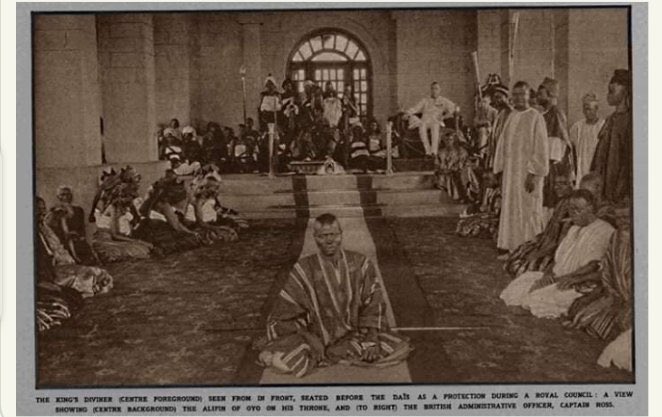
Aláàfin of Oyo.
It should be noted that the descendants of Oduduwa instituted various kingdoms, Oyo, Ijesha, Ijebu, Ondo, Owo, Osun, Ketu, Ekiti etc.
Also, oral history has a particular strong effect on Oyo history much more than other contemporary West African
It should be noted that the descendants of Oduduwa instituted various kingdoms, Oyo, Ijesha, Ijebu, Ondo, Owo, Osun, Ketu, Ekiti etc.
Also, oral history has a particular strong effect on Oyo history much more than other contemporary West African
Empires as Yoruba cosmology focuses on an earlier kingdom.
Ile-Ife, which provide the foundation for the Oyo Empires.
Early in the 16th century, Oyo was a minor state which was led by the founder.
king-Alaafin of Oyo Oranmiyan whose position on earth was comparable
Ile-Ife, which provide the foundation for the Oyo Empires.
Early in the 16th century, Oyo was a minor state which was led by the founder.
king-Alaafin of Oyo Oranmiyan whose position on earth was comparable
To that of the supreme Being in heaven probably because of his strong reputation as a military leader.
The Aláàfin ruled with the aid of a council of powerful advisers, the Oyo Mesi.
who were seven in number whilst the chief among the Oyo Mesi is the Basorun who carried
The Aláàfin ruled with the aid of a council of powerful advisers, the Oyo Mesi.
who were seven in number whilst the chief among the Oyo Mesi is the Basorun who carried
Out the duties of Chief Executive Officer of the state and principal adviser to the Aláàfin.
Furthermore, it is worthy of mention that the Oyo Empire expanded based on its convenient trade location and its ability to manipulate marketers by the second half
Furthermore, it is worthy of mention that the Oyo Empire expanded based on its convenient trade location and its ability to manipulate marketers by the second half
Of the sixteenth century.
The Oyo Mesi were seven principal councilors of the empire (Oyo).
They constituted the electoral council and possess the legislative powers to carry out their duty.
The seven councilors are:- (1) Bashorun (2) Agbaakin (3) Samu (4) Alapinni
The Oyo Mesi were seven principal councilors of the empire (Oyo).
They constituted the electoral council and possess the legislative powers to carry out their duty.
The seven councilors are:- (1) Bashorun (2) Agbaakin (3) Samu (4) Alapinni
(5)Laguna (6) Akiniku (7) Ashipa.
Those seven councilors represent the voice of the nation and also had the chief responsibility of protecting the interest of the empire.
The Aláàfin also takes counsel from them whenever matters affecting the
state occur.
Furthermore, the
Those seven councilors represent the voice of the nation and also had the chief responsibility of protecting the interest of the empire.
The Aláàfin also takes counsel from them whenever matters affecting the
state occur.
Furthermore, the
Strong political force of the Oyo Mesi was strengthened by the Ogboni cult.
The Aláàfin, while being the sole voice of the authority, was unable to exercise complete and unquestioned authority or power.
His authority was curbed by the various political institutions
The Aláàfin, while being the sole voice of the authority, was unable to exercise complete and unquestioned authority or power.
His authority was curbed by the various political institutions
Of Oyo, particularly the Oyo Mesi.
The Oyo Mesi guided the king in many important matters including military actions and religious festivals.
While the Bashorun, the leader of the Oyo Mesi, exercised the highest authority and control such as in many ways rivaled the power of
The Oyo Mesi guided the king in many important matters including military actions and religious festivals.
While the Bashorun, the leader of the Oyo Mesi, exercised the highest authority and control such as in many ways rivaled the power of
The Aláàfin himself.
For example,the Bahorun served as the commander in chief of the army and equally orchestrated various religious festivals in Oyo.
To accord him more power, chief among the responsibilities of the Bashorun was the management of the all-important festival
For example,the Bahorun served as the commander in chief of the army and equally orchestrated various religious festivals in Oyo.
To accord him more power, chief among the responsibilities of the Bashorun was the management of the all-important festival
of Orun.
This festival would figure prominently in the rise of the Oyo Mesi over the Alaafin because the Alaafin could not leave the palace due to ritual restrictions.
That accompanied the position which grossly curtailed his ability to implement and exercise
This festival would figure prominently in the rise of the Oyo Mesi over the Alaafin because the Alaafin could not leave the palace due to ritual restrictions.
That accompanied the position which grossly curtailed his ability to implement and exercise
His authority outside the palace walls.
In line with this, a Nigerian historian, Samuel Johnson, observed “the father is the king of the palace and the son, the king for the general public.
The Oyomesi had acquired the power to depose the Aláàfin by forcing him to commit
In line with this, a Nigerian historian, Samuel Johnson, observed “the father is the king of the palace and the son, the king for the general public.
The Oyomesi had acquired the power to depose the Aláàfin by forcing him to commit
Suicide during the Orun festival.
In 1754, the Oyo Prime Minister, Bashorun Gaa, conspired with the Oyomesi.
A strong policitical force in the administration of justice and strengthened by the Ogboni cult, to force four successive Alaafins to commit ritual suicide after they
In 1754, the Oyo Prime Minister, Bashorun Gaa, conspired with the Oyomesi.
A strong policitical force in the administration of justice and strengthened by the Ogboni cult, to force four successive Alaafins to commit ritual suicide after they
Had been presented with the symbolic parrot’s egg.
As a result of which Alaafin Abiodun who reigned from (1972) executed Bashorun Gaa.
These intrigues and instability weakened and impoverished Oyo as there were series of constitutional upheavals, dynastic intrigues and local
As a result of which Alaafin Abiodun who reigned from (1972) executed Bashorun Gaa.
These intrigues and instability weakened and impoverished Oyo as there were series of constitutional upheavals, dynastic intrigues and local
Particularism in the community.
These were furthered when ‘Awole’ killed his father, Alaafin Abiodun, and became the king.
He in turn was ousted by the revolt initiated by “Afonja” the Aare OnaKakanfo.
It was the same revolt which led to the secession of Ilorin which played
These were furthered when ‘Awole’ killed his father, Alaafin Abiodun, and became the king.
He in turn was ousted by the revolt initiated by “Afonja” the Aare OnaKakanfo.
It was the same revolt which led to the secession of Ilorin which played
A crucial role in the destruction of Oyo empire because Oba Awole was rejected by his subjects.
But Aláàfin Awole cursed the empire as he prepared to commit suicide, he said:
“My curse is on you, your disloyalty and your disobedience. So let your children disobey you.
But Aláàfin Awole cursed the empire as he prepared to commit suicide, he said:
“My curse is on you, your disloyalty and your disobedience. So let your children disobey you.
If you send them on an errand, let them never return to bring you word again.
To all points, I shoot my arrows. You will be carried as slaves.
My curse will carry to the sea and beyond the sea . Broken calabash can be mended, but not a broken dish. So, let my word
To all points, I shoot my arrows. You will be carried as slaves.
My curse will carry to the sea and beyond the sea . Broken calabash can be mended, but not a broken dish. So, let my word
Be irrevocable”.
After Awole’s death.
Afonja, the Aare OnaKakanfo, now master of Ilorin, invited an itinerant Fulani scholar of Islam called “Alimi al-salih” into his cabinet, hoping to secure the support of Yoruba Muslims.
However, turned by the internal struggle, the Fulani
After Awole’s death.
Afonja, the Aare OnaKakanfo, now master of Ilorin, invited an itinerant Fulani scholar of Islam called “Alimi al-salih” into his cabinet, hoping to secure the support of Yoruba Muslims.
However, turned by the internal struggle, the Fulani
Revolted and Oyo could not defend itself against the Fulani who razed Oyo Ile in 1835 and 1837.
This explains why Ilorin traditional empire has an emir.
while in the rest of Yoruba towns, the kings are called Oba or Baale, meaning “Father of the land” or “Lord of the land”.
This explains why Ilorin traditional empire has an emir.
while in the rest of Yoruba towns, the kings are called Oba or Baale, meaning “Father of the land” or “Lord of the land”.
In conclusion, despite all attempts, Oyo Empire eventually became a protectorate of Great Britain in 1888;
its states ceased to exist as any sort of super power and it never regained its prominence in the region.
However, during the colonial period, the Yoruba were one of the
its states ceased to exist as any sort of super power and it never regained its prominence in the region.
However, during the colonial period, the Yoruba were one of the
Most urbanised groups in Africa.
Source; by Oyetunde is Chief Museum Education Officer, National Museum, Oyo
📸credit;Pinterest and Nairaland.
Source; by Oyetunde is Chief Museum Education Officer, National Museum, Oyo
📸credit;Pinterest and Nairaland.
Note; if you have issue with this write-up,direct the attack to the source.
Thank you!
Thank you!
Loading suggestions...