

"The thought of negotiating makes me want to vomit."
Can you relate?
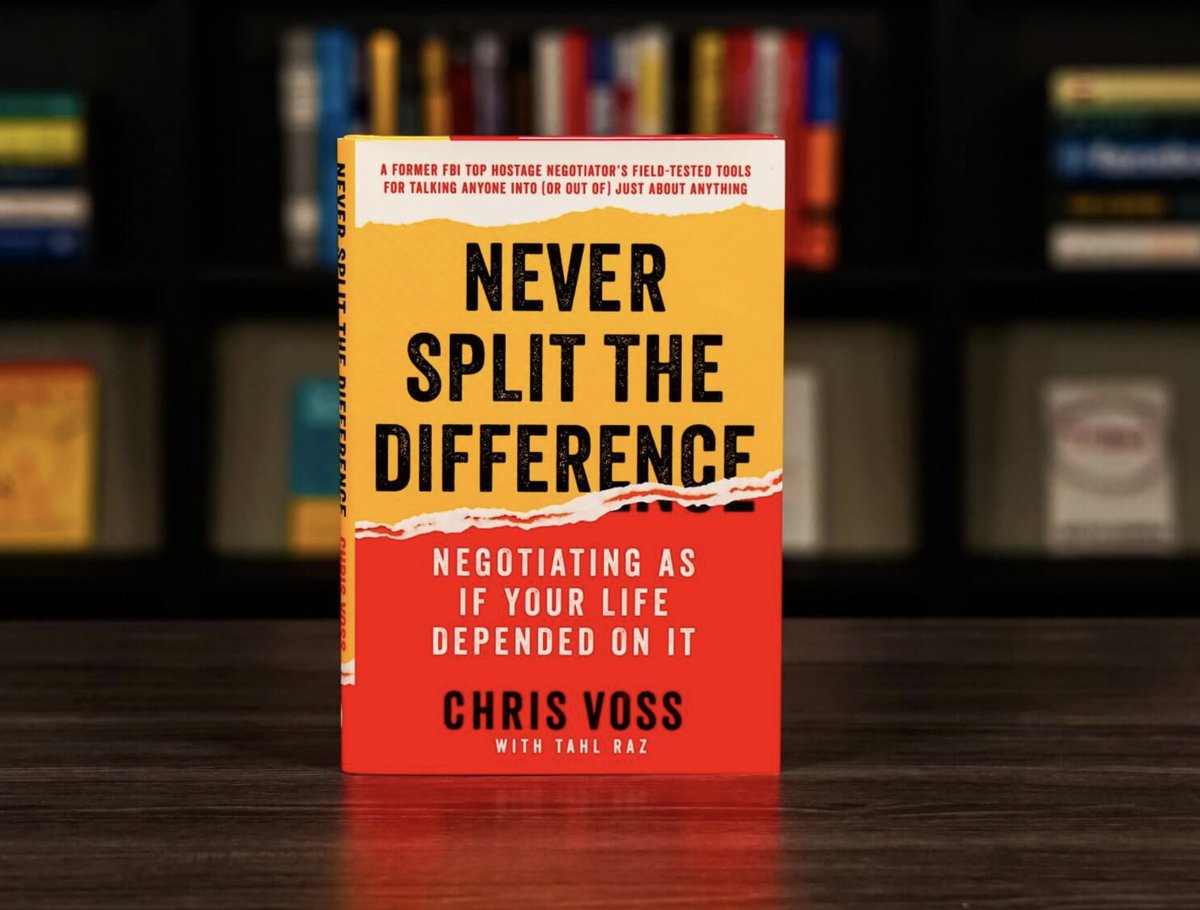
Here are 9 actionable ideas from the book "Never Split the Difference" that will help YOU become an EXPERT negotiator for:
-Higher salaries
-New contracts
-Job promotions
Seem impossible? It's not..
Can you relate?
Here are 9 actionable ideas from the book "Never Split the Difference" that will help YOU become an EXPERT negotiator for:
-Higher salaries
-New contracts
-Job promotions
Seem impossible? It's not..
1. Implore "tactical empathy"
IMPORTANT: remember in any negotiation is the other person is human, just like you.
*Recognize their perspective and vocalize that recognition
*Imagine yourself in the counterpart’s situation
IMPORTANT: remember in any negotiation is the other person is human, just like you.
*Recognize their perspective and vocalize that recognition
*Imagine yourself in the counterpart’s situation
2. Always be prepared before a negotiation
-Know what you want and what you're willing to give up
-Hypotheses vs. assumptions: Use negotiation to test hypotheses
-Uncover what counterpart needs:
*money 💰
*emotional 🥹
*personal 🙋🏽♂️
-Know what you want and what you're willing to give up
-Hypotheses vs. assumptions: Use negotiation to test hypotheses
-Uncover what counterpart needs:
*money 💰
*emotional 🥹
*personal 🙋🏽♂️
4. The 7-38-55 rule of negotiating
--> 7% content
--> 38% tone of voice
--> 55% body language & face
Pay close attention to tone & body language.
See if they don’t match up with the literal meaning of words
--> 7% content
--> 38% tone of voice
--> 55% body language & face
Pay close attention to tone & body language.
See if they don’t match up with the literal meaning of words
Use labels to discover the source of the incongruence:
->I heard you say ‘Yes’ but it seemed like there was a hesitation in your voice
->I heard you say ‘Yes’ but it seemed like there was a hesitation in your voice
5. Stay calm and collected during negotiations, even if the other person is getting angry
Observe without reaction & judgment
*Focus on tone
*Smiling is a natural tension release 😀
-->this applies even on phone negotiations
Observe without reaction & judgment
*Focus on tone
*Smiling is a natural tension release 😀
-->this applies even on phone negotiations
6. Label their emotions
Validate someone’s emotion by acknowledging it, not by accusation.
-It seems like...
-It sounds like...
-It looks like...
Pause to let the label sink in.
Let the other person fill the silence.
Validate someone’s emotion by acknowledging it, not by accusation.
-It seems like...
-It sounds like...
-It looks like...
Pause to let the label sink in.
Let the other person fill the silence.
Examples of labeling vs accusations:
"You're a thief! Why are you not paying my invoice?"
vs
"It seems like you don't care about my commitment to your company's success. I want you to succeed. But how am I supposed to do that if you don't pay me for my time?"
"You're a thief! Why are you not paying my invoice?"
vs
"It seems like you don't care about my commitment to your company's success. I want you to succeed. But how am I supposed to do that if you don't pay me for my time?"
7. Be ready for accusations
Do this by preparing an "accusation audit"
*List the worst things your counterpart can say about you first
*Use labels to reinforce & encourage positive perceptions
*Remove "I understand" from your vocabulary. -Never use it-
Do this by preparing an "accusation audit"
*List the worst things your counterpart can say about you first
*Use labels to reinforce & encourage positive perceptions
*Remove "I understand" from your vocabulary. -Never use it-
8. Saying NO is the start of negotiating
Saying YES actually makes people defensive
If you hear NO, here's the real questions that come up:
-What about this doesn’t work for you?
-What would you need to make this work?
-It seems there’s something here that bothers you?
Saying YES actually makes people defensive
If you hear NO, here's the real questions that come up:
-What about this doesn’t work for you?
-What would you need to make this work?
-It seems there’s something here that bothers you?
Just because someone says YES doens't mean you've won.
There are 3 types of YES:
*Counterfeit: Yes as an escape route (want to say No)
*Confirmation: Reflexive response question. Affirmation with no promise of action
*Commitment: True agreement that leads to action
There are 3 types of YES:
*Counterfeit: Yes as an escape route (want to say No)
*Confirmation: Reflexive response question. Affirmation with no promise of action
*Commitment: True agreement that leads to action
Trigger a No: Is now a bad time to talk?
Might sometimes need to force counterpart into a no:
Intentionally mislabeling an emotion
Ask a ridiculous question that can only be answered by a No
Might sometimes need to force counterpart into a no:
Intentionally mislabeling an emotion
Ask a ridiculous question that can only be answered by a No
9. Remember: a good negotiation should be win-win for both parties involved
Visualize what the other person wants out of life
Use those aspirations to get them to follow along
Display a passion for their desires, while also staying true to you.
Visualize what the other person wants out of life
Use those aspirations to get them to follow along
Display a passion for their desires, while also staying true to you.
If you enjoyed this thread, I’d appreciate a RT of the first tweet.
I create content on:
- Wealth hacking
- Income acceleration
- Online business and entrepreneurship
Follow me for a fun journey towards financial freedom:
@jjeffrose
I create content on:
- Wealth hacking
- Income acceleration
- Online business and entrepreneurship
Follow me for a fun journey towards financial freedom:
@jjeffrose
Loading suggestions...