

Most RCT data on "psychotherapy" for depression is from manualized therapies of 8-12 sessions—woefully inadequate to treat anything. Meaningful change (vs initial placebo effects) typically begins around 6 month mark. The RCT data provide no info on benefits of real psychotherapy
2/ What RCTs measure after 8-12 sessions is basically placebo effect (expectancy, demand characteristics, regression to mean) + response to generic common factors. I think this is why dodo bird effect (all therapies equivalent) is always replicated—real therapy hasn't started.
/3 I had exchange with @pimcuijpers who has published the major meta-analyses of psychotherapy for depression & has made database of his RCT findings available to other researchers. Largest/best data set to date. But avg. length of tx is 8-10 sessions. But what are we supposed to
/4 learn from 100s of studies of treatments too brief for meaningful work to even begin? What we've really learned is that these brief, manualized treatments are inadequate for most people most of the time. And do not remotely reflect what competent tx looks like in real world.
/5 Ultimately, the outcome research is trivializing psychotherapy by proceeding from the assumptions that there's a quick fix, and lifelong psychological patterns can magically change in a matter of weeks. I don't think researchers necessarily mean to trivialize m.h. problems
6/ but that is what happens as a direct consequence of shoehorning psychotherapy into fitting research protocols that fit researchers' artificial assumptions (eg, depression can be treated in 8-10 sessions) instead of adapting research protocols to fit clinical reality. They
7/ are operating in a parallel universe and they are not studying *psychotherapy.* They are studying fictions of their own invention and calling it "psychotherapy."
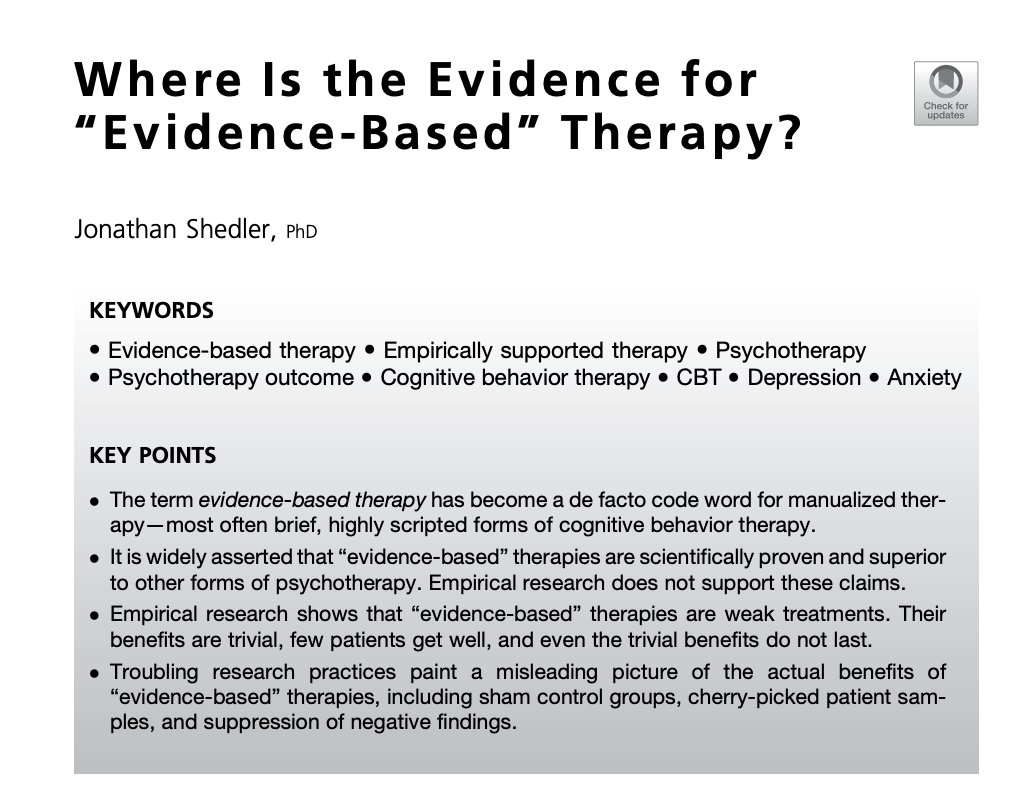
9/ They use term gold standard to refer to the research methods used to study the treatments—not benefits to patients. It's academic researchers centering what matters to academic researchers—research methodology—& sidelining what really matters which is whether patients get well
Loading suggestions...