

There are 63,105 stocks in the investing universe.
But only 947 firms drove ~100% of the returns.
That's less than 1.5% of the entire investing universe.
Without a screener, it is like finding a needle in a haystack.
Here are the top 5 screeners to hunt for winners:
But only 947 firms drove ~100% of the returns.
That's less than 1.5% of the entire investing universe.
Without a screener, it is like finding a needle in a haystack.
Here are the top 5 screeners to hunt for winners:
Here's a quick rundown:
1. Revenue growth > 10%
2. Gross profitability ratio > 20%
3. Debt to EBITDA ratio < 3
4. Interest coverage ratio > 3.5
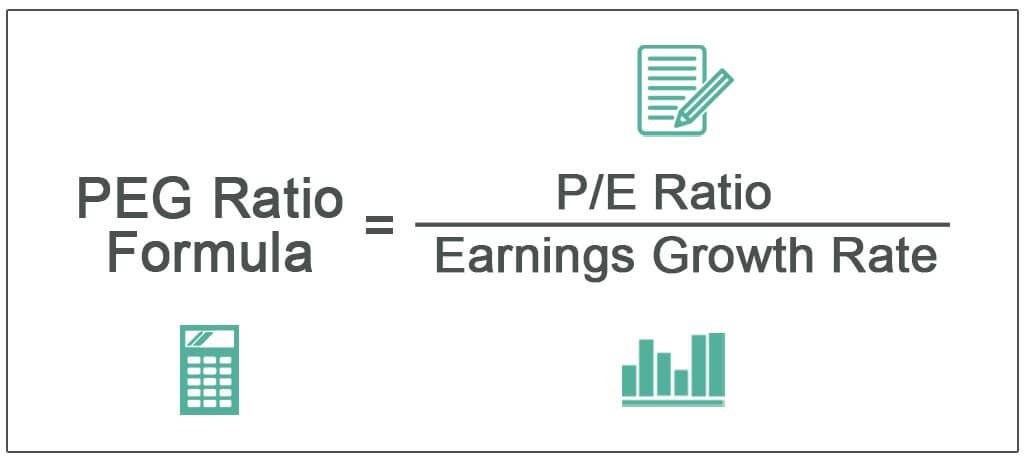
5. PEG < 1.2
Bonus: List of FREE screening tools at the end.
1. Revenue growth > 10%
2. Gross profitability ratio > 20%
3. Debt to EBITDA ratio < 3
4. Interest coverage ratio > 3.5
5. PEG < 1.2
Bonus: List of FREE screening tools at the end.
1. Revenue growth > 10%
FCF per share growth could be achieved through through:
1. Increased revenue
2. Expanding margins
3. Shares buybacks
But there's a lower ceiling to growth attained via 2 and 3.
Durable revenue growth is key to compounding shareholders value.
FCF per share growth could be achieved through through:
1. Increased revenue
2. Expanding margins
3. Shares buybacks
But there's a lower ceiling to growth attained via 2 and 3.
Durable revenue growth is key to compounding shareholders value.
2. Gross profitability ratio > 20%
A key challenge with ROIC is that many high growth companies invest heavily in marketing and research.
As a result, they appear unprofitable.
Using ROIC may cause you to miss winners who are rapidly growing.
The solution...👇
A key challenge with ROIC is that many high growth companies invest heavily in marketing and research.
As a result, they appear unprofitable.
Using ROIC may cause you to miss winners who are rapidly growing.
The solution...👇
Use the gross profitability as a first-level filter
Professor Novy-Marx's research shows that:
- Gross profitability is persistent
- Cleanest accounting measure of true economic profitability
- Companies with gross profitability > 33% outperformed the market by a wide margin.
Professor Novy-Marx's research shows that:
- Gross profitability is persistent
- Cleanest accounting measure of true economic profitability
- Companies with gross profitability > 33% outperformed the market by a wide margin.
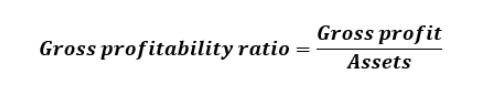
Between 1973 to 2011, a dollar invested in the market grew to over $80.
A dollar invested in a basket of businesses with gross profitability > 33% grew to a whopping $572 in the same period!
A similar study was conducted in 2018, and the results showed that...
A dollar invested in a basket of businesses with gross profitability > 33% grew to a whopping $572 in the same period!
A similar study was conducted in 2018, and the results showed that...
There would be a significant return advantage to investing in companies with gross profitability above 20%.
Personally, companies with a gross profitability of at least 20% is a indication that it could be a high-quality compounder which warrants further research.
Personally, companies with a gross profitability of at least 20% is a indication that it could be a high-quality compounder which warrants further research.
3. Debt to EBITDA ratio < 3
This estimates how much capital a company can raise.
We want a company that's able to tap on credit line when great opportunities arises or when a crisis hits.
The lower the ratio, the better it is.
This estimates how much capital a company can raise.
We want a company that's able to tap on credit line when great opportunities arises or when a crisis hits.
The lower the ratio, the better it is.

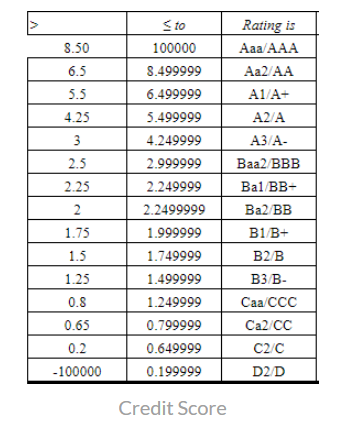
4. Interest coverage ratio > 3.5
This measures the company’s ability to meet its interest obligations.
A ratio of 3.5 indicates that it is able to pay its interest payments 3.5 times over.
Rule-of-thumb:
- Safe: 3.5x
- Risky: 1.5x
The higher the better.
This measures the company’s ability to meet its interest obligations.
A ratio of 3.5 indicates that it is able to pay its interest payments 3.5 times over.
Rule-of-thumb:
- Safe: 3.5x
- Risky: 1.5x
The higher the better.
5. PEG < 1.2
This is a valuation metric coined by Peter Lynch.
While it isn't perfect, it's a great litmus test for filtering stocks that are fair or undervalued.
For Lynch, growth stocks with a PEG < 1 is considered undervalued.
But in today's environment...
This is a valuation metric coined by Peter Lynch.
While it isn't perfect, it's a great litmus test for filtering stocks that are fair or undervalued.
For Lynch, growth stocks with a PEG < 1 is considered undervalued.
But in today's environment...
I have found that high-quality growth stocks very rarely meet that criteria.
For several seasons:
- Relatively lower interest-rate environment
- Require lower capital for growth
- More durable growth
It would be better to use a PEG less than 1.2 as a first-level filter.
For several seasons:
- Relatively lower interest-rate environment
- Require lower capital for growth
- More durable growth
It would be better to use a PEG less than 1.2 as a first-level filter.
And that's a wrap!
If you enjoyed this thread:
1. Follow me @steadycompound & give this a RT!
2. Join 10k+ subscribers inside of my newsletter.
I share about investing, business breakdowns & timeless lessons from super investors.
steadycompounding.com
If you enjoyed this thread:
1. Follow me @steadycompound & give this a RT!
2. Join 10k+ subscribers inside of my newsletter.
I share about investing, business breakdowns & timeless lessons from super investors.
steadycompounding.com

BONUS:
Access my investing research toolkit.
Stock screeners, track superinvestors and access companies financials.
steadycompounding.notion.site
Access my investing research toolkit.
Stock screeners, track superinvestors and access companies financials.
steadycompounding.notion.site
Loading suggestions...