
THE OLD PRUSSIAN LANGUAGE
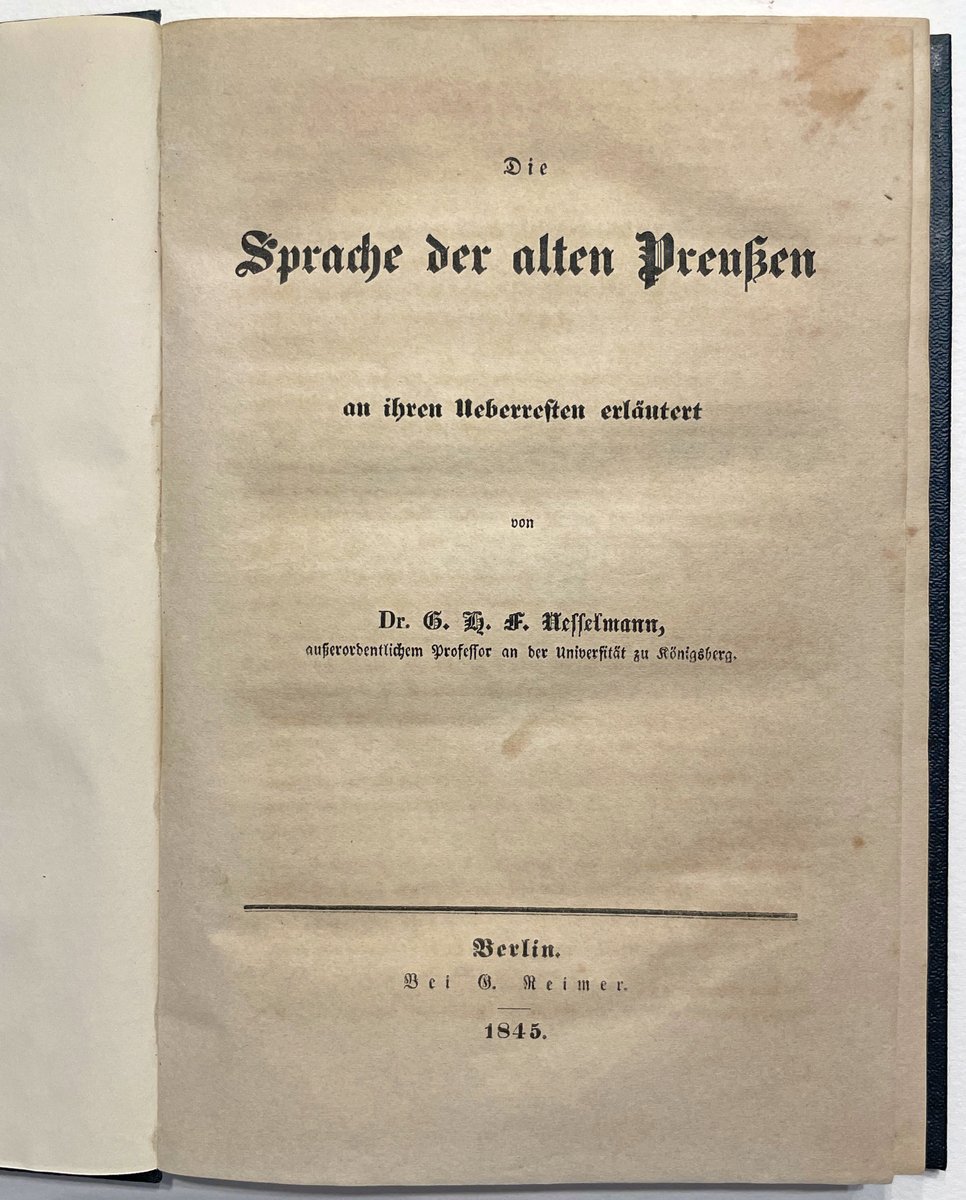
Die Sprache der alten Preußen an ihren Überresten erläutert.
G. H. F. Nesselmann, Berlin 1845.
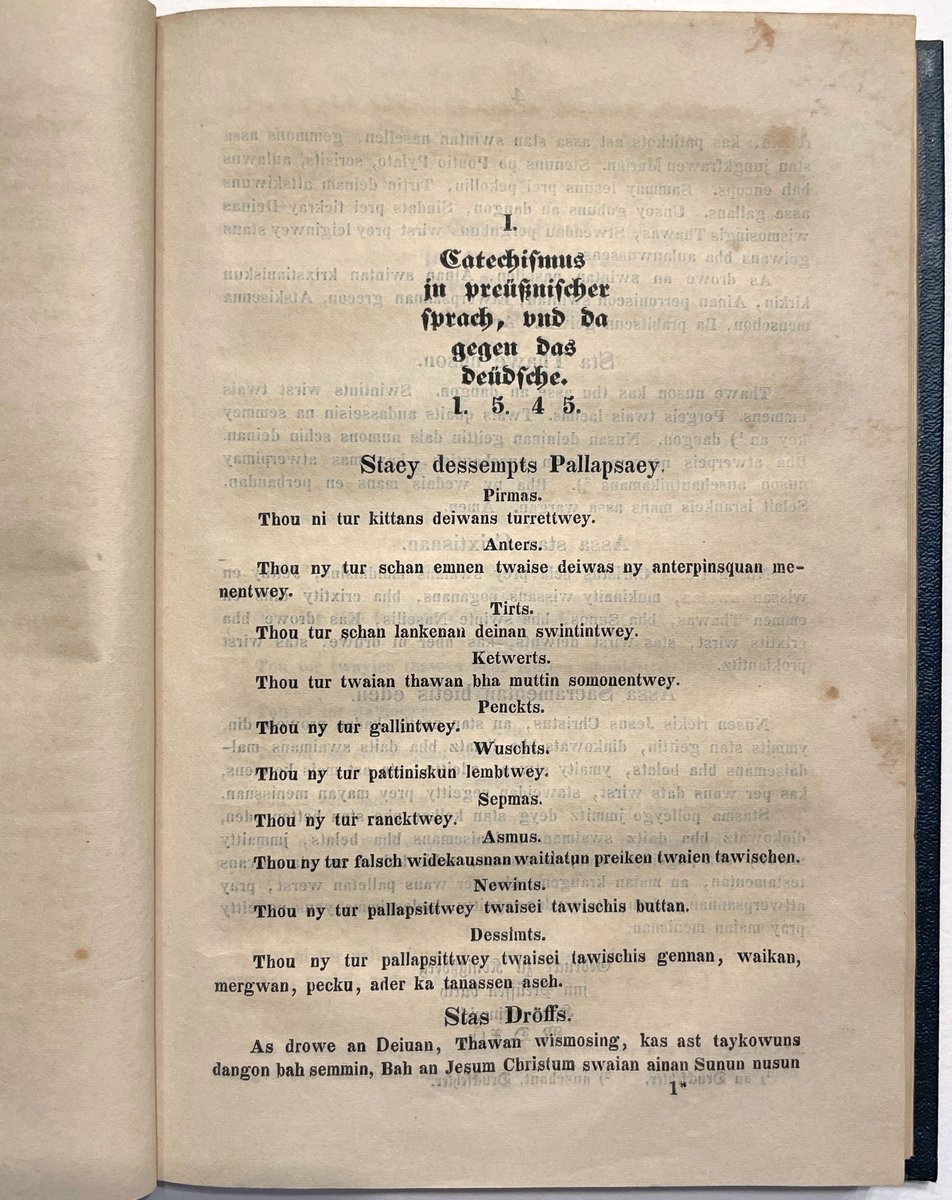
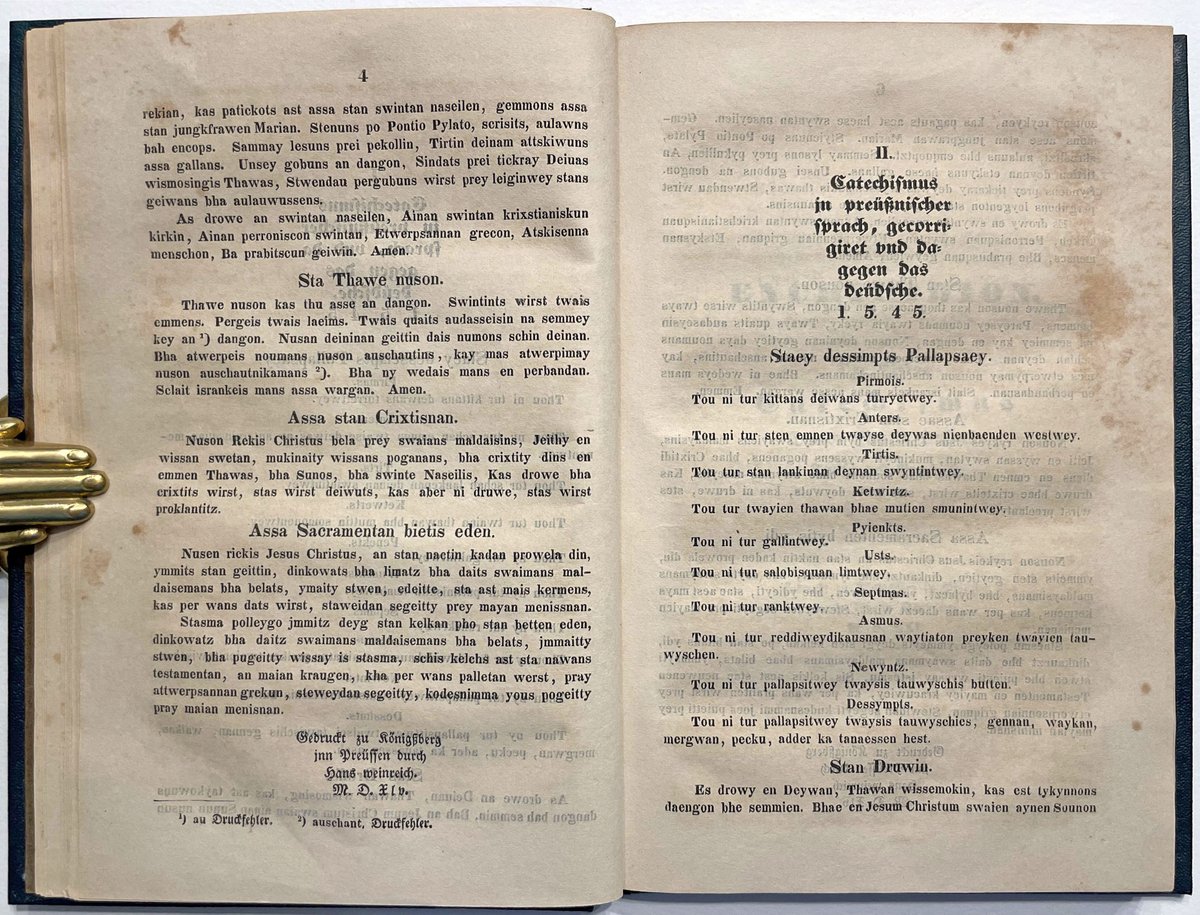
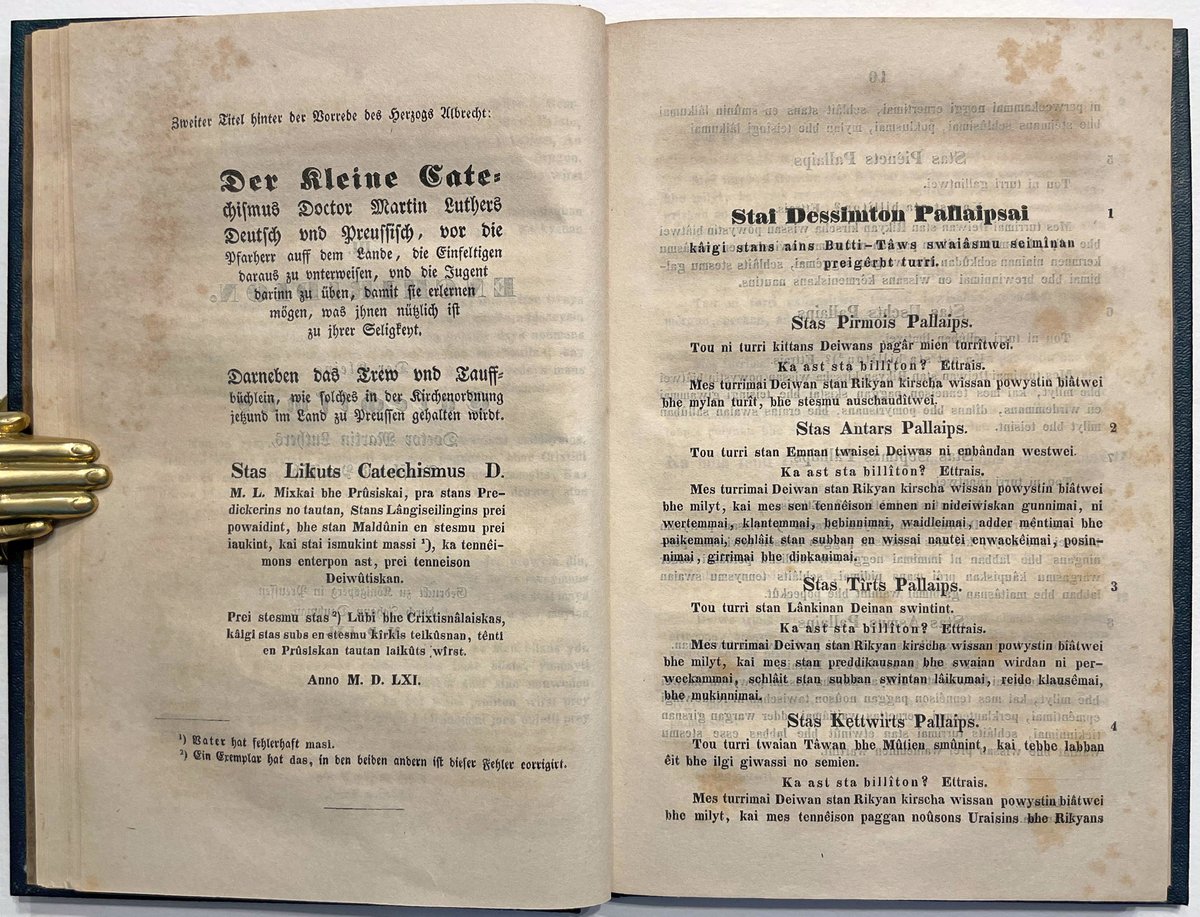
With approximate type-facsimiles of the three extraordinarily rare Old Prussian Catechisms printed in Königsberg in 1545, 1545, and 1561 respectively. 1/
Die Sprache der alten Preußen an ihren Überresten erläutert.
G. H. F. Nesselmann, Berlin 1845.
With approximate type-facsimiles of the three extraordinarily rare Old Prussian Catechisms printed in Königsberg in 1545, 1545, and 1561 respectively. 1/
Old Prussian was a Western Baltic language belonging to the Balto-Slavic branch of the Indo-European languages, once spoken by the Old Prussians, the Baltic peoples of the Prussian region. 2/
The language is called Old Prussian to avoid confusion with the German dialects of Low Prussian and High Prussian and with the adjective Prussian as it relates to the later German state. 3/

Old Prussian began to be written down in the Latin alphabet in about the 13th century, and a small amount of literature in the language survives. 4/
Old Prussian was closely related to the other extinct Western Baltic languages, namely Curonian, Galindian and Sudovian. It is related to the Eastern Baltic languages such as Lithuanian and Latvian, and more distantly related to Slavic. 5/
With the conquest of the Old Prussian territory by the Teutonic Knights in the 13th century, and the subsequent influx of Polish, Lithuanian and especially German speakers, Old Prussian experienced a 400-year-long decline as an oppressed language of an oppressed population. 6/
Old Prussian ceased to be spoken probably around the beginning of the 18th century, because many of its remaining speakers died in the famines and the bubonic plague outbreak which devastated the East Prussian countryside and towns from 1709 until 1711. 7/

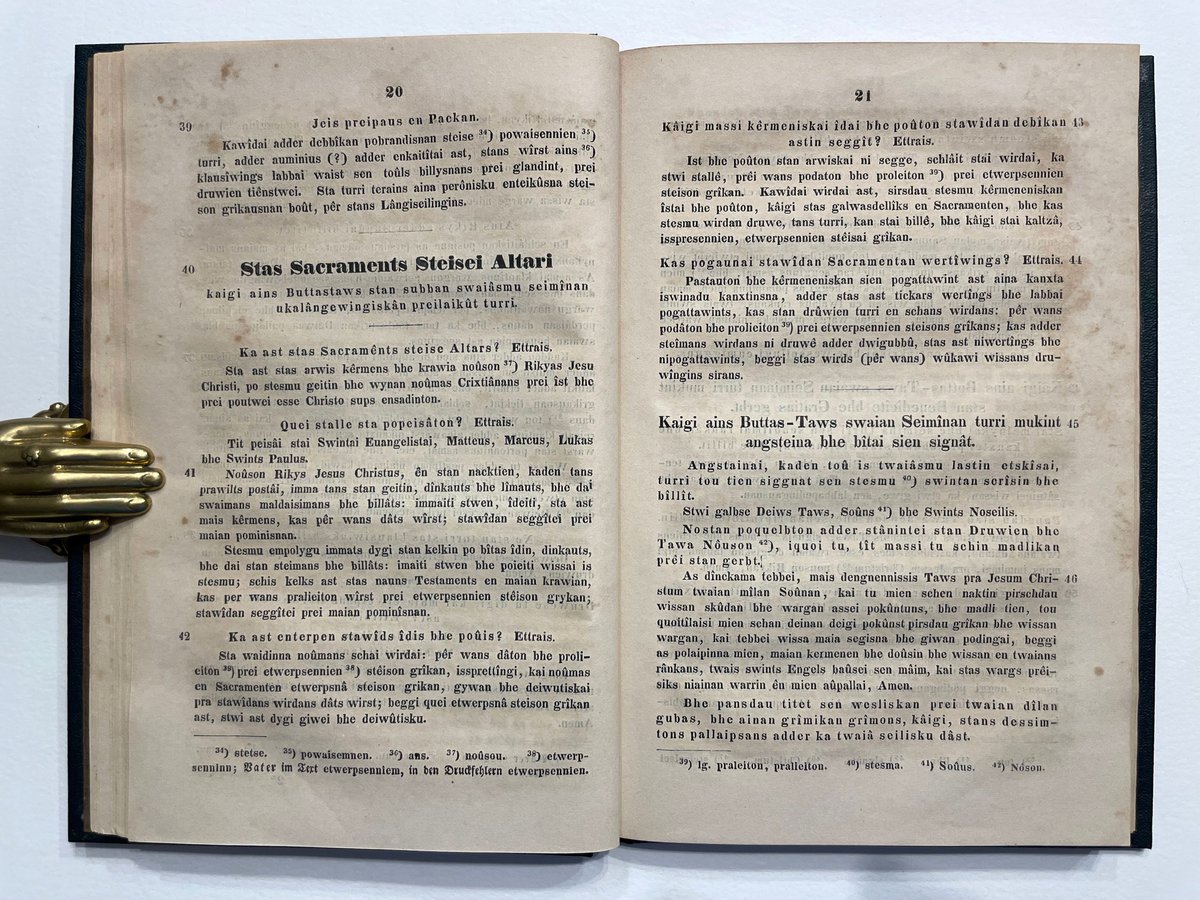
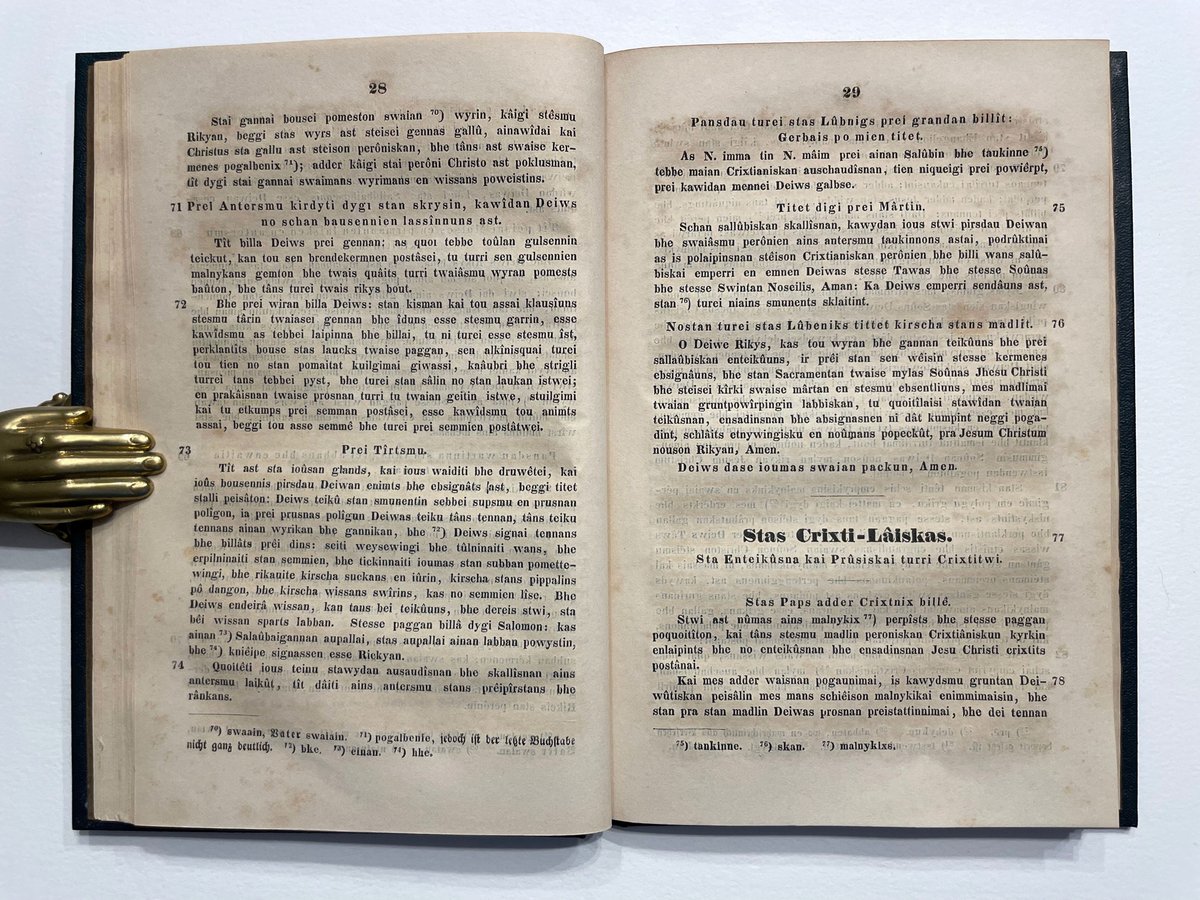
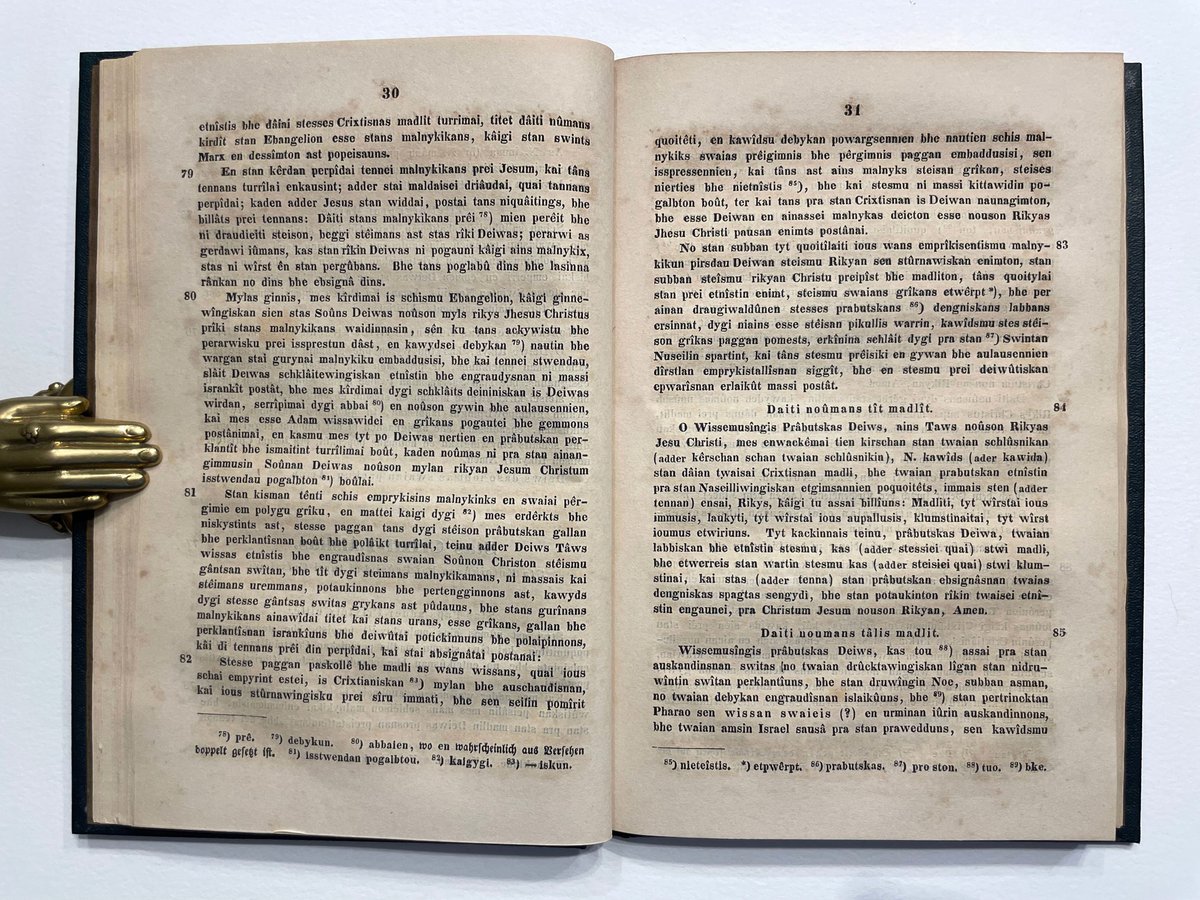
The three surviving Old Prussian Catechisms were printed in Königsberg in 1545, 1545, and 1561 respectively. The first two consist of only six pages of text in Old Prussian – the second one being a correction of the first into another Old Prussian dialect. 8/
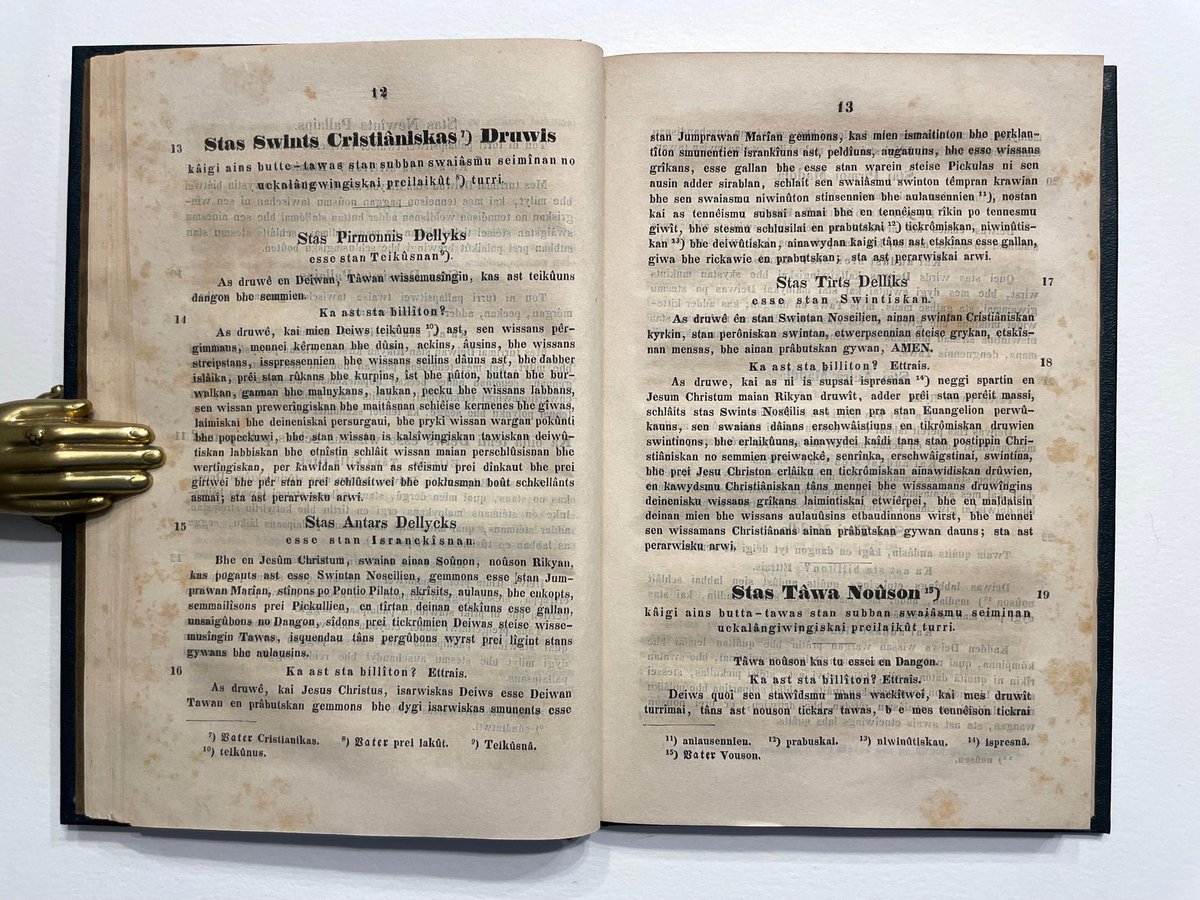
The third catechism, or Enchiridion, consists of 132 pages of text, and is a translation of Luther's Small Catechism by a German cleric called Abel Will, with his Prussian assistant Paul Megott. 9/

Will himself knew little or no Old Prussian, and his Prussian interpreter was probably illiterate, but according to Will spoke Old Prussian quite well. The text itself is mainly a word-for-word translation, and Will phonetically recorded Megott's oral translation. 10/
Loading suggestions...