

If you want to sleep better (backed by science), follow these 10 tips:
1. Keep your phone outside the bedroom
Why this works:
• Eliminates jarring sounds/vibrations
• Hides the prompt to check your phone (blue light + emotional triggers destroy sleep)
Why this works:
• Eliminates jarring sounds/vibrations
• Hides the prompt to check your phone (blue light + emotional triggers destroy sleep)
2. Reduce stress via exercise and meditation
The impact of exercise on sleep:
• Fall asleep up to 13 mins faster
• Stay asleep 18 mins longer
Caveat: Avoid exercising 2-3 hrs before bed (increased heart rate + body temp may delay sleep).
The impact of exercise on sleep:
• Fall asleep up to 13 mins faster
• Stay asleep 18 mins longer
Caveat: Avoid exercising 2-3 hrs before bed (increased heart rate + body temp may delay sleep).
Another way to reduce stress (and fall asleep fast) is deep breathing…
I wrote a popular thread on the 4-7-8 Method.
Read that one later:
I wrote a popular thread on the 4-7-8 Method.
Read that one later:
3. Limit blue light exposure
Our phone screens and monitors emit blue light.
It suppresses melatonin, a chemical that makes us sleepy.
So, you’ll want to limit blue light as you approach sleep…
Our phone screens and monitors emit blue light.
It suppresses melatonin, a chemical that makes us sleepy.
So, you’ll want to limit blue light as you approach sleep…
Use device filters to regulate blue light.
Here are some popular options:
Apple
• Mobile (Night Shift)
• Desktop (f.lux)
Android
• Mobile (Twilight App)
Windows 11
• Desktop (Night Light)
Here are some popular options:
Apple
• Mobile (Night Shift)
• Desktop (f.lux)
Android
• Mobile (Twilight App)
Windows 11
• Desktop (Night Light)
In addition to phones and monitors,
traditional light bulbs emit blue light
(while smart lightbulbs offer full spectrum control).
Starting late afternoon, control smart bulbs to warmer tones (2500k-3500k).
Or try another popular option:
Blue light blocking glasses.
traditional light bulbs emit blue light
(while smart lightbulbs offer full spectrum control).
Starting late afternoon, control smart bulbs to warmer tones (2500k-3500k).
Or try another popular option:
Blue light blocking glasses.
4. Avoid naps >30 mins and past 3pm
Effective napping is two-fold:
• Length: Naps >30 mins might put you in REM, inducing sleep inertia (grogginess)
• Time of day: Napping past 3pm often hurts evening sleep
Find your sweet spot of length and time.
Effective napping is two-fold:
• Length: Naps >30 mins might put you in REM, inducing sleep inertia (grogginess)
• Time of day: Napping past 3pm often hurts evening sleep
Find your sweet spot of length and time.
5. Avoid caffeine within 6 hrs of bedtime
Figure out your average bedtime and subtract 6 hrs.
So if you go to bed at 10pm, stop consuming caffeine at 4pm.
Make progress today: Switch to decaf in the afternoon.
Figure out your average bedtime and subtract 6 hrs.
So if you go to bed at 10pm, stop consuming caffeine at 4pm.
Make progress today: Switch to decaf in the afternoon.
6. Limit alcohol intake
Alcohol is NOT a good sleep aid.
While it may help you fall asleep more quickly, alcohol will reduce REM sleep.
2 servings for men per day and 1 for women can decrease sleep quality by 9.3%.
Stop drinking 4 hrs before bedtime (lowers impact).
Alcohol is NOT a good sleep aid.
While it may help you fall asleep more quickly, alcohol will reduce REM sleep.
2 servings for men per day and 1 for women can decrease sleep quality by 9.3%.
Stop drinking 4 hrs before bedtime (lowers impact).
7. Eat dinner at least 2-3 hrs before bedtime; avoid heavy meals
Bodily discomfort reduces your chances of falling asleep.
Eating late is also associated with weight gain
(metabolism is slower when you're stationary).
All to say, be intentional about what & when you eat.
Bodily discomfort reduces your chances of falling asleep.
Eating late is also associated with weight gain
(metabolism is slower when you're stationary).
All to say, be intentional about what & when you eat.
8. Limit light with blackout shades
Remember how I mentioned blue light earlier?
Well, daylight IS blue light.
So if your sleep schedule deviates from the natural rhythm of the sun,
or you live in a flashy city,
optimize your bedroom with blackout shades.
Remember how I mentioned blue light earlier?
Well, daylight IS blue light.
So if your sleep schedule deviates from the natural rhythm of the sun,
or you live in a flashy city,
optimize your bedroom with blackout shades.
9. Create a noise-canceling environment
Avoid noisy housemates, partying, street sirens (if possible).
Consider a noise-masking device, like a white noise machine.
Noticing a common theme here?
Sleep is often as simple as eliminating that which prevents you from it.
Avoid noisy housemates, partying, street sirens (if possible).
Consider a noise-masking device, like a white noise machine.
Noticing a common theme here?
Sleep is often as simple as eliminating that which prevents you from it.
10. Prioritize the quality of your mattress and pillow(s).
We spend one-third of our lives in bed...
Yet 99% of people underinvest in that experience…
We spend one-third of our lives in bed...
Yet 99% of people underinvest in that experience…
Buying a quality mattress is one of the BEST purchases you can make (for utility).
Here’s the breakdown:
• Quality mattress: ≈ $1k
• Mattress Life: 10 yr
• Use: 365 days/yr
≈ $0.27 / night
≈ $0.04 / hour
Two people sharing? Cut that number in half.
Worth it.
Here’s the breakdown:
• Quality mattress: ≈ $1k
• Mattress Life: 10 yr
• Use: 365 days/yr
≈ $0.27 / night
≈ $0.04 / hour
Two people sharing? Cut that number in half.
Worth it.
Additional sleep tips:
• Take a warm bath before bed
• Set a cool room temperature (60-67° F)
• Get morning sunlight exposure (10-30 mins helps to regulate circadian rhythm)
• Go to bed at the same time nightly (conditions mind/body).
• Take a warm bath before bed
• Set a cool room temperature (60-67° F)
• Get morning sunlight exposure (10-30 mins helps to regulate circadian rhythm)
• Go to bed at the same time nightly (conditions mind/body).
One final pro tip:
If you want to get more serious about your sleep quality + health
Consider using a tracking device, like Oura.
Oura is a sleep lab wrapped around your finger—that has a nice ring to it.
What gets measured gets managed.
If you want to get more serious about your sleep quality + health
Consider using a tracking device, like Oura.
Oura is a sleep lab wrapped around your finger—that has a nice ring to it.
What gets measured gets managed.
TLD;DR for better sleep
1. Keep phone outside bedroom
2. Exercise + meditate
3. Limit blue light
4. Avoid naps >30 mins and past 3pm
5. Cut off caffeine
6. Limit alcohol intake
7. Avoid heavy + late meals
8. Use blackout shades
9. Minimize noise
10. Use a quality mattress
1. Keep phone outside bedroom
2. Exercise + meditate
3. Limit blue light
4. Avoid naps >30 mins and past 3pm
5. Cut off caffeine
6. Limit alcohol intake
7. Avoid heavy + late meals
8. Use blackout shades
9. Minimize noise
10. Use a quality mattress
High-performers are always looking for an edge.
Optimizing your sleep is a fantastic place to start.
If you want to dive deeper, I highly recommend reading:
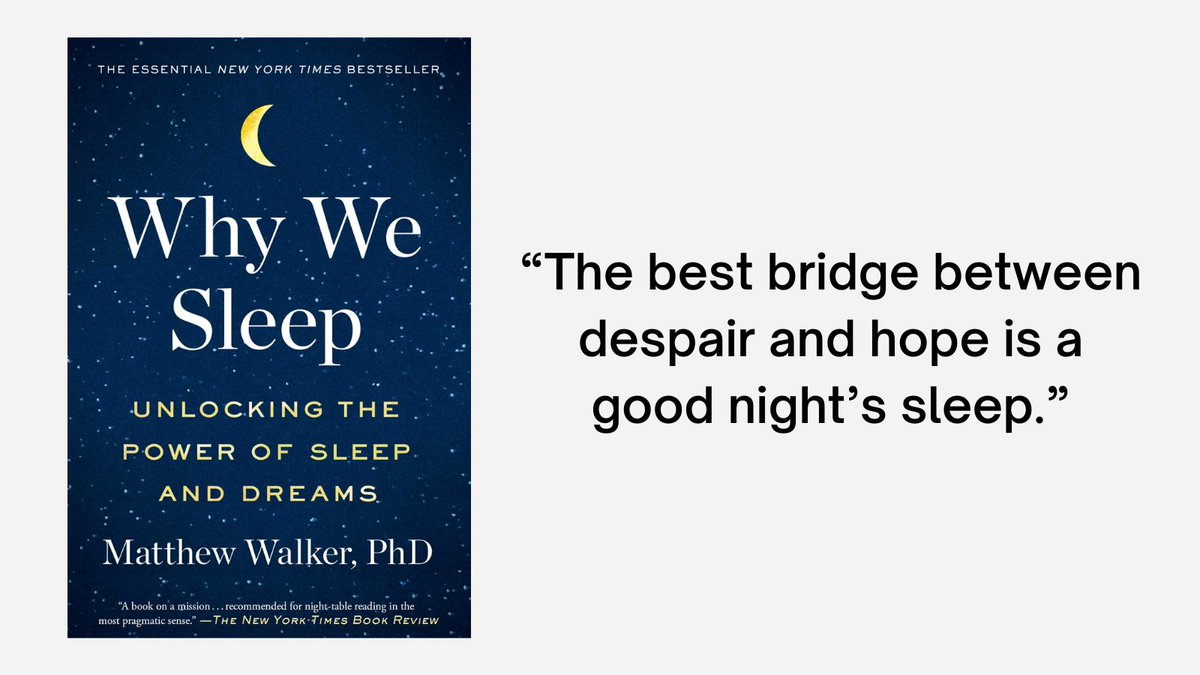
“Why We Sleep” by Matthew Walker
Optimizing your sleep is a fantastic place to start.
If you want to dive deeper, I highly recommend reading:
“Why We Sleep” by Matthew Walker
Loading suggestions...