

99% of English speakers don't understand their own language.
Today, I want to help you learn a little bit about it.
I'm going to share 15 terms with you that will make your writing 10x better and help you learn any foreign language 10x faster:
Today, I want to help you learn a little bit about it.
I'm going to share 15 terms with you that will make your writing 10x better and help you learn any foreign language 10x faster:
English speakers don't receive a proper education in our language.
Non-native speakers study English to allow them to work and travel the world.
We don't need this, so we ignore it.
However, knowing the structure of language unlocks countless benefits.
Non-native speakers study English to allow them to work and travel the world.
We don't need this, so we ignore it.
However, knowing the structure of language unlocks countless benefits.
Let's start with some tenses:
1. Present Simple
Subject + verb
"I am tall."
"He likes football."
"She walks her dog every day."
Used to describe habits and routines.
1. Present Simple
Subject + verb
"I am tall."
"He likes football."
"She walks her dog every day."
Used to describe habits and routines.
2. Present Continuous
Subject + verb 'be' (am/are/is) + verb + ing
"I am going to the shop."
"He is watching TV."
"She is helping her father."
Used to show an action in progress in the present.
Subject + verb 'be' (am/are/is) + verb + ing
"I am going to the shop."
"He is watching TV."
"She is helping her father."
Used to show an action in progress in the present.
3. Past Simple
Subject + verb (in simple past form)
"I woke up at 7am."
"I ate breakfast an hour ago."
"I helped my friend move yesterday."
Used to show 1 action at 1 specific time in the past.
Subject + verb (in simple past form)
"I woke up at 7am."
"I ate breakfast an hour ago."
"I helped my friend move yesterday."
Used to show 1 action at 1 specific time in the past.
4. Present Perfect
Subject + have/has + past participle
"I have travelled the world."
"I have asked him already."
"I have tried several times."
Used in a few ways:
1. We don't know the time in the past
2. It's not important
3. The action happened multiple times in the past
Subject + have/has + past participle
"I have travelled the world."
"I have asked him already."
"I have tried several times."
Used in a few ways:
1. We don't know the time in the past
2. It's not important
3. The action happened multiple times in the past
5. Past Continuous
Subject + verb 'be' (was/were) + verb + ing
"I was walking my dog."
"He was talking to his boss."
"She was riding her bike in the park."
Used to show an action in progress at a point in the past.
Subject + verb 'be' (was/were) + verb + ing
"I was walking my dog."
"He was talking to his boss."
"She was riding her bike in the park."
Used to show an action in progress at a point in the past.
6. Past Perfect
Subject + had + past participle
"I had already tried the fish before he offered."
"She had been to the post office before she arrived."
Used to show how one action happened before another in the past.
Subject + had + past participle
"I had already tried the fish before he offered."
"She had been to the post office before she arrived."
Used to show how one action happened before another in the past.
7. Future Simple
Subject + will + verb (infinitive)
"I will go to the shop."
"I will be 30 in 2 years time."
Used to show future decisions and facts.
We also use 'going to' in English to show intention.
"I am going to run a marathon next year."
Subject + will + verb (infinitive)
"I will go to the shop."
"I will be 30 in 2 years time."
Used to show future decisions and facts.
We also use 'going to' in English to show intention.
"I am going to run a marathon next year."
8. Future Continuous
Subject + will be + verb + ing
"He will be applying for university in 6 months."
Same as our other continuous tenses.
An action in progress in the future.
Subject + will be + verb + ing
"He will be applying for university in 6 months."
Same as our other continuous tenses.
An action in progress in the future.
9. Future Perfect
Subject + will have + past participle
"I will have finished this work by 6pm."
Used to show how an action will have been completed by a certain point in the future.
Subject + will have + past participle
"I will have finished this work by 6pm."
Used to show how an action will have been completed by a certain point in the future.
There are more and they vary in different languages, but those are the important tenses.
Let's look at some other grammatical terms that you will recognise:
Let's look at some other grammatical terms that you will recognise:
10. Subjects and Objects
I was using the word 'subject' above.
All this means is the person or thing doing an action.
I
You (singular)
He
She
It
We
You (plural)
They
I was using the word 'subject' above.
All this means is the person or thing doing an action.
I
You (singular)
He
She
It
We
You (plural)
They
An object is the person or thing that receives an action.
Why don't we say "He likes she" in English?
Because 'She' is a subject pronoun.
The object pronoun is 'Her'.
Me
You (singular)
Him
Her
It
Us
You (plural)
Them
Why don't we say "He likes she" in English?
Because 'She' is a subject pronoun.
The object pronoun is 'Her'.
Me
You (singular)
Him
Her
It
Us
You (plural)
Them
11. Articles
A
An
The
'A/an' are called indefinite articles. They refer to a new object in our sentence or an unspecified object.
'The' is the definite article. You know exactly which thing you're talking about.
A
An
The
'A/an' are called indefinite articles. They refer to a new object in our sentence or an unspecified object.
'The' is the definite article. You know exactly which thing you're talking about.
12. Prepositions
On
In
At
Near
There are dozens more of these.
Used to describe place, movement and time.
On
In
At
Near
There are dozens more of these.
Used to describe place, movement and time.
13. Modal Verbs
These change the tone of our sentence.
Form: Subject + modal verb + verb
An example:
I can ask him - possible
I should ask him - advice/recommend
I must ask him - certainty
These change the tone of our sentence.
Form: Subject + modal verb + verb
An example:
I can ask him - possible
I should ask him - advice/recommend
I must ask him - certainty
14. Quantifiers
Several
Enough
Some
Any
No
I have several books
I don't have enough time
I have some chocolate
I don't have any chocolate
These go before the noun to indicate the quantity of it.
Several
Enough
Some
Any
No
I have several books
I don't have enough time
I have some chocolate
I don't have any chocolate
These go before the noun to indicate the quantity of it.
15. Phrasal Verbs
These are VERY common in English. It throws foreign speakers off massively.
I actually used one in the sentence above ☝🏼
These are VERY common in English. It throws foreign speakers off massively.
I actually used one in the sentence above ☝🏼
'to throw off' - to confuse
These are formed with verb + preposition
They are confusing because the preposition changes the meaning of the sentence.
These are formed with verb + preposition
They are confusing because the preposition changes the meaning of the sentence.
Another example:
Take the verb 'to carry'
"I am carrying 2 boxes."
But what happens when we add 'on'?
"I can't carry on."
It changes its meaning to 'continue'.
Here are some more examples where maybe you can spot the difference:
Take the verb 'to carry'
"I am carrying 2 boxes."
But what happens when we add 'on'?
"I can't carry on."
It changes its meaning to 'continue'.
Here are some more examples where maybe you can spot the difference:
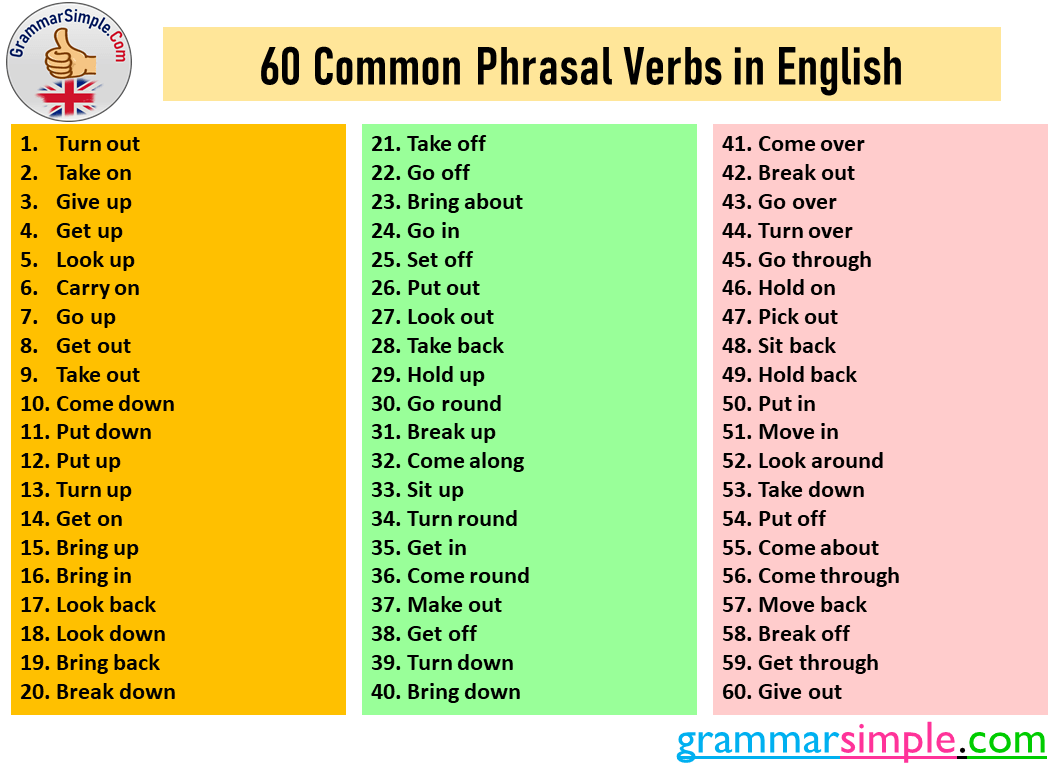
This guide just scratches the surface of language learning.
The iceberg goes far underneath the water.
However, if we don't understand our own language, how can we ever hope to understand others?
The iceberg goes far underneath the water.
However, if we don't understand our own language, how can we ever hope to understand others?
Learning about our language breaks down the intimidating barrier of other ones.
Once you learn these terms in English, you can take the concepts and learn them in any other language.
It becomes a simple matching game.
Once you learn these terms in English, you can take the concepts and learn them in any other language.
It becomes a simple matching game.
I hope this thread enlightened you in some way.
Thanks so much for reading.
If you want to see more content like this, follow me @TheWritersGift
If you want to help the thread along, RT below
Thanks so much for reading.
If you want to see more content like this, follow me @TheWritersGift
If you want to help the thread along, RT below
Struggling to write content that gets engagement? Not converting your readers into followers?
I've written a FREE 10-step guide to help you solve this exact problem.
Grab it here: thewritersgift.gumroad.com
I've written a FREE 10-step guide to help you solve this exact problem.
Grab it here: thewritersgift.gumroad.com
Loading suggestions...