
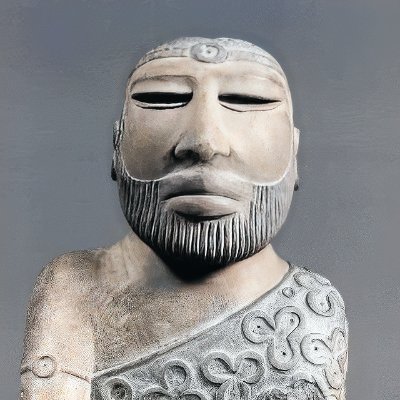
Long #Thread in my pending task on Indian Astronomy.
Src: 'Prehistoric Lunar Astronomy' by S. B. ROY
1/
Src: 'Prehistoric Lunar Astronomy' by S. B. ROY
1/
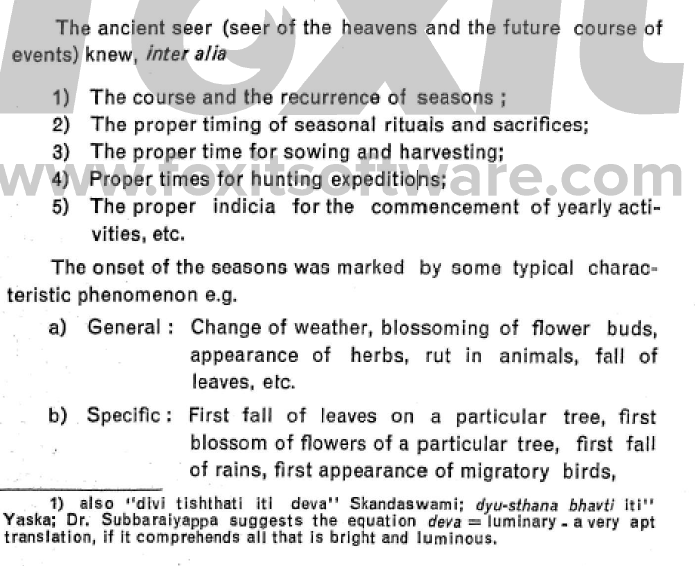
To the ancients, the heaven was the land of gods and mystery. The sky - the Dyaus Of the RV was itself living. The stars were the abode of the gods. Shining stars were the luminous gods.
2/
2/
The Ancient Wise Man 'Magi', 'Rishi', 'Muni' were the time keeper and 'astronomers'. They have the knowledge of Nakshatra and the bright stars (house of Gods 'Devagriha'). They were foreteller of the seasons for common people 'agrarian'
3/
3/
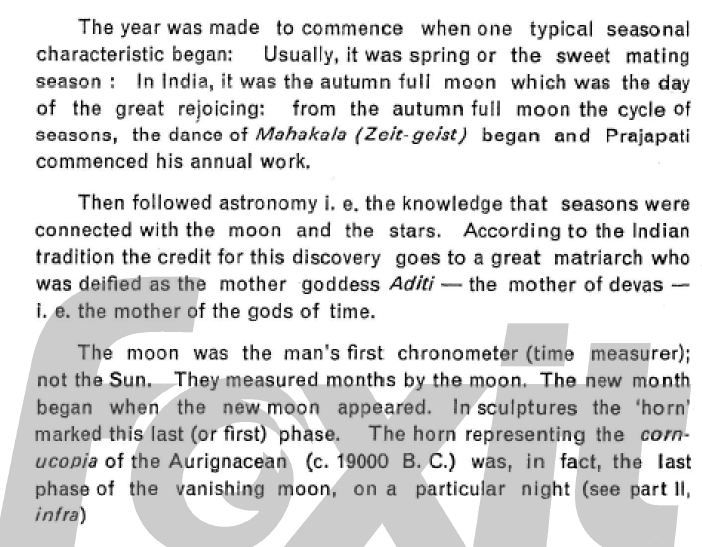
Originally, moon was the masakrit मासकृत (maker of the month) a chronometer.
And woman may have been the first astrologer for she knew her natural phenomenon of mensuration मासिकधर्म coinciding with moon's cycle period.
4/
And woman may have been the first astrologer for she knew her natural phenomenon of mensuration मासिकधर्म coinciding with moon's cycle period.
4/
Woman may have noticed that seasons returned after about her 12 periods.
In Sanskrit 'Ritu' signifies both season as well as menstrual periods. This may not be mere coincidence.
5/
In Sanskrit 'Ritu' signifies both season as well as menstrual periods. This may not be mere coincidence.
5/
The earliest evidence of woman knowing moon phase is 'Venus of Laussel' - where a woman is seen as holding a horn with '13' knotches on it. It dates 25000 years back
In India, credit of discovery of 'devas' goes to Godess 'Aditi'
6/
In India, credit of discovery of 'devas' goes to Godess 'Aditi'
6/
Later astrologer moved on to Sun movement to align with seasons. Several Stone formation and 'Dolmen' were found with alignment to Sun's particular position. North Facing Burials may have also been designed during this period
7/
7/
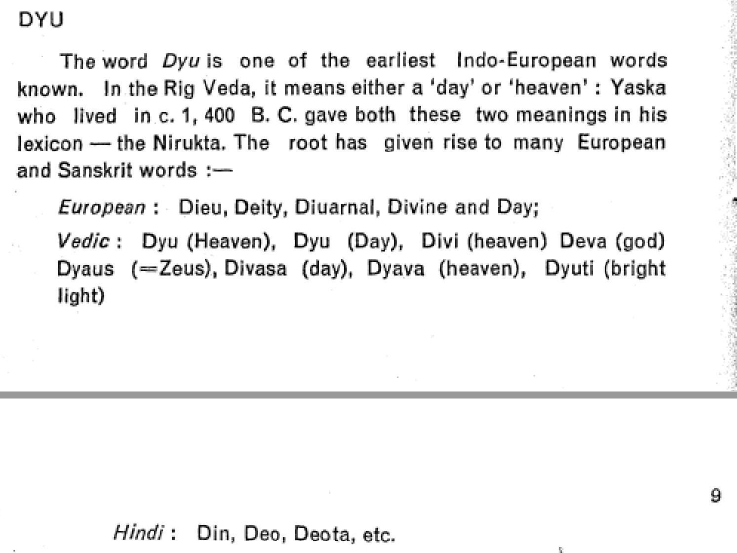
The word Sounding as Deu and Ritu has interesting and somewhat similar interpretation across various languages
8/
8/
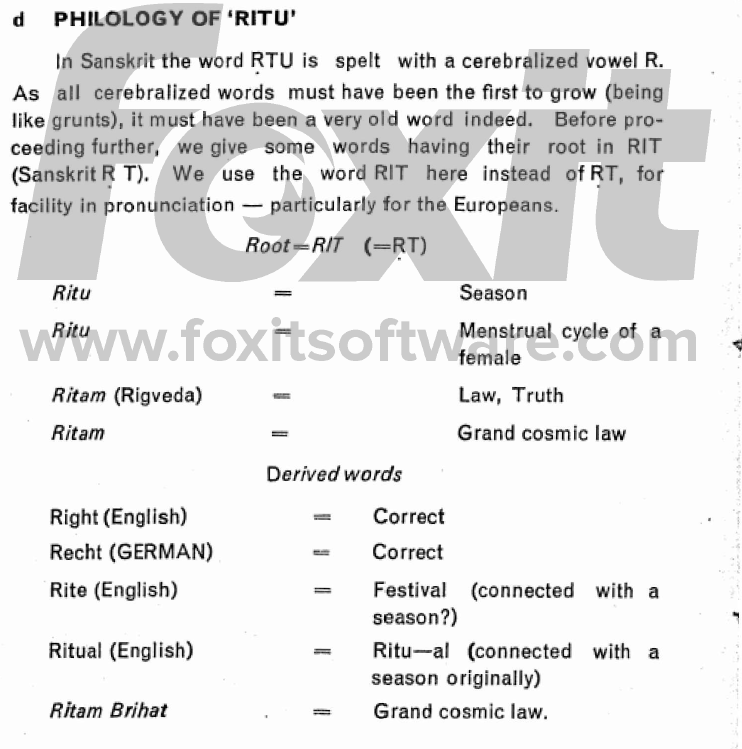
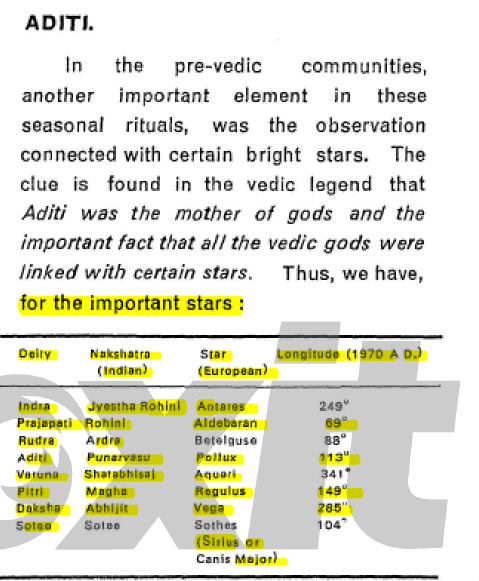
In pre-vedic period, people knew and connected deities with certain bright stars.
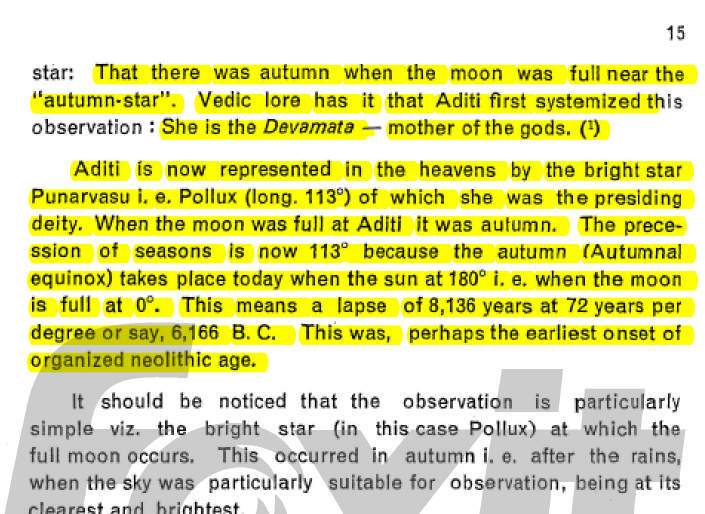
Someone noticed 20-10k years ago, that onset of a particular season occurred when the moon was full near a particular bright star.
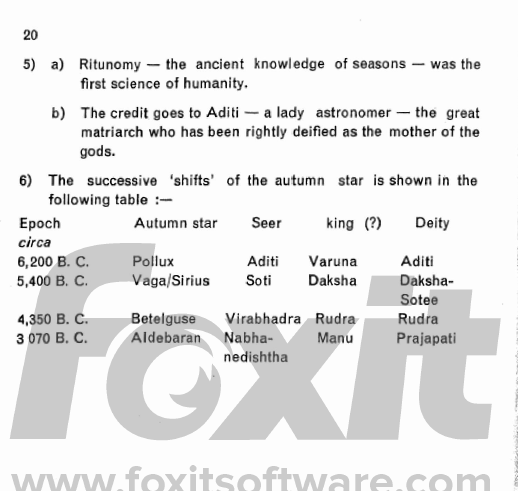
Aditi 'Devamata' is now represented as Punarvasu i.e. Pollux.
9/
Someone noticed 20-10k years ago, that onset of a particular season occurred when the moon was full near a particular bright star.
Aditi 'Devamata' is now represented as Punarvasu i.e. Pollux.
9/
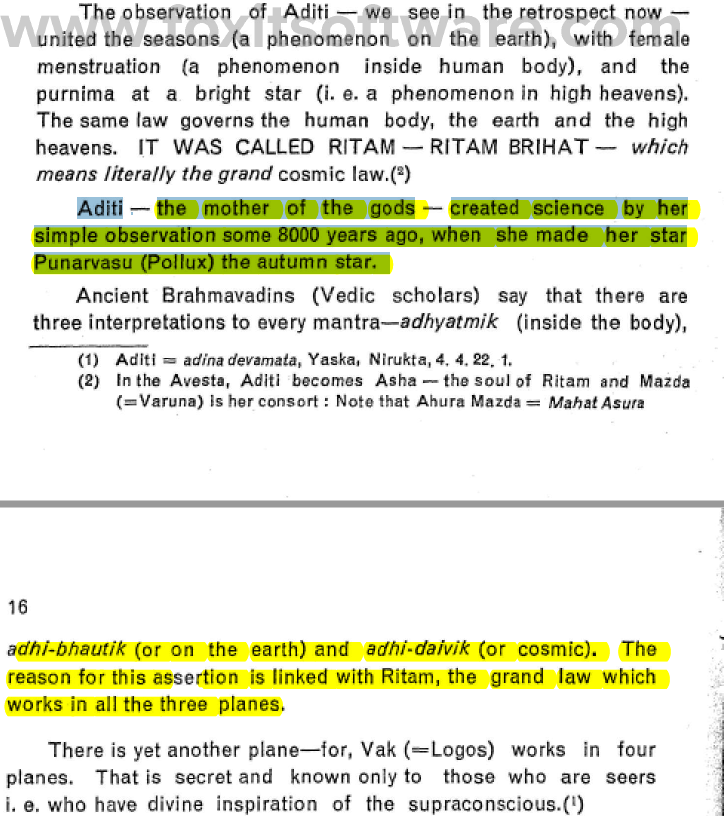
Aditi - the mother of the gods created science by her
simple observation some 8000 years ago. when she made her star Punarvasu (Pollux) the autumn star.
10/
simple observation some 8000 years ago. when she made her star Punarvasu (Pollux) the autumn star.
10/
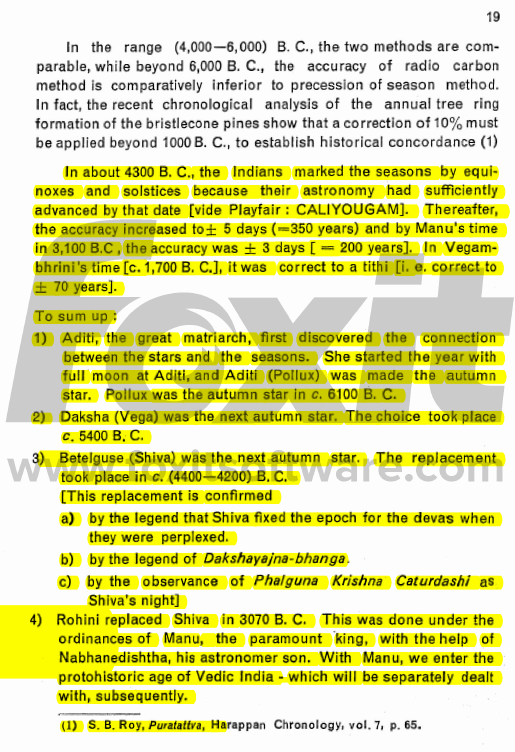
After 700 years, seasons advanced due to precession and equinox took place when the moon was full at Vega (Daksha)
Autumnal equinox took place at Sotte Purnima ) while spring equinox at Daksha Purnlma
Daksha (Vega) was called the son of Aditi and Sotee was Daksha's daughter
11/
Autumnal equinox took place at Sotte Purnima ) while spring equinox at Daksha Purnlma
Daksha (Vega) was called the son of Aditi and Sotee was Daksha's daughter
11/

Around 4400 bce the season advanced by 16 degree and correlation with Vega 'A new Autumn Star' was quintessential. And 'Rudra' (Shiva) an autumn star took place in c.4370 bce
12/
12/
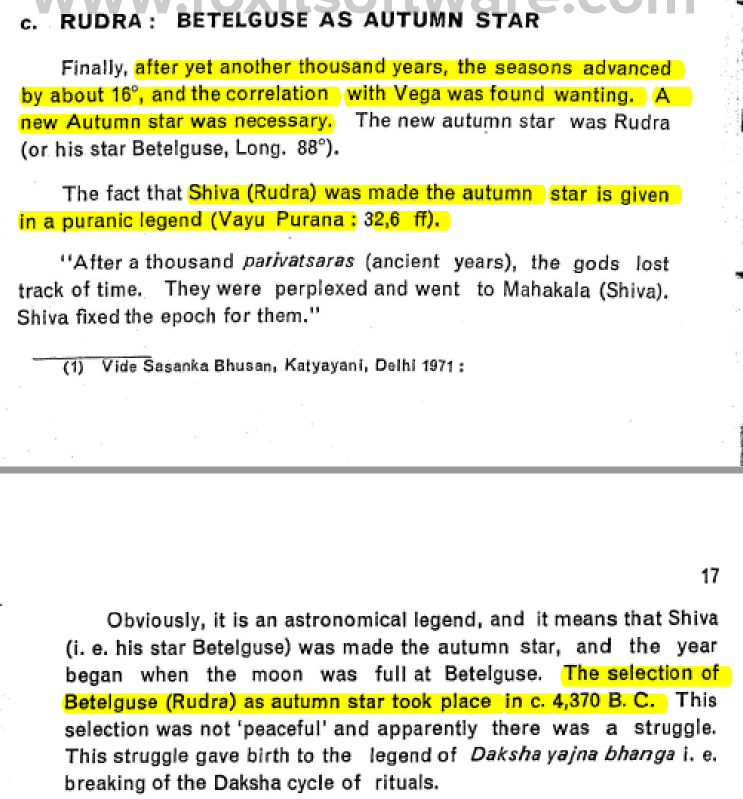
Rudra's establishment was very skirmish. Daksha was kiIIed, Sotee committed suic!de.
But obvious, all these hymes meant change in 'autumn stars' but starving indologists interpreted it to suit their objectives.
13/
But obvious, all these hymes meant change in 'autumn stars' but starving indologists interpreted it to suit their objectives.
13/
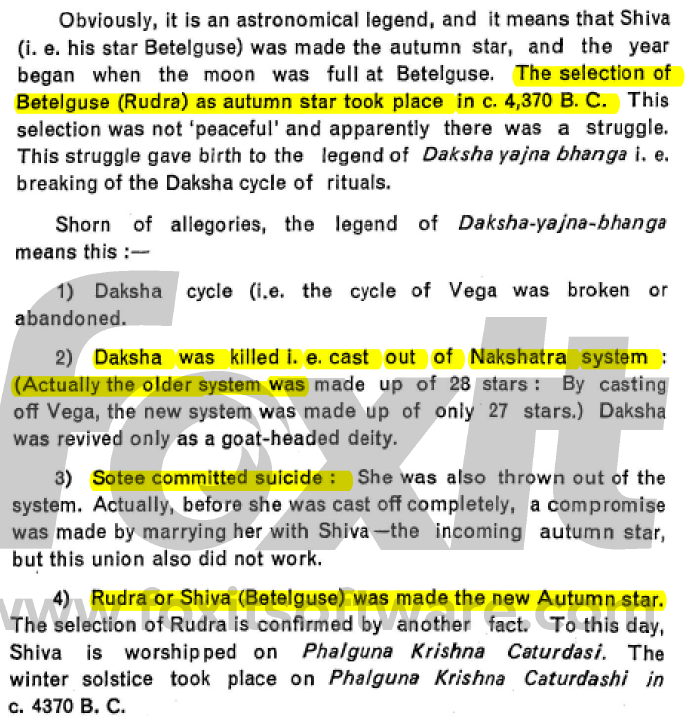
Rohini replaced Shiva in 3070 bce
14/n
14/n
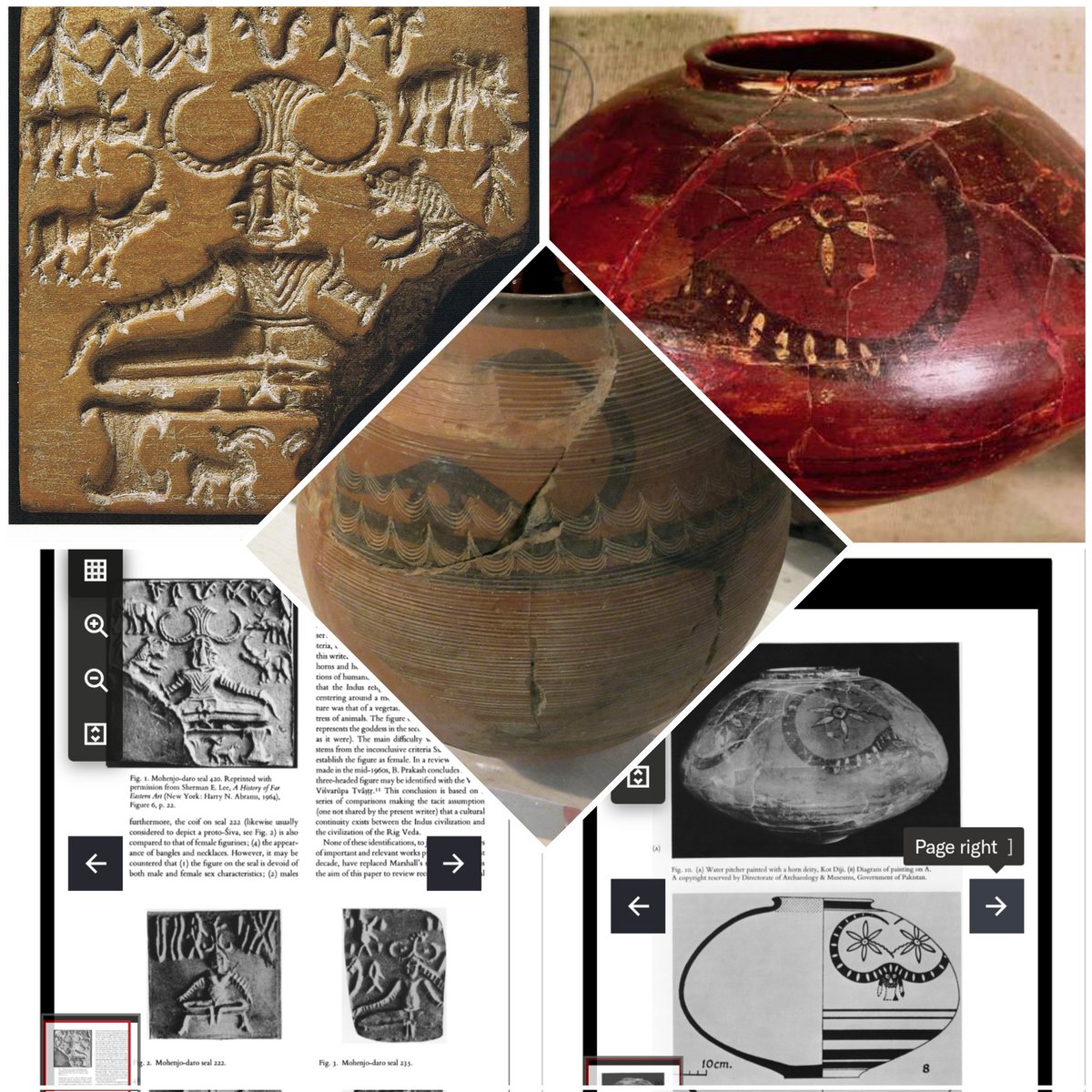
Horn depicted on Famous Pasupati seal and other potshred from #harappa have 27-28 knotches is probably Moon Alemena.
Moon in Shiv's hair is probably a later development in this direction
15/n
#metadata_info_tab_contents" target="_blank" rel="noopener" onclick="event.stopPropagation()">jstor.org
Moon in Shiv's hair is probably a later development in this direction
15/n
#metadata_info_tab_contents" target="_blank" rel="noopener" onclick="event.stopPropagation()">jstor.org
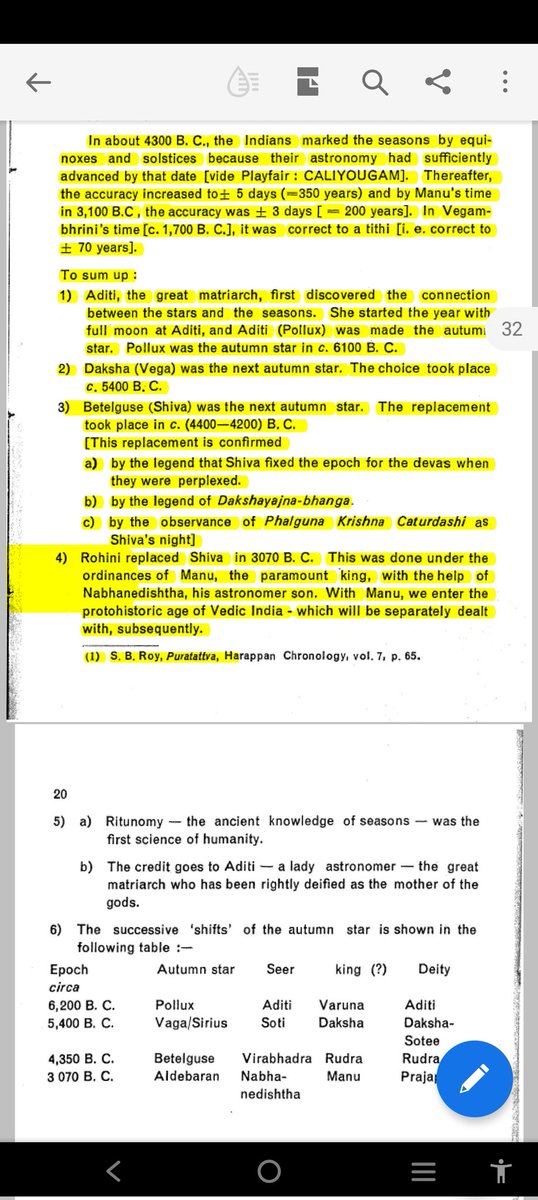
In about 4300 bce, Indians marked the seasons by equinoxes and solstices
By #kaliyuga 3100 bce, accuracy increased 10± 3 days (200 years)
By 1,700 bce, it was correct to a tithi i.e. correct to ± 70 years
16/n
By #kaliyuga 3100 bce, accuracy increased 10± 3 days (200 years)
By 1,700 bce, it was correct to a tithi i.e. correct to ± 70 years
16/n
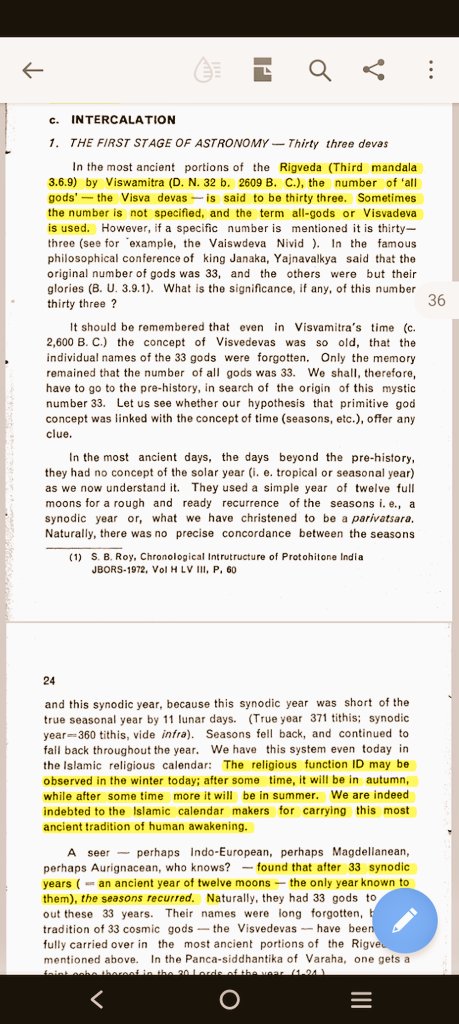
17/ The key problem for the ancient astronomer who measured time i. e. the month) by the moon and a year by twelve full moons was : how to synchronize the seasons with the moon ie. to synchronize the seasonal year with the lunar synodic year of twelve moon
18/ Devaganas देवगण gods— Visvedevas, Rudras, Adityas and Vasus were called Rituwik ऋतुविक. The order of Devaganas is not clear but they were kind of Gotra class गौत्र
19/
'I move with the Rudra, the Vasus, the Adityas and the Visvedevas' - RV 125.1
Charati kalah चरती कलह 'Motion Is The Essence Of Time'
Newton - 'Time Is That Which Flows Uniformly Past'
'I move with the Rudra, the Vasus, the Adityas and the Visvedevas' - RV 125.1
Charati kalah चरती कलह 'Motion Is The Essence Of Time'
Newton - 'Time Is That Which Flows Uniformly Past'
20/
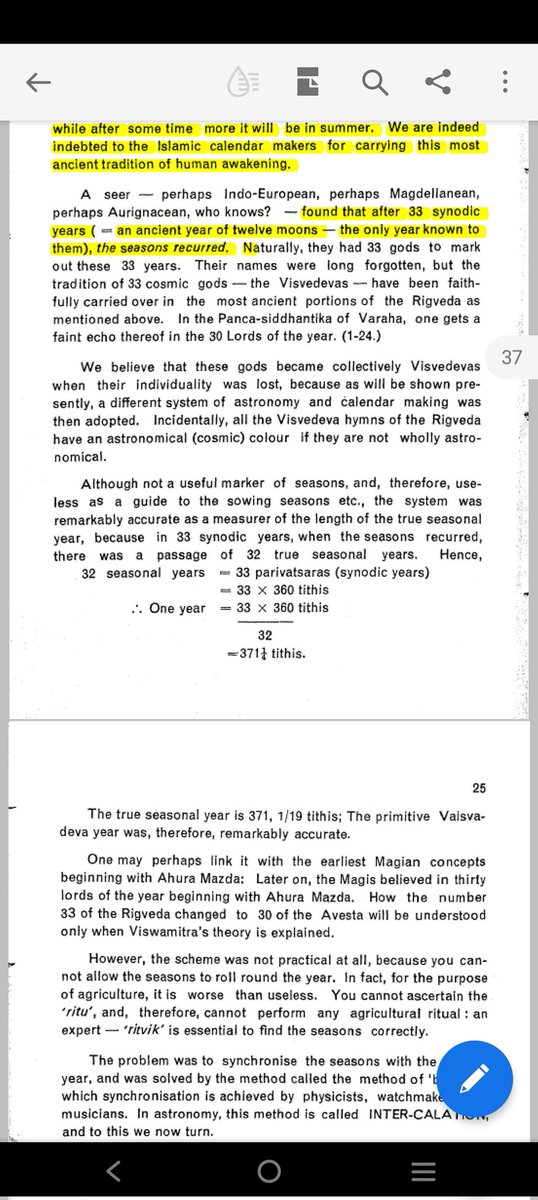
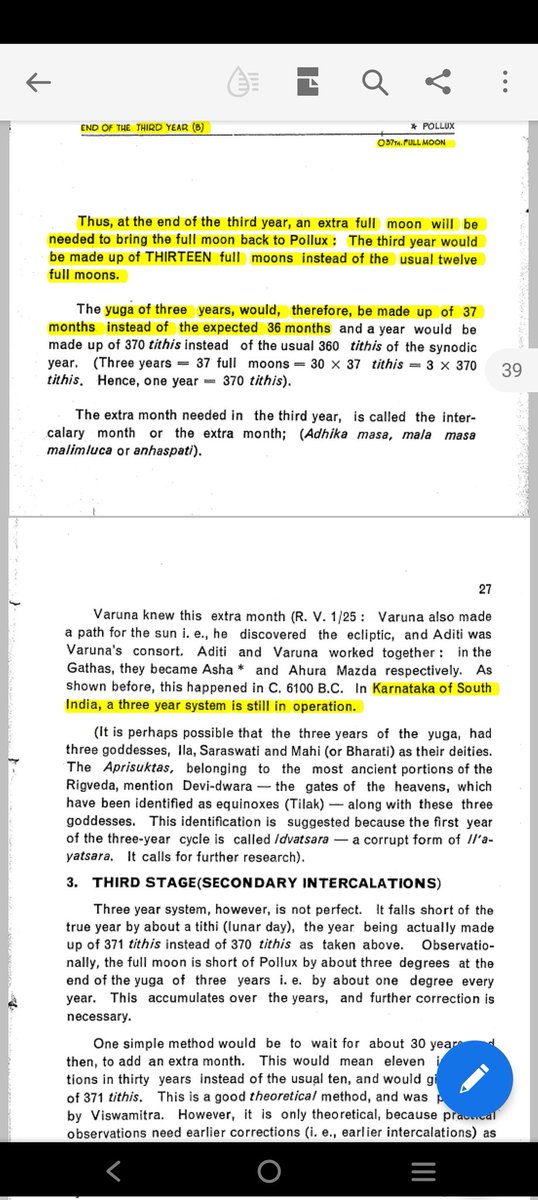
Long back, there was no Solar year. Instead there was a simple 12 full moon ie. A synodic year of 360 tithis. However, this fell short of 11 tithis from true year. Someone, realised that after '33' synodic years season recurred. Hence is the significance of 33 in hindutva
Long back, there was no Solar year. Instead there was a simple 12 full moon ie. A synodic year of 360 tithis. However, this fell short of 11 tithis from true year. Someone, realised that after '33' synodic years season recurred. Hence is the significance of 33 in hindutva
21/
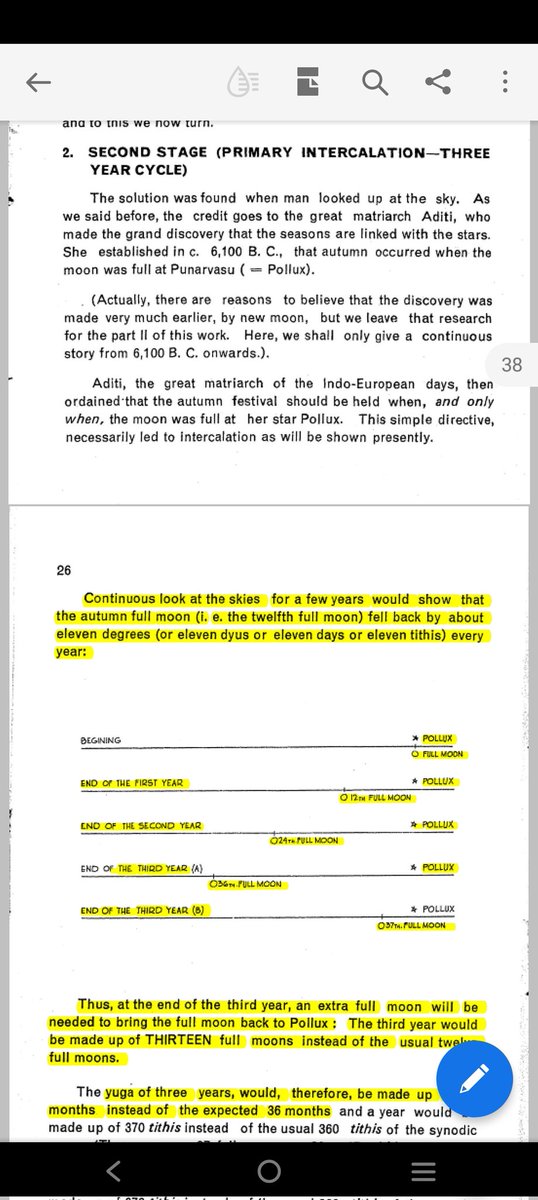
Aditi the grand astrologer, found that each year the moon fell back by 11 degrees. Hence a moon month was added at the end of 3rd year.
This way, a Yuga of 3 synodic years constituted 37 moon month. This made the identification of season easier.
Aditi the grand astrologer, found that each year the moon fell back by 11 degrees. Hence a moon month was added at the end of 3rd year.
This way, a Yuga of 3 synodic years constituted 37 moon month. This made the identification of season easier.
22/
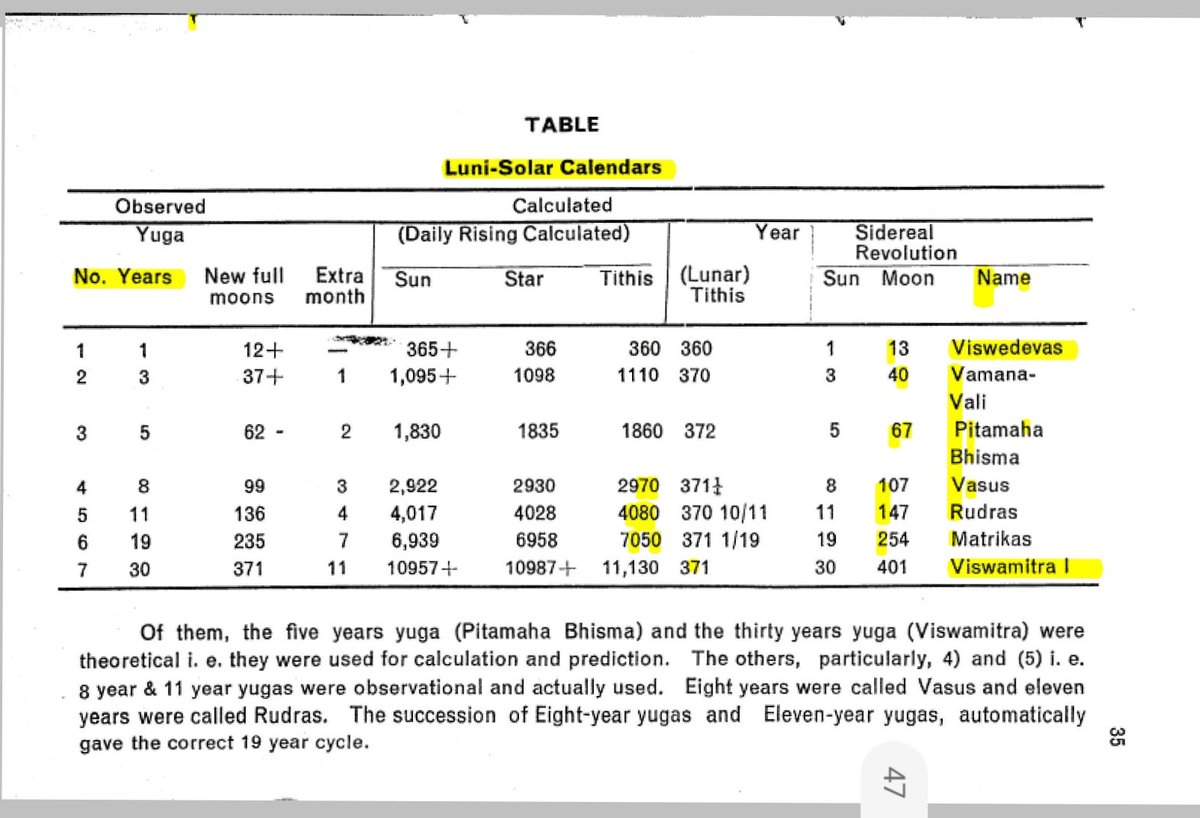
3 years cycle was imperfect as it fell short of 1 tithi.
An intercalation of 3 yugas in 8 years (Vasu Yuga) was an overcorrection
An intercalation of 4 yugas in 11 years (Raudra Yuga) was an undercorretion.
3 years cycle was imperfect as it fell short of 1 tithi.
An intercalation of 3 yugas in 8 years (Vasu Yuga) was an overcorrection
An intercalation of 4 yugas in 11 years (Raudra Yuga) was an undercorretion.
23/
A midway correction of 7 months (Later called seven Matrikas सप्तमात्रिका) years with accuracy of 300 years was achieved around #harappan mature phase
A midway correction of 7 months (Later called seven Matrikas सप्तमात्रिका) years with accuracy of 300 years was achieved around #harappan mature phase
24/
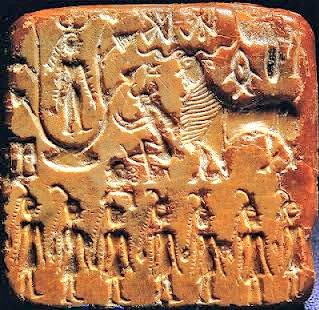
This #harappan seal may be depicting the addition of '7' months to 19 year Yuga
'Rudra' (kneeling down) and 'Vasu' as a sheep seeking permission from 'Aditi' the grand astrologer in U Shaped Urn to add 7 months?
This #harappan seal may be depicting the addition of '7' months to 19 year Yuga
'Rudra' (kneeling down) and 'Vasu' as a sheep seeking permission from 'Aditi' the grand astrologer in U Shaped Urn to add 7 months?
25/
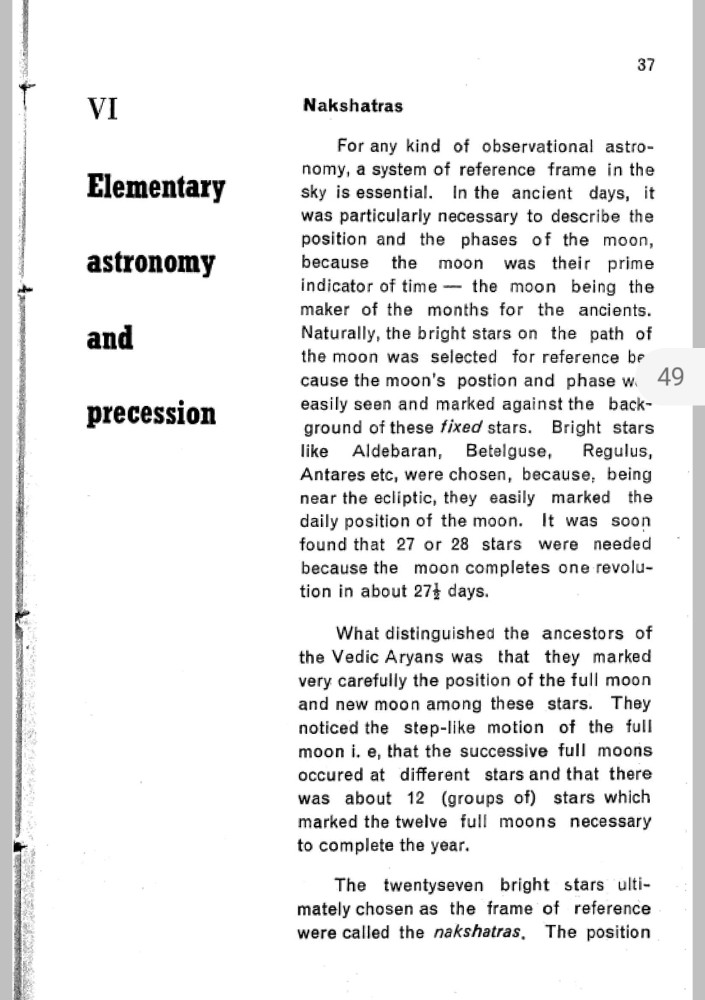
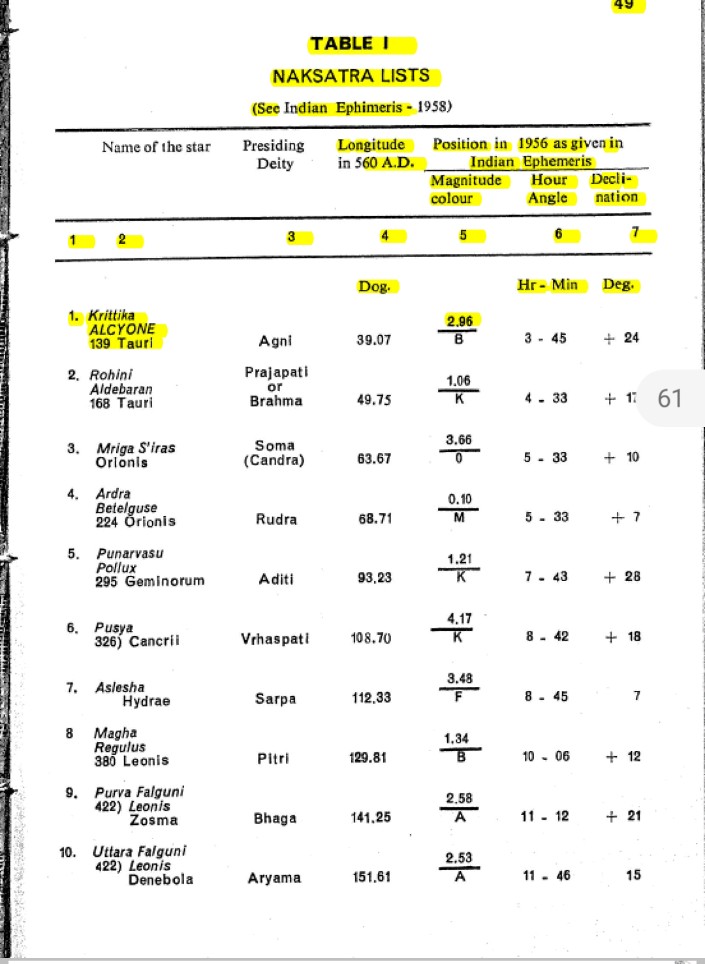
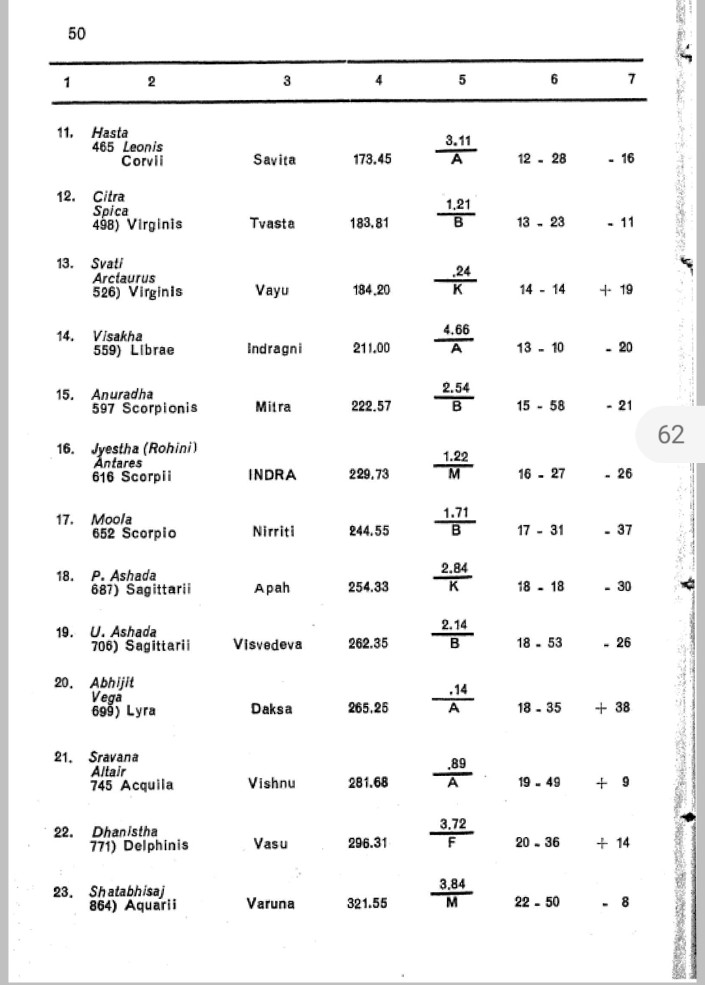
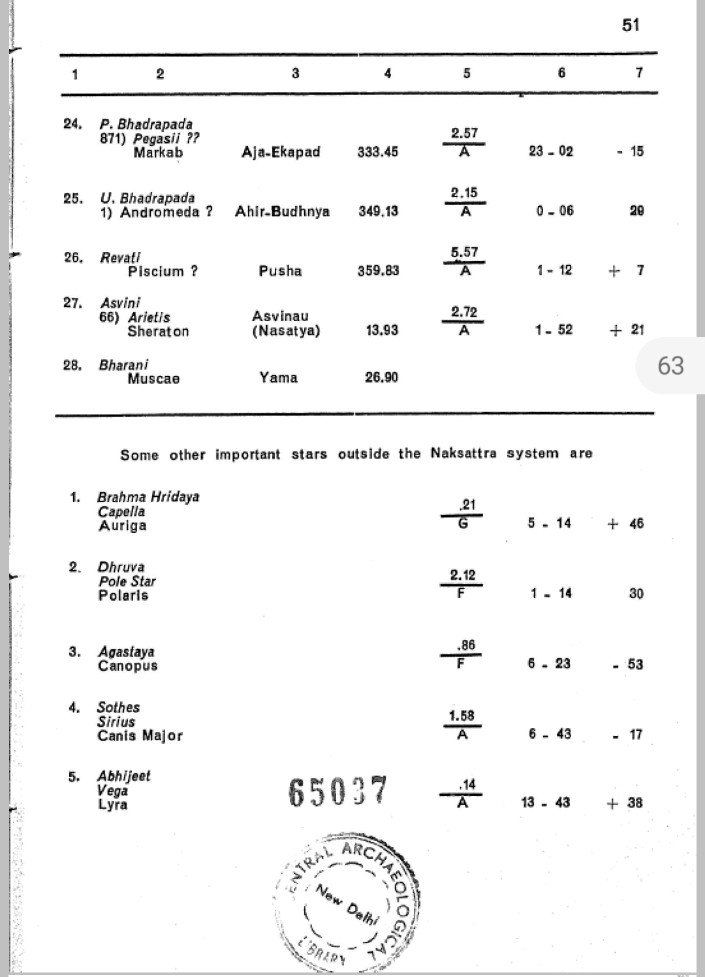
Since moon completed it's one revolution in 27½ days, 27-28 reference bright stars were needed. Hence 28 Nakshatraa were chosen. Later, 12 moon months were also marked in celestial sky.
Since moon completed it's one revolution in 27½ days, 27-28 reference bright stars were needed. Hence 28 Nakshatraa were chosen. Later, 12 moon months were also marked in celestial sky.
Loading suggestions...