
This painting is from 1833.
It's by Thomas Cole, an artist of extraordinary imaginative power.
But The Titan's Goblet isn't even his masterpiece...
It's by Thomas Cole, an artist of extraordinary imaginative power.
But The Titan's Goblet isn't even his masterpiece...

Thomas Cole was born in England but later moved to America and became a citizen.
There he was inspired by the sheer size and beauty of the American landscape.
In keeping with the Romantic Age of art, which focussed on drama and high emotion, he set to work painting it...
There he was inspired by the sheer size and beauty of the American landscape.
In keeping with the Romantic Age of art, which focussed on drama and high emotion, he set to work painting it...
Thomas Cole is regarded as the founder of Hudson River School, a group of American painters who sought to portray the continent's incredible wilderness.
Consider Cole's Distant View of the Niagara Falls (1830):
Consider Cole's Distant View of the Niagara Falls (1830):

But Cole didn't just stick to naturalistic landscapes.
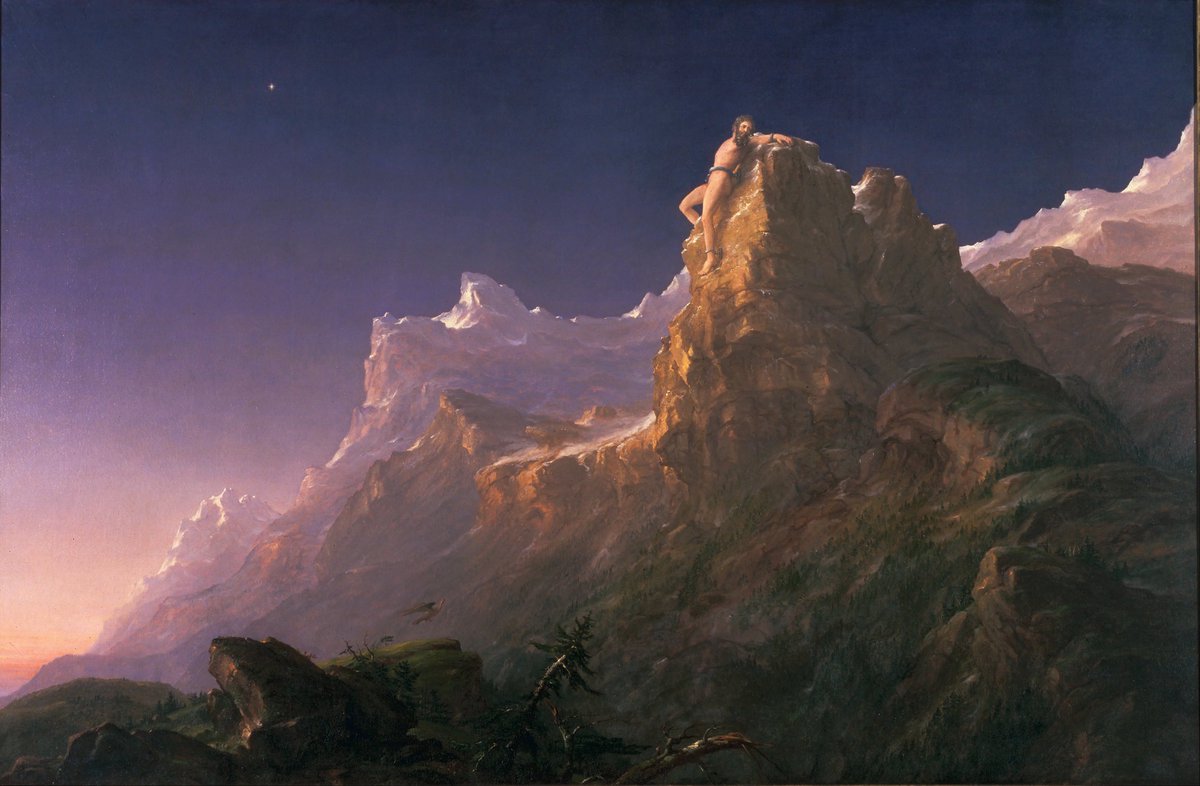
He also painted scenes from Greek mythology, inspired by Romantic writers like Percy Shelley, such as Prometheus Bound (1847):
He also painted scenes from Greek mythology, inspired by Romantic writers like Percy Shelley, such as Prometheus Bound (1847):
And he even painted a capriccio - a genre of landscape art popular in the 18th century which depicted imaginary architectural wonders.
The Architect's Dream (1840)
Notice his signature and a possible self-portrait on the pedestal:
The Architect's Dream (1840)
Notice his signature and a possible self-portrait on the pedestal:

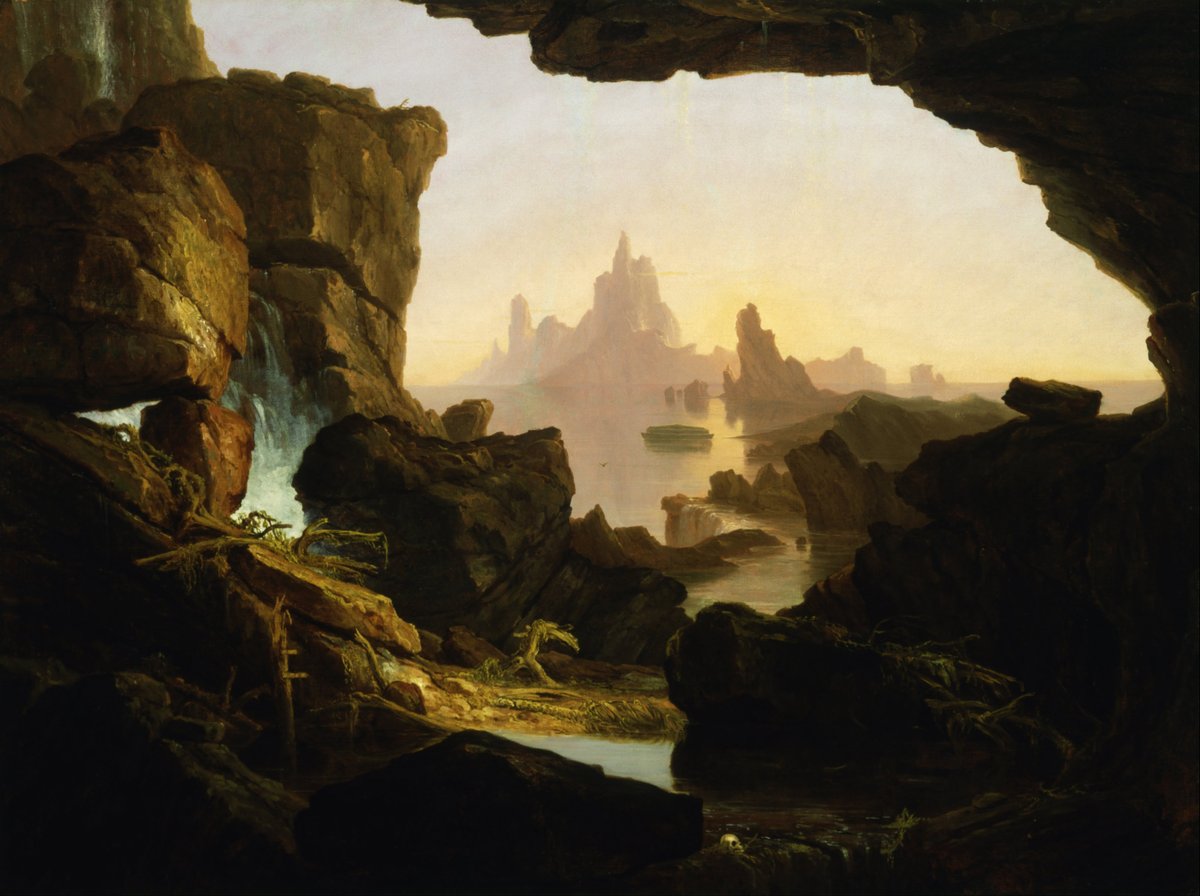
And scenes from Biblical history, such as The Subsiding of the Waters of the Deluge (1829).
However, in all his works, Cole retains a sharp focus on the gargantuan, beautiful natural landscapes by which he had been so inspired in the American wilderness.
However, in all his works, Cole retains a sharp focus on the gargantuan, beautiful natural landscapes by which he had been so inspired in the American wilderness.
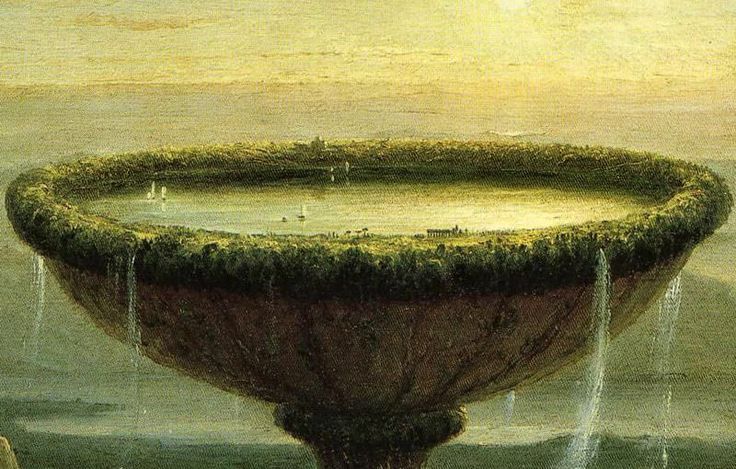
The Titan's Goblet is without doubt his most mysterious and enigmatic painting.
Here is a closeup. You can see temples along the goblet's rim and ships sailing across its waters.
A work of wonderful imaginative magnitude. Somehow terrifying, too...
Here is a closeup. You can see temples along the goblet's rim and ships sailing across its waters.
A work of wonderful imaginative magnitude. Somehow terrifying, too...
But none of these are Cole's masterpiece.
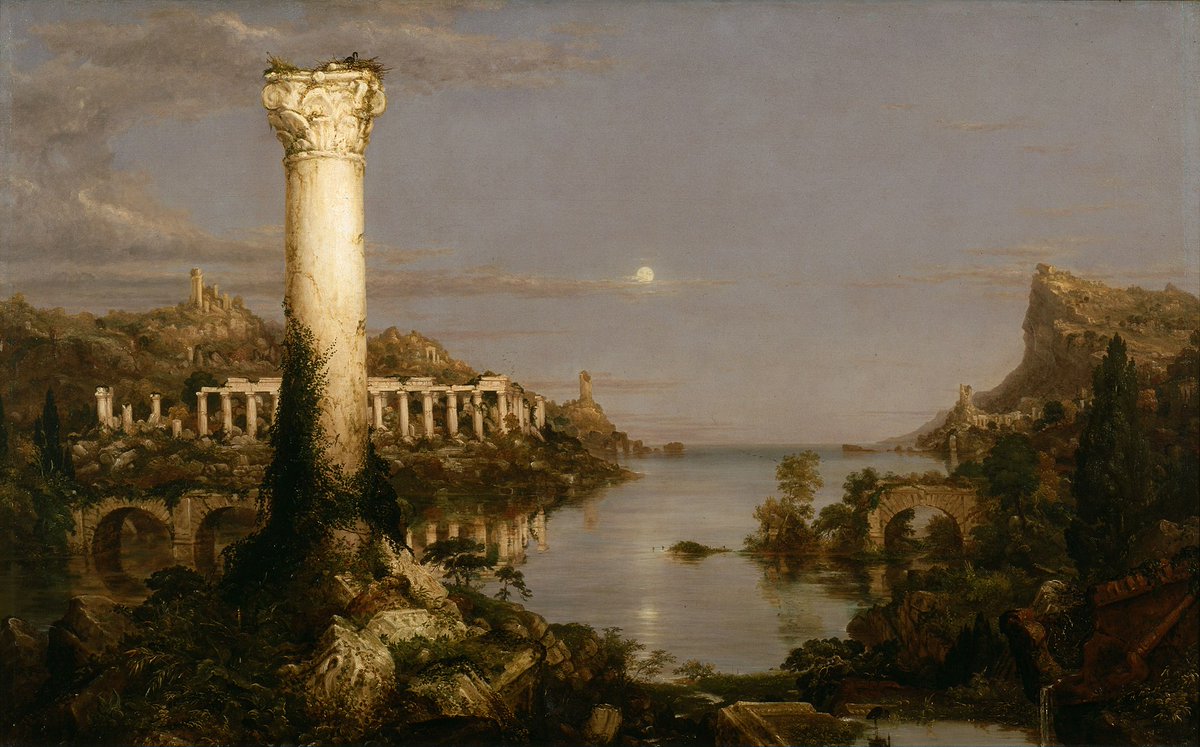
His "Course of Empire" series, painted between 1833 and 1836, is one of the great achievements of 19th century.
It depicts five stages in the rise and fall of human civilisation, starting with The Savage State:
His "Course of Empire" series, painted between 1833 and 1836, is one of the great achievements of 19th century.
It depicts five stages in the rise and fall of human civilisation, starting with The Savage State:
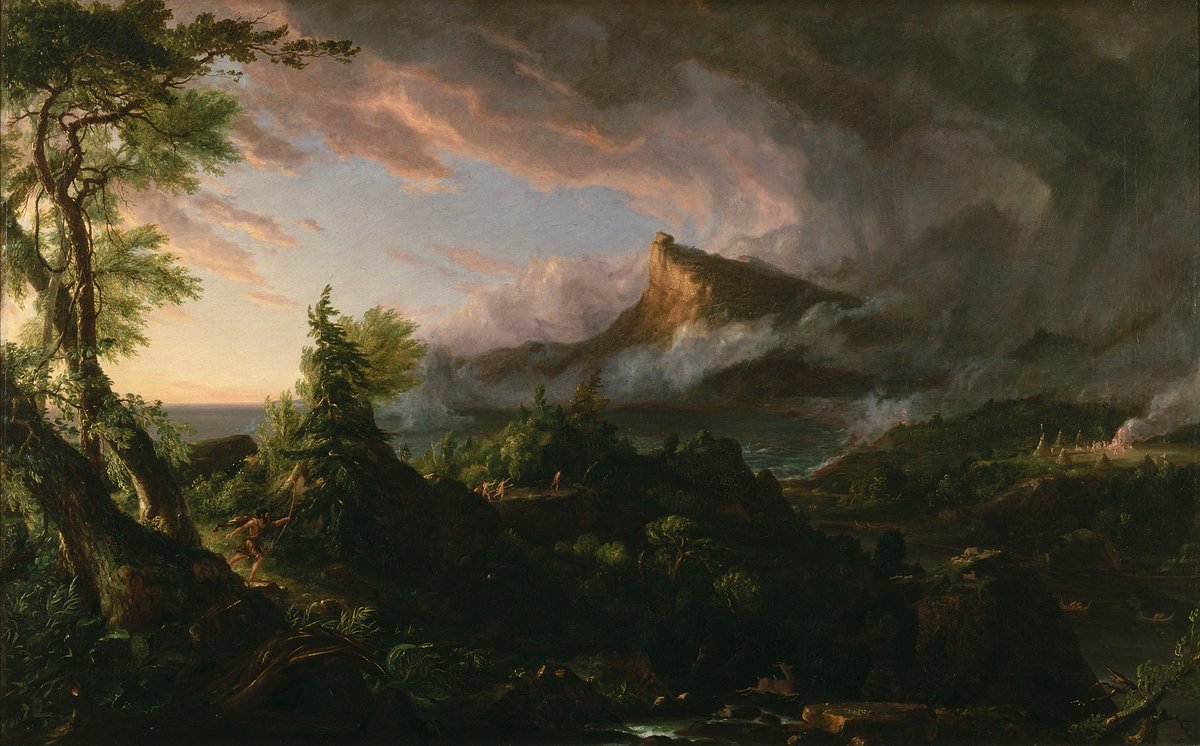
Through to the Arcadian or Pastoral State:
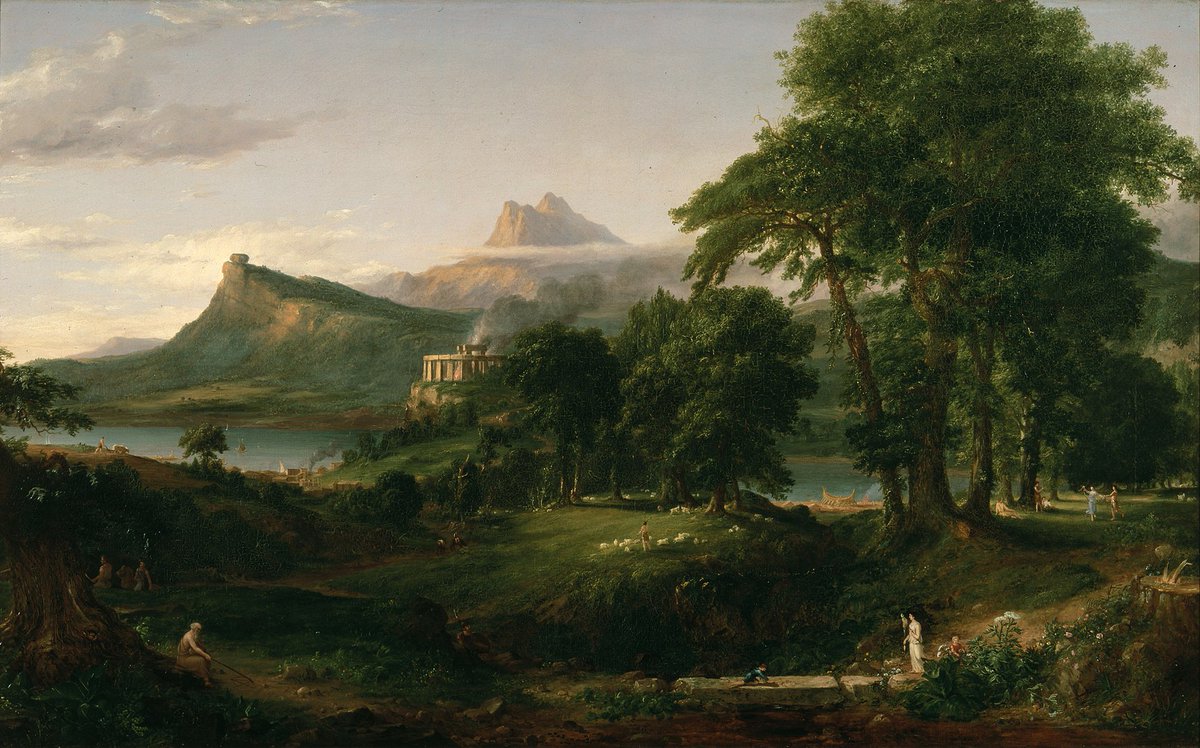
Then the Consummation of Empire:
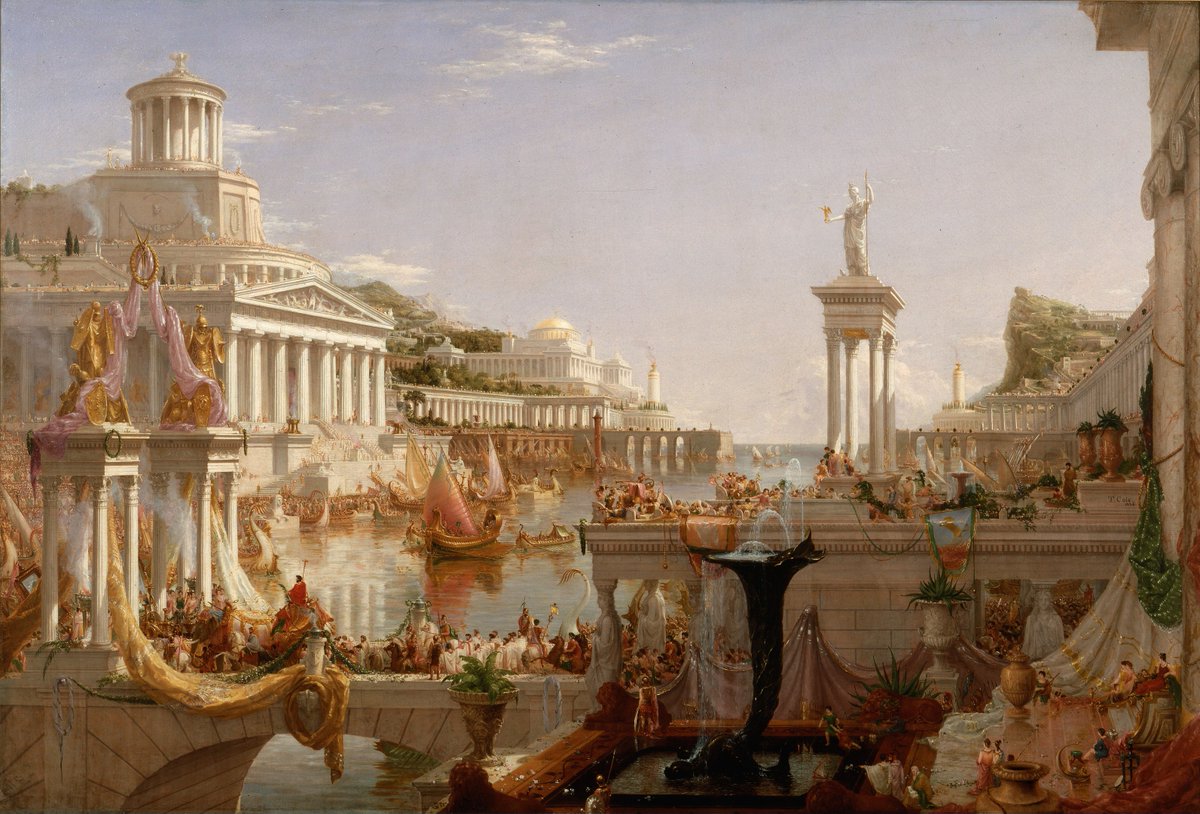
After that comes Destruction:
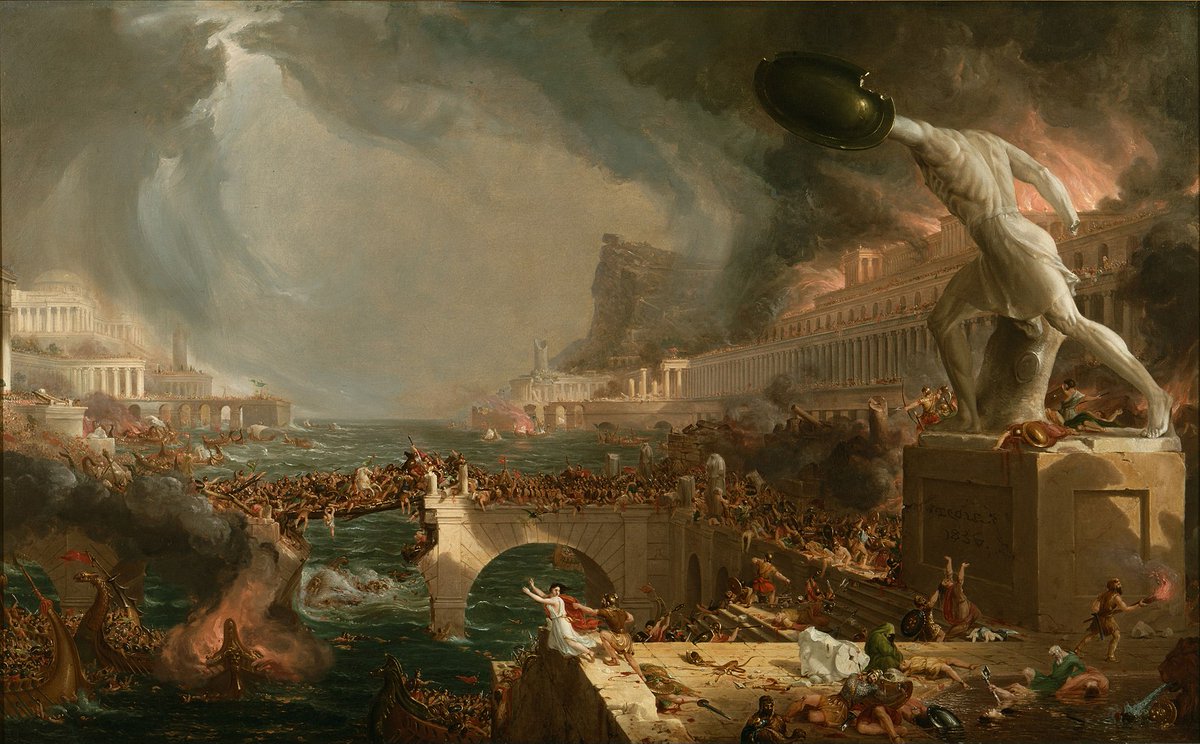
And finally... Desolation.
No words are needed to describe the thought-provoking, terrifying, and evocative power of this series.
No words are needed to describe the thought-provoking, terrifying, and evocative power of this series.
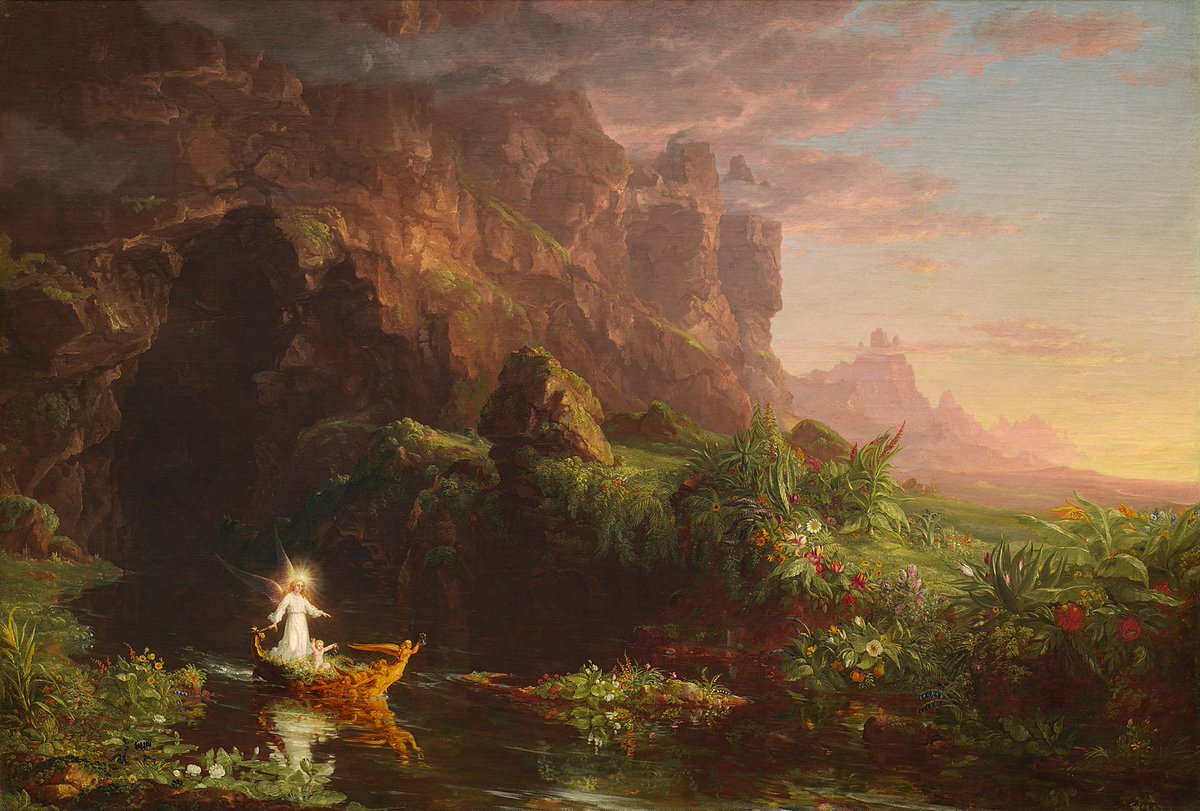
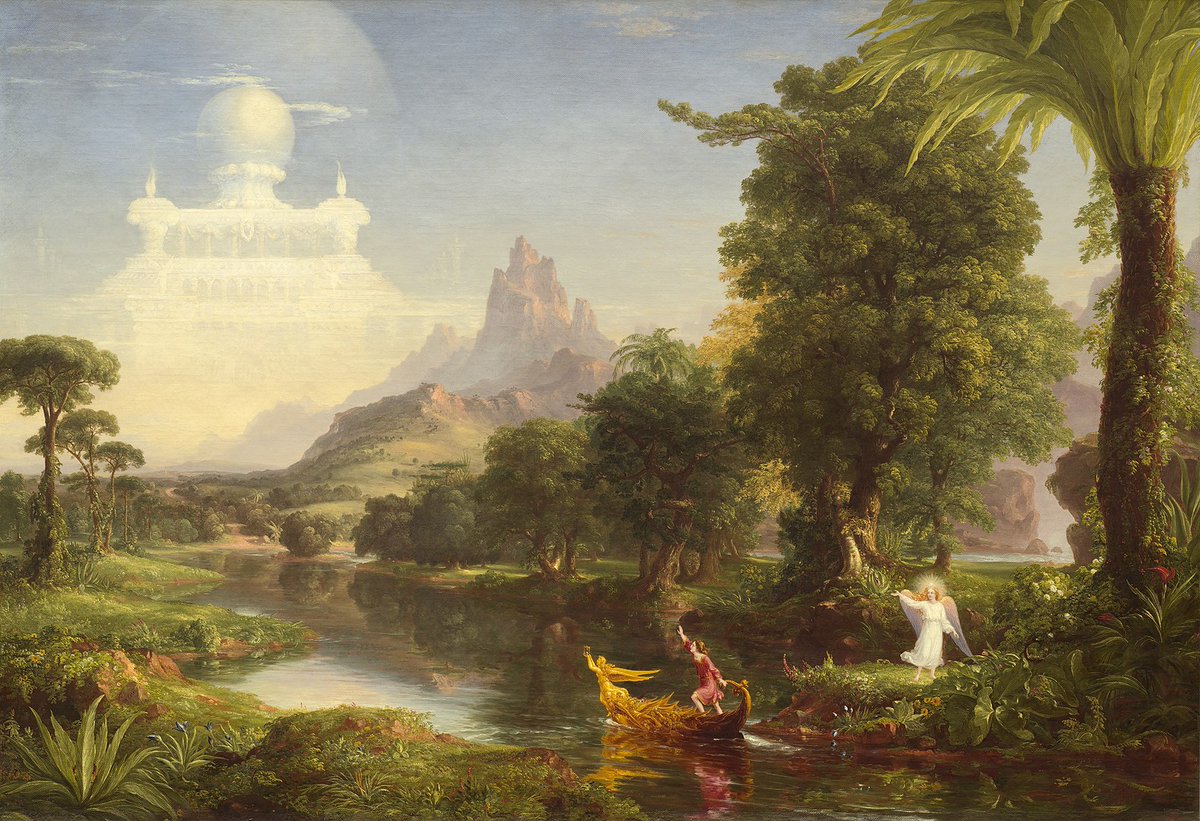
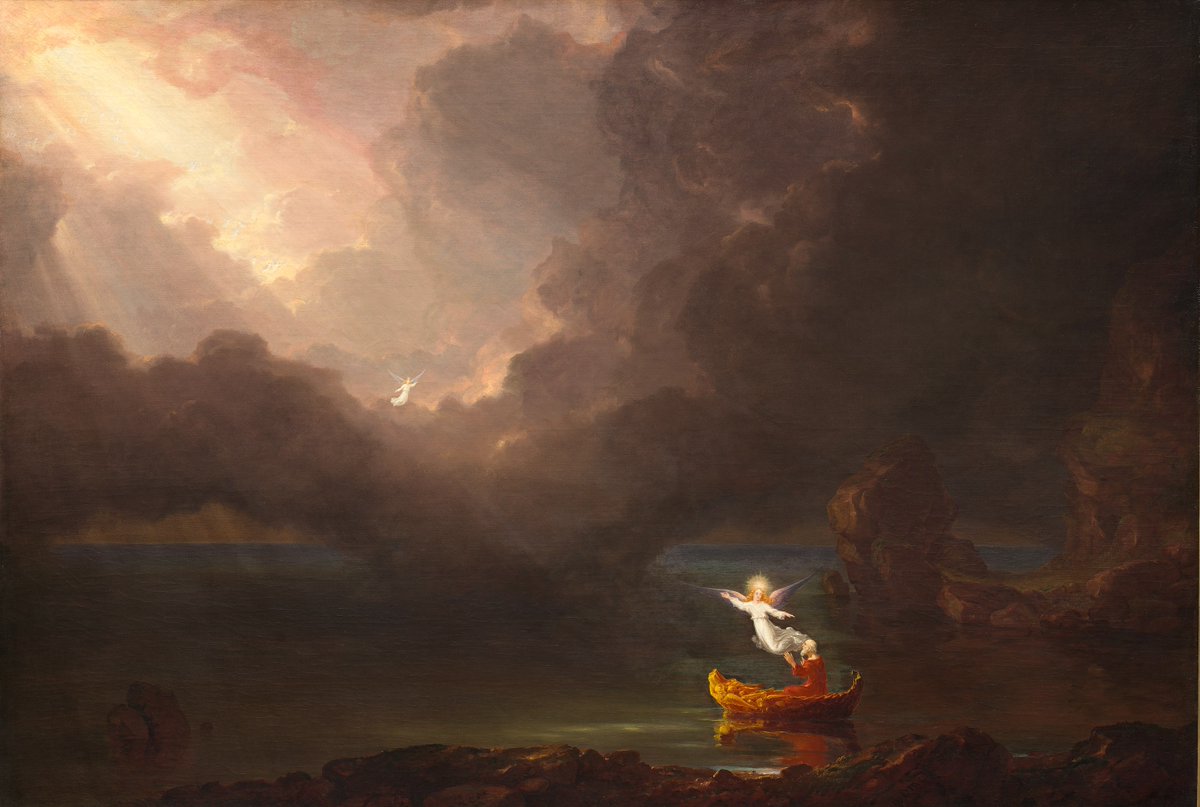
And Thomas Cole painted another series called the "Voyage of Life" in 1846. It depicts four stages in the life of a human.
This series is rather more allegorical than the Course of Empire, and philosophically striking.
Starting with Childhood:
This series is rather more allegorical than the Course of Empire, and philosophically striking.
Starting with Childhood:
Then Youth:
Manhood:

And, of course, Old Age:
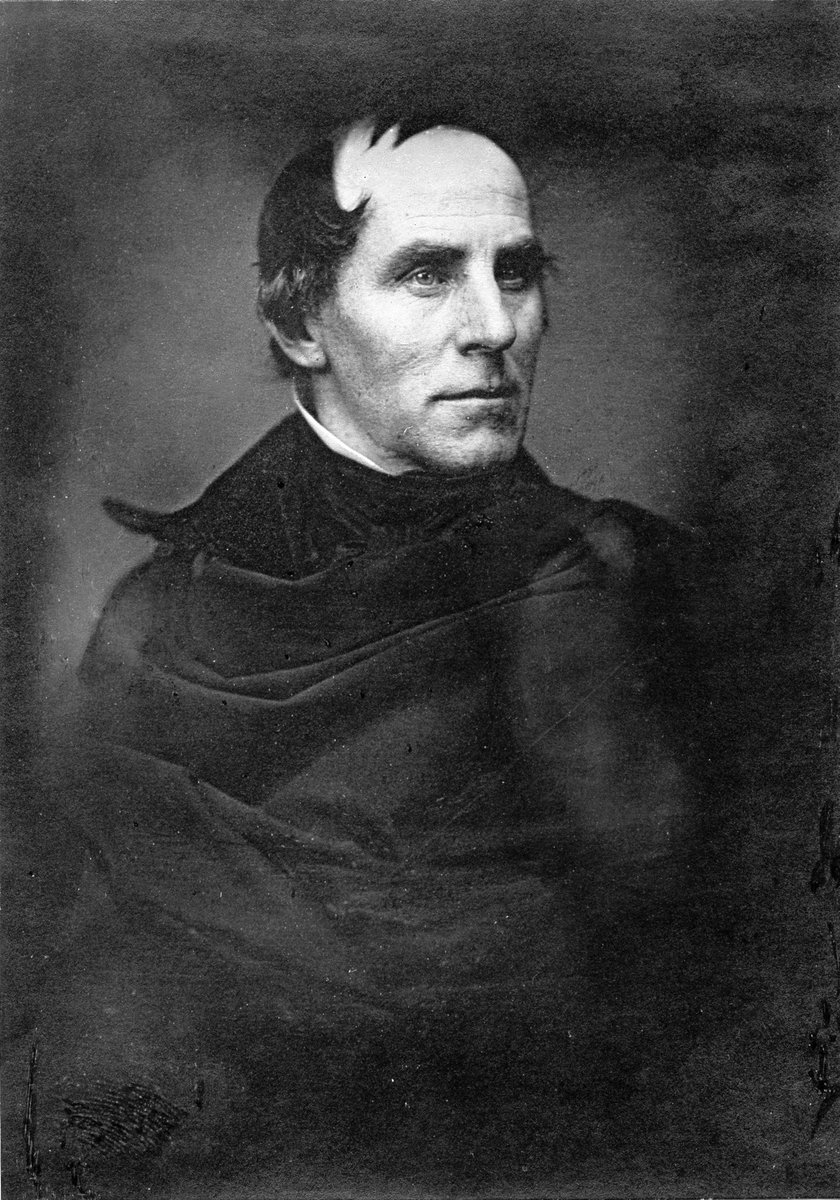
And here is Thomas Cole himself, a rather gloomy looking Victorian chap.
Few artists have matched the sheer scale of his imaginative power. But crucially, Cole had the talent and ability to achieve his artistic visions.
Few artists have matched the sheer scale of his imaginative power. But crucially, Cole had the talent and ability to achieve his artistic visions.
If you found this overview of Thomas Cole illuminating then you'll probably enjoy my weekly newsletter, Areopagus.
Seven short lessons every Friday, including one about art - Cole has been featured there before!
You can subscribe here:
culturaltutor.com
Seven short lessons every Friday, including one about art - Cole has been featured there before!
You can subscribe here:
culturaltutor.com

Loading suggestions...