

The story of a queen.. Hatshepsut ruled Egypt for more than 12 years.
// Thread //
// Thread //
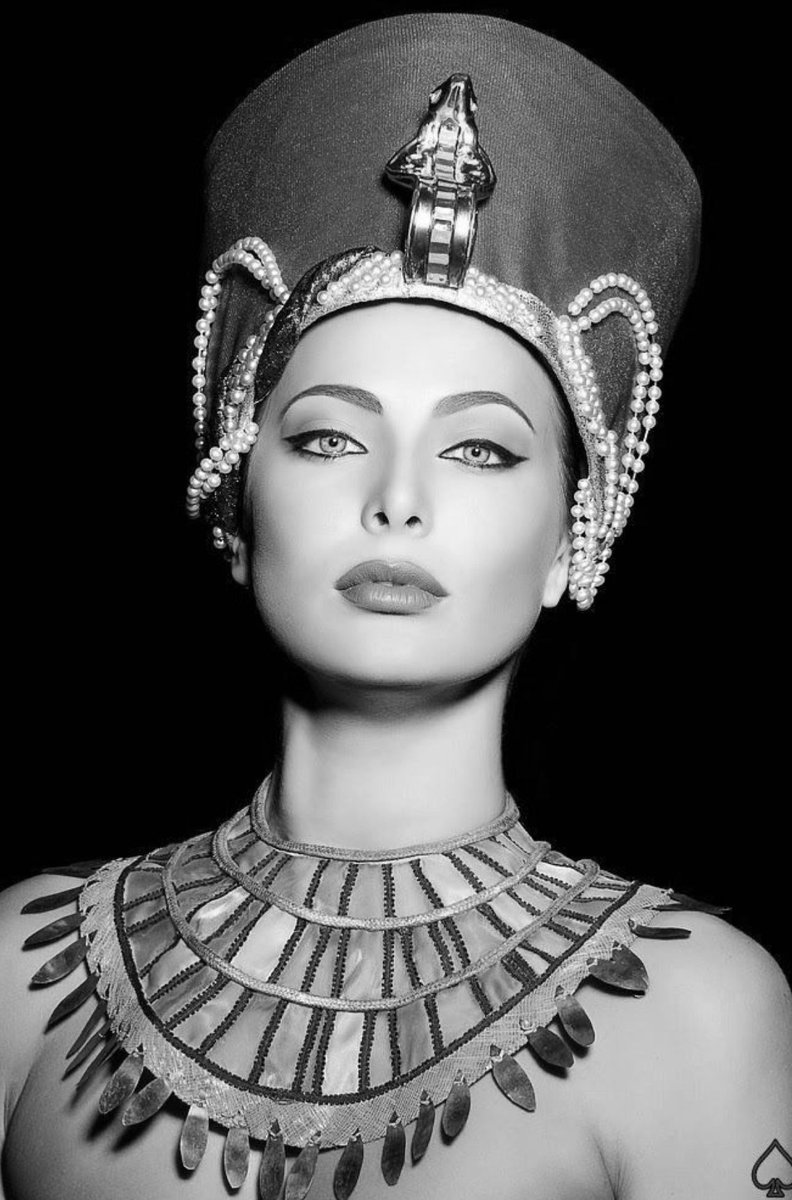
During the reign of Queen Hatshepsut, Egypt lived one of the most brilliant eras of Egyptian civilization over a period of 12 years and nine months.
She is one of the greatest rulers of Egypt, masterpieces of greatness and glory, and blessed Egypt with progress, stability and solid international relations, to immortalize her name among the greatest rulers of the world.
Hatshepsut is considered one of the most important kings of Egypt whose era was characterized by peace and prosperity, improving the strength of the army, securing the Egyptian borders, consolidating and developing relations, diplomatic and commercial relations.
Hatshepsut married her brother, King Thutmose II, and was called the Great Royal Wife, and upon his death, the guardian of the throne of his son, King Thutmose III, who was nine years old at the time.
She is Hatshepsut, the greatest woman of her time, a strong, ambitious, intelligent woman who is confident of her position and ability. She enabled her circumstances and enabled her for herself.
Hatshepsut was considered outside the religious legitimacy of rule, as the ruling king must be a male representative of the god Horus, the lord of monarchy, in order to grant religious legitimacy and acceptance among the people.
Hatshepsut's position required some political and religious treatments to protect her seat on the throne, especially as she began as a regent on the official throne of the king, Thutmose III, and since he was a small child.
But with the intelligence of Hatshepsut and her ambition to rule, the political circumstances provided her with the opportunity to sit on the throne and rule alone, even if it was an official partnership with the young king.
Hatshepsut's ambition and desire to rule with the young age of Thutmose III prepared suitable conditions for her that enabled her independence to rule, especially as she felt in her heart that she was the owner of royal blood and the right to the heirs to the throne.
With the end of the second year of the reign of the child king Thutmose III, Hatshepsut changed her status from regent on the throne to a ruling queen in partnership with Thutmose III, and of course she was the actual ruler of the country.
Hatshepsut extracted some statesmen loyal to her in exchange for raising their position in the state. "Senmut" was the most important of these men and was the director of the house of Amon, and he was an ambitious man who knew how to manage things for his property and himself.
Since the beginning of Hatshepsut's reign on the throne and the rise of the star of “Senmut”and his name has been associated with many of the works and assignments of Hatshepsut, he became the first teacher of Hatshepsut's daughter Princess Neferu and supervisor.
The functions he was assigned to him enabled him to be a decision-maker in ruling the country, and perhaps alone in some of his decisions without referring to his queen, and more than that, he represented himself in the doors of some inner chapels in a temple,
It was designed for her by the engineer “Sennemut” who loved her and adored her, so he built her temple "Hatshepsut" in Deir el-Bahari and her cemetery.
The queen loved him and was devoted to him and also allowed him to build his tomb within her temple,designed a passage between his tomb and hers,but it was a love that was not completed, as the government fascinated her and her pride prevented her from continuing her love for him
The lover engineer was able to design and implement the most beautiful archaeological works in the history of the 18th Pharaonic dynasty, everyone who visits this temple feels the state of love that accompanied its construction,
The love story that united Hatshepsut and Sennemut was complex, it was not to be announced officially, but the many evidences of the status of each of them with the other was an unusual matter, which was the subject of controversy and anger among the high priests.
Sennemut disappeared from her life after a big story and his fate has not yet been identified,
The era of Hatshepsut was distinguished by many architectural constructions, which illustrate the extent of the prosperity of her era. It also has many monuments in Mam Ombo, El Kom El Red, El Kab, Armant and Elephantine,
but the most important monuments of Hatshepsut at all is her famous funerary temple in Deir el-Bahari, which is one of the most immortal of her works with its unique design and wonderful inscriptions,
Despite the many challenges they faced, history has immortalized their love story through these unique archaeological works. The Temple of Hatshepsut in the city of Qurna (west of Luxor), reflects the hallmarks of a devoted lover to his beloved,
The story as a whole confirms that love always dissolves differences and barriers between everyone.
Loading suggestions...