

🧵of 🧵...we've done chromic and PDS (links at the end).
Now we'll cover the Nickelback of suture material...silk.
I use the analogy because silk has been around a long time: it's irritating, no one admits to using it, but they do; and you think it'll never go away, but it does.
Now we'll cover the Nickelback of suture material...silk.
I use the analogy because silk has been around a long time: it's irritating, no one admits to using it, but they do; and you think it'll never go away, but it does.
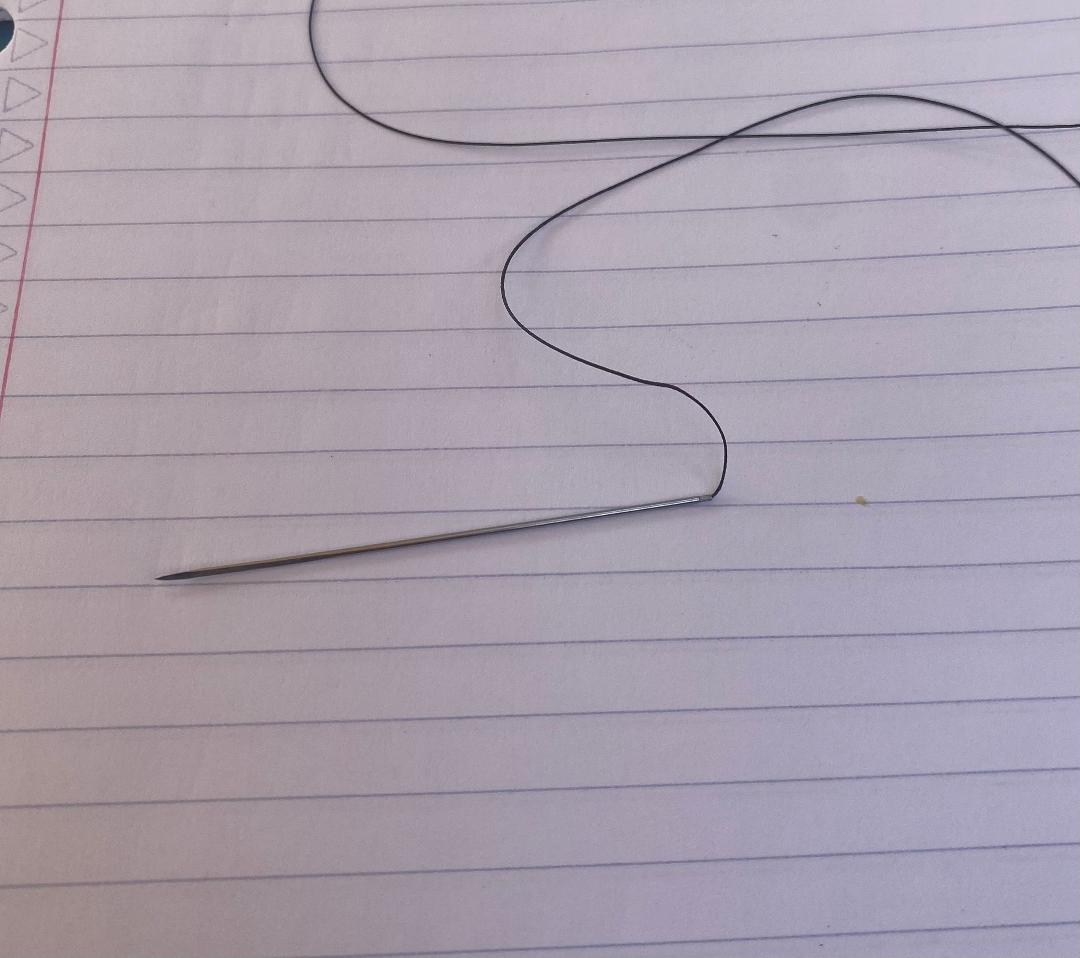
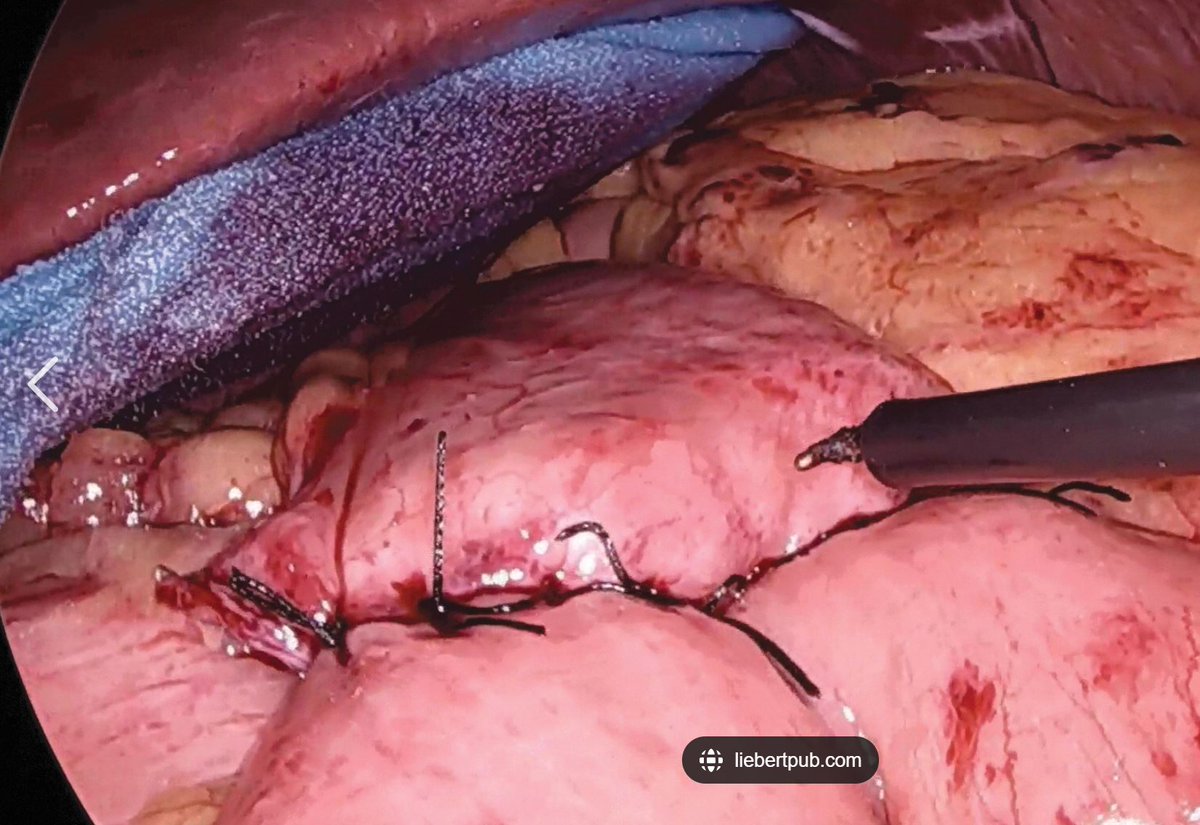
The history of silk suture is complicated. It goes back millennia. Certainly it was used commonly in the 19th century. I can't begin to describe it in this 🧵
In the early history of modern surgery, surgeons basically only had 2 kinds of sutures...silk and gut (later chromic).
In the early history of modern surgery, surgeons basically only had 2 kinds of sutures...silk and gut (later chromic).
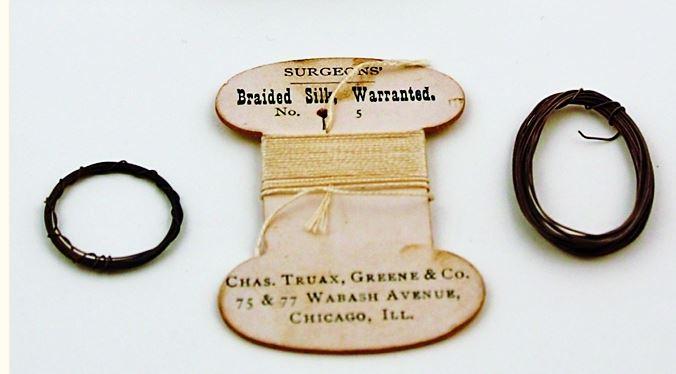
Likewise the manufacture of silk suture is complicated; too much for this 🧵.
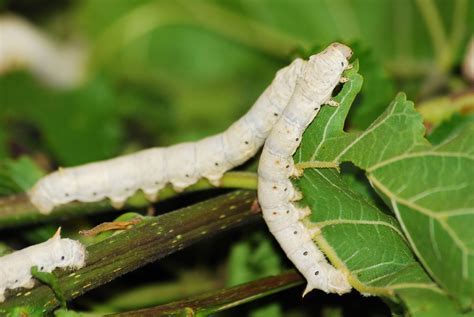
It's from the Bombyx mori moth, and through a complex process, the silk is processed, dyed black, braided, and wax coated.
The black dye increases the visibility of the suture in the tissue.
It's from the Bombyx mori moth, and through a complex process, the silk is processed, dyed black, braided, and wax coated.
The black dye increases the visibility of the suture in the tissue.

Silk is a braided suture, and technically it is characterized as nonabsorbable.
Still, it loses strength by 1 yr and is gone by 2 yr. It doesn't stay forever like Prolene.
General surgeons will notice they rarely see old silk sutures when they do reoperative abdominal surgery.
Still, it loses strength by 1 yr and is gone by 2 yr. It doesn't stay forever like Prolene.
General surgeons will notice they rarely see old silk sutures when they do reoperative abdominal surgery.
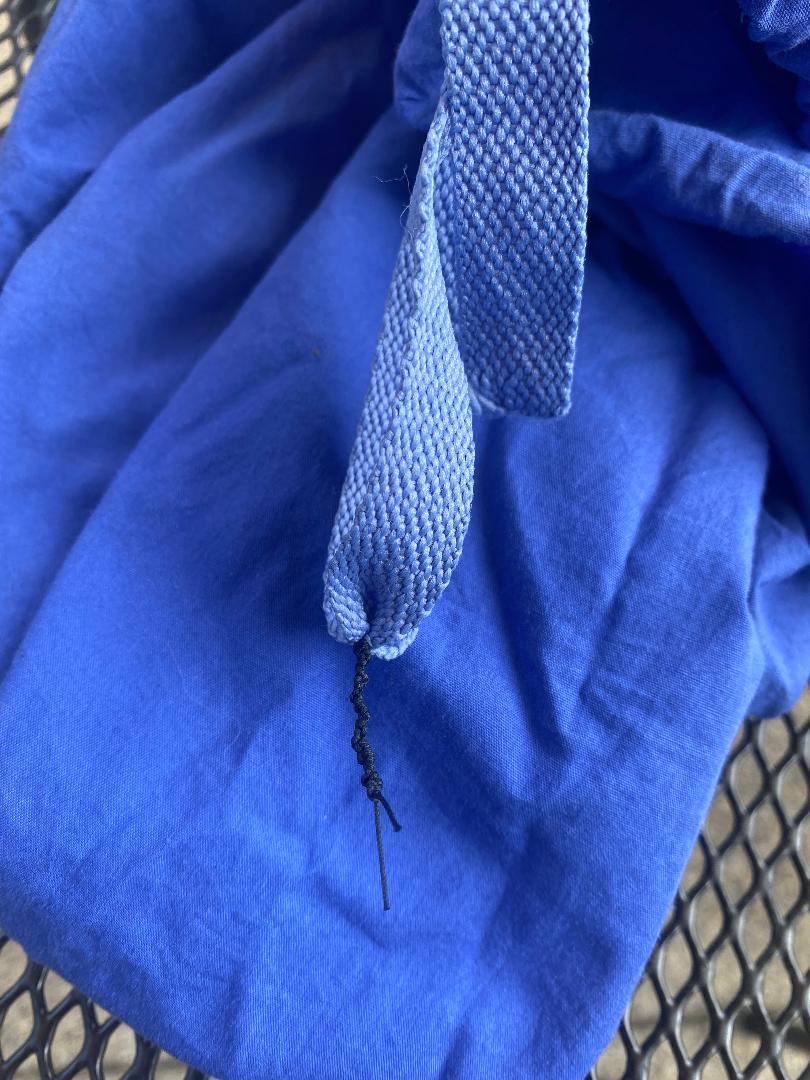
Silk suture is easy to tie. And it's easy to tie. Most importantly, it's easy to tie. Any that's perhaps the main reason why we use it.
It doesn't have any real advantage besides this one. But this is a *big* advantage, and that's why silk suture is popular to this day.
It doesn't have any real advantage besides this one. But this is a *big* advantage, and that's why silk suture is popular to this day.
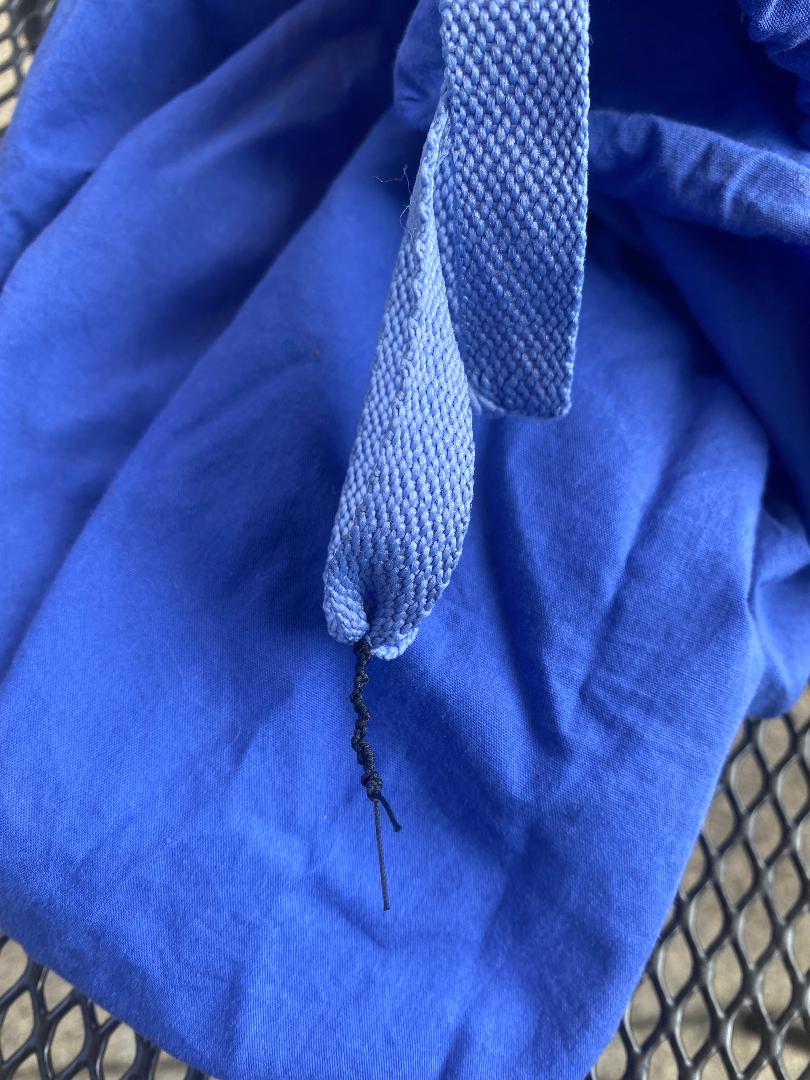
The knot security of silk is high, and it’s classically said that you need only 3 knots, as long as they’re good.
Some people show off and do 2 throws. I’ll do 3 if it’s not an important knot and 4 if it is (like Lembert).
Also the tails can be shorter than other sutures.
Some people show off and do 2 throws. I’ll do 3 if it’s not an important knot and 4 if it is (like Lembert).
Also the tails can be shorter than other sutures.

The strength of silk is actually below average.
In terms of braided sutures, both Vicryl and Ethibond were found to be stronger than silk (meaning the silk broke first)
Silk was stronger than PDS however (not shown)
In terms of braided sutures, both Vicryl and Ethibond were found to be stronger than silk (meaning the silk broke first)
Silk was stronger than PDS however (not shown)
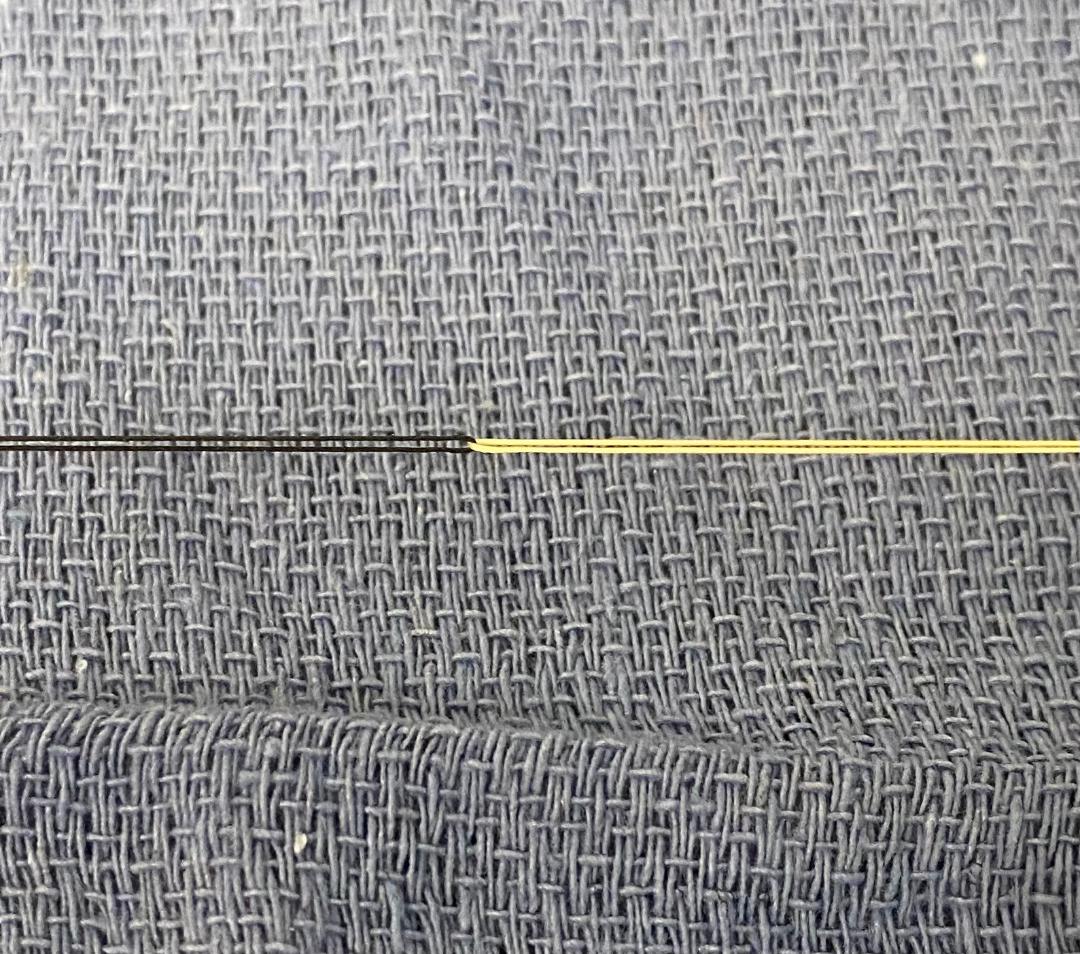
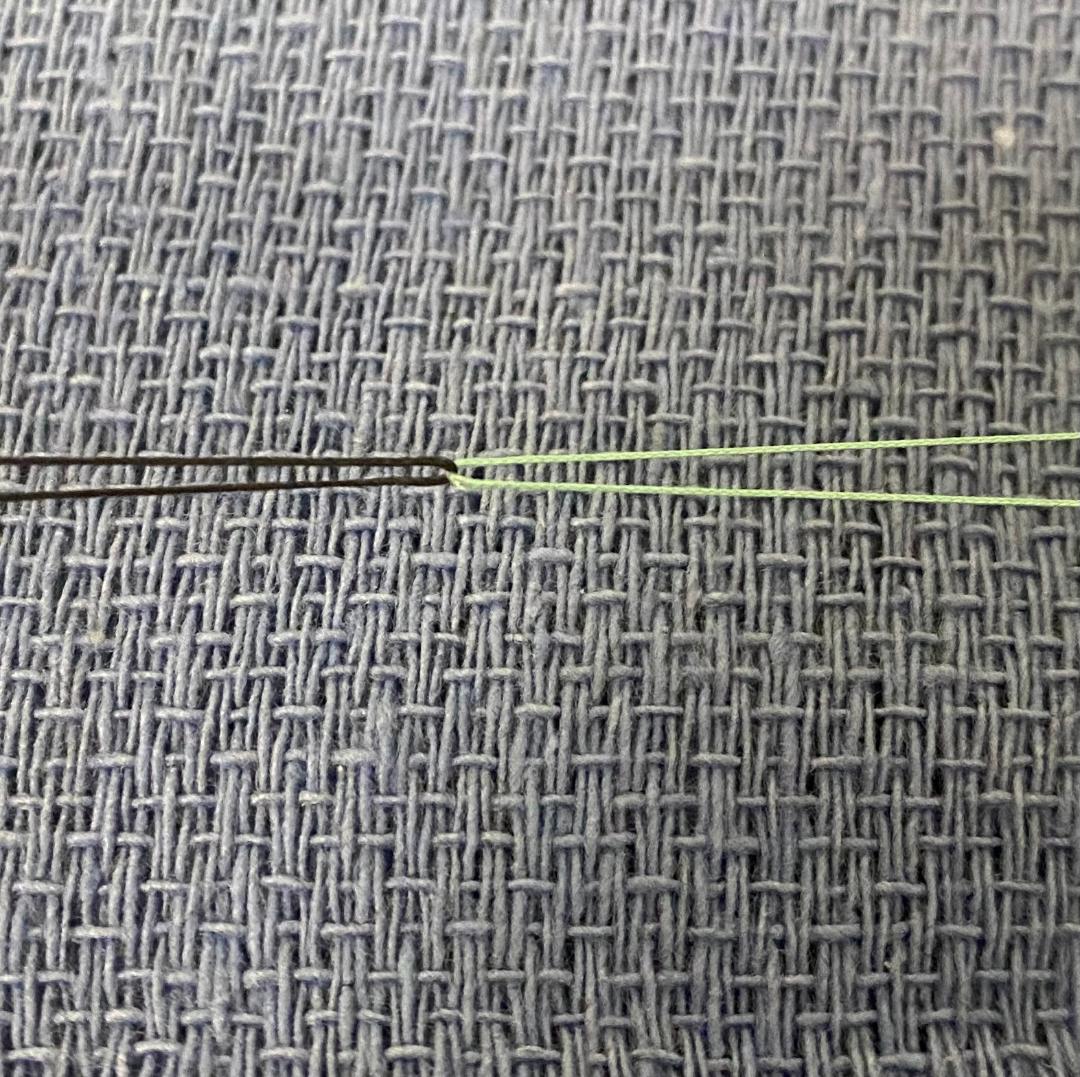
Silk causes more tissue inflammation than most other sutures.
So you wouldn't want to use it near the skin surface, such as for the more superficial fascia. There are better options for this, such as Vicryl or PDS.
So you wouldn't want to use it near the skin surface, such as for the more superficial fascia. There are better options for this, such as Vicryl or PDS.

#1 up to #5 silk sutures exist, sometimes on needles, but probably more often as free ties.
I would say these are rarely used. We are a tertiary hospital and I did not find anything larger than #1 silk in the inventory.
If anyone uses these, please tell us what for.
I would say these are rarely used. We are a tertiary hospital and I did not find anything larger than #1 silk in the inventory.
If anyone uses these, please tell us what for.
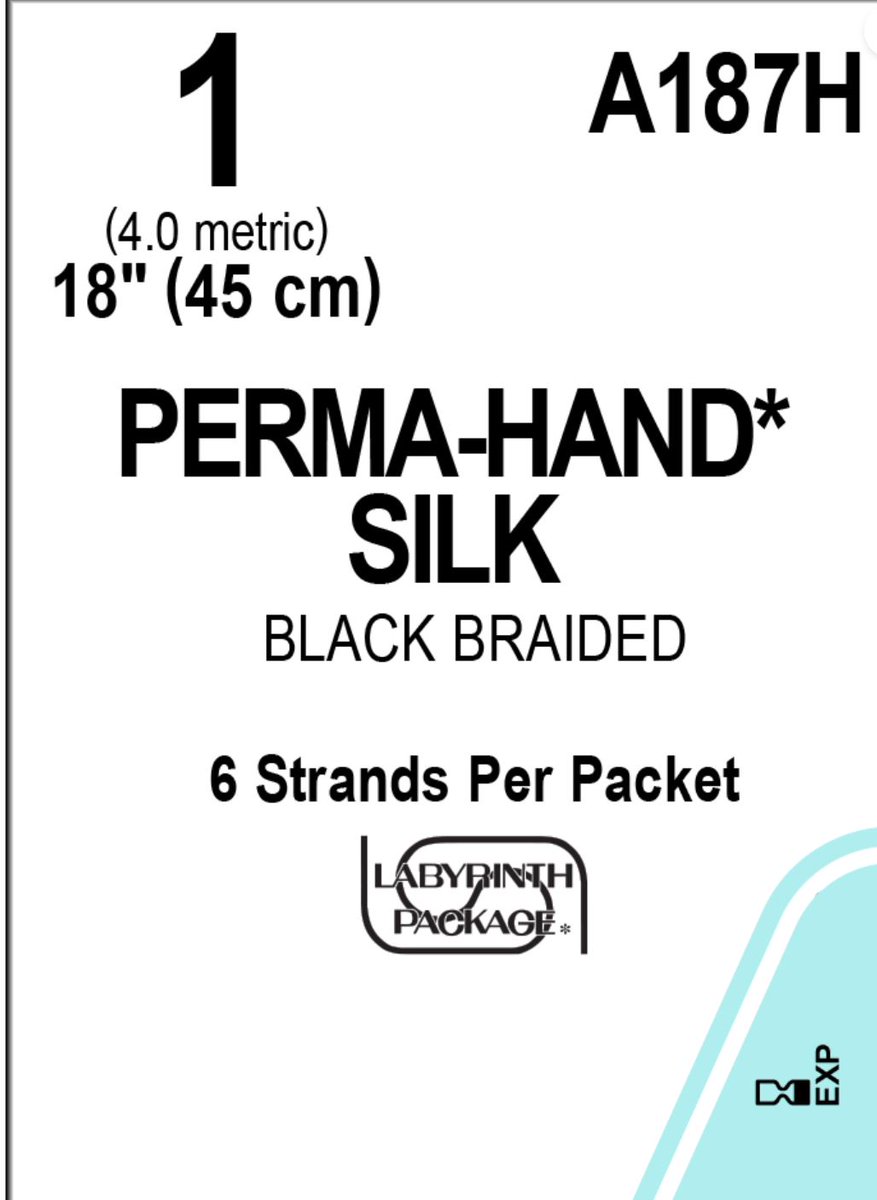
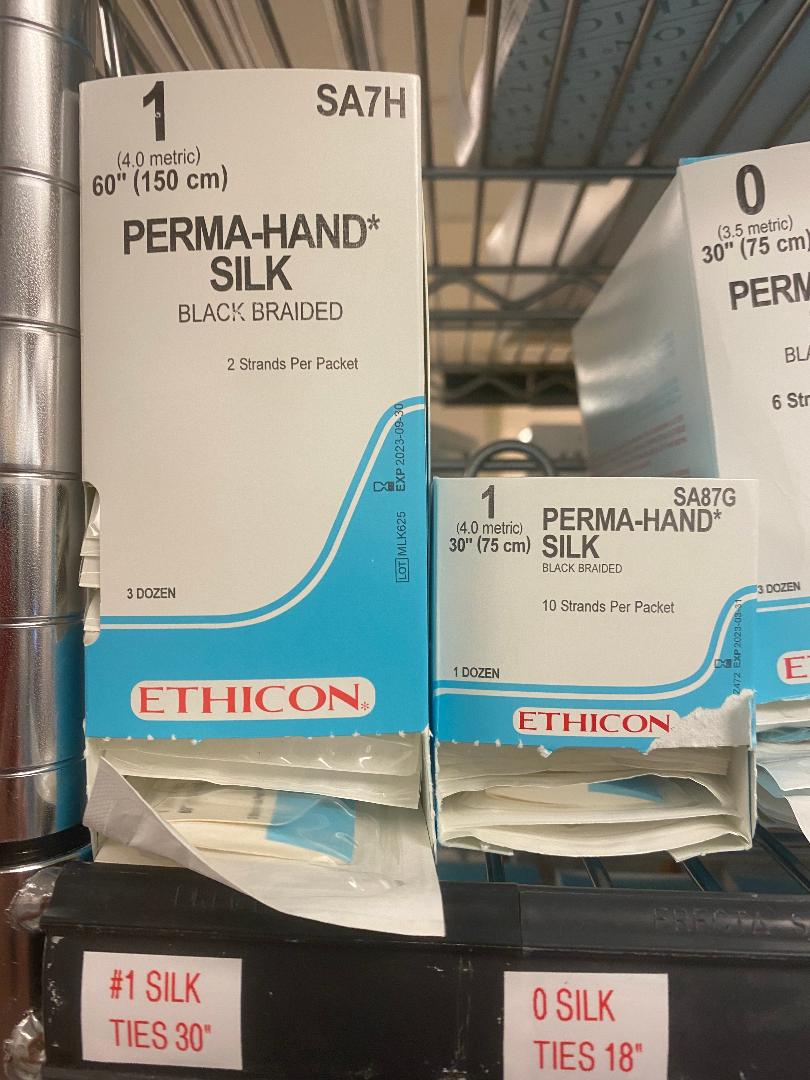
0 silk sutures come on many needles, and also they are often used as free ties.
It may be used to tie off 'named' mesenteric vessels, such as the ileocolic artery.
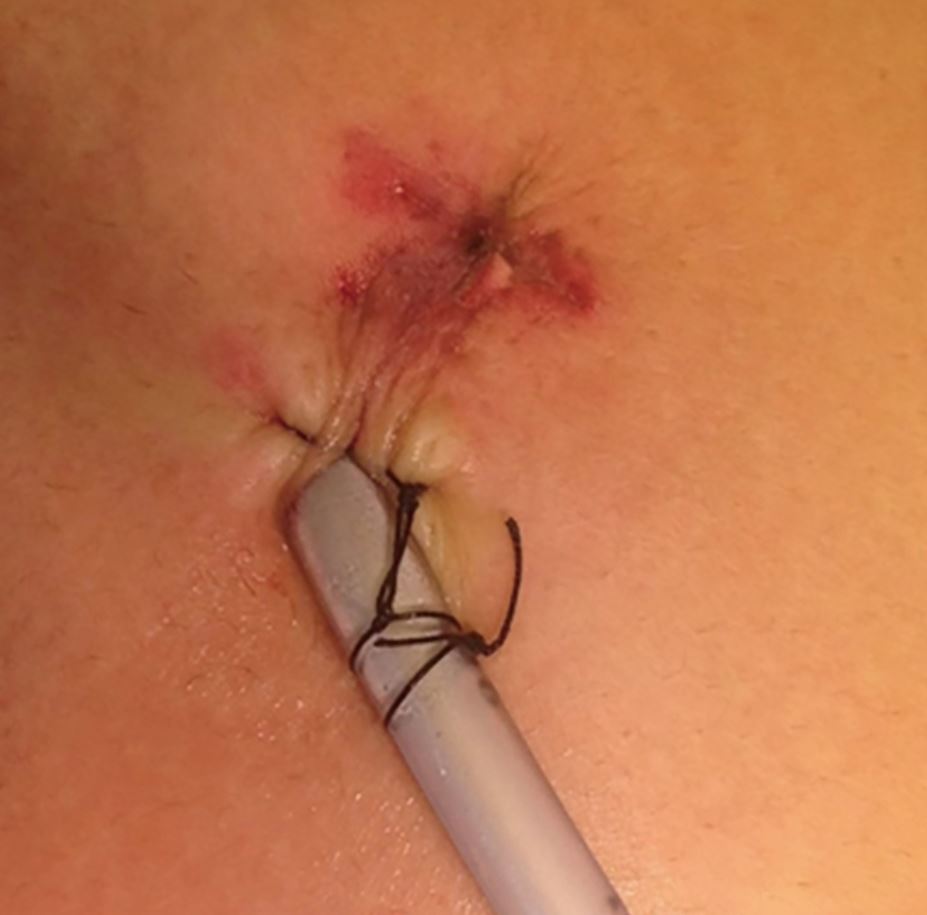
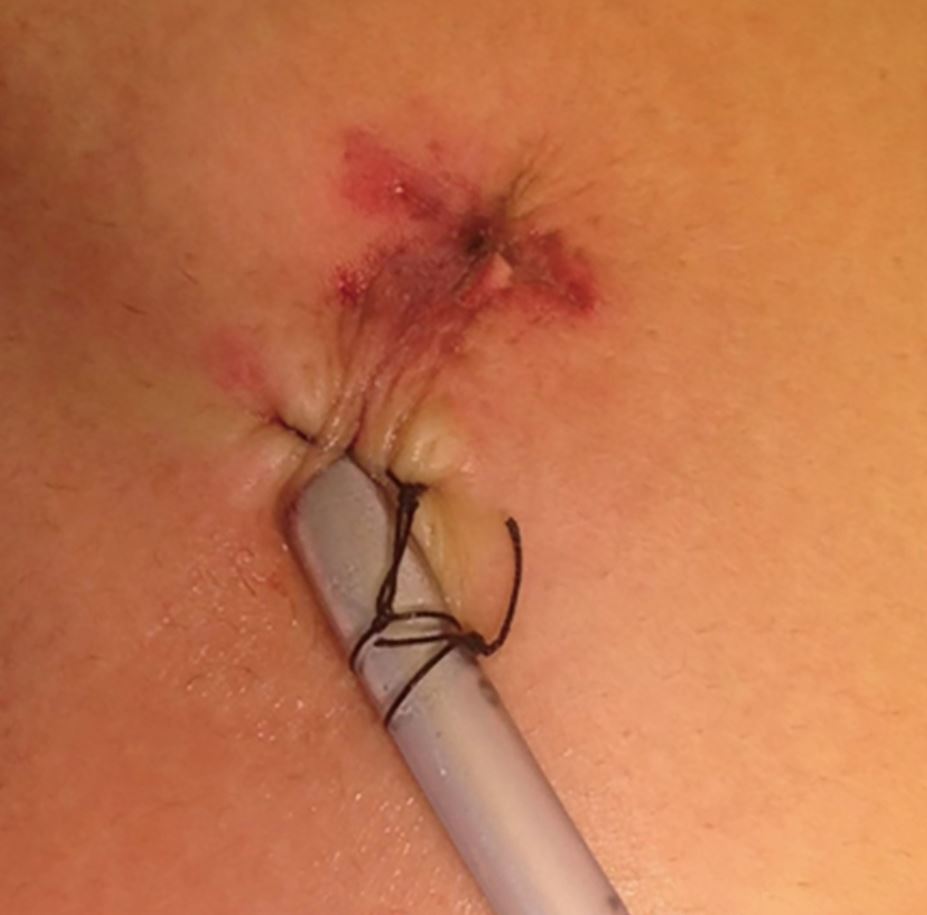
We use 0-silk to secure (larger) chest tubes (which could be its own 🧵)
It may be used to tie off 'named' mesenteric vessels, such as the ileocolic artery.
We use 0-silk to secure (larger) chest tubes (which could be its own 🧵)
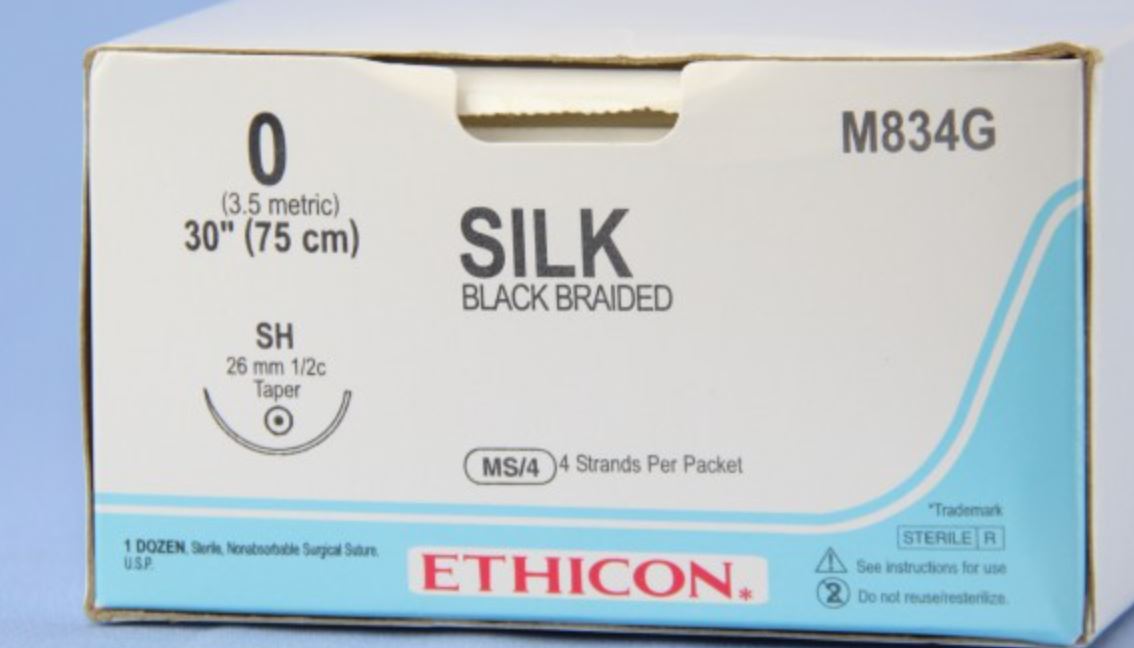
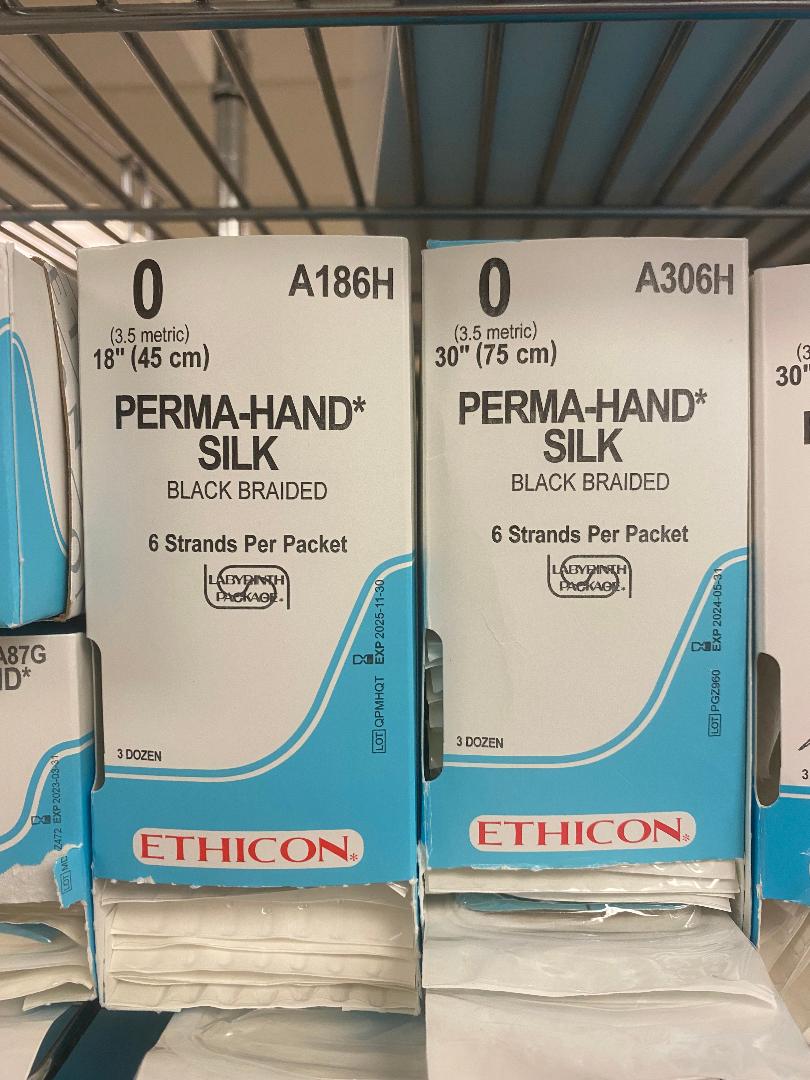
2-0 silk is used in general surgery to tie off larger wads of tissue or ligate somewhat sizable vessels, though not too big. "Suture ligatures" are often with 2-0 silk.
Often used for mesentery. There is a lot of it on our thoracic cart, and it's also on the ped surg cart.
Often used for mesentery. There is a lot of it on our thoracic cart, and it's also on the ped surg cart.

3-0 silk is used a lot in general surgery. 3-0 ties are often used to tie off smaller bits of tissue (mesentery, etc).
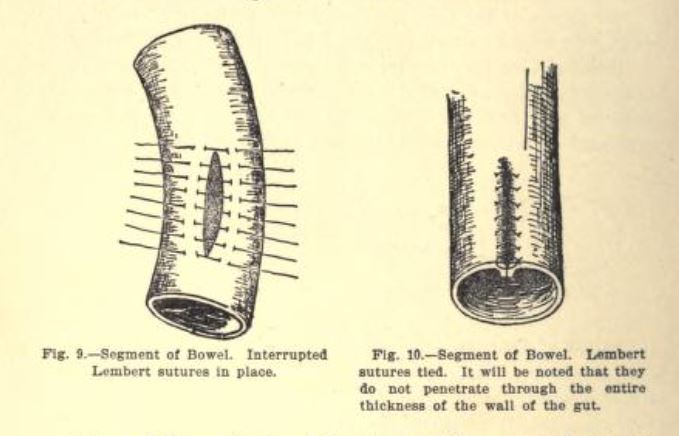
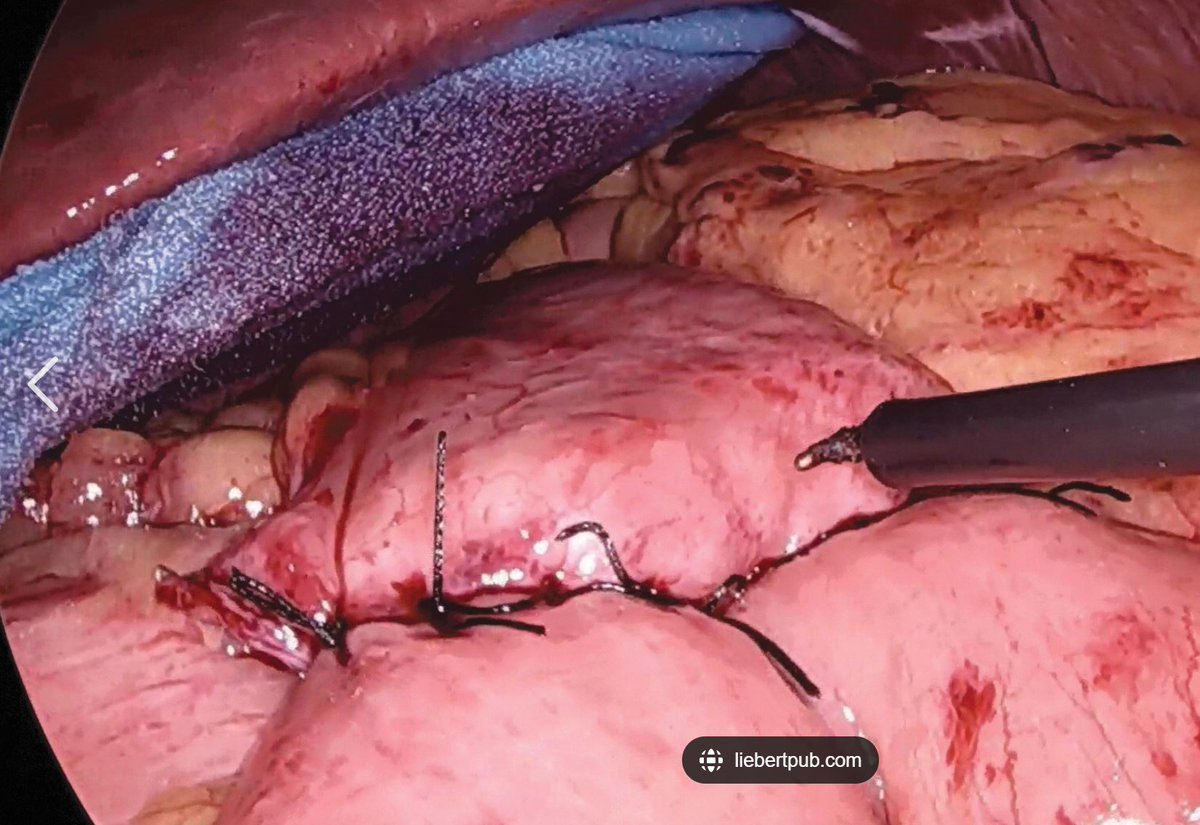
3-0 silk "popoffs" are often used to do Lembert sutures on the outer layer of a bowel anastomosis.
It is found in many central line kits on a Keith needle.
3-0 silk "popoffs" are often used to do Lembert sutures on the outer layer of a bowel anastomosis.
It is found in many central line kits on a Keith needle.
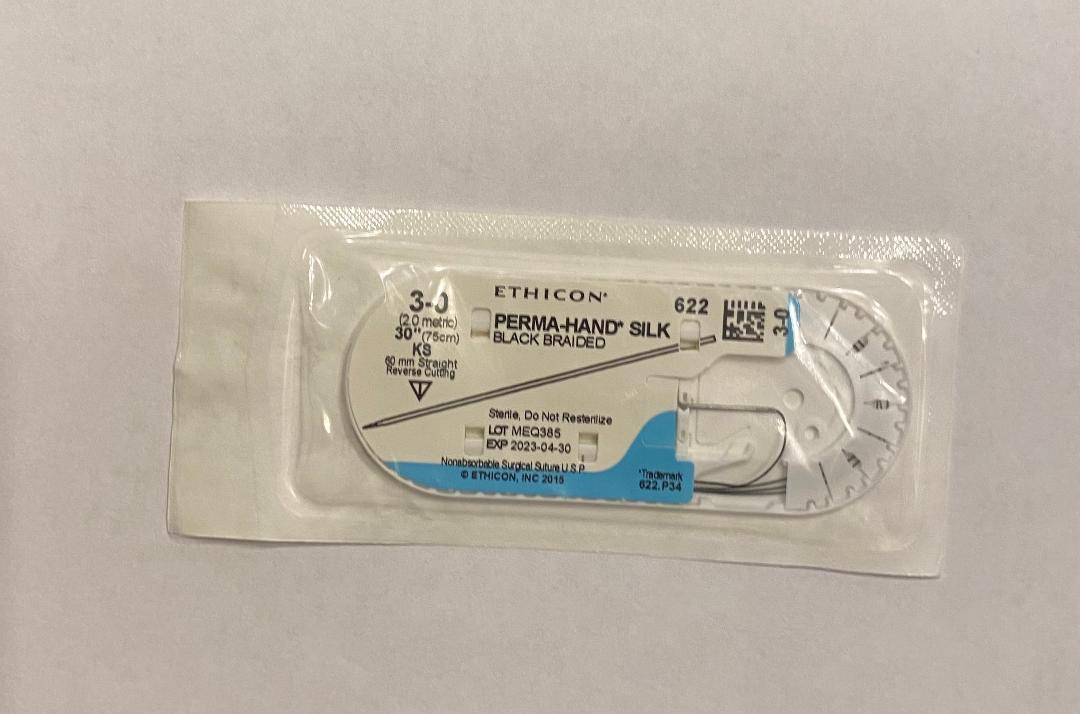
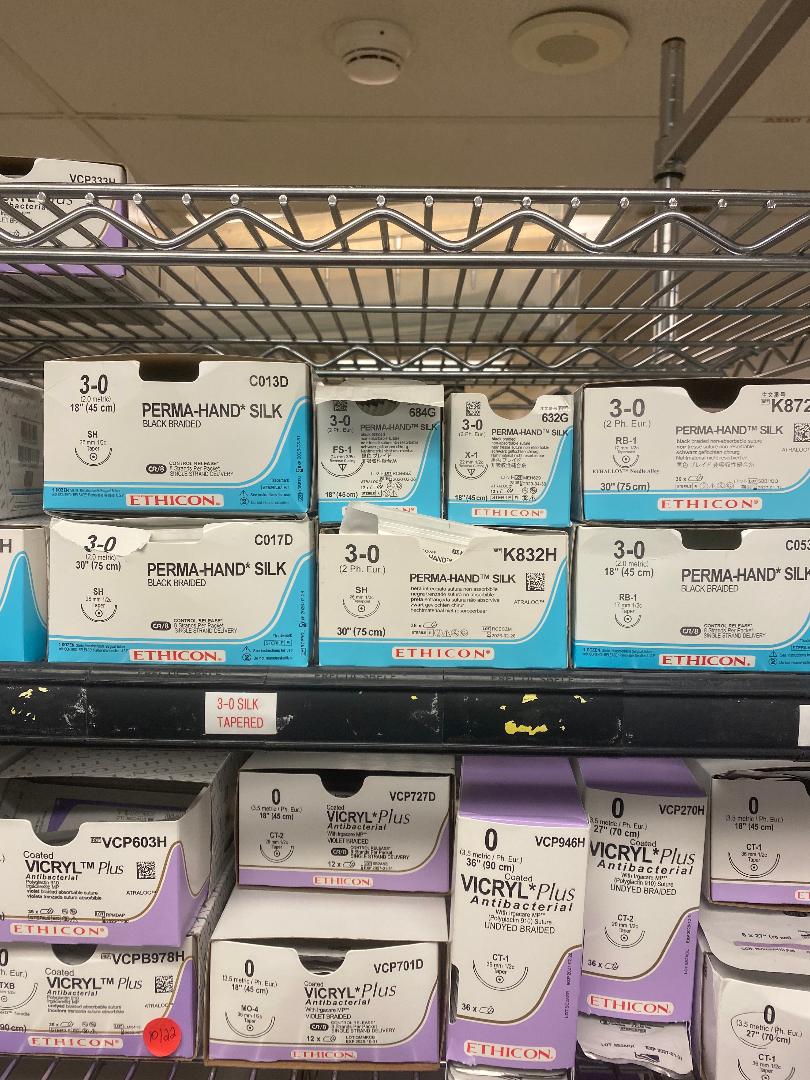
4-0 silk comes in a number of formats. I found it on our pediatric, thoracic, and facial surgery carts.
On the pediatric surgery cart, it came in 4 formats: free ties and on 3 different needles. My guess is that they use it for the same things adult surgeons use 3-0 for.
On the pediatric surgery cart, it came in 4 formats: free ties and on 3 different needles. My guess is that they use it for the same things adult surgeons use 3-0 for.
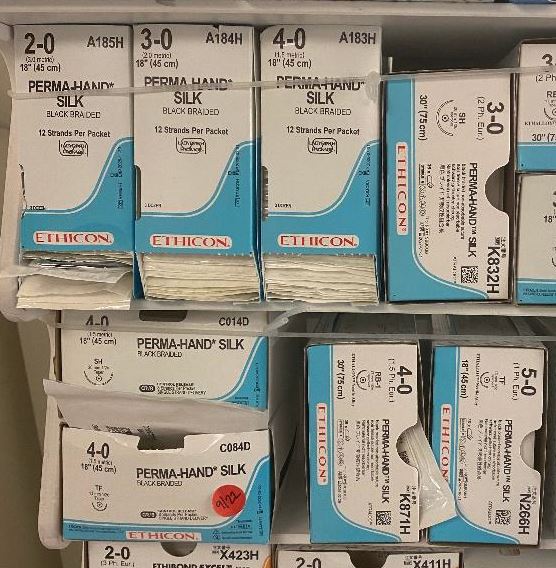
5-0 silk comes on a variety of small needles, often double-armed. It seems to find use mostly in ophthalmology and pediatric surgery, with a some urology references.
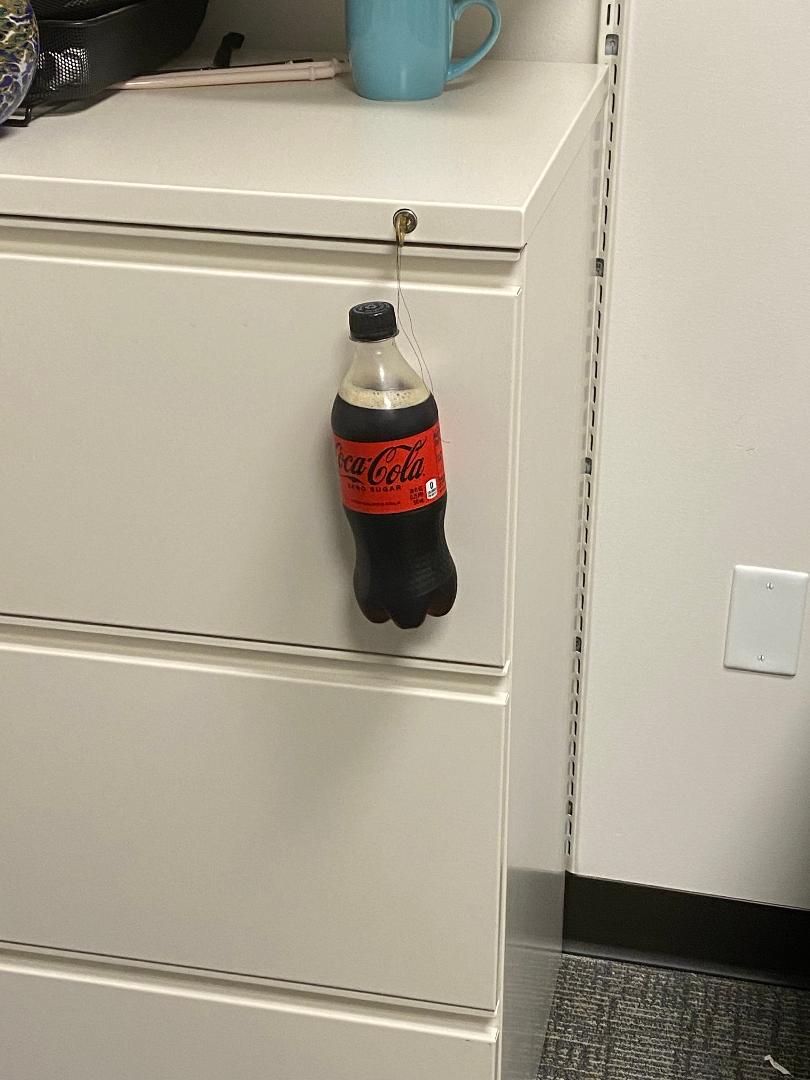
5-0 silk is strong enough to suspend a 20 oz. soda (pic).
5-0 silk is strong enough to suspend a 20 oz. soda (pic).
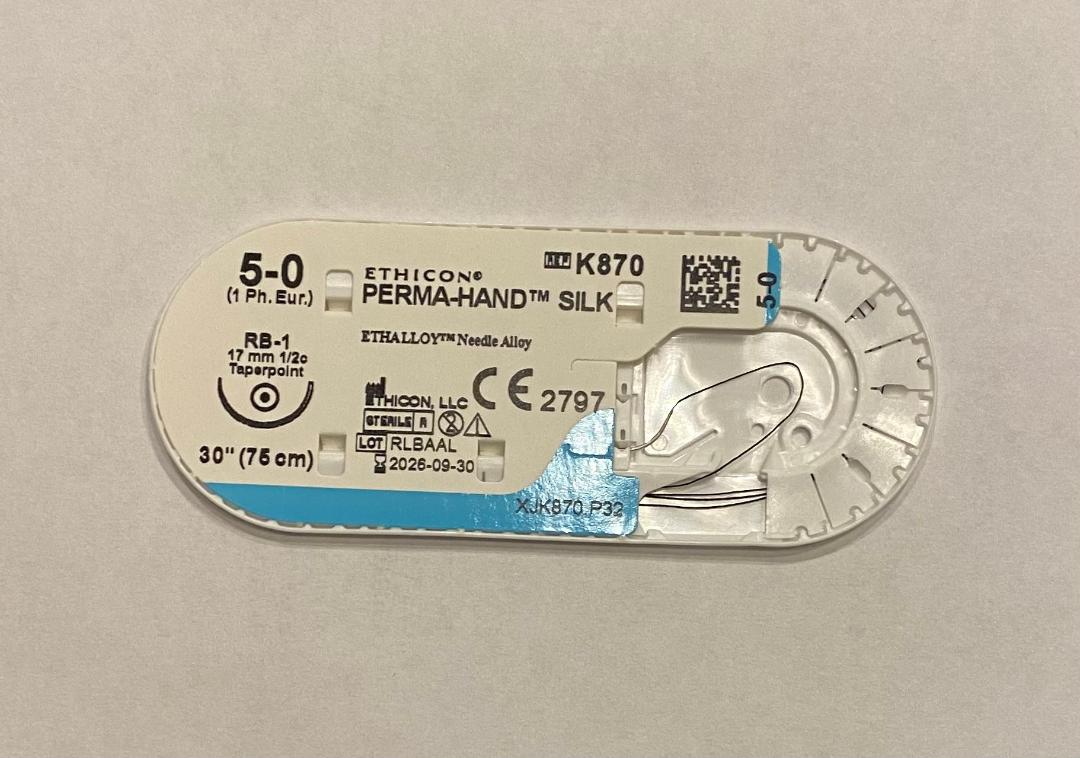
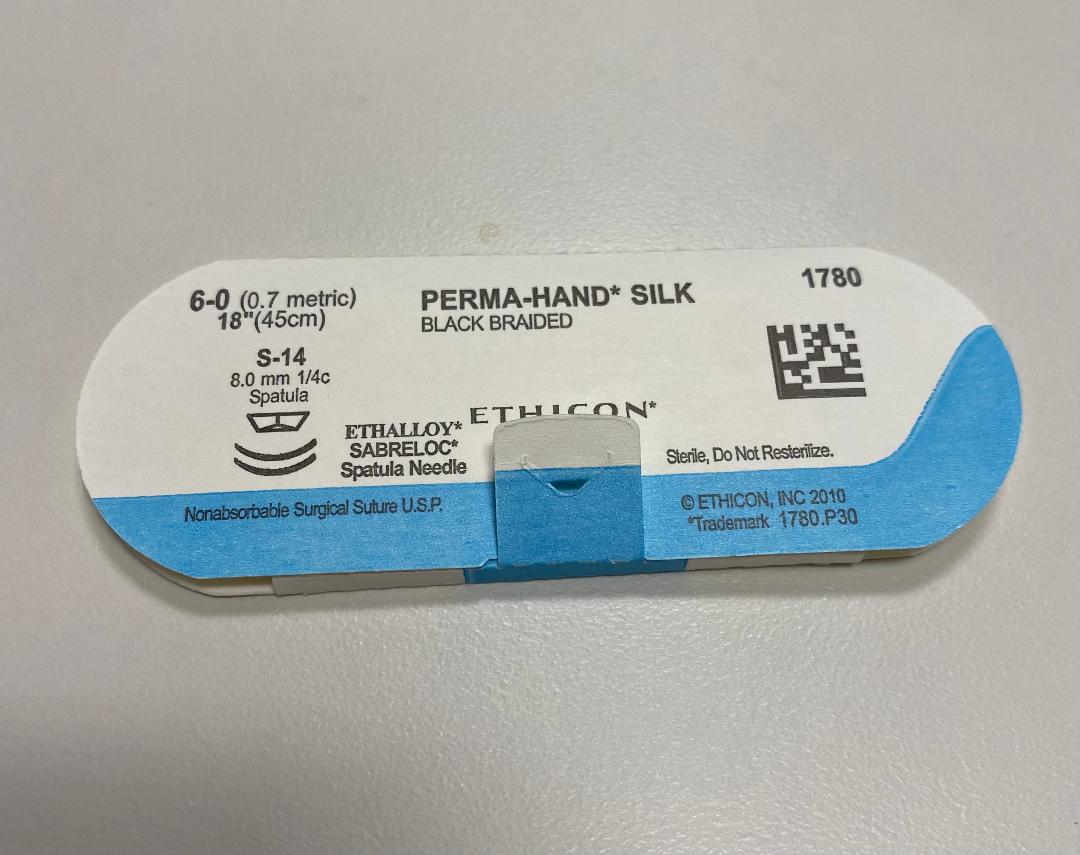
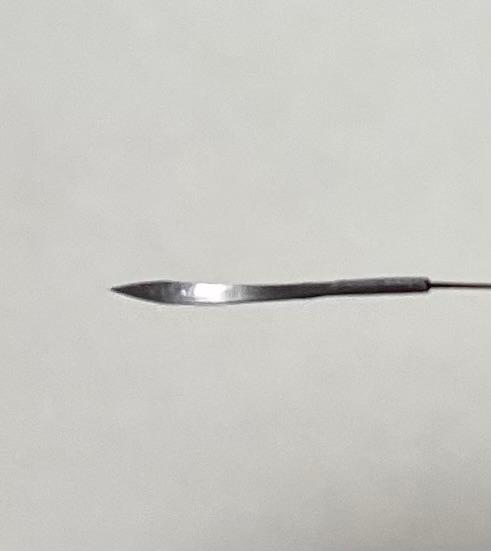
6-0 silk comes on small needles, often double-armed, and often with a flat, spatulated needle. It seems most common in ophthalmology ('corneal and sclera', according to the internet).
6-0 is *much* weaker than 5-0, but probably doesn't matter much in the eye.
6-0 is *much* weaker than 5-0, but probably doesn't matter much in the eye.
In terms of strength:
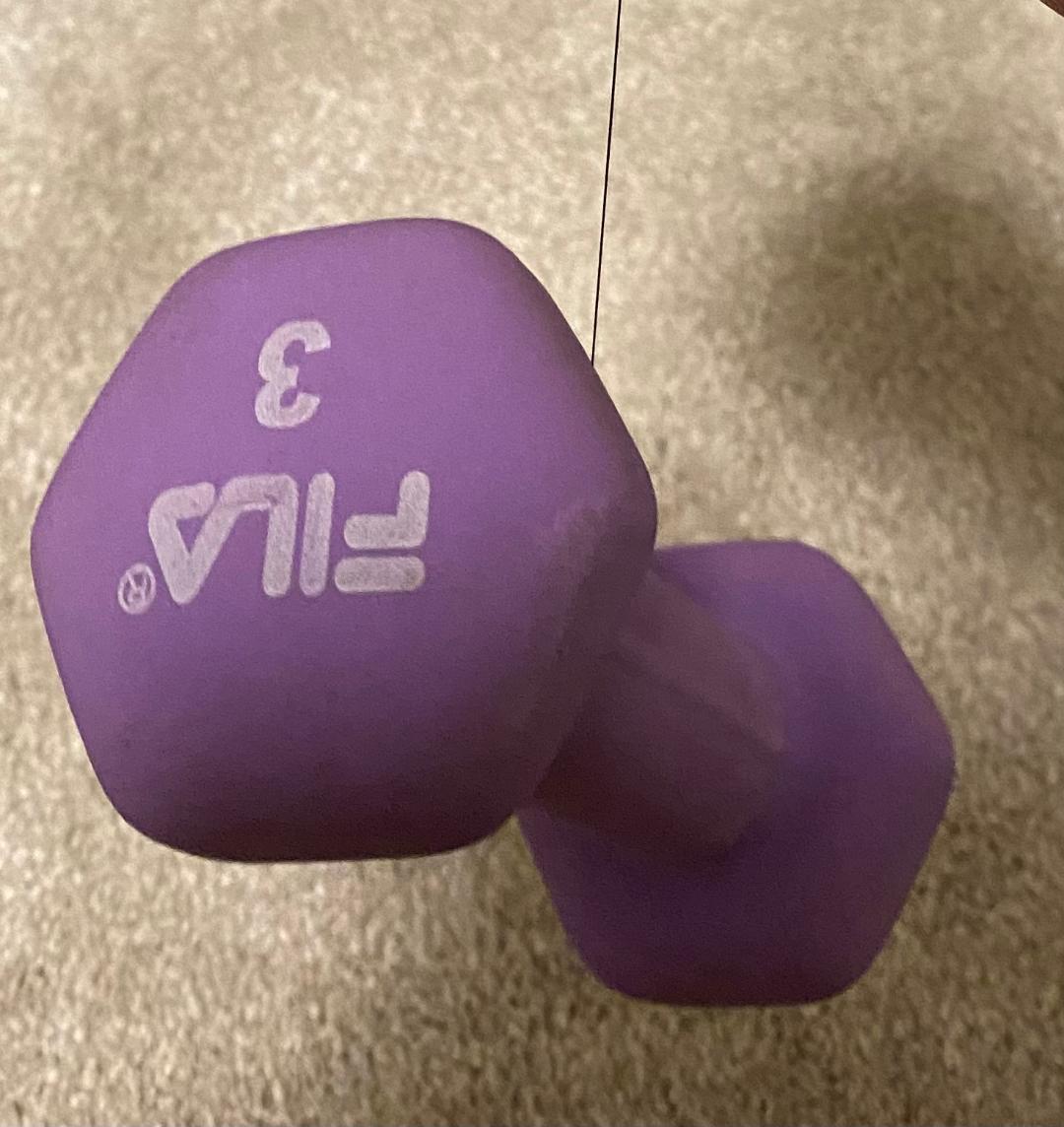
3-0 silk could lift 3 pounds (lb)
2-0 silk could lift 5 lb.
0-silk was only minimally stronger: it could not lift 8 lb.
#1 silk lifted 8 lb, but failed to lift 10 lb.
3-0 silk could lift 3 pounds (lb)
2-0 silk could lift 5 lb.
0-silk was only minimally stronger: it could not lift 8 lb.
#1 silk lifted 8 lb, but failed to lift 10 lb.
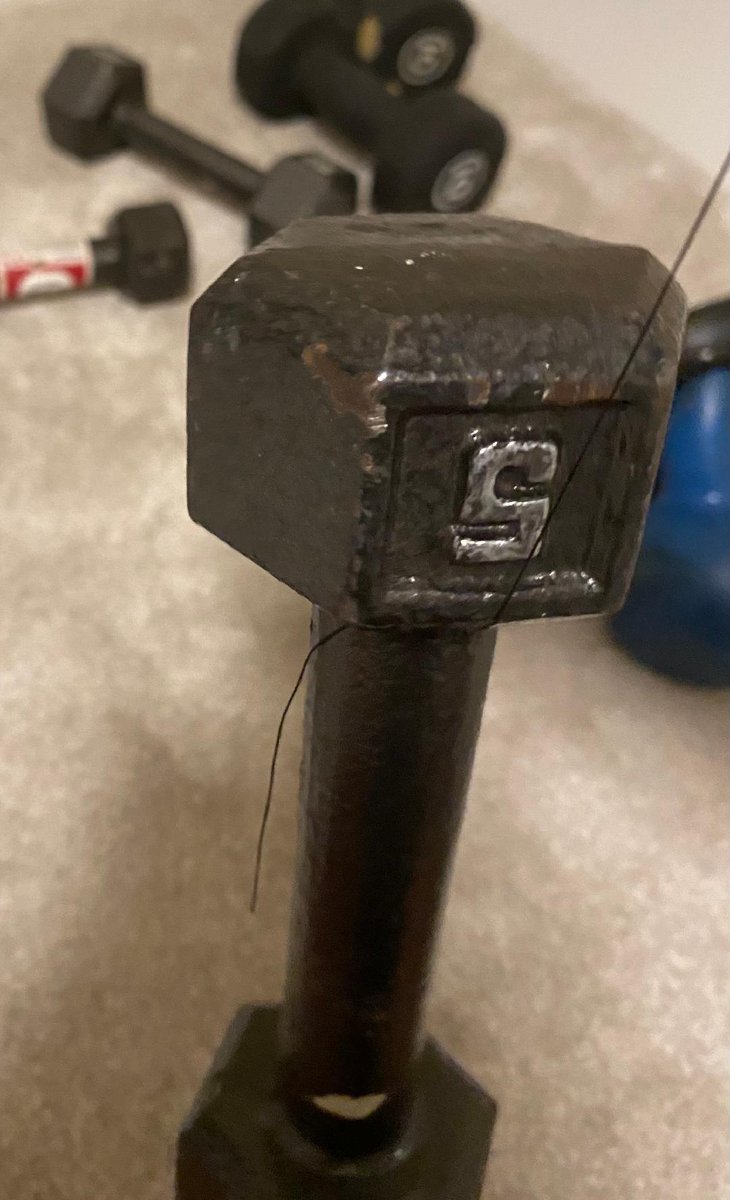
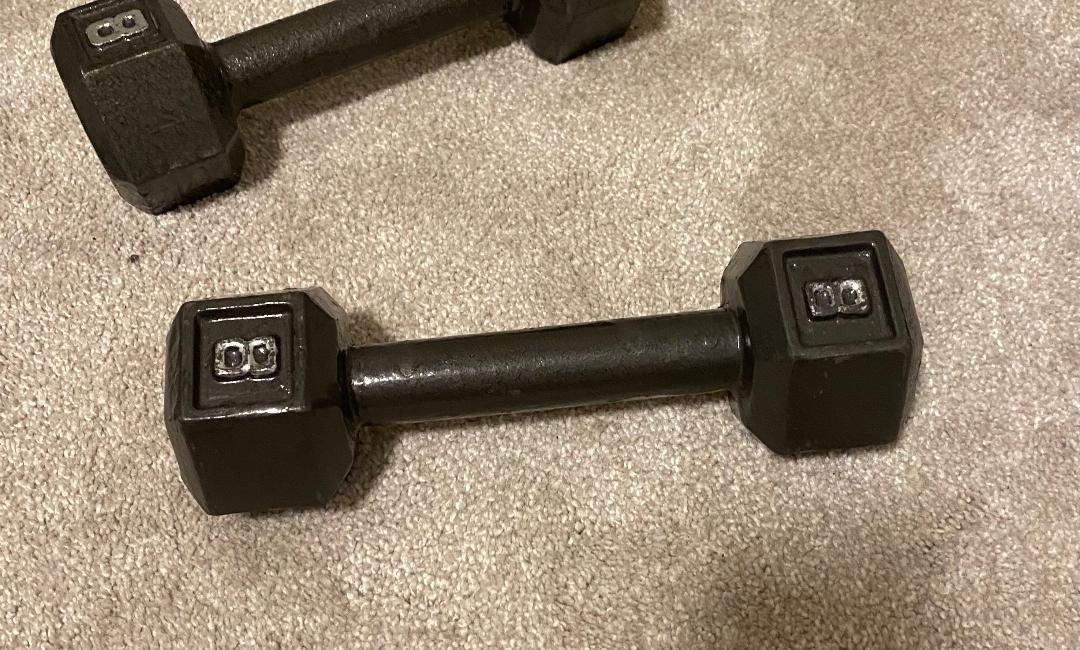
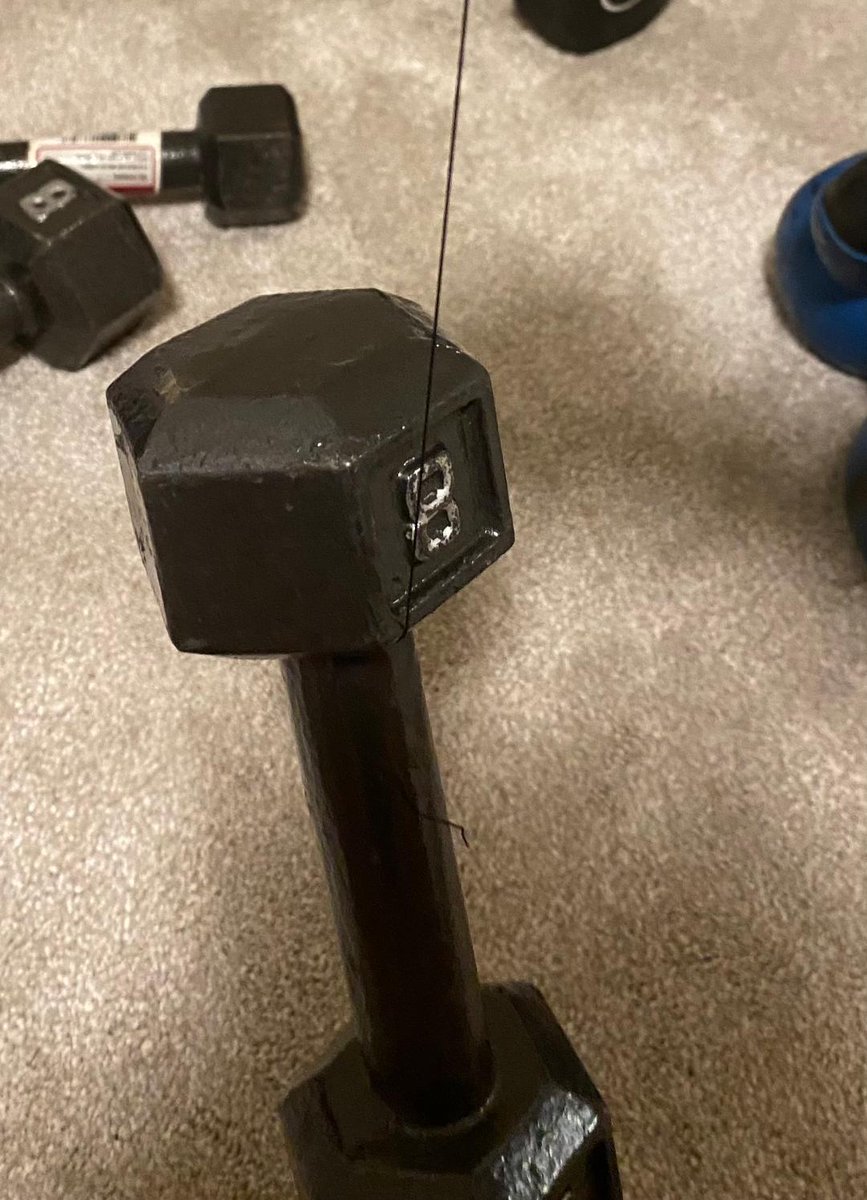
Generally speaking when it comes to using free ties, the length ends up being reasonably important.
You can't easily tie the 18" ties deep in a cavity, and the 30" ties are in your way a lot if you are tying things superficially.
You can't easily tie the 18" ties deep in a cavity, and the 30" ties are in your way a lot if you are tying things superficially.
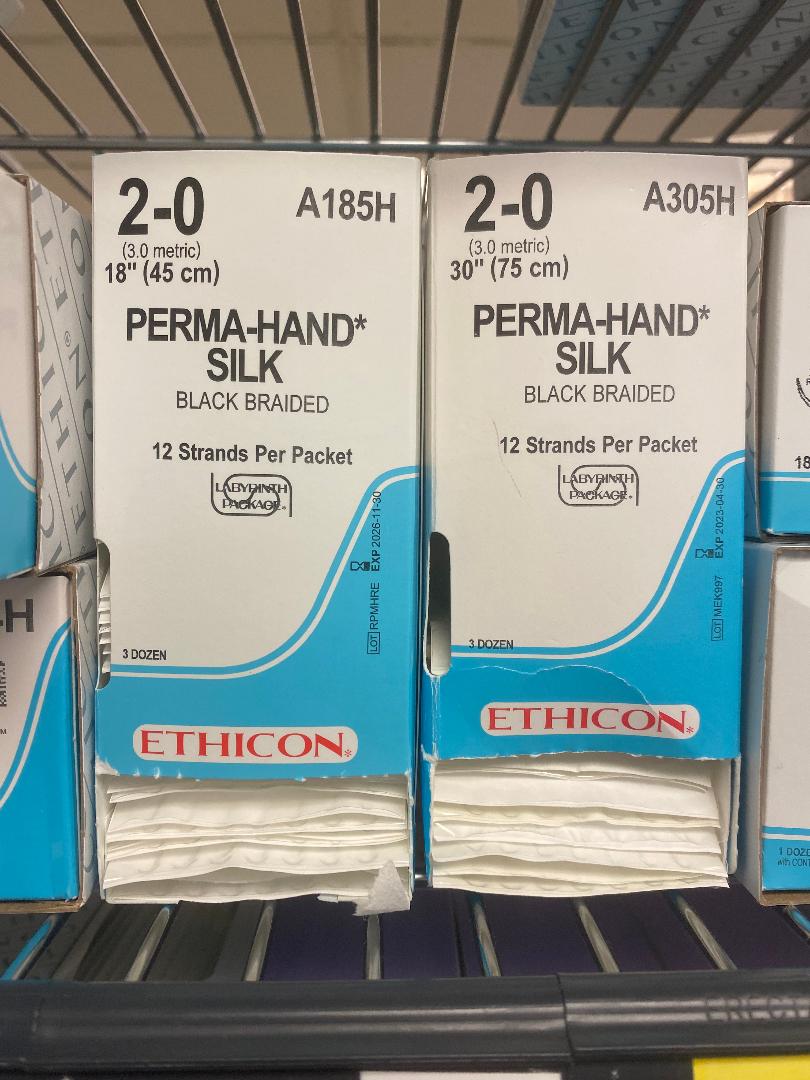
In summary:
Silk can be used when (for whatever reason) you need the suture to be fast and easy to tie, and you don't need it to be too strong, and you don't mind that it causes some tissue irritation.
For most other situations, there are better options.
⬛️
Silk can be used when (for whatever reason) you need the suture to be fast and easy to tie, and you don't need it to be too strong, and you don't mind that it causes some tissue irritation.
For most other situations, there are better options.
⬛️
Link to chromic thread:
Link to PDS thread:
Loading suggestions...