

"The Hellenic worshipers of images (eikones) were perfectly aware that images of the gods are merely receptacles and symbols, not divine realities per se.
These images are not altogether adequate representations of the gods, but the anagogic instruments that help in one’s devotional, intellectual, and imaginative ascent or function as ‘windows of transcendence’ irradiating divine powers and graces.
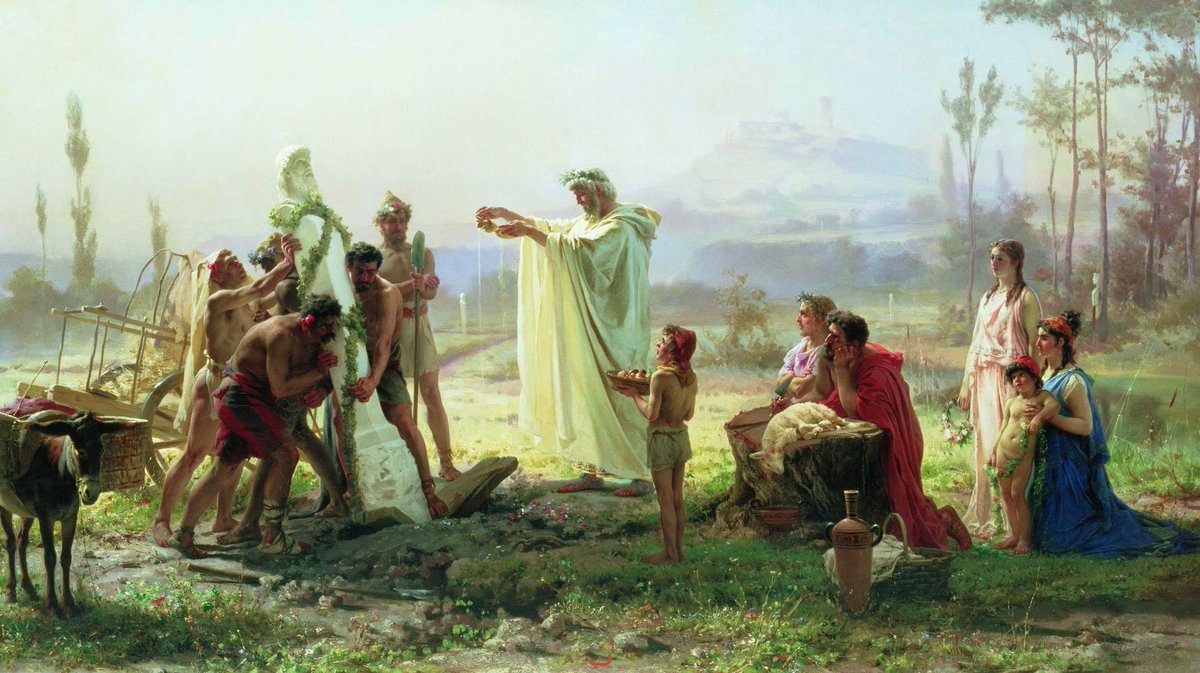
The honour given to the image is transmitted to its noetic archetype, therefore the Hellenic practice of setting up images in human form is based on the premise ‘that because man is godlike in his virtue and intelligence, his outward form is the best possible symbol of divinity.’
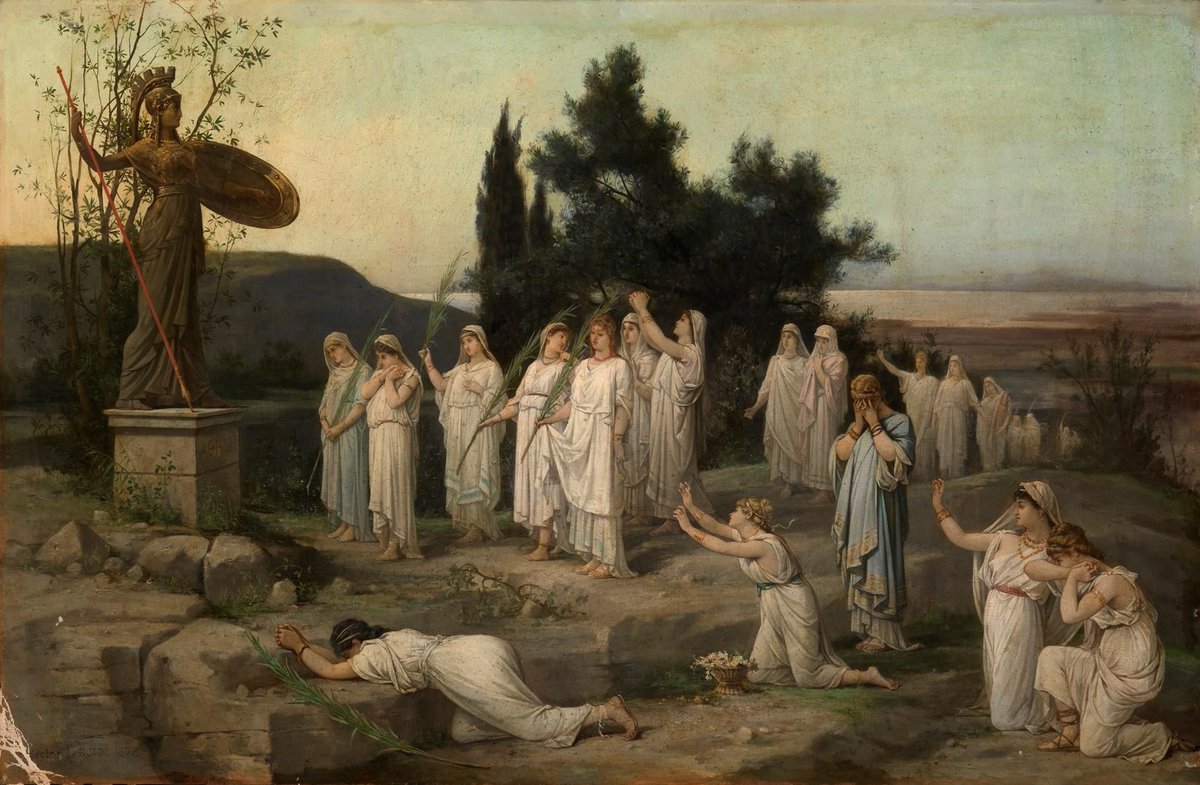
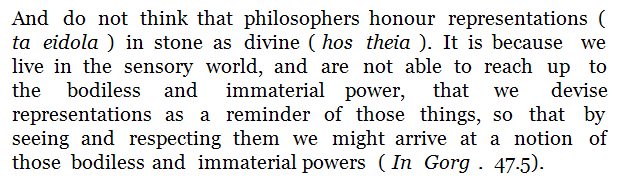
Olympiodorus defends the use of sacred images following the established tradition of argumentation, at first employed by Platonists themselves against the Stoic pantheists (those who rejected the cult images by saying that God is the living intelligent universe):
Loading suggestions...