
Politics
Economy
Economics
Neoliberalism
Socialist States
Political Class
Austerity
Repression
Late Cold War
Capitalist Democracies
Fiscal Discipline
Belatedly reading @Alex__1789 on neoliberalism and the late Cold War. One implication is capitalist democracies maintained legitimacy while imposing harsh fiscal discipline because, in JP Dupuy’s terms, they could “generate transcendence” by shifting agency/blame to the market.
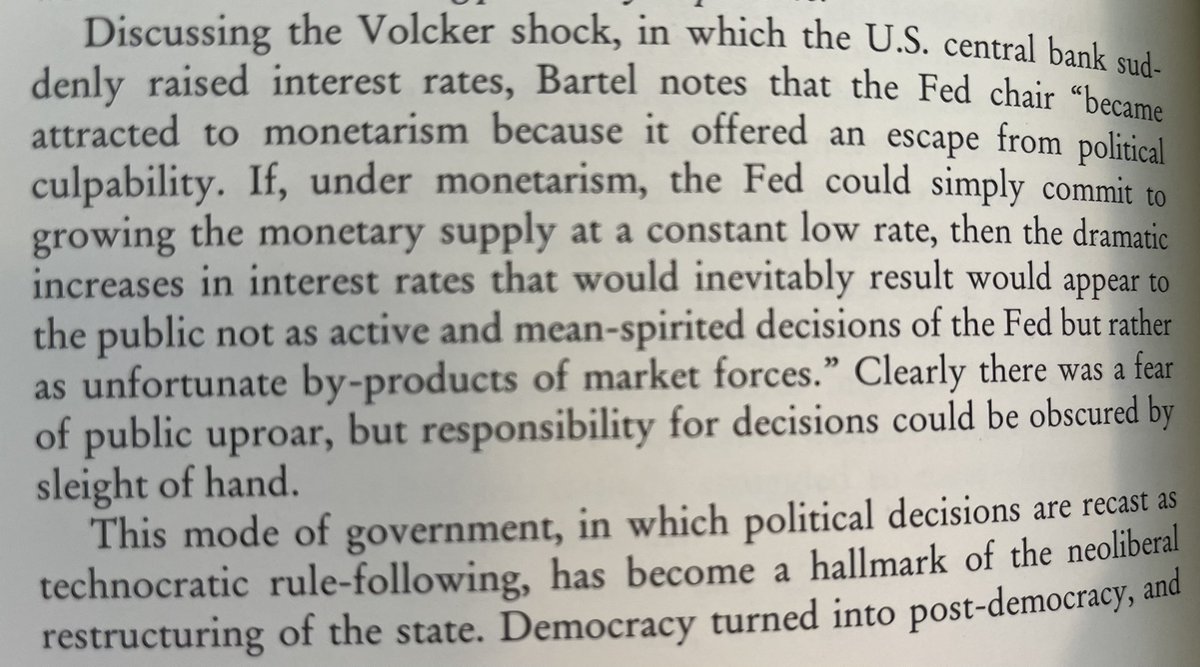
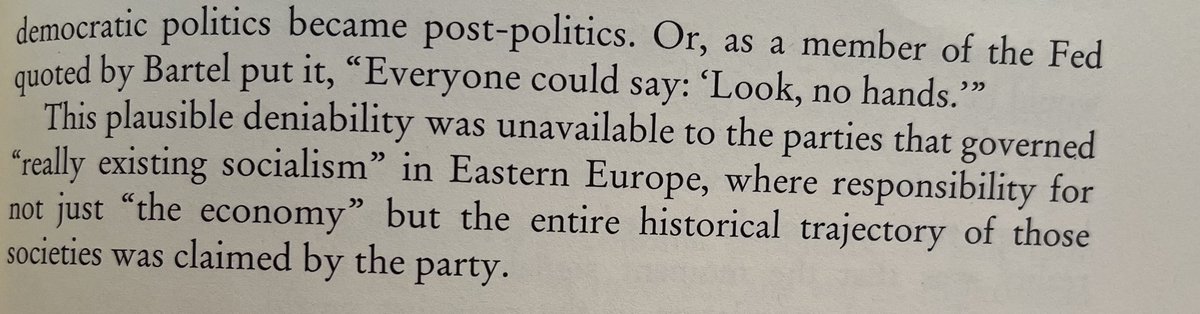
That is, the political class could deflect blame for austerity onto the supposedly external, apolitical workings of the economy. Overseers of planned economies had no such option — maybe in part because the communist big Other of History had been quietly put to rest post Stalin?
In other words, sacrifices could be sustained in socialist states not just through harsh repression but also through a different generation of transcendent authority: an identification of the party with History itself (Zizek discusses this often).
Once the authority rested only on immanent grounds — providing economic security, a decent standard of living — no transcendent ascription of agency underwrote the party’s power, leaving it unable to “break promises” as Alex discusses via Bartel’s book. americanaffairsjournal.org
As Dupuy argues, the political basis of the market economy is not its immanent capacity to provide materially for people, as often claimed, but its success at generating exteriority and transcendence, a claim this example seems to fortify.
Loading suggestions...