

Most people try and make financial statements hard.
But, they’re not much different than your personal finances.
Let’s break it down:
But, they’re not much different than your personal finances.
Let’s break it down:
Each company has 3 financial statements.
To simplify, let’s compare them to your personal finances:
• Income Statement = Budget
• Balance Sheet = Net Worth Statement
• Statement of Cash Flows = Bank Statement
To simplify, let’s compare them to your personal finances:
• Income Statement = Budget
• Balance Sheet = Net Worth Statement
• Statement of Cash Flows = Bank Statement
• Income Statement
This statement tells you whether or not you’ve made a profit over a given period of time.
The formula: Revenue - Expenses = Profit
This statement tells you whether or not you’ve made a profit over a given period of time.
The formula: Revenue - Expenses = Profit
Just like a budget, you itemize your expense into categories that help you make decisions.
Revenue = Salary/Income
Expenses = the money you spend
Revenue = Salary/Income
Expenses = the money you spend

When looking at the Income Statement, ask these questions:
• Balance Sheet
This statement tells you a company’s financial strength at a specific snapshot in time.
The formula: Assets = Liabilities + Equity OR
Assets - Liabilities = Equity
This statement tells you a company’s financial strength at a specific snapshot in time.
The formula: Assets = Liabilities + Equity OR
Assets - Liabilities = Equity
Like a Net Worth Statement, the Balance Sheet helps you understand:
• What you own
• What you owe
• What is remaining
• What you own
• What you owe
• What is remaining
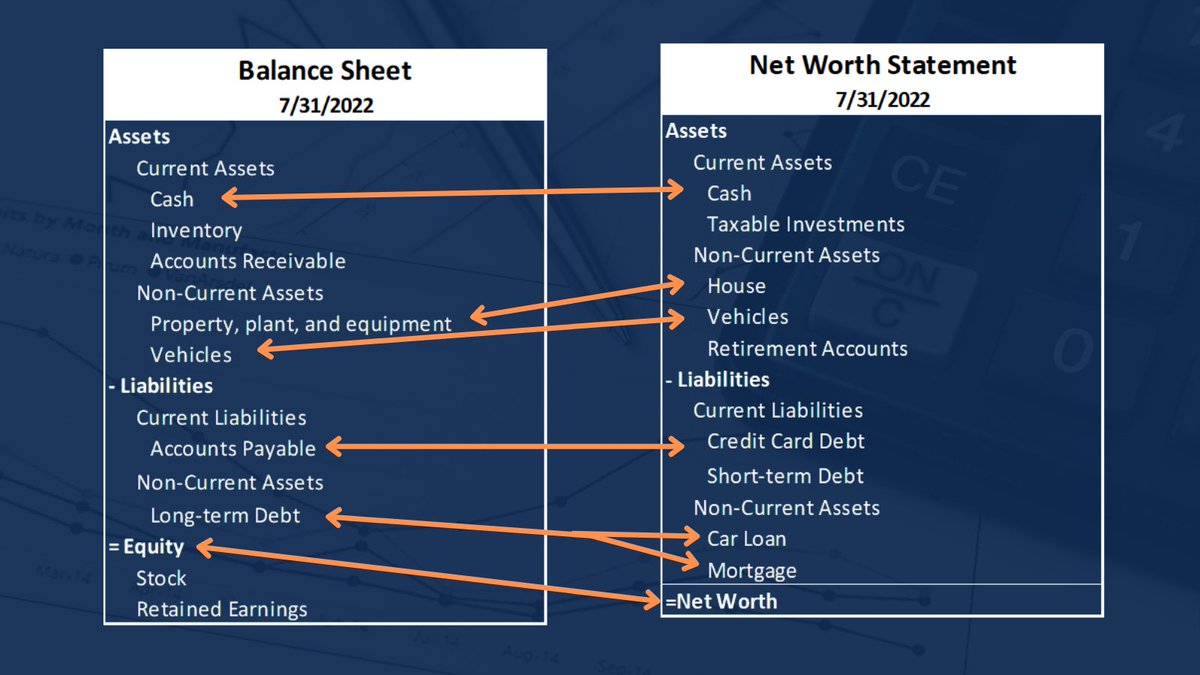
When looking at a Balance Sheet, ask these questions:
• Statement of Cash Flows
This statement helps you understand how cash has been spent over a period of time.
The formula: Beginning Cash +/- Change in Cash During Period = Ending Cash
This statement helps you understand how cash has been spent over a period of time.
The formula: Beginning Cash +/- Change in Cash During Period = Ending Cash
Like your Bank Account, the Cash Flow Statement shows the movement of cash.
Now, your Bank Statement doesn’t categorize transactions, but the Cash Flow Statement groups them into 3 categories:
• Operating Activities
• Investing Activities
• Financing Activities
Now, your Bank Statement doesn’t categorize transactions, but the Cash Flow Statement groups them into 3 categories:
• Operating Activities
• Investing Activities
• Financing Activities
Transactions in the Bank Statement are essentially what is used to create the Statement of Cash Flows.
As you see below, transactions end up summarized into different categories (or sections) on the Statement of Cash Flows.
As you see below, transactions end up summarized into different categories (or sections) on the Statement of Cash Flows.

When looking at the Statement of Cash Flows, ask these questions:
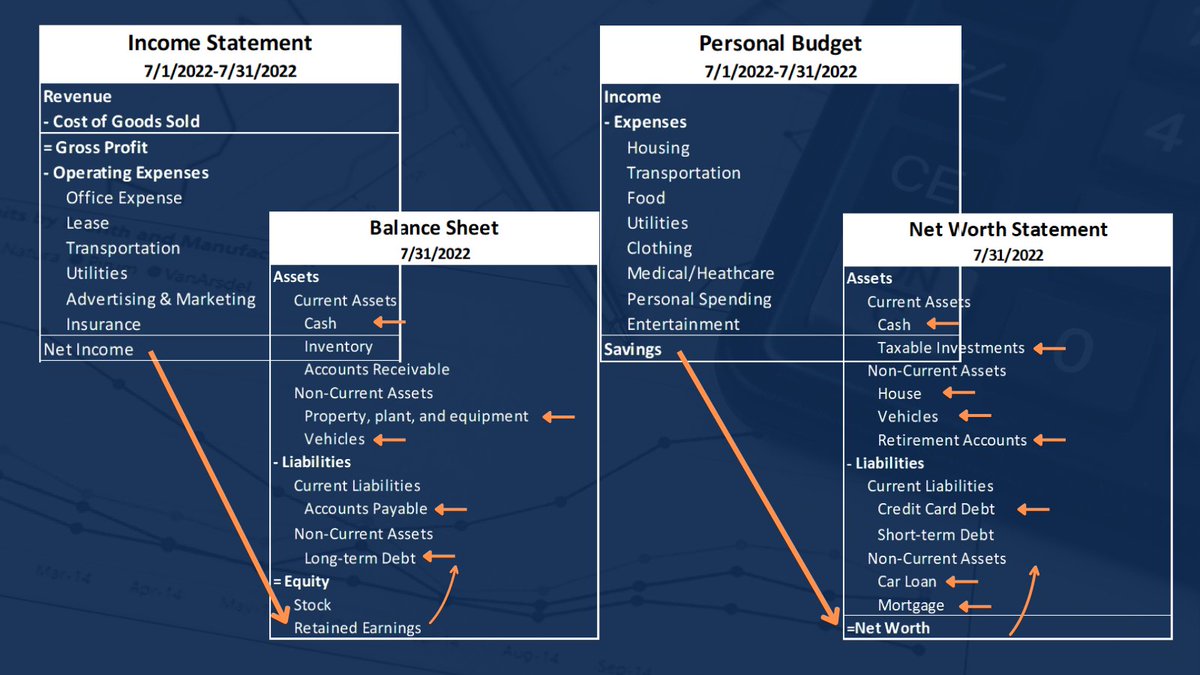
Creating a gap between EARNINGS and SPENDING is how you can “retire early” in personal finance.
This gap gets invested into the investment of your choice:
• Stocks
• Real Estate
• Businesses
This gap gets invested into the investment of your choice:
• Stocks
• Real Estate
• Businesses
This gap and reinvestment adds to your net worth.
In the same way, money generated in PROFITS of a business ultimately increases the value of that business.
Similar to the way Stocks throw off an 8-10% annual return, profits reinvested can generate more profits.
In the same way, money generated in PROFITS of a business ultimately increases the value of that business.
Similar to the way Stocks throw off an 8-10% annual return, profits reinvested can generate more profits.
If you’re interested to learn more, join me in cohort Financial Statements Decoded.
It starts Monday, August 22 and we only have 9 spots left!
Join today: kurtishanni.com
It starts Monday, August 22 and we only have 9 spots left!
Join today: kurtishanni.com
If you learned from this thread, go to the first tweet linked below and:
• Bookmark it to reference it later
• Retweet the first tweet to spread the knowledge
• Bookmark it to reference it later
• Retweet the first tweet to spread the knowledge
Every Thursday I write a newsletter and share 1 framework and 1 financial concept.
Subscribe here:
kurtishanni.com
Subscribe here:
kurtishanni.com
Loading suggestions...