

Isaiah 41:25’s prophecy about prophet Muhammad SAW
🧵:
🧵:

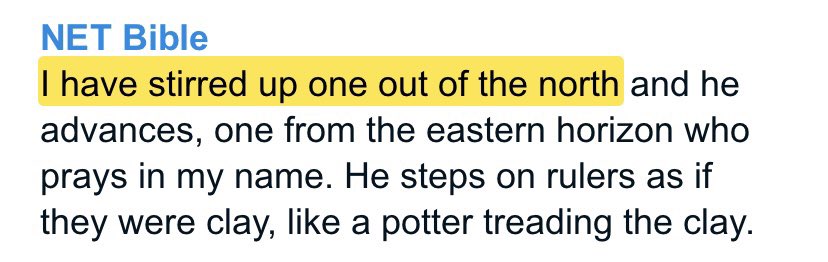
God summons this Servant from the north.
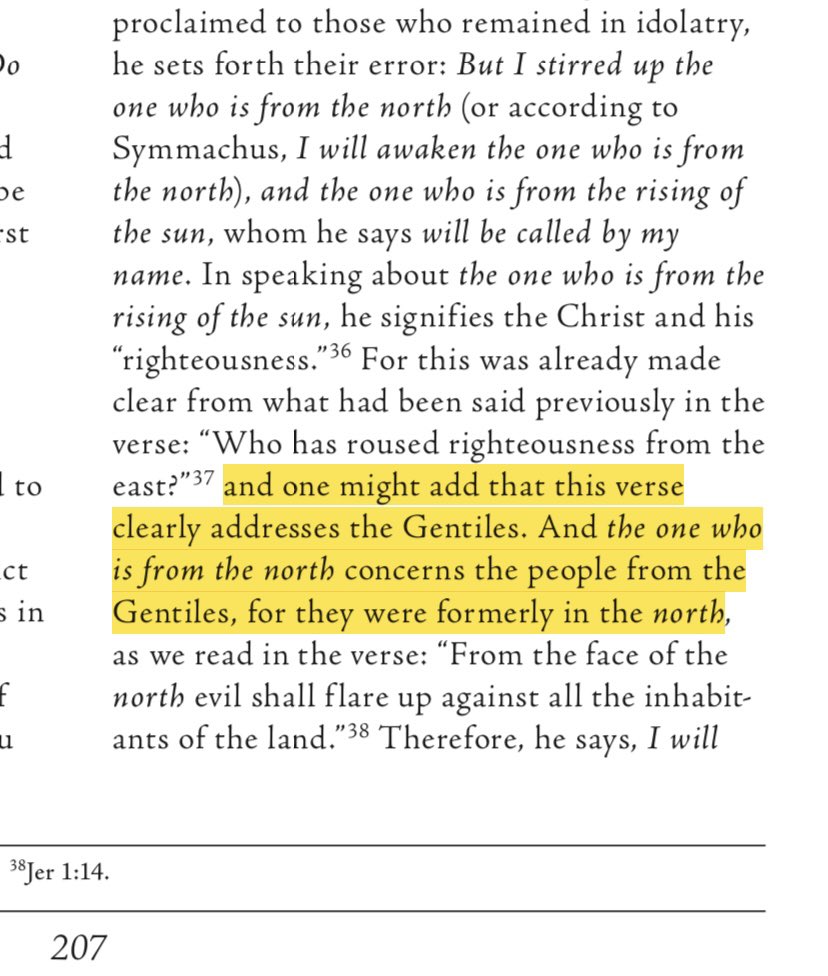
Eusebius of Caesarea (d. 339 AD) proves that “north” in the Bible signifies the Gentiles.
Thus, it should be rendered: “I have stirred up one out of the Gentiles” and our prophet SAW was a Gentile.
Eusebius of Caesarea (d. 339 AD) proves that “north” in the Bible signifies the Gentiles.
Thus, it should be rendered: “I have stirred up one out of the Gentiles” and our prophet SAW was a Gentile.
God continues to describe the Servant and says:
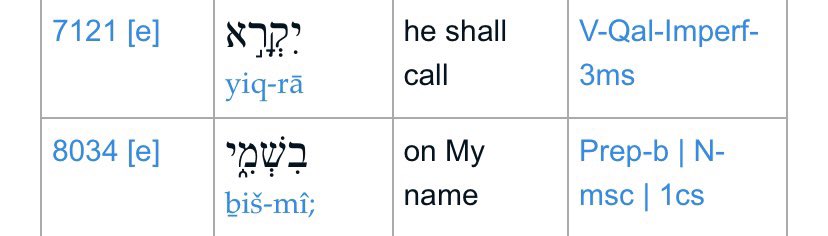
“𝘆𝗶𝗾𝗿ā ḇ𝗶š𝗺î” the most literal translation being: “He will read in my name.”
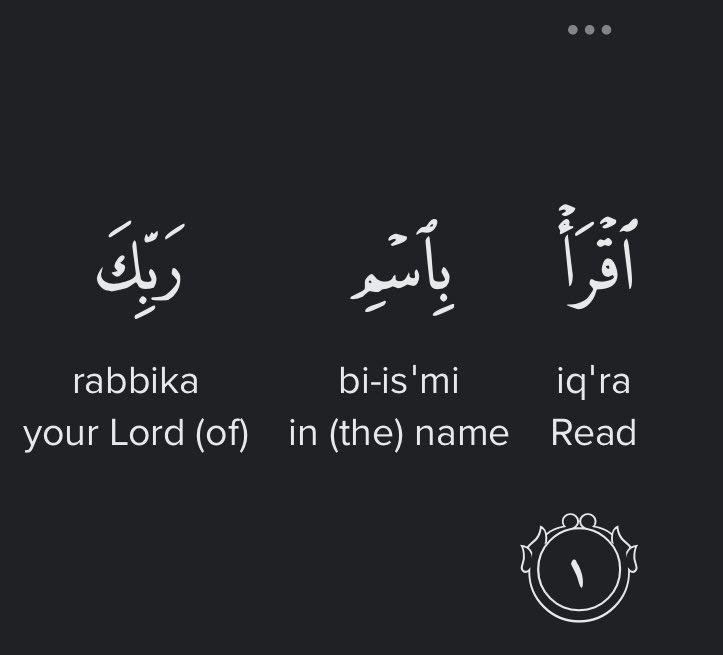
The very first words revealed in the Qur’an were:
“𝗶𝗾’𝗿𝗮 𝗯𝗶-𝗶𝘀’𝗺𝗶 rabbika” meaning: “Read in the name of your Lord.”
“𝘆𝗶𝗾𝗿ā ḇ𝗶š𝗺î” the most literal translation being: “He will read in my name.”
The very first words revealed in the Qur’an were:
“𝗶𝗾’𝗿𝗮 𝗯𝗶-𝗶𝘀’𝗺𝗶 rabbika” meaning: “Read in the name of your Lord.”
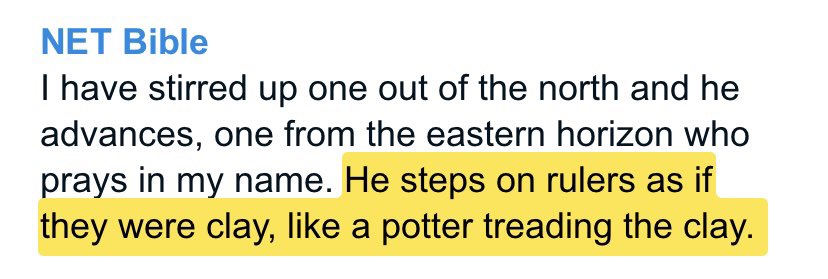
The Servant is given the ability to destroy Rulers very easily.
Our prophet SAW was able to do this.
Our prophet SAW was able to do this.
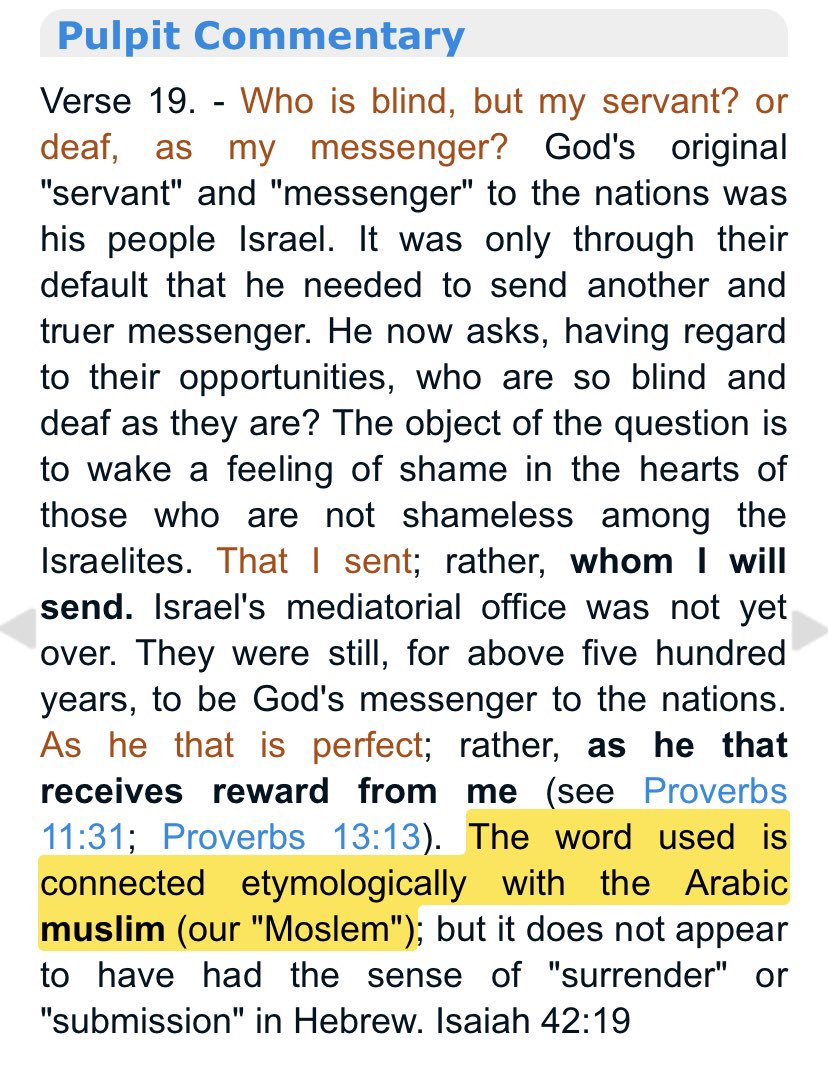
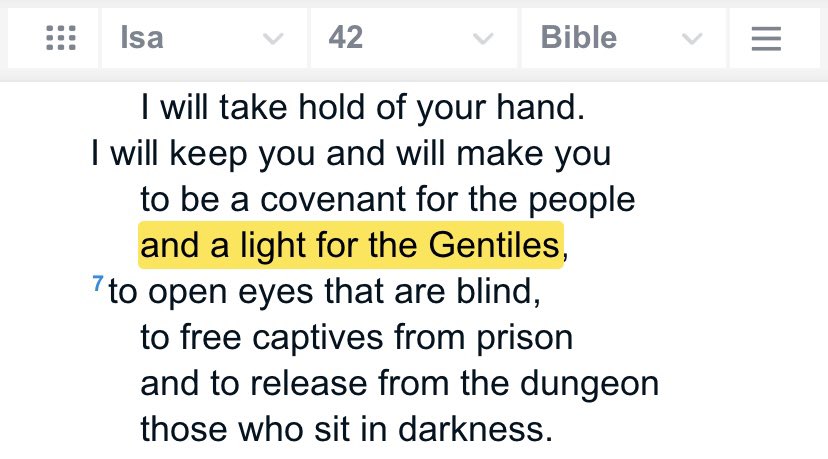
Lastly, the very next chapter (Isaiah 42) calls the Servant: “Muslim” and a light for the “Gentiles.”
This is relevant because all Church Fathers and many Jewish commentators concede that Isaiah 41 & 42 speak of the very same Servant.
This is relevant because all Church Fathers and many Jewish commentators concede that Isaiah 41 & 42 speak of the very same Servant.
Summary:
1) A Gentile.
2) Reads in the name of his Lord.
3) Conquers Rulers.
4) Comes for the Gentiles.
5) A Muslim.
1) A Gentile.
2) Reads in the name of his Lord.
3) Conquers Rulers.
4) Comes for the Gentiles.
5) A Muslim.
Question: “Why couldn’t this be Cyrus.”
Answer: He contradicts 2), 4) and 5).
Answer: He contradicts 2), 4) and 5).
Question: “Why couldn’t this be Jesus.”
Answer: Contradicts 1), hadn’t fulfilled 3) and contradicts 4).
Answer: Contradicts 1), hadn’t fulfilled 3) and contradicts 4).
Question: “How does Cyrus contradict 2)?”
Answer: Though it is true he acknowledged God in Ezra 1:2 and 2 Chronicles 36:23, he didn’t read in His name (literal translation) or pray in His name (NET) and he was a polytheist, so it’s harder to make him fit.
Answer: Though it is true he acknowledged God in Ezra 1:2 and 2 Chronicles 36:23, he didn’t read in His name (literal translation) or pray in His name (NET) and he was a polytheist, so it’s harder to make him fit.
Question: “Why can’t Jesus fulfill 3) in his second coming?”
Answer: He theoretically could but it is absurd to wait for an already fulfilled prophecy to be fulfilled in someone else.
Answer: He theoretically could but it is absurd to wait for an already fulfilled prophecy to be fulfilled in someone else.
Question: “Why couldn’t the conquering Rulers part be interpreted metaphorically?”
Answer: It could but then every prophecy can be interpreted metaphorically and anyone can claim its fulfillment in himself. We don’t want that.
Answer: It could but then every prophecy can be interpreted metaphorically and anyone can claim its fulfillment in himself. We don’t want that.
Loading suggestions...