

1/17 A war that the world has not seen for a long time...
#RussianUkrainianWar #ATACMSForUkraine #OSINT @TheStudyofWar @McFaul @AlexKokcharov @KofmanMichael @shashj @general_ben @apmassaro3 #Oryx
#RussianUkrainianWar #ATACMSForUkraine #OSINT @TheStudyofWar @McFaul @AlexKokcharov @KofmanMichael @shashj @general_ben @apmassaro3 #Oryx

2/17 Russia's war against Ukraine seems to many people to be local and not too big on a global scale. But if we compare it with World Wars І and II, then in terms of the level of destruction of artillery, Russia is not inferior to the artillery of the USSR in 1941-1942.
3/17 If you divide it by the length of the front line, then the destruction caused by Russian artillery is comparable to the scale of the destruction of Hitler's army in 1941-1944.
We see one of the most destructive wars right now. And it is difficult to call it a local conflict.
We see one of the most destructive wars right now. And it is difficult to call it a local conflict.
4/17 How long will Russia be able to feed this beast?
According to Novaya Gazeta, Russia had 15 million artillery shells at the beginning of the war.
Also, Russia can produce another 1 million shells per year and restore 0.5 million old Soviet shells novayagazeta.eu
According to Novaya Gazeta, Russia had 15 million artillery shells at the beginning of the war.
Also, Russia can produce another 1 million shells per year and restore 0.5 million old Soviet shells novayagazeta.eu

5/17 According to my calculations, this will be enough for about 11 months.
But from November to April, Russia will certainly experience logistics problems due to bad roads.
Most likely, Russia will not experience an acute shortage of shells until next summer-autumn.
But from November to April, Russia will certainly experience logistics problems due to bad roads.
Most likely, Russia will not experience an acute shortage of shells until next summer-autumn.

6/ Maybe the artillery will exhaust its resource earlier?
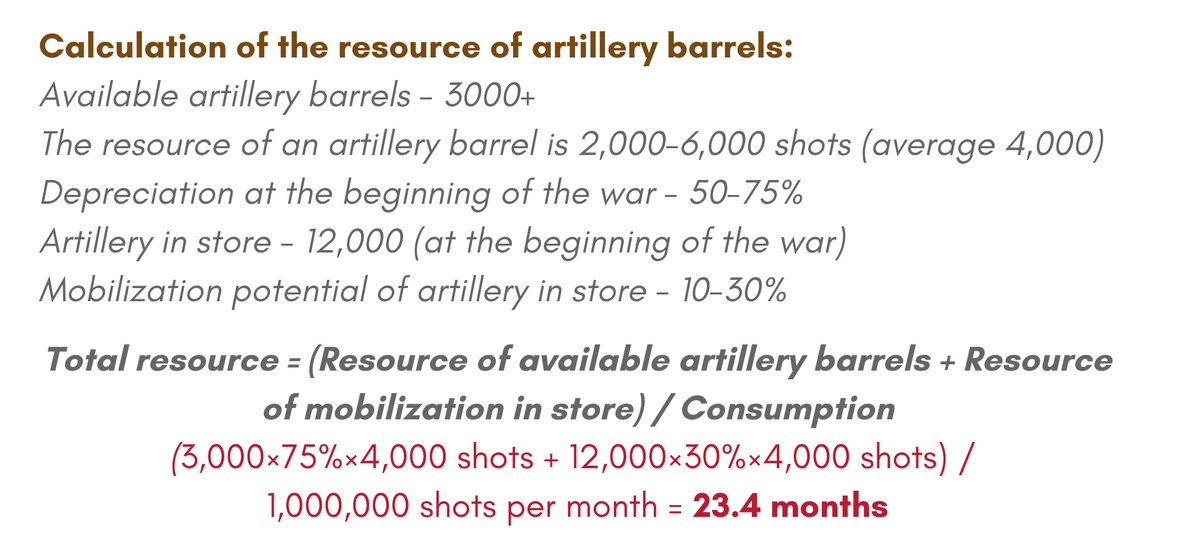
It is difficult to say what wear Russian artillery had at the beginning of the war. But most likely, the existing artillery + restored systems from warehouses will be enough to maintain intensive shelling for 12-24 months.
It is difficult to say what wear Russian artillery had at the beginning of the war. But most likely, the existing artillery + restored systems from warehouses will be enough to maintain intensive shelling for 12-24 months.
7/17 Trench warfare
If Ukraine does not have enough weapons, and Russia does not have enough soldiers to conduct large-scale offensive actions, the war may turn into trench warfare in the fall.
In trench warfare, the one with more artillery has the upper hand.
If Ukraine does not have enough weapons, and Russia does not have enough soldiers to conduct large-scale offensive actions, the war may turn into trench warfare in the fall.
In trench warfare, the one with more artillery has the upper hand.
8/17 Long-term war
A war of attrition is not beneficial to Ukraine, nor to the US and its allies. Russia has sufficient reserves to conduct intensive military operations. Sanctions will catch up with Putin much later than the missiles and ammunition will run out.
A war of attrition is not beneficial to Ukraine, nor to the US and its allies. Russia has sufficient reserves to conduct intensive military operations. Sanctions will catch up with Putin much later than the missiles and ammunition will run out.
9/17 How to prevent this?
To prevent a prolonged bloody war, one of these conditions must be present (preferably all 3):
a) Ukraine must have enough armored vehicles to conduct large-scale offensive operations
To prevent a prolonged bloody war, one of these conditions must be present (preferably all 3):
a) Ukraine must have enough armored vehicles to conduct large-scale offensive operations
10/17
b) Ukraine must have enough artillery to conduct an effective counter-battery fight along the entire front line
c) Ukraine should have enough long-range weapons to hit logistics routes (bridges, railways), airbases, and warehouses deep in the rear
b) Ukraine must have enough artillery to conduct an effective counter-battery fight along the entire front line
c) Ukraine should have enough long-range weapons to hit logistics routes (bridges, railways), airbases, and warehouses deep in the rear
11/17 Armor
Ukraine received about 1,000 armored vehicles and 300+ tanks. This is essential, but not enough to form a large-scale strike group.
Ukraine received about 1,000 armored vehicles and 300+ tanks. This is essential, but not enough to form a large-scale strike group.
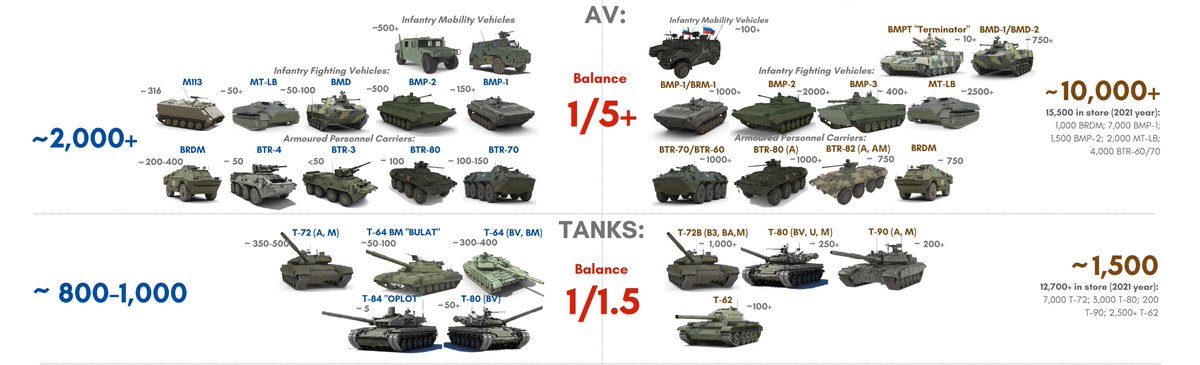
12/17 Afghanistan received 24,000 HUMVEE and 800 infantry fighting vehicles from the USA. Yes, these are very different wars, both in terms of duration and scale of actions. But I do not think that the goals of democracy in Ukraine are less than the goals in the East...
13/17 In addition, the equipment received by Ukraine is very different. In the short term, this is acceptable. But in a long-term war, you need to make a system of repair and maintenance of this equipment. And this is difficult to do with dozens of different systems.
14/17 Artillery
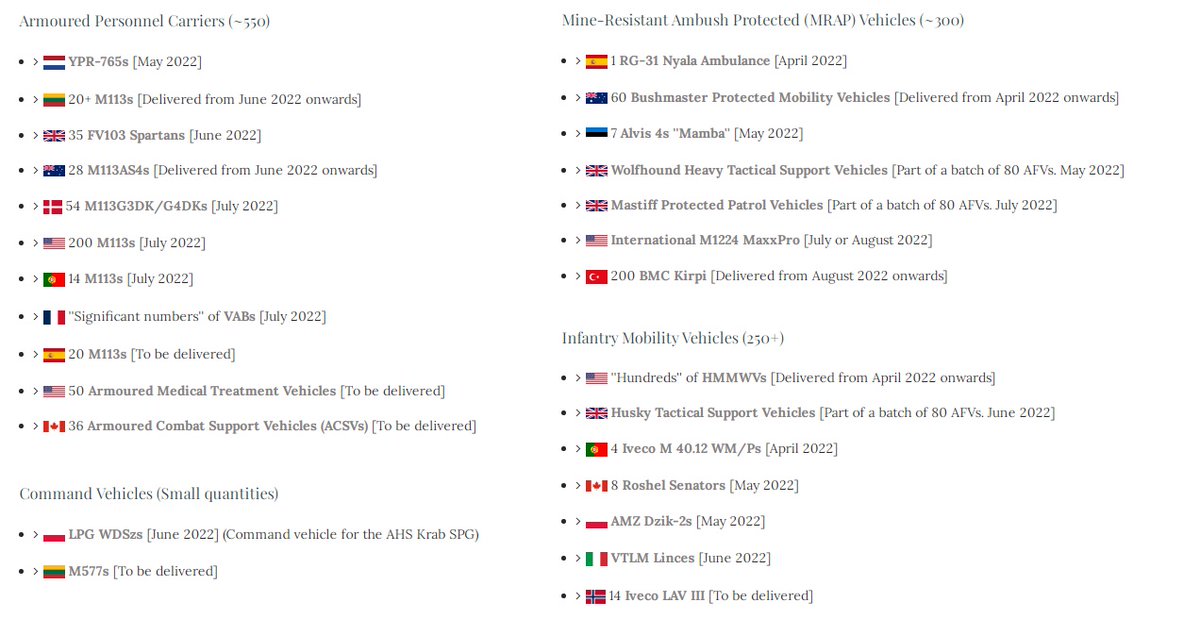
Ukraine received about 340 artillery systems. And this is also a lot, but it is much less than what Ukraine has already lost in this war. And Ukraine already has many different artillery systems supplied by allies. This is also a problem in the future (if not now)
Ukraine received about 340 artillery systems. And this is also a lot, but it is much less than what Ukraine has already lost in this war. And Ukraine already has many different artillery systems supplied by allies. This is also a problem in the future (if not now)


15/17 The firepower of Ukrainian artillery dropped sharply in May. Now the soldiers often complain that the artillery does not have time in all directions and is often late.
16/17 HIMARS and M270 really play a big role. But they rather restrain the Russian army than destroy it.
Russia is forced to adapt to new conditions. Logistics becomes more difficult, and the consumption of shells is greater.
Russia is forced to adapt to new conditions. Logistics becomes more difficult, and the consumption of shells is greater.
17/17 Ukraine needs powerful long-range missiles, such as ATAСMS. Which are capable of destroying fortified infrastructure facilities, air bases, and warehouses at a long distance. Then the Russian supply may come to a dead end.
Loading suggestions...