

There's a term called "The Spiral of Silence" and it describes the phenomenon that people are willing to express an opinion only if they think it's a popular one. This has dramatic consequences to our society.
Here's how to understand it (and how avoid falling into its trap):
Here's how to understand it (and how avoid falling into its trap):
The term comes from German researcher Elisabeth Noelle-Neumann in the 1960s and ’70s.
According to her theory, if we think an opinion is unpopular, we will avoid expressing it. If we think it is popular, we will make a point of showing we think the same as others.
According to her theory, if we think an opinion is unpopular, we will avoid expressing it. If we think it is popular, we will make a point of showing we think the same as others.
Controversy is also a factor—we may be willing to express an unpopular uncontroversial opinion but not an unpopular controversial one.
We perform a complex dance whenever we share views on anything morally loaded.
We perform a complex dance whenever we share views on anything morally loaded.
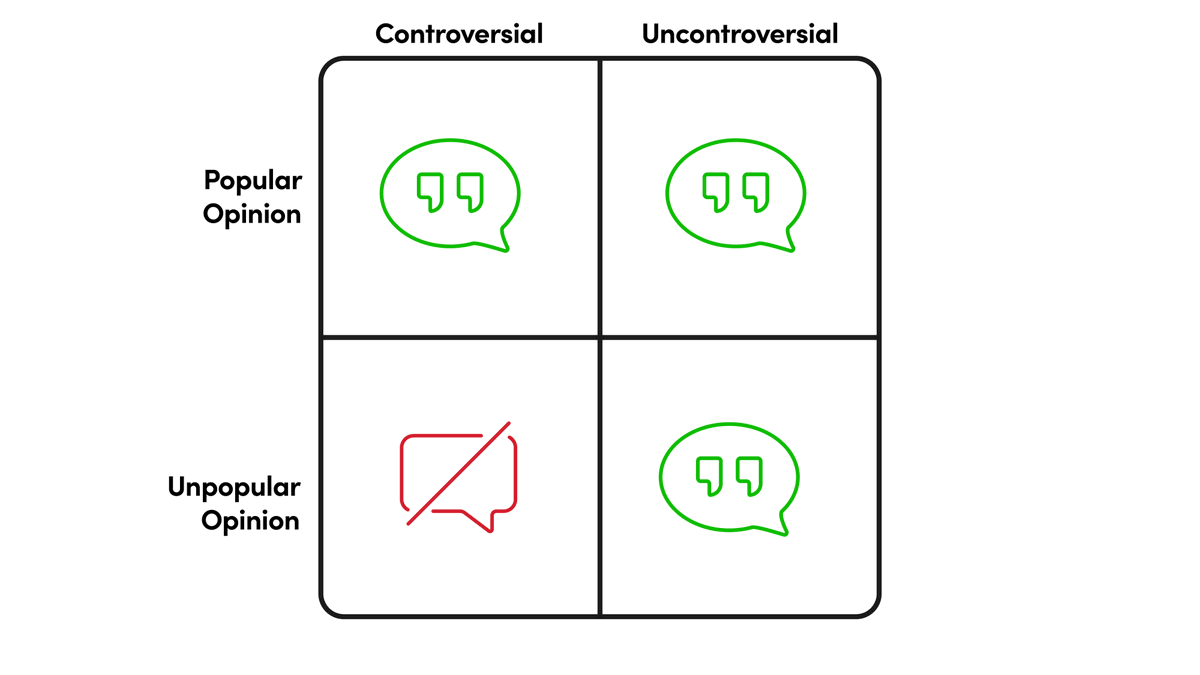
Our perception of how “safe” it is to voice a particular view comes from the clues we pick up, consciously or not, about what everyone else believes.
This is why only one viewpoint is often popular in current discourse. That viewpoint is the assumed majority.
Even if people think otherwise, they won't say that because they don't want to alienate themselves.
Even if people think otherwise, they won't say that because they don't want to alienate themselves.
Naturally, this leads a group of people to assume *everyone else* is thinking the same thing but themselves. They assume they're in the minority.
Since everyone else is also in this exact position, everyone stays silent.
Since everyone else is also in this exact position, everyone stays silent.
Now, let's try and illustrate this:
Suppose you received the two cards below and had to identify which line on the right card matched the height of the line on the left card.
Pretty easy, right? Which do you think it is?
Suppose you received the two cards below and had to identify which line on the right card matched the height of the line on the left card.
Pretty easy, right? Which do you think it is?
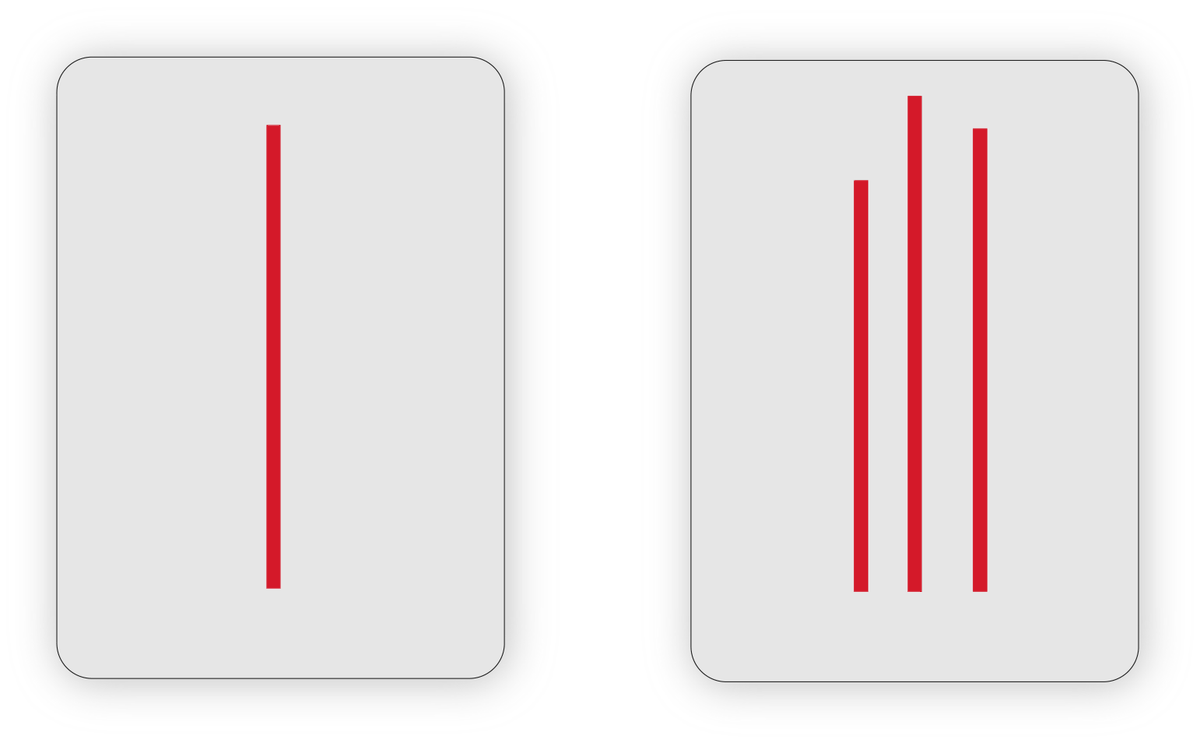
Now, imagine you are paired with a group of people who have to decide which line is the proper height. You know which line is the right answer, the one on the far right.
But if everyone else says the one in the middle, would you be swayed to change your mind? Maybe, maybe not.
But if everyone else says the one in the middle, would you be swayed to change your mind? Maybe, maybe not.
This actually happened in the Asch conformity experiments.
During which, a group of 8 participants were situated in a room to determine the proper line, but 7 of these were actors, trying to throw off the 8th person by saying the incorrect line.
During which, a group of 8 participants were situated in a room to determine the proper line, but 7 of these were actors, trying to throw off the 8th person by saying the incorrect line.
36.8% of the participants ended up conforming to the majority's answers–they were swayed by popular opinion.
Now imagine that but on a much larger scale with more important topics and that's how the spiral of silence works.
Now imagine that but on a much larger scale with more important topics and that's how the spiral of silence works.
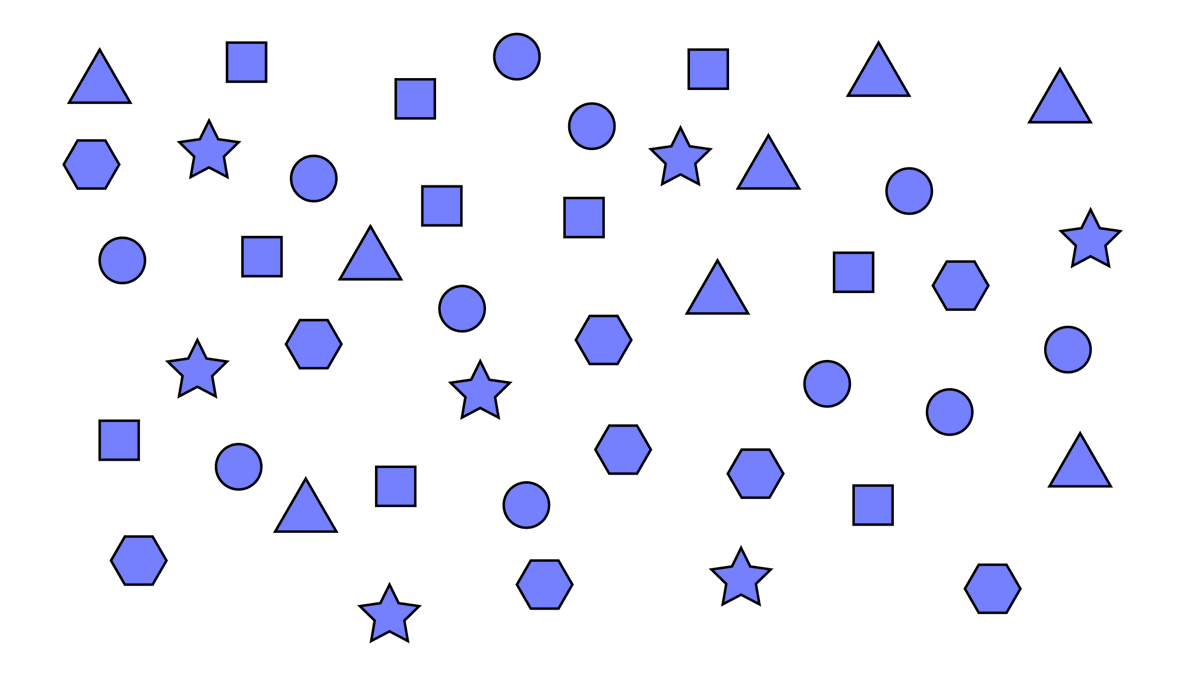
Take a look at this example of a diverse community. Each shape represents a different viewpoint:
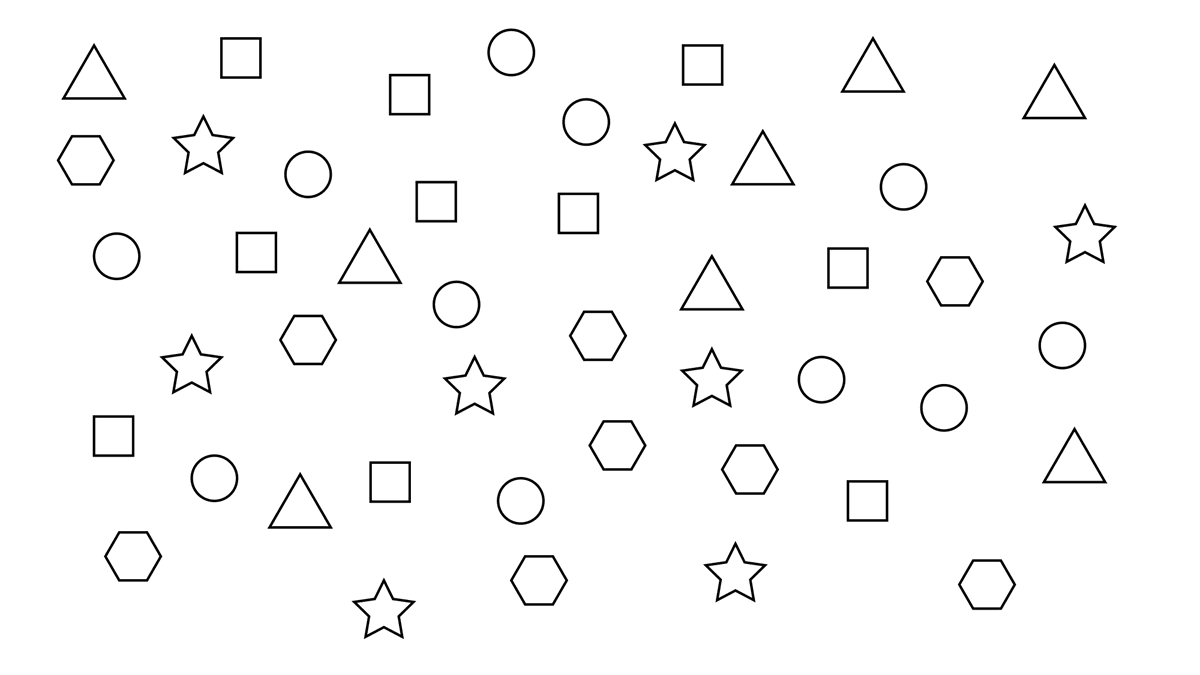
Now let's say the color of the shape represents what that person *says* they believe.
In a perfect world, all shapes would match their corresponding color, like in the image.
All triangles are saying the same thing, all circles are saying the same thing, and so on.
In a perfect world, all shapes would match their corresponding color, like in the image.
All triangles are saying the same thing, all circles are saying the same thing, and so on.
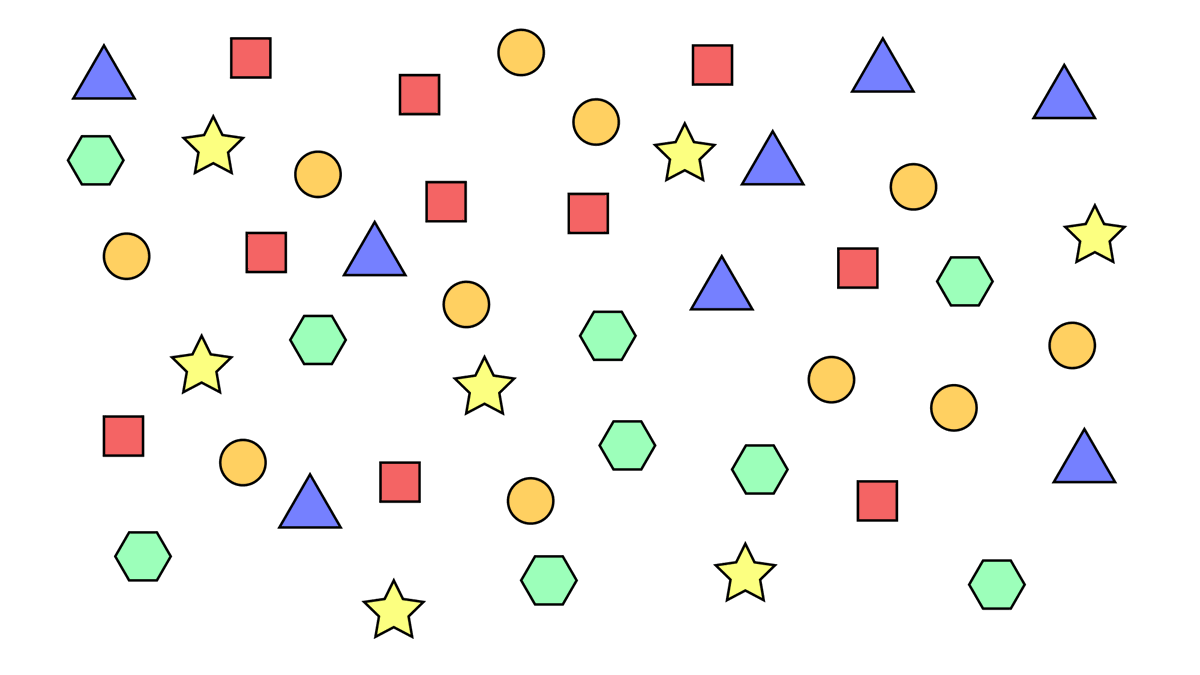
But if the triangles start opposing dissenting ideas, other shapes become more afraid to voice their opinion. They either silently nod along with the triangles or say they agree with them.
Now, the community starts to look like this...
Now, the community starts to look like this...
Even though the different beliefs are still held by each shape, those beliefs were slowly removed from the discourse because the shapes never said anything.
They spiraled into silence.
They spiraled into silence.
The end result of the spiral of silence is a point where no one publicly voices a minority opinion, regardless of how many people believe it.
The first implication of this is that the picture we have of what most people believe is not always accurate.
The first implication of this is that the picture we have of what most people believe is not always accurate.
A second implication is that the possibility of discord makes us less likely to voice an opinion at all, assuming we are not trying to drum up conflict.
A third implication is that what seems like a sudden change in mainstream opinions can in fact be the result of a shift in what is acceptable to voice, not in what people actually think.
While this was less the case in the past, the internet makes it possible for a vocal minority to make their opinions seem far more prevalent than they actually are—and therefore more acceptable.
Indeed, the most extreme views on any spectrum can end up seeming most normal online because people with a moderate take have less of an incentive to make themselves heard.
Loading suggestions...