

By 2030, most of your life and work will happen on social media.
It's inevitable.
If you want to be prepared, read on:
It's inevitable.
If you want to be prepared, read on:
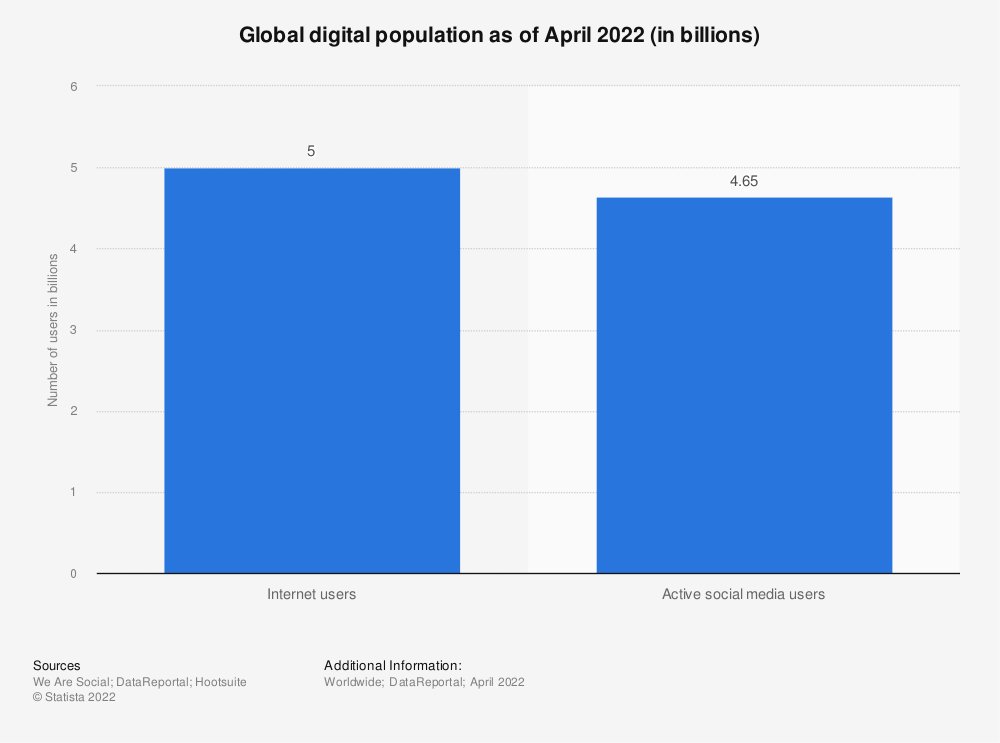
Today, more than half of the world's population — 4.65 billion people — are active social media users.
The need to connect is one of the most powerful human drivers.
And the numbers reflect it.
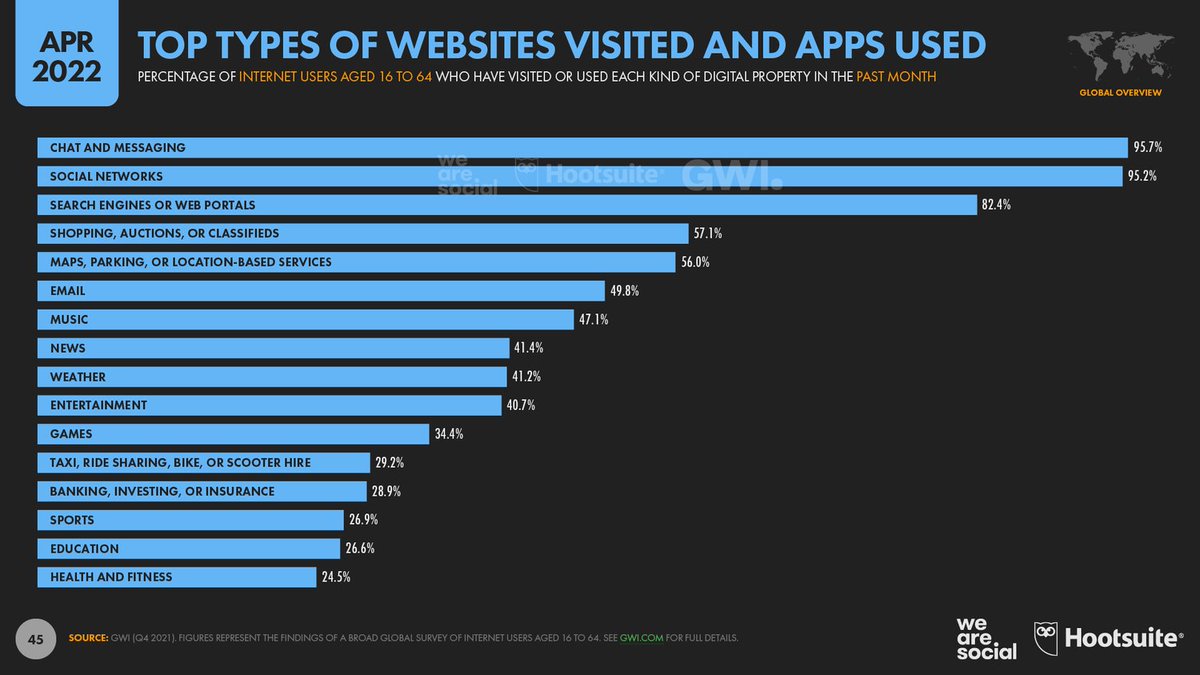
Chat, messaging and social networks are the top two reasons people use the internet.
And the numbers reflect it.
Chat, messaging and social networks are the top two reasons people use the internet.
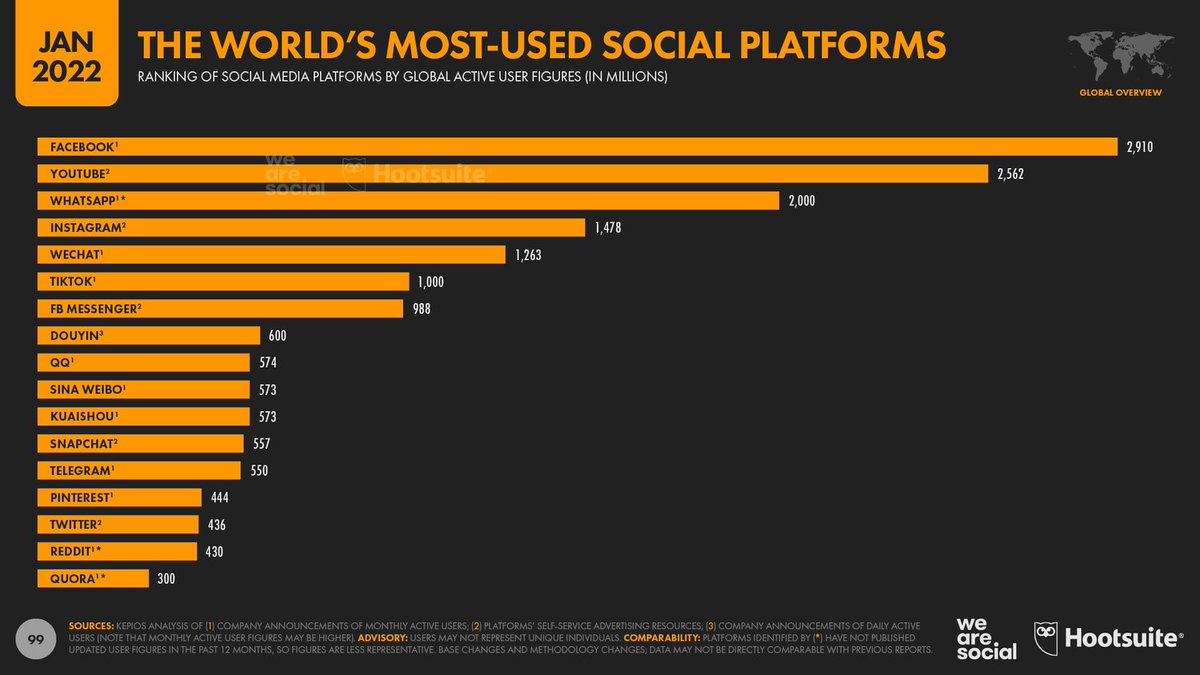
The most used social media platforms (in billions of users) are:
Facebook - 2.9 B
YouTube - 2.56 B
WhatsApp - 2.0 B
Instagram - 1.5 B
WeChat - 1.26 B
TikTok - 1.0 B
Facebook - 2.9 B
YouTube - 2.56 B
WhatsApp - 2.0 B
Instagram - 1.5 B
WeChat - 1.26 B
TikTok - 1.0 B
These platforms present real concerns for users:
Privacy, ownership, harassment, spam, bots, fake news, hate speech, security breaches, a business model based on collecting data and more.
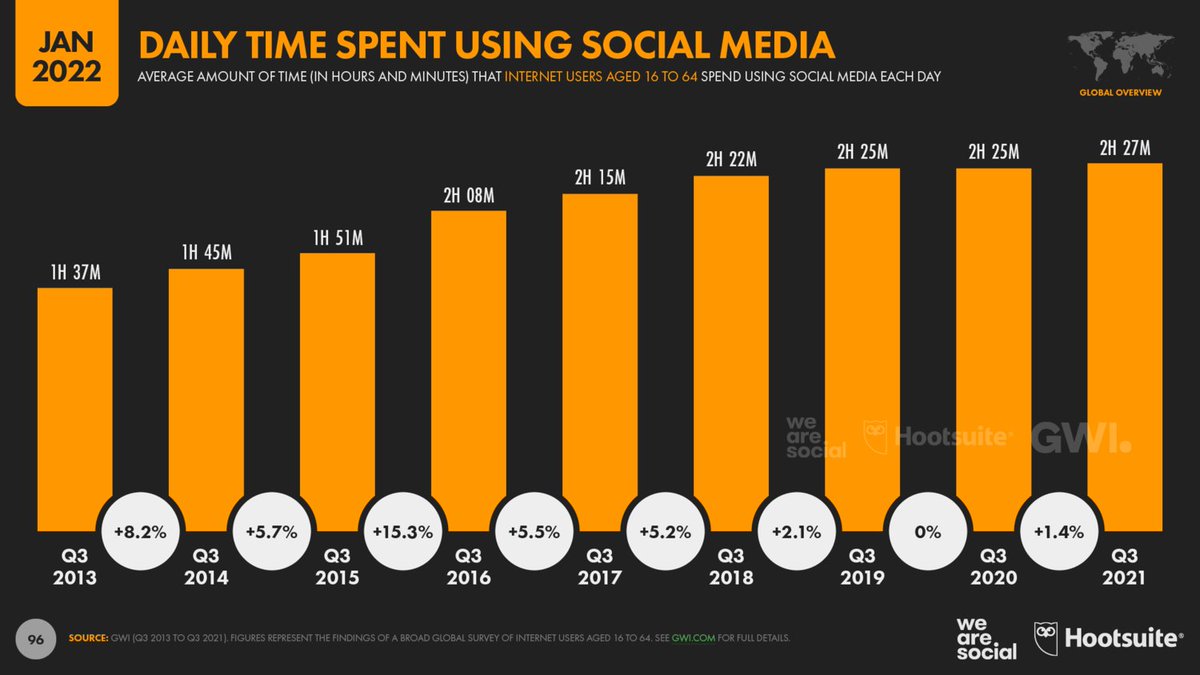
Yet, on average, we use them for 2 hours and 27 minutes per day.
Privacy, ownership, harassment, spam, bots, fake news, hate speech, security breaches, a business model based on collecting data and more.
Yet, on average, we use them for 2 hours and 27 minutes per day.
And with the new generation this trend is growing.
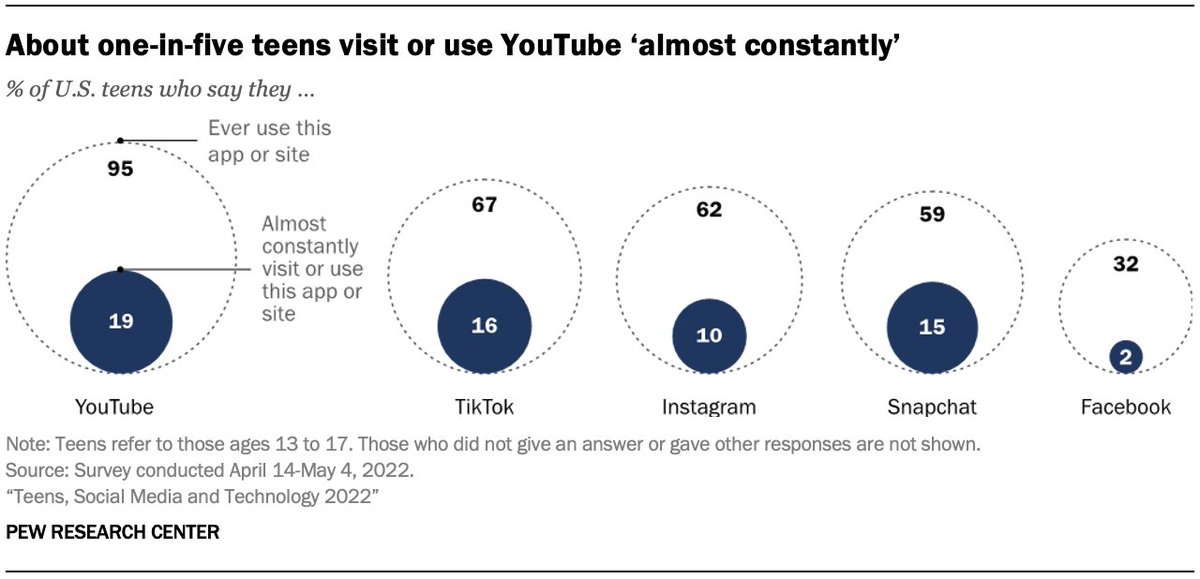
According to @pewresearch, 35% of teens are using at least one of the top 5 platforms — YouTube, TikTok, Instagram, Snapchat and Facebook — almost constantly.
According to @pewresearch, 35% of teens are using at least one of the top 5 platforms — YouTube, TikTok, Instagram, Snapchat and Facebook — almost constantly.
Most people on these platforms are looking for human connection, entertainment, or gathering information.
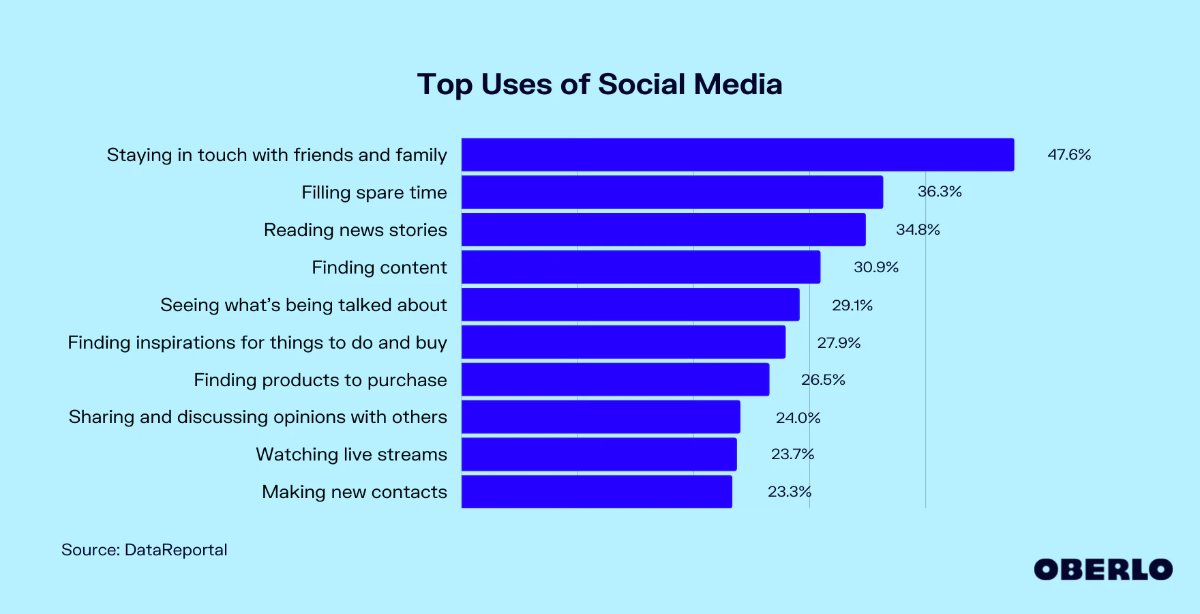
But increasingly, social media is becoming a place for work, for building a network and a following.
In 2022, 50 million content creators use social media to earn an income.
In 2022, 50 million content creators use social media to earn an income.
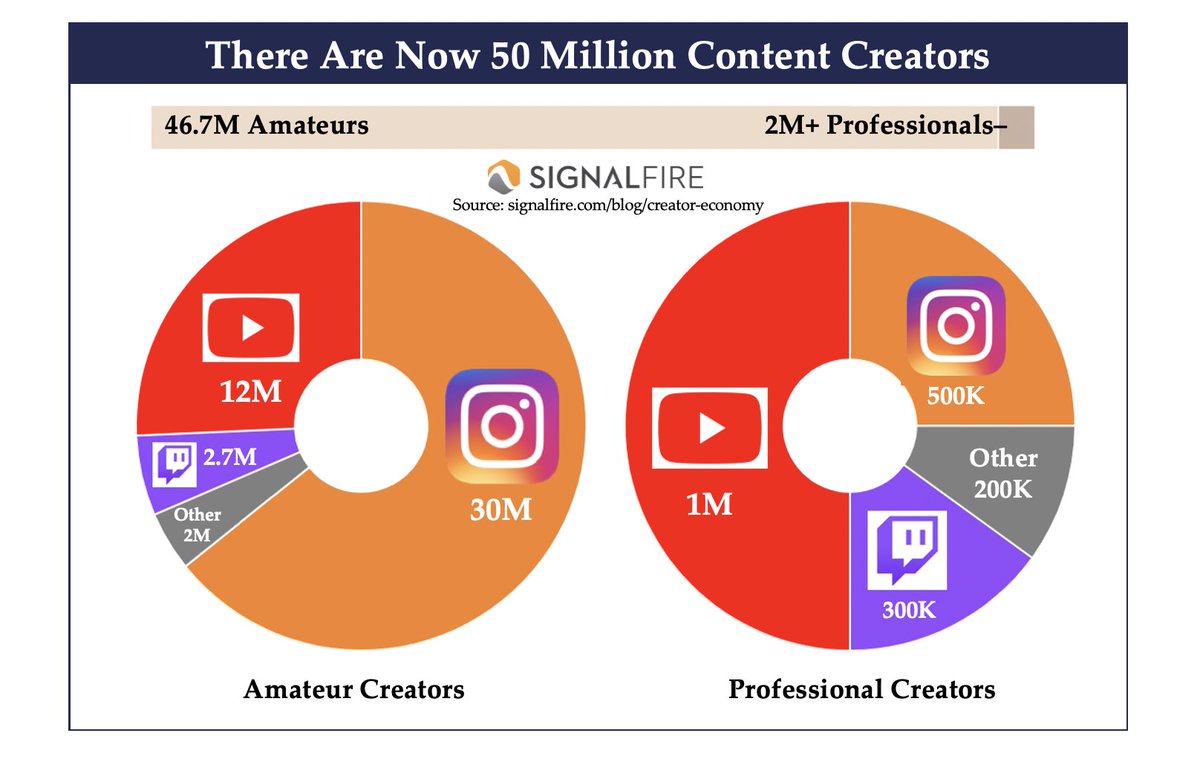
2M+ are Professional Individual Creators who are making content full-time:
YouTube: 1M creators have over 10K subscribers
Instagram: 500K have over 100k followers
Twitch: 300K are partners or affiliates
Others: 200K incl musicians, podcasters, writers etc.
YouTube: 1M creators have over 10K subscribers
Instagram: 500K have over 100k followers
Twitch: 300K are partners or affiliates
Others: 200K incl musicians, podcasters, writers etc.
46.7M are Amateur Individual Creators who are monetizing content creation part-time:
YouTube: 12M have between 100-10K subscribers
Instagram: 30M have between 50-100K followers
Twitch: 2.7M are non-partners
Others: 2M incl musicians, podcasters, writers etc.
YouTube: 12M have between 100-10K subscribers
Instagram: 30M have between 50-100K followers
Twitch: 2.7M are non-partners
Others: 2M incl musicians, podcasters, writers etc.
Clearly, even with massive flaws, social media is central to how we live and work in the 21st century.
And there's good news.
The technology is evolving. The internet is currently undergoing not just an update, but a metamorphosis.
And there's good news.
The technology is evolving. The internet is currently undergoing not just an update, but a metamorphosis.
With its decentralized nature and trustless framework, blockchain technology is transforming the internet
Add features like NFTs, gamification, tokenization, and the social media networks of the future will allow vast new possibilities.
Add features like NFTs, gamification, tokenization, and the social media networks of the future will allow vast new possibilities.
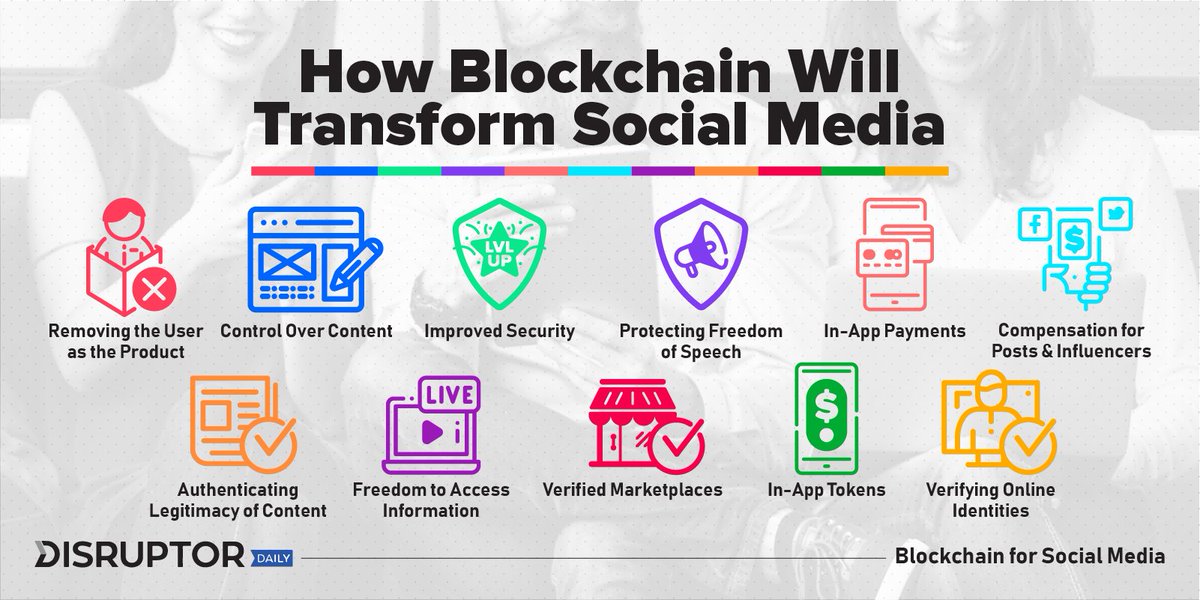
Web3 transforms social media with protocols and apps that are tailored for users and creators:
• removing user as product
• control over content
• improved security
• in-app payments
• compensation
• verifying online identities and more
• removing user as product
• control over content
• improved security
• in-app payments
• compensation
• verifying online identities and more
Aware of powerful new technology and new options for users, Meta CEO Mark Zuckerberg launched “Digital Collectibles” on Instagram.
This lets creators connect their digital wallets and choose which NFTs they want to share on Instagram.
techcrunch.com
This lets creators connect their digital wallets and choose which NFTs they want to share on Instagram.
techcrunch.com
TikTok, also rolled out Web3, entering into a strategic partnership with Immutable X.
Using Immutable X’s scaling solution for Ethereum, TikTok has dropped its first-ever NFT collection called “TikTok Top Moments.”
newsroom.tiktok.com
Using Immutable X’s scaling solution for Ethereum, TikTok has dropped its first-ever NFT collection called “TikTok Top Moments.”
newsroom.tiktok.com

But these web2 giants are not aligned with the new ethos and are merely capitalizing on current trends.
It is the web3 social protocols and dapps which are purpose-built for users, creators, and communities that will become the social media you use in 2030.
It is the web3 social protocols and dapps which are purpose-built for users, creators, and communities that will become the social media you use in 2030.
These new platforms, free of the current control, surveillance, and monetization models, will be environments where economies of all sizes can freely proliferate.
More from @cdixon on how networks become economies:
More from @cdixon on how networks become economies:
Individuals, communities, businesses, even large corporations will conduct business directly on social media.
Product design, marketing, hiring and more will all happen in full view of stakeholders/token or NFT holders/community members, and others.
Product design, marketing, hiring and more will all happen in full view of stakeholders/token or NFT holders/community members, and others.
With full control of their identities and content, creators and influencers will be unleashed to share even more of who they are and what they do.
The more open you are, the more lucrative your brand will become.
The more open you are, the more lucrative your brand will become.
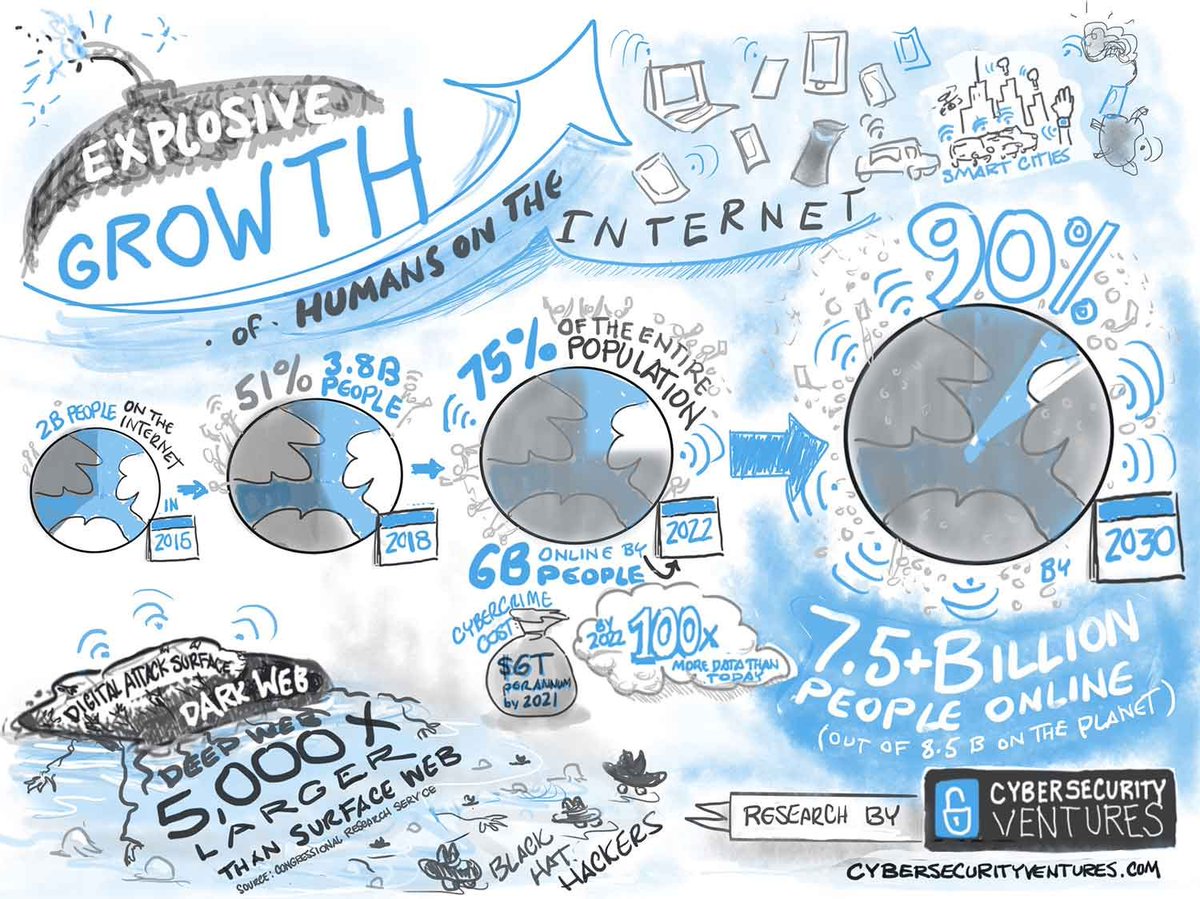
By 2030, nearly 7 billion people will be on social media.
And so too will much of your work and life.
And so too will much of your work and life.
These new web3 protocols and apps of the future are already in existence.
Here are a few:
Here are a few:
DeSo @desoprotocol - a new layer-1 blockchain built from the ground up to scale decentralized social applications to one billion users.
deso.org
deso.org

Diamond @UseDiamond - a home for creators and their audience to build engaging communities around content, incentives & ownership.
Built on @desoprotocol
diamondapp.com
Built on @desoprotocol
diamondapp.com

Farcaster @farcaster_xyz - a sufficiently decentralized social network. It is an open protocol that can support many clients, just like email.
farcaster.xyz
farcaster.xyz
Lenster @lensterxyz - a decentralized, and permissionless social media app built with @LensProtocol.
lenster.xyz
lenster.xyz

On August 26, join me for a deep dive into the new social media.
We will explore the @desoprotocol blockchain in-depth with founder @nadertheory.
We will learn about @UseDiamond app and try it together.
IT'S FREE & ONLINE. RSVP 👇
lu.ma
We will explore the @desoprotocol blockchain in-depth with founder @nadertheory.
We will learn about @UseDiamond app and try it together.
IT'S FREE & ONLINE. RSVP 👇
lu.ma
That's it, folks. I hope this was useful.
If you enjoyed it, please share by retweeting the first tweet.
I write about the ideas, trends and people shaping web3 and the future.
You can follow me @MishaDaVinci.
If you enjoyed it, please share by retweeting the first tweet.
I write about the ideas, trends and people shaping web3 and the future.
You can follow me @MishaDaVinci.
Loading suggestions...