

Most marketers suck at writing stories.
Why?
They forget one major rule of storytelling.
Here is...
The Only Storytelling Hack You Need For Irresistible Email Copy...
🧵
Why?
They forget one major rule of storytelling.
Here is...
The Only Storytelling Hack You Need For Irresistible Email Copy...
🧵
So a while back a writer posted up an article for feedback inside one of the communities I’m in.
She had an email sequence selling a skin care product.
And in the very first email she started to tell a story.
The story wasn’t bad. But it was missing something…
She had an email sequence selling a skin care product.
And in the very first email she started to tell a story.
The story wasn’t bad. But it was missing something…
On my first pass through the copy, I couldn’t exactly put my finger on what it was.
But on my second pass through, I found the problem.
And it’s not that the story wasn’t inherently interesting, it’s that it violated one sacred rule of storytelling:
But on my second pass through, I found the problem.
And it’s not that the story wasn’t inherently interesting, it’s that it violated one sacred rule of storytelling:
Show Me. Don’t Tell Me.
Most marketers like to “tell” stories.
"The character was named ___, they did this… then they did this… then this happened! And everyone lived happily ever after."
Most marketers like to “tell” stories.
"The character was named ___, they did this… then they did this… then this happened! And everyone lived happily ever after."
And yes… you can get away with that.
It could convert.
But if you want to cross that threshold from good copy to GREAT copy, you need to learn how to SHOW and not TELL.
Here's the difference…
It could convert.
But if you want to cross that threshold from good copy to GREAT copy, you need to learn how to SHOW and not TELL.
Here's the difference…
*Telling*
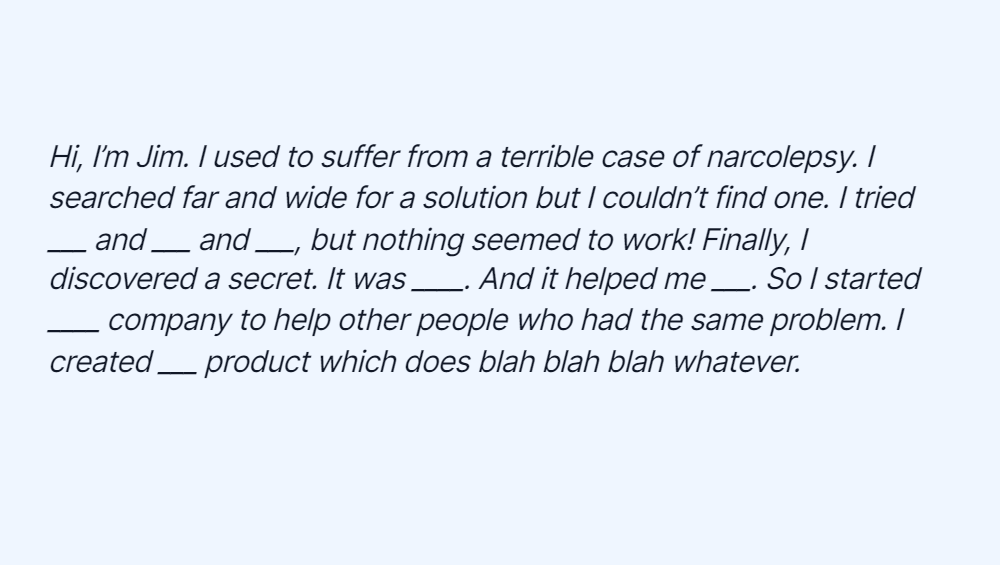
^^That’s a story.^^
Technically.
But you feel nothing as you read those words.
And that’s the big difference.
A good piece of email copy contains a story that hit’s you emotionally and makes you FEEL something as you read it.
Like this...
Technically.
But you feel nothing as you read those words.
And that’s the big difference.
A good piece of email copy contains a story that hit’s you emotionally and makes you FEEL something as you read it.
Like this...
*Showing*
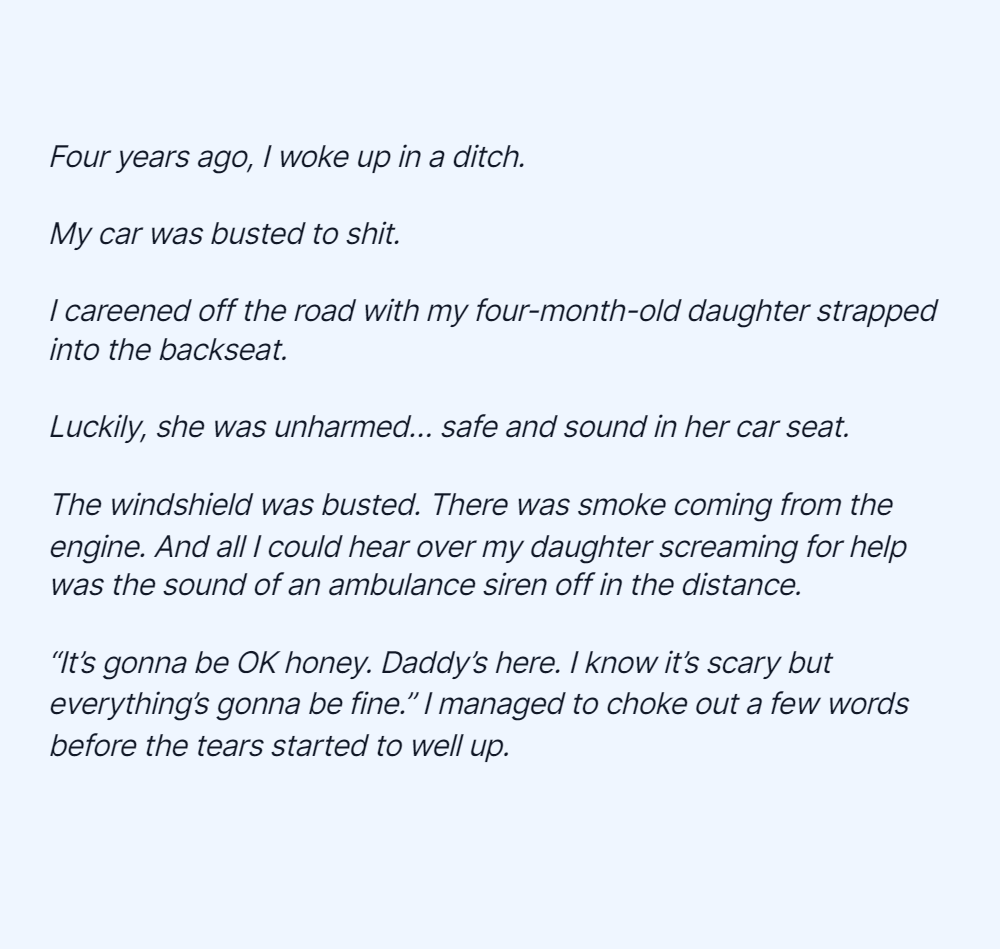
*Continues*
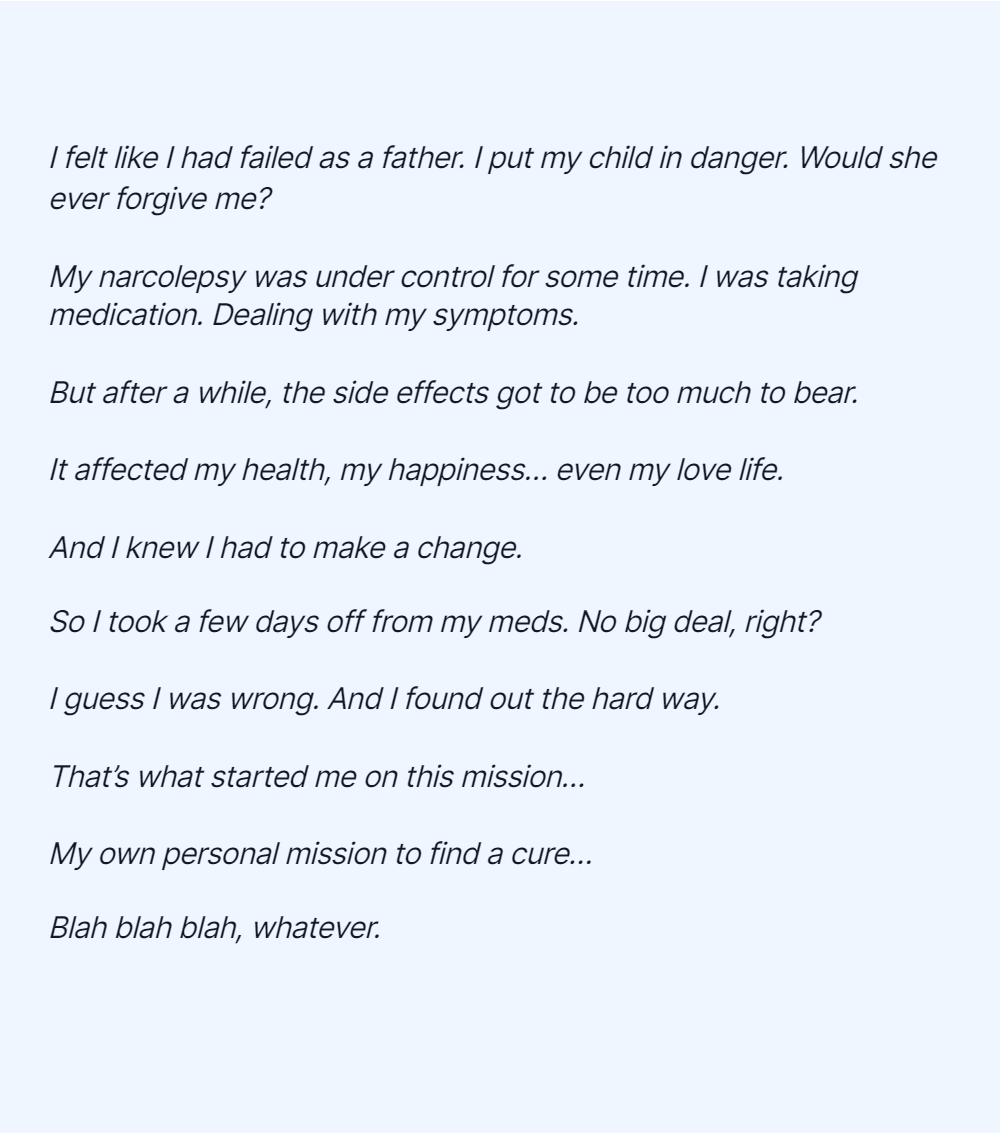
^^That’s also a story.^^
(Please note: this is not a true story. It’s just something I made off the top of my head as a demonstration of the technique).
Now...
Which one made you feel something, emotionally?
I bet you chose the second.
Here's why you felt that way...
(Please note: this is not a true story. It’s just something I made off the top of my head as a demonstration of the technique).
Now...
Which one made you feel something, emotionally?
I bet you chose the second.
Here's why you felt that way...
The Four Building Blocks Behind Any Great Story…
There are only four (technically five) building blocks of any great story.
We have:
1. Action
2. Feelings
3. Thoughts
4. Dialogue
5: Literary devices (although we won’t get too deep into the weeds with this fifth element).
There are only four (technically five) building blocks of any great story.
We have:
1. Action
2. Feelings
3. Thoughts
4. Dialogue
5: Literary devices (although we won’t get too deep into the weeds with this fifth element).
If you were to pull your favorite fiction book off a shelf, you’d be able to take four different colored highlighters and place each sentence into one of these buckets.
(You should try this with your own writing - it's eye-opening.)
(You should try this with your own writing - it's eye-opening.)
A story has a character. Who travels through a story arc.
And the way we write the story is by filling in all the details with action, feelings, thoughts and dialogue.
And the way we write the story is by filling in all the details with action, feelings, thoughts and dialogue.
—-
The girl skipped down the sidewalk.
She felt excited for her first day of school.
She started to imagine all the new friends she’d make.
“This is going to be the best day ever!” she cried.
—-
See what I mean?
The girl skipped down the sidewalk.
She felt excited for her first day of school.
She started to imagine all the new friends she’d make.
“This is going to be the best day ever!” she cried.
—-
See what I mean?
We marketers/copywriters run into problems when we rely too much on the action of the story.
Action is good.
Action is necessary.
But unless the action is powerful enough to paint us a vivid image of what’s happening to the character, it will always fall short.
Action is good.
Action is necessary.
But unless the action is powerful enough to paint us a vivid image of what’s happening to the character, it will always fall short.
You need to layer in the thoughts… the feelings… the emotions… the drama… the suspense.
You need to paint a picture with your words so that as we are reading the text, we are imagining the picture in the theatre of our minds.
You need to paint a picture with your words so that as we are reading the text, we are imagining the picture in the theatre of our minds.
I’m hoping this thread gave you enough insight into how you can write better story-based email sequences.
But if you’re still looking for more training on this topic, then check out some of my favorite books and trainings on storytelling…
But if you’re still looking for more training on this topic, then check out some of my favorite books and trainings on storytelling…
Best books/courses:
Wired For Story by @LisaCron
Storytelling Made Easy by Michael Hague
The Hero With A Thousand Faces by Joseph Campbell
Storytelling For Marketers by @andrechaperon & Michael Hague
Wired For Story by @LisaCron
Storytelling Made Easy by Michael Hague
The Hero With A Thousand Faces by Joseph Campbell
Storytelling For Marketers by @andrechaperon & Michael Hague
@LisaCron @andrechaperon Did you enjoy this thread?
Retweet and share with your audience.
Follow me @chrisorzy
Retweet and share with your audience.
Follow me @chrisorzy
Loading suggestions...