
History
Science
Archaeology
Migration
Armenia
Archaeogenetics
Indo-Europeans
West Asia
North Caucasus
SE Anatolia
Steppe
CHG
Khvalsynk
Progress2
Yamnaya
Levantine Farmer
Anatolian Farmer
European farmers
Southern Arc papers are finally here. The biggest upending in archaeogenetics since the original Haak et al 2015. The consensus amongst all scholars now is that the original homeland of the Indo-Europeans was in West Asia (North Caucasus, SE Anatolia or Armenia).
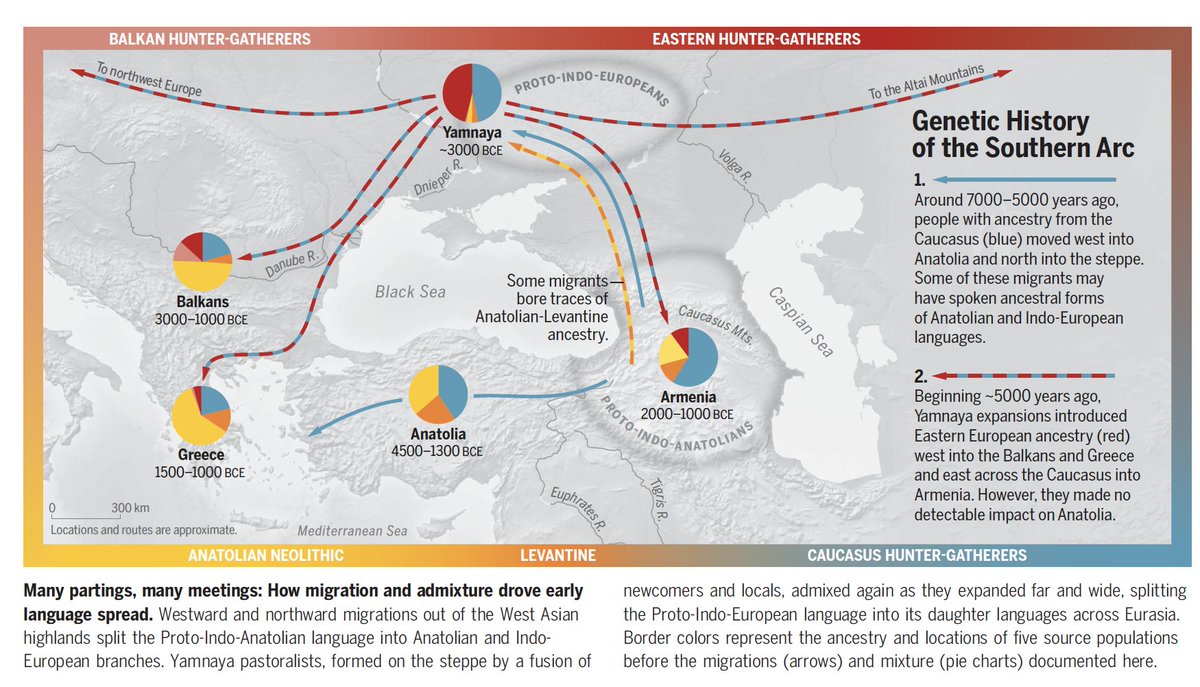
A few important things to note from the paper.
The Steppe received 2 migrations of CHG like people. The first migration post 5000 BCE forming Khvalsynk and Progress-2 like pops, the second around 3000 BCE onwards bringing CHG + LevantPPN + Anatolian Farmer to the Steppe.
The Steppe received 2 migrations of CHG like people. The first migration post 5000 BCE forming Khvalsynk and Progress-2 like pops, the second around 3000 BCE onwards bringing CHG + LevantPPN + Anatolian Farmer to the Steppe.
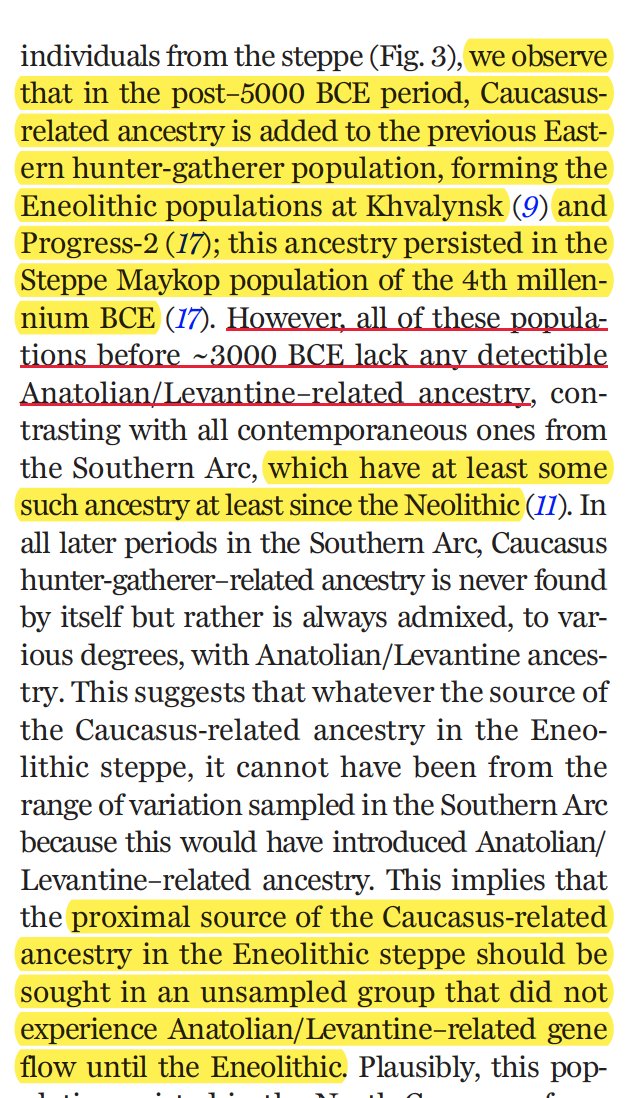
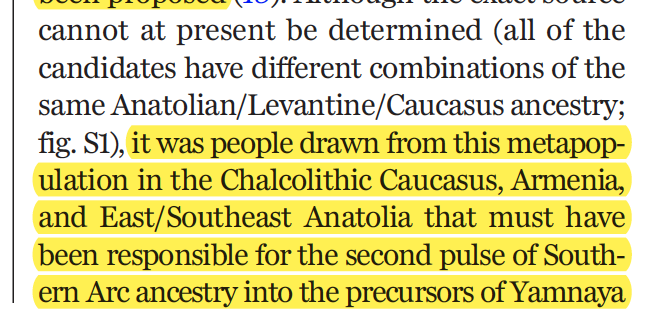
Yamnaya has around 3.5% Levantine Farmer ancestry and 3.5% Anatolian Farmer ancestry. The Levant mixture rules out European farmers giving it the Anatolian.
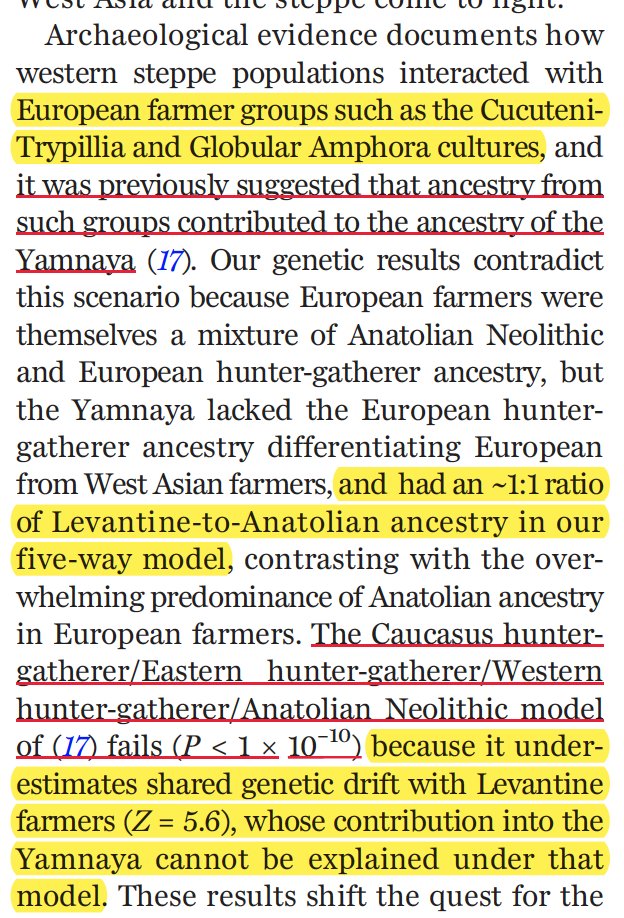
The biggest issue with saying the homeland is in the Steppe is that an entire branch (Anatolian) has zero Steppe ancestry. This paper brings out 100 new Anatolian samples from the Copper Age to the Bronze Age and not a single one of them has even a trace of Steppe ancestry.
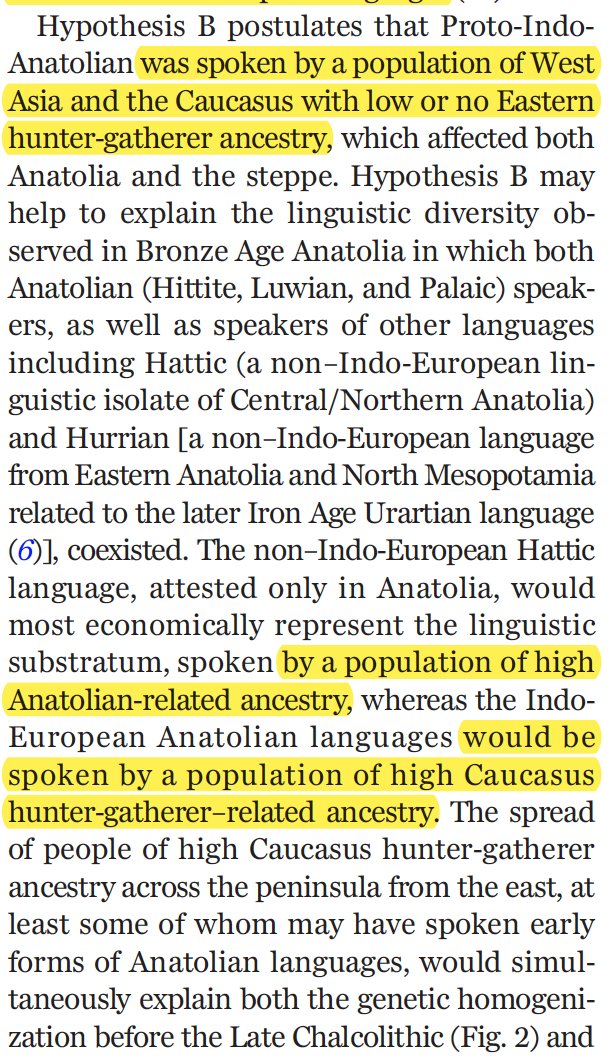
There is no RM269 (R1b1a1b) in Anatolia at all, not even one sample. It's understandable if autosomal ancestry got diluted, but where are the patrilineal markers? Even they don't exist.
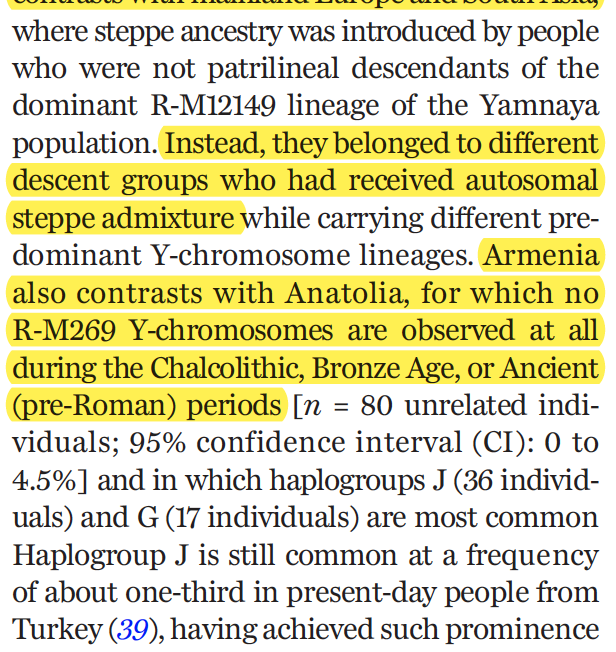
But at the same time in Anatolia as Indo-European languages appear, we see an influx of Caucasus Hunter Gatherer ancestry from eastern part of West Asia. Haplogroup J increases in Anatolia around the same time.
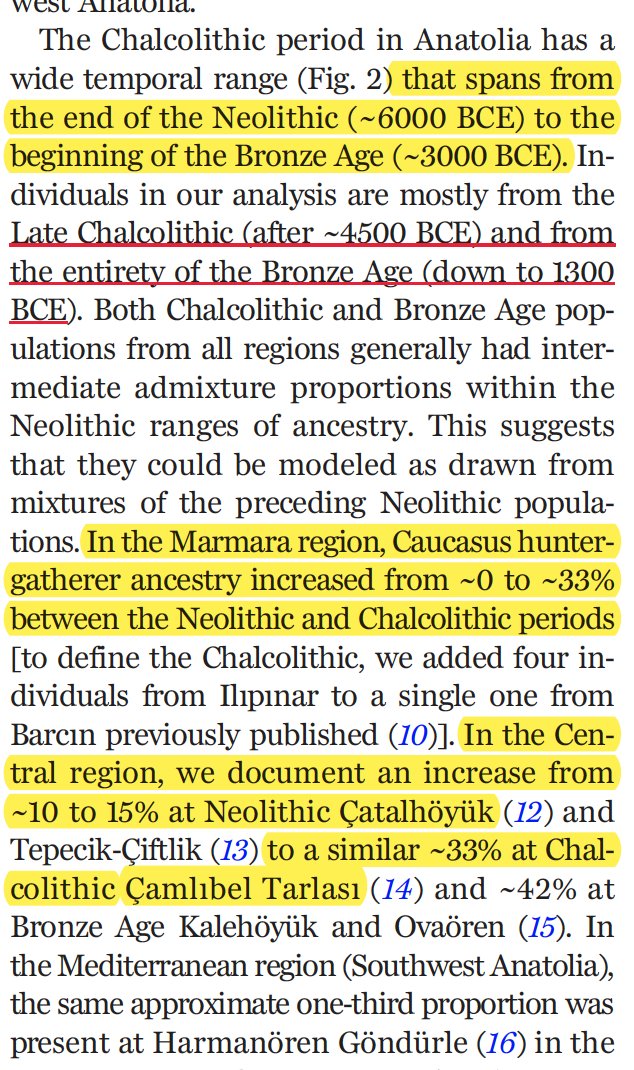
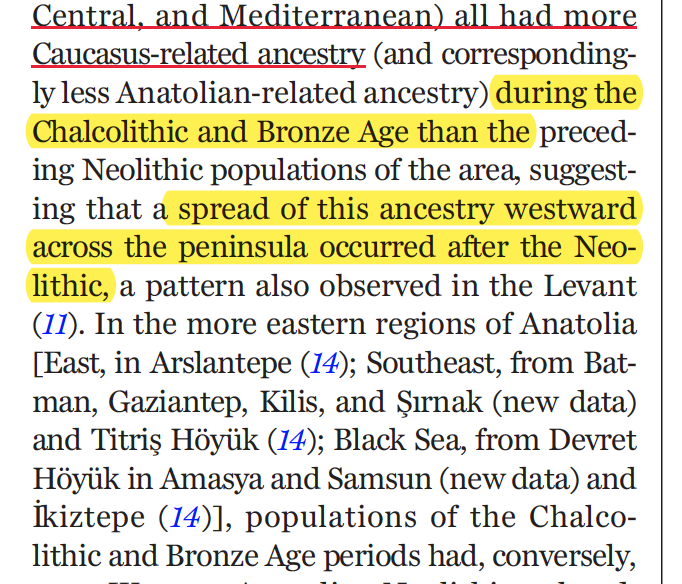
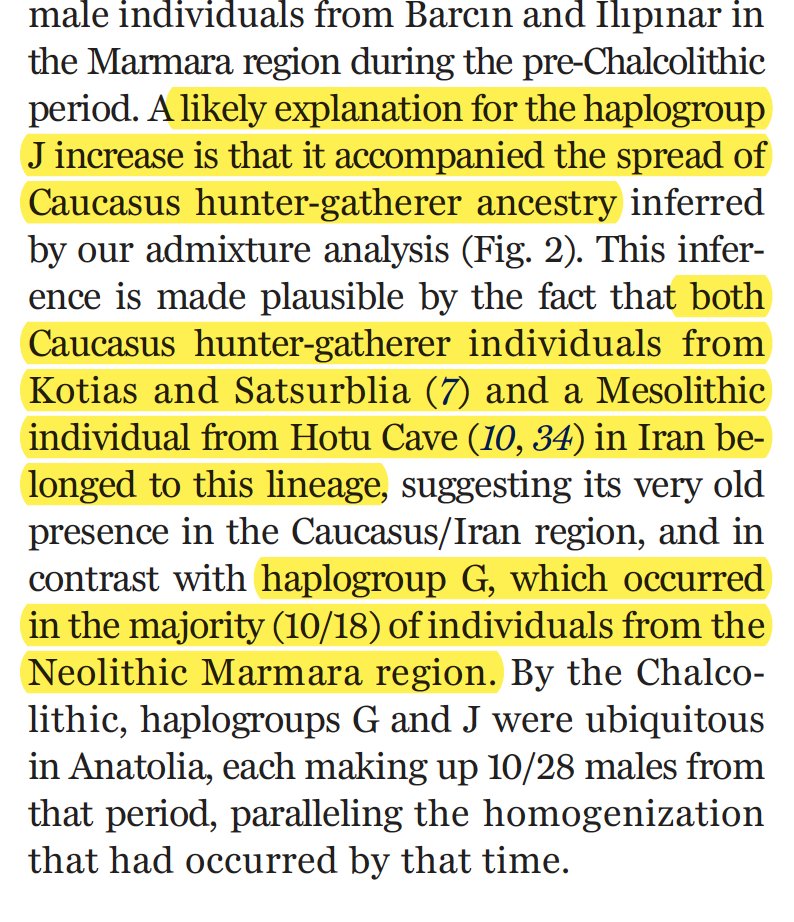
These are just the basics, I'm sure the supplementary info contains nitty gritty details that explain why the authors decided this was the best hypothesis. I will go through the supple when I get time.
One another thing that really has to be noticed is that CHG ancestry is virtually indistinguishable from Iran_N (Ganj Dareh). The profiles are extremley similar (Dzudzuana + ANE).
Both Indians and Iranians get most of their ancestry from pops carrying Iran_N (Ganj Dareh) admix.
Both Indians and Iranians get most of their ancestry from pops carrying Iran_N (Ganj Dareh) admix.
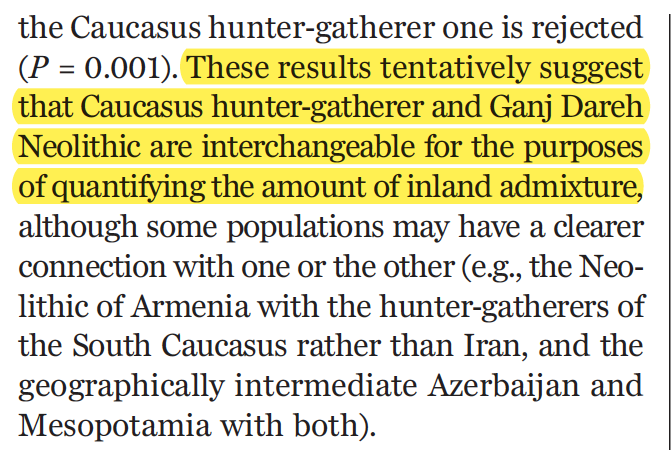
Yamnaya is around 47% EHG, 47% CHG/Iran and 6% Levantine + Anatolian.
Indo-European here = Proto-Indo-Anatolian
"original homeland" means where the PIE themselves originally came from, not their distal homeland after the Indo-Anatolian split. In other words, PIE homeland is in Steppes while "Proto-PIE" is in West Asia.
"original homeland" means where the PIE themselves originally came from, not their distal homeland after the Indo-Anatolian split. In other words, PIE homeland is in Steppes while "Proto-PIE" is in West Asia.
I alluded to this a few months back, the semantics are a bit confusing since people don't know what Indo-Anatolian or Indo-Hittite mean. The site of primary dispersal would be West Asia, while secondary dispersal would be the Pontic Caspian Steppes.
Now if you ask my personal opinion, I don't know. Both hypothesis have things going for them and make sense. I'll have to read deep into the supple of this paper plus some stuff on Anatolian linguistics when I get time to come to a conclusion. Let's see!
I've studied this topic a good bit since Southern Arc, especially the genetics and archaeology of Steppe Eneolithic (the predecessor of Yamnaya). Two things.
1) There likely was some Southern Arc ancestry in Yamnaya via it's predecessor... +
1) There likely was some Southern Arc ancestry in Yamnaya via it's predecessor... +
2) It's unlikely this ancestry gave the PIA languages, because it came from Darkveti-Meshoko or a similar Eneolithic Caucasus farmer population, and Proto-Indo-Anatolian is quite bereft of agricultural vocabulary. PIA was probably spoken east of the Don, and *not* in Sredny Stog.
3) David Anthony comes to the same conclusion. Anyway, the reason Anatolian lacks EHG is because it split off very early, much before the Yamnaya even formed, and then stayed in the Balkans for a millenia, then a millenia more till first Hittite records show up.
4) The lack of Steppe haplogroups is still a bit disturbing, it's fine it autosomal was diluted but where is the damn Y-dna? I believe we need aDNA from Suvorovo, Cernavoda and Ezero cultures to confirm. These are likely the Pre-Proto-Anatolian and Proto-Anatolian cultures.
Loading suggestions...