
Social Media
Technology
Business
Personal Development
Marketing
Social Media Marketing
Content Strategy
Brand Building

I grew from 0 → 50k followers in 8 months.
Here's EVERYTHING you need to know about how to grow on Twitter
🧵 + slides 👇
(1/100)
Here's EVERYTHING you need to know about how to grow on Twitter
🧵 + slides 👇
(1/100)
What you will learn from this 🧵:
• Profile Branding to increase follower conversion
• Designing an effective content strategy
• How to ideate and create high-quality content efficiently
• Growth Hacks to boost small accounts
• Befriending the algorithm
• Tools
+++
• Profile Branding to increase follower conversion
• Designing an effective content strategy
• How to ideate and create high-quality content efficiently
• Growth Hacks to boost small accounts
• Befriending the algorithm
• Tools
+++
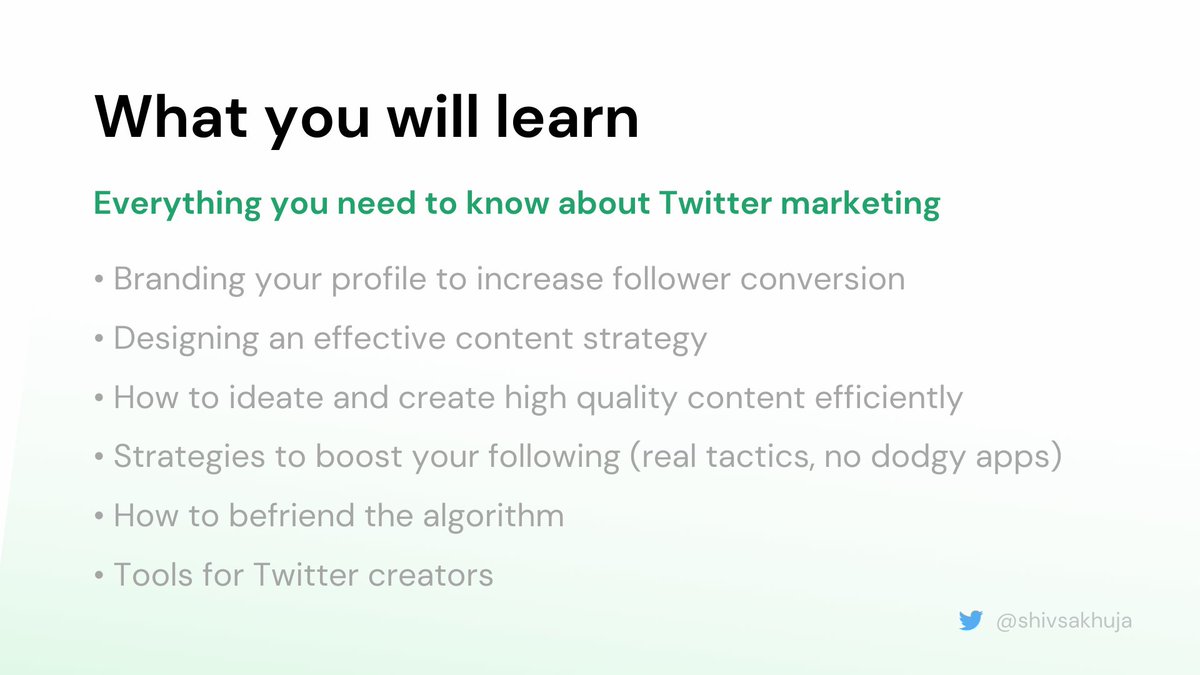
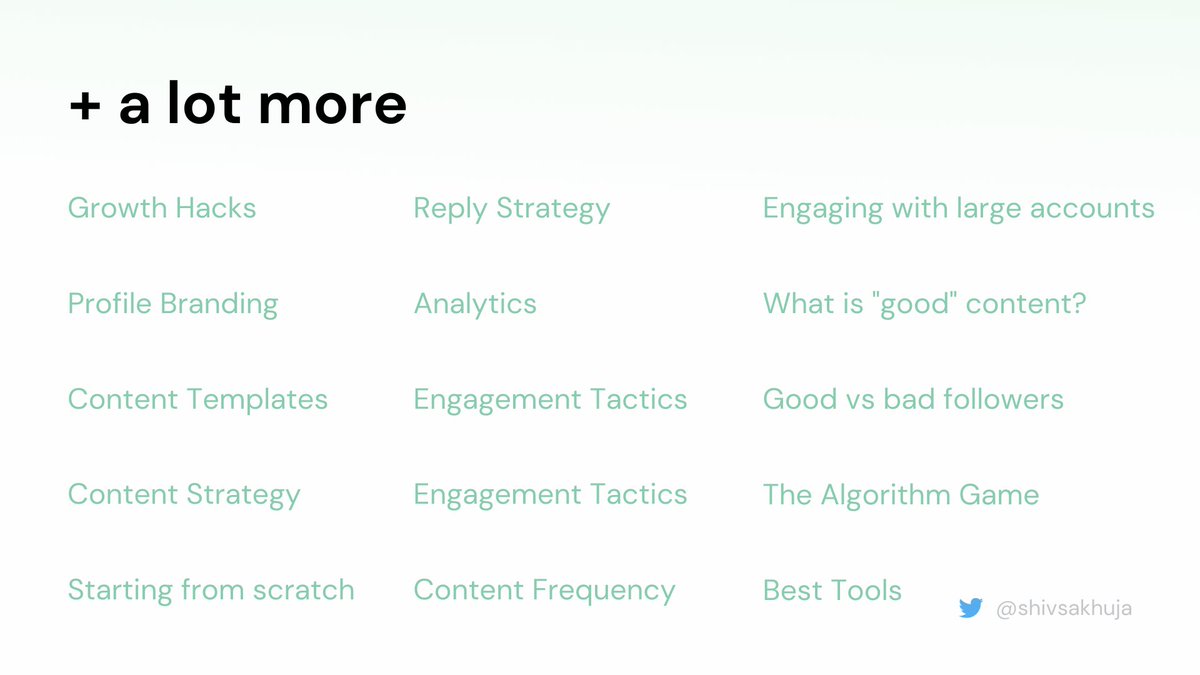
+ a lot more...
This took me weeks to put together and ended up getting REALLY long.
So I also created a PDF with 81 slides that explain everything you need to know about how to grow a Twitter audience from scratch.
It's completely free for now.
shivsakhuja.gumroad.com
So I also created a PDF with 81 slides that explain everything you need to know about how to grow a Twitter audience from scratch.
It's completely free for now.
shivsakhuja.gumroad.com
And of course, much of it is also below in 🧵 form - though I recommend the slides for the complete guide.
If you appreciate the effort, I appreciate follows, likes & retweets on the first post ❤️ ♻️ 😊
If you appreciate the effort, I appreciate follows, likes & retweets on the first post ❤️ ♻️ 😊
First, figure out WHY you want to grow a following.
I started writing because I knew I wanted to work in web3, and I thought writing would be a good way to grow my network and meet people in the industry.
I started writing because I knew I wanted to work in web3, and I thought writing would be a good way to grow my network and meet people in the industry.
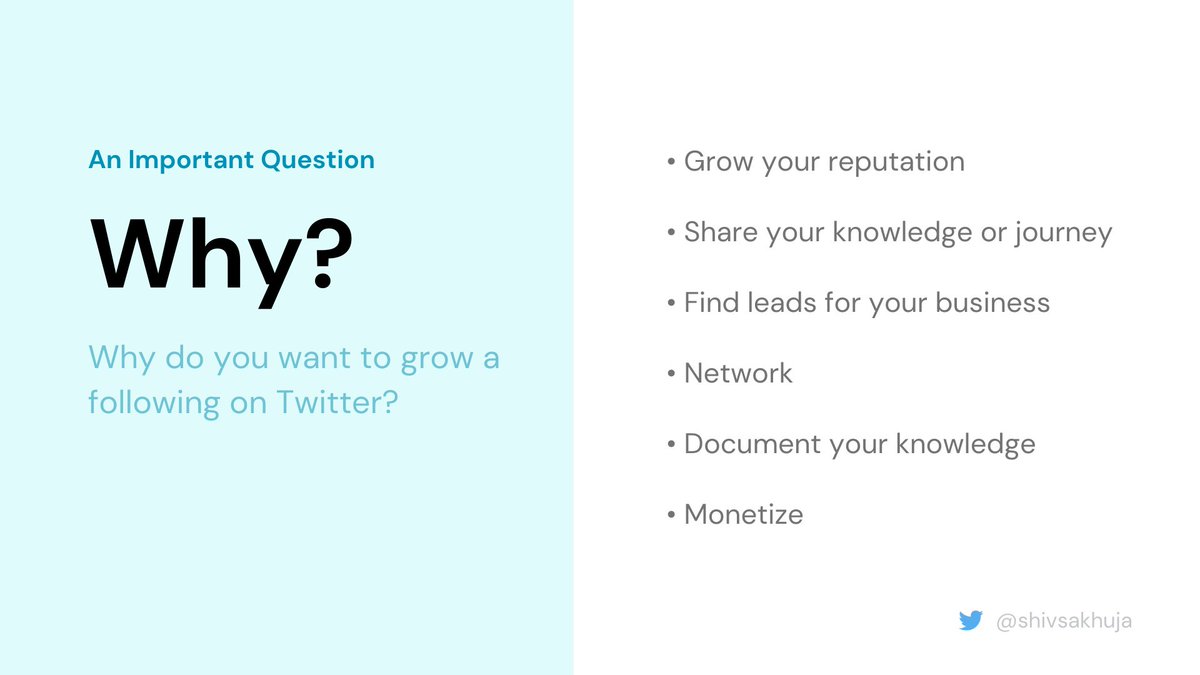
Over time, I developed more reasons.
• Make crypto more accessible for everyone
• Build credibility in the industry
• Platform to share the projects I'm working on (@magikinvestxyz)
• Developing skills (research, writing, design, marketing)
• Make crypto more accessible for everyone
• Build credibility in the industry
• Platform to share the projects I'm working on (@magikinvestxyz)
• Developing skills (research, writing, design, marketing)
Your goals might be different. You might want to:
• Grow your reputation
• Find leads for your business
• Network
• Monetize
+++
• Grow your reputation
• Find leads for your business
• Network
• Monetize
+++
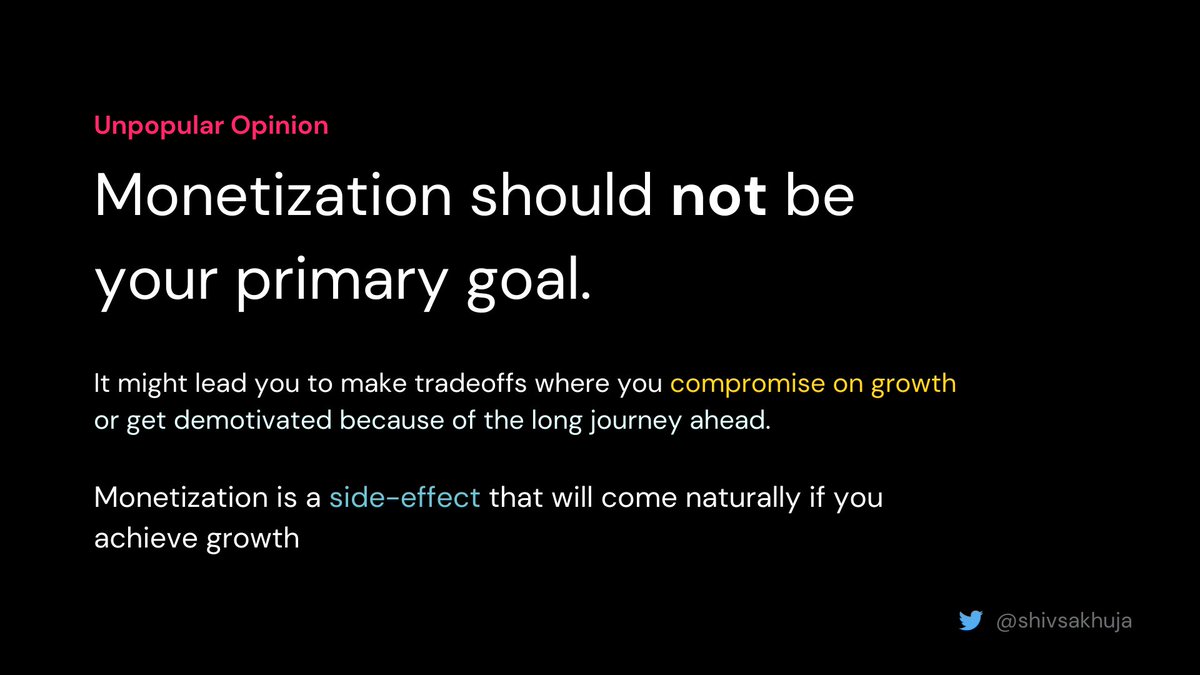
I don't think monetizing should be the core goal because it might cause you to compromise your growth trajectory, or get demotivated in the early days.
Monetization is a side effect that will come naturally if you achieve growth.
Monetization is a side effect that will come naturally if you achieve growth.
If you don't have a clear goal in mind, it can be really difficult to stay motivated.
Especially when you spend hours working on content, get no traction, and gain very few followers.
Find a goal that you can use as an anchor when you get demotivated.
Especially when you spend hours working on content, get no traction, and gain very few followers.
Find a goal that you can use as an anchor when you get demotivated.
Next, is Twitter the right platform for you?
Your target audience plays a big role in determining which platform to choose.
• Crypto Overall: Twitter / YouTube
• New to Crypto: YouTube / TikTok
• Dev tutorials: YouTube
• Long-form writing: Substack / Twitter
Your target audience plays a big role in determining which platform to choose.
• Crypto Overall: Twitter / YouTube
• New to Crypto: YouTube / TikTok
• Dev tutorials: YouTube
• Long-form writing: Substack / Twitter
The right platform for you is the one you can do most consistently.
I enjoy writing so I blog and write Twitter threads.
Love making videos? YouTube
Love speaking to people in your industry? Podcast
I enjoy writing so I blog and write Twitter threads.
Love making videos? YouTube
Love speaking to people in your industry? Podcast
Branding
---
Branding is SUPER important (as I've learned the hard way).
Your profile clicks won't convert to followers unless your profile tells people EXACTLY why they should follow you.
---
Branding is SUPER important (as I've learned the hard way).
Your profile clicks won't convert to followers unless your profile tells people EXACTLY why they should follow you.
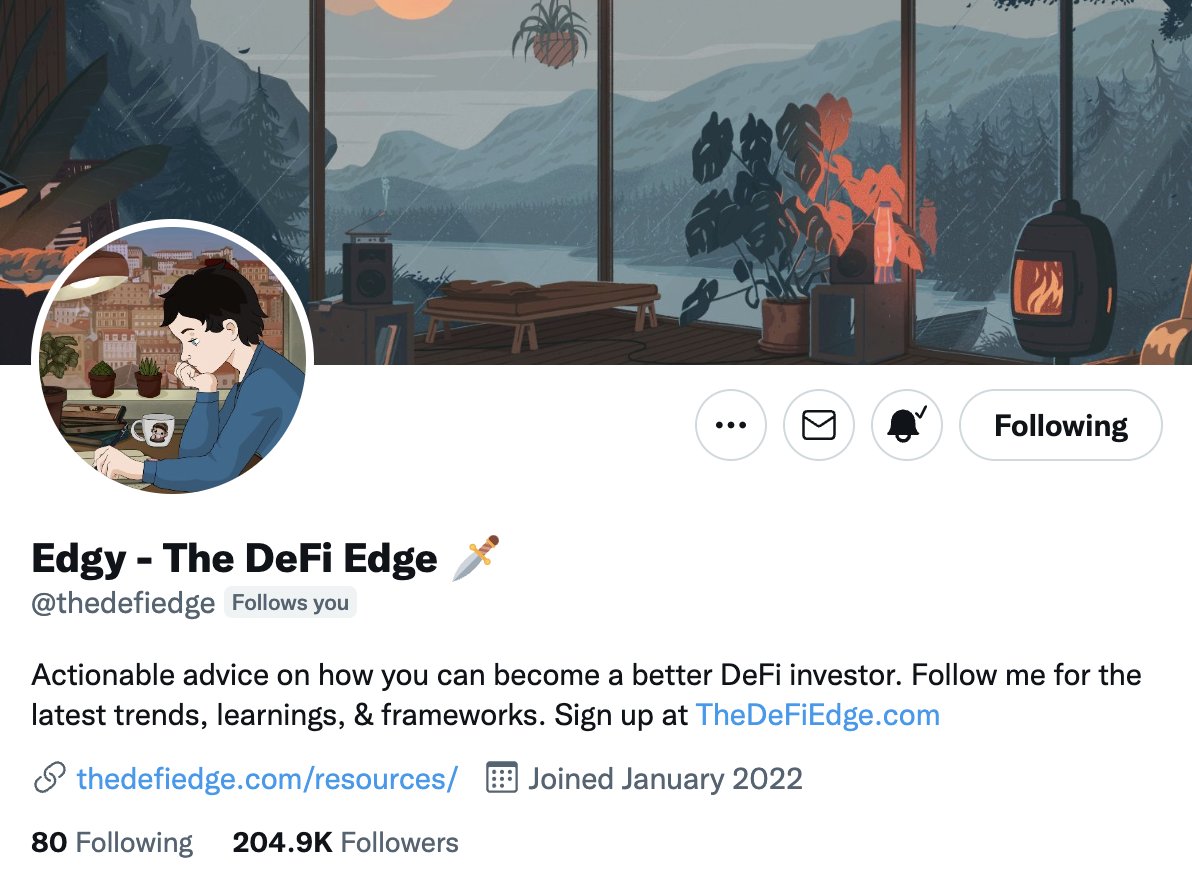
@thedefiedge, for example, has a great brand:
The name and bio immediately tell you exactly what value he provides.
The follower count also adds a lot of social proof.
The name and bio immediately tell you exactly what value he provides.
The follower count also adds a lot of social proof.
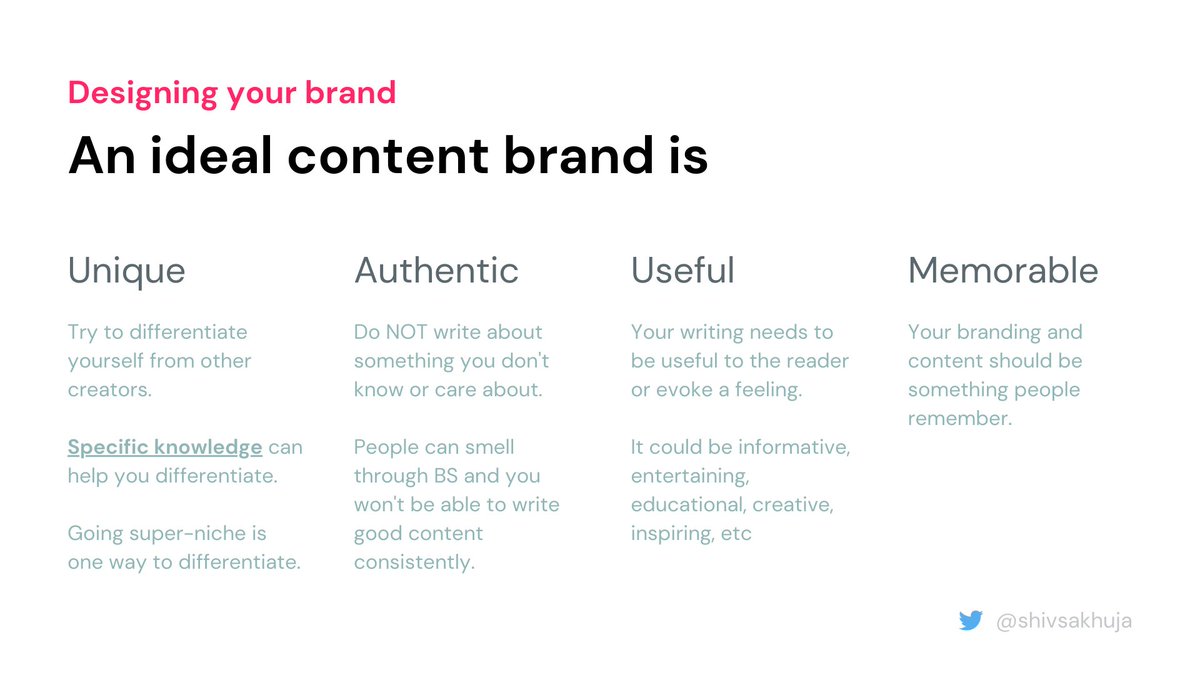
A good content brand is:
• Unique
• Authentic
• Useful
• Memorable
• Unique
• Authentic
• Useful
• Memorable
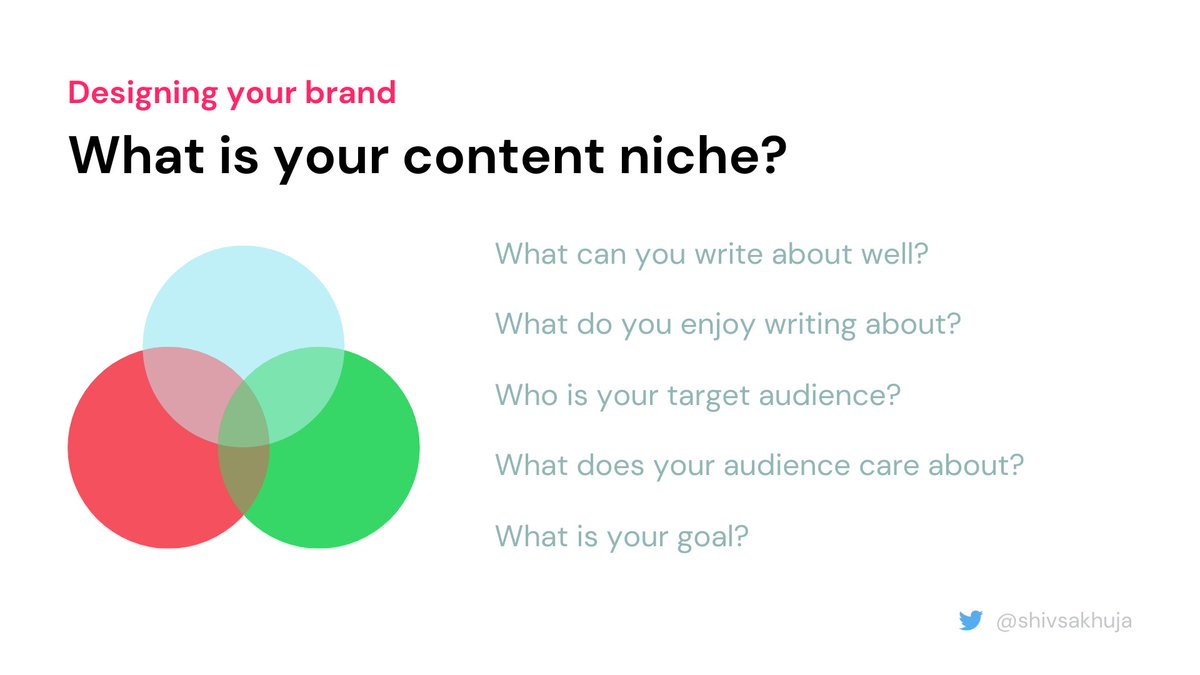
To find your content niche, answer these questions:
• What can you write about well?
• What do you enjoy writing about?
• Who is your target audience?
• What does your audience care about?
• What is your goal?
• What can you write about well?
• What do you enjoy writing about?
• Who is your target audience?
• What does your audience care about?
• What is your goal?
Branding Q. Anon or Doxxed?
There are pros and cons to anon profiles.
Pros:
• No harassment or personal attacks on you
• Scaling a brand without compromising personal reputation
Cons:
• Harder to connect with audience
• Can limit opportunities if you are unwilling to dox
There are pros and cons to anon profiles.
Pros:
• No harassment or personal attacks on you
• Scaling a brand without compromising personal reputation
Cons:
• Harder to connect with audience
• Can limit opportunities if you are unwilling to dox
You can also start anon and eventually dox yourself.
But once doxxed, there's no going back.
But once doxxed, there's no going back.
Profile Branding
---
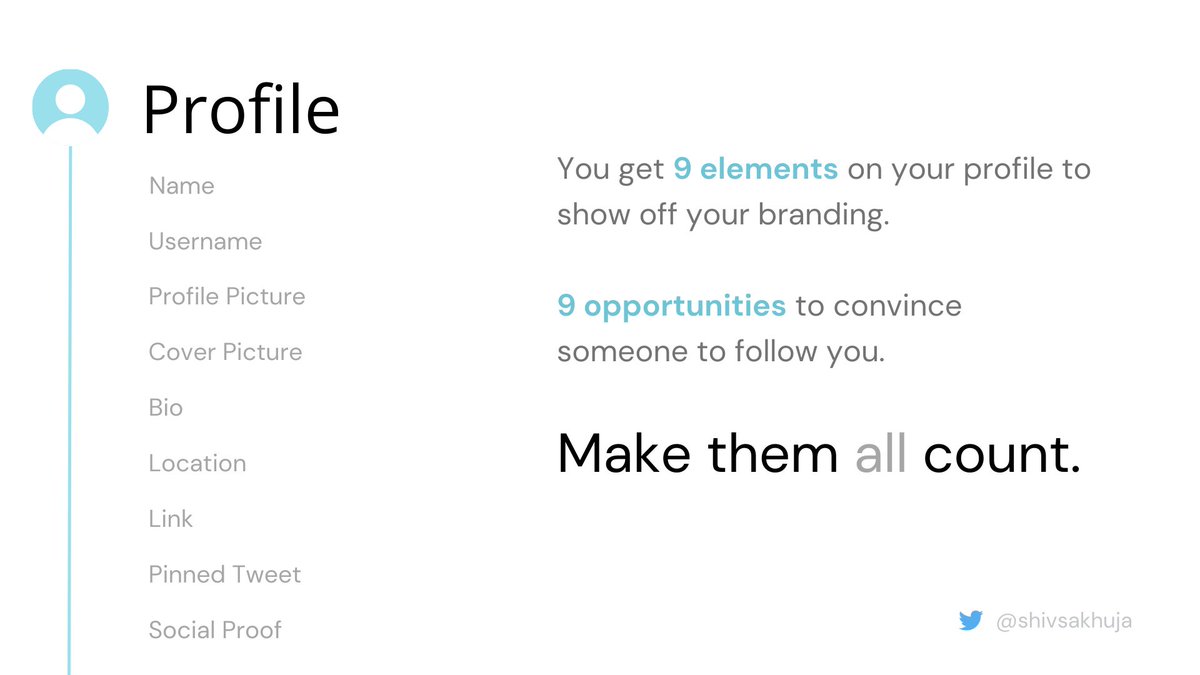
You get 9 elements to show off your brand on your Twitter profile.
9 opportunities to convert viewers to followers.
You will grow 10x faster if your conversion rate for profile visits → followers is 50% instead of 5%.
---
You get 9 elements to show off your brand on your Twitter profile.
9 opportunities to convert viewers to followers.
You will grow 10x faster if your conversion rate for profile visits → followers is 50% instead of 5%.
Profile Branding: Name & Username
Your name & username can be changed later, but you really don’t want to after you’ve grown your account.
People identify you by your name and username. And with so many scam accounts out, your followers will be confused by username changes.
Your name & username can be changed later, but you really don’t want to after you’ve grown your account.
People identify you by your name and username. And with so many scam accounts out, your followers will be confused by username changes.
The name is easier to change than the username.
If you switch usernames, links to your Tweets will be broken.
So pick wisely. I wish I had gone with something simpler, but it’s too late for me now.
If you switch usernames, links to your Tweets will be broken.
So pick wisely. I wish I had gone with something simpler, but it’s too late for me now.
Profile Branding: Bio
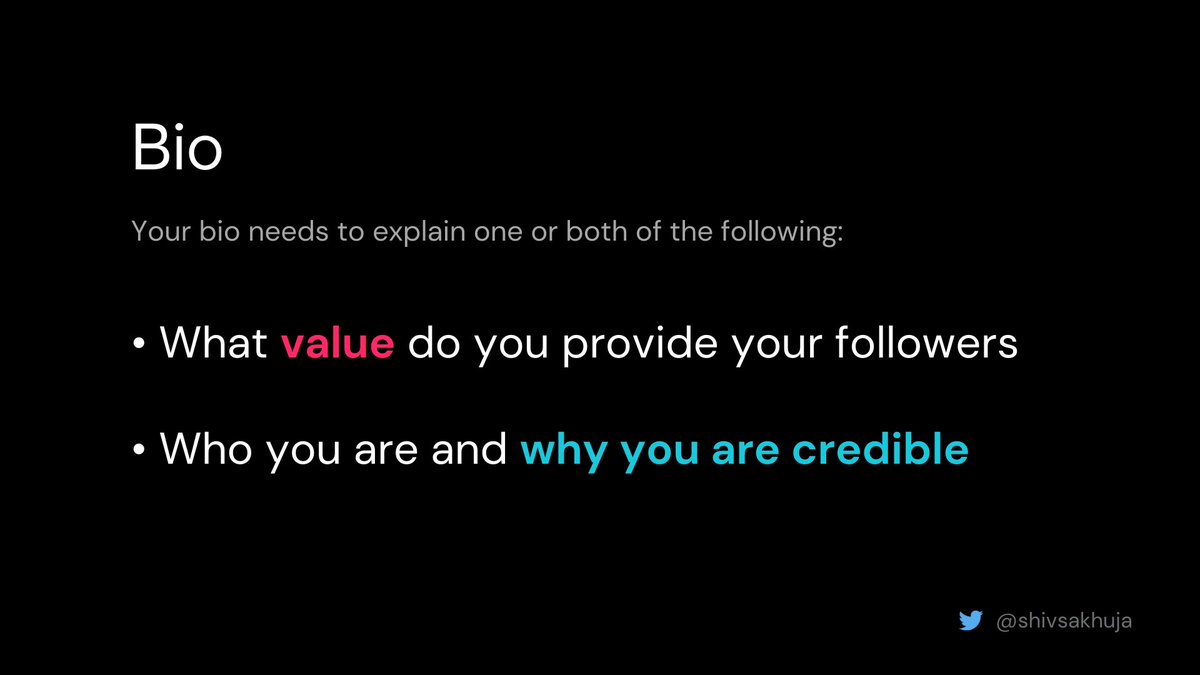
A good bio will explain one or both of the following:
• What value do you provide your followers?
• Who you are and why you are credible?
A good bio will explain one or both of the following:
• What value do you provide your followers?
• Who you are and why you are credible?
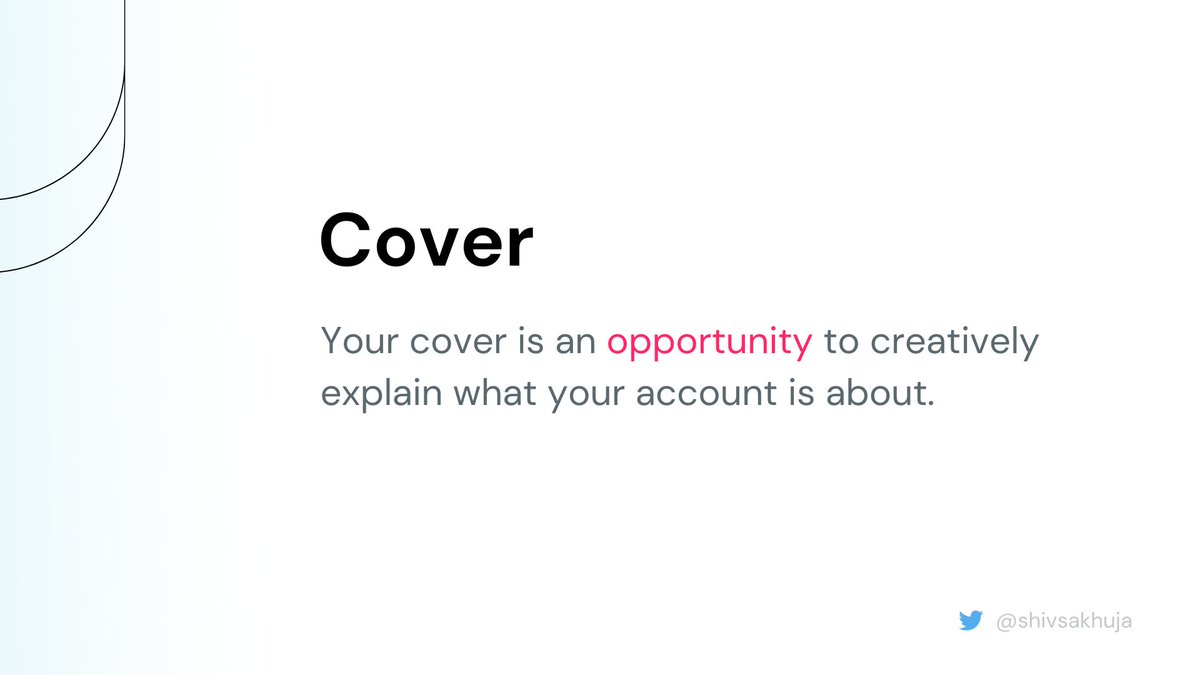
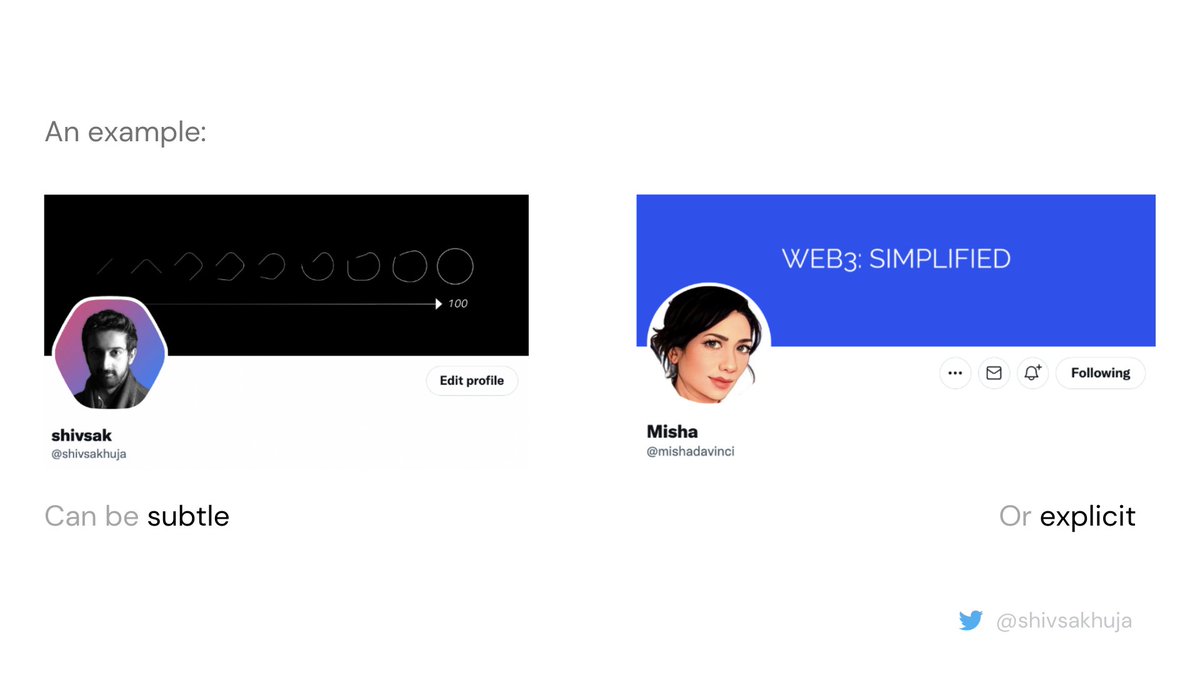
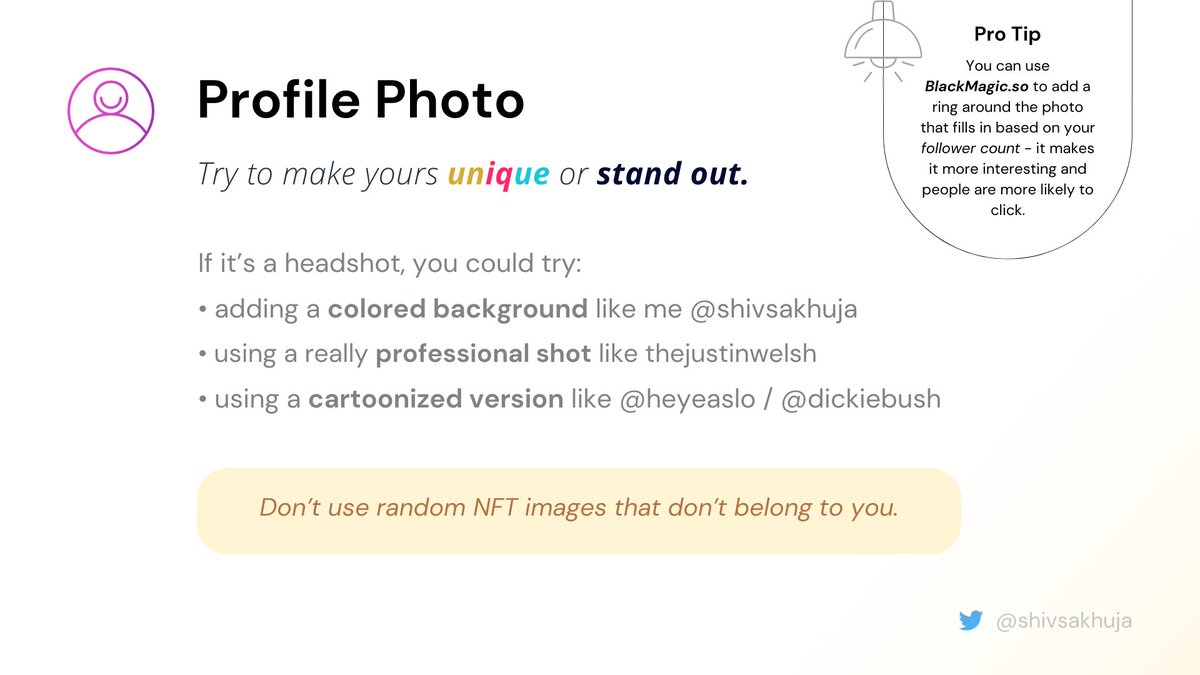
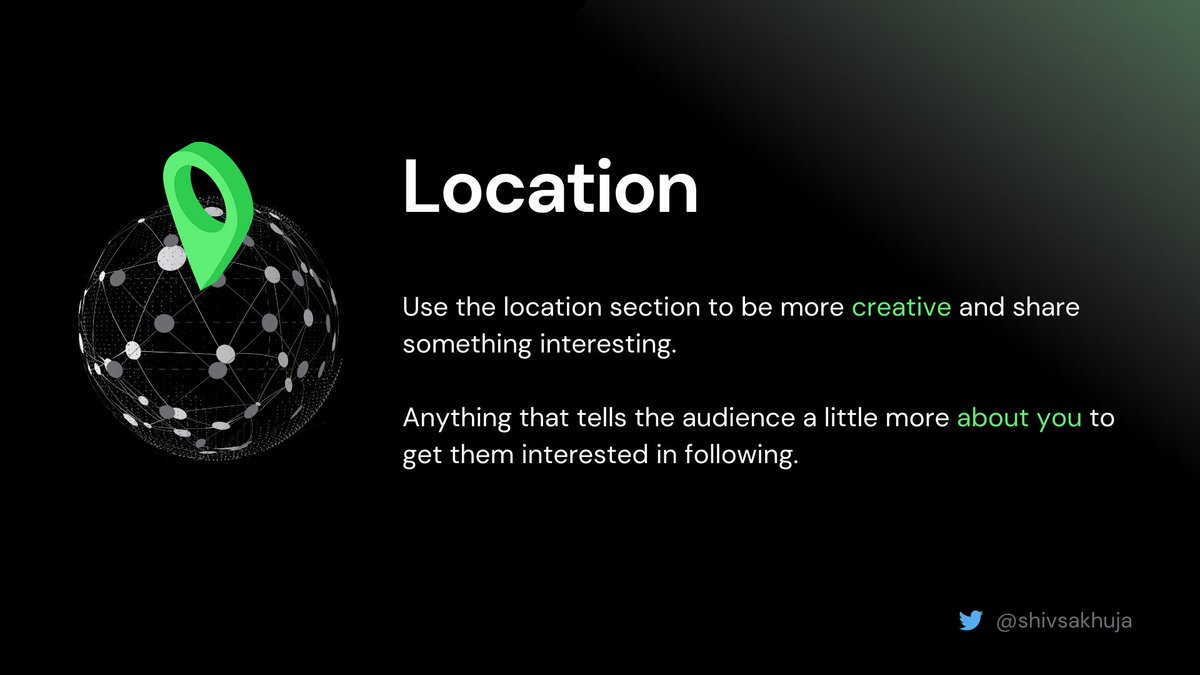
Profile Branding: Cover, Profile Photo, Location
• Find a unique profile picture to stand out
• Create a descriptive and aesthetic cover
• Use the location field creatively
• Find a unique profile picture to stand out
• Create a descriptive and aesthetic cover
• Use the location field creatively
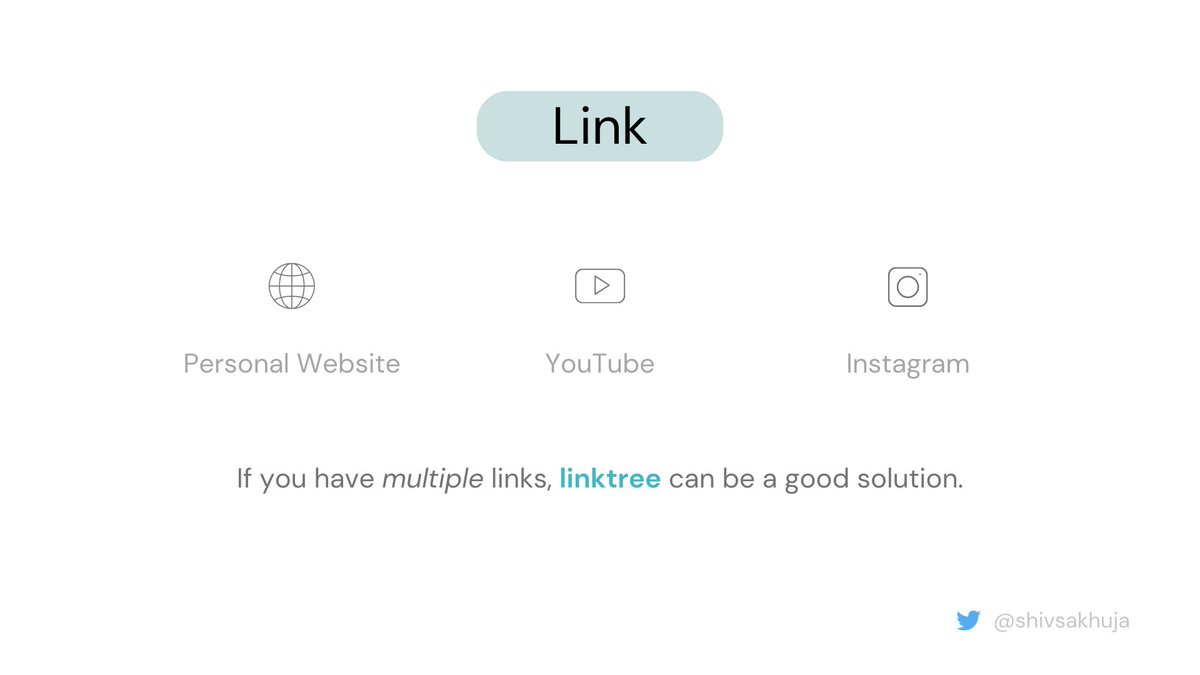
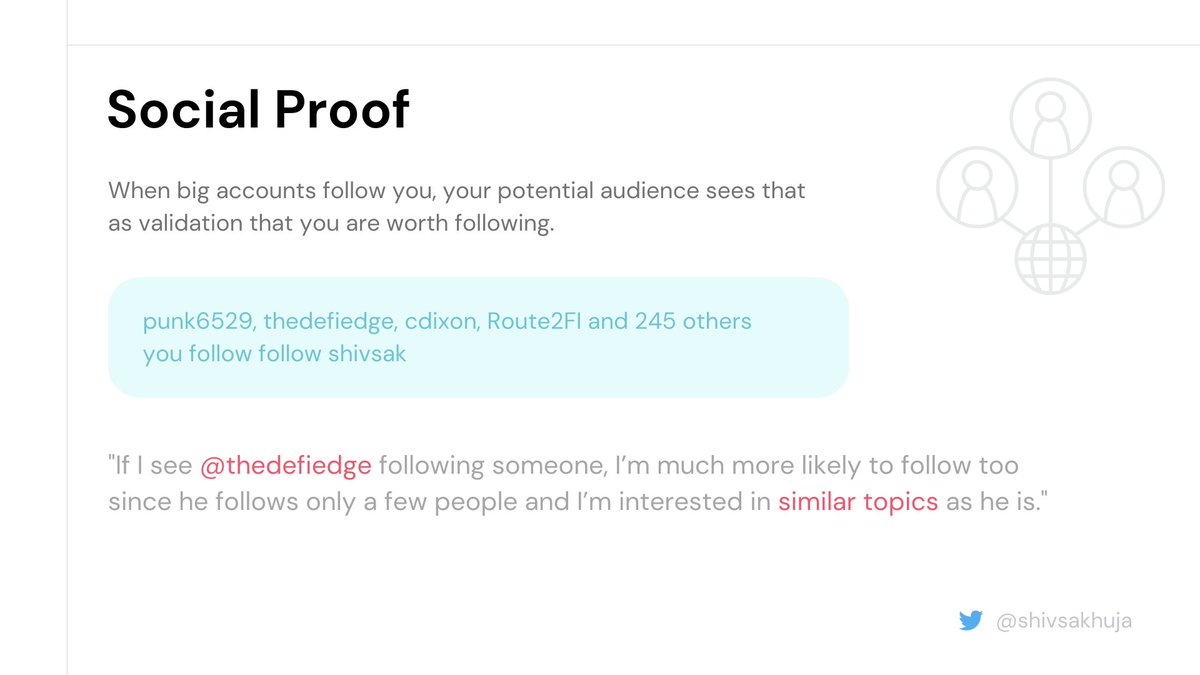
Profile Branding: Link, Pinned Tweet, Social Proof
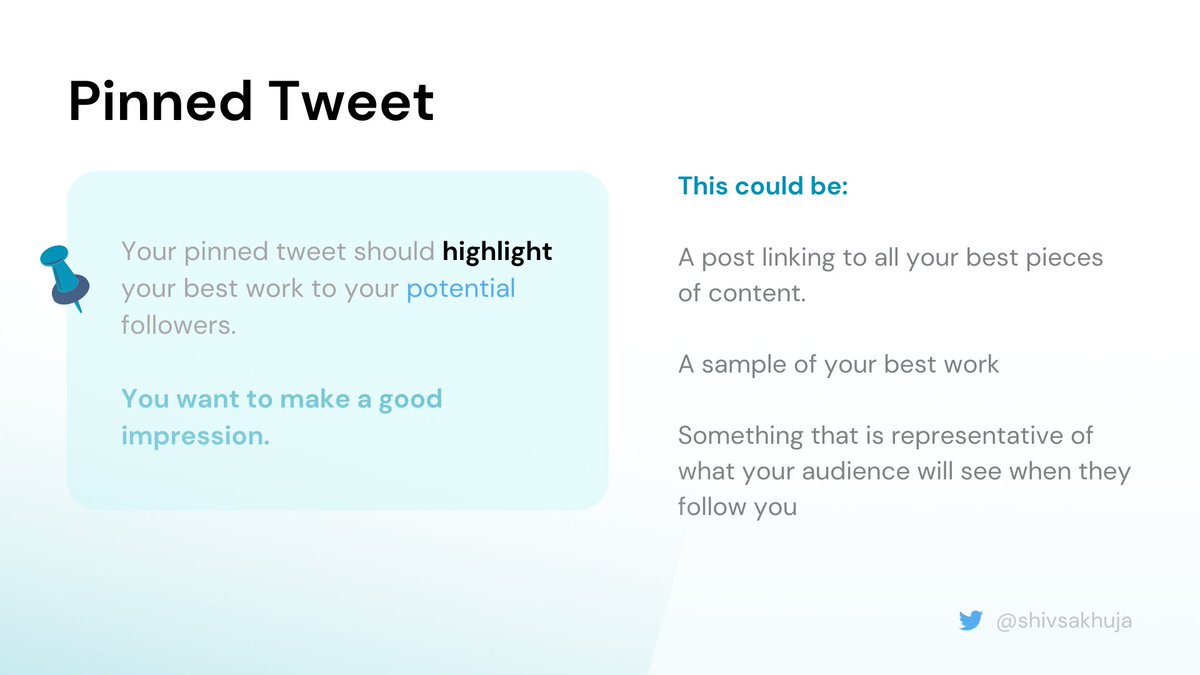
Your pinned tweet should highlight your best work to your potential followers. You want to make a good impression.
For example, this could be a post linking to all your best pieces of content or a sample of your best work.
Your pinned tweet should highlight your best work to your potential followers. You want to make a good impression.
For example, this could be a post linking to all your best pieces of content or a sample of your best work.
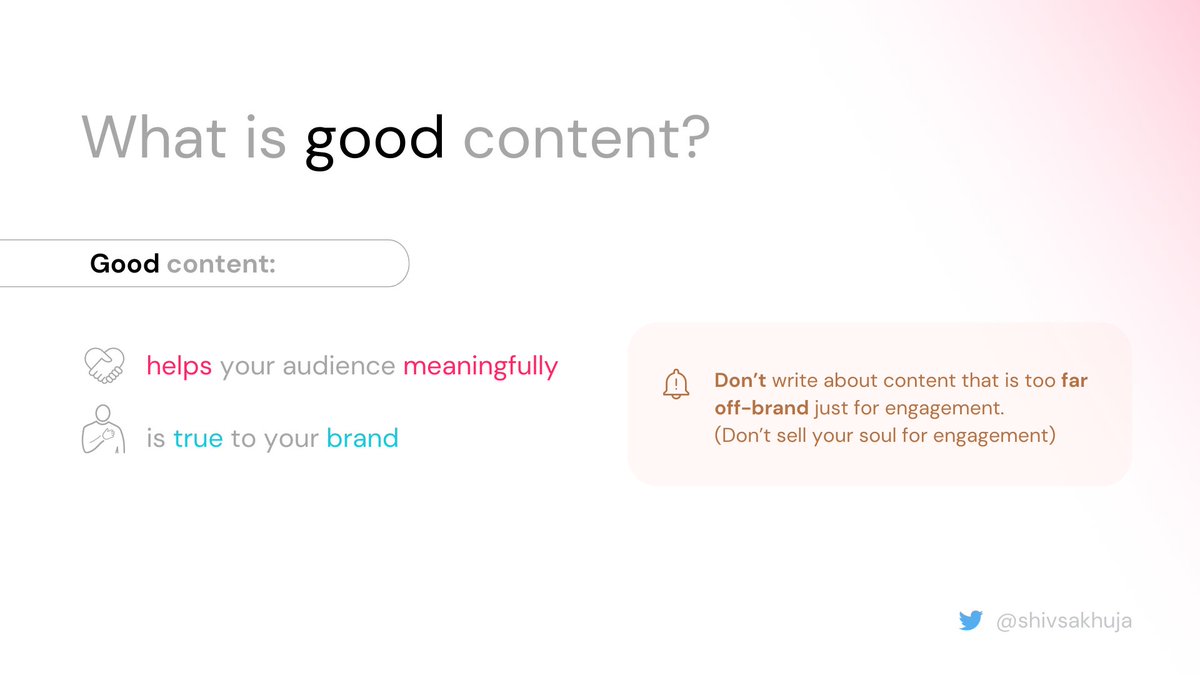
Now that your branding is on point, let's turn you into a content creator!
What is "good" content?
What is "good" content?
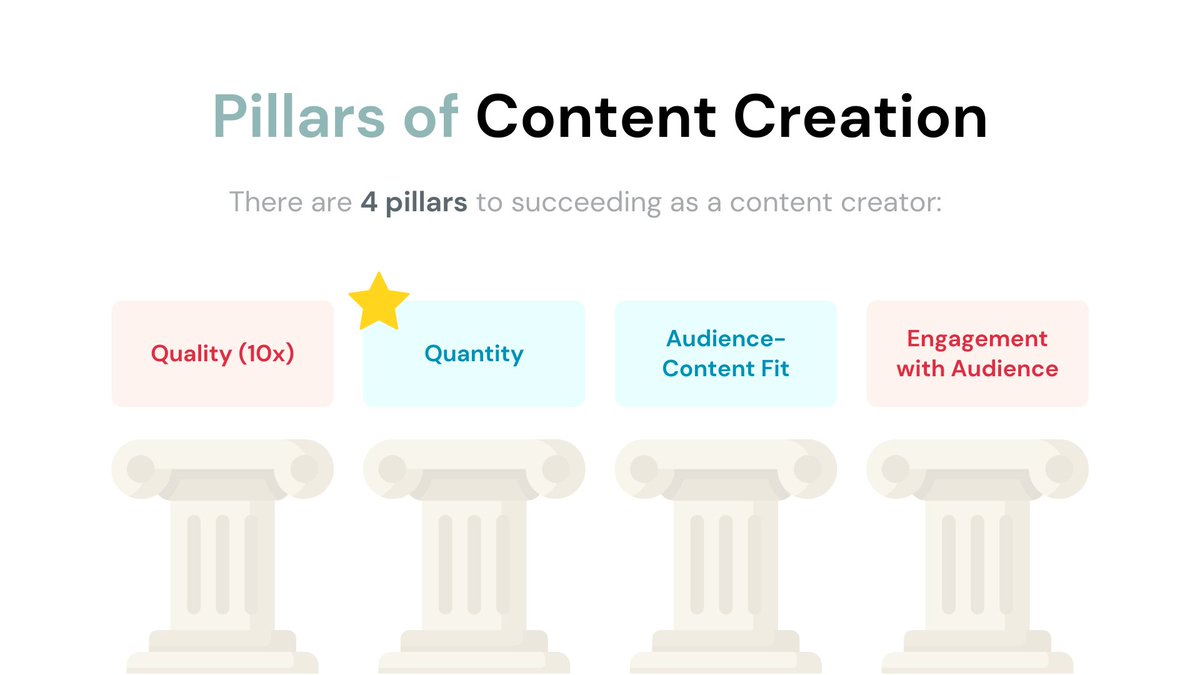
Pillars of Content Creation
---
• Quality (10x)
• Quantity
• Audience-Content Fit
• Engagement
---
• Quality (10x)
• Quantity
• Audience-Content Fit
• Engagement
I’m an engineer, so I tried to think of the content game as a function.
Inputs are the 4 pillars I mentioned.
Outputs are likes, retweets, comments & followers.
Inputs are the 4 pillars I mentioned.
Outputs are likes, retweets, comments & followers.

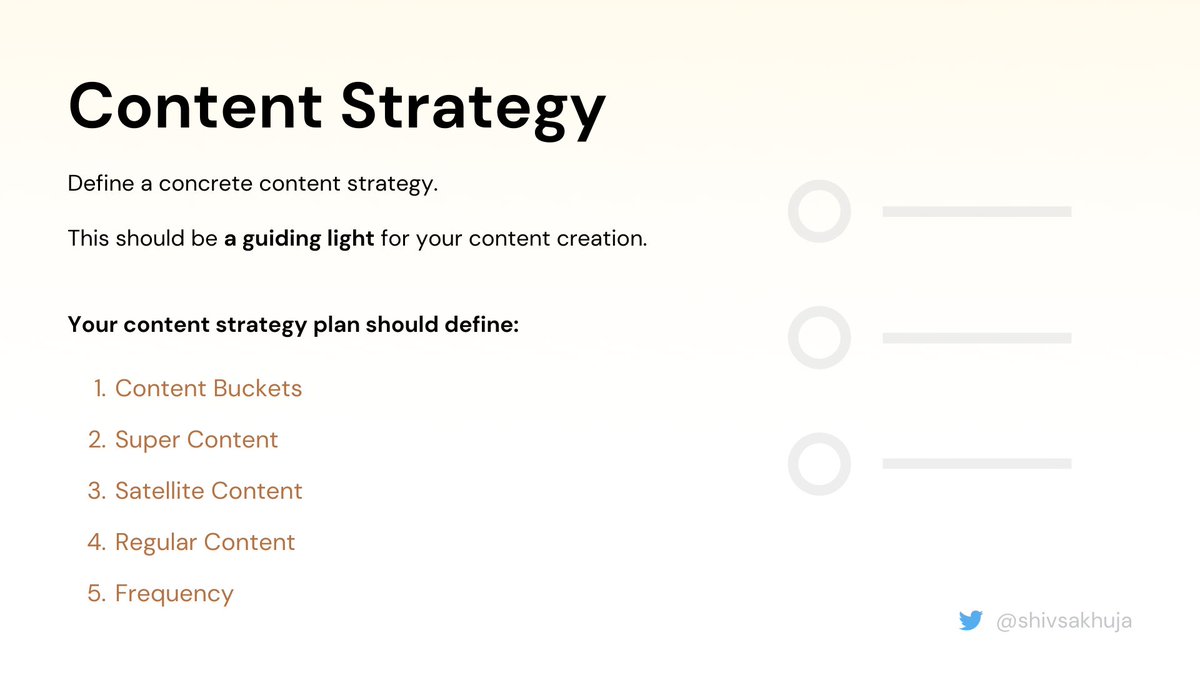
Content Strategy
---
This should be a guiding light for your content creation.
Your content strategy plan should define:
1. Content Buckets
2. Super Content
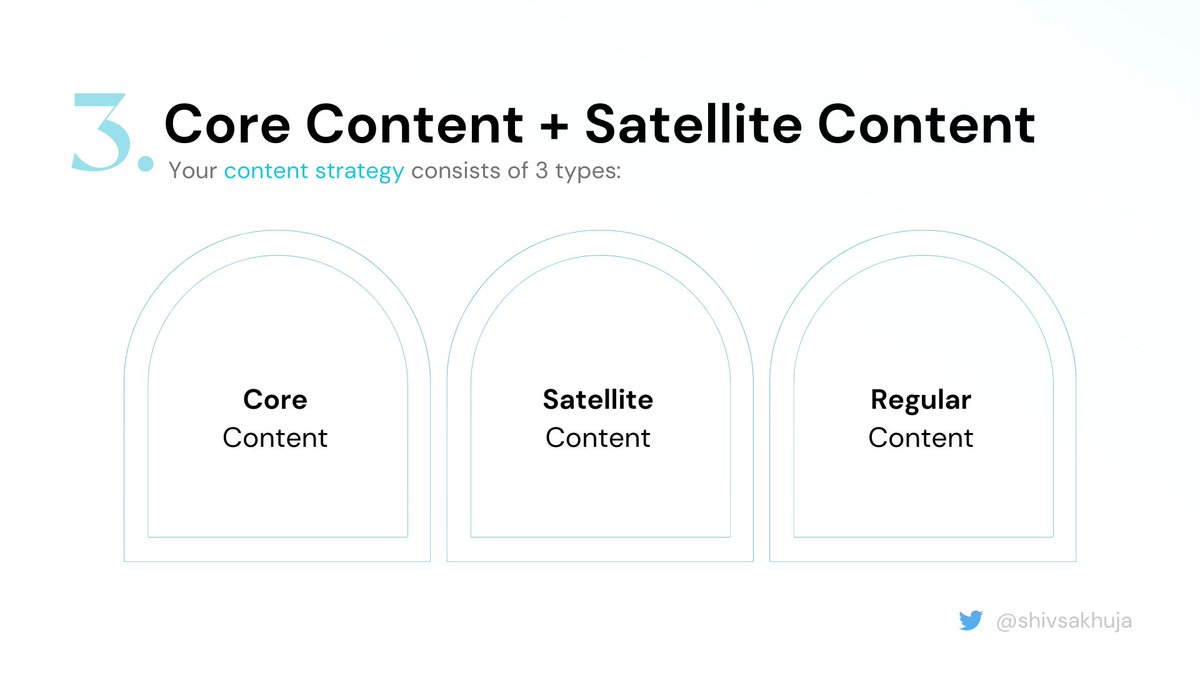
3. Satellite Content
4. Regular Content
5. Frequency
---
This should be a guiding light for your content creation.
Your content strategy plan should define:
1. Content Buckets
2. Super Content
3. Satellite Content
4. Regular Content
5. Frequency
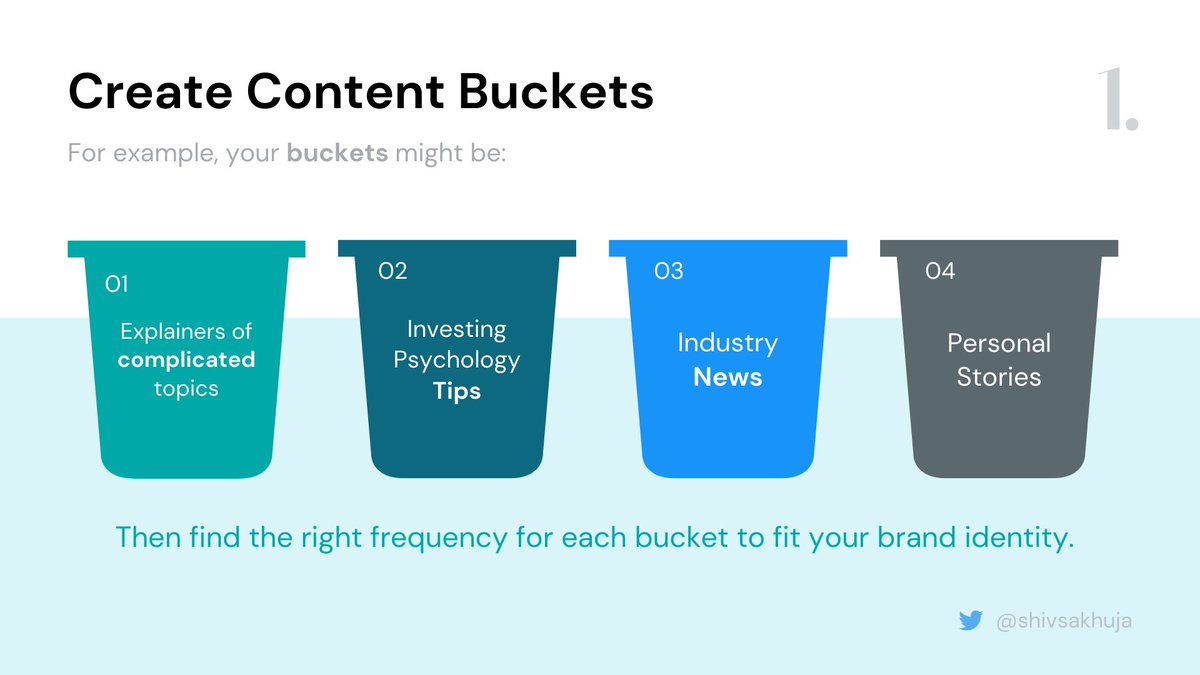
1. Create Content Buckets
For example, your buckets might be:
• Explainers of complicated topics
• Investing Psychology Tips
• Industry News
• Personal Stories
For example, your buckets might be:
• Explainers of complicated topics
• Investing Psychology Tips
• Industry News
• Personal Stories
2. Invest in Super Content
This is your BEST content.
Sometimes you want to really invest in a piece of content, and go all out to make it phenomenal.
This is your BEST content.
Sometimes you want to really invest in a piece of content, and go all out to make it phenomenal.
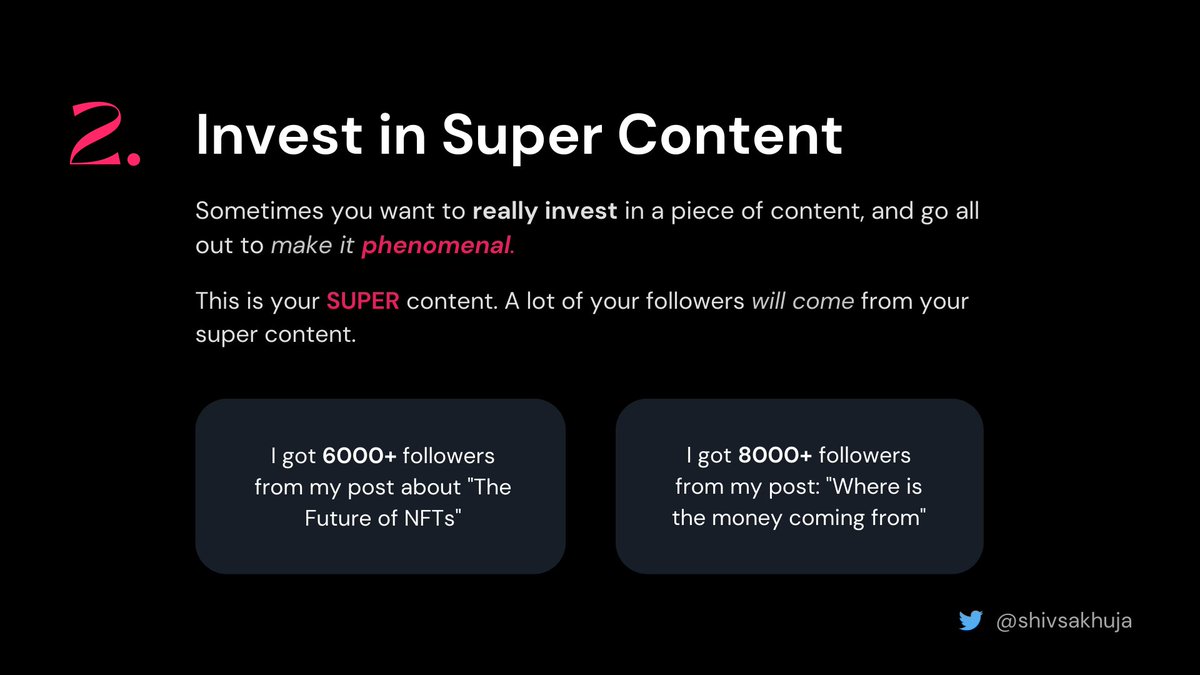
A lot of your followers will come from your super content.
I got 6000+ followers in 2 days from this post.
I got 6000+ followers in 2 days from this post.
3. Core + Satellite Content
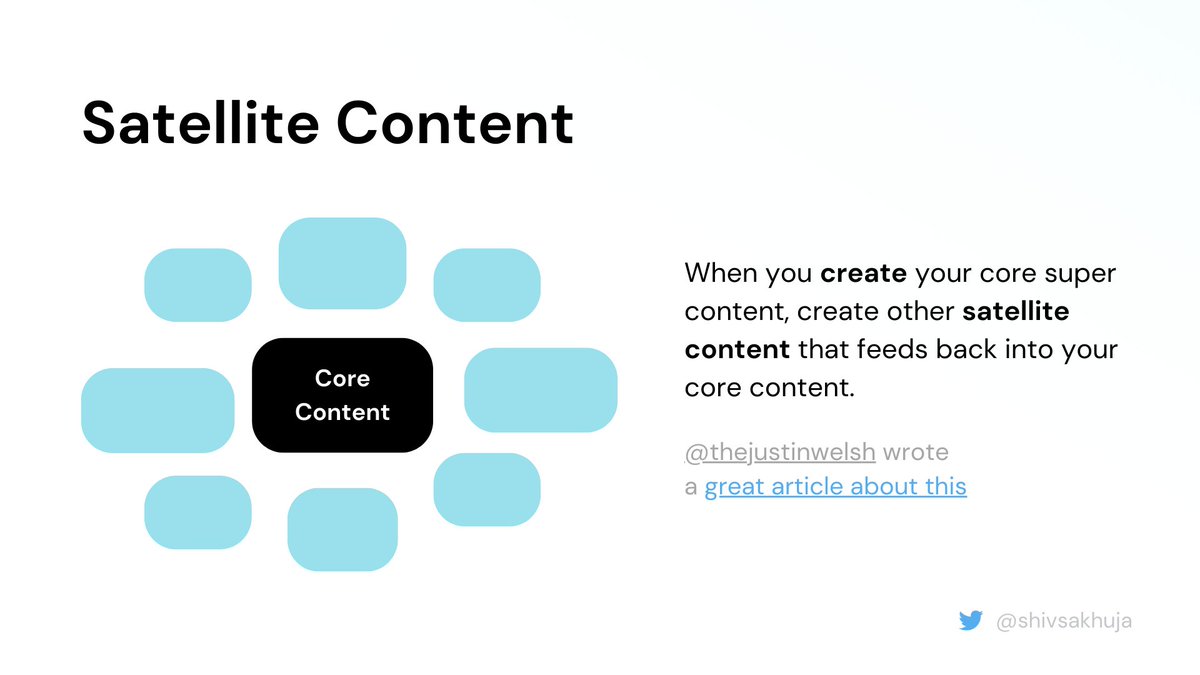
When you create your core super content, create other satellite content that feeds back into your core content.
@thejustinwelsh wrote a great article about this:
justinwelsh.me
When you create your core super content, create other satellite content that feeds back into your core content.
@thejustinwelsh wrote a great article about this:
justinwelsh.me
Why create satellite content?
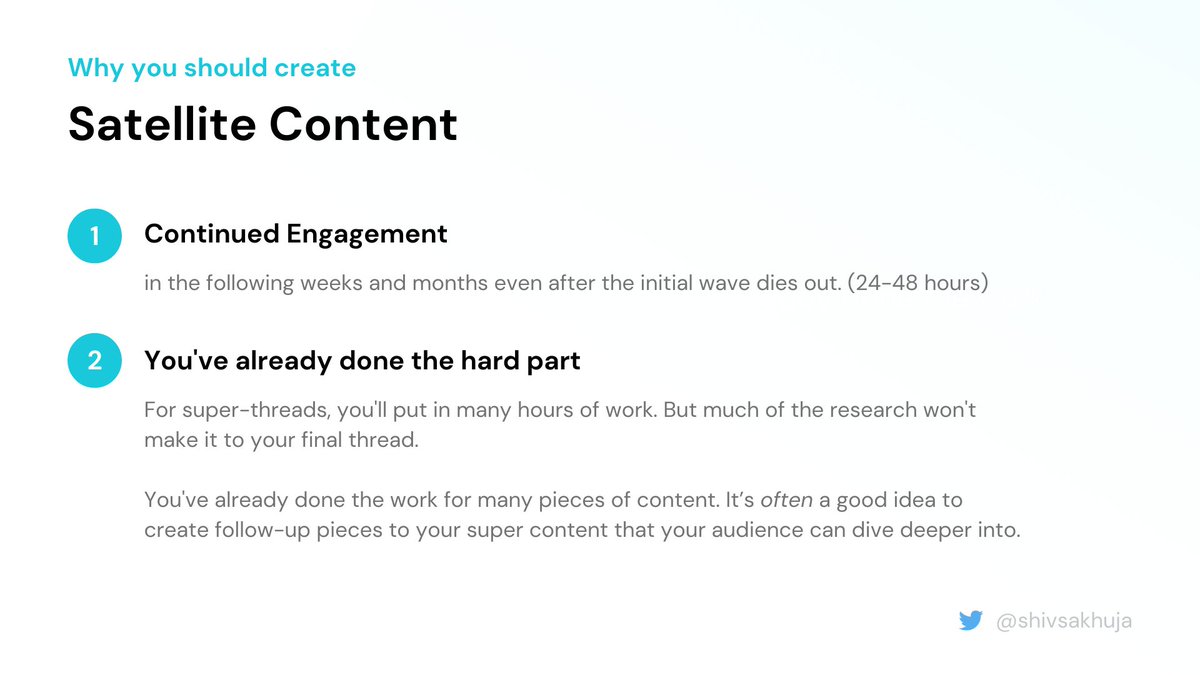
1. Continued Engagement
in the following weeks and months even after the initial wave dies out. (24-48 hours)
1. Continued Engagement
in the following weeks and months even after the initial wave dies out. (24-48 hours)
2. You've already done the hard work
For super-threads, you'll put in many hours of work. But much of the research won't make it to your final thread.
You've already done the work.
Why not create follow-up pieces to your super content that your audience can dive deeper into?
For super-threads, you'll put in many hours of work. But much of the research won't make it to your final thread.
You've already done the work.
Why not create follow-up pieces to your super content that your audience can dive deeper into?
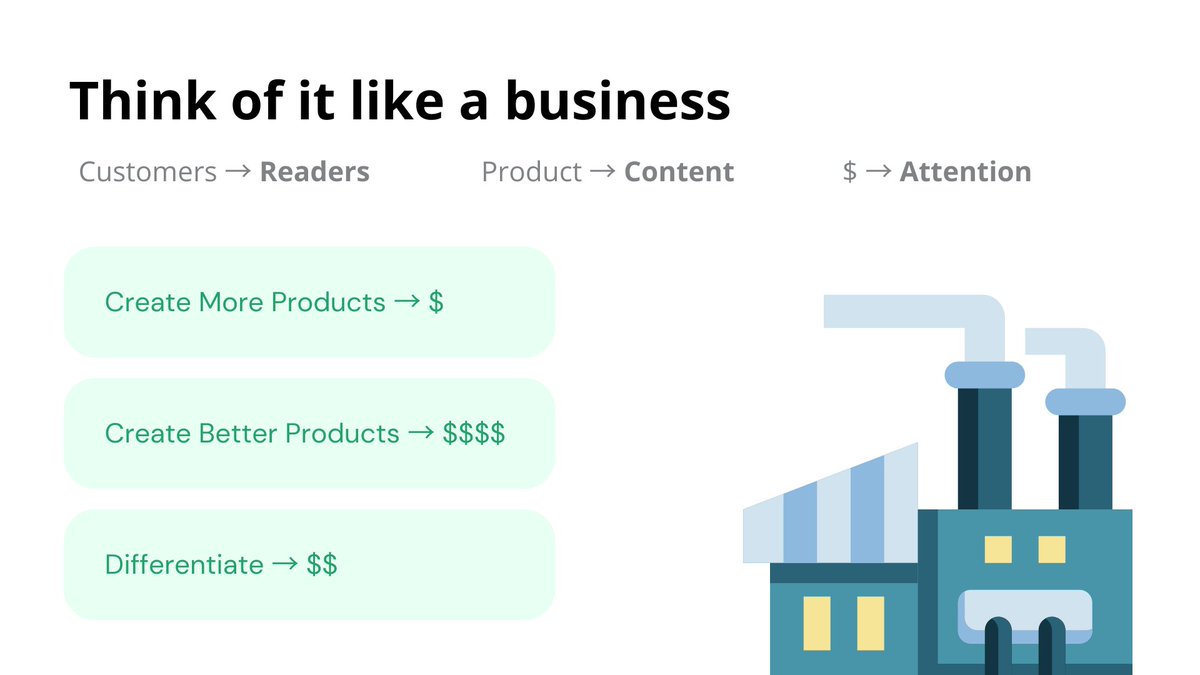
Think of your content creation like a business.
• Your Product is Content
• Your Revenue ($) is Attention
• Your Customers are Readers
To grow, you need to:
• Create More Products → $
• Create Better Products → $$$$
• Differentiate → $$
• Your Product is Content
• Your Revenue ($) is Attention
• Your Customers are Readers
To grow, you need to:
• Create More Products → $
• Create Better Products → $$$$
• Differentiate → $$
4. Regular Content
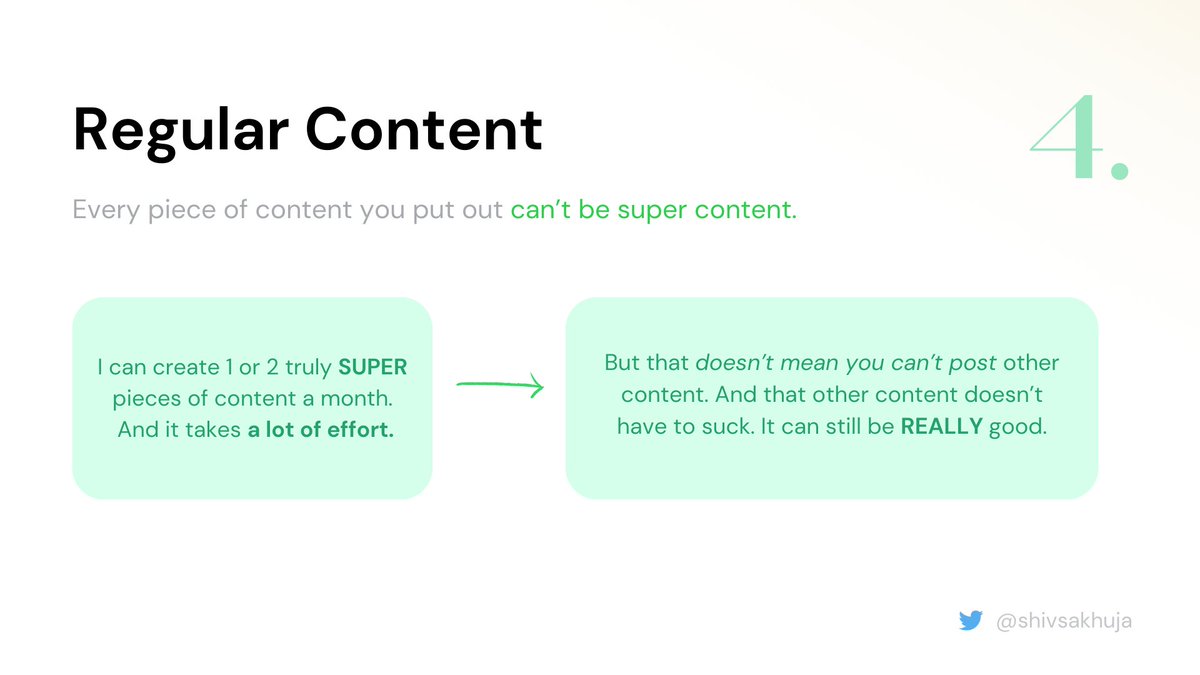
Every piece of content you put out can’t be super content.
I can create 1 or 2 truly SUPER posts a month (at best).
But that doesn’t mean you can’t post other content. And that other content doesn’t have to suck. It should still be REALLY good content.
Every piece of content you put out can’t be super content.
I can create 1 or 2 truly SUPER posts a month (at best).
But that doesn’t mean you can’t post other content. And that other content doesn’t have to suck. It should still be REALLY good content.
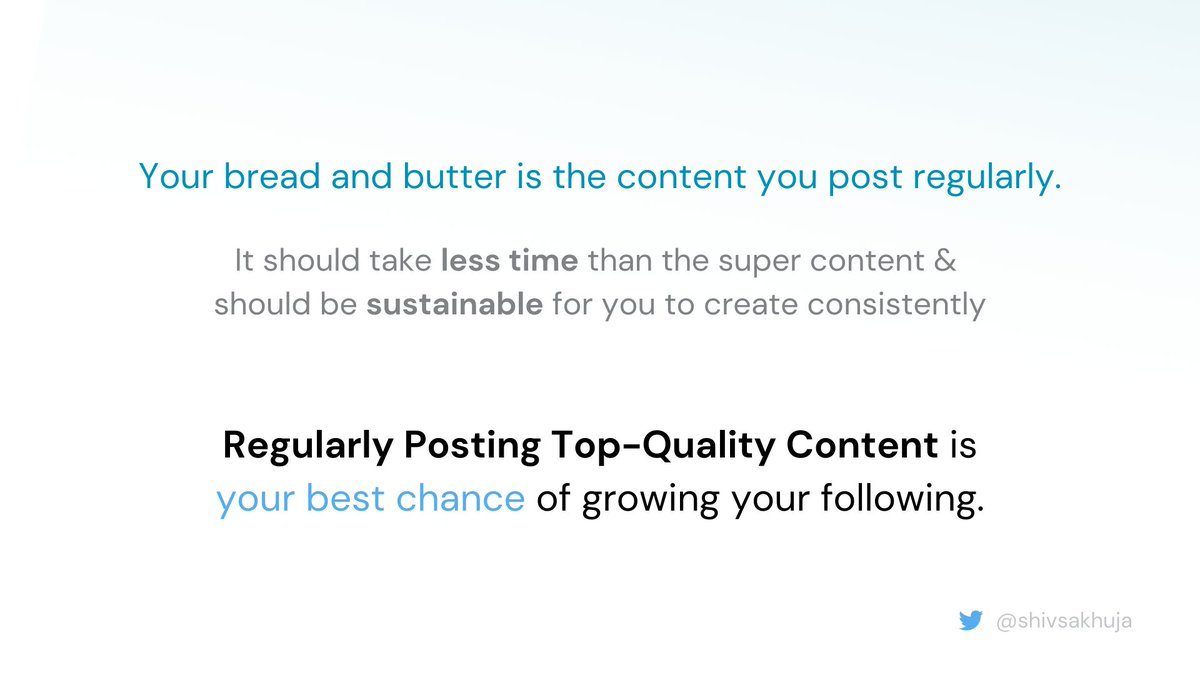
Your bread and butter is the content you post regularly.
It should take less time than the super content & should be sustainable for you to create consistently
Regularly posting top-quality content is your best chance of growing your following.
It should take less time than the super content & should be sustainable for you to create consistently
Regularly posting top-quality content is your best chance of growing your following.
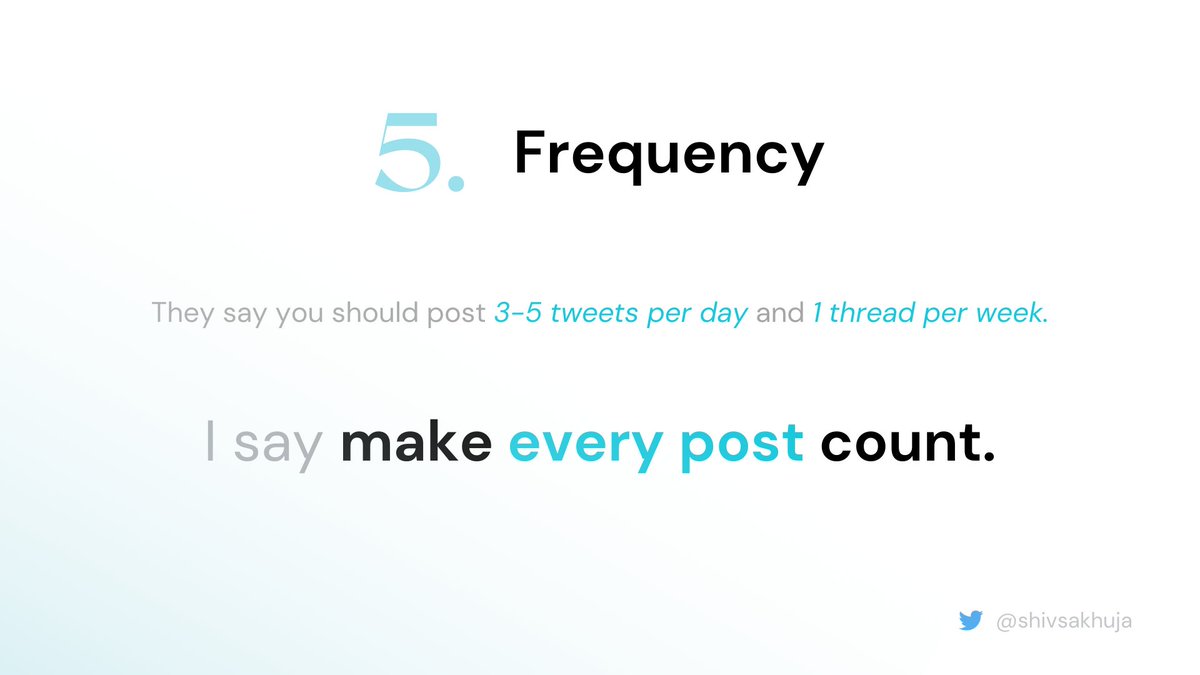
5. Frequency
They say you should post 3-5 tweets per day and at least 1 thread per week.
Those are good guidelines, but I say make every post count.
They say you should post 3-5 tweets per day and at least 1 thread per week.
Those are good guidelines, but I say make every post count.
Content Ideation: How to come up with good content ideas
---
The goal is to find topics your audience or target audience is interested in it and that you can write about really well.
---
The goal is to find topics your audience or target audience is interested in it and that you can write about really well.
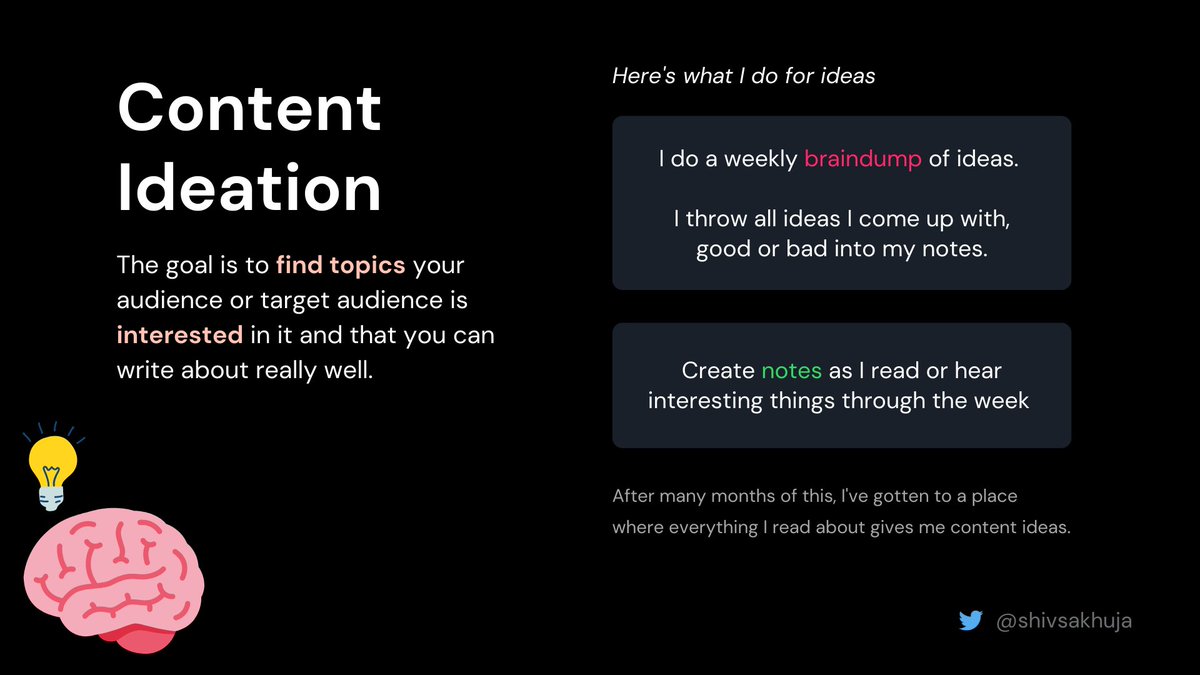
Here's what I do for ideas:
• I do a weekly braindump of ideas. I throw all ideas I come up with, good or bad into my notes.
• Create notes as I read or hear interesting things through the week
After many months of this, everything I read or watch gives me content ideas.
• I do a weekly braindump of ideas. I throw all ideas I come up with, good or bad into my notes.
• Create notes as I read or hear interesting things through the week
After many months of this, everything I read or watch gives me content ideas.
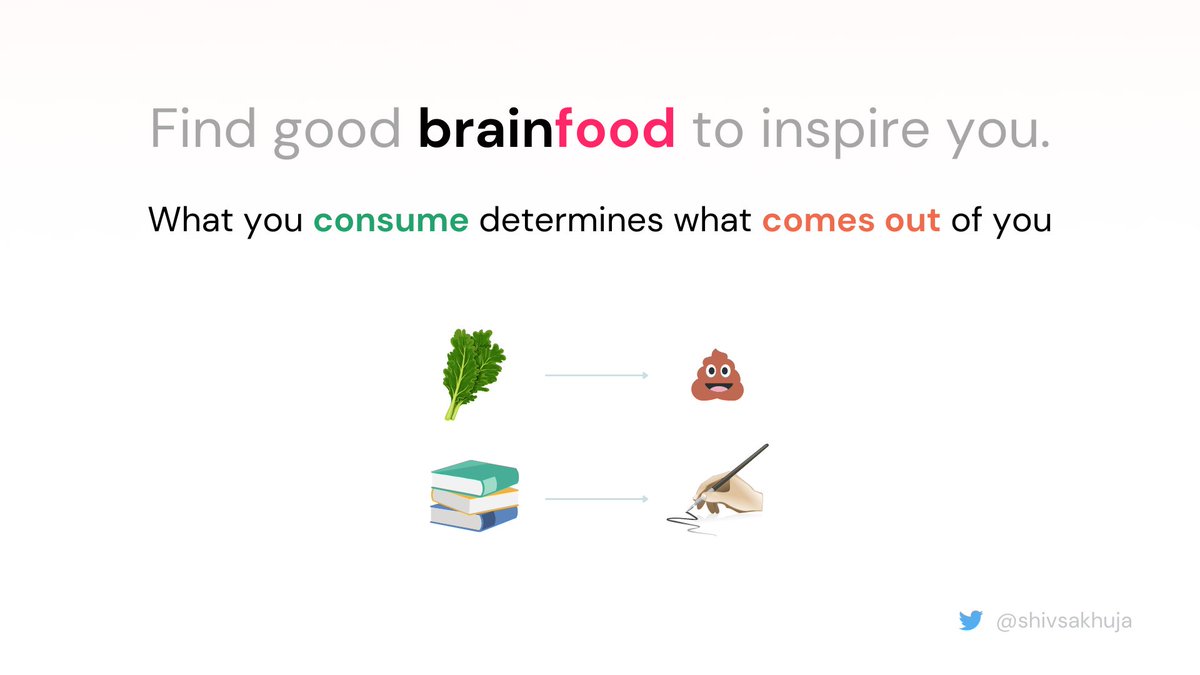
Find good brainfood to inspire you.
What you consume determines what comes out of you
What you consume determines what comes out of you
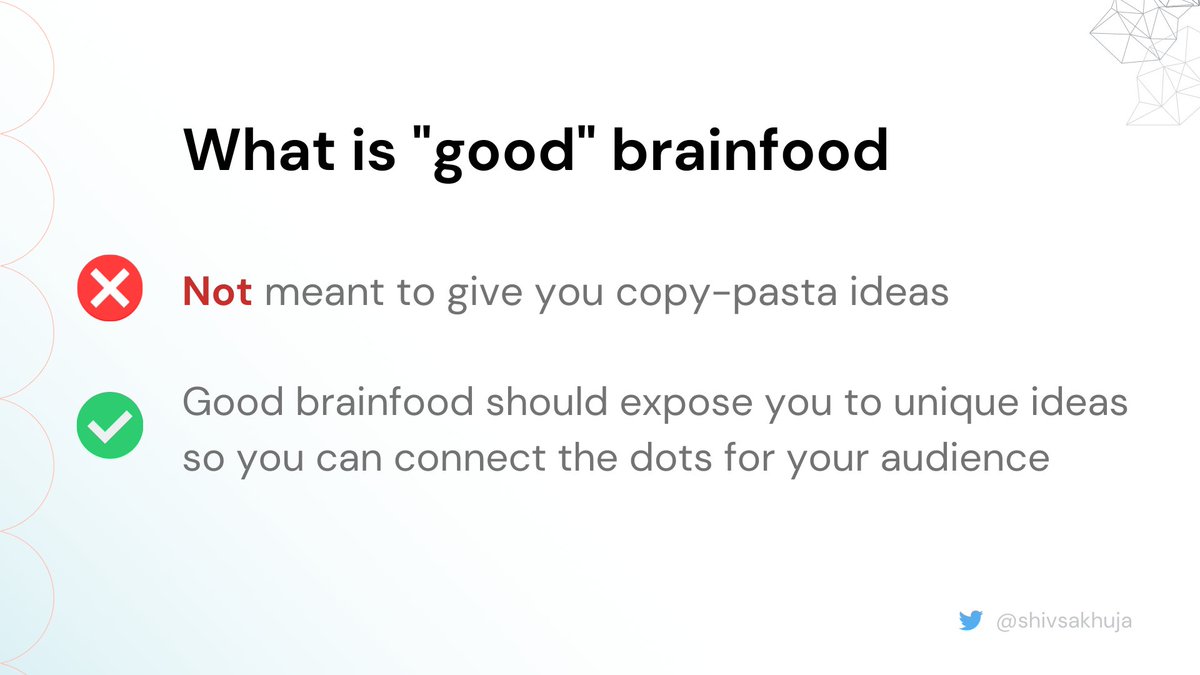
What is good brainfood?
Good brainfood should expose you to unique ideas so you can connect the dots for your audience
Brainfood does NOT mean searching for copy-pasta ideas.
Good brainfood should expose you to unique ideas so you can connect the dots for your audience
Brainfood does NOT mean searching for copy-pasta ideas.
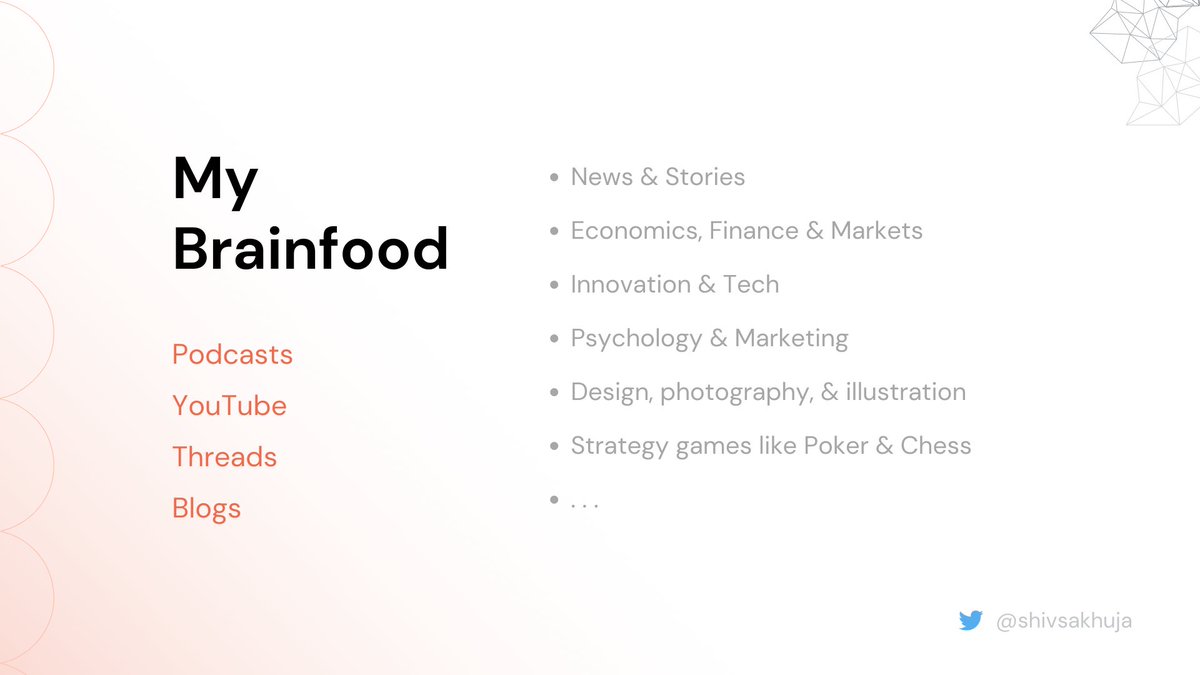
My brainfood content includes:
• News & Stories
• Economics, Finance & Markets
• Innovation & Tech
• Psychology & Marketing
• Design, Photography, & Illustration
• Strategy games like Poker & Chess
+++
• News & Stories
• Economics, Finance & Markets
• Innovation & Tech
• Psychology & Marketing
• Design, Photography, & Illustration
• Strategy games like Poker & Chess
+++
Content Templates
---
6 examples to show different types of content you can do 👇
---
6 examples to show different types of content you can do 👇
1. Do original content with visuals.
2. Do a thought experiment, and share your process or your idea.
3. Take an interesting piece of content, and offer a different take, a fresh perspective, and/or additional insights
4. Share your creative work (designs, animations, etc)
5. Share a story or personal anecdote. This can be really powerful to connect with your audience.
6. Share your failures
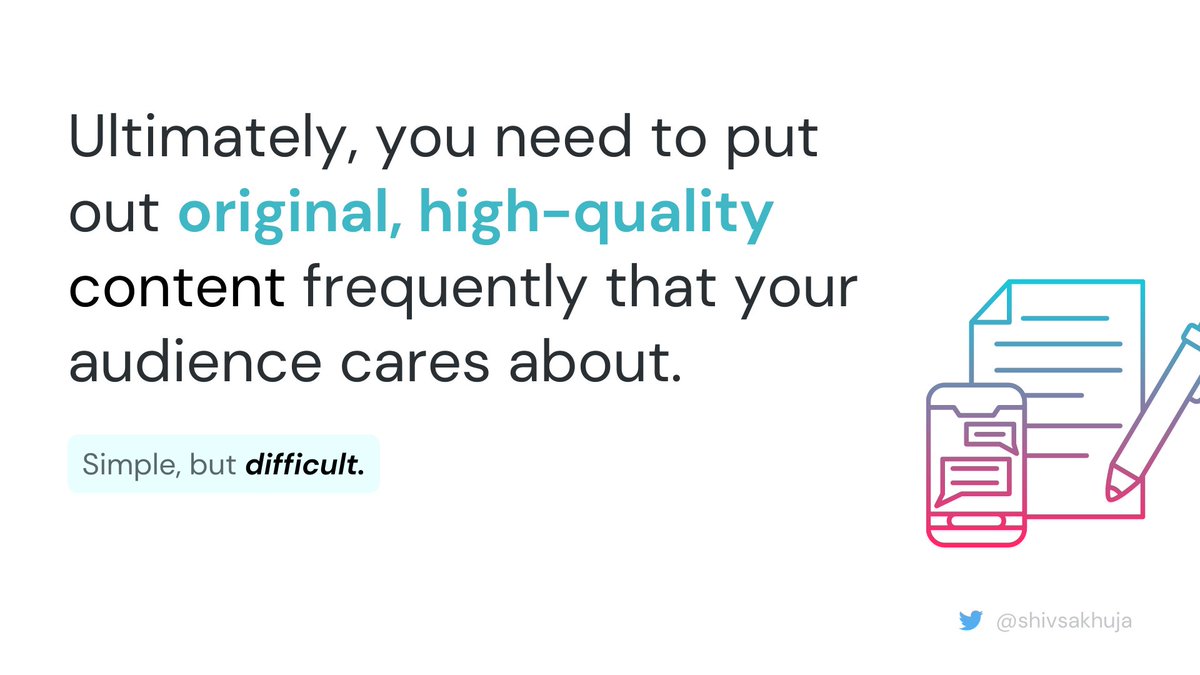
Ultimately, you need to put out original, high-quality content frequently that your audience cares about.
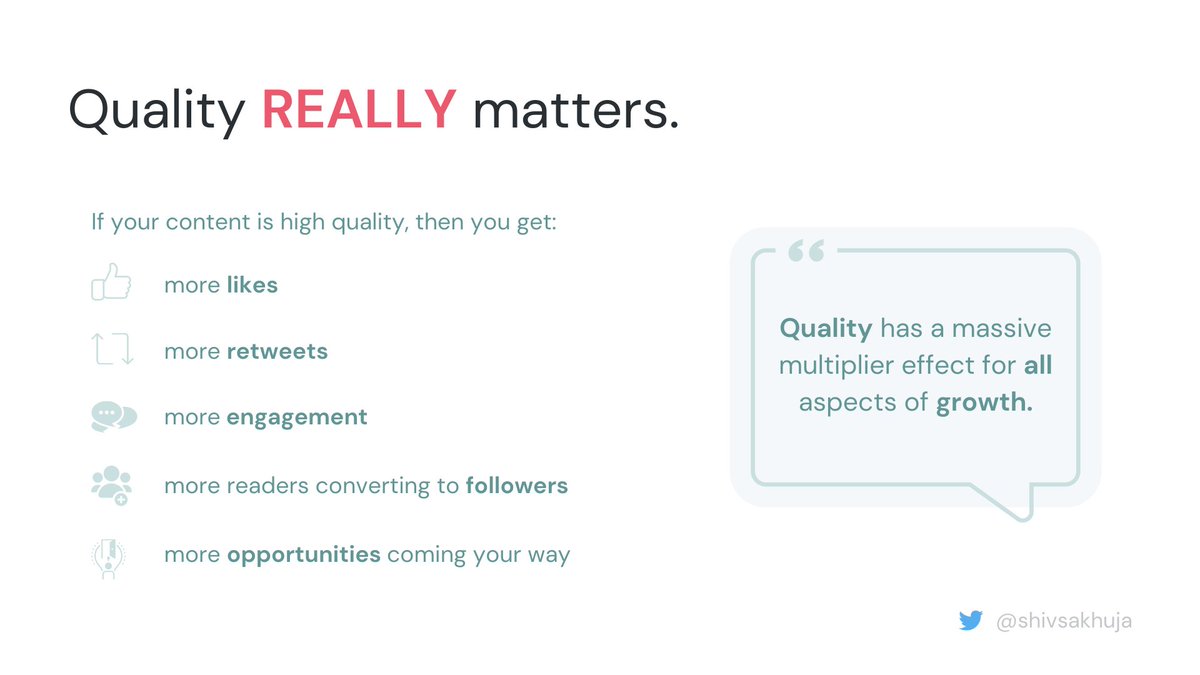
Quality is the most important factor. If your content is high-quality, then you get:
• more likes
• more retweets
• more engagement
• more readers converting to followers
• more opportunities coming your way
Quality has a massive multiplier effect on all growth aspects.
• more likes
• more retweets
• more engagement
• more readers converting to followers
• more opportunities coming your way
Quality has a massive multiplier effect on all growth aspects.
Content Quality Tips
---
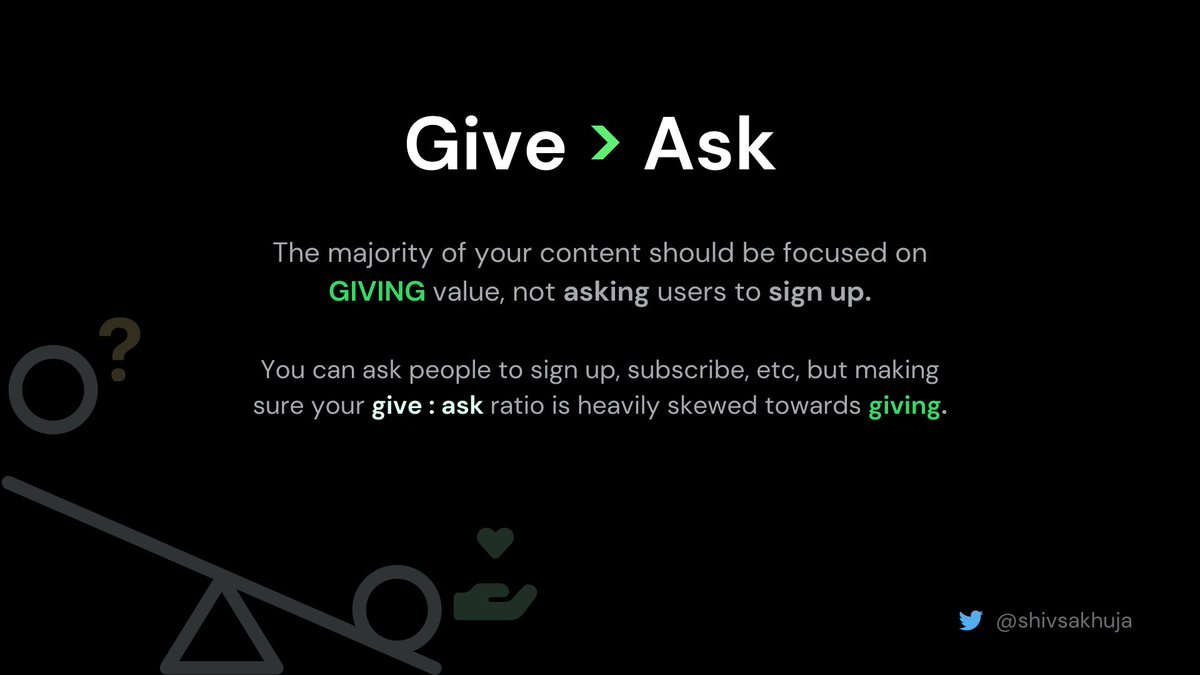
1. Give > Ask
The majority of your content should be focused on GIVING value, not asking users to sign up.
You can ask people to sign up, subscribe, etc, but making sure your give : ask ratio is heavily skewed towards giving.
---
1. Give > Ask
The majority of your content should be focused on GIVING value, not asking users to sign up.
You can ask people to sign up, subscribe, etc, but making sure your give : ask ratio is heavily skewed towards giving.
For example, I may ask you to subscribe to my (free) substack (shivsak.substack.com) for more content like this, but I'm also sharing a ton of free value on Twitter.
What makes a high-quality post?
• Unique and interesting: Copy-pasta content won't get you far.
There's little incentive to follow someone who's posting content I've already read 5 times before.
• Unique and interesting: Copy-pasta content won't get you far.
There's little incentive to follow someone who's posting content I've already read 5 times before.
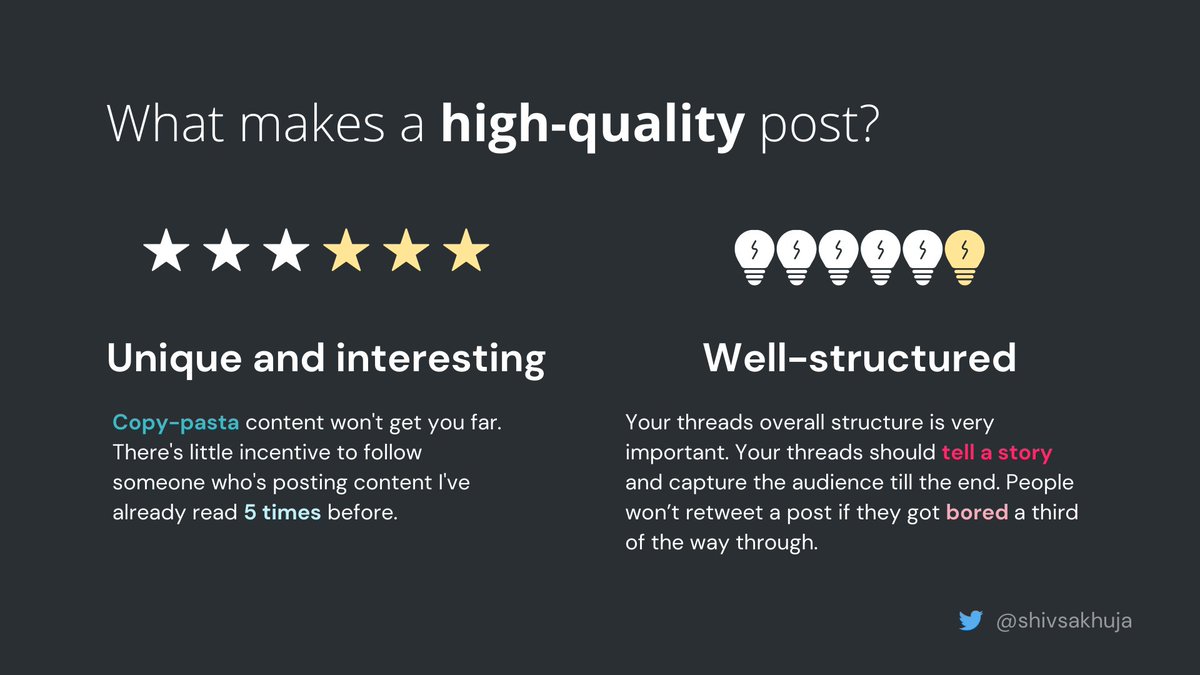
• Well-structured:
Your threads overall structure is very important.
Your threads should tell a story and capture the audience till the end.
People won’t retweet a post if they got bored a third of the way through.
Your threads overall structure is very important.
Your threads should tell a story and capture the audience till the end.
People won’t retweet a post if they got bored a third of the way through.
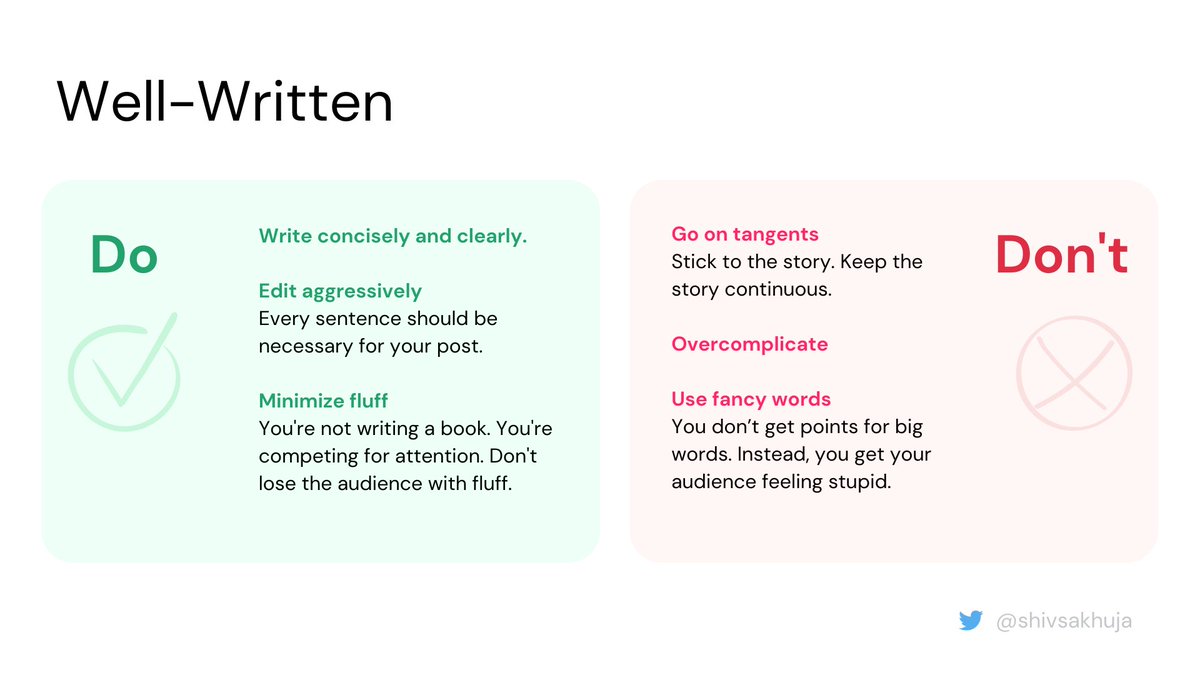
• Well-written:
- Write concisely and clearly.
- Don't overcomplicate things.
- Edit aggressively: Every sentence should be necessary for your post.
- Minimal fluff: You're not writing a book. You're competing for attention. Don't lose the audience with fluff.
- Write concisely and clearly.
- Don't overcomplicate things.
- Edit aggressively: Every sentence should be necessary for your post.
- Minimal fluff: You're not writing a book. You're competing for attention. Don't lose the audience with fluff.
• Well-Formatted
- Make threads skimmable. People may only care about the latter half of your thread. Make it easy to find what they care about.
- Short paragraphs: Avoid writing paragraphs that are more than 2-3 lines. Nothing scares away readers like dense walls of text.
- Make threads skimmable. People may only care about the latter half of your thread. Make it easy to find what they care about.
- Short paragraphs: Avoid writing paragraphs that are more than 2-3 lines. Nothing scares away readers like dense walls of text.
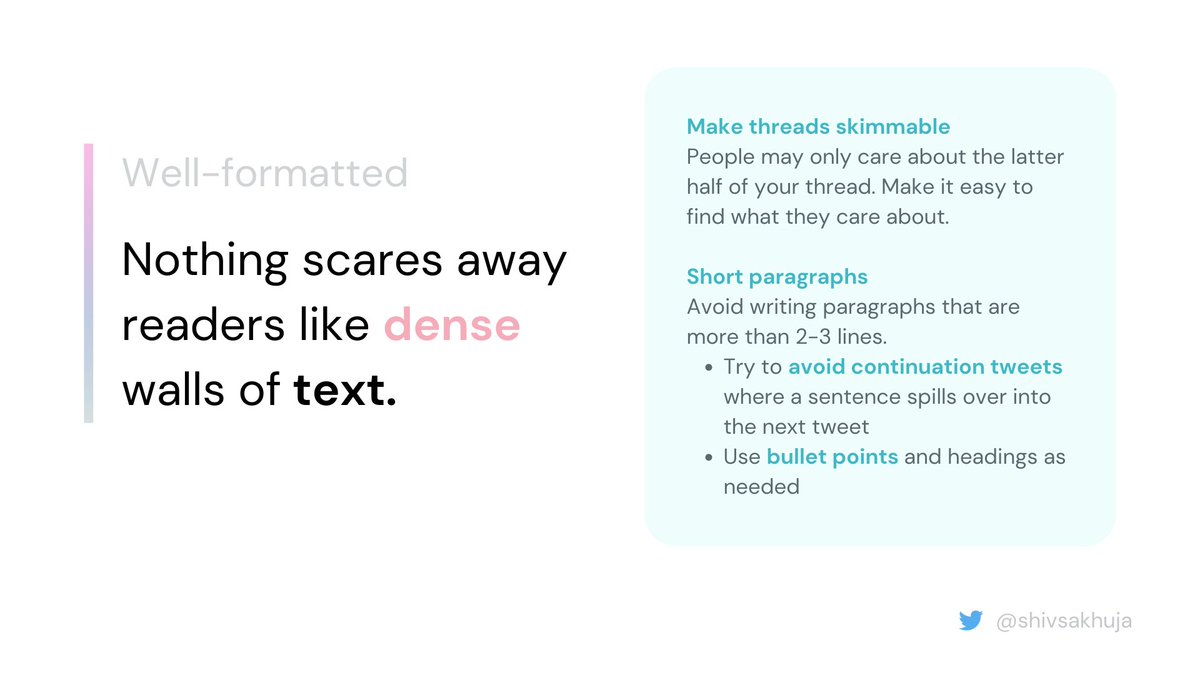
- Try to avoid continuation tweets where a sentence spills over into the next tweet
- Use bullet points and headings as needed
- Use bullet points and headings as needed
• Use Grammarly to improve your writing
Poor grammar, typos, mistakes, etc are a flow disruptors because people will re-read sentences.
It might also make people question your credibility (perhaps unfairly).
Poor grammar, typos, mistakes, etc are a flow disruptors because people will re-read sentences.
It might also make people question your credibility (perhaps unfairly).
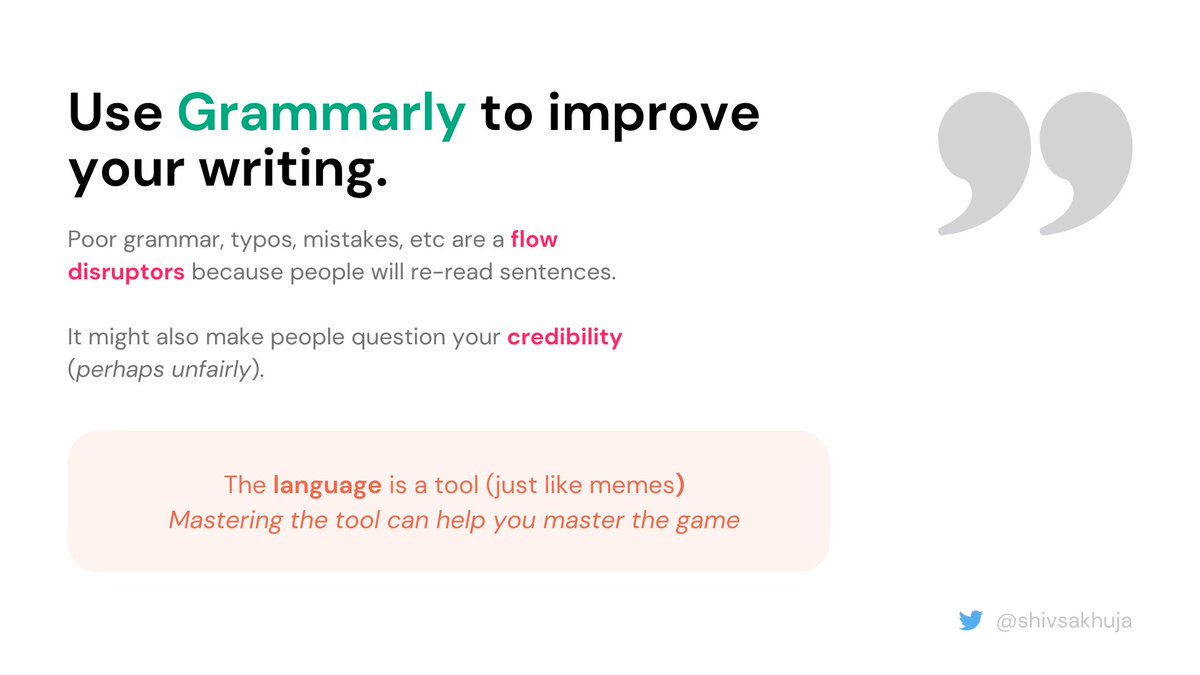
The language is a tool (just like memes).
Mastering the tool can help you master the game
Mastering the tool can help you master the game
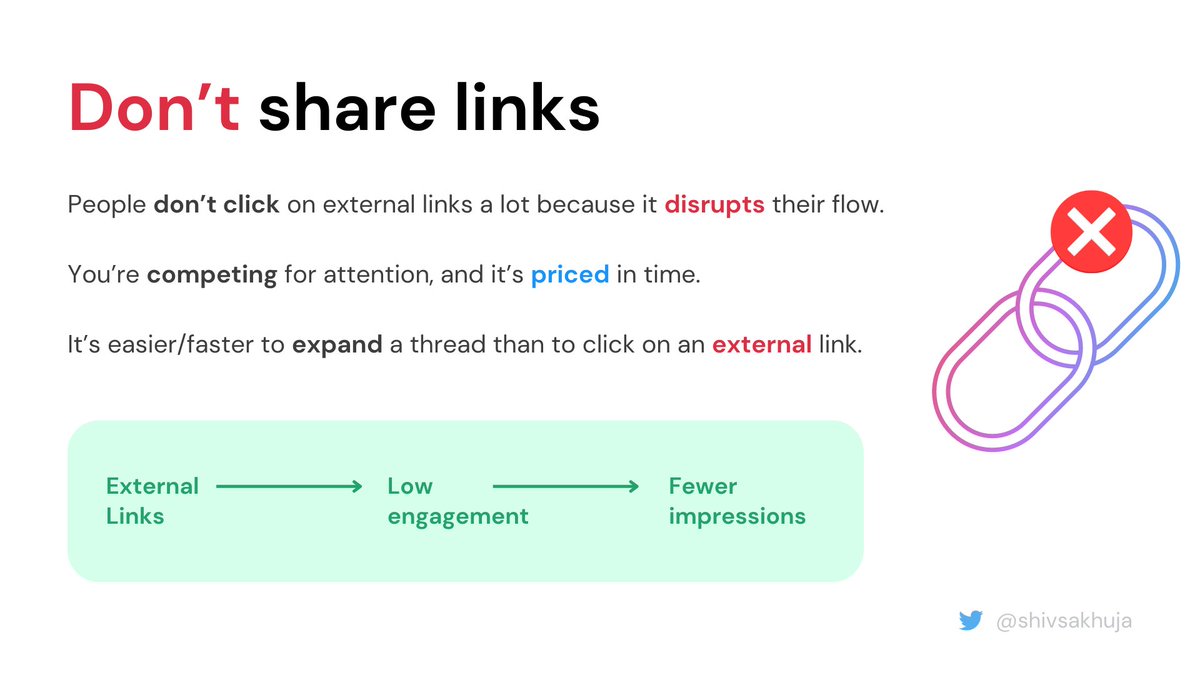
• Don't share links
People don’t click on external links a lot because it disrupts their flow.
You’re competing for attention, and it’s priced in time.
It’s faster to expand a thread than to click on an external link.
External Links
→ Low engagement
→ Fewer impressions
People don’t click on external links a lot because it disrupts their flow.
You’re competing for attention, and it’s priced in time.
It’s faster to expand a thread than to click on an external link.
External Links
→ Low engagement
→ Fewer impressions
News Websites are a classic example.
The @nytimes has over 54 MILLION followers, and they ONLY got 129 likes on this post after 24+ hours.
They have a 1000 times as many followers as I do, and yet my last post got over 400 likes in the same period of time.
The @nytimes has over 54 MILLION followers, and they ONLY got 129 likes on this post after 24+ hours.
They have a 1000 times as many followers as I do, and yet my last post got over 400 likes in the same period of time.
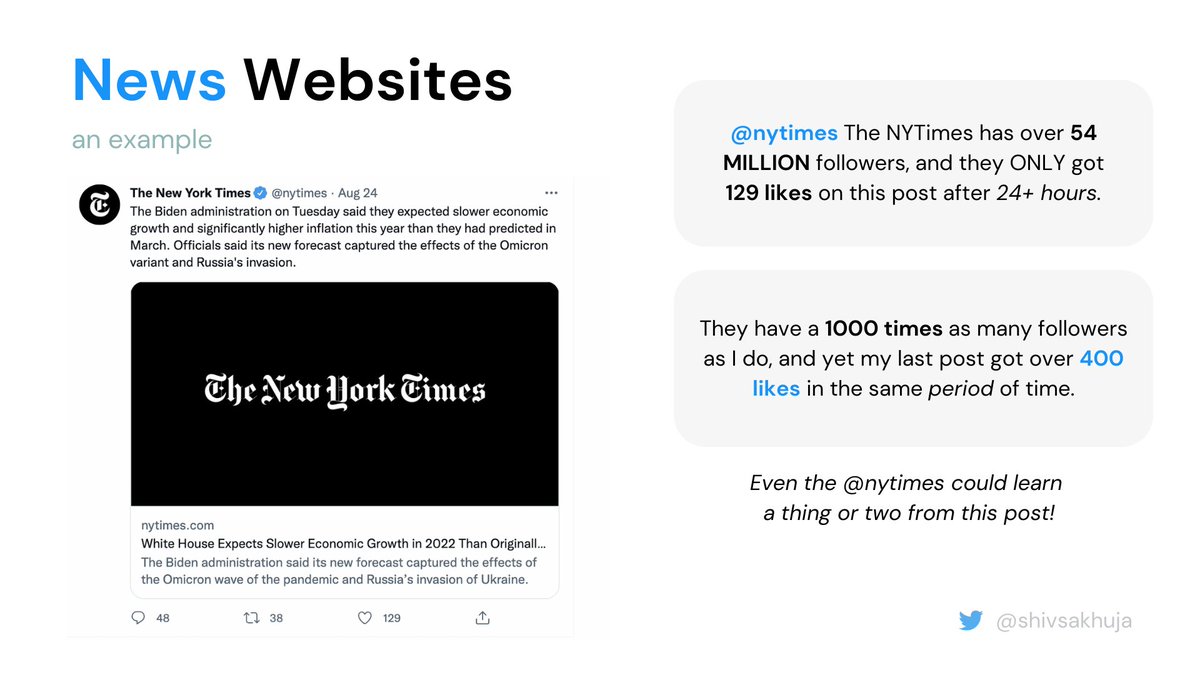
You can still share links, but that should not be the primary part of your content strategy.
Maybe the @nytimes could learn a thing or two from this post! 😆
Maybe the @nytimes could learn a thing or two from this post! 😆
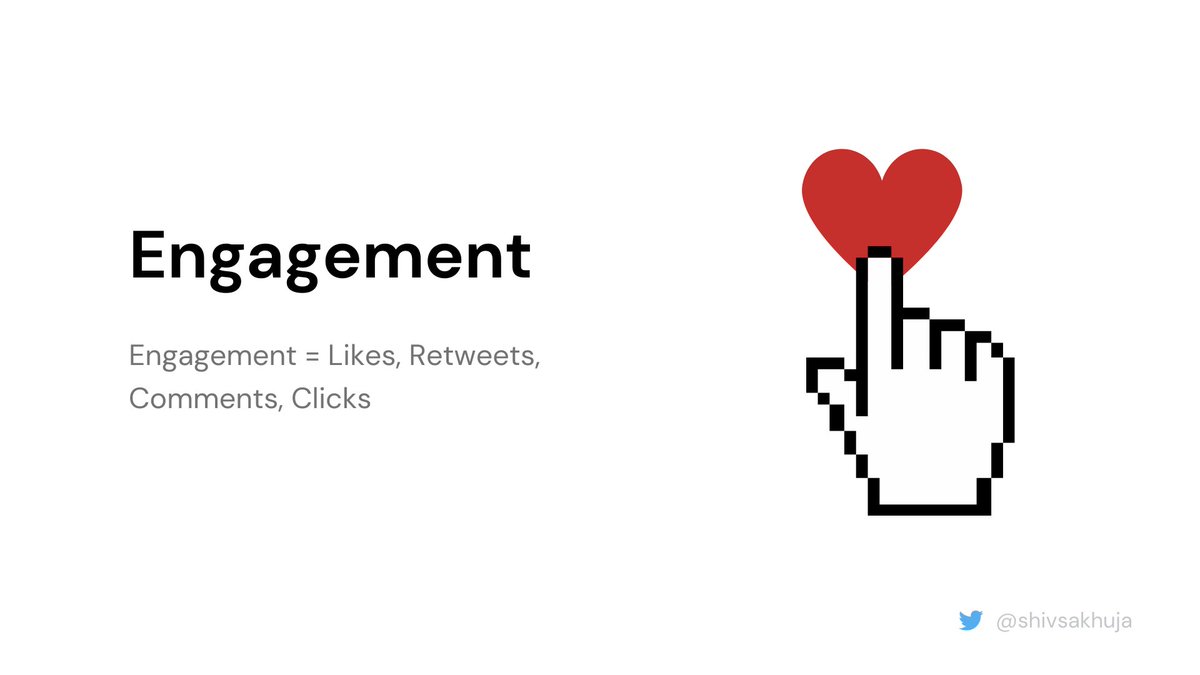
Engagement
---
Engagement = likes, clicks, comments, retweets, ...
---
Engagement = likes, clicks, comments, retweets, ...
Cheap & Dirty Engagement
Some posts get you cheap engagement. I don't recommend using this much though - you're not usually adding any value for anyone.
Don't abuse this.
Some posts get you cheap engagement. I don't recommend using this much though - you're not usually adding any value for anyone.
Don't abuse this.
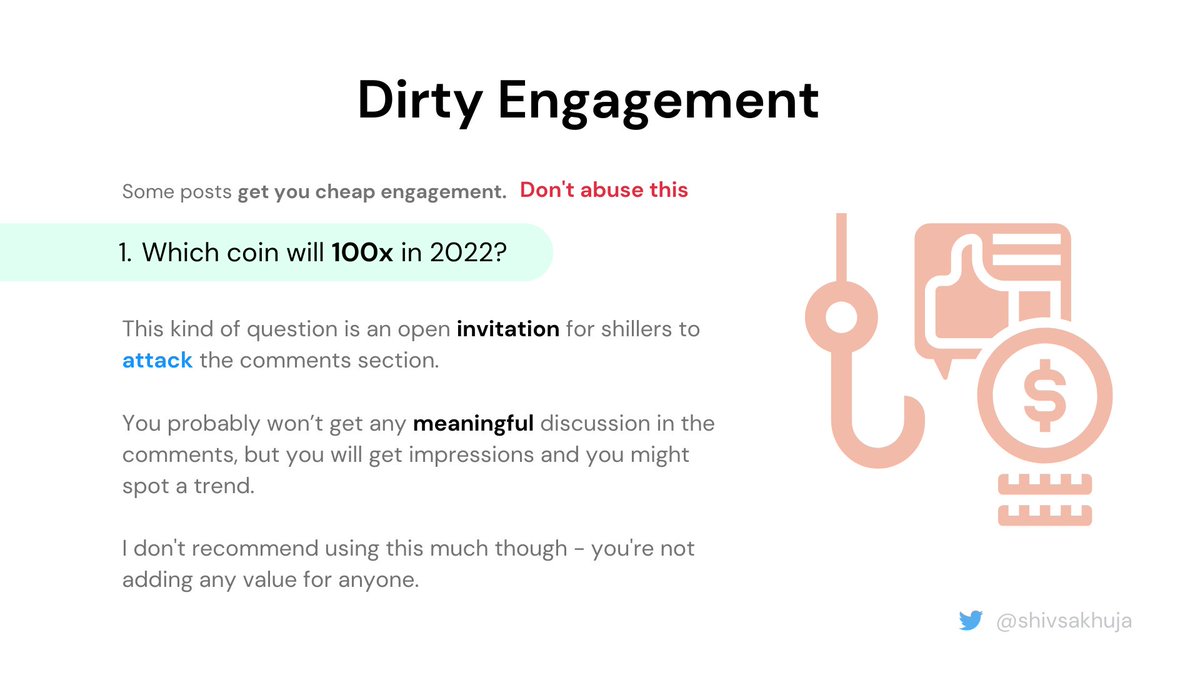
"Which coin will 100x in 2022?"
This kind of question is an open invitation for shillers to attack the comments section.
You probably won’t get any meaningful discussion in the comments, but you will get impressions and you might spot a trend.
This kind of question is an open invitation for shillers to attack the comments section.
You probably won’t get any meaningful discussion in the comments, but you will get impressions and you might spot a trend.
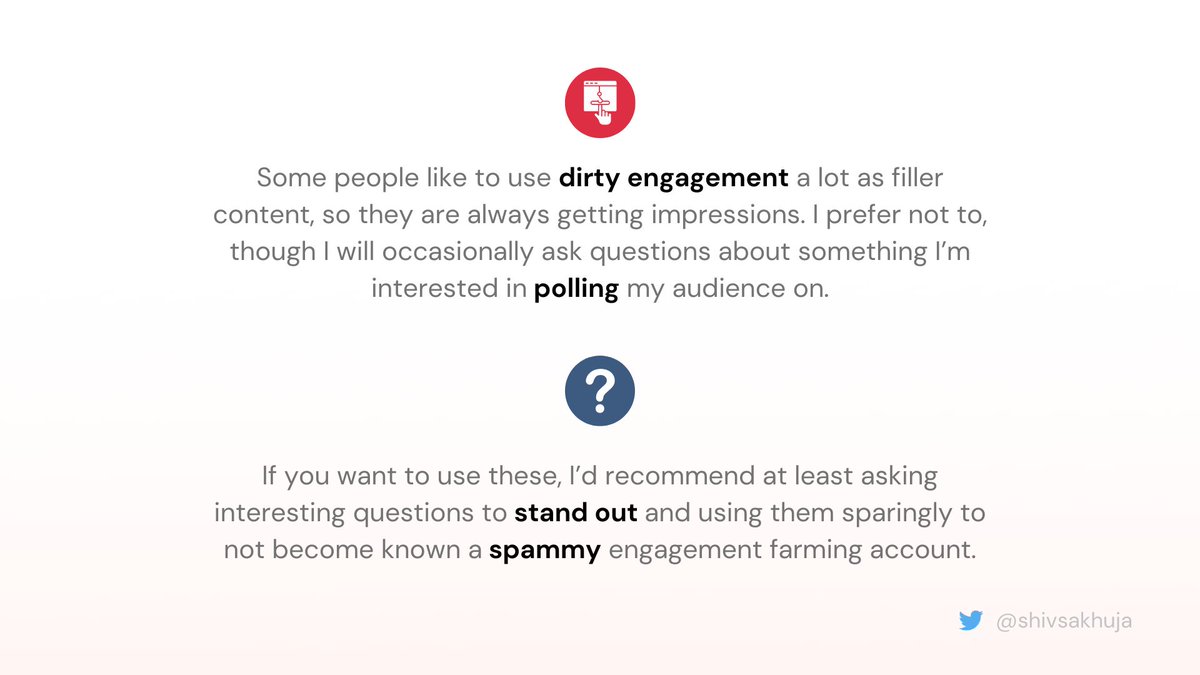
Some people like to use cheap engagement posts as filler content, so they are always getting impressions.
I prefer not to, though I will occasionally ask questions about something I’m interested in polling my audience on.
I prefer not to, though I will occasionally ask questions about something I’m interested in polling my audience on.
If you want to use these, I’d recommend at least asking interesting questions to stand out and using them sparingly to not become known as a spammy engagement farming account.
Important Note:
All followers are not equal. There are "good" and "bad" followers.
Strategies that will get you bad followers (and potentially banned):
• Mass follow / unfollow
• Follow for follow
• Engagement spam
• Buying followers
• Giveaways
All followers are not equal. There are "good" and "bad" followers.
Strategies that will get you bad followers (and potentially banned):
• Mass follow / unfollow
• Follow for follow
• Engagement spam
• Buying followers
• Giveaways
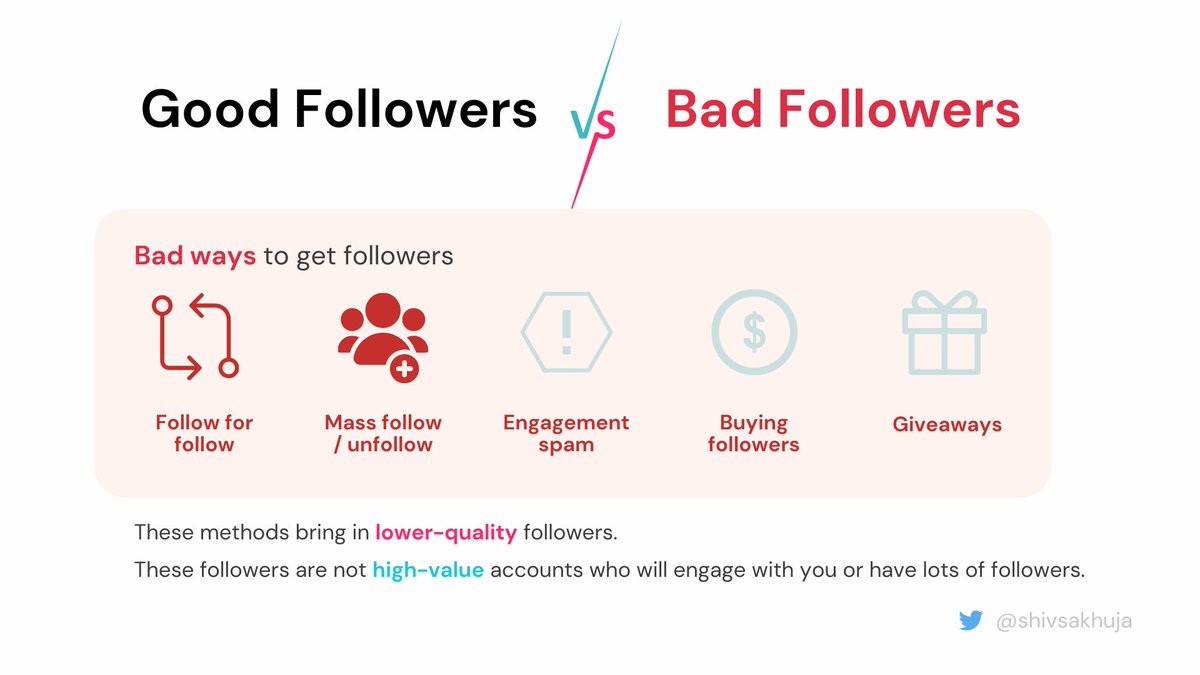
These methods bring in lower-quality followers.
These followers are not high-value accounts who will engage with you or have lots of followers themselves.
Instead, they will just drag your engagement rates down.
These followers are not high-value accounts who will engage with you or have lots of followers themselves.
Instead, they will just drag your engagement rates down.
Speaking of engagement, let's talk about the Algorithm - it can be your best friend or your worst enemy.
No one TRULY knows how the algorithm works.
But I have learned some things from analyzing my own data and experiences.
It might help you play the algorithm game better.
No one TRULY knows how the algorithm works.
But I have learned some things from analyzing my own data and experiences.
It might help you play the algorithm game better.
Here are some algorithm tricks and secrets that I believe to be true:
---
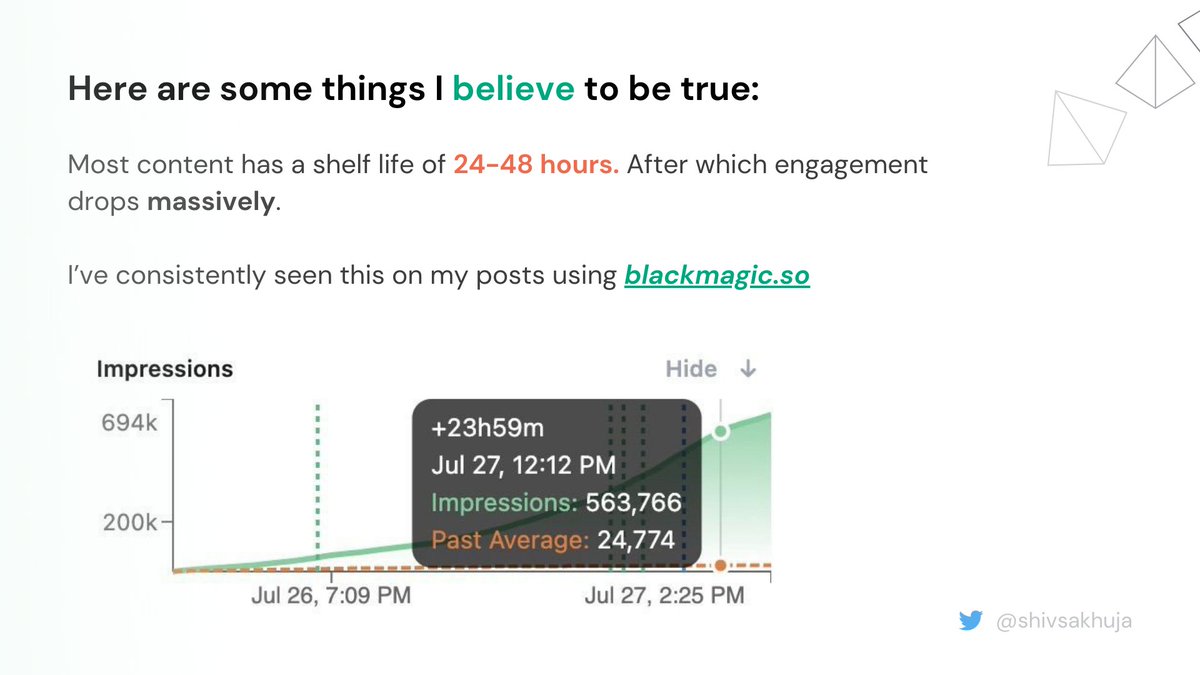
1. Most content has a shelf life of 24-48 hours. After which engagement drops massively. I’ve consistently seen this on my posts using @blackmagic_so (created by @tdinh_me).
---
1. Most content has a shelf life of 24-48 hours. After which engagement drops massively. I’ve consistently seen this on my posts using @blackmagic_so (created by @tdinh_me).
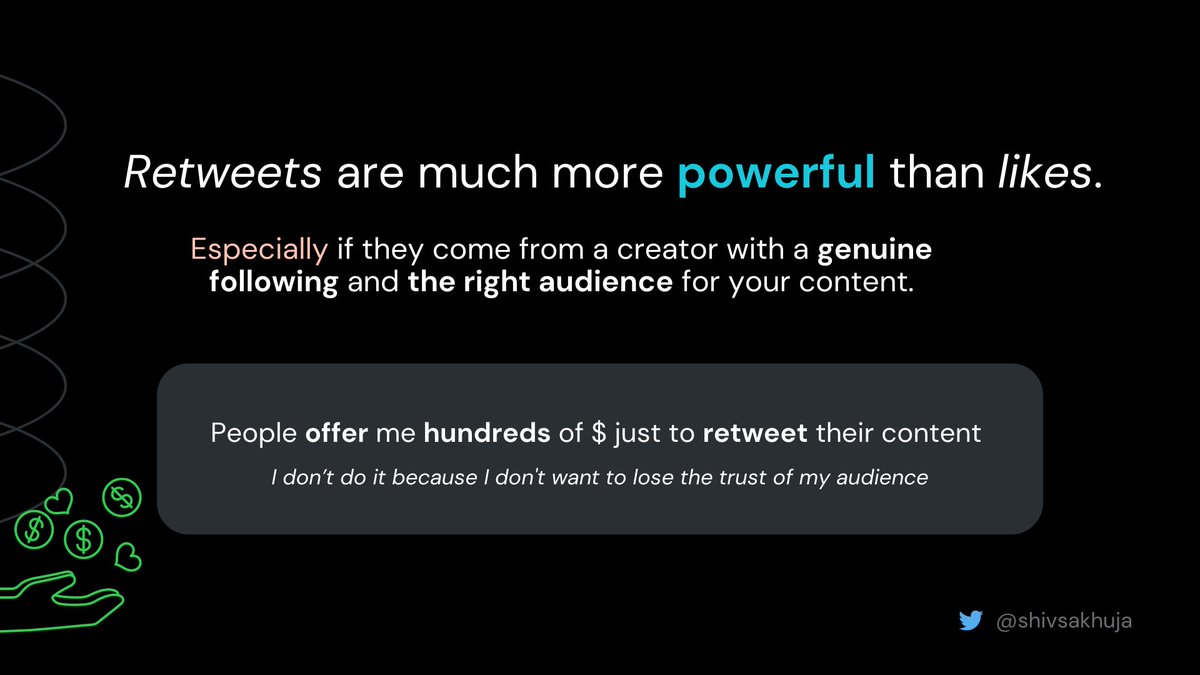
2. Retweets are much more powerful than likes.
Especially if they come from a creator with a genuine following and the right audience for your content.
People offer me hundreds of $ just to retweet a post.
(I don’t do it because I don't want to lose the trust of my audience)
Especially if they come from a creator with a genuine following and the right audience for your content.
People offer me hundreds of $ just to retweet a post.
(I don’t do it because I don't want to lose the trust of my audience)
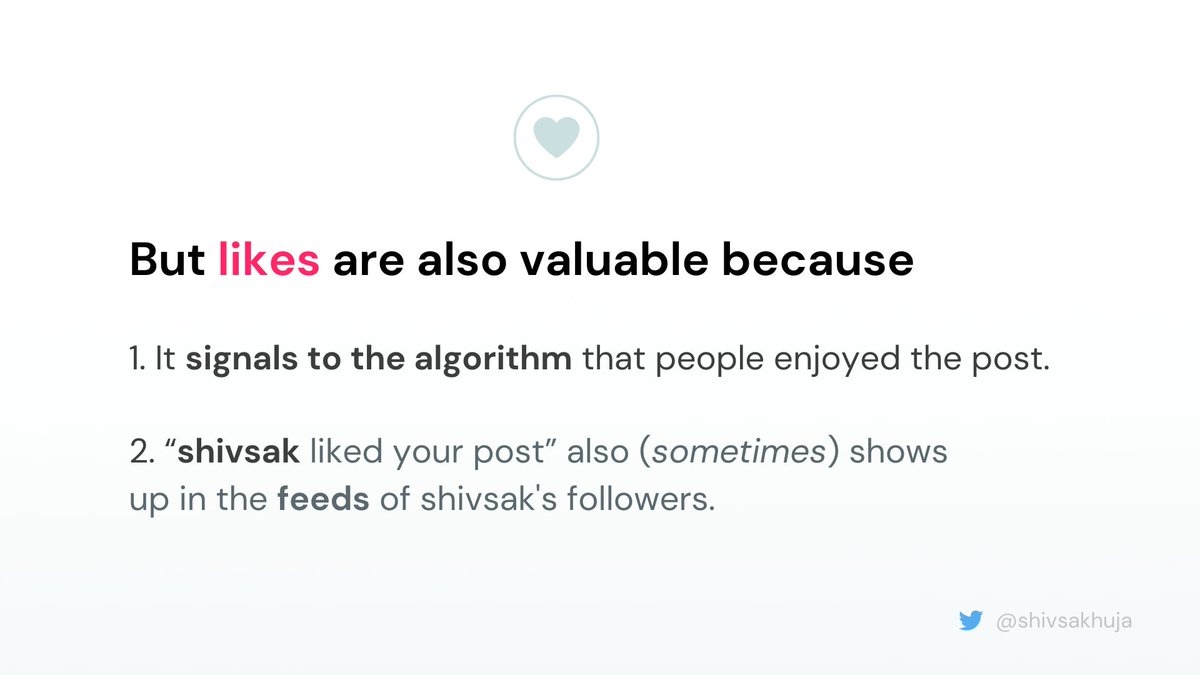
3. Likes are also valuable:
• “@Route2FI liked your post” also shows up in the feeds of some of Route2FI's followers.
• It signals to the algorithm that people enjoyed the post.
• “@Route2FI liked your post” also shows up in the feeds of some of Route2FI's followers.
• It signals to the algorithm that people enjoyed the post.
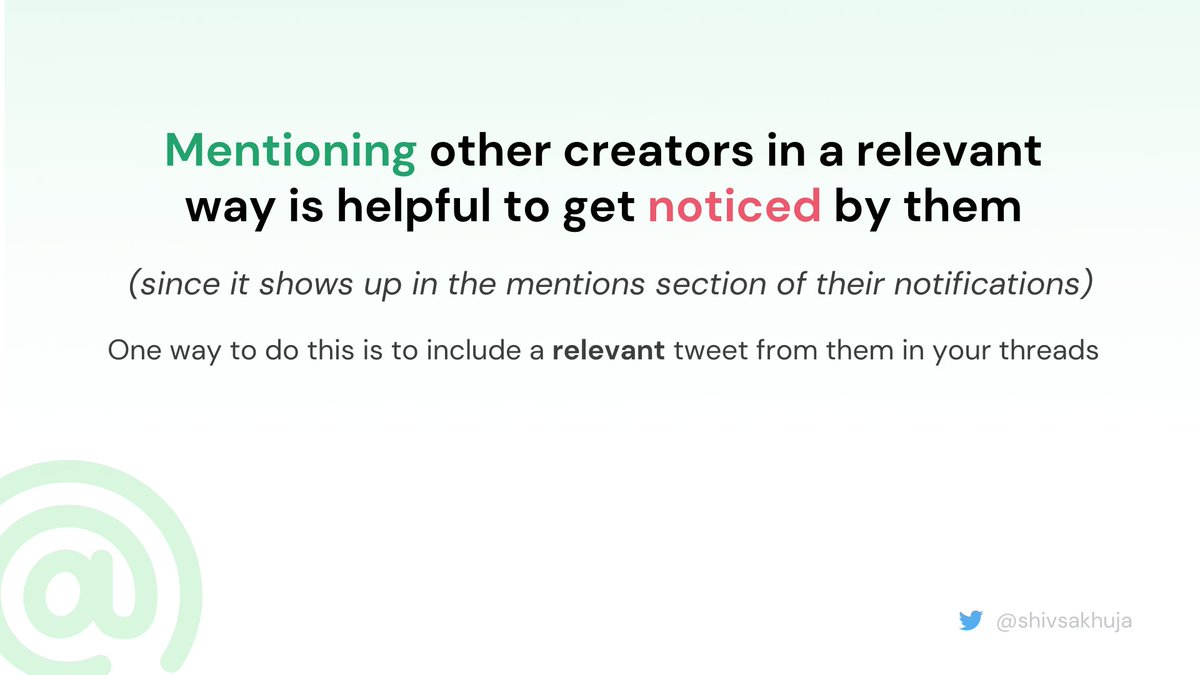
4. Mentioning other creators in a relevant way is helpful to get noticed by them
(since it shows up in the mentions section of their notifications)
One way to do this is to include a relevant tweet from them in your threads
(since it shows up in the mentions section of their notifications)
One way to do this is to include a relevant tweet from them in your threads
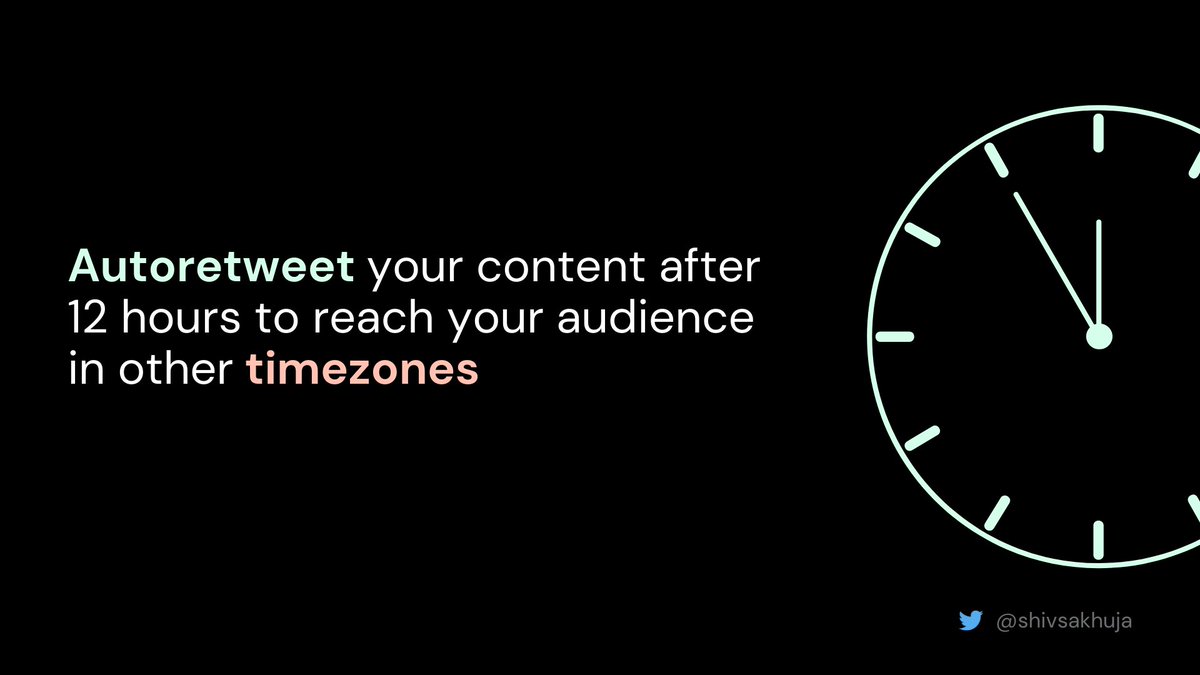
5. Autoretweet your content after 12 hours to reach your audience in other timezones
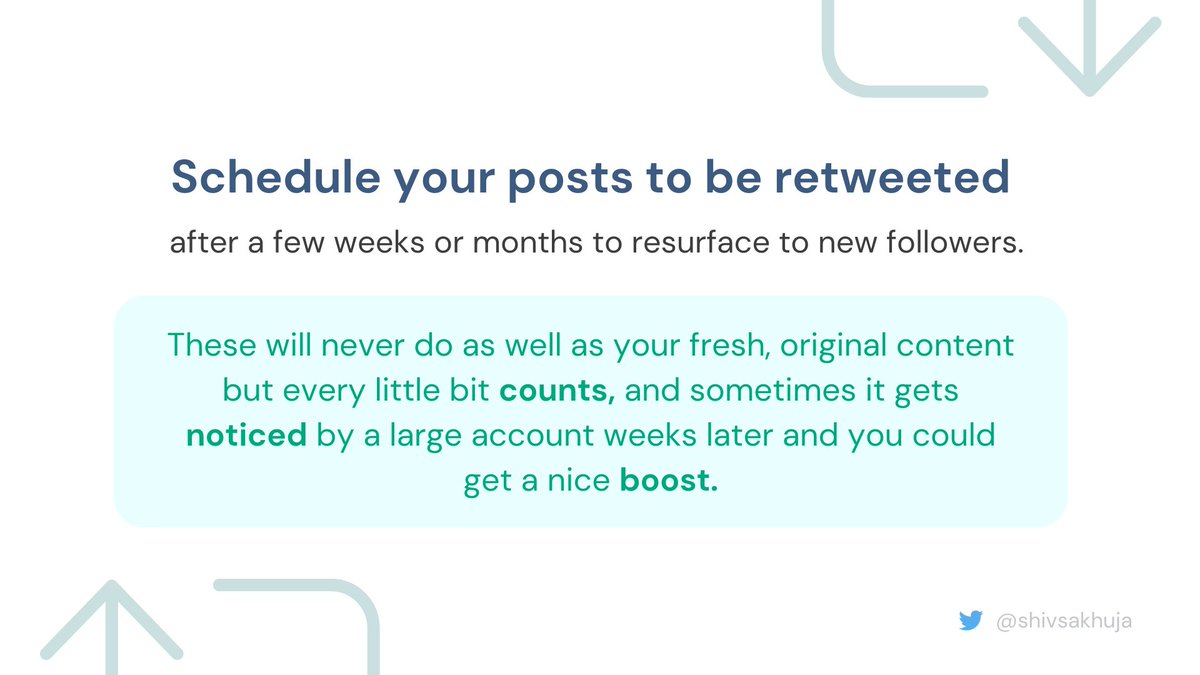
6. Schedule your posts to be retweeted after a few weeks or months to resurface to new followers.
These will never do as well as your fresh, original content but every little bit counts, and sometimes it gets noticed by a large account weeks later and you could get a nice boost.
These will never do as well as your fresh, original content but every little bit counts, and sometimes it gets noticed by a large account weeks later and you could get a nice boost.
How to get started from 0 followers?
---
You spend 5 hours writing a thread - a masterpiece, some might call it.
You hit the button to publish your tweet.
*cricket sounds.*
Turns out your 35 followers don’t care.
You get 2 likes in 24 hours.
Demoralized, you give up.
---
You spend 5 hours writing a thread - a masterpiece, some might call it.
You hit the button to publish your tweet.
*cricket sounds.*
Turns out your 35 followers don’t care.
You get 2 likes in 24 hours.
Demoralized, you give up.
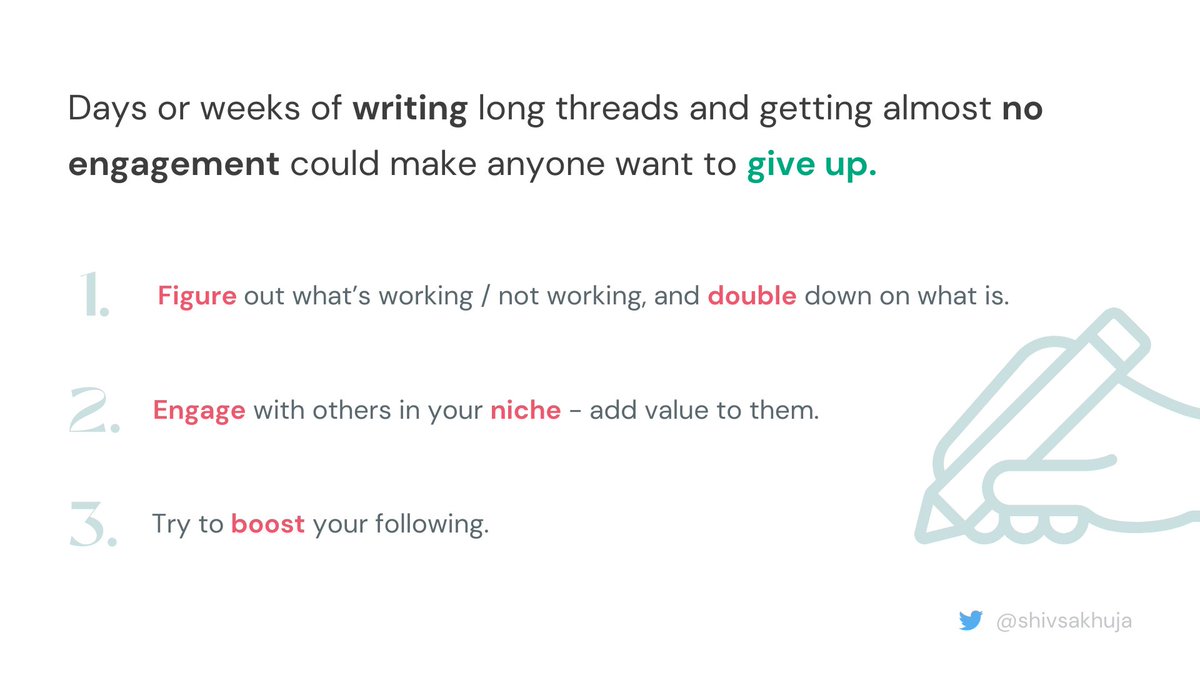
Days or weeks of writing long threads and getting almost no engagement could make anyone want to give up.
1. Figure out what’s working / not working, and double down on what is.
2. Engage with others in your niche - add value to them.
3. Try to boost your following.
1. Figure out what’s working / not working, and double down on what is.
2. Engage with others in your niche - add value to them.
3. Try to boost your following.
Growth Hacks to boost a small account
---
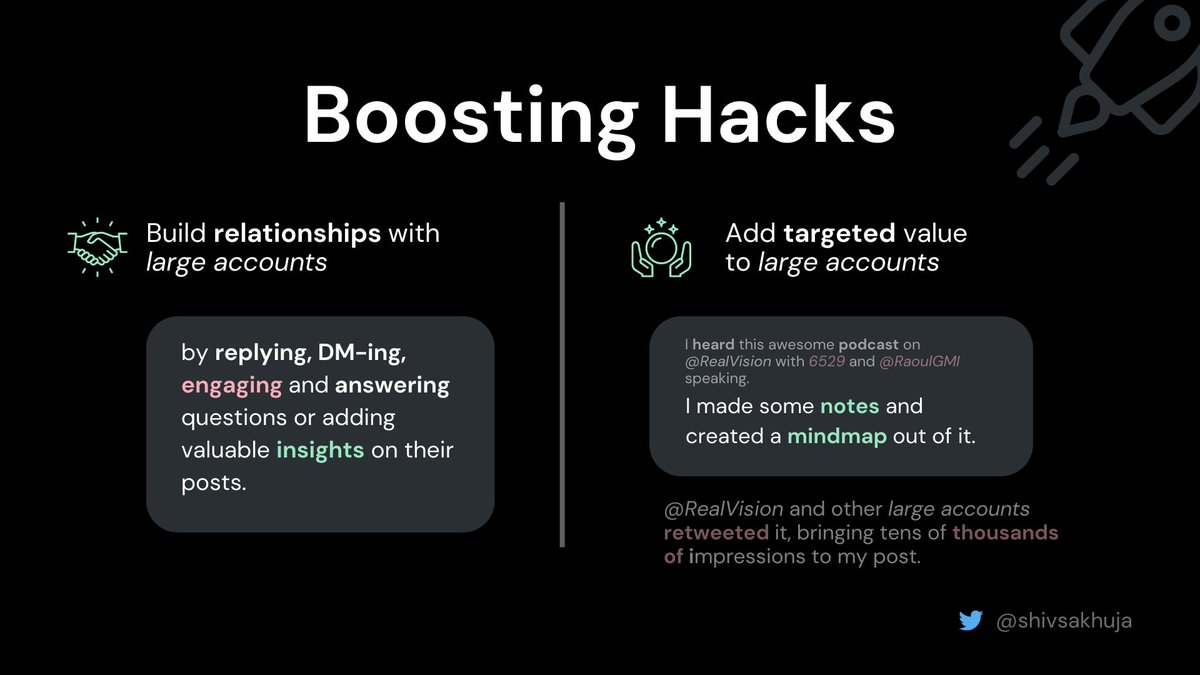
1. Build relationships with large accounts by replying, DM-ing, engaging and answering questions, or adding valuable insights on their posts
---
1. Build relationships with large accounts by replying, DM-ing, engaging and answering questions, or adding valuable insights on their posts
2. Getting Retweets
Retweets are a BIG reason why Twitter is such an awesome platform for creators if you want rapid growth.
For example: @thedefiedge started writing on Twitter this year and has 200k+ followers.
Retweets are a BIG reason why Twitter is such an awesome platform for creators if you want rapid growth.
For example: @thedefiedge started writing on Twitter this year and has 200k+ followers.
Some ways to increase your chances of getting RTs:
• Create content like no one has ever seen before
• Embed tweets by other creators in your threads and mention them. This gets you noticed, and you show your appreciation for their work.
• Create content like no one has ever seen before
• Embed tweets by other creators in your threads and mention them. This gets you noticed, and you show your appreciation for their work.
• Quote tweet other creators to get noticed.
Quote tweets show up in the mentions tab of their notifications meaning the original creator is much more likely to notice it compared to a regular RT.
Quote tweets show up in the mentions tab of their notifications meaning the original creator is much more likely to notice it compared to a regular RT.
3. Add targeted value to big accounts
For example: I heard this awesome podcast on @RealVision with @punk6529 and @RaoulGMI speaking.
I made some notes and created a mindmap. @RealVision and other large accounts retweeted it, bringing me tens of thousands of impressions.
For example: I heard this awesome podcast on @RealVision with @punk6529 and @RaoulGMI speaking.
I made some notes and created a mindmap. @RealVision and other large accounts retweeted it, bringing me tens of thousands of impressions.
More examples of creating value for others:
• Deep-dive into a complicated project
• Summarize a lengthy report (like @sabocrypto did here) 👇
• Deep-dive into a complicated project
• Summarize a lengthy report (like @sabocrypto did here) 👇
Chances are, you'll get retweeted by people who appreciated you saving them hours and want to share it with their communities.
People will also start seeing you as someone who creates high-value content that saves them hours.
People will also start seeing you as someone who creates high-value content that saves them hours.
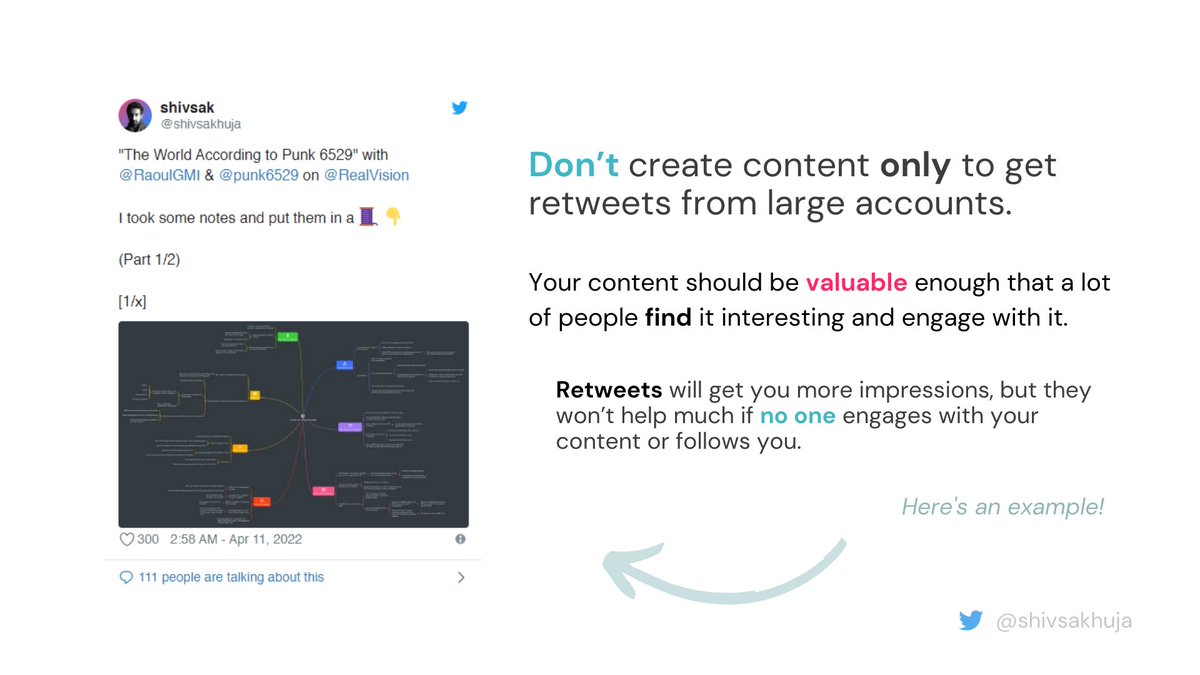
Note: Don’t create content ONLY to get retweets from large accounts.
Your content should be valuable enough that a lot of people find it interesting and engage with it.
Retweets will get you more impressions, but they won’t help much if no one engages or follows.
Your content should be valuable enough that a lot of people find it interesting and engage with it.
Retweets will get you more impressions, but they won’t help much if no one engages or follows.
4. Reply Strategy
Add value in replies to big accounts.
Tweets by large accounts can get millions of impressions.
Suppose only 1% of people see the comments.
If you can get to the top of the comments, you can easily get 10k+ impressions.
Add value in replies to big accounts.
Tweets by large accounts can get millions of impressions.
Suppose only 1% of people see the comments.
If you can get to the top of the comments, you can easily get 10k+ impressions.
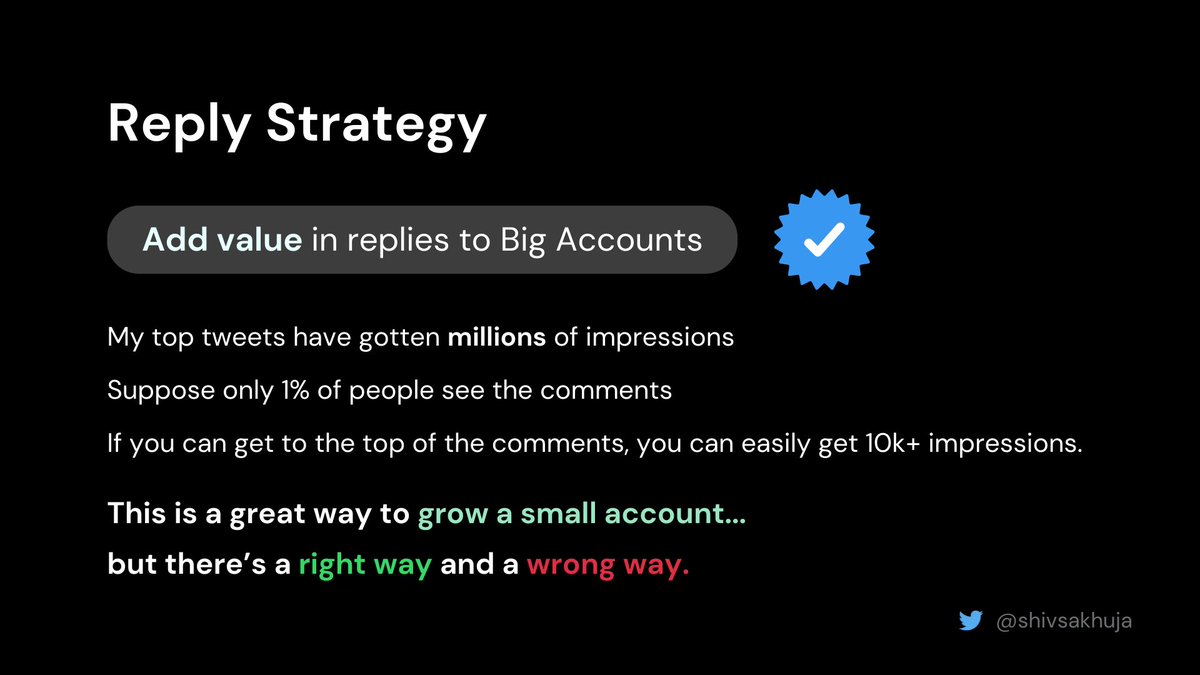
This is a GREAT way to grow a small account (0-10k followers).
But there’s a right way and a wrong way.
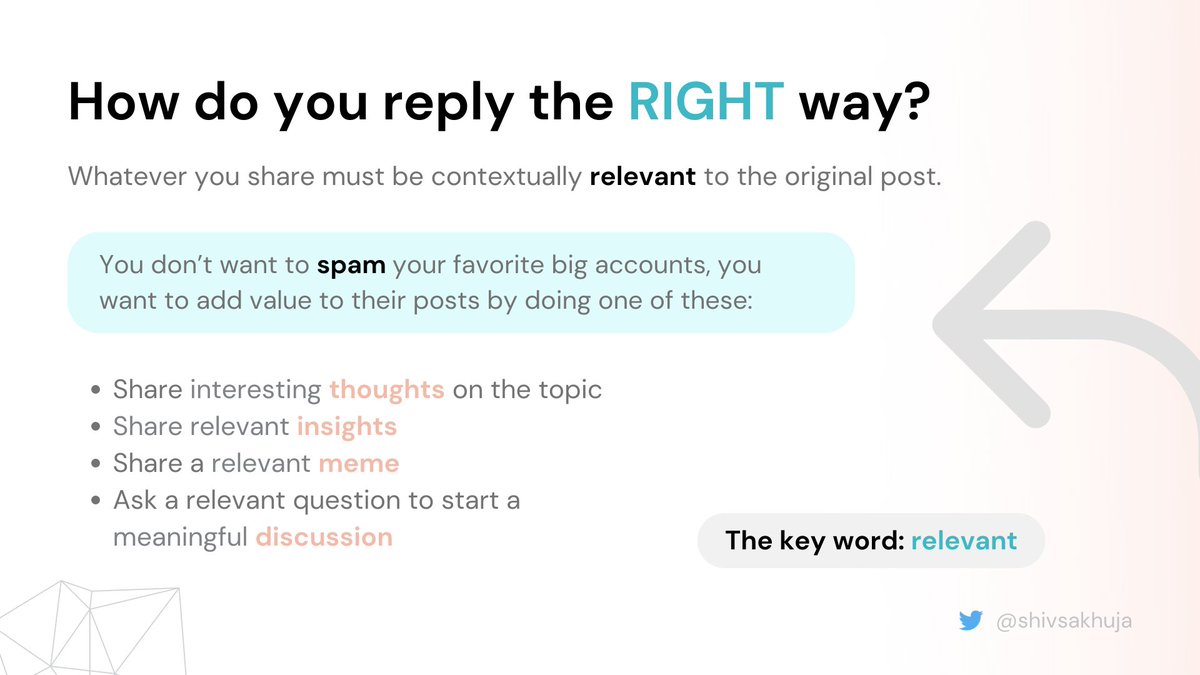
How do you reply the RIGHT way?
Whatever you share must be contextually relevant to the original post.
But there’s a right way and a wrong way.
How do you reply the RIGHT way?
Whatever you share must be contextually relevant to the original post.
You don’t want to spam your favorite big accounts, you want to add value to their posts by doing one of these:
• Share interesting thoughts on the topic
• Share relevant insights
• Share a relevant meme
• Ask a relevant question to start a discussion
The key-word: relevant.
• Share interesting thoughts on the topic
• Share relevant insights
• Share a relevant meme
• Ask a relevant question to start a discussion
The key-word: relevant.
Every tweet you post helps shape your brand identity
Make sure you're not going too far off brand just to get follower boosts
Make sure you're not going too far off brand just to get follower boosts
Analytics
---
Analytics help you measure what the market is voting for.
I got over 12.5M+ impressions in a 60-day period from May-June.
4.4M of those came in just 3 days from my best post.
That post alone did 2M impressions + another 2M impressions for my embedded tweets.
---
Analytics help you measure what the market is voting for.
I got over 12.5M+ impressions in a 60-day period from May-June.
4.4M of those came in just 3 days from my best post.
That post alone did 2M impressions + another 2M impressions for my embedded tweets.
...and I had only 24k followers at the time.
This informed me that it’s worth investing the time to create SUPER content that has a high likelihood of doing really well.
This informed me that it’s worth investing the time to create SUPER content that has a high likelihood of doing really well.
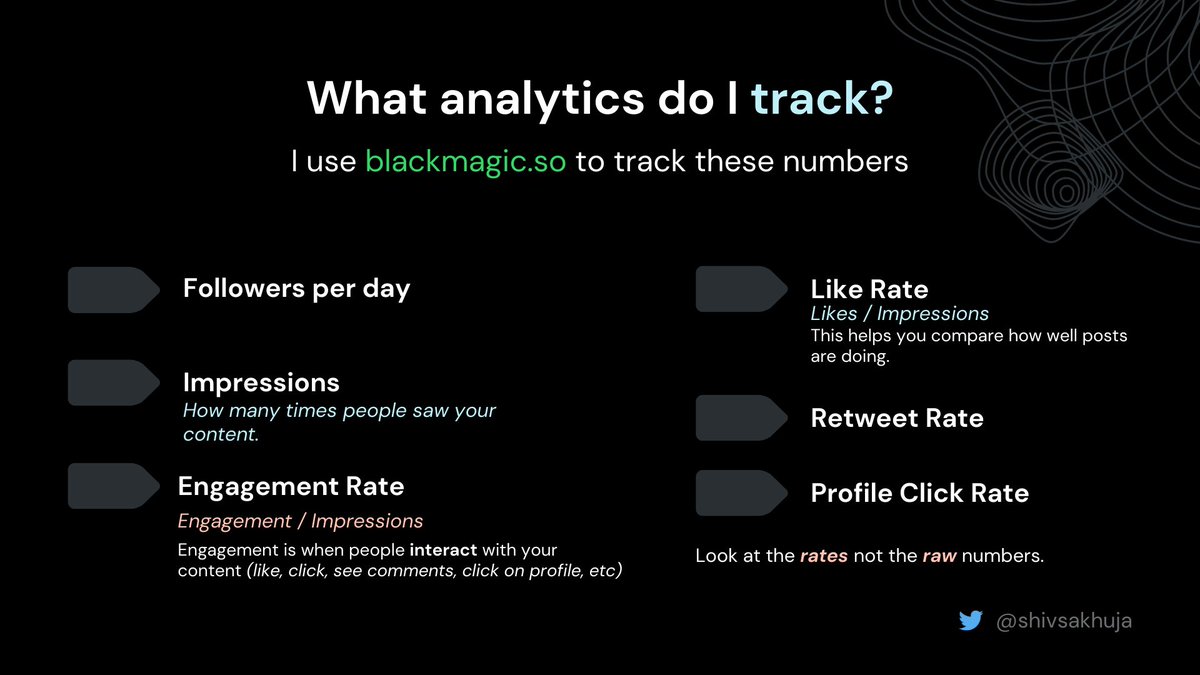
What analytics numbers do I track for Twitter?
• Followers per day
• Impressions
• Engagement Rate
• Like Rate
• Likes / Impressions
• Retweet Rate
• Profile Click Rate
This helps me compare how well different posts are doing.
• Followers per day
• Impressions
• Engagement Rate
• Like Rate
• Likes / Impressions
• Retweet Rate
• Profile Click Rate
This helps me compare how well different posts are doing.
You can find these analytics in a few places:
• Under the tweet, there’s a button that shows you the tweet’s statistics
• analytics.twitter.com (official Twitter Analytics page)
• @blackmagic_so by @tdinh_me: My personal favorite analytics tool
• Under the tweet, there’s a button that shows you the tweet’s statistics
• analytics.twitter.com (official Twitter Analytics page)
• @blackmagic_so by @tdinh_me: My personal favorite analytics tool
Tools to Help You Grow
---
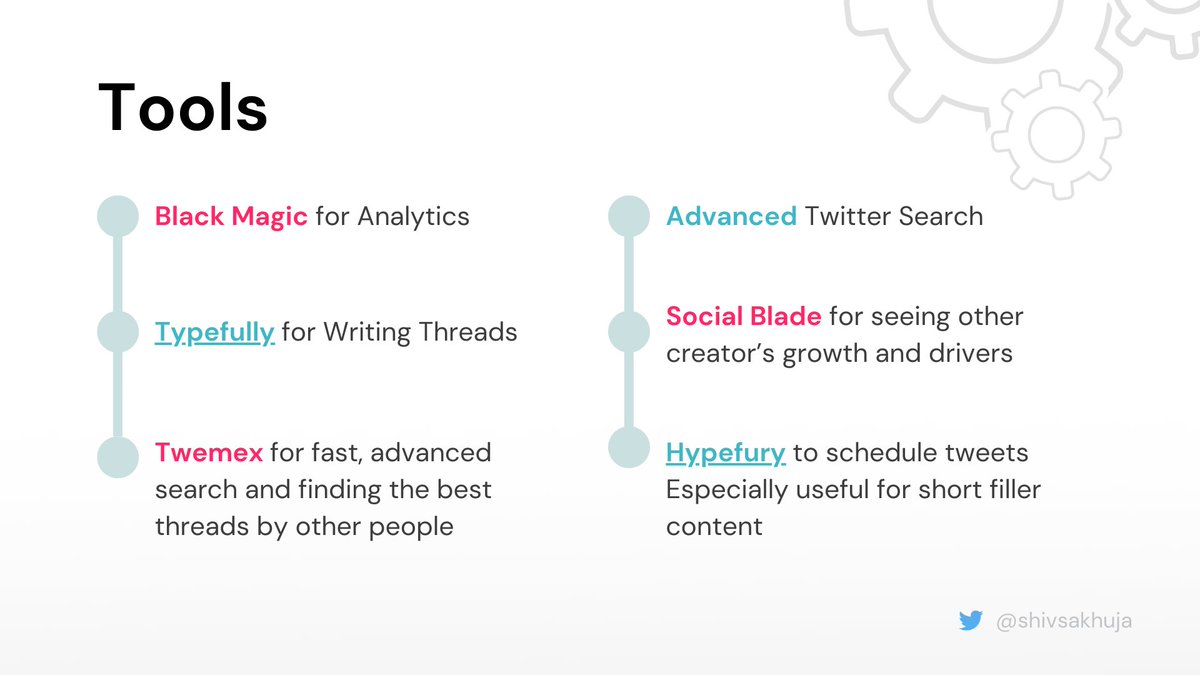
• Advanced @twitter Search
• @blackmagic_so for Analytics
• @typefully for Writing Threads (typefully.com)
---
• Advanced @twitter Search
• @blackmagic_so for Analytics
• @typefully for Writing Threads (typefully.com)
• @TwemexApp for fast, powerful search
• @SocialBlade for seeing other creators' growth
• @hypefury to schedule tweets (hypefury.com)
• @SocialBlade for seeing other creators' growth
• @hypefury to schedule tweets (hypefury.com)
If you liked the thread and are going to work on growing your Twitter audience, you might want to download the (free) PDF of slides from here - there's more information there, and it's easier to read!
shivsakhuja.gumroad.com
shivsakhuja.gumroad.com
I hope you've found this useful - it took a LOT of time to prepare.
Follow me @shivsakhuja for more.
Consider retweeting the first tweet (👇) to share this Twitter growth guide with your community.
Follow me @shivsakhuja for more.
Consider retweeting the first tweet (👇) to share this Twitter growth guide with your community.
Also, subscribe to my substack where I explain the most interesting ideas and concepts in crypto / web3.
shivsak.substack.com
shivsak.substack.com
Loading suggestions...