

/1 What does a typical microservice architecture look like? 👇
The diagram below shows a typical microservice architecture.
🔹Load Balancer: This distributes incoming traffic across multiple backend services.
The diagram below shows a typical microservice architecture.
🔹Load Balancer: This distributes incoming traffic across multiple backend services.
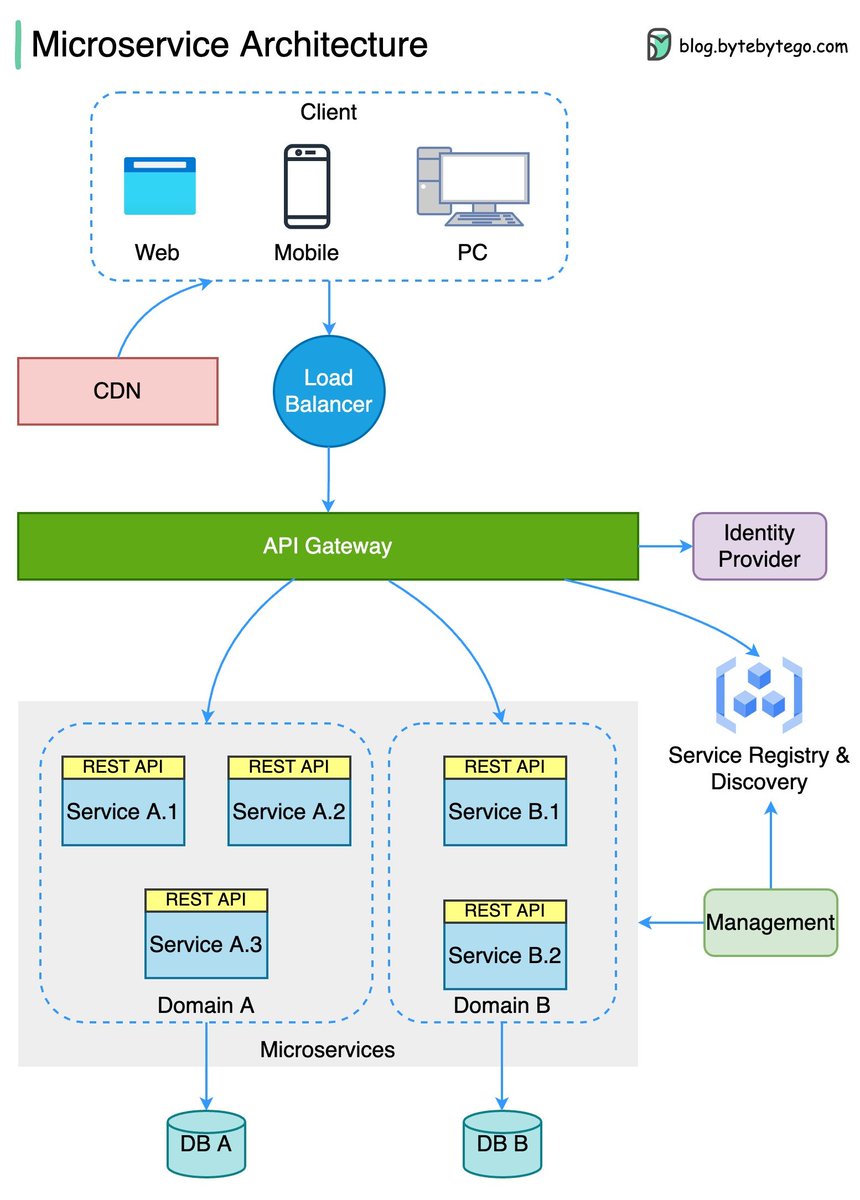
/2 🔹CDN (Content Delivery Network): CDN is a group of geographically distributed servers that hold static content for faster delivery. The clients look for content in CDN first, then progress to backend services.

/3 🔹API Gateway: This handles incoming requests and routes them to the relevant services. It talks to the identity provider and service discovery.
🔹Identity Provider: This handles authentication and authorization for users.
🔹Identity Provider: This handles authentication and authorization for users.
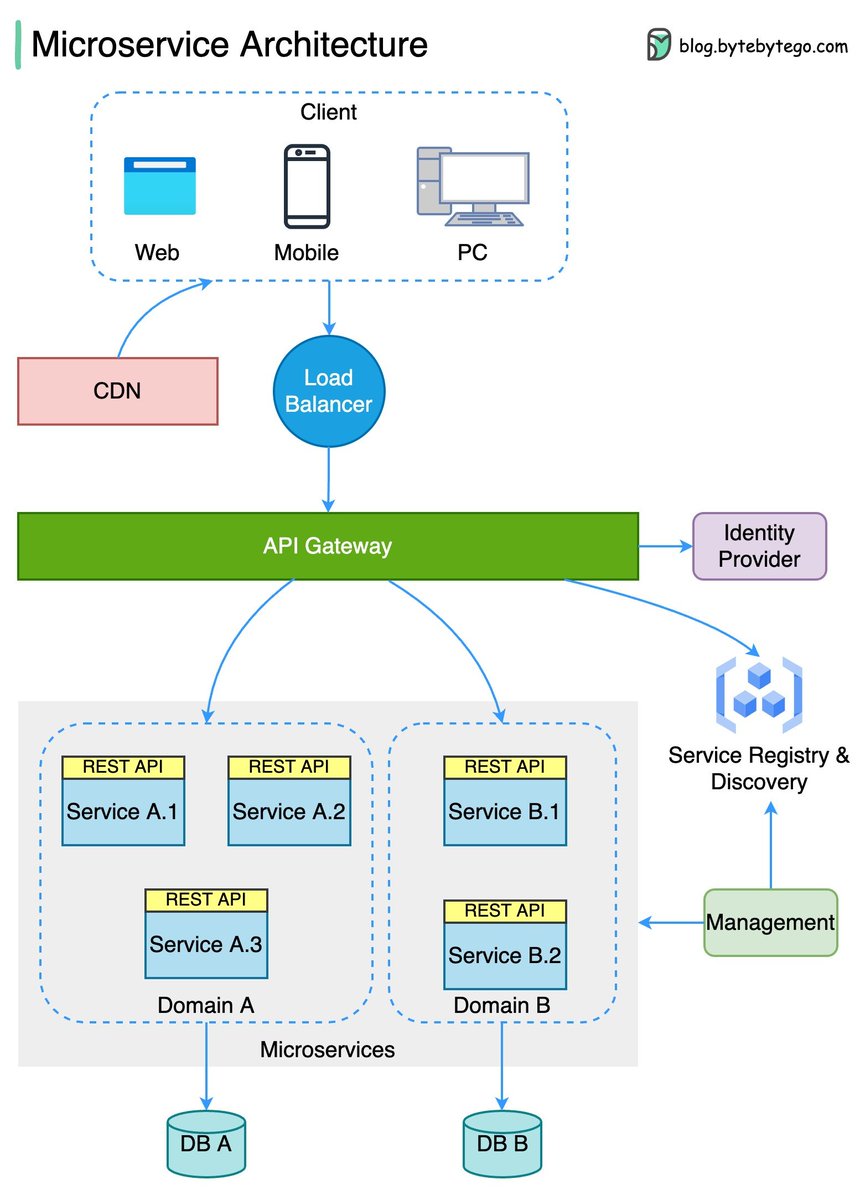
/4 🔹Service Registry & Discovery: Microservice registration and discovery happen in this component, and the API gateway looks for relevant services in this component to talk to.
🔹Management: This component is responsible for monitoring the services.
🔹Management: This component is responsible for monitoring the services.
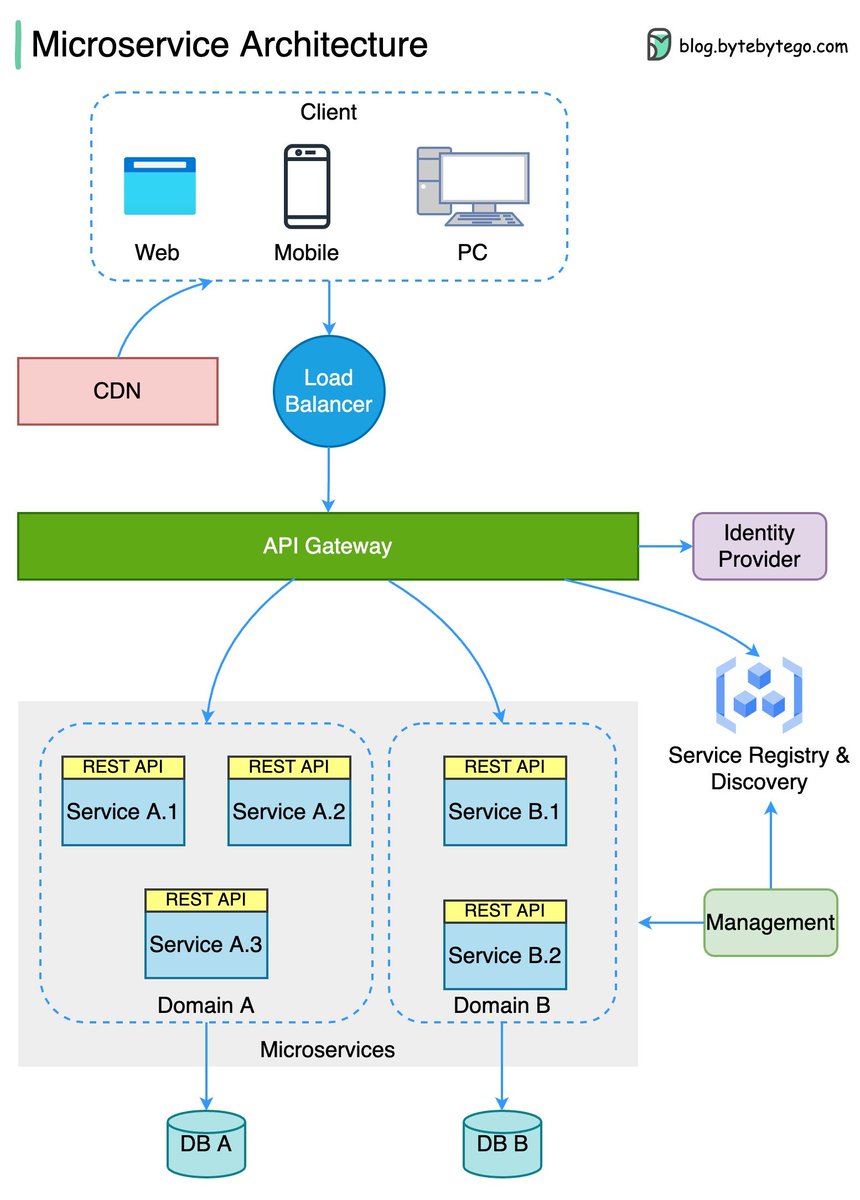
/5 🔹Microservices: Microservices are designed and deployed in different domains. Each domain has its database.
The API gateway talks to the microservices via REST API or other protocols, and the microservices within the same domain talk to each other using RPC
The API gateway talks to the microservices via REST API or other protocols, and the microservices within the same domain talk to each other using RPC

/6 Benefits of microservices:
- They can be quickly designed, deployed, and horizontally scaled.
- Each domain can be independently maintained by a dedicated team.
- Business requirements can be customized in each domain and better supported, as a result.
- They can be quickly designed, deployed, and horizontally scaled.
- Each domain can be independently maintained by a dedicated team.
- Business requirements can be customized in each domain and better supported, as a result.
/7 Over to you: 1). What are the drawbacks of the microservice architecture?
2). Have you seen a monolithic system be transformed into microservice architecture? How long does it take?
2). Have you seen a monolithic system be transformed into microservice architecture? How long does it take?
/8 I hope you've found this thread helpful.
Follow me @alexxubyte for more.
Like/Retweet the first tweet below if you can:
Follow me @alexxubyte for more.
Like/Retweet the first tweet below if you can:
Loading suggestions...