
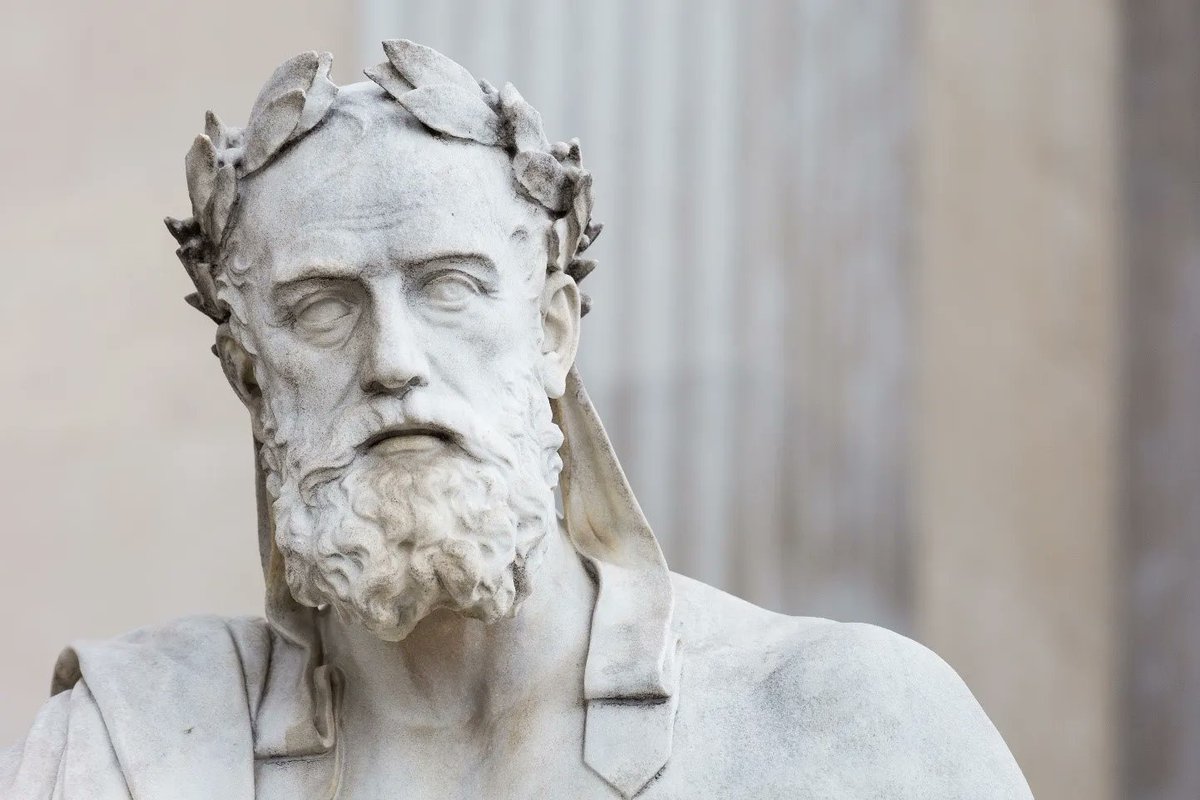
Do not ask "what is going to happen to me?" Ask "what action am I going to take?"
This was written by Xenophon over 2,000 years ago; truly good advice is timeless.
Here are 12 other pearls of ancient wisdom:
This was written by Xenophon over 2,000 years ago; truly good advice is timeless.
Here are 12 other pearls of ancient wisdom:

1. From the political annalist and epigrammatic master Tacitus, writing in 100 AD:
"The more corrupt the state, the more numerous the laws."
"The desire for safety stands against every great and noble enterprise."
"The more corrupt the state, the more numerous the laws."
"The desire for safety stands against every great and noble enterprise."
2. From the historian and gardener Sallust, in 40 BC:
"The ruler of the life of man is the mind, which is powerful, efficient, worthy of honour, and needs no assistance from fortune, who can neither bestow integrity, industry, or other good qualities, nor can take them away."
"The ruler of the life of man is the mind, which is powerful, efficient, worthy of honour, and needs no assistance from fortune, who can neither bestow integrity, industry, or other good qualities, nor can take them away."
3. From the satirist Horace, writing in 33 BC:
"Oft must you use the eraser, if you’re going to write what deserves a second reading."
(If *you* haven't even read your words twice, how can you expect anybody else to do so?)
"Oft must you use the eraser, if you’re going to write what deserves a second reading."
(If *you* haven't even read your words twice, how can you expect anybody else to do so?)
4. From the greatest biographer of antiquity, Plutarch, writing in 100 AD:
"To find fault is easy; to do better may be difficult."
"To find fault is easy; to do better may be difficult."
5. A story about Diogenes (c.350 BC):
When people laughed at him because he walked backward beneath the portico, he said to them: "Aren't you ashamed of walking backward along the whole path of existence while blaming me for walking backward along the path of the promenade?"
When people laughed at him because he walked backward beneath the portico, he said to them: "Aren't you ashamed of walking backward along the whole path of existence while blaming me for walking backward along the path of the promenade?"
6. From the most famous Stoic of all, the Philosopher-Emperor Marcus Aurelius himself, writing around 170 AD:
"The best revenge is to be unlike him who performed the injury."
"The best revenge is to be unlike him who performed the injury."
7. From Cicero, the greatest Roman speaker, in 50 BC:
"Not to know what has happened in former times is to be always a child. If no use is made of the labours of past ages, the world must remain always in the infancy of knowledge."
"Not to know what has happened in former times is to be always a child. If no use is made of the labours of past ages, the world must remain always in the infancy of knowledge."
8. From the Ancient Greek historian Polybius, writing in 120 BC:
"A historian must speak good of his enemies and honour them with the highest praises while criticising and even reproaching roundly his closest friends, should the errors of their conduct impose this duty on him."
"A historian must speak good of his enemies and honour them with the highest praises while criticising and even reproaching roundly his closest friends, should the errors of their conduct impose this duty on him."
9. From Quintilian, the master of rhetoric, writing in 85 AD:
"We should not write so that it is possible for the reader to understand us, but so that it is impossible for him to misunderstand us."
"We should not write so that it is possible for the reader to understand us, but so that it is impossible for him to misunderstand us."
10. From Herodotus, the father of history himself, writing in 430 BC:
"If a man insisted always on being serious, and never allowed himself a bit of fun and relaxation, he would go mad or become unstable without knowing it."
"If a man insisted always on being serious, and never allowed himself a bit of fun and relaxation, he would go mad or become unstable without knowing it."
11. From Thucydides, the first political historian, writing in 400 BC:
"We know that there can never be any solid friendship between individuals, or union between communities that is worth the name, unless the parties be persuaded of each others honesty."
"We know that there can never be any solid friendship between individuals, or union between communities that is worth the name, unless the parties be persuaded of each others honesty."
12. And, to end, we return to Xenophon:
"Moderation in all things healthful; total abstinence from all things harmful."
"Moderation in all things healthful; total abstinence from all things harmful."
What's interesting is that you've likely heard much of this advice before, just expressed with different words and almost certainly by people on Twitter.
Rather than by ancient historians, philosophers, soldiers, gardeners, and poets.
Good advice is timeless.
Rather than by ancient historians, philosophers, soldiers, gardeners, and poets.
Good advice is timeless.
Because reading the works of ancient writers makes it clear that people haven't changed at all.
Systems, technologies, styles, art, structures, ideologies; these change.
But people - our problems, our politics, our failings, our needs, our nature - don't.
Systems, technologies, styles, art, structures, ideologies; these change.
But people - our problems, our politics, our failings, our needs, our nature - don't.
Loading suggestions...