

In 1977, Coca-Cola was kicked out of India by the government
To fill the void, its distributor started Campa-Cola which went on to redefine the meaning of celebration for an entire generation
Now Ambani is on a mission to revive this lost legend
Here’s the EPIC story:
To fill the void, its distributor started Campa-Cola which went on to redefine the meaning of celebration for an entire generation
Now Ambani is on a mission to revive this lost legend
Here’s the EPIC story:
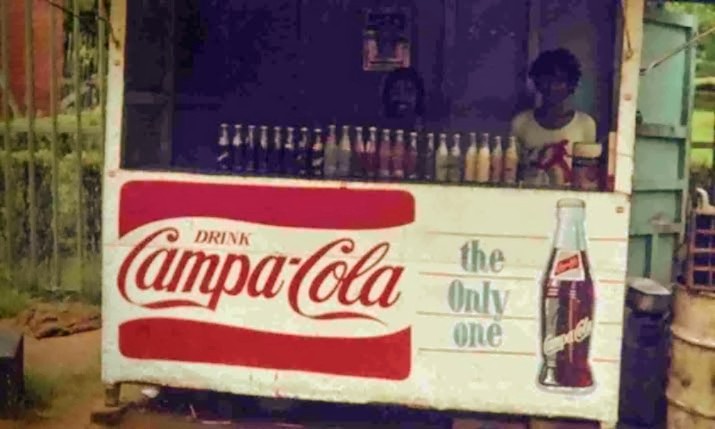
Pure Drinks Group was Coca-Cola’s sole licensed manufacturer and distributor in India.
Coke was at a crossroads when the govt asked it to reduce its ownership stake in the Indian entity or else it would have to reveal the secret drink formula.
Coke was at a crossroads when the govt asked it to reduce its ownership stake in the Indian entity or else it would have to reveal the secret drink formula.
The company protested against this and chose to leave India in ‘77.
What happened next was really funny.
To celebrate Coke’s exit and the end of “The Emergency”, the Indian govt (Janata Party) launched its own soft drink brand called "Double Seven".
Socialist much?
What happened next was really funny.
To celebrate Coke’s exit and the end of “The Emergency”, the Indian govt (Janata Party) launched its own soft drink brand called "Double Seven".
Socialist much?
After the failure of Double Seven, govt approached Pure Drinks for a partnership.
But Pure Drinks had its own capitalistic ambitions and launched Campa-Cola that same year.
Campa had some very big shoes to fill and it succeeded.
But Pure Drinks had its own capitalistic ambitions and launched Campa-Cola that same year.
Campa had some very big shoes to fill and it succeeded.
You see, people were addicted to Coke and rejected Double Seven.
Campa quenched this thirst. However, its taste wasn’t the only thing that appealed to people.
Their marketing strategy struck the right chords in the hearts of consumers.
Campa quenched this thirst. However, its taste wasn’t the only thing that appealed to people.
Their marketing strategy struck the right chords in the hearts of consumers.
India was going through multiple crises and soft drinks were an affordable luxury for them.
Campa-Cola times signified the celebration of life in this period of political turmoil.
“We’re all in it together for the fun of it, for the taste of it” — was their punchline.
Campa-Cola times signified the celebration of life in this period of political turmoil.
“We’re all in it together for the fun of it, for the taste of it” — was their punchline.
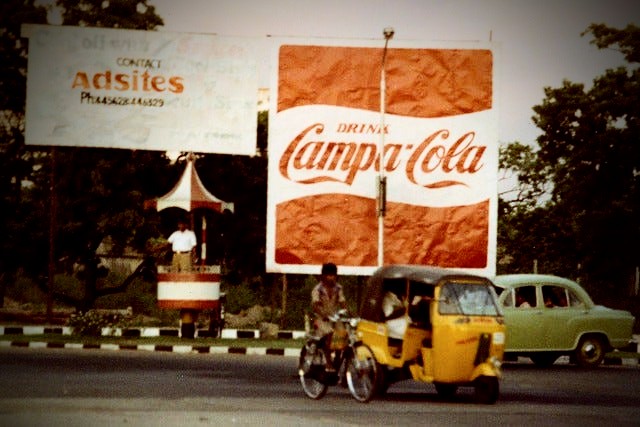
The brand also positioned itself as “The Great Indian Taste” to reflect nationalism and pride.
It soon became a household name and ruled the Indian market in the 80s and 90s.
People booked 100s of crates for parties and loads of students toured “The Campa” factory every day.
It soon became a household name and ruled the Indian market in the 80s and 90s.
People booked 100s of crates for parties and loads of students toured “The Campa” factory every day.
Campa was sold nationwide in 5 flavors — Cola, Orange, Lemon, Mango, and Jeera Masala.
Its only competition at the time were the Parle soft drinks — Thums Up, Limca, and Gold Spot.
Both these desi soft drink companies were thriving and dominated the Indian market.
Its only competition at the time were the Parle soft drinks — Thums Up, Limca, and Gold Spot.
Both these desi soft drink companies were thriving and dominated the Indian market.
Fun Fact: Campa-Cola imitated Coca-Cola’s branding and taste, and something similar happened in Russia this year.
After McDonald’s and Starbucks withdrew from Russia in response to Russia invading Ukraine, their stores got rebranded as Vkusno — i Tochka and Stars Coffee.
After McDonald’s and Starbucks withdrew from Russia in response to Russia invading Ukraine, their stores got rebranded as Vkusno — i Tochka and Stars Coffee.
Now here’s the thing — Campa’s success was short-lived and went downhill after Indian economy’s liberalization in ‘91.
India was going through the worst economic crisis in the 80s due to a huge fiscal deficit which led to liberalization.
India was going through the worst economic crisis in the 80s due to a huge fiscal deficit which led to liberalization.
India was a lucrative and untapped market, and many MNCs were trying to enter at the time.
But until ‘91, it was extremely difficult for them to operate effectively because of the Foreign Exchange Regulation Act (FERA).
But until ‘91, it was extremely difficult for them to operate effectively because of the Foreign Exchange Regulation Act (FERA).
PepsiCo succeeded by creating a joint venture with the Punjab government in ‘88.
Now, liberalization led to the spread of globalization and enabled MNCs like PepsiCo to increase their investment in India.
Now, liberalization led to the spread of globalization and enabled MNCs like PepsiCo to increase their investment in India.
This posed a threat for the local cola brands and they opposed the entry of foreign brands.
The final nail in the coffin for them was Coca-Cola’s re-entry in ‘93 and people welcoming it with open arms once again.
The final nail in the coffin for them was Coca-Cola’s re-entry in ‘93 and people welcoming it with open arms once again.
Most Parle soft drink brands were sold to Coke that year, which further strengthened its market position.
Coke and Pepsi’s global rivalry shaped their cutthroat marketing tactics which prevailed in India and their market share has only increased over the years.
Coke and Pepsi’s global rivalry shaped their cutthroat marketing tactics which prevailed in India and their market share has only increased over the years.
The two century-old powerhouses clearly had an upper hand.
So, with Coke and Pepsi’s rising popularity, Campa’s declined and led to its slow death.
The company shut down its bottling plants by ‘01 and has since tried to revive Campa several times with no success.
So, with Coke and Pepsi’s rising popularity, Campa’s declined and led to its slow death.
The company shut down its bottling plants by ‘01 and has since tried to revive Campa several times with no success.
Nevertheless, Campa-Cola still holds a strong nostalgic value for the people who grew up with the brand.
Mukesh Ambani recently acquired it for mere ₹22 crores and is planning to relaunch it by Diwali in 3 flavors — the iconic cola, orange, and lemon.
Mukesh Ambani recently acquired it for mere ₹22 crores and is planning to relaunch it by Diwali in 3 flavors — the iconic cola, orange, and lemon.
This is also a part of Reliance's strategy to scale up and focus on the ever-growing FMCG business.
The company is in talks to acquire many other homegrown brands such as Garden Namkeens, Lahori Zeera and Bindu Beverages.
The company is in talks to acquire many other homegrown brands such as Garden Namkeens, Lahori Zeera and Bindu Beverages.
Leveraging nostalgia can help build brand loyalty as a result of the consumers feeling connectedness.
Currently, the Indian soft drink demand hit a 5-year-high but it's an extremely saturated segment — with Coca-Cola and Pepsi in a dominant market position.
Currently, the Indian soft drink demand hit a 5-year-high but it's an extremely saturated segment — with Coca-Cola and Pepsi in a dominant market position.
Time will tell whether Campa will be able to stand out and challenge the stiff competition from the global leaders, or not.
If you liked this thread do ReTweet🔄 the first tweet and follow us @FinFloww for more.
Join our WhatsApp Community for daily updates:
chat.whatsapp.com
chat.whatsapp.com
Something fascinating in our Newsletter
Subscribe to receive it soon: getrevue.co
Subscribe to receive it soon: getrevue.co
Loading suggestions...