

What did we learn from the fact that hourly wages jumped in July but slowed in August?
Possibly just that July had 10 weekend days and August had 8 weekend days (as I learned from the great @RiccardoTrezzi).
Important lessons for interpreting incoming data, a short 🧵.
Possibly just that July had 10 weekend days and August had 8 weekend days (as I learned from the great @RiccardoTrezzi).
Important lessons for interpreting incoming data, a short 🧵.
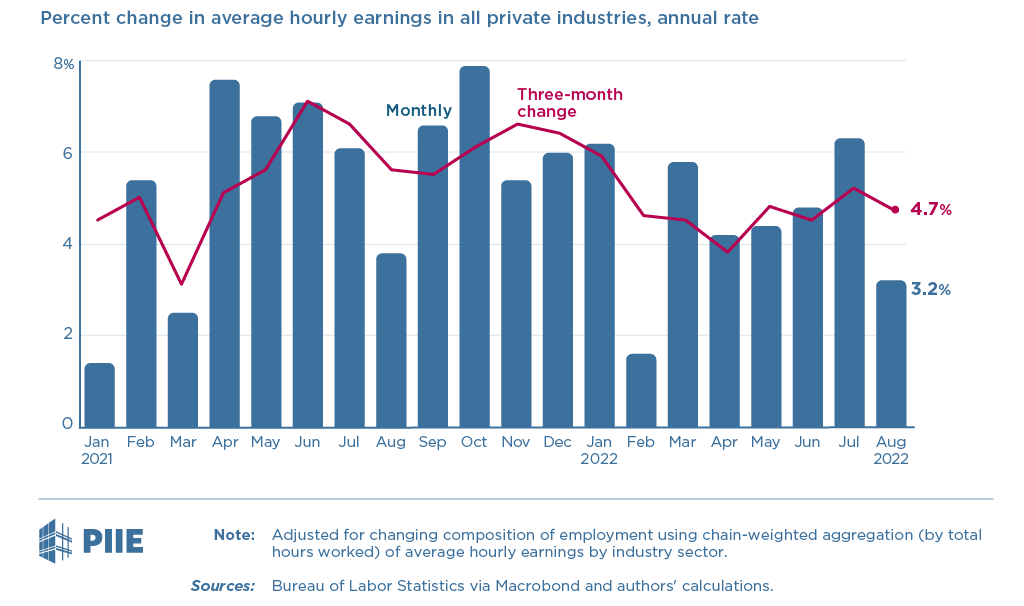
In general there is a tradeoff in reading incoming data. The latest month's data is the new information, the way to spot turning points, etc. But the latest month also suffers from measurement noise (we don't measure accurately) and true news (the economy itself is volatile).
In July wage growth was up a lot. A lot of weekend days can do that (again repeating @RiccardoTrezzi):
1. Weekend pay is higher
2. Some employers with salaried workers report fixed monthly pay but then when more weekends they report lower hours that month.
Reverse in August.
1. Weekend pay is higher
2. Some employers with salaried workers report fixed monthly pay but then when more weekends they report lower hours that month.
Reverse in August.
(BLS seasonally adjusts data, for example reflecting what happens regularly at certain times of year with hiring and pay. But this is a "calendar" effect and they don't fully adjust for calendar effects, so called "residual calendarity.)
If you are a super-sophisticated & super-knowledgeable (which I am not) you can take this and other factors into account and focus on adjusted July and August numbers.
If you're a normal(ish) person safest to just look at something like a 3-month average (the line in the chart).
If you're a normal(ish) person safest to just look at something like a 3-month average (the line in the chart).
Note, I don't have a scientifically-informed view on the smoothing period for different variables. For most monthly series averaging over 12 months loses a lot of signal (recent changes in the economy) while only slightly improving on the noise. 3 months seems about right to me.
Loading suggestions...