
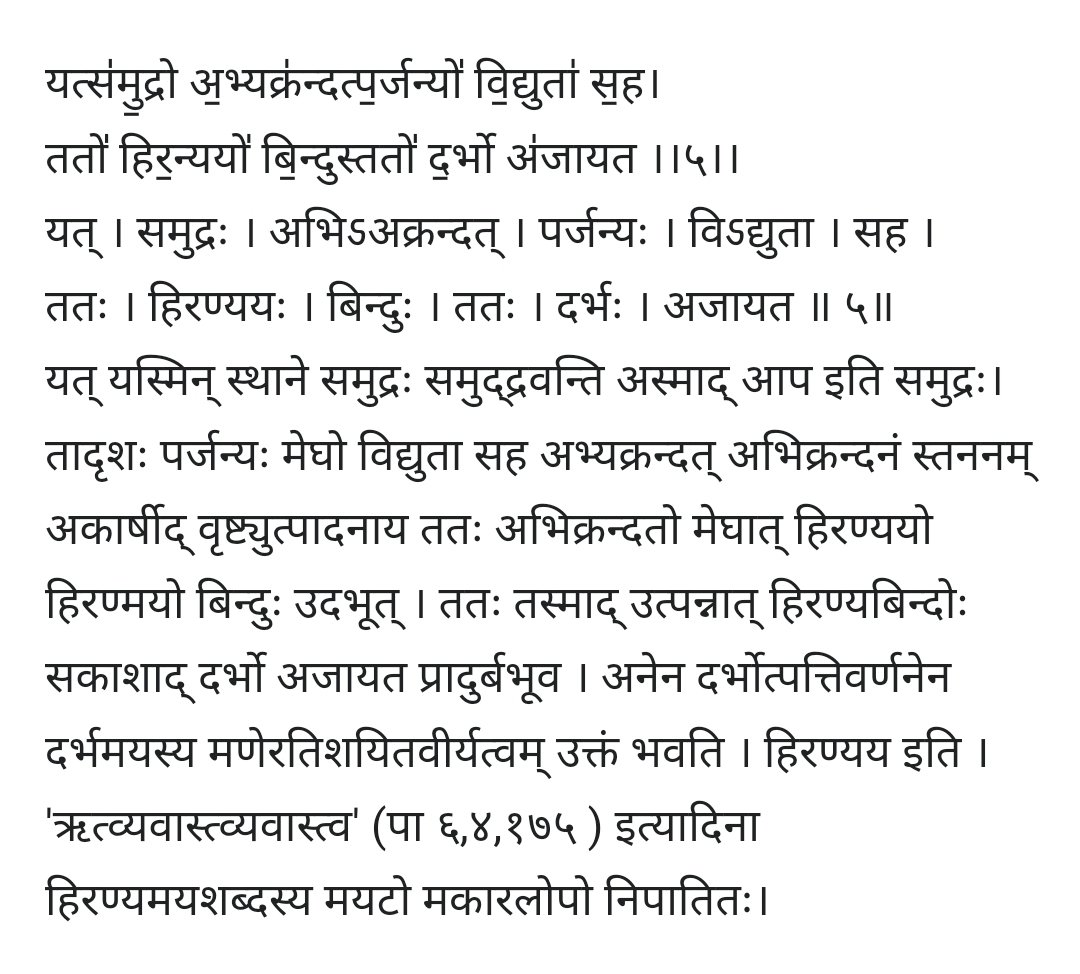
Parjánya thunders with lightning in the [aerial] ocean (अ॒भ्यक्र॑न्दत् प॒र्जन्यो॑ वि॒द्युता॑ स॒ह).
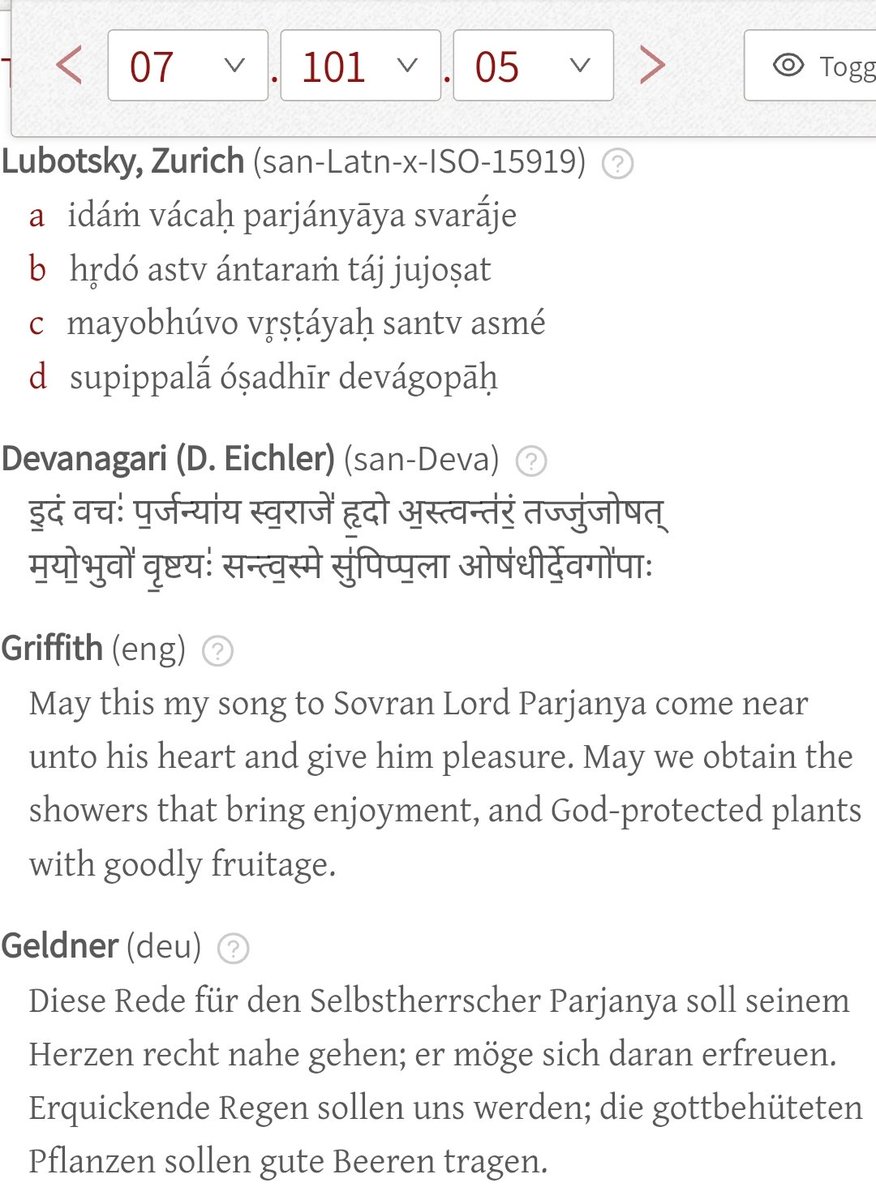
He is besought for rains (म॒यो॒भुवो॑ वृ॒ष्टयः॑ सन्त्व॒स्मे), and is therefore the producer and nourisher of vegetation (उद् ओष॑धी॒र् जिह॑ते॒, सु॑पिप्प॒ला ओष॑धीर्).
He is besought for rains (म॒यो॒भुवो॑ वृ॒ष्टयः॑ सन्त्व॒स्मे), and is therefore the producer and nourisher of vegetation (उद् ओष॑धी॒र् जिह॑ते॒, सु॑पिप्प॒ला ओष॑धीर्).
![Parjánya thunders with lightning in the [aerial] ocean (अ॒भ्यक्र॑न्दत् प॒र्जन्यो॑ वि॒द्युता॑ स॒ह)....](https://pbs.twimg.com/media/FcNF-OkagAUtu5p.png)
Parjánya flies around in a watery car (उद॒न्वता॒ परि॑ दीया॒ रथे॑न) and loosens and draws downward the 'water-skin' (दृतिं॒ सु क॑र्ष॒ विषि॑तं॒ न्य॑ञ्चं).
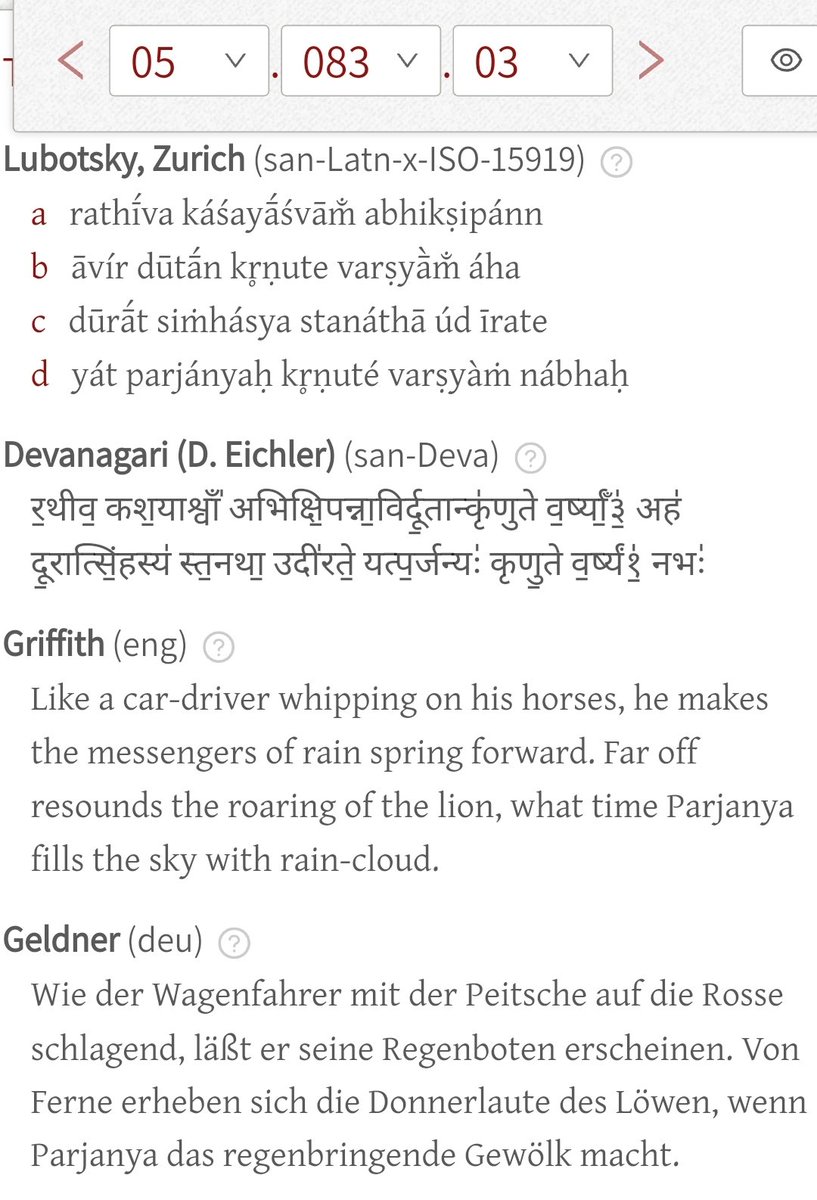
He's like a charioteer urging on his horses; when he sheds rain water (कृणु॒ते व॒र्ष्यं१॒॑ नभः॑), the roar of the lion ..
He's like a charioteer urging on his horses; when he sheds rain water (कृणु॒ते व॒र्ष्यं१॒॑ नभः॑), the roar of the lion ..
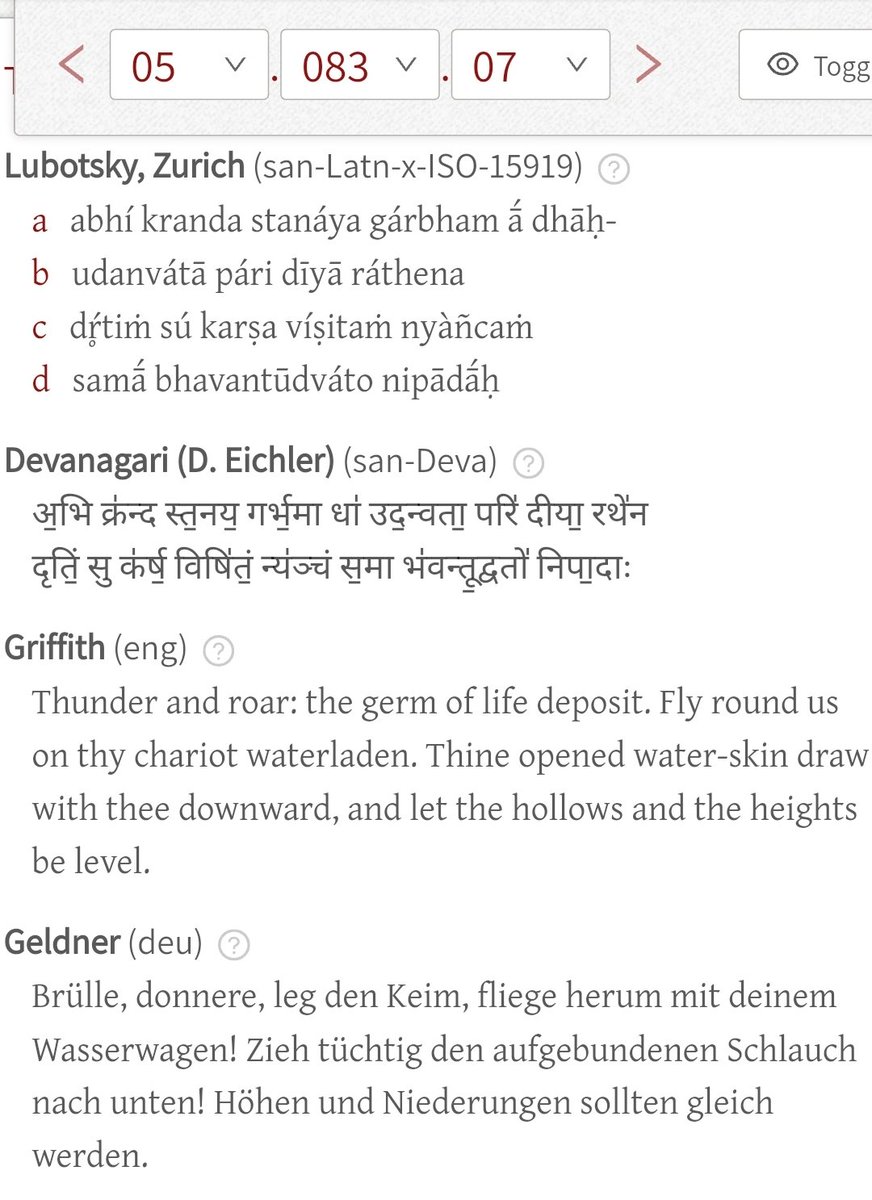
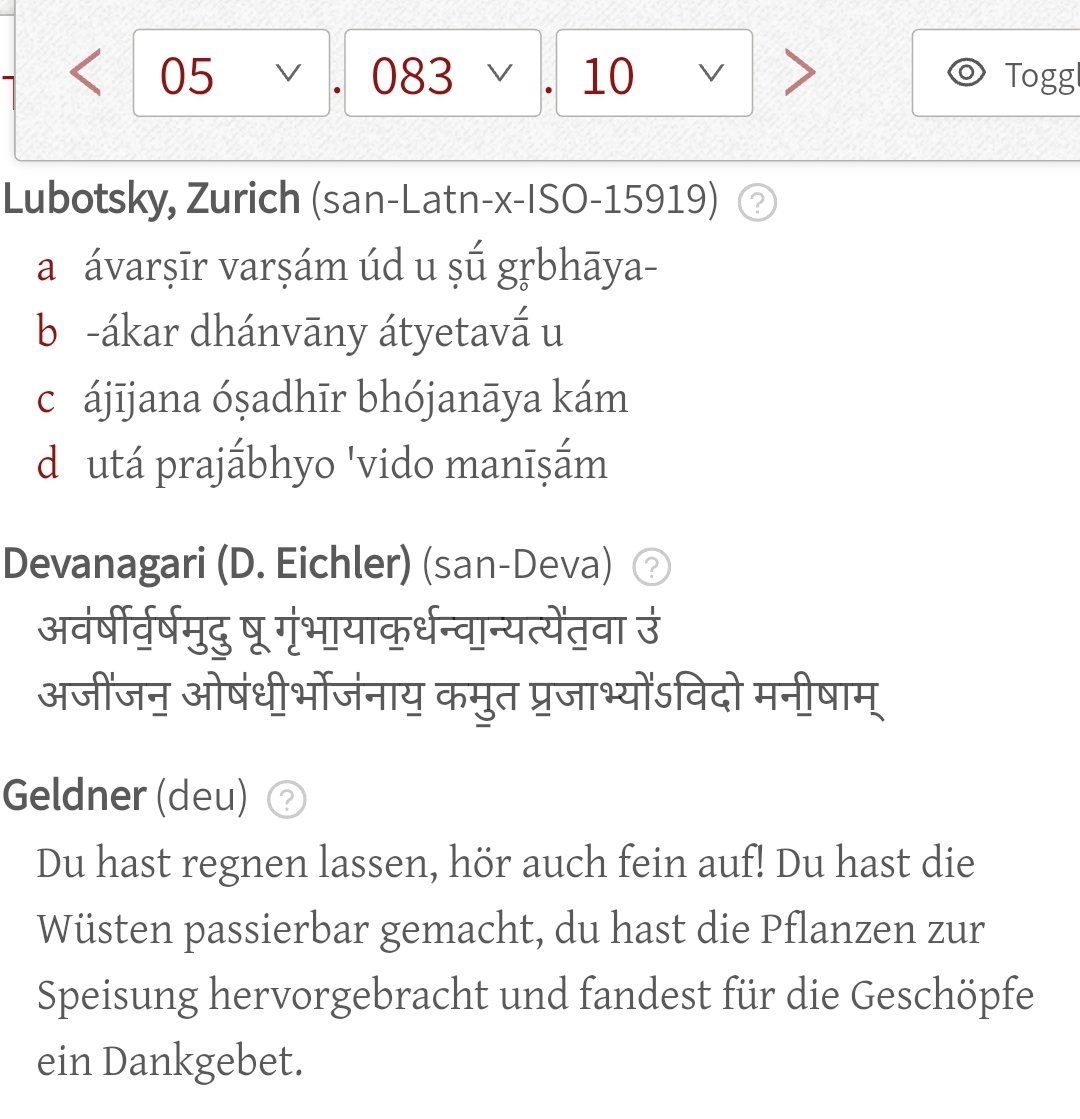
.. resounds from afar (दू॒रात्सिं॒हस्य॑ स्त॒नथा॒ उदी॑रते॒). He's also implored to withhold rain (षू गृ॑भा॒य) after shedding it (अव॑र्षीर् व॒र्षम्).
Like Sóma, Parjánya is likened to a bull, though with a certain confusion of gender (because clouds are otherwise cows).
Like Sóma, Parjánya is likened to a bull, though with a certain confusion of gender (because clouds are otherwise cows).
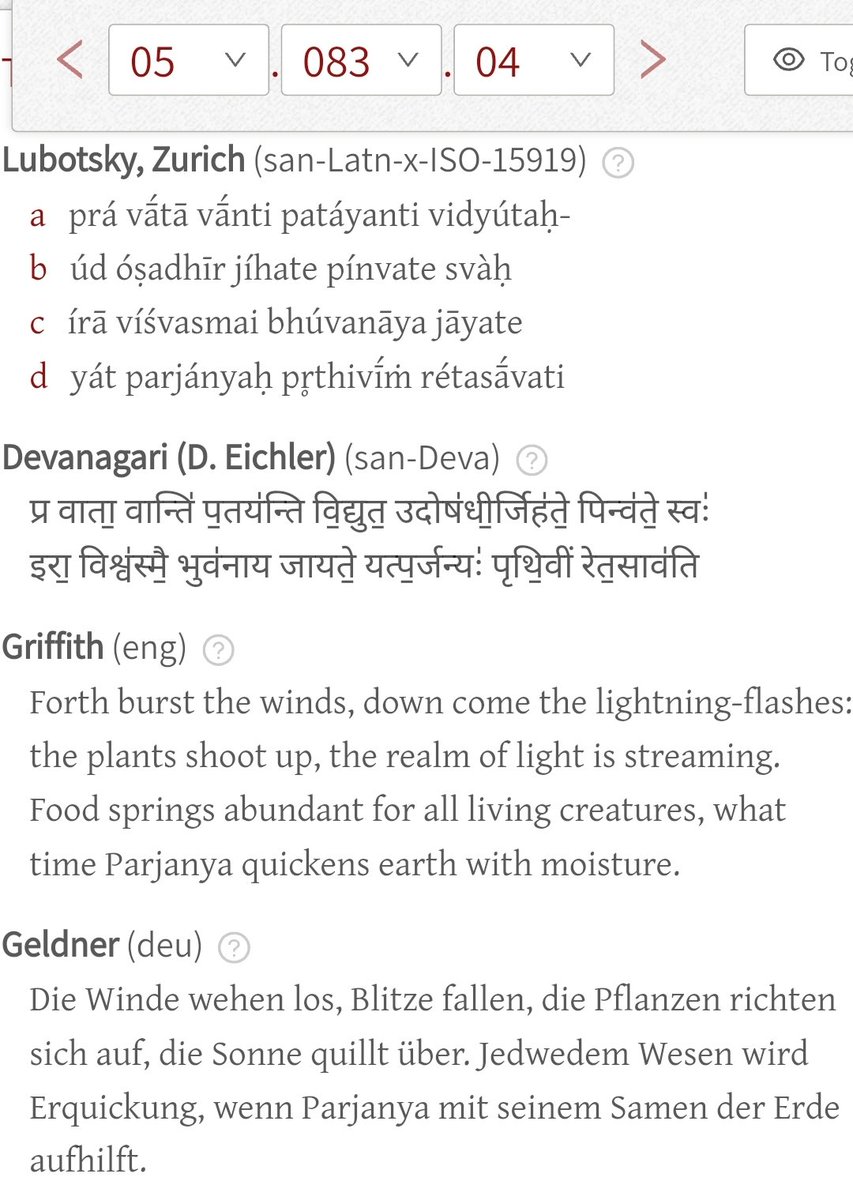
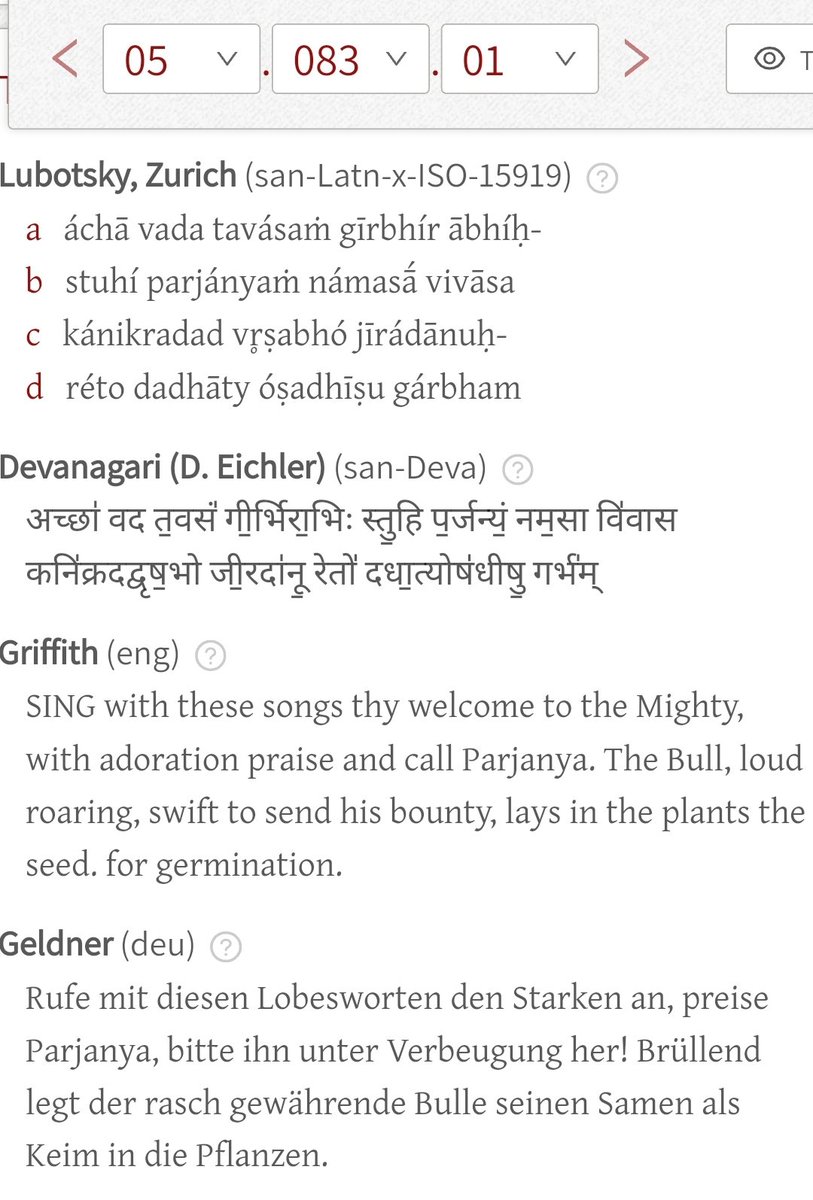
Parjánya is a roaring bull with swift-flowing drops, who places his seed in the plants as a germ (वृष॒भो जी॒रदा॑नू॒ रेतो॑ दधा॒त्य् ओष॑धीषु॒ गर्भ॑म्).
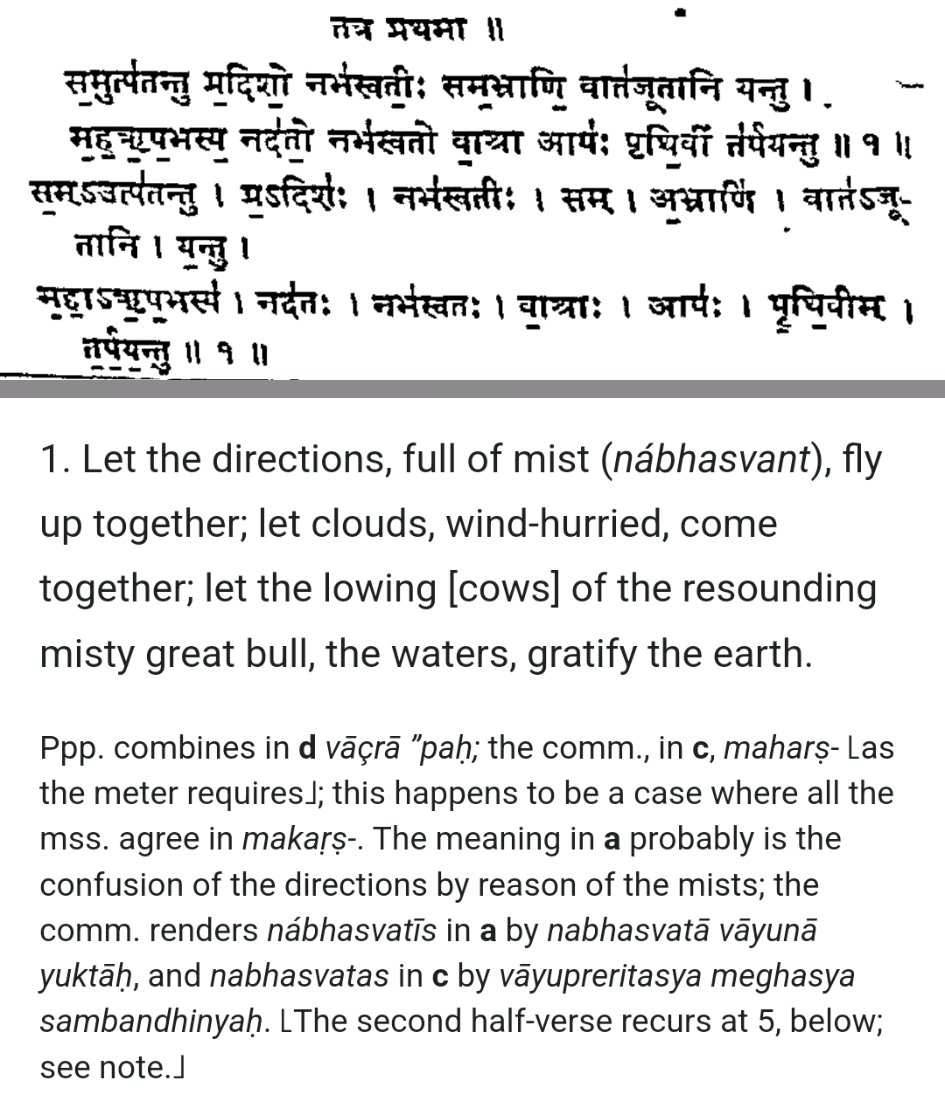
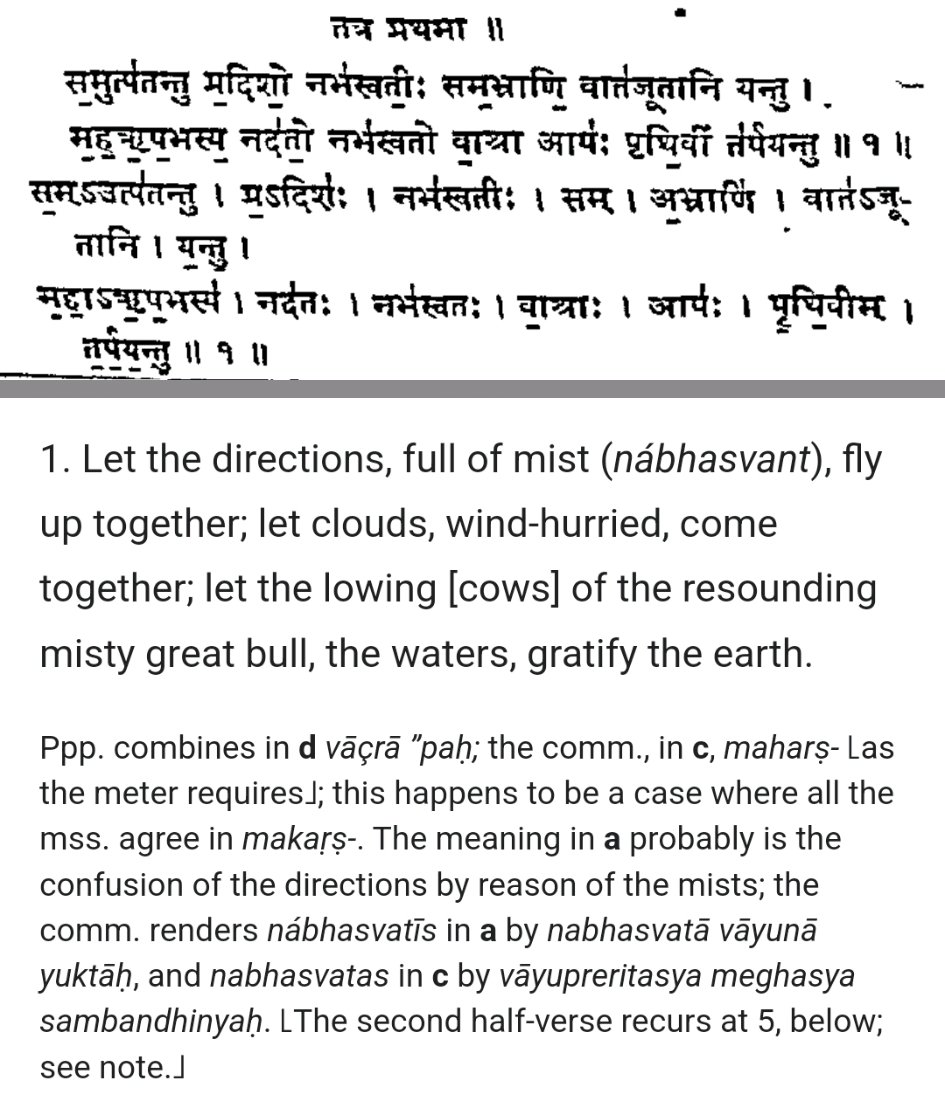
The clouds impelled by the wind come together, and the roaring waters of the great bellowing aqueous bull delight the earth ..
The clouds impelled by the wind come together, and the roaring waters of the great bellowing aqueous bull delight the earth ..
.. (स॒मुत्प॑तन्तु प्र॒दिशो॒ नभ॑स्वतीः॒ सम॒भ्राणि॒ वात॑जूतानि यन्तु ... आपः॑ पृथि॒वीं त॑र्पयम्तु)
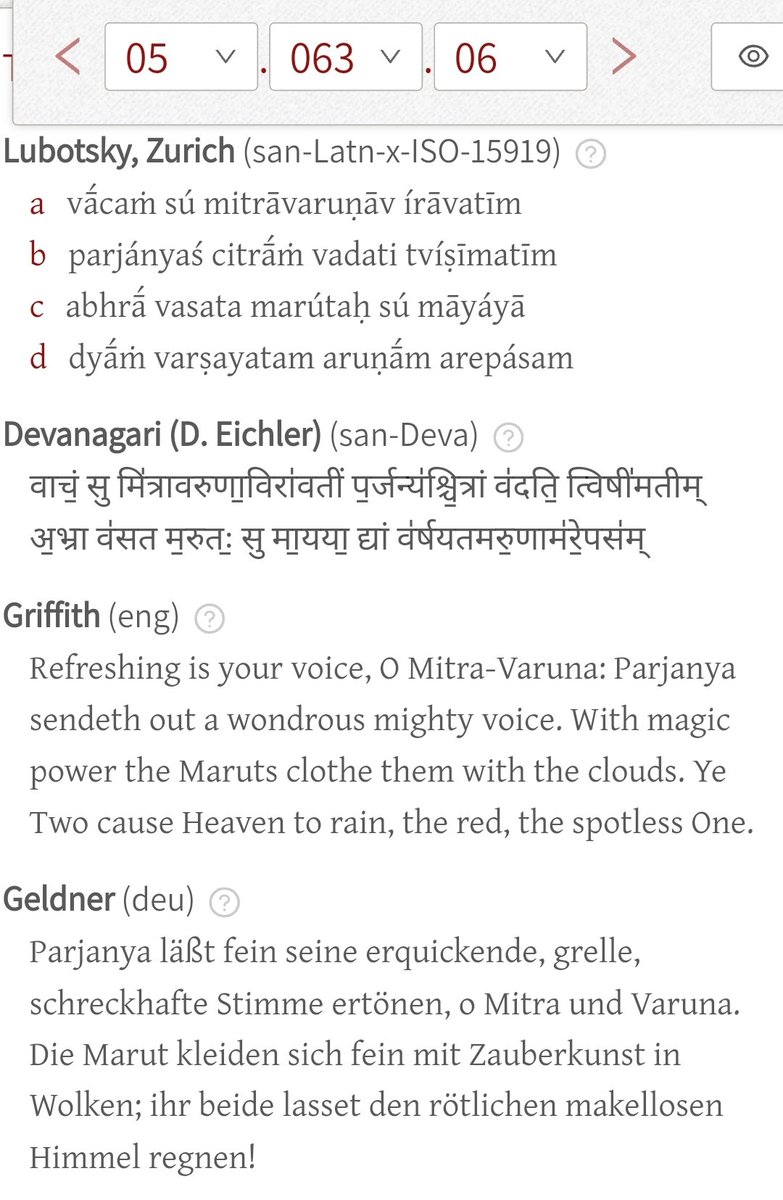
It is, however, implied (in 5.63) that the action of Parjánya, as well as of the Marúts, in shedding rain is subordinate to that of Mitrá and Váruṇa.
It is, however, implied (in 5.63) that the action of Parjánya, as well as of the Marúts, in shedding rain is subordinate to that of Mitrá and Váruṇa.
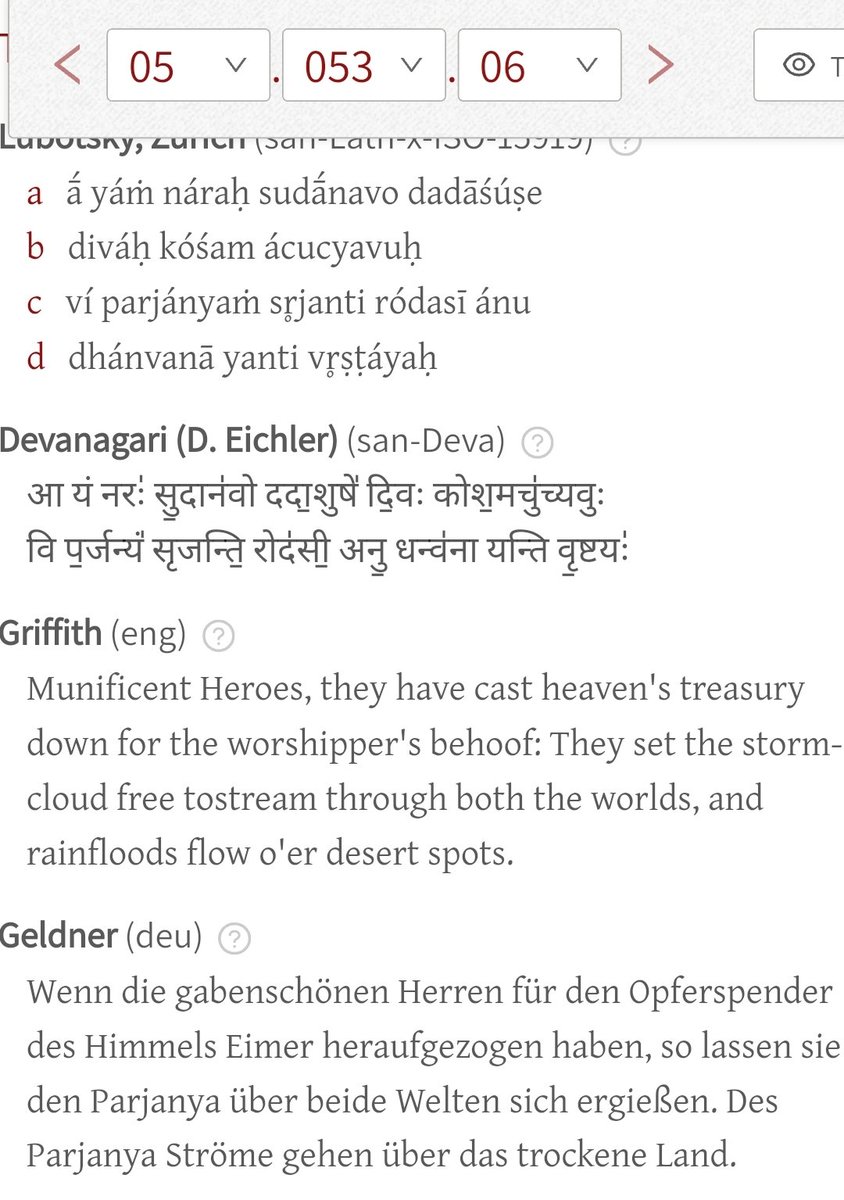
Parjánya can also simply have the appellative sense of "rain-cloud", as when the Marúts pour out the pail of heaven and discharge the rain-cloud through the two worlds (वि प॒र्जन्यं॑ सृजन्ति॒ रोद॑सी॒).
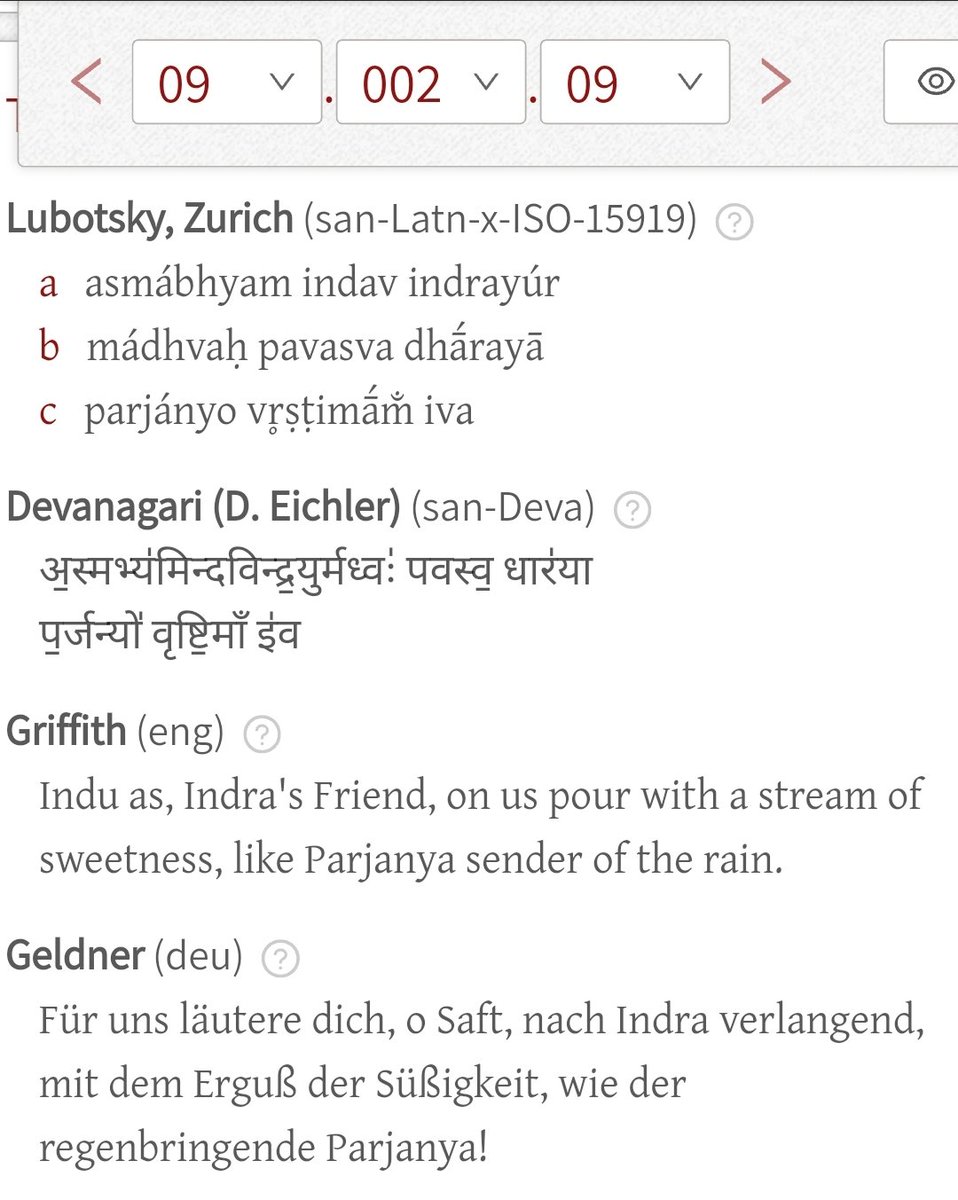
Sóma flows "like the rain-charged cloud" (प॒र्जन्यो॑ वृष्टि॒माँ इ॑व),
Sóma flows "like the rain-charged cloud" (प॒र्जन्यो॑ वृष्टि॒माँ इ॑व),
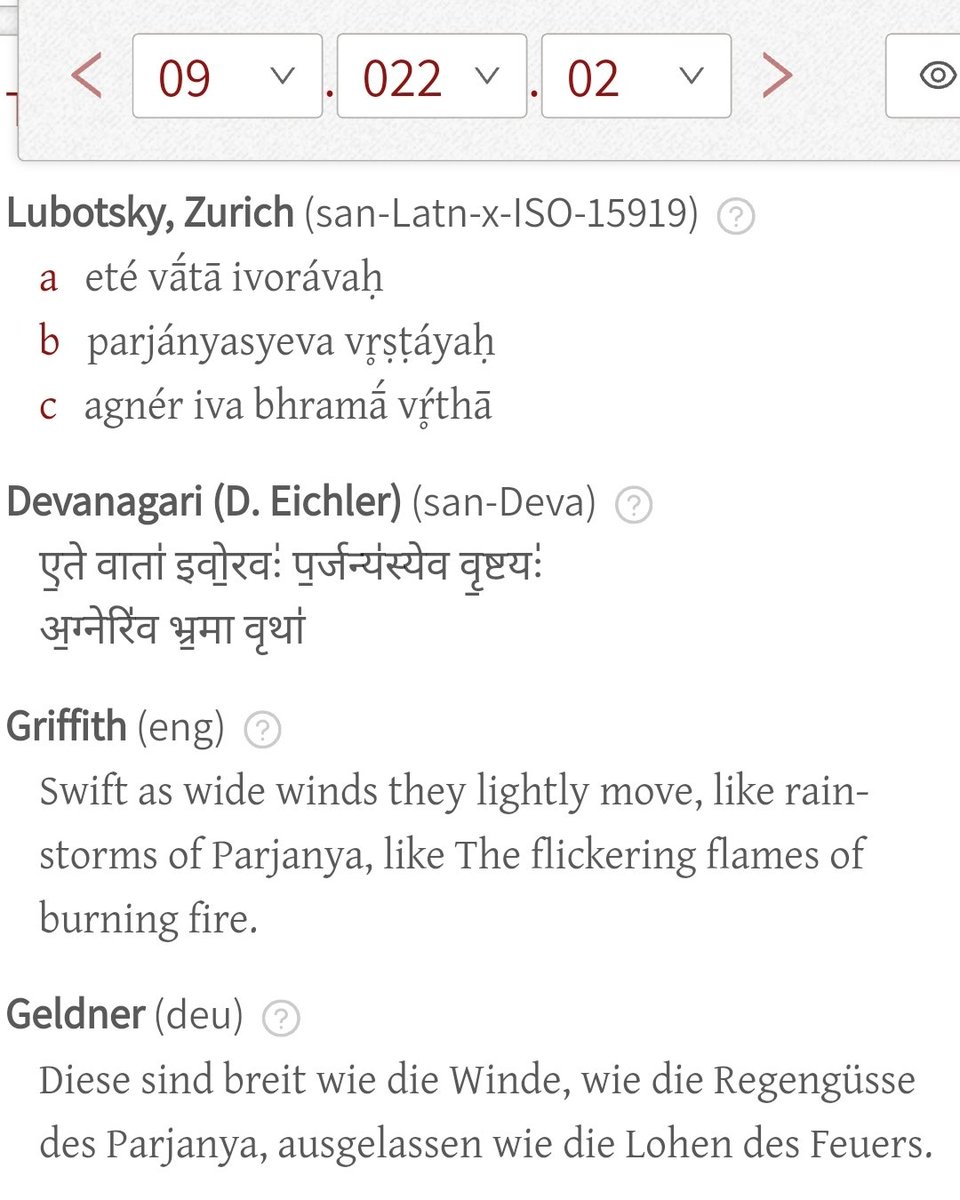
and the drops of Sóma speed "like the rains of a cloud" (प॒र्जन्य॑स्येव वृ॒ष्टयः॑).
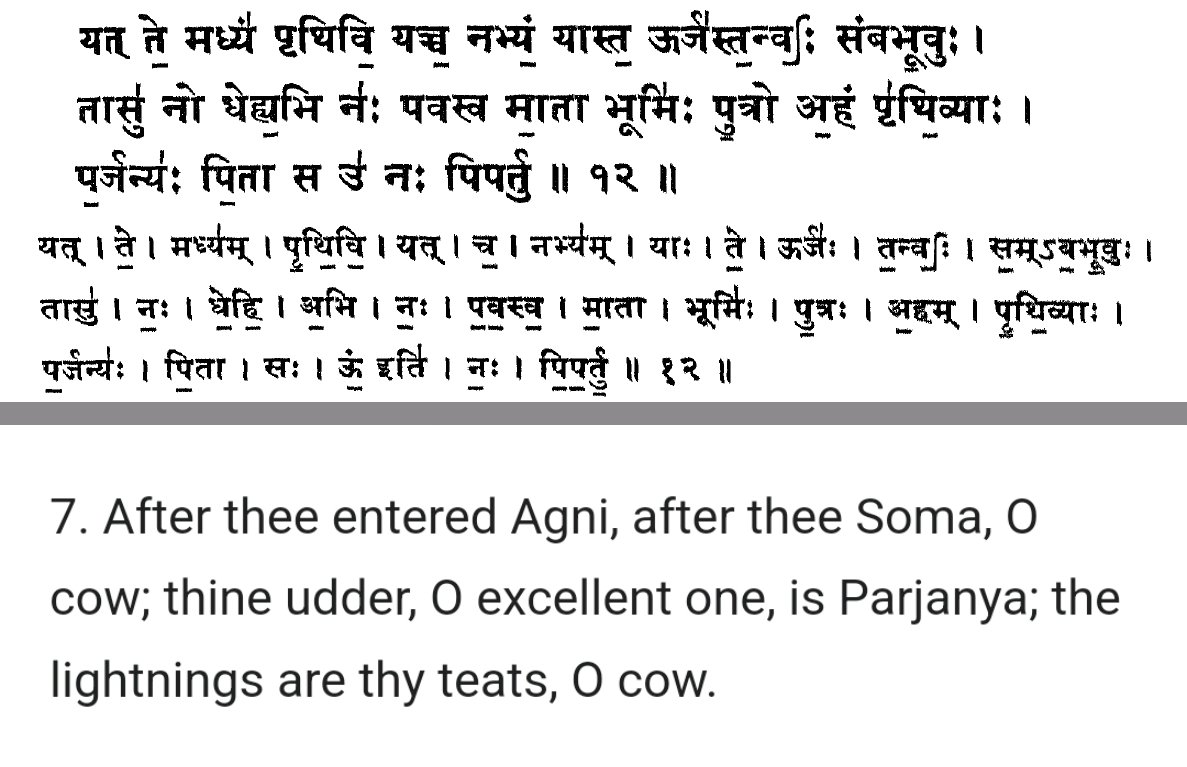
The rain-cloud is said to be the udder of the (goddess) cow Vaśā́ and the lightning her teats (ऊध॑स्ते भद्रे प॒र्जन्यो॑, वि॒द्युत॑स्ते॒ स्तना॑ वशे), in AV 10.10.
The rain-cloud is said to be the udder of the (goddess) cow Vaśā́ and the lightning her teats (ऊध॑स्ते भद्रे प॒र्जन्यो॑, वि॒द्युत॑स्ते॒ स्तना॑ वशे), in AV 10.10.
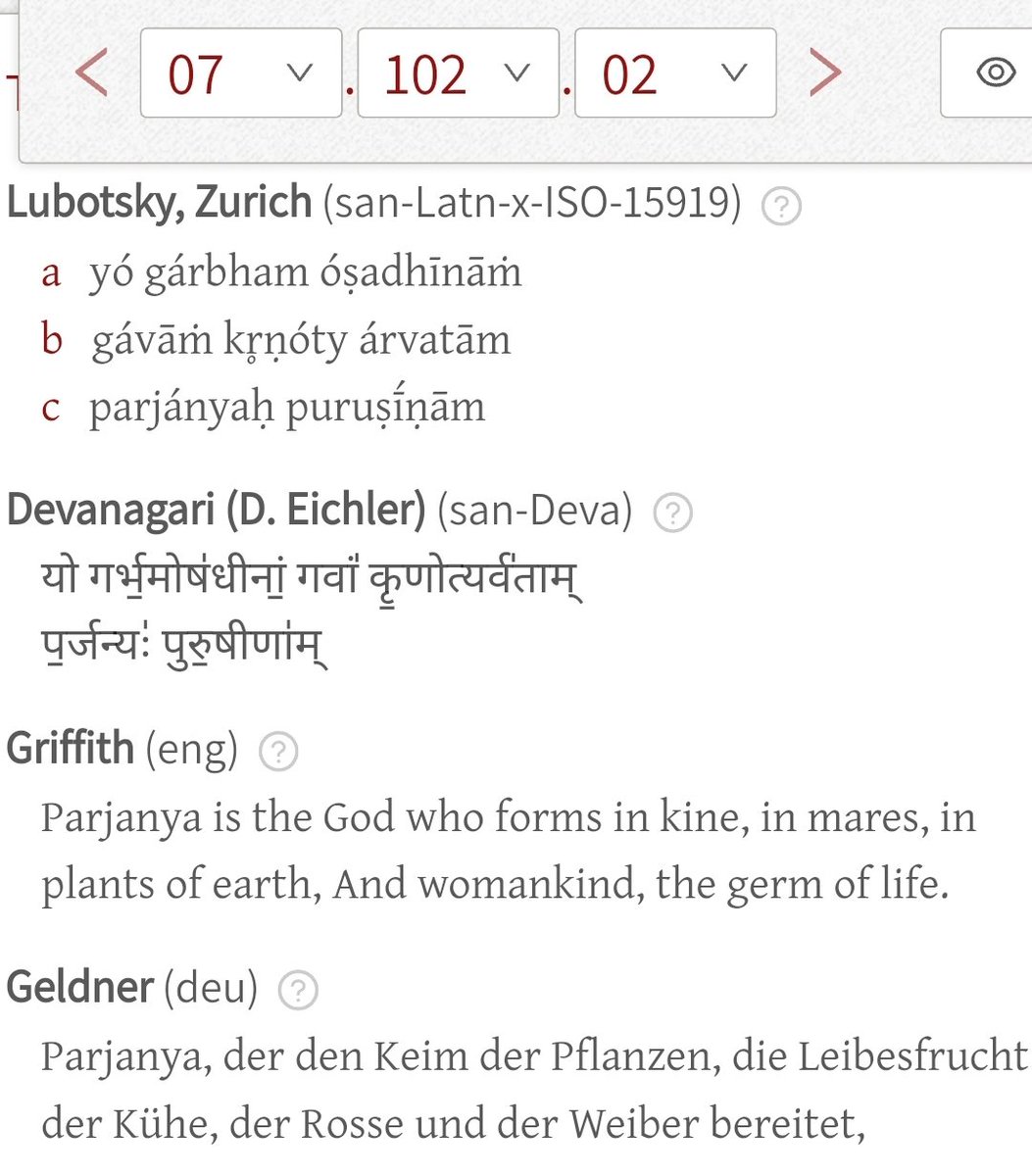
Parjánya places the germ not only in plants, but in cows, mares, and women (गर्भ॒म् ओष॑धीनां॒ गवां॑ कृ॒णोत्य् अर्व॑ताम् ... पुरु॒षीणा॑म्), and is invoked to bestow fertility (गर्भ॒मा धा॑).
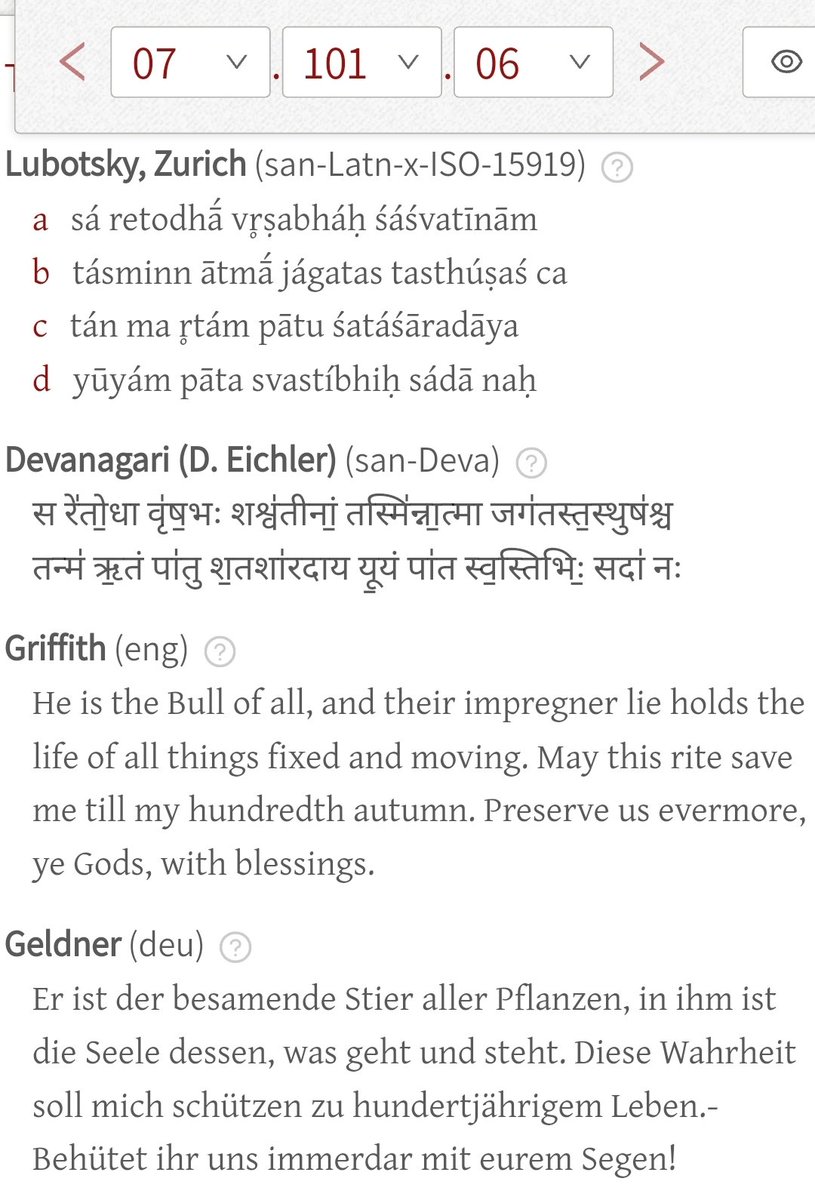
In him is the soul of what moves and stands (तस्मि॑न्न् आ॒त्मा जग॑तस् त॒स्थुष॑श्च).
In him is the soul of what moves and stands (तस्मि॑न्न् आ॒त्मा जग॑तस् त॒स्थुष॑श्च).
Parjánya is even described as a self-dependent sovereign, who rules over the three worlds, in whom all beings and the three heavens are established, and him whom the threefold waters flow.
Owing to his generative activity he often receives the epithet of "father".
Owing to his generative activity he often receives the epithet of "father".
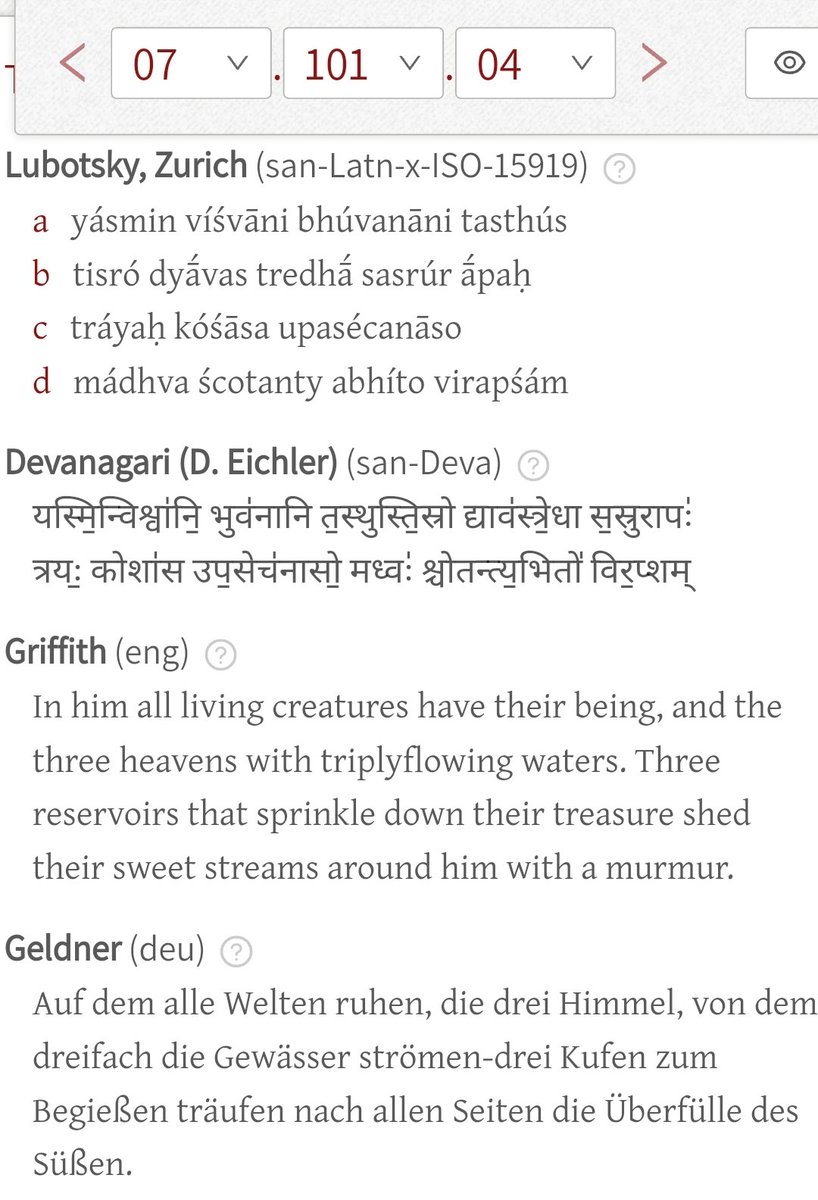
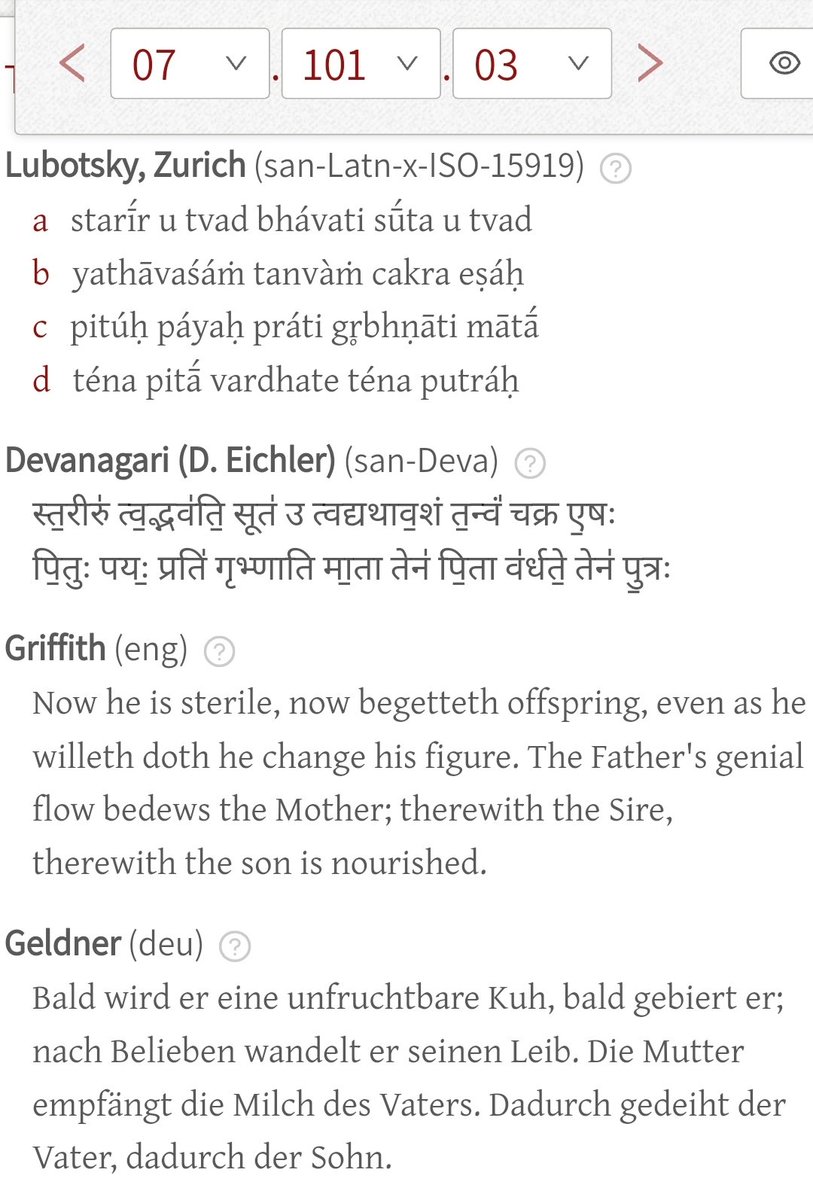
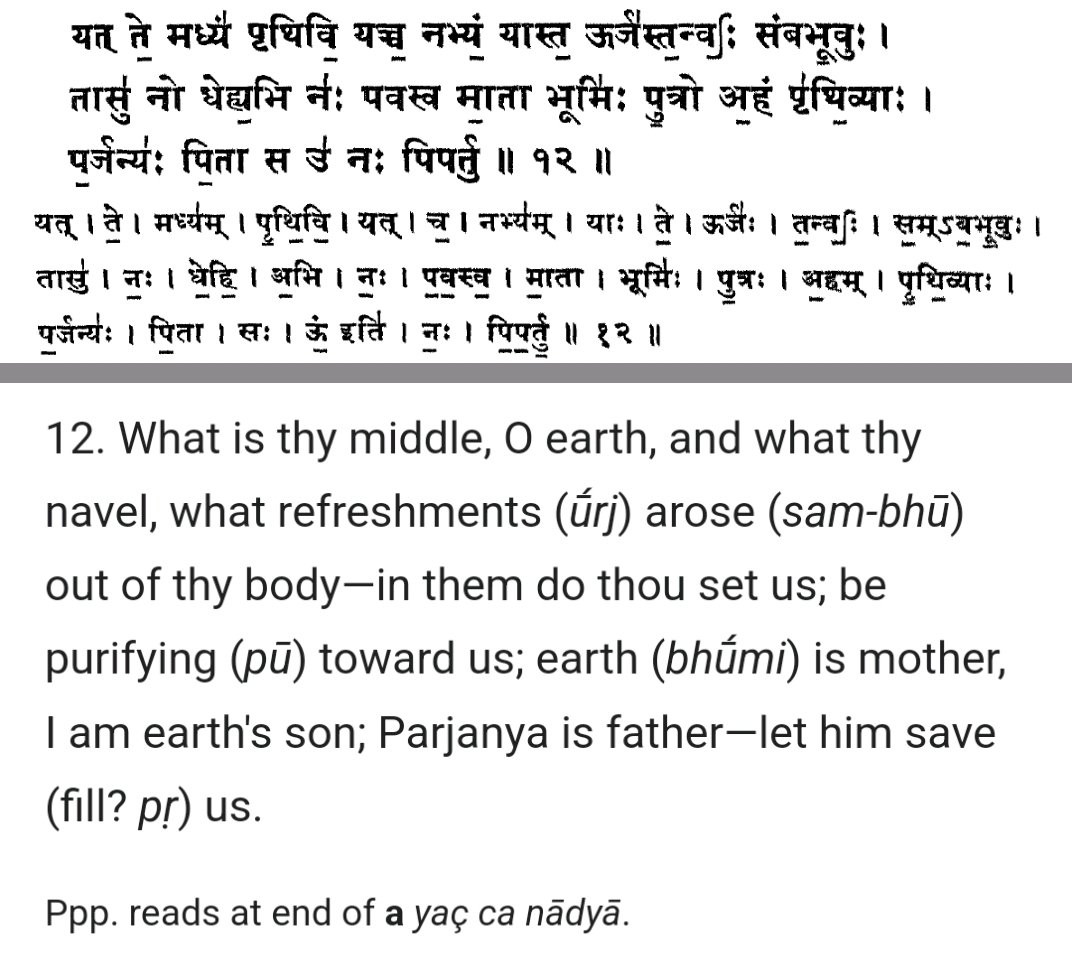
Atharvavedá {12.1} states that Earth is the mother, Parjánya the father (मा॒ता भूमिः॑ ... प॒र्जन्यः॑ पिता).
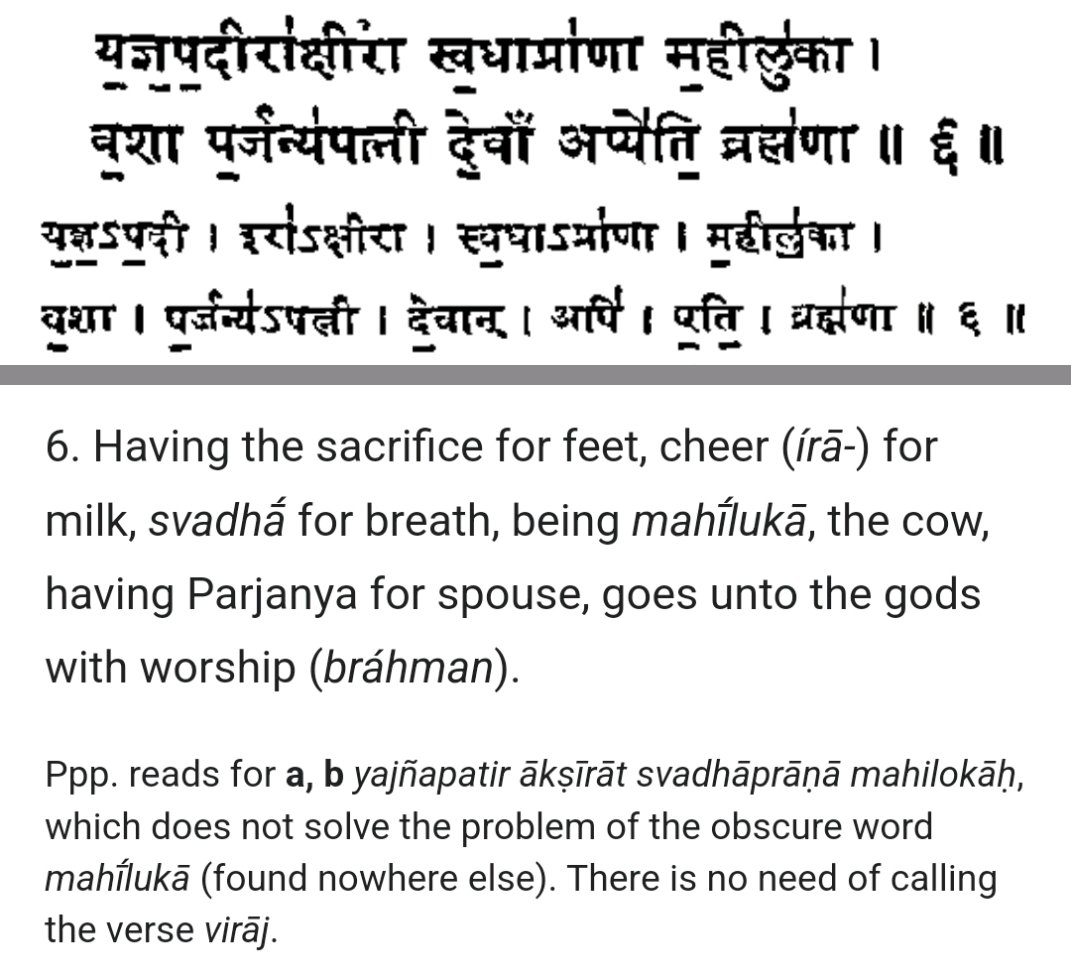
However, in 10.10 Vaśā́ is explicitly said to be Parjánya's wife.
In these respects as well as in the theriomorphic conception of him as a bull, Parjánya approximates ..
However, in 10.10 Vaśā́ is explicitly said to be Parjánya's wife.
In these respects as well as in the theriomorphic conception of him as a bull, Parjánya approximates ..
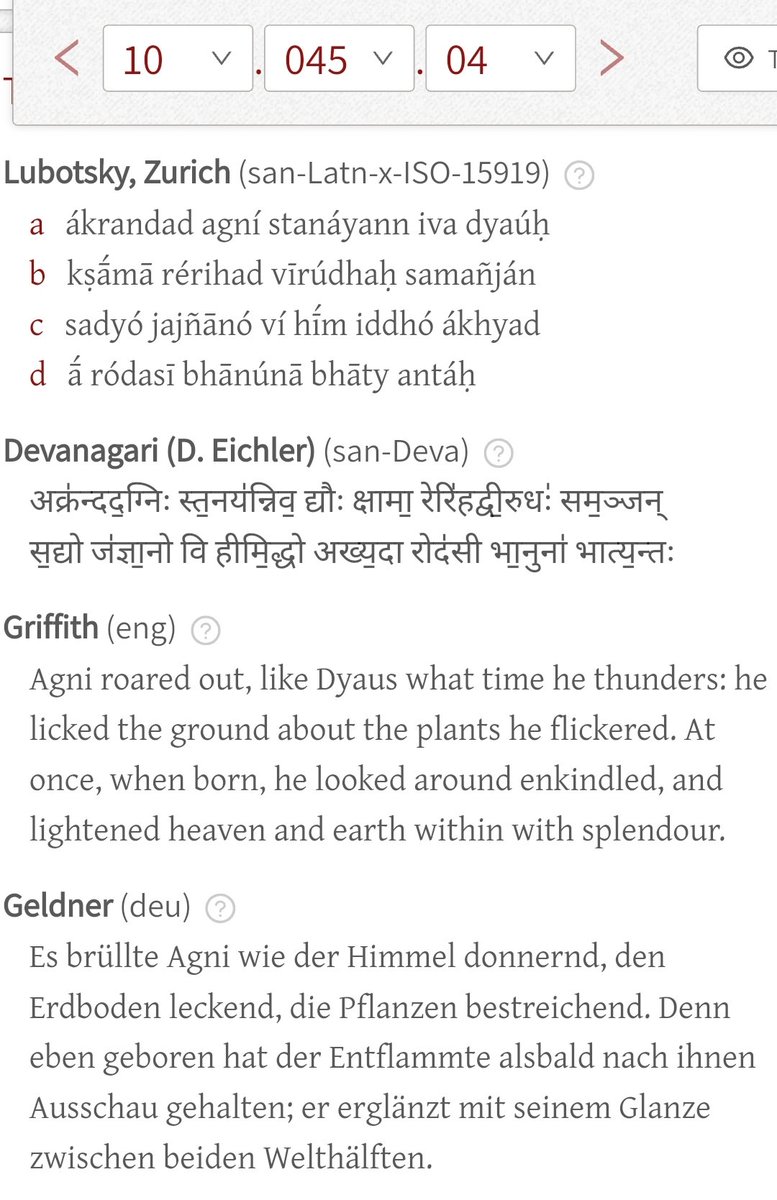
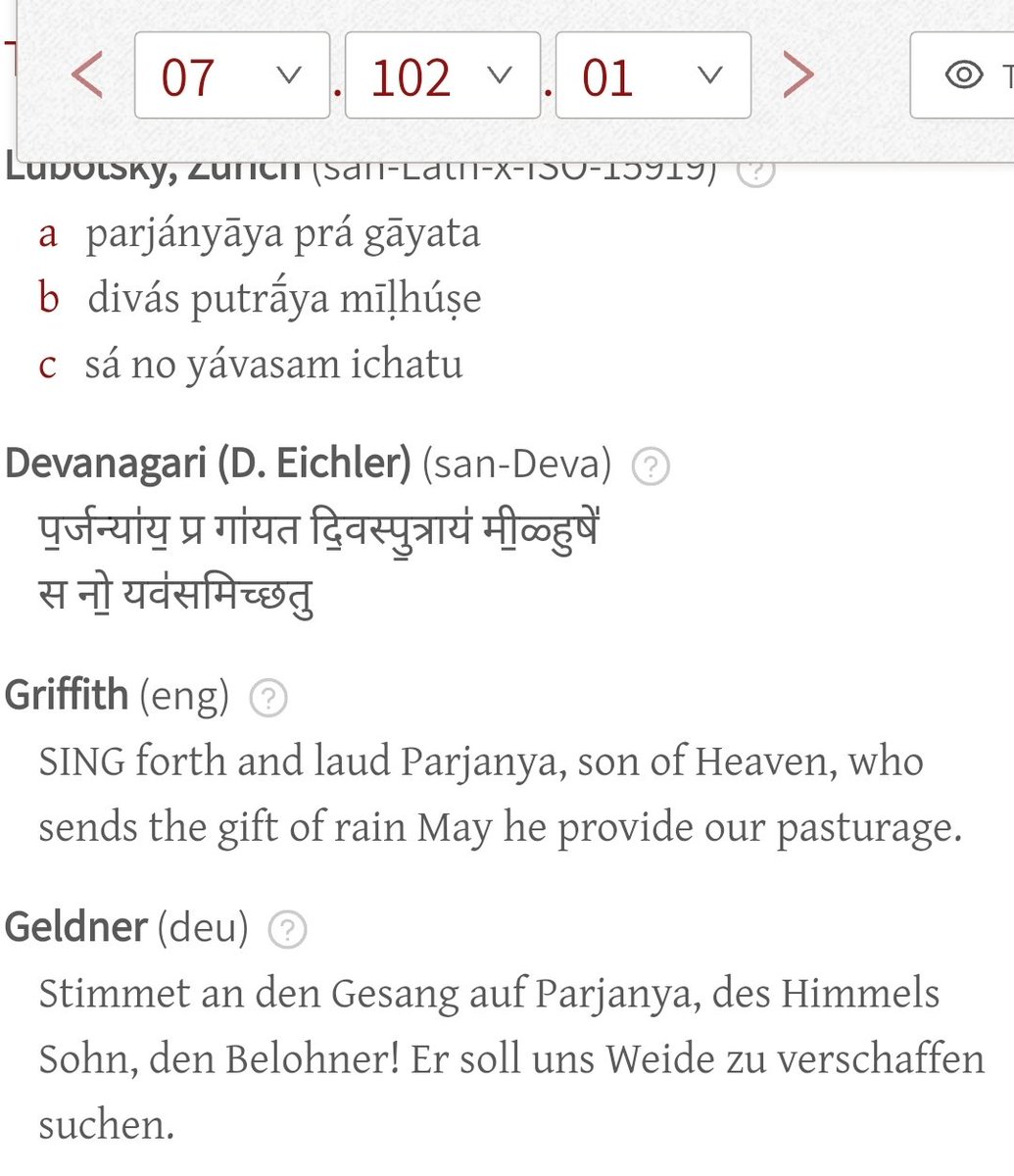
.. to the character of Dyaús (e.g. thundering: स्त॒नय॑न्निव॒ द्यौः), whose son he is once called (प॒र्जन्या॑य॒ प्र गा॑यत दि॒वस्पु॒त्राय॑).
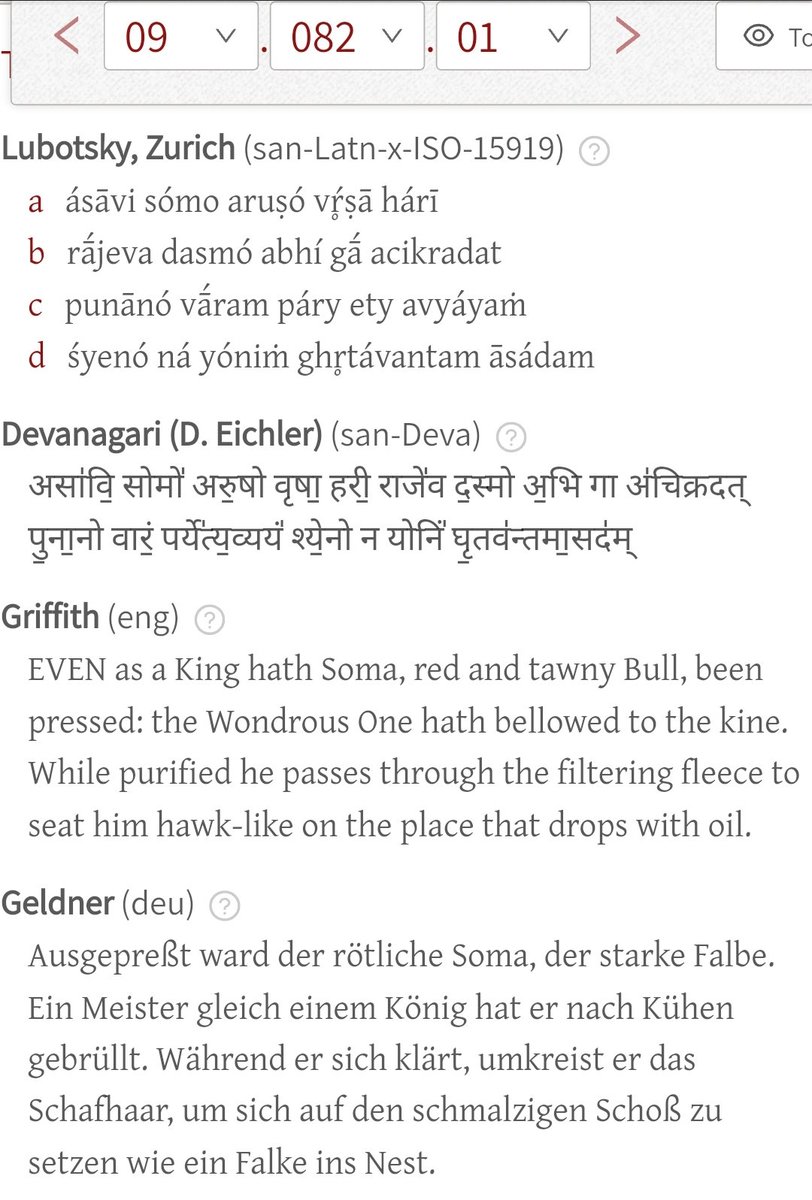
In turn Parjánya himself is said to be the father of Sóma (प॒र्जन्यः॑ पि॒ता म॑हि॒षस्य॑ प॒र्णिनो॒), who's likened to a an eagle when he ..
In turn Parjánya himself is said to be the father of Sóma (प॒र्जन्यः॑ पि॒ता म॑हि॒षस्य॑ प॒र्णिनो॒), who's likened to a an eagle when he ..
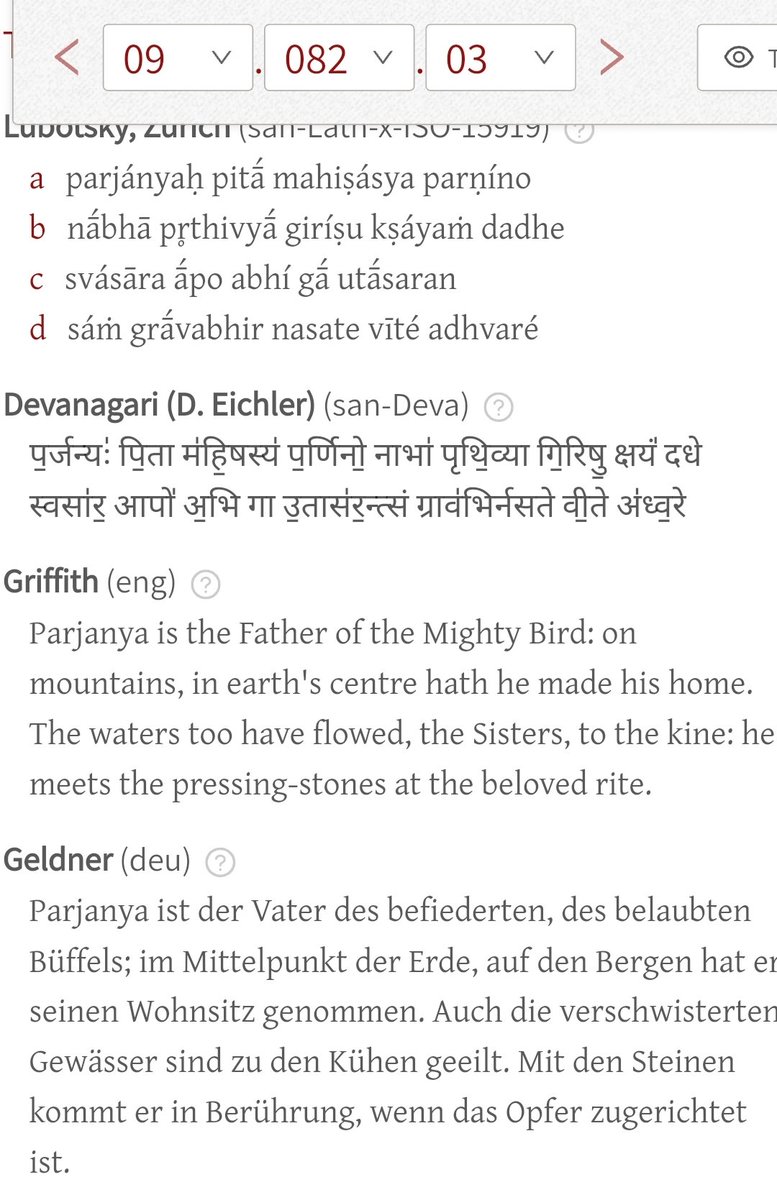
.. passes through the fleece (पु॒ना॒नो वारं॒ पर्ये॑त्य॒व्ययं॑ श्ये॒नो न).
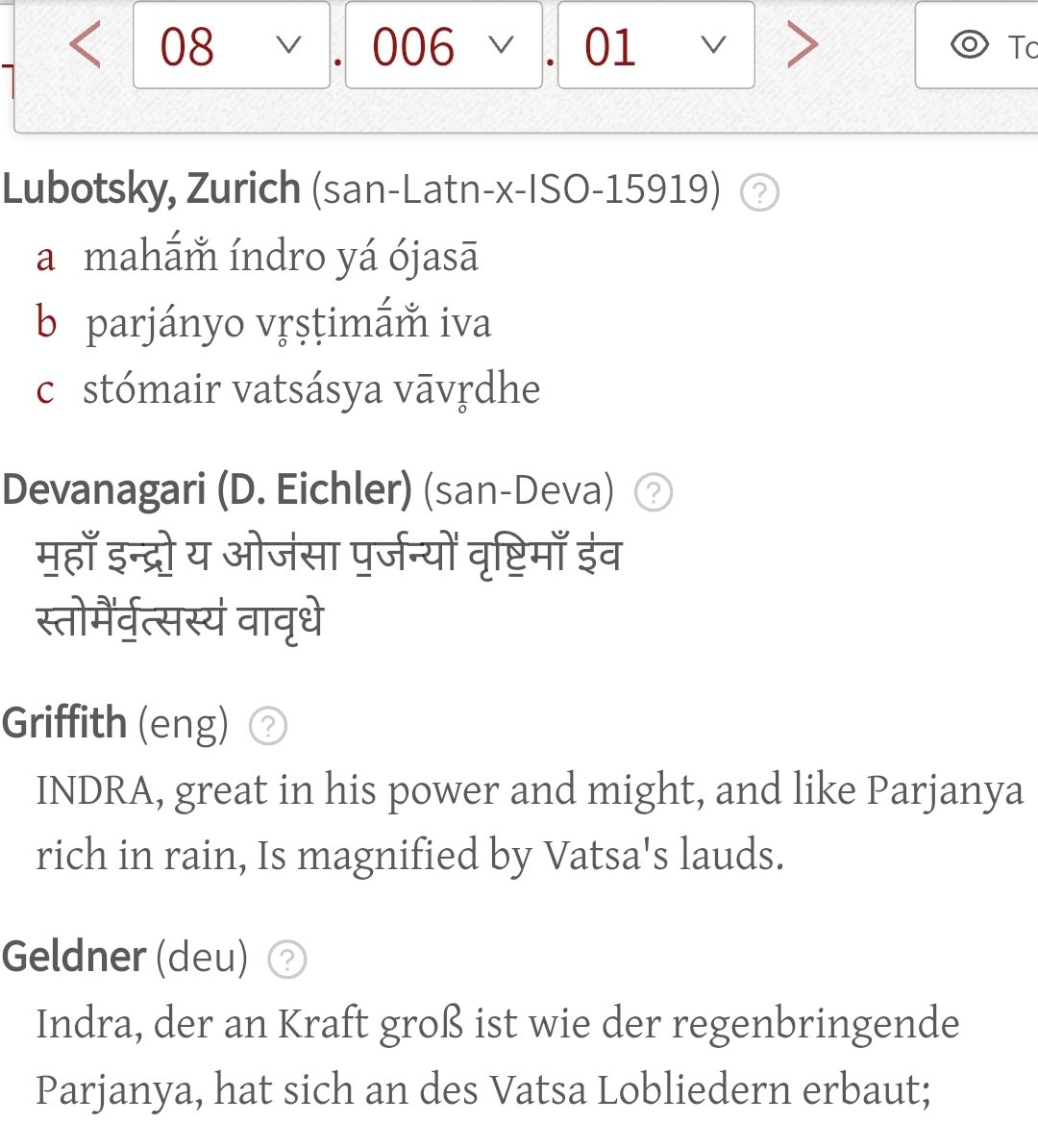
Naturally, Índra has much in common with the 'rainy' Parjánya, being compared with him in this respect (इन्द्रो॒ य ओज॑सा प॒र्जन्यो॑ वृष्टि॒माँ इ॑व).
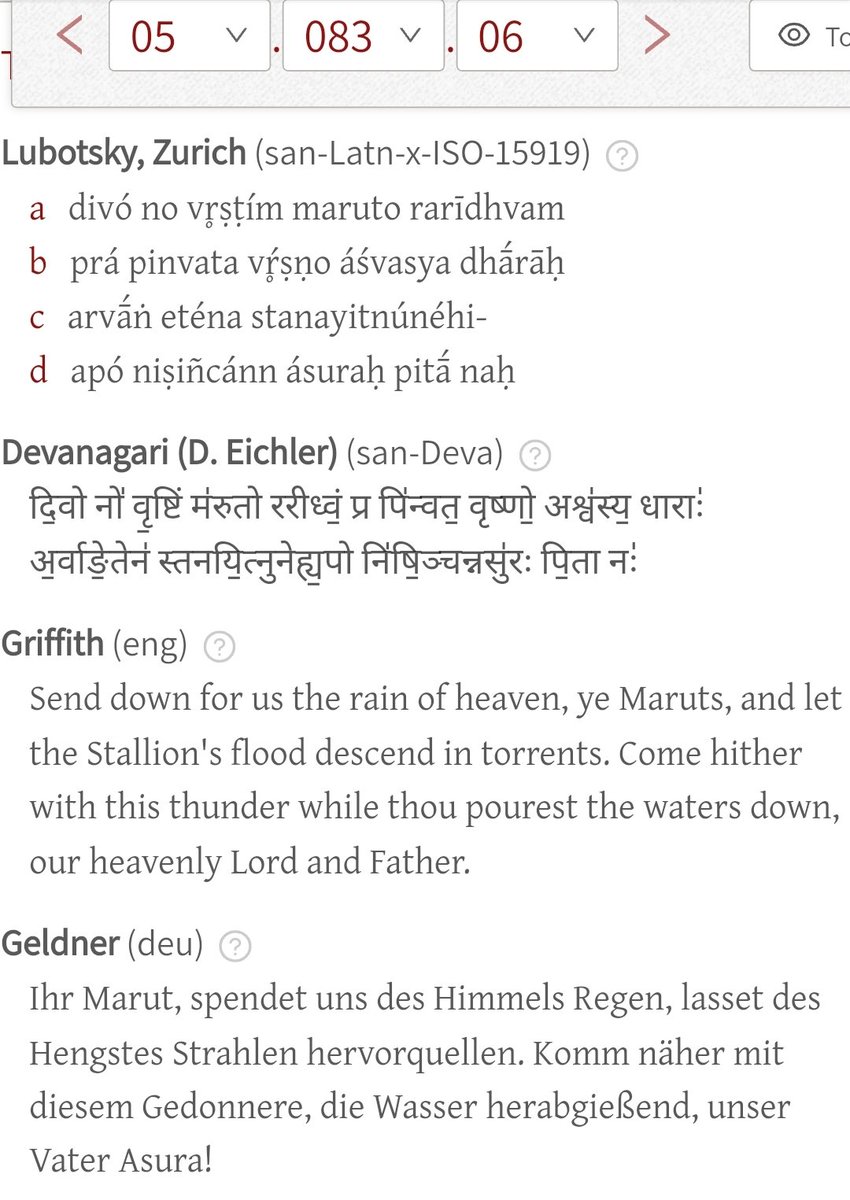
Parjánya is our divine father (असु॑रः पि॒ता नः॑).
Naturally, Índra has much in common with the 'rainy' Parjánya, being compared with him in this respect (इन्द्रो॒ य ओज॑सा प॒र्जन्यो॑ वृष्टि॒माँ इ॑व).
Parjánya is our divine father (असु॑रः पि॒ता नः॑).
Missed to attach this Atharvavedá extract.
Loading suggestions...