

I spent 10 years as a journalist in the US and China and wrote hundreds of stories in major websites and magazines. People wonder how fake information spreads. Here's how it really happens. 🧵
I never wrote anything I knew was false. Very few journalists do. But I'm familiar with the incentives and dynamics that allow falsehoods to propagate. They exploit weaknesses in human thinking that are as old as our species.
Allow me to share a story that showcases the conditions in which fake narratives successfully evolve and propagate.
1. The narrative is irresistible.
If people want a falsehood to be true, it doesn’t matter whether or not it is true.
If people want a falsehood to be true, it doesn’t matter whether or not it is true.
Nearly 200 years ago, the New York Sun announced breaking news: life was discovered on the moon. People had been speculating about this for years. The world exploded. Almost overnight, the Sun became the most-read paper in the world.
2. It comes from authority.
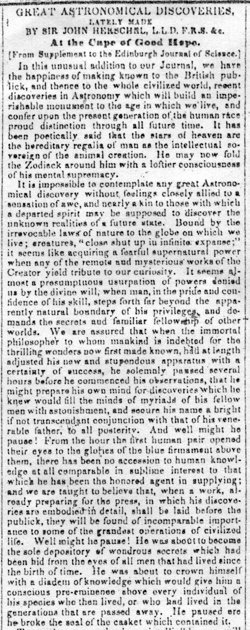
Those who are believed to have expertise and access to unique sources of information are often invoked when spreading falsehood.
Those who are believed to have expertise and access to unique sources of information are often invoked when spreading falsehood.
The 1835 "Great Moon" hoax credited the discovery of lunar life to famed astronomer Sir John Herschel, son of William Herschel, discoverer of infrared radiation and the planet Uranus. It was cited to a scientific journal in Edinburgh. (All false.)
3. It is detailed & voluminous.
People assume that falsehoods don’t travel in packs. One lie is easy to spot. But a whole swarm of highly detailed lies overwhelms skepticism.
The truth is often patchy and uncertain.
People assume that falsehoods don’t travel in packs. One lie is easy to spot. But a whole swarm of highly detailed lies overwhelms skepticism.
The truth is often patchy and uncertain.
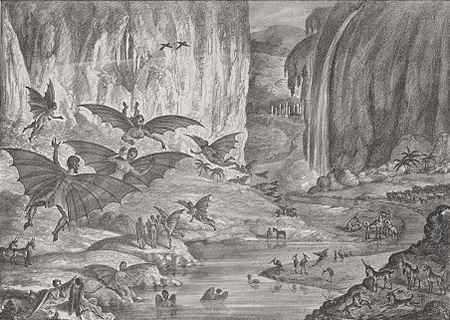
In one week, the New York Sun ran six articles on the moon-life discovery. It totaled over 20,000 words and included illustrations and editorial notes. Today it would be called a "deep dive" or a "multimedia longform investigation." The kind of work that wins prizes.
4. The narrative is difficult or impossible to verify yourself.
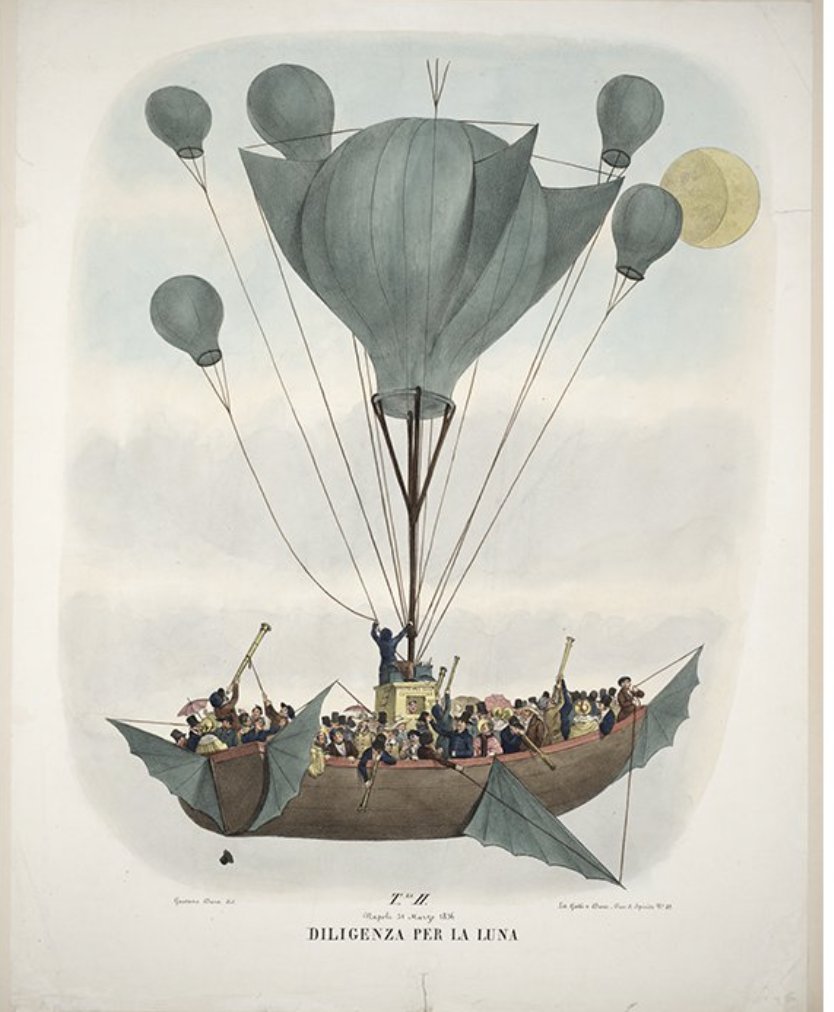
Falsehoods thrive when readers cannot test facts against their experience or senses.
Falsehoods thrive when readers cannot test facts against their experience or senses.
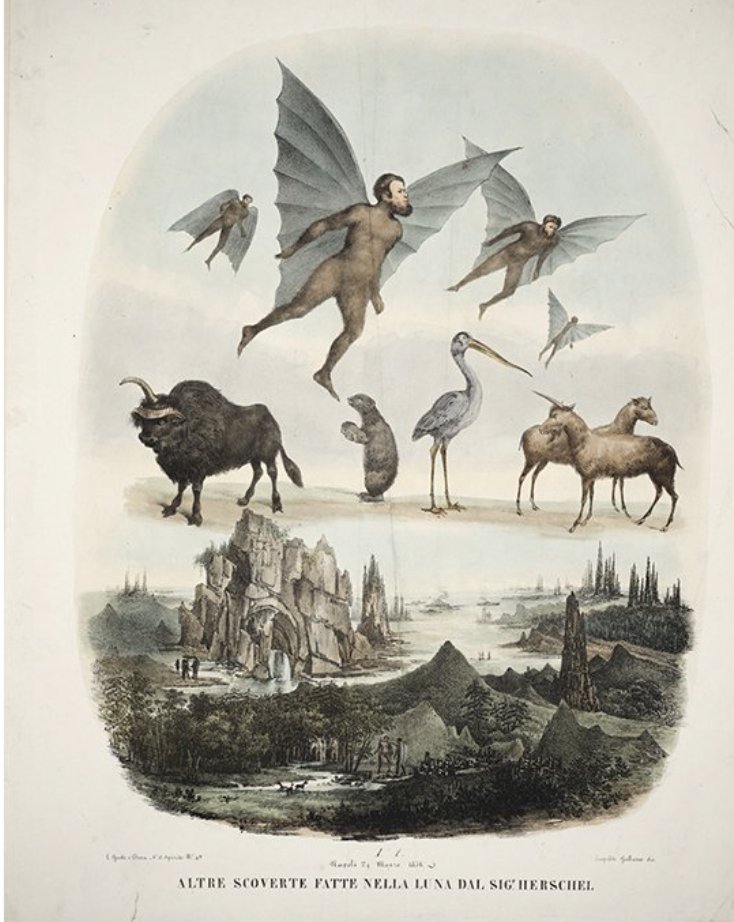
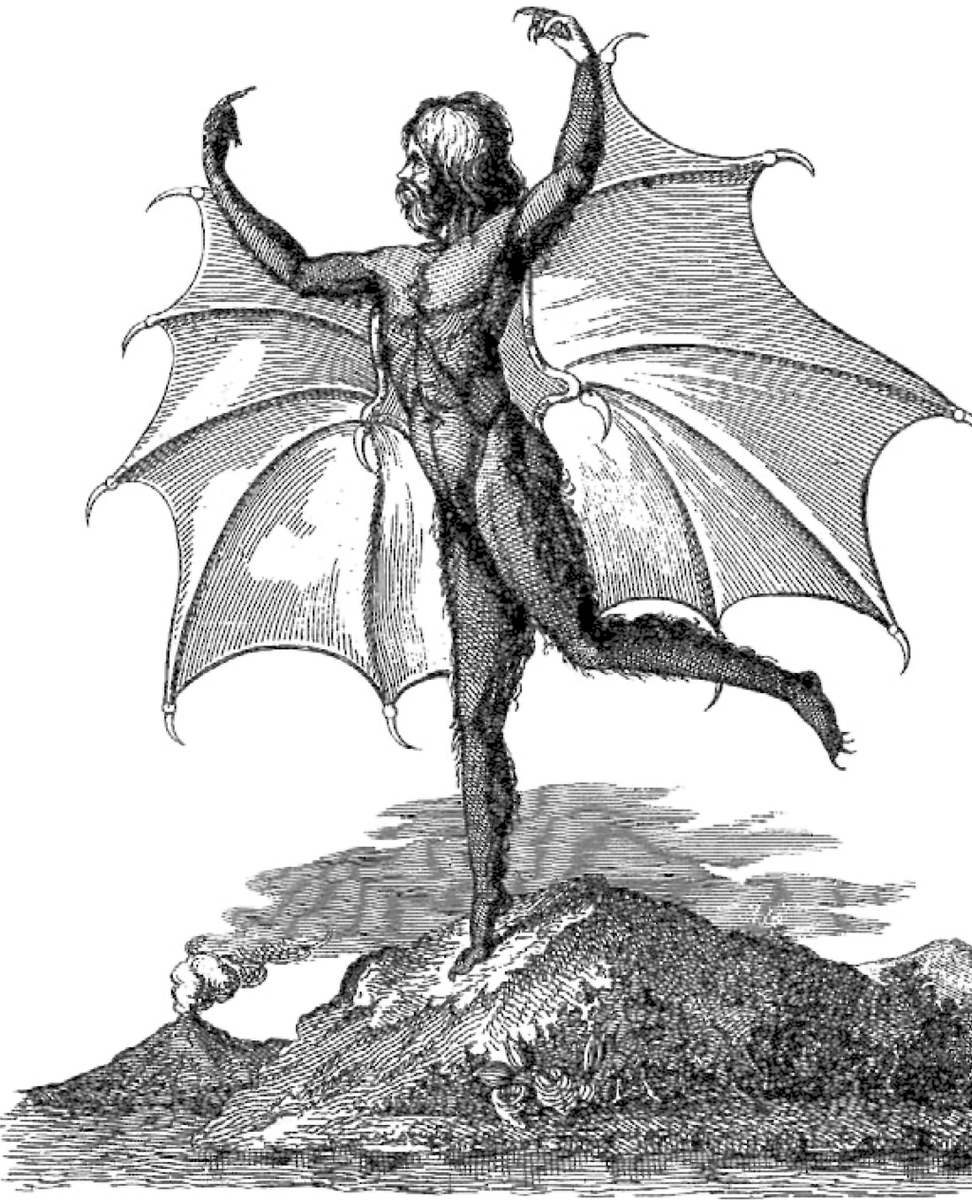
The Great Moon hoax attributed its facts to a telescope with a 7-ton lens located in the Cape of Good Hope. No reader could look at the Moon and expect to see the Biped Beaver and Vespertilio-Homo (flying man bat) with the naked eye.
5. The economic incentives favor sensationalism.
If a writer needs viral stories to make money, expect more viral stories. If reality doesn't produce enough, invent some.
If a writer needs viral stories to make money, expect more viral stories. If reality doesn't produce enough, invent some.
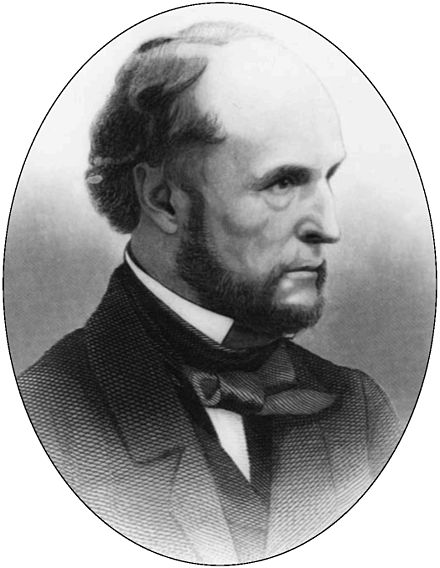
The Great Moon Hoax was schemed up by Richard Adams Locke, a descendent of philosopher John Locke. His newspaper was a struggling startup with 8,000 readers. During the hoax, it became the top-selling paper in the world, with nearly 20,000 readers. Ad space sold out.
6. The response is explosive.
Once falsehood goes viral, the truth of the original report often ceases to matter. What matters is the buzz & conversation around it. People no longer care whether it's true.
Once falsehood goes viral, the truth of the original report often ceases to matter. What matters is the buzz & conversation around it. People no longer care whether it's true.
The Great Moon Hoax reports went global. Newspapers in Italy, France, and England ran their own versions of the news. Suddenly there were new images of the moon creatures. New descriptions of them. Moon life was great for business.
Prestige publications gave their approval. The New York Times called the moon life discoveries "probable and possible." The New Yorker hailed "a new era in science." Edgar Allen Poe wrote that the only people who doubted were "the ignorant": those who knew nothing about science.
7. Don't expect a correction.
Locke, the hoaxer, became famous. The New York Sun blamed Europeans for the mistake and sold 60,000 more copies. It never admitted the hoax. In 2010, the 175th anniversary, the Sun joked it was still exploring the existence of lunar man-bats.
Locke, the hoaxer, became famous. The New York Sun blamed Europeans for the mistake and sold 60,000 more copies. It never admitted the hoax. In 2010, the 175th anniversary, the Sun joked it was still exploring the existence of lunar man-bats.
Falsehoods that travel come from a variety of sources. Rarely does a mastermind like Locke commit conscious fraud.
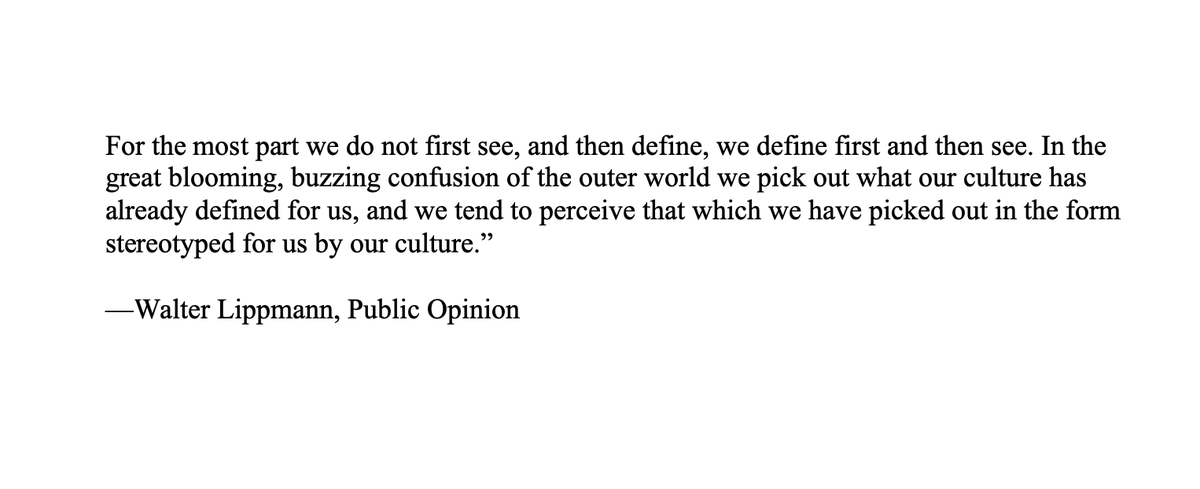
There doesn't have to be. Our selective perception does the work for us. @ScottAdamsSays calls it a reality filter. Walter Lippmann says this:
There doesn't have to be. Our selective perception does the work for us. @ScottAdamsSays calls it a reality filter. Walter Lippmann says this:
I hope you've found this thread interesting & informative.
Follow me @bfcarlson for more.
Like/Retweet the first tweet below if you can:
Follow me @bfcarlson for more.
Like/Retweet the first tweet below if you can:
Loading suggestions...