
Weekend Digest
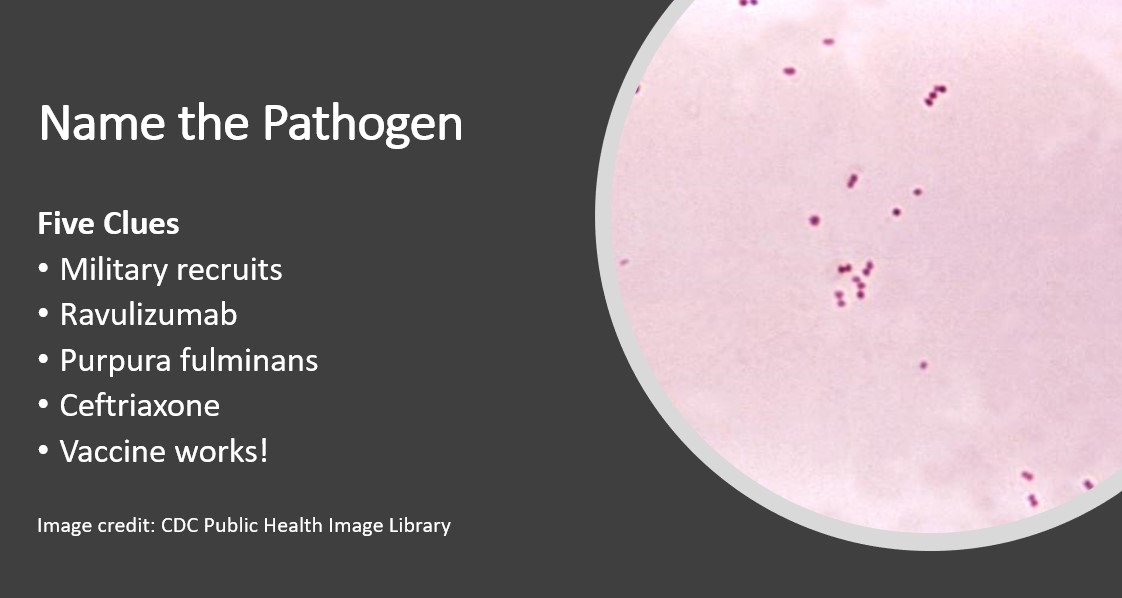
Name the Pathogen
Five Clues
1. #Military recruits
2. #Ravulizumab
3. #Púrpura fulminans
4. #Ceftriaxone
5. #Vaccination
Name the Pathogen
Five Clues
1. #Military recruits
2. #Ravulizumab
3. #Púrpura fulminans
4. #Ceftriaxone
5. #Vaccination
2/
#Neisseria #meningitidis
Gram-negative diplococcus
Exclusively infects humans
Serogroups causing human disease:
A B C X Y Z W135 L
Nasopharyngeal carriage: spreads through aerosol route
#Neisseria #meningitidis
Gram-negative diplococcus
Exclusively infects humans
Serogroups causing human disease:
A B C X Y Z W135 L
Nasopharyngeal carriage: spreads through aerosol route
3/
#Neisseria #meningitidis
Individuals at risk
1. Military recruits: epidemic infections was controlled by vaccination of all recruits.
2. College students living in dormitories
3. HIV
4. MSM
5. Complement deficiency
6. Occupational exposure
#Neisseria #meningitidis
Individuals at risk
1. Military recruits: epidemic infections was controlled by vaccination of all recruits.
2. College students living in dormitories
3. HIV
4. MSM
5. Complement deficiency
6. Occupational exposure
4/
#Neisseria #meningitidis
Complement deficiency in early C3, properdin and terminal component is associated with meningococcal disease
C5 inhibitors - Eculizumab and Ravulizumab - terminal complement inhibitors for Rx of PNH and HUS - high risk of meningococcal disease
#Neisseria #meningitidis
Complement deficiency in early C3, properdin and terminal component is associated with meningococcal disease
C5 inhibitors - Eculizumab and Ravulizumab - terminal complement inhibitors for Rx of PNH and HUS - high risk of meningococcal disease
5/
#Neisseria #meningitidis
Clinical disease: fever and bacteremia/meningococcemia to meningitis and fulminant sepsis
1. Meningitis
2. Meningitis and meningococcemia
3. Meningococcemia
Petechial rash coalesce to larger purpuric rash then DIC / purpura fulminans
#Neisseria #meningitidis
Clinical disease: fever and bacteremia/meningococcemia to meningitis and fulminant sepsis
1. Meningitis
2. Meningitis and meningococcemia
3. Meningococcemia
Petechial rash coalesce to larger purpuric rash then DIC / purpura fulminans
6/
#Neisseria #meningitidis
Treatment:
Ceftriaxone is drug of choice (penicillin if susceptible).
Ceftriaxone can eradicate the nasopharyngeal carriage.
#Neisseria #meningitidis
Treatment:
Ceftriaxone is drug of choice (penicillin if susceptible).
Ceftriaxone can eradicate the nasopharyngeal carriage.
/7
#Neisseria #meningitidis
Prevention:
1. Droplet precaution
2. Chemoprophylaxis: close contacts - rifampin, ciprofloxacin, ceftriaxone
3. Antibiotic prophylaxis for patients on eculizumab and ravulizumab
4. Vaccination: quadrivalent MenACWY and monovalent serogroup B vaccine
#Neisseria #meningitidis
Prevention:
1. Droplet precaution
2. Chemoprophylaxis: close contacts - rifampin, ciprofloxacin, ceftriaxone
3. Antibiotic prophylaxis for patients on eculizumab and ravulizumab
4. Vaccination: quadrivalent MenACWY and monovalent serogroup B vaccine
Loading suggestions...