

Now for the next 🧵of 🧵.
We've done chromic, silk and PDS (links at the end)...
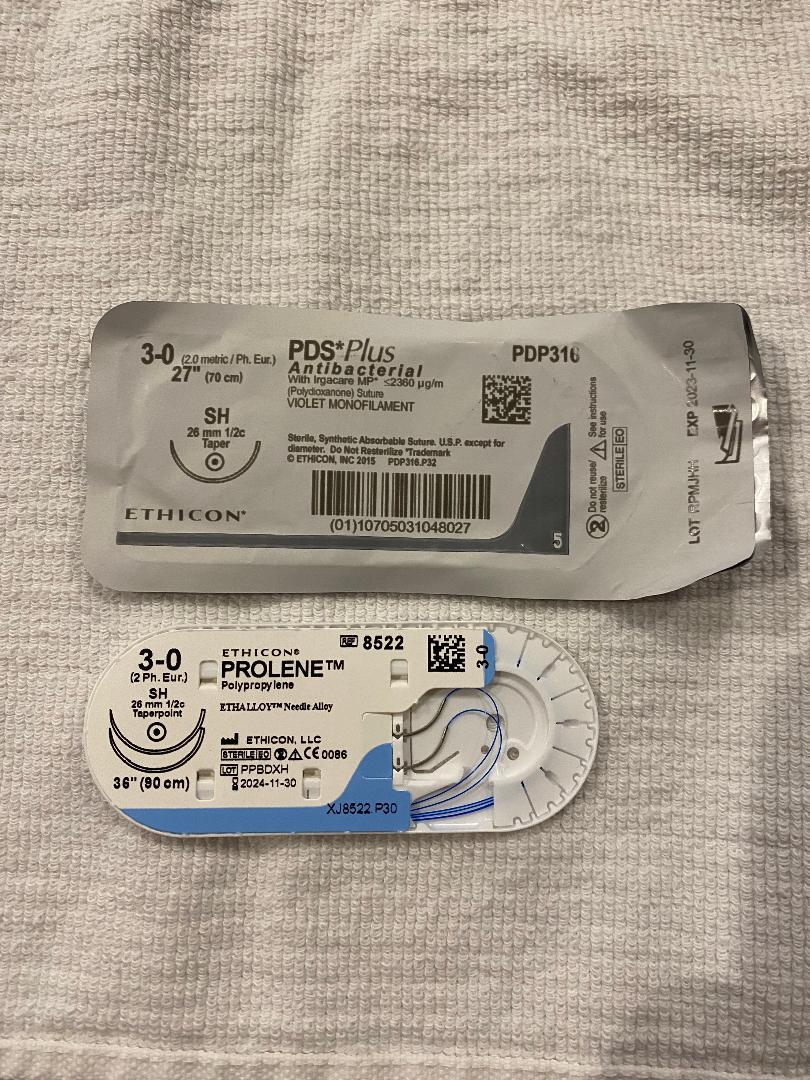
Next up is polypropylene or "Prolene".
As usual we'll go over (brief) history, some properties, and some of its uses, which do include things other than vascular anastomoses.
We've done chromic, silk and PDS (links at the end)...
Next up is polypropylene or "Prolene".
As usual we'll go over (brief) history, some properties, and some of its uses, which do include things other than vascular anastomoses.

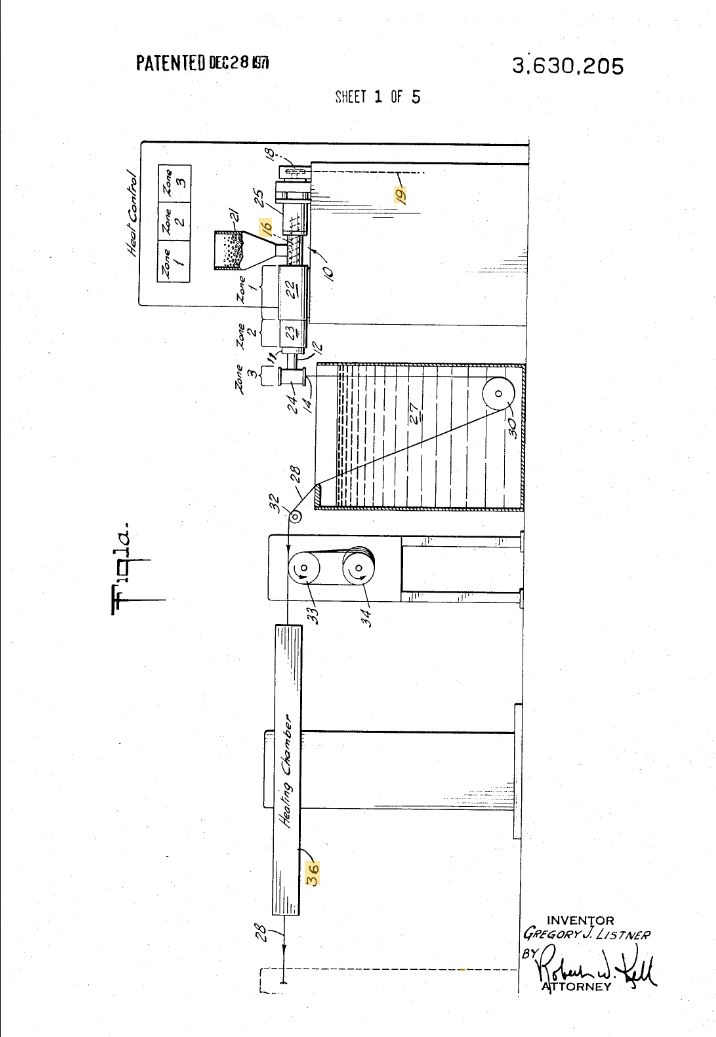
Polypropylene sutures (I'll just call them 'Prolene' for the thread) were invented in 1969 and the US patent was approved in 1971.
The patent was mostly based on a novel method of preparing monofilament polypropylene into a material that could actually be used for sutures.
The patent was mostly based on a novel method of preparing monofilament polypropylene into a material that could actually be used for sutures.
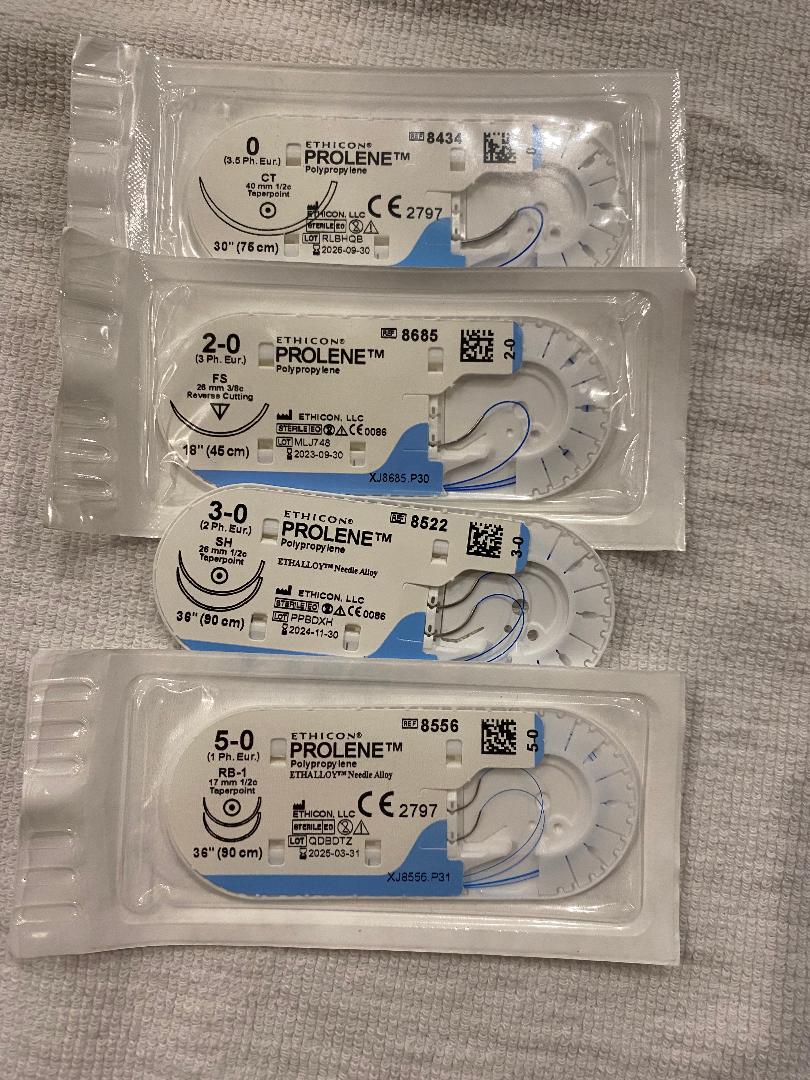
I'll defer my usual list of what each size is used for, because it doesn't make for good reading.
But basically, Prolene can be found in sizes from 0 to 10-0 (skipping only 9-0).
Needles are of different sizes, often double-armed. They are usually dyed blue for visibility.
But basically, Prolene can be found in sizes from 0 to 10-0 (skipping only 9-0).
Needles are of different sizes, often double-armed. They are usually dyed blue for visibility.
Prolene sutures are non-absorbable. And not 'fake' nonabsorbable like silk (which goes away eventually), but 'real' nonabsorbable, meaning it will encapsulate and stay there into the grave and beyond.
Occasionally, suture granulomas may form, which may or may not cause problems.
Occasionally, suture granulomas may form, which may or may not cause problems.
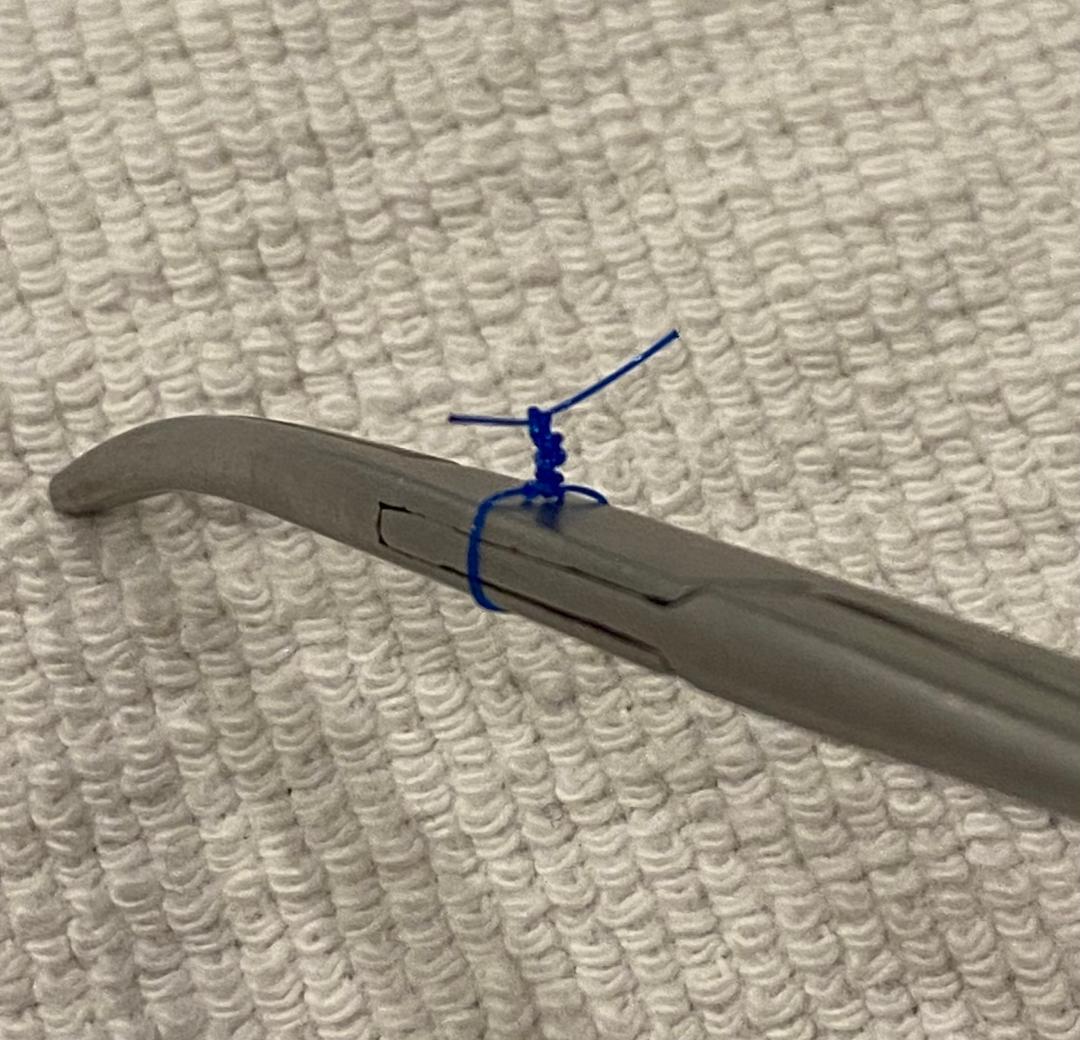
Like an angry teenager, Prolene sutures have a tenacious memory (L picture), that is barely changed by initial efforts (R picture).
Ultimately, the memory can be made to fade. In the lower 2 pictures, I have straightened out a strand of 3-0 Prolene by stretching it for 48 hr.
Ultimately, the memory can be made to fade. In the lower 2 pictures, I have straightened out a strand of 3-0 Prolene by stretching it for 48 hr.
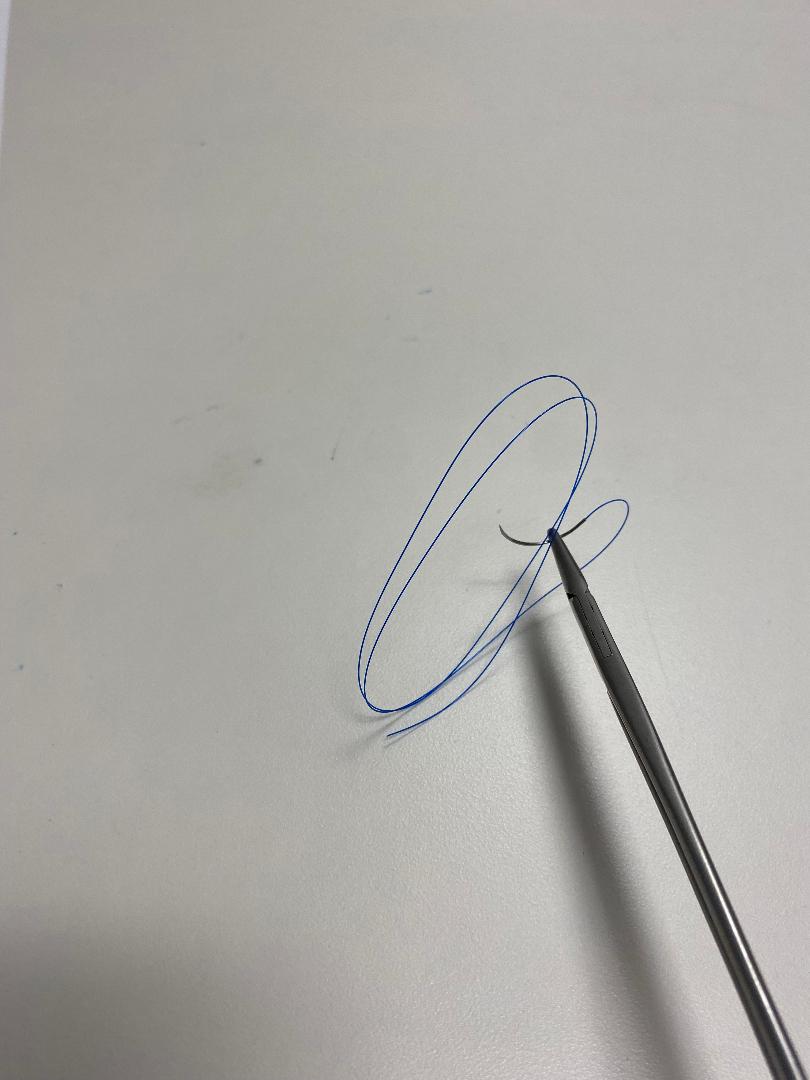
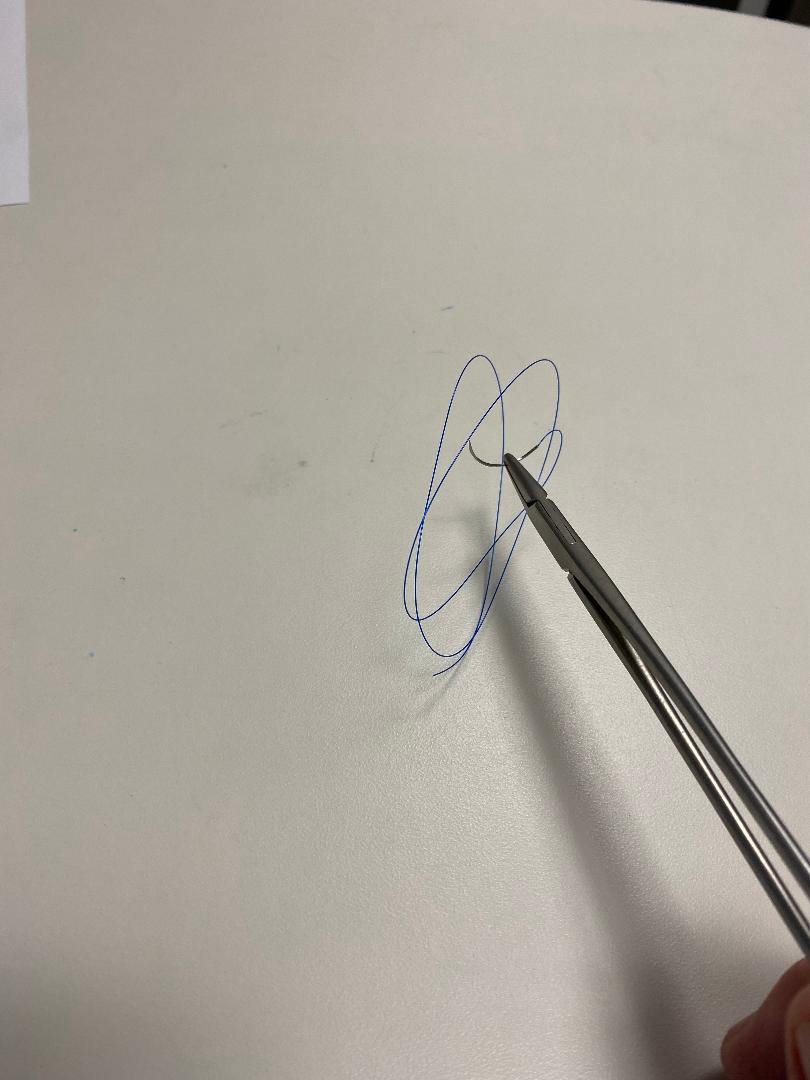
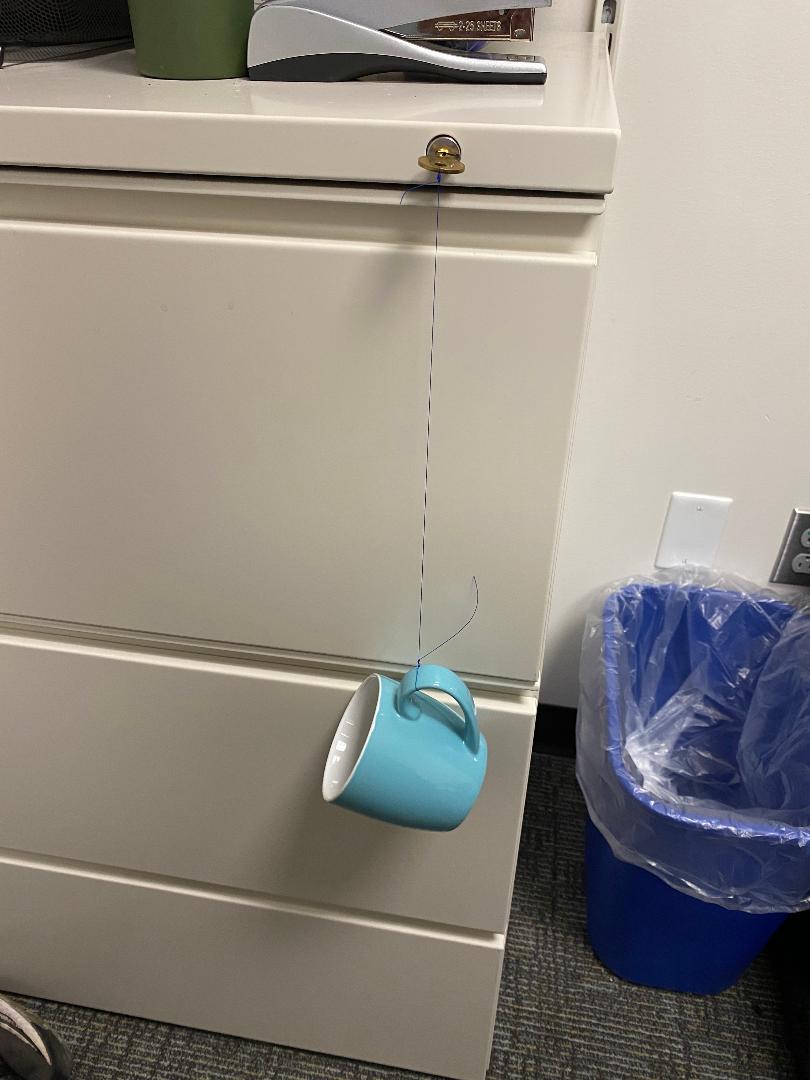
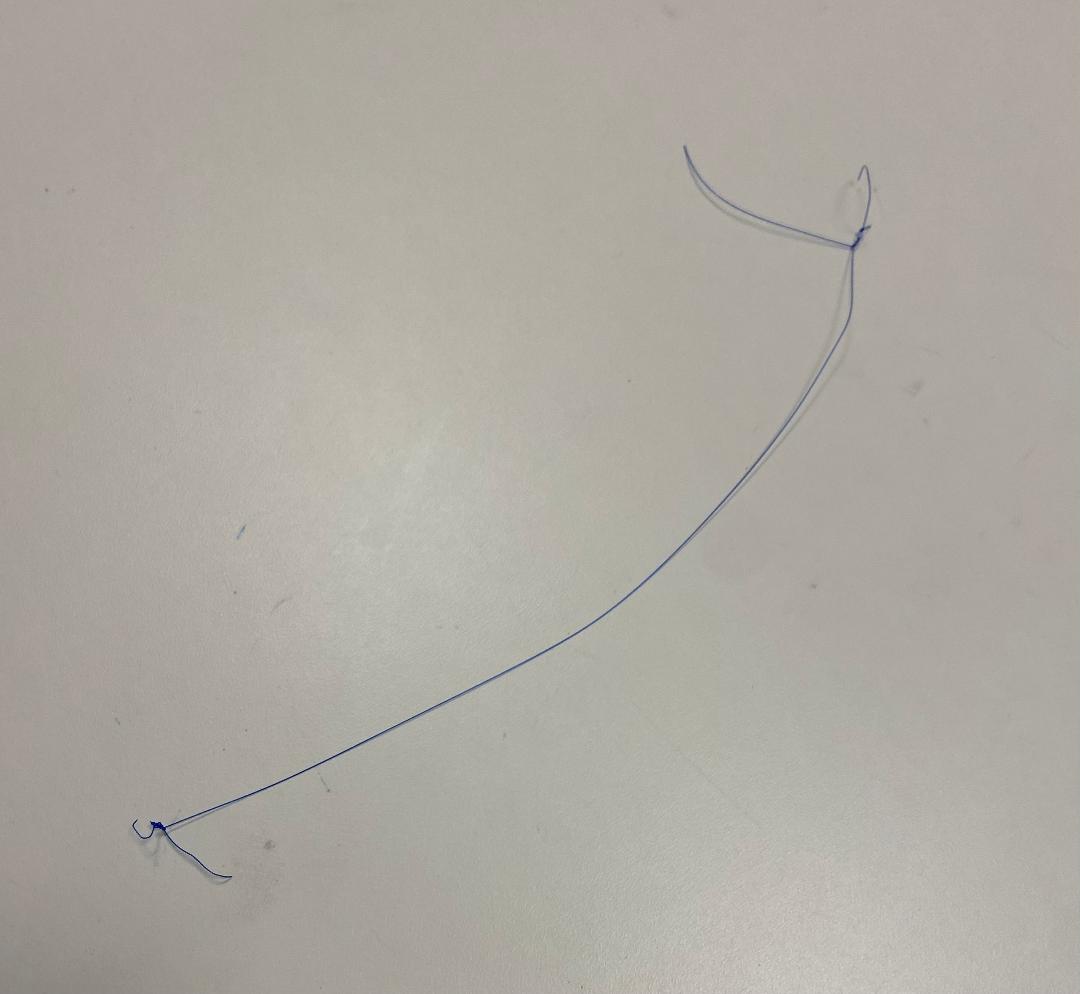
Obviously, you can't wait that long, so to make working with Prolene manageable, you will usually want to control the other end with a 'tag' or (better), a 'rubber shod' (tag with rubber pieces on it to protect the suture).

Prolene is one of the harder sutures to tie, especially the larger sizes.
The suture slides more easily than other materials (part of why it's popular for vascular work) but you will need more knots (~8) and longer tails than for other sutures.
The suture slides more easily than other materials (part of why it's popular for vascular work) but you will need more knots (~8) and longer tails than for other sutures.

Subjectively, Prolene is roughly the same strength as silk.
In contrast, PDS is *much* stronger than Prolene suture of an equivalent size. Fortunately, for most applications, this doesn't matter much.
In contrast, PDS is *much* stronger than Prolene suture of an equivalent size. Fortunately, for most applications, this doesn't matter much.
The main use for Prolene sutures is for vascular anastomosis of all kinds. It's used commonly in vascular, cardiac, and transplant surgery.
Other materials may be used also (Gore-Tex, PDS) but the merits of these (as compared to Prolene) are beyond the scope of this 🧵.
Other materials may be used also (Gore-Tex, PDS) but the merits of these (as compared to Prolene) are beyond the scope of this 🧵.
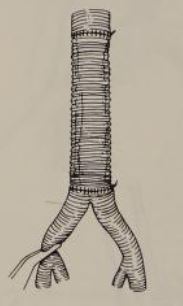
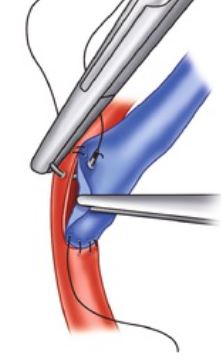
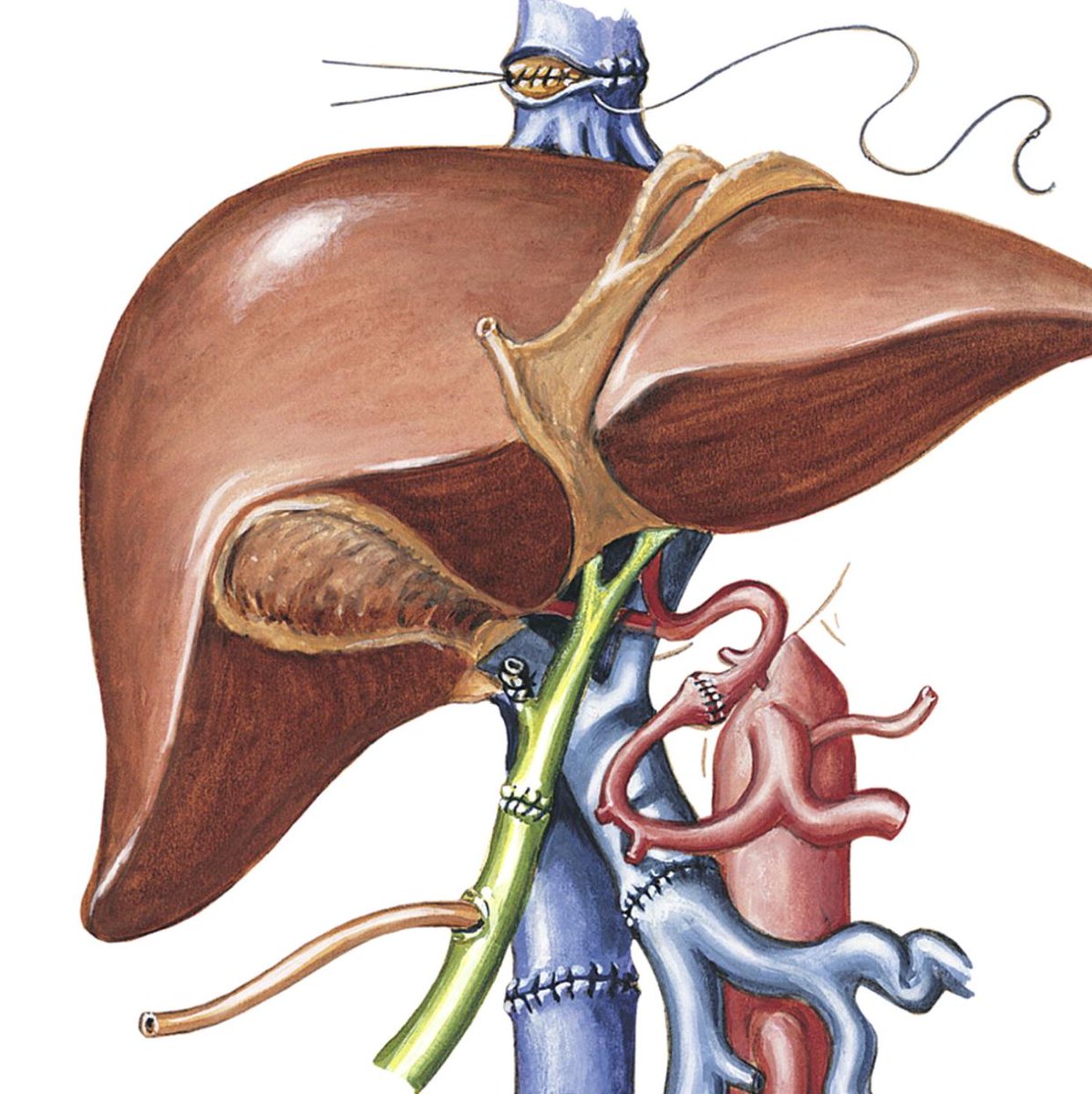
Vascular work is definitely the main area where Prolene is used, but it is also used elsewhere. Some examples follow.
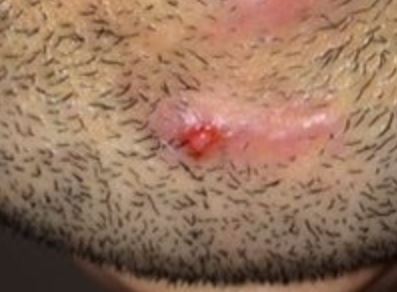
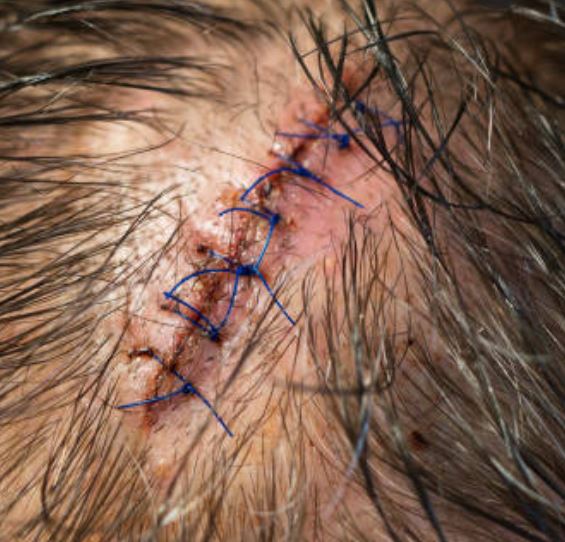
First, Prolene may be used instead of Nylon for laceration repair in people with dark hair. They're blue, and so are easier to find when removing them later.
First, Prolene may be used instead of Nylon for laceration repair in people with dark hair. They're blue, and so are easier to find when removing them later.
Prolene sutures are often used to anchor prosthetic mesh during inguinal or ventral hernia repair.
I can't say I fully understand this one (why not PDS?), as the mesh incorporates anyway, but perhaps part of the thought is that the mesh is often polypropylene anyway.
I can't say I fully understand this one (why not PDS?), as the mesh incorporates anyway, but perhaps part of the thought is that the mesh is often polypropylene anyway.
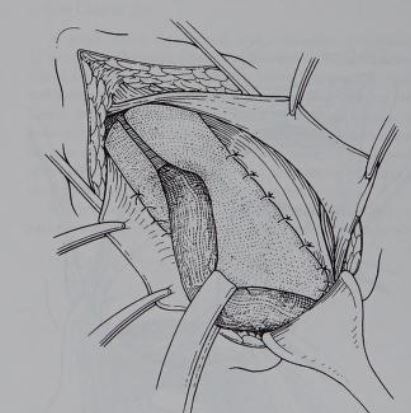
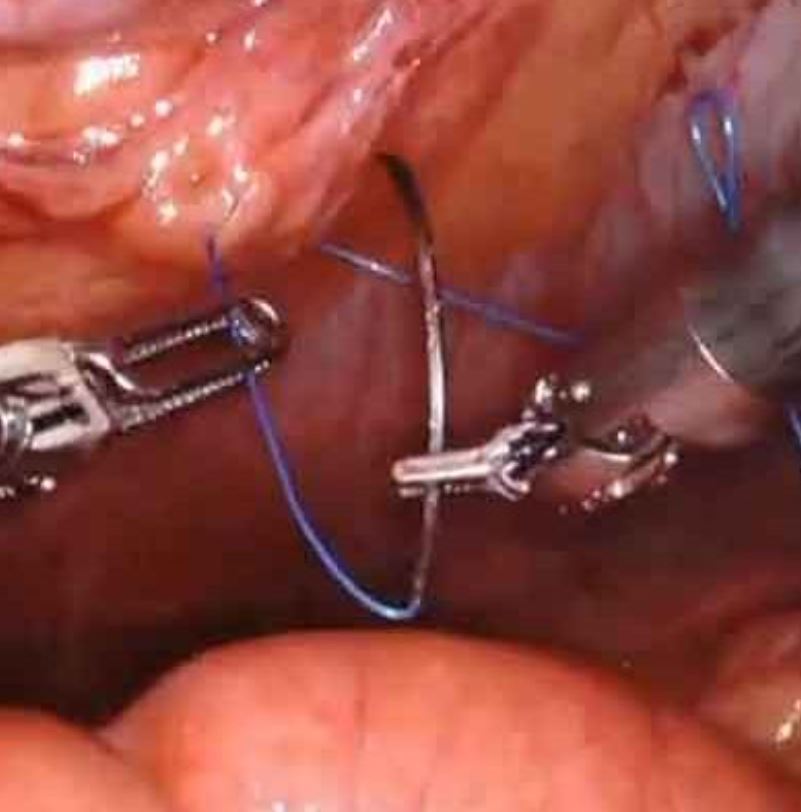
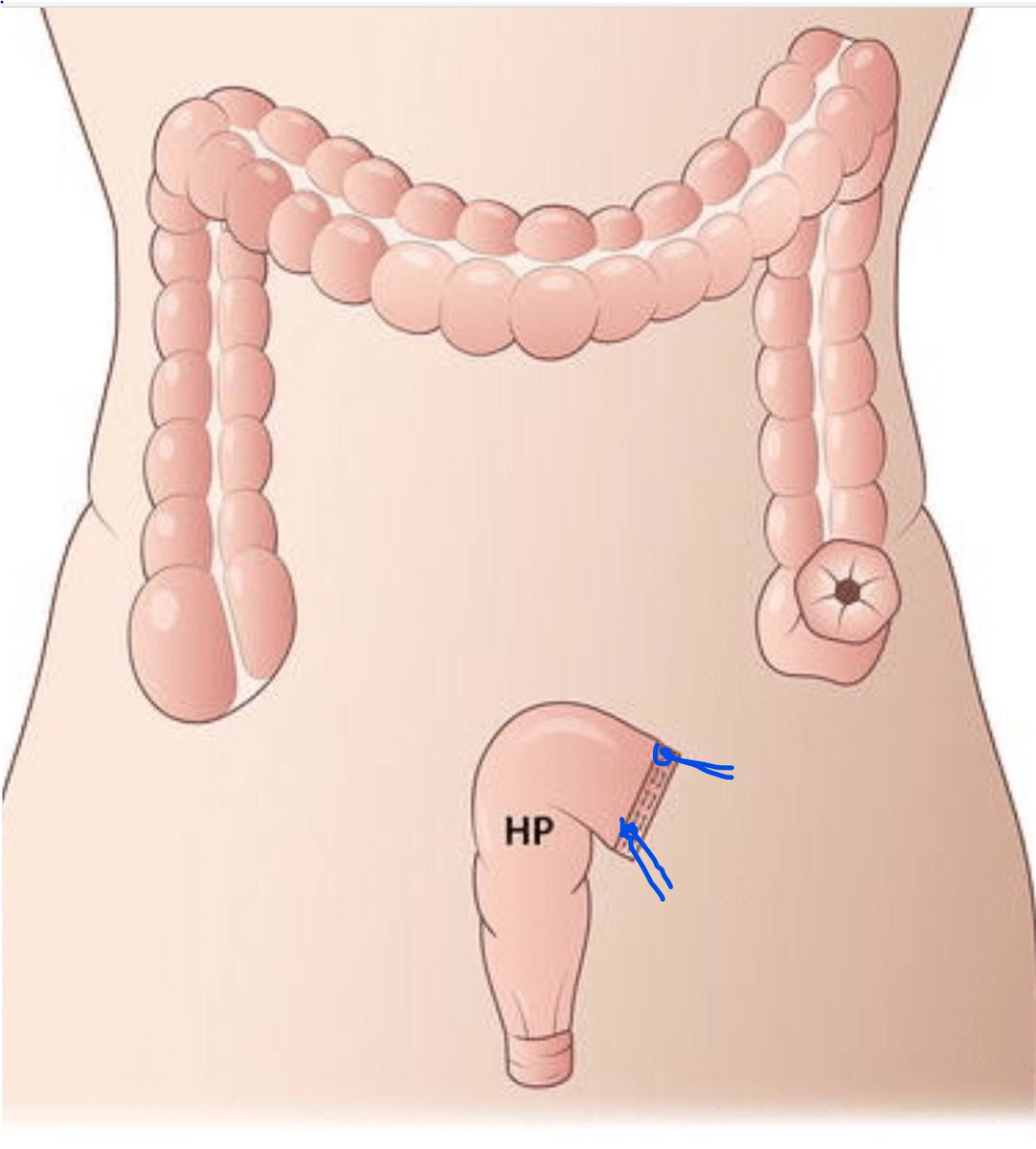
When doing a Hartmann procedure (sigmoid colectomy/colostomy), Prolene sutures are often used to 'mark' the pouch so that it is easier to find when going back later on to do the colostomy reversal.
Prolene sutures have been used in running subcuticular closure. The thought is that this may decrease wound infection.
The downside is that you then have to go and remove the suture later on. The suture slides out easily because it does not incorporate into the tissue.
The downside is that you then have to go and remove the suture later on. The suture slides out easily because it does not incorporate into the tissue.
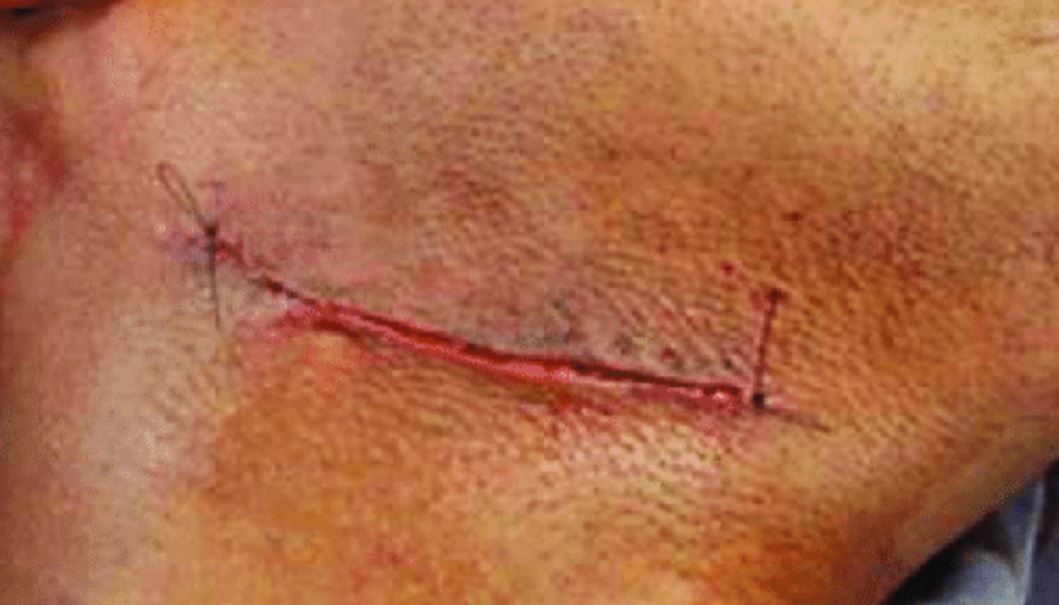
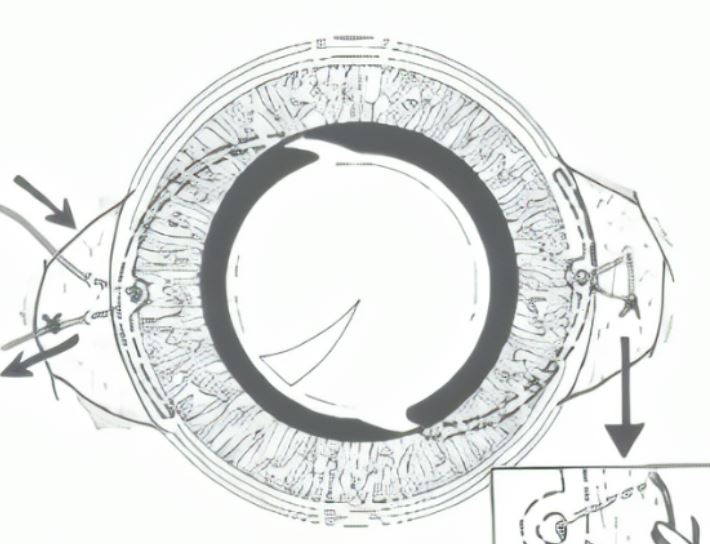
The smallest size (10-0) Prolene is used in ophthalmology.
Because using an actual photograph of eyeball suturing would undoubtedly get a 'sensitive content' label, I'll show a generic photo instead here.
Because using an actual photograph of eyeball suturing would undoubtedly get a 'sensitive content' label, I'll show a generic photo instead here.
Link to thread on PDS:
Link to thread on silk suture:
Link to thread on chromic suture:
Loading suggestions...