
The most ambitious production of the early Indian press.
Haft Qulzum [The Seven Seas. Dictionary & Grammar of the Persian language], Lucknow, 1822.
With 28000 entries, it was compiled and printed on the orders of the first King of Oudh and last Nawab, Ghaziuddin Haidar. 1/
Haft Qulzum [The Seven Seas. Dictionary & Grammar of the Persian language], Lucknow, 1822.
With 28000 entries, it was compiled and printed on the orders of the first King of Oudh and last Nawab, Ghaziuddin Haidar. 1/
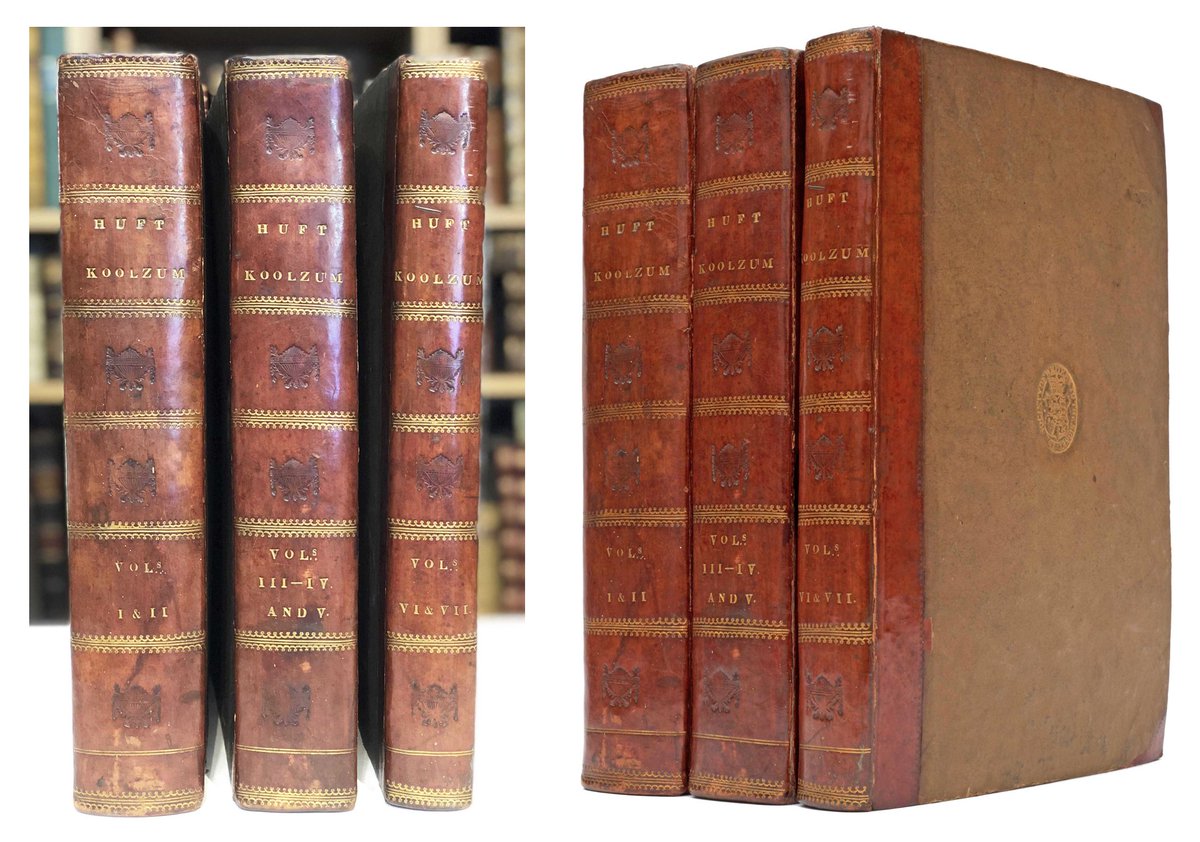
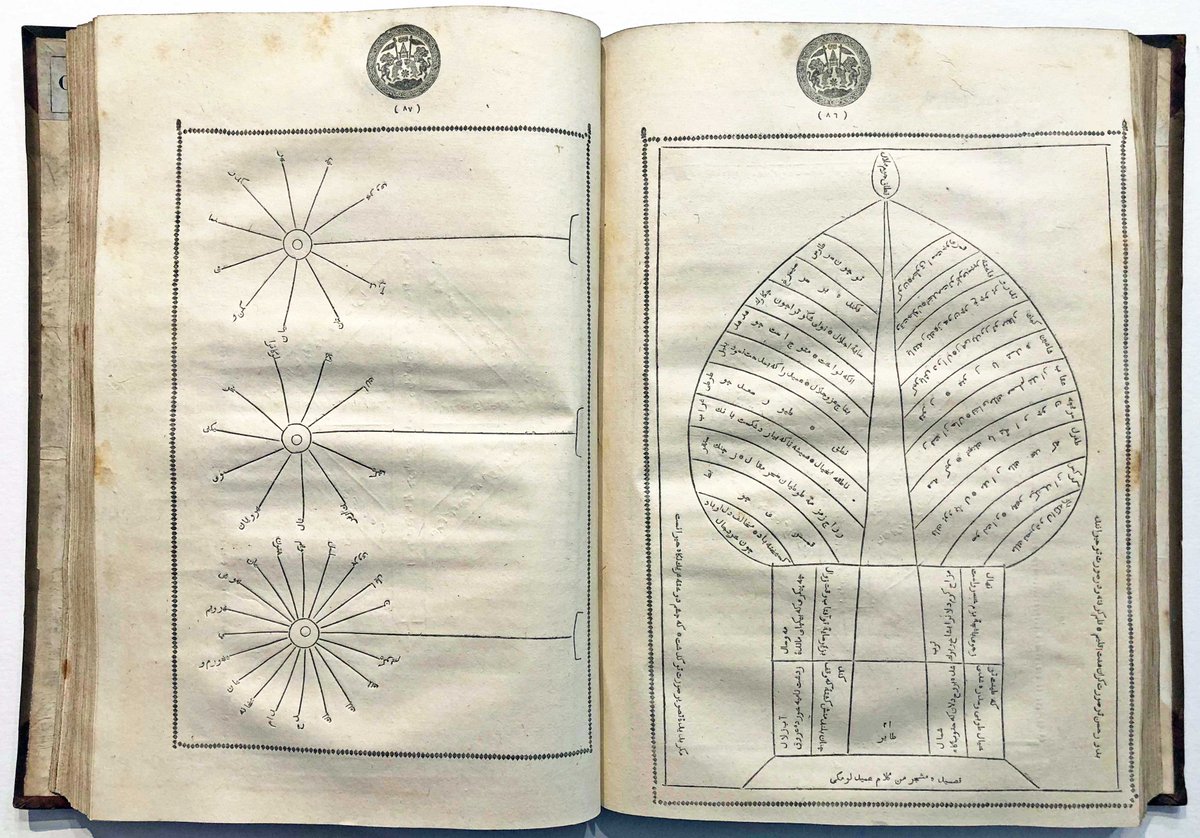
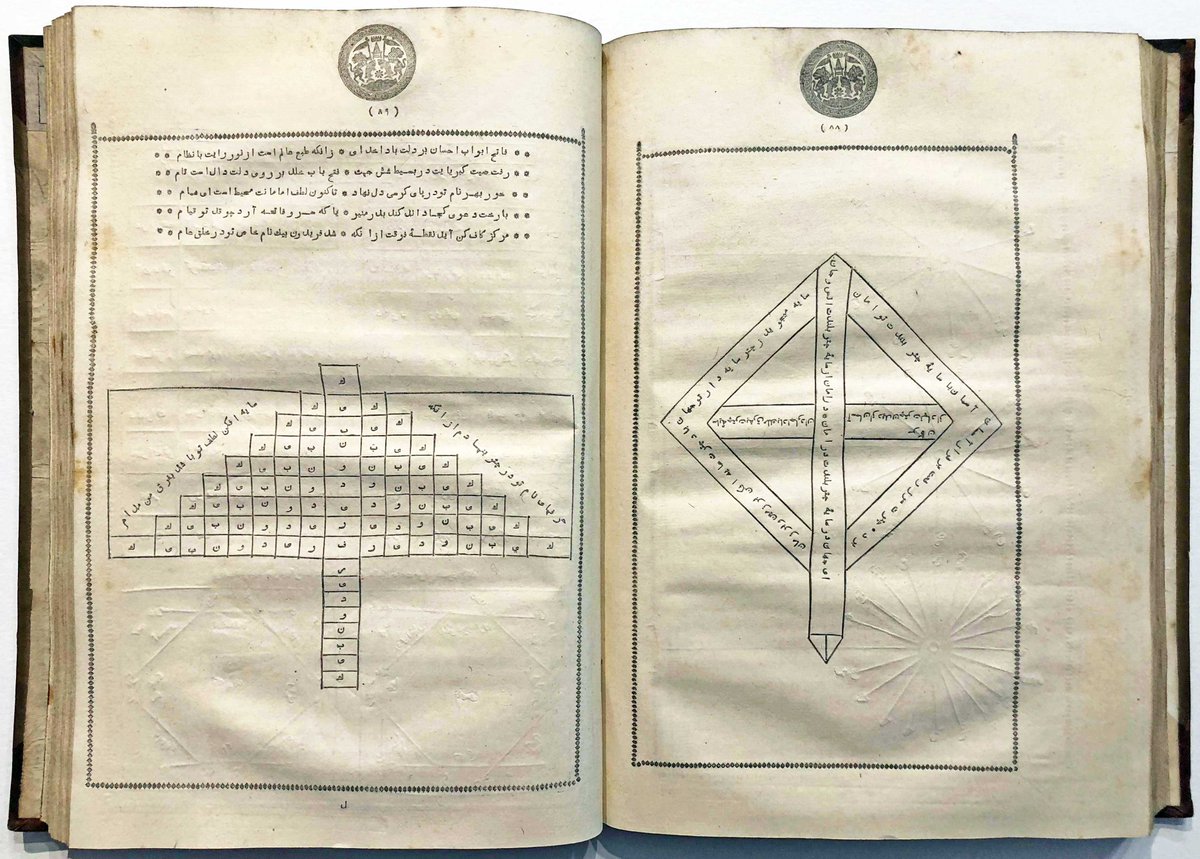
A magnificent work, the Haft Qulzum represents the last flowering of Persian culture under the patronage of the royal court of Oudh. The work is masterfully type-set throughout and was produced before the press switched to the newer technology of lithography around 1830. 2/
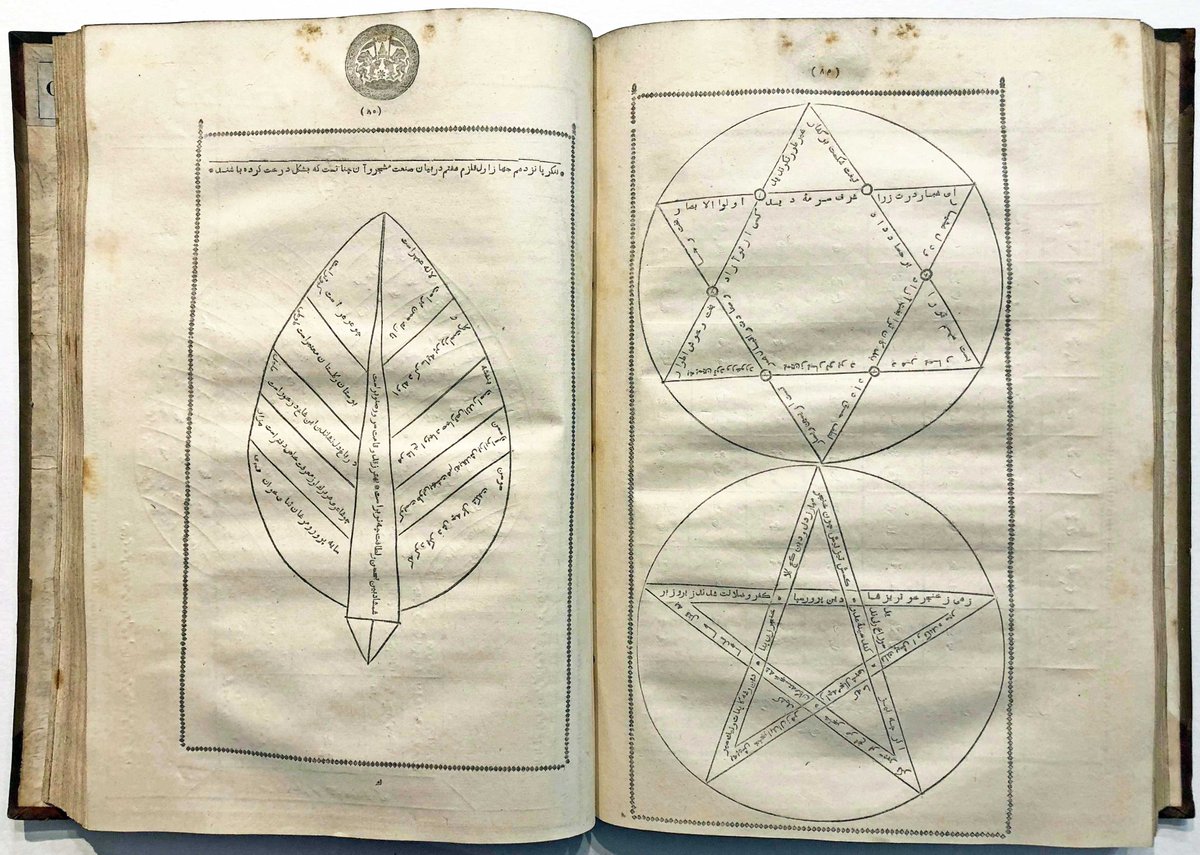
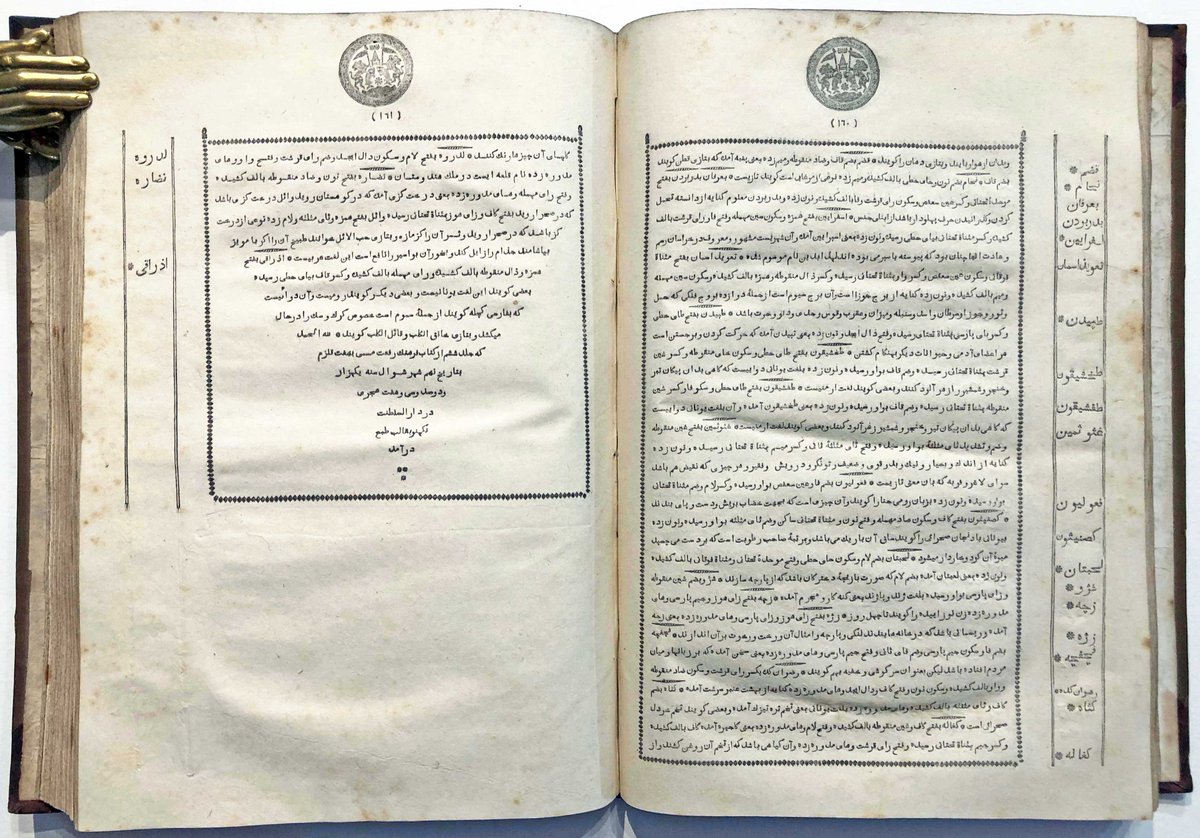
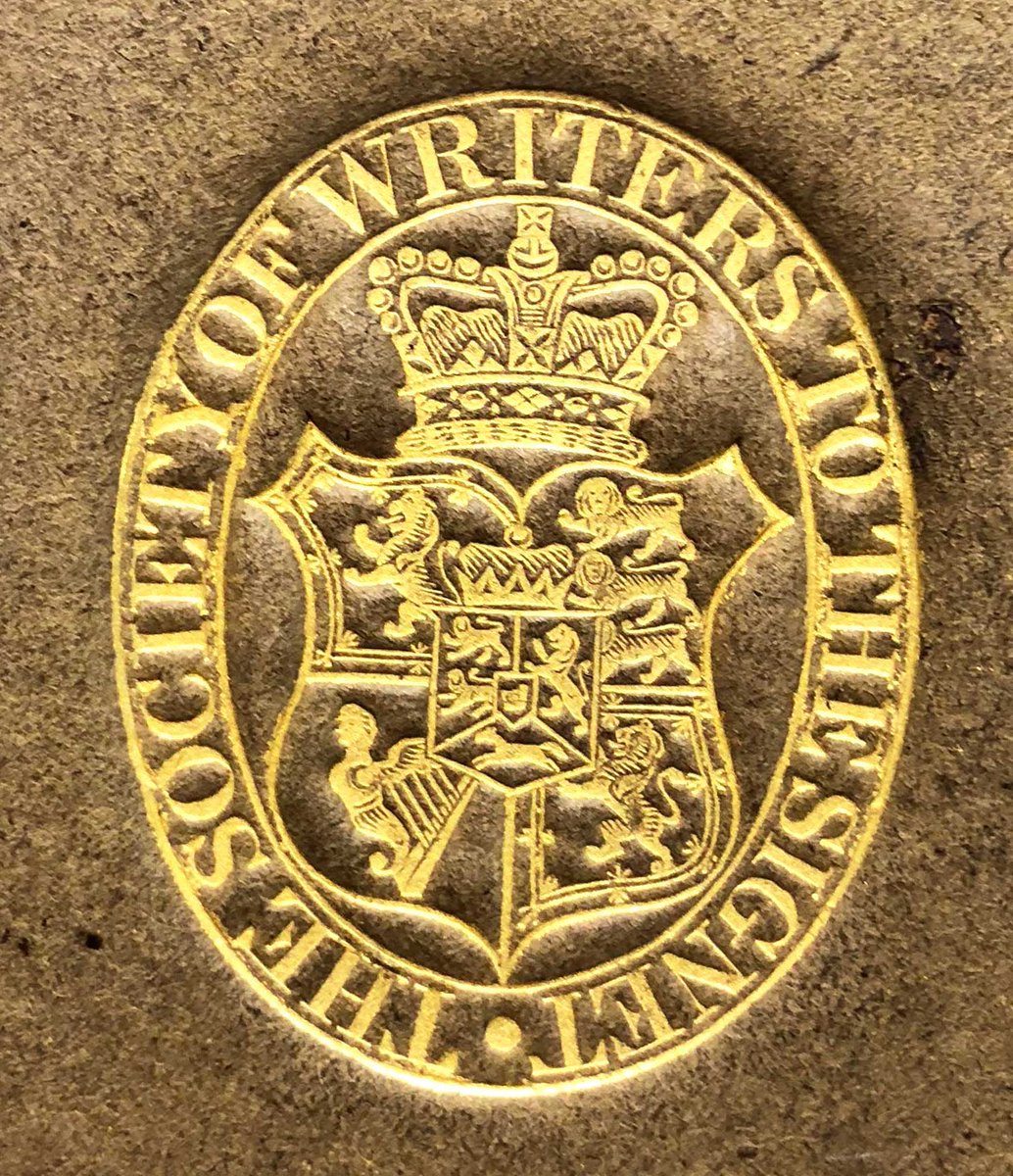
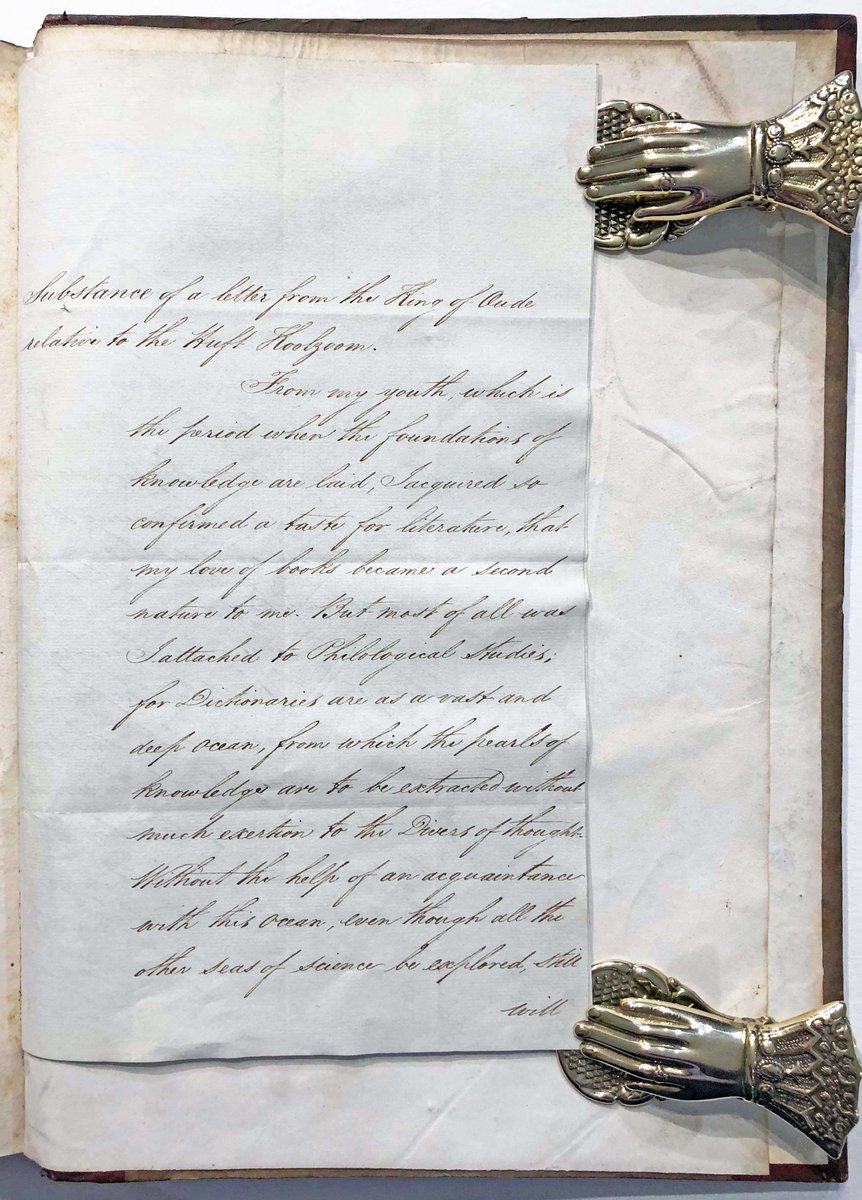
This copy was presented by George Swinton, Chief Sec. to the Gov. of Bengal, to the Signet Library and has the Library’s arms gilt-stamped on the boards. Tipped in is a contemporary 4-page ms with the “substance of a letter from the King of Oude relative to the Huft Koolzoom”. 3/
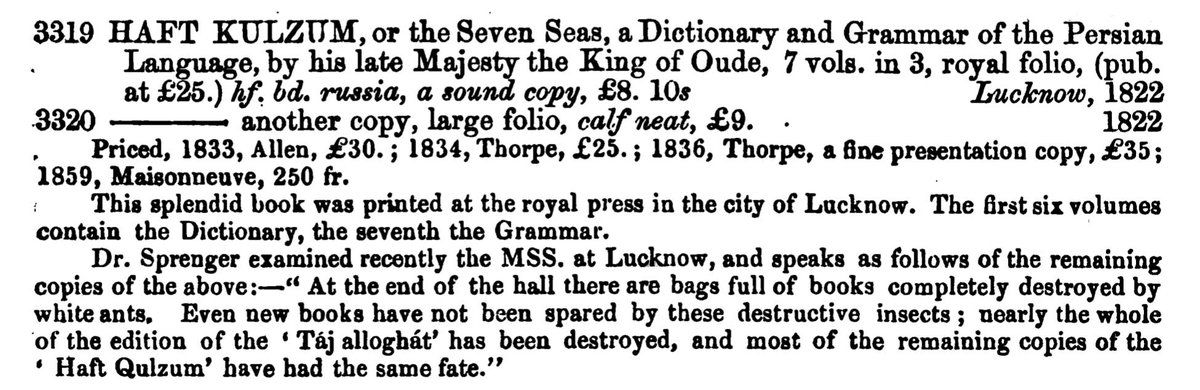
This is the listing for the book in Quaritch's General Catalogue of 1860 - interesting both for the reference to the destruction of many copies by white ants, and also as a reminder of the extraordinary range of rare books from every corner of the globe that @Quaritch sold. 4/
The manuscript note tipped into the first volume describes the King's lifelong fascination with literature, and particularly lexicography. He describes dictionaries as “a vast and deep ocean, from which the pearls of knowledge are to be extracted without much exertion...” 5/
He goes on to say “Because water is the ruling principle of all life according to the verse in the Coran “I have made of water all things that have life” so that water is the fundamental principle of animated nature, I have named this work, the Huft Koolzoom or Seven Seas.” 6/
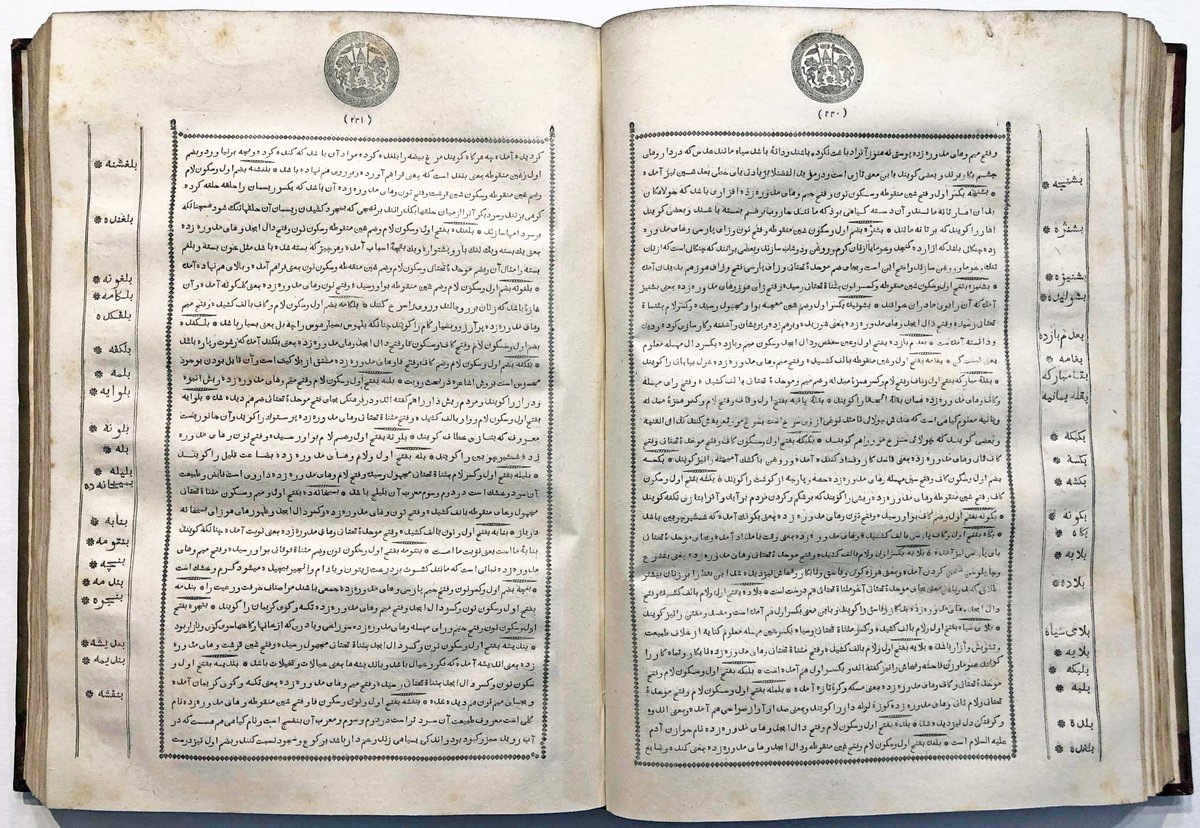
This magnificent dictionary is undoubtedly the finest product of the Lucknow Matba’e Sultani, one of the earliest private royal presses in India, established by Ghaziuddin Haider, Nawab of Oudh, in 1817. 7/
Loading suggestions...