
Mánu was the institutor of sacrifice (yajñá).
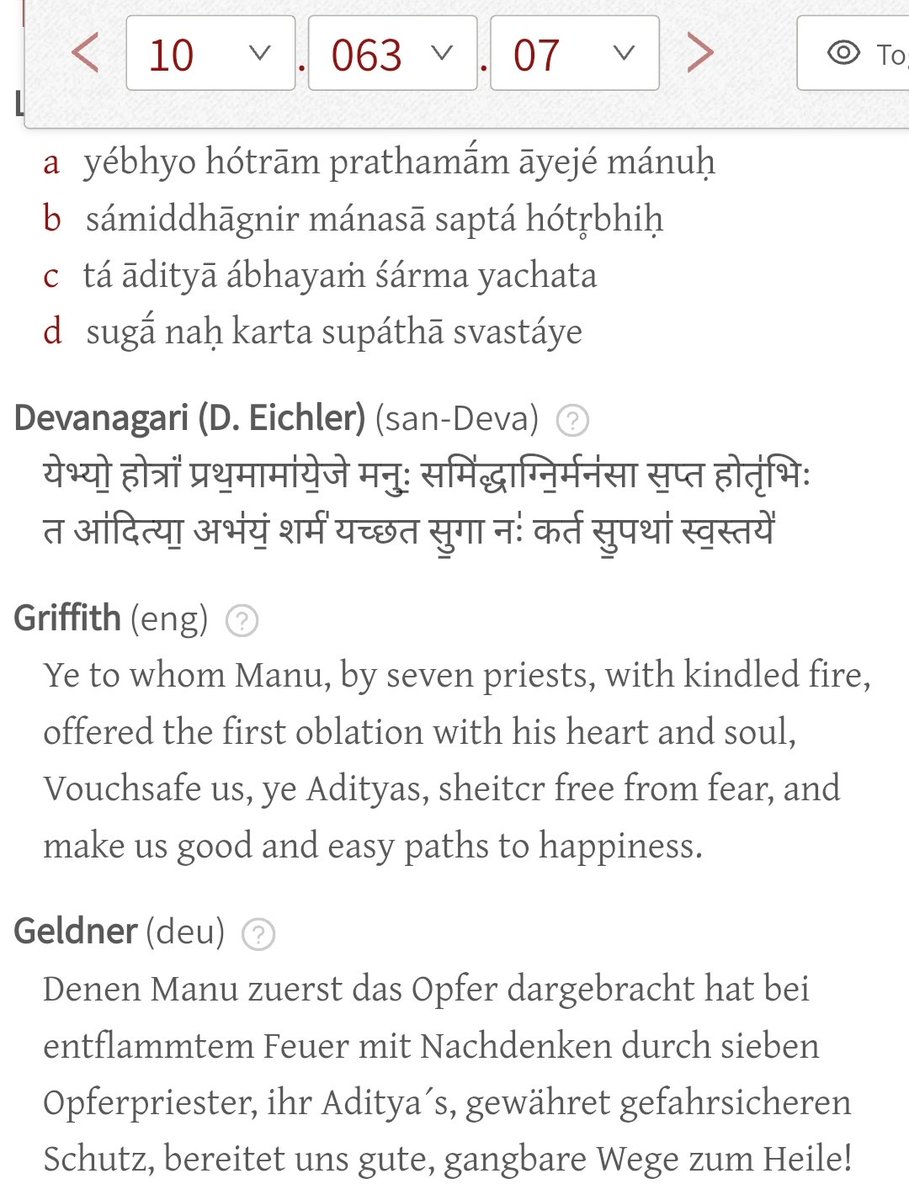
For when he had kindled the fire, he presented the first offering with the seven priests to the gods (होत्रां॑ प्रथ॒माम् आ॑ये॒जे मनुः॒ समि॑द्धाग्नि॒र् मन॑सा स॒प्त होतृ॑भिः).
For when he had kindled the fire, he presented the first offering with the seven priests to the gods (होत्रां॑ प्रथ॒माम् आ॑ये॒जे मनुः॒ समि॑द्धाग्नि॒र् मन॑सा स॒प्त होतृ॑भिः).
The sacrifice of Mánu is the prototype of the present sacrifice.
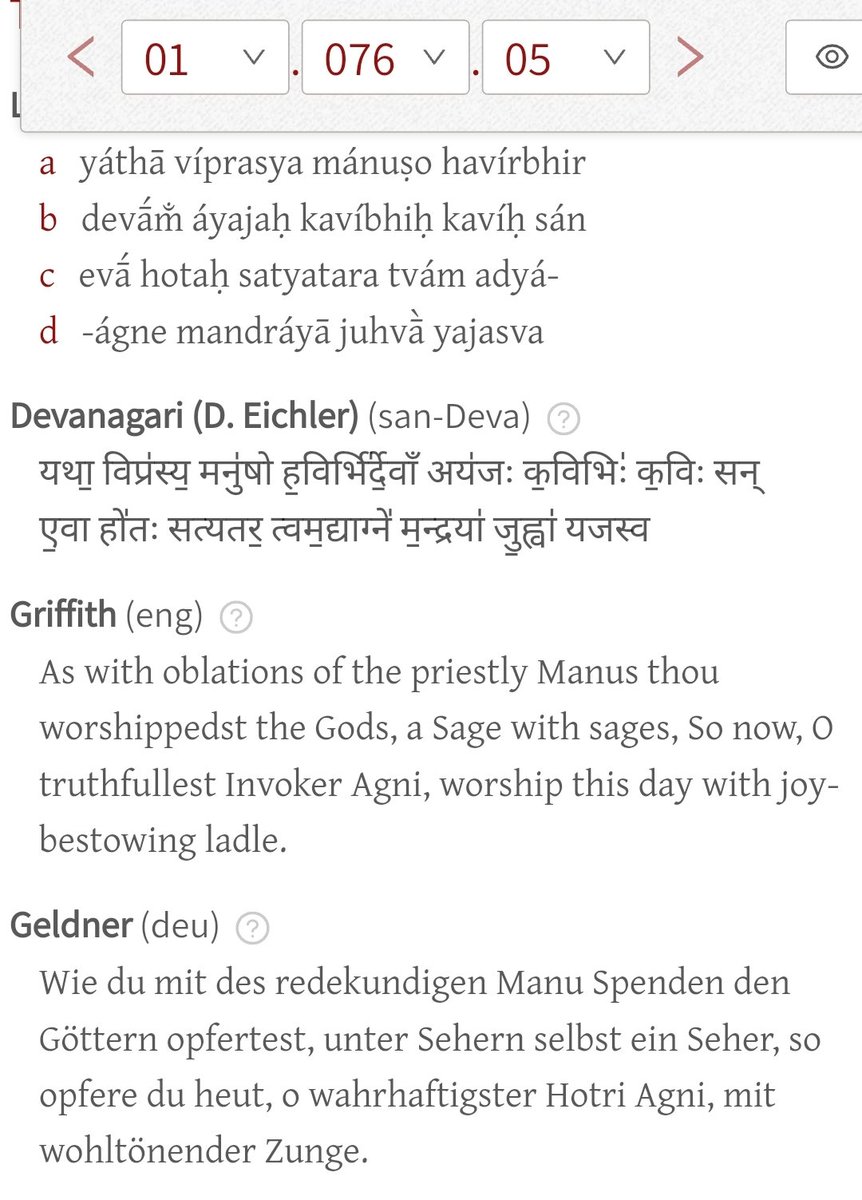
For the latter is compared to the sacrifice that Mánu offered to the gods (यथा॒ ... दे॒वाँ अय॑जः ... ए॒वा हो॑तः ... जु॒ह्वा॑ यजस्व)
Such comparisons are often made with the adverb manuṣvát "like Mánu".
For the latter is compared to the sacrifice that Mánu offered to the gods (यथा॒ ... दे॒वाँ अय॑जः ... ए॒वा हो॑तः ... जु॒ह्वा॑ यजस्व)
Such comparisons are often made with the adverb manuṣvát "like Mánu".
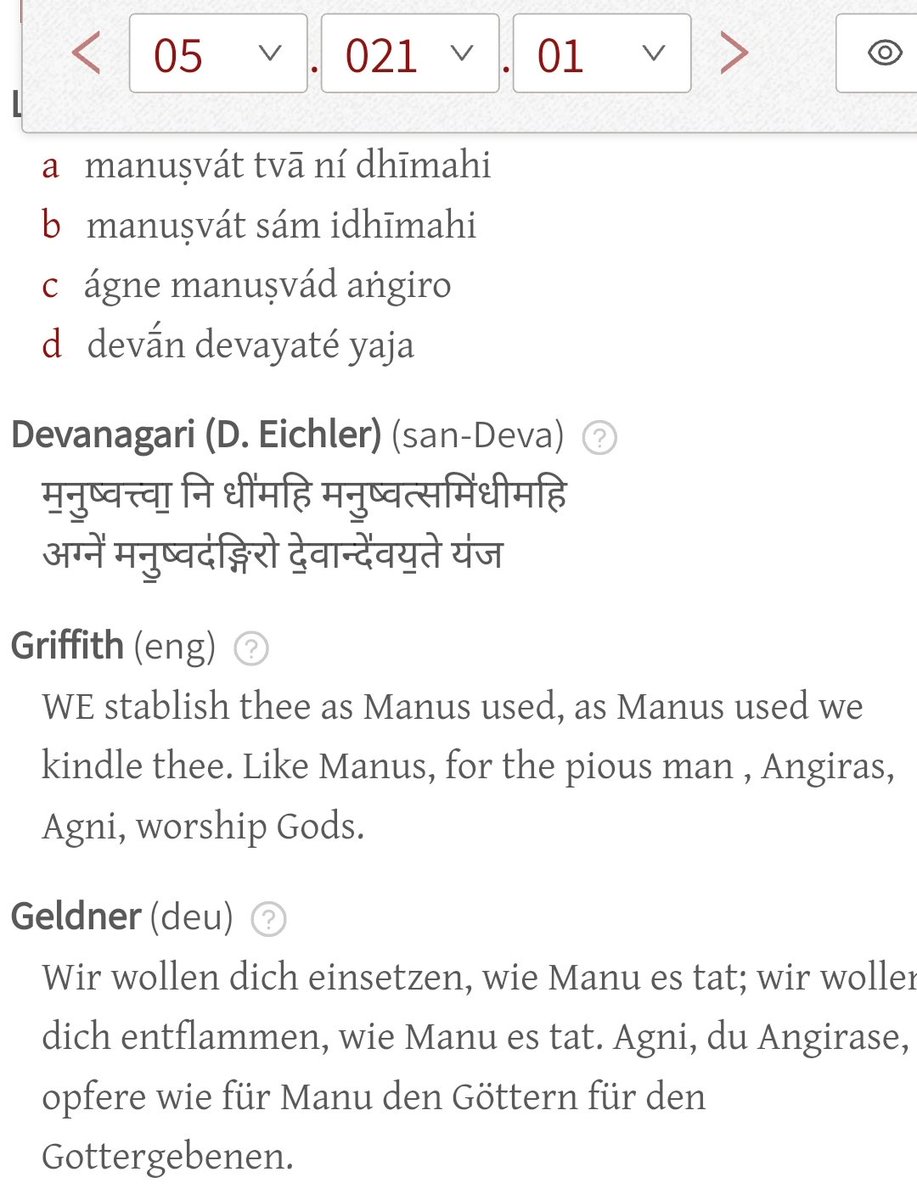
⧐ Worshippers kindle Agní like Mánu
did (मनु॒ष्वत् समि॑धीमहि).
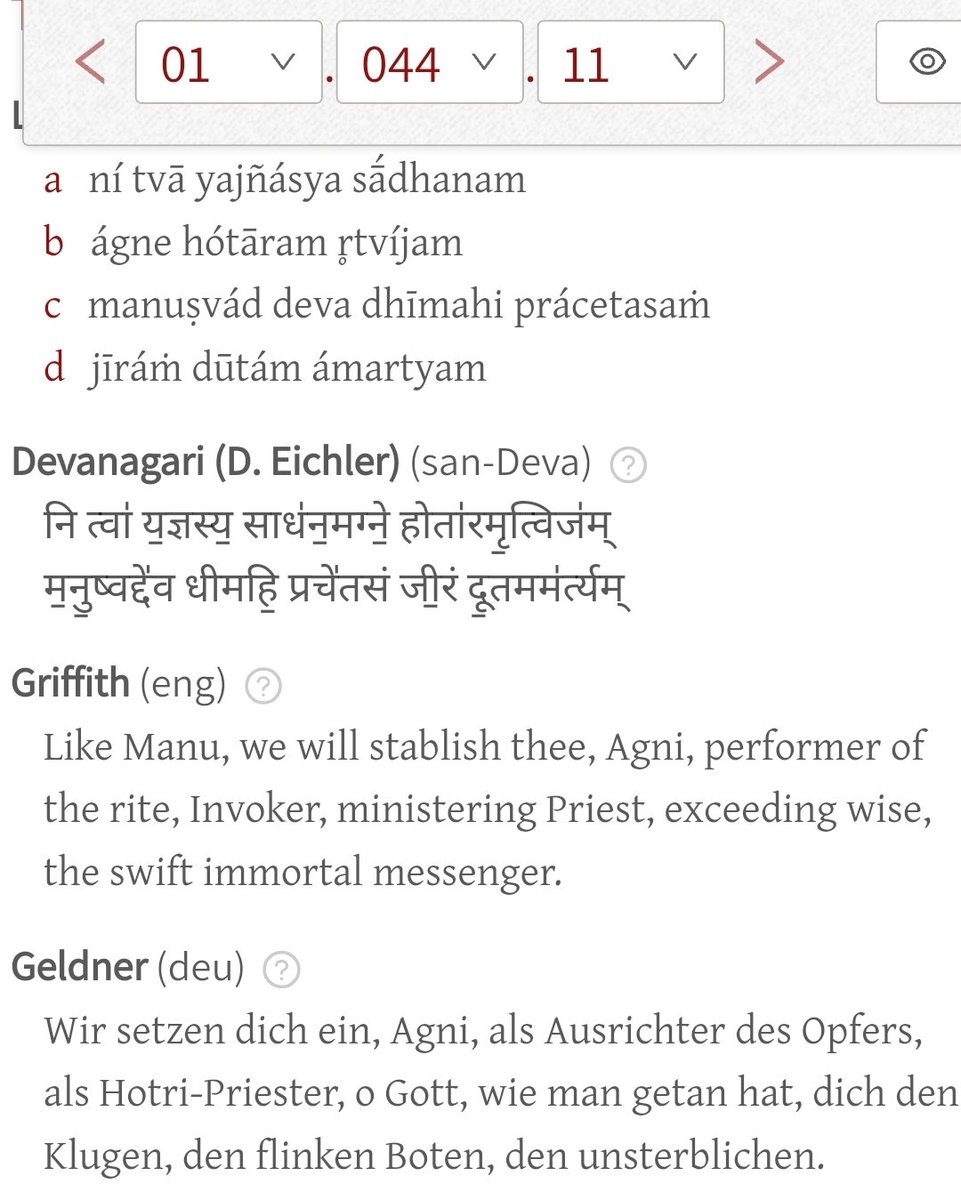
⧐ They make Agní the accomplisher of sacrifer, as Mánu did (नि त्वा॑ य॒ज्ञस्य॒ साध॑न॒म् अग्ने॒ ... म॒नु॒ष्वद् दे॑व धीमहि॒).
⧐ Like Mánu, they invoke Agní who was kindled by Mánu ..
did (मनु॒ष्वत् समि॑धीमहि).
⧐ They make Agní the accomplisher of sacrifer, as Mánu did (नि त्वा॑ य॒ज्ञस्य॒ साध॑न॒म् अग्ने॒ ... म॒नु॒ष्वद् दे॑व धीमहि॒).
⧐ Like Mánu, they invoke Agní who was kindled by Mánu ..
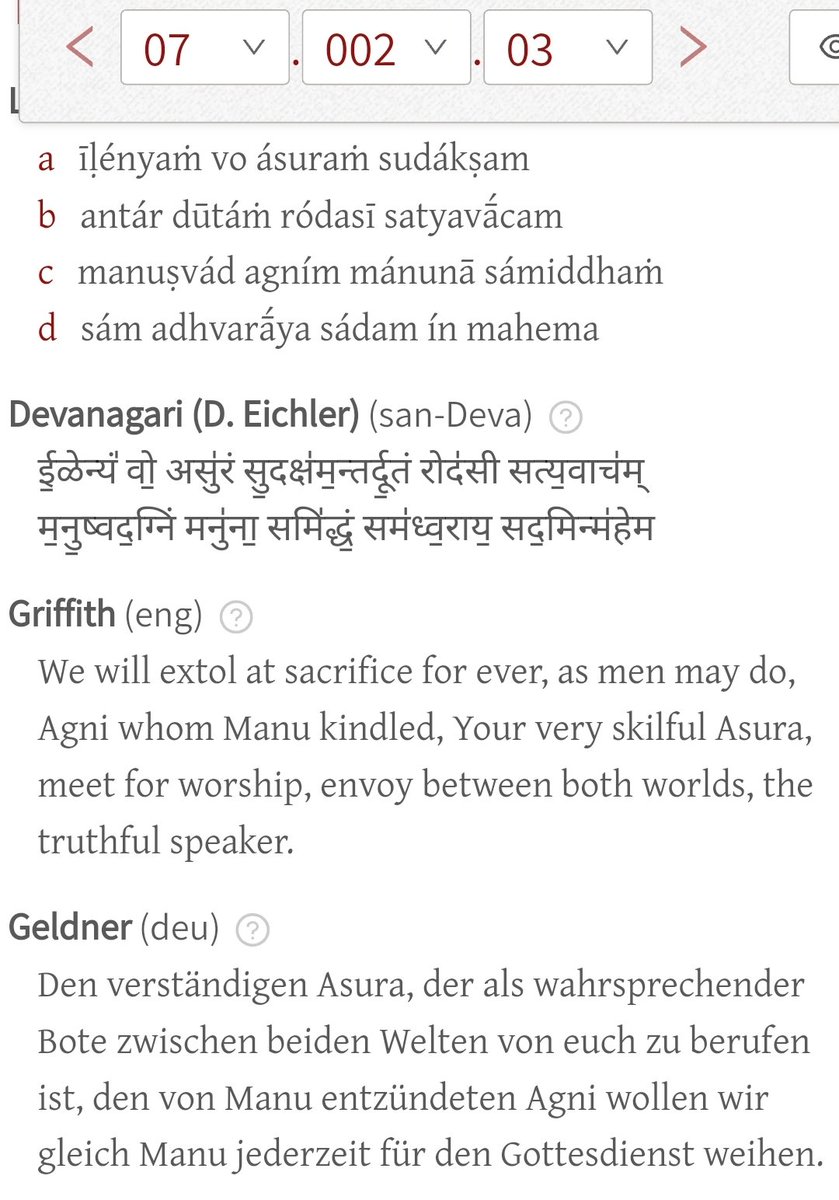
.. (म॒नु॒ष्वद॒ग्निं मनु॑ना॒ समि॑द्धं॒ ... म॑हेम).
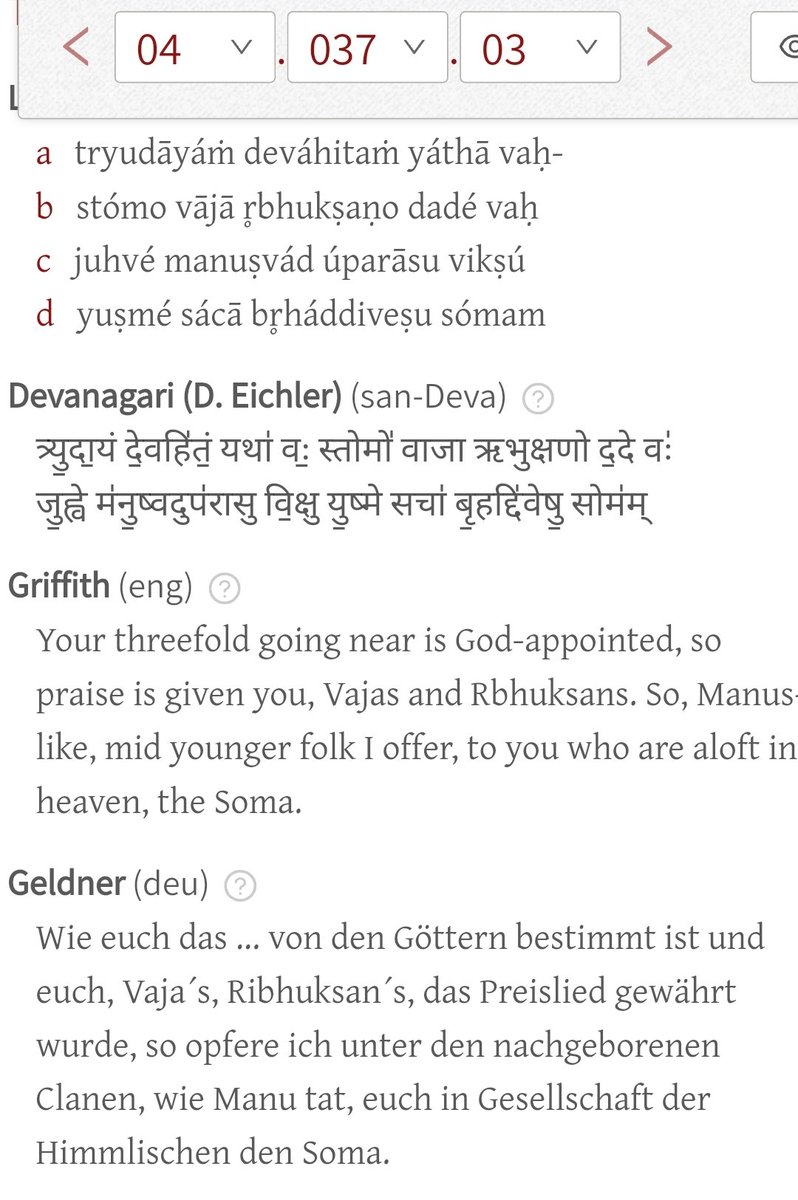
⧐ They offer Sóma as Mánu did (जु॒ह्वे म॑नु॒ष्वद् ... सोम॑म्).
⧐ Sóma is prayed to flow as he once flowed for Mánu (यथा॒ अप॑वथा॒ मन॑वे वयो॒धा ... ए॒वा प॑वस्व॒ द्रवि॑णं॒ दधा॑न॒).
⧐ They offer Sóma as Mánu did (जु॒ह्वे म॑नु॒ष्वद् ... सोम॑म्).
⧐ Sóma is prayed to flow as he once flowed for Mánu (यथा॒ अप॑वथा॒ मन॑वे वयो॒धा ... ए॒वा प॑वस्व॒ द्रवि॑णं॒ दधा॑न॒).
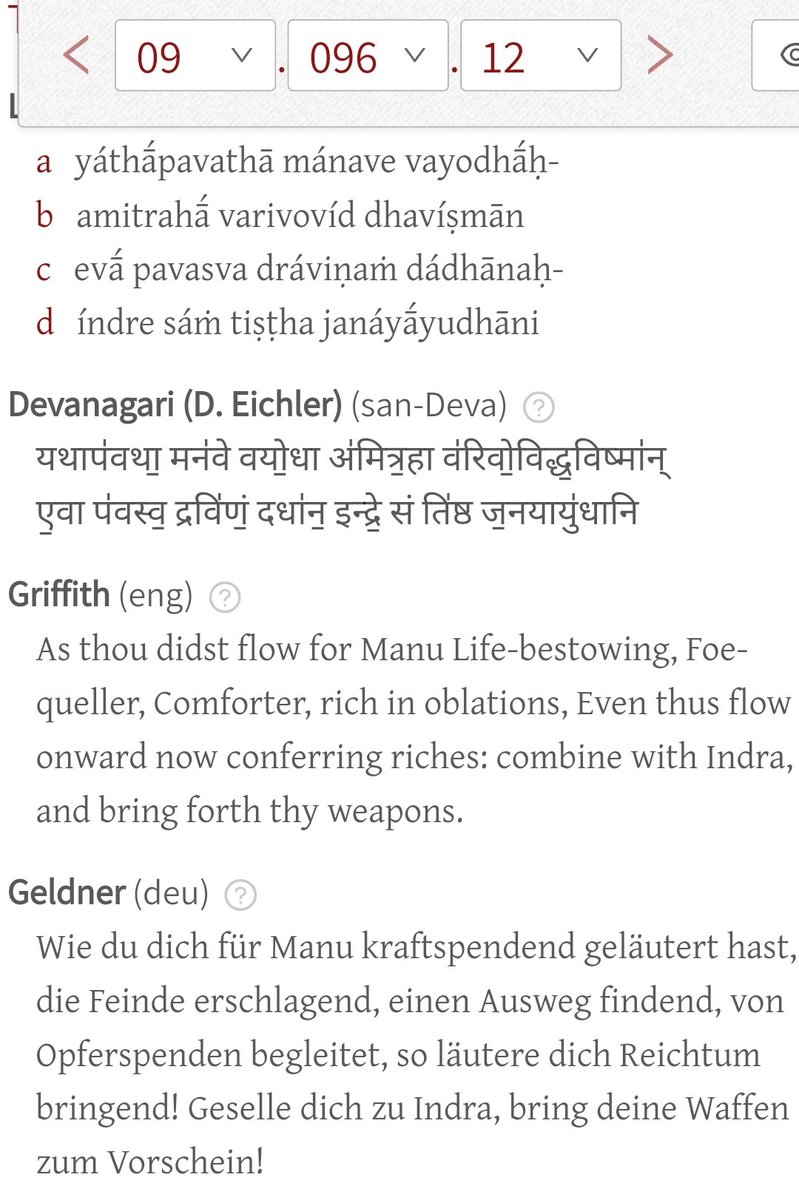
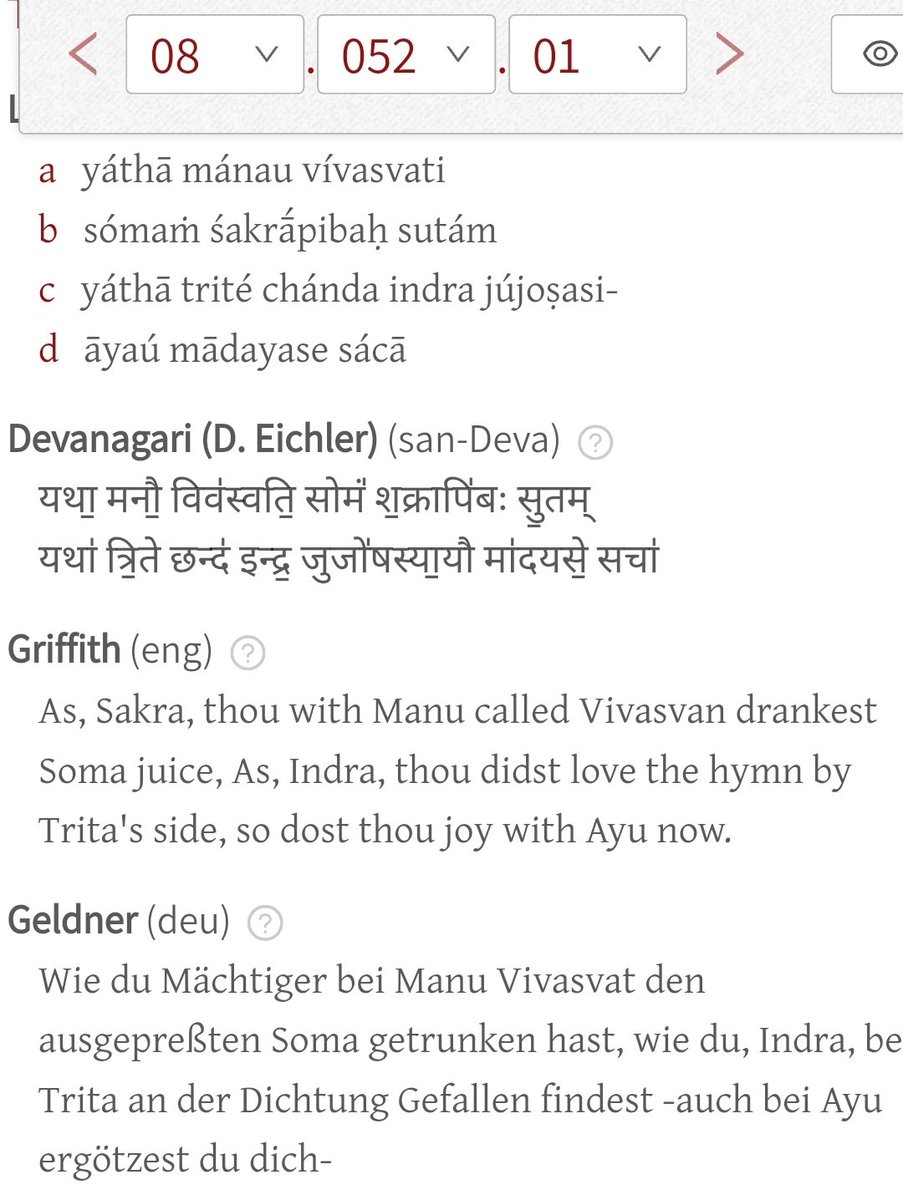
Índra himself is said to have drunk Sóma beside Mánu (यथा॒ मनौ॒ विव॑स्वति॒ सोमं॑ श॒क्रापि॑बः सु॒तम्), and to have drunk the Sóma of Mánu, three lakes, to strengthen himself for the Vṛtrá-fight (त्री सा॒कम् इन्द्रो॒ मनु॑षः॒ सरां॑सि सु॒तं पि॑बद् वृत्र॒हत्या॑य॒ सोम॑म्).
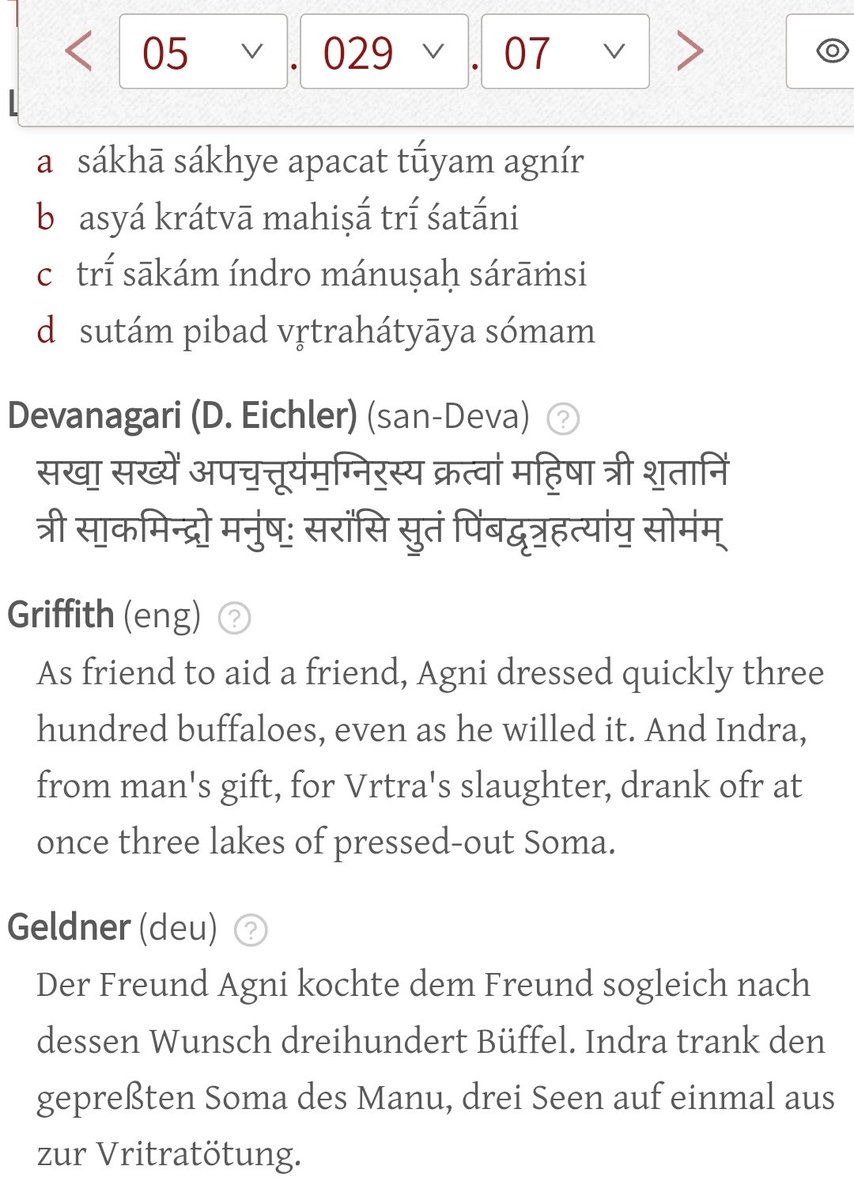
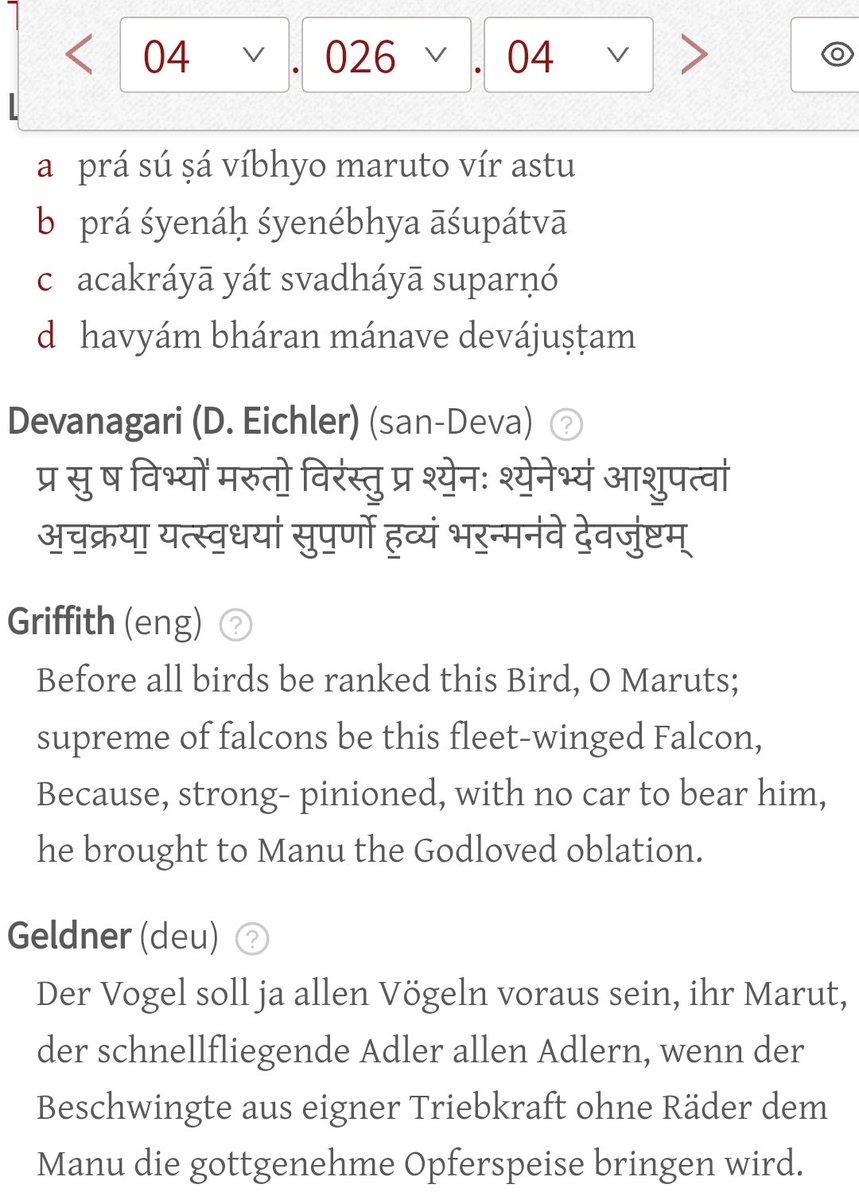
Sóma is said to have been brought to Mánu by the bird (सुप॒र्णो ह॒व्यं भर॒न्मन॑वे दे॒वजु॑ष्टम्).
Nonetheless, as the appellation Mánu or Mánus is often used in the sense of "man", there's sometimes an uncertainty as to when it has the value of a proper name.
Nonetheless, as the appellation Mánu or Mánus is often used in the sense of "man", there's sometimes an uncertainty as to when it has the value of a proper name.
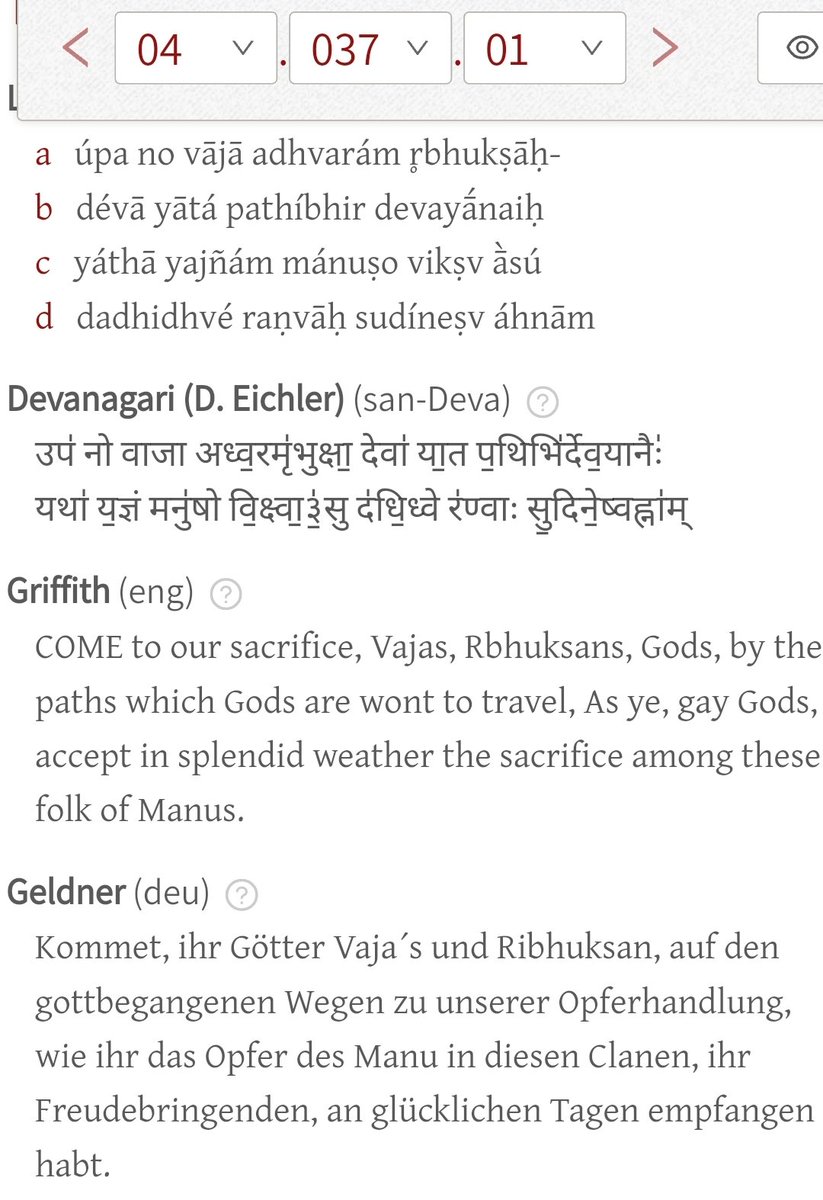
Sacrificers are spoken as the viśaḥ "people" of Mánu (यथा॑ य॒ज्ञं मनु॑षो वि॒क्ष्वा॒३॒॑सु द॑धि॒ध्वे र॑ण्वाः).
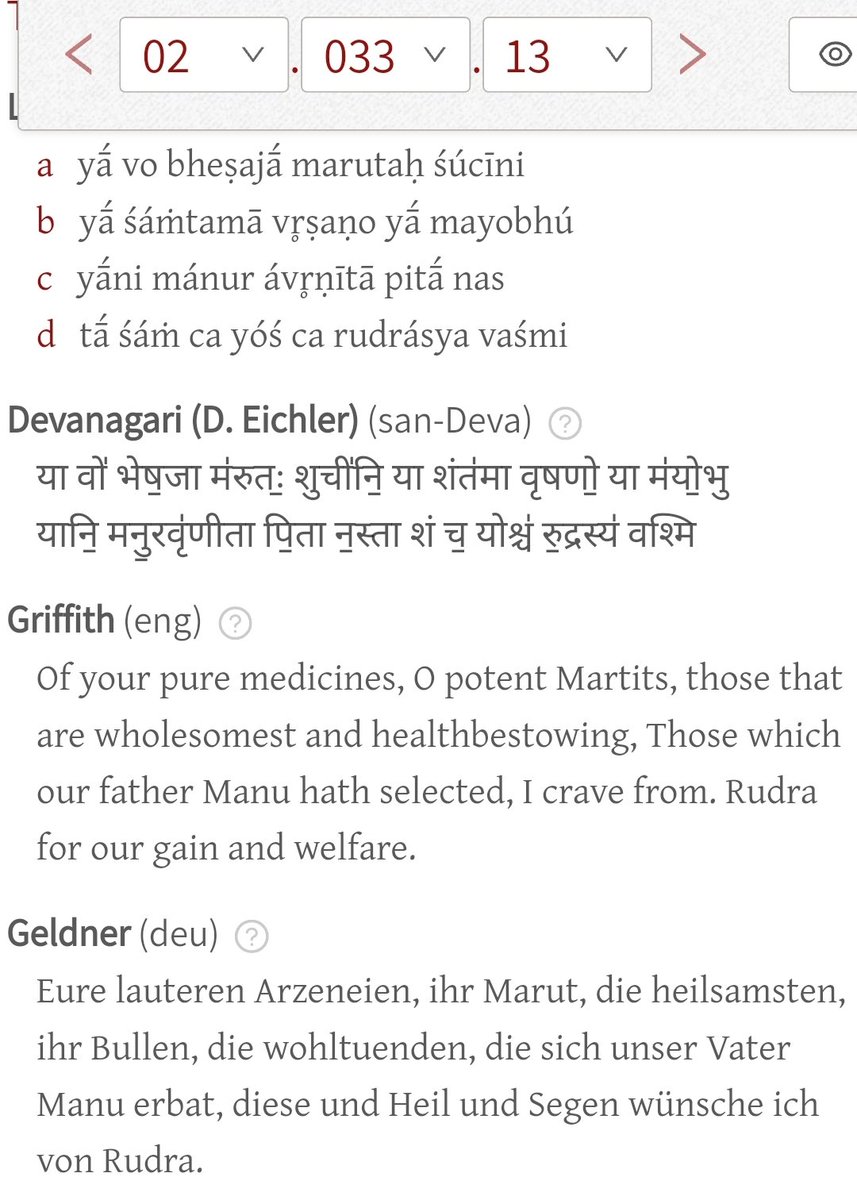
He's sometimes styled as a father, even "our father" (यानि॒ मनु॒र् अवृ॑णीता पि॒ता न॒स्ता).
He's sometimes styled as a father, even "our father" (यानि॒ मनु॒र् अवृ॑णीता पि॒ता न॒स्ता).
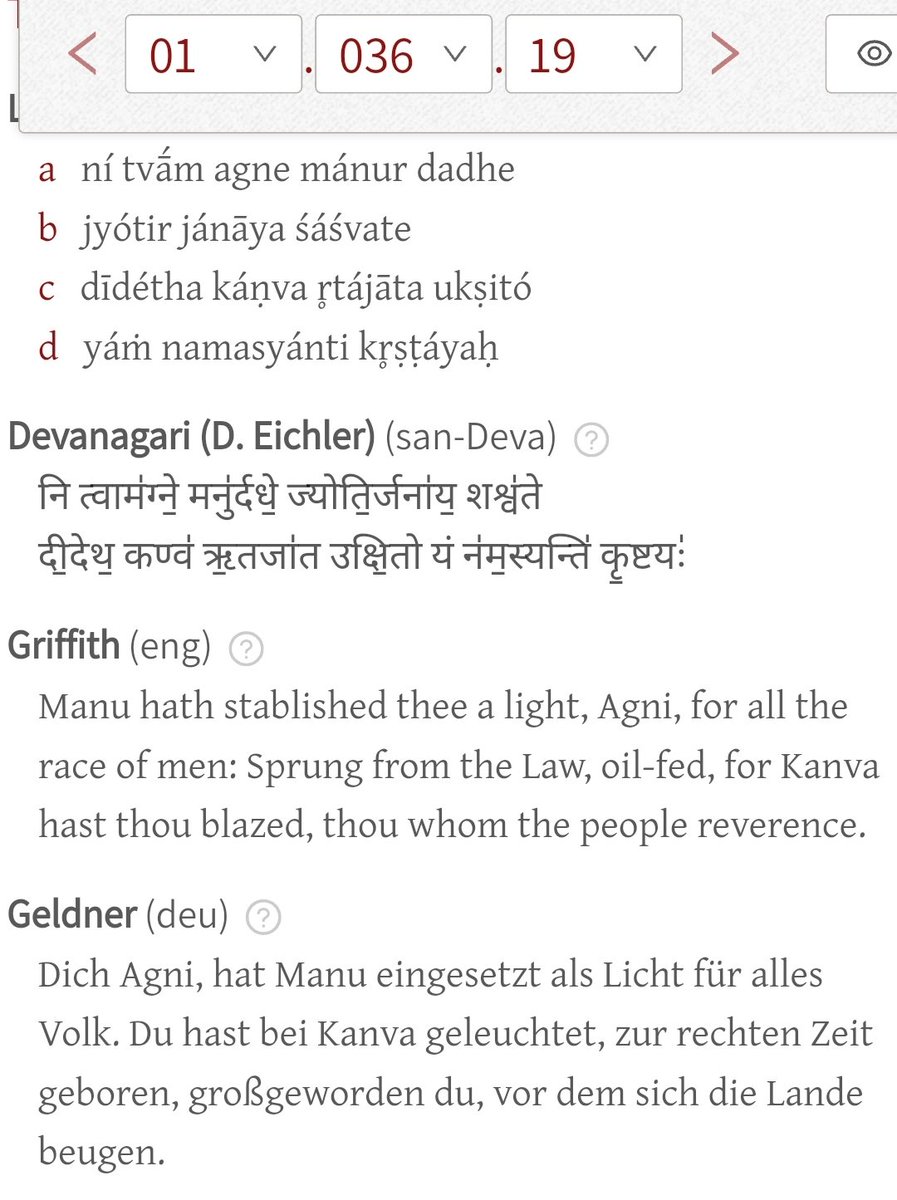
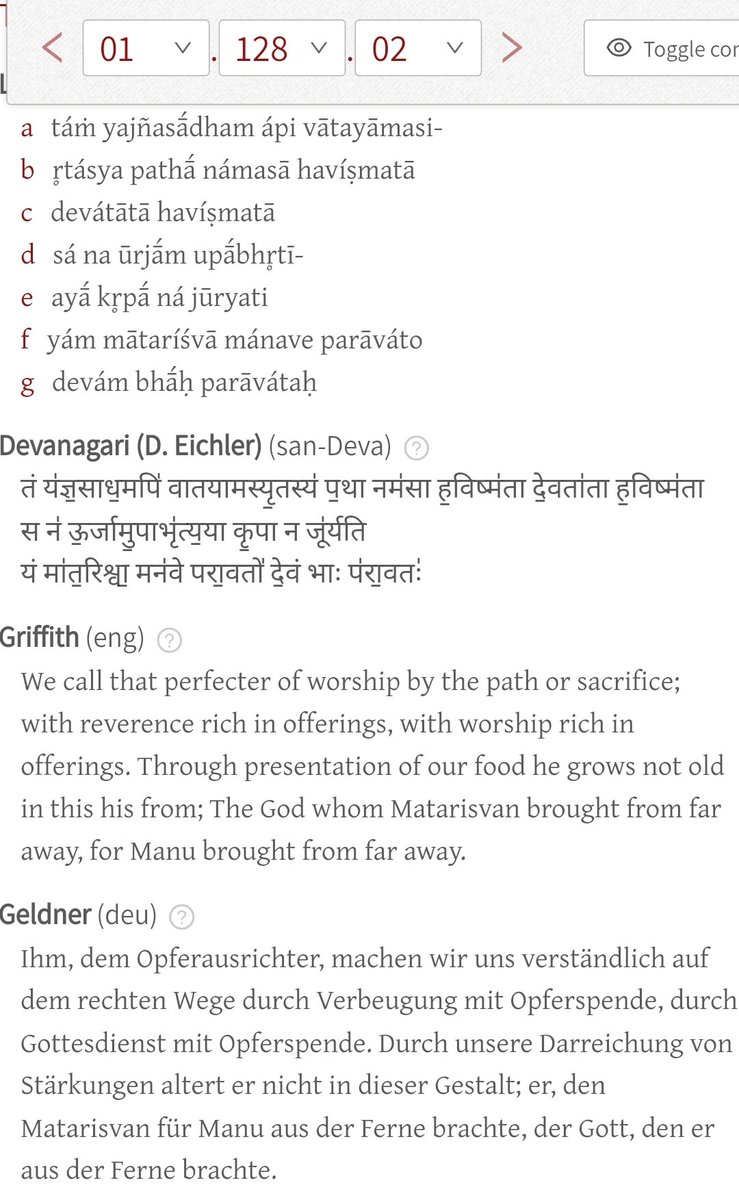
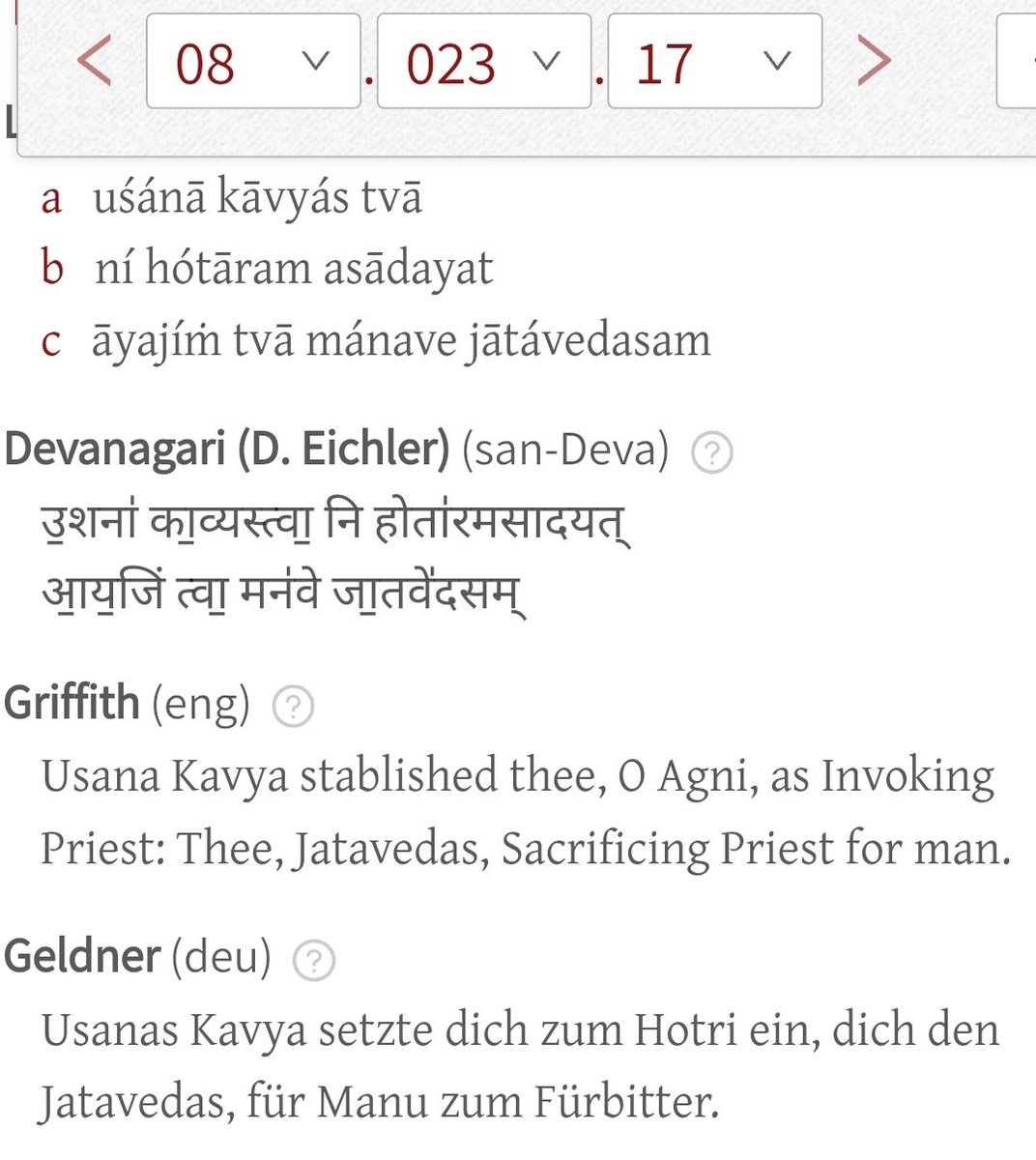
Mánu established Agní as a light for all people (नि त्वाम॑ग्ने॒ मनु॑र् दधे॒ ज्योति॒र् जना॑य॒ शश्व॑ते). But who gave Agní to Mánu? Why, the gods themselves (त्वा॑ दे॒वासो॒ मन॑वे द॒धुर् इ॒ह यजि॑ष्ठं हव्यवाहन); but Mātariśvan and Kāvya Uśanā (an ancient seer, protégé of Índra ..
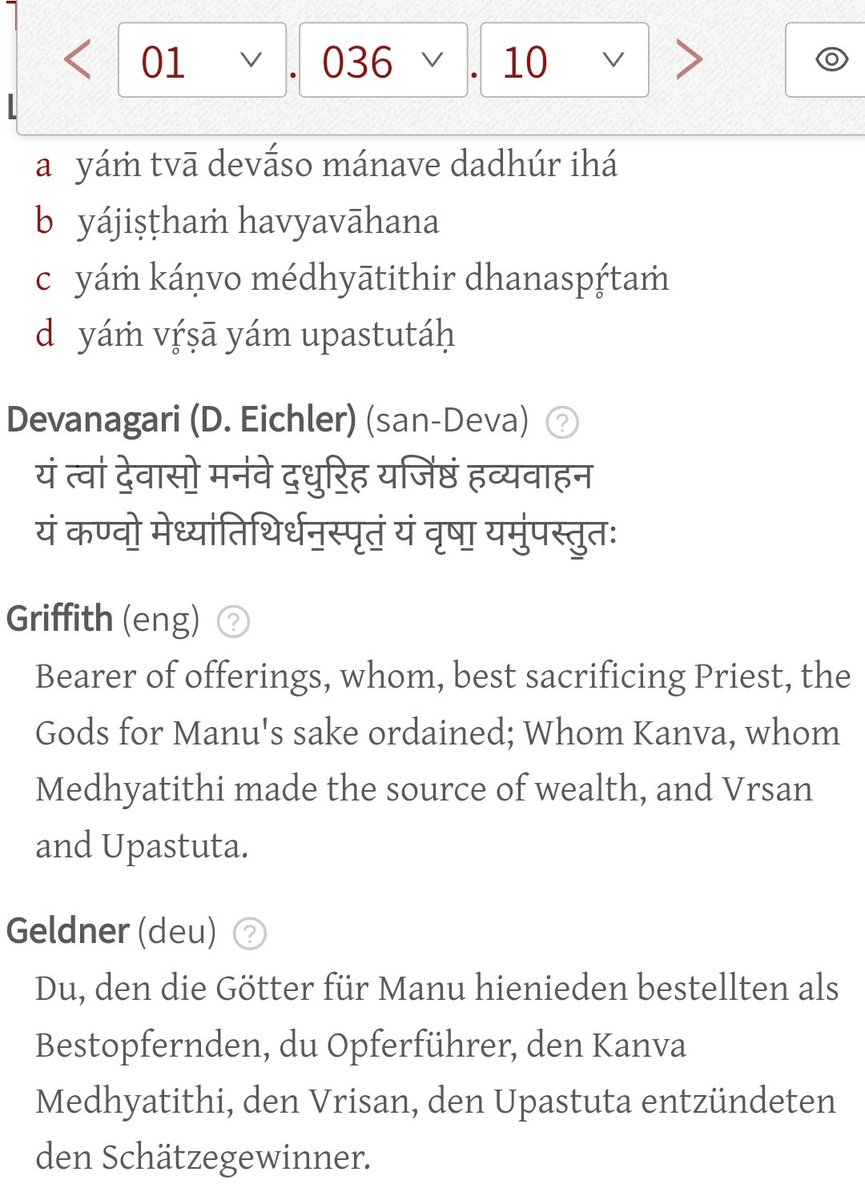
.. who fashioned for him the vájra "bolt" for slaying Vṛ́tra) are also mentioned in the capacity (यं मा॑त॒रिश्वा॒ मन॑वे परा॒वतो॑ दे॒वं भाः प॑रा॒वतः॑, उ॒शना॑ का॒व्यस् त्वा॒ नि होता॑रम् असादयत् ... मन॑वे).
Mánu is also mentioned with other ancient sacrificers – Bhṛ́gu, ..
Mánu is also mentioned with other ancient sacrificers – Bhṛ́gu, ..
.. Áṅgiras, Yayā́ti, Dadhyáñc, Átharvan, Káṇva, and Átri. These must be the "seven priests" mentioned in the head tweet above.
Mánu appears to have been regarded as the son of Vívasvat, for he's once called Mánu Vívasvat (मनौ॒ विव॑स्वति॒). In the later literature (AV, ŚB,+) ..
Mánu appears to have been regarded as the son of Vívasvat, for he's once called Mánu Vívasvat (मनौ॒ विव॑स्वति॒). In the later literature (AV, ŚB,+) ..
.. he bears the regular patronymic Vaivasvatá. Yáma also is a son of Vívasvat, and the first of mortals. Mánu is thus a doublet og Yáma as ancestor of the human race.
But Mánu is regarded is the first of men living on earth, shukhe Yáma, as first of men who died, became the ..
But Mánu is regarded is the first of men living on earth, shukhe Yáma, as first of men who died, became the ..
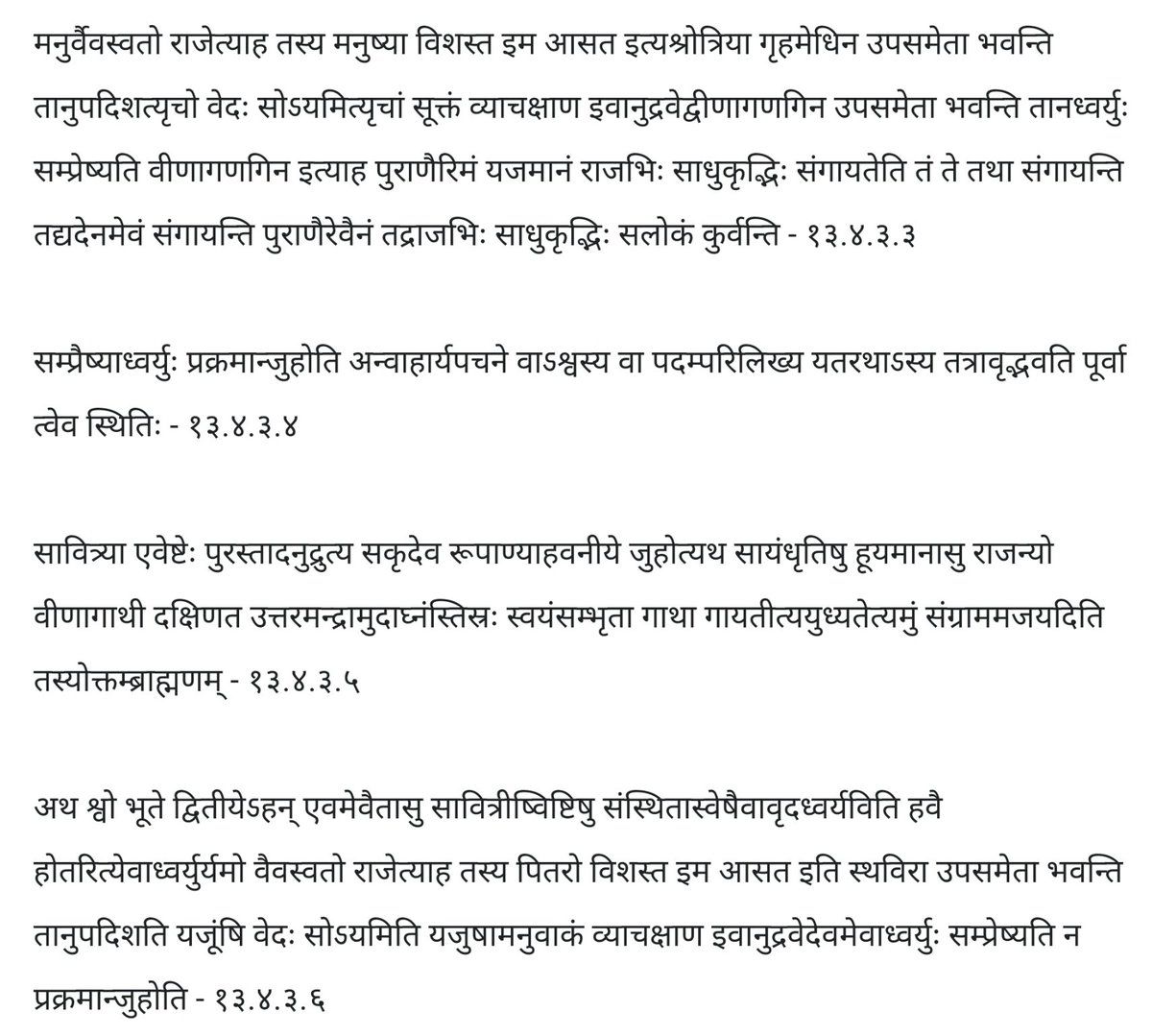
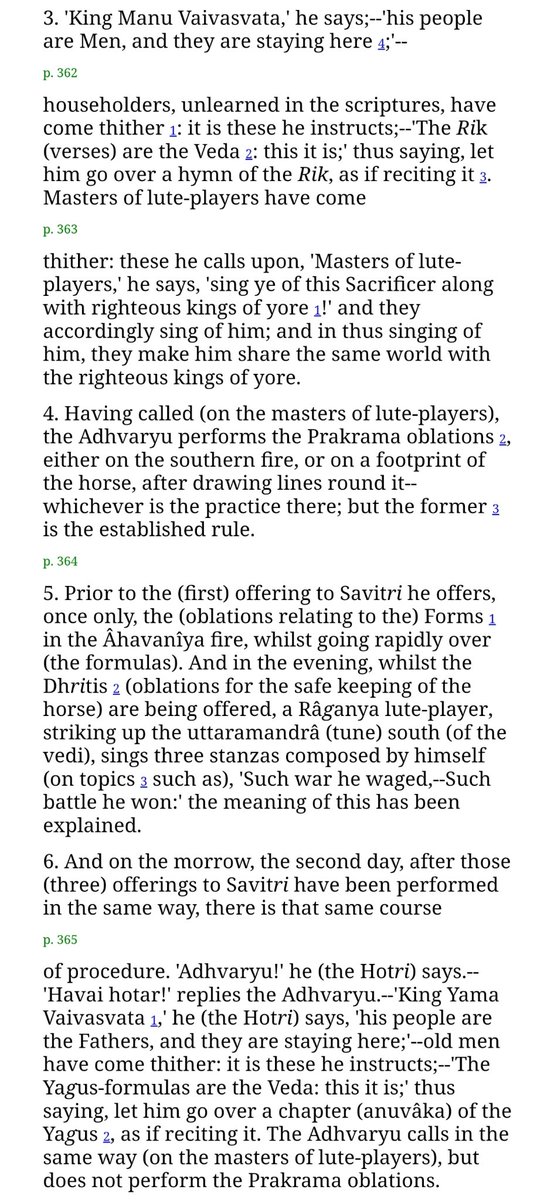
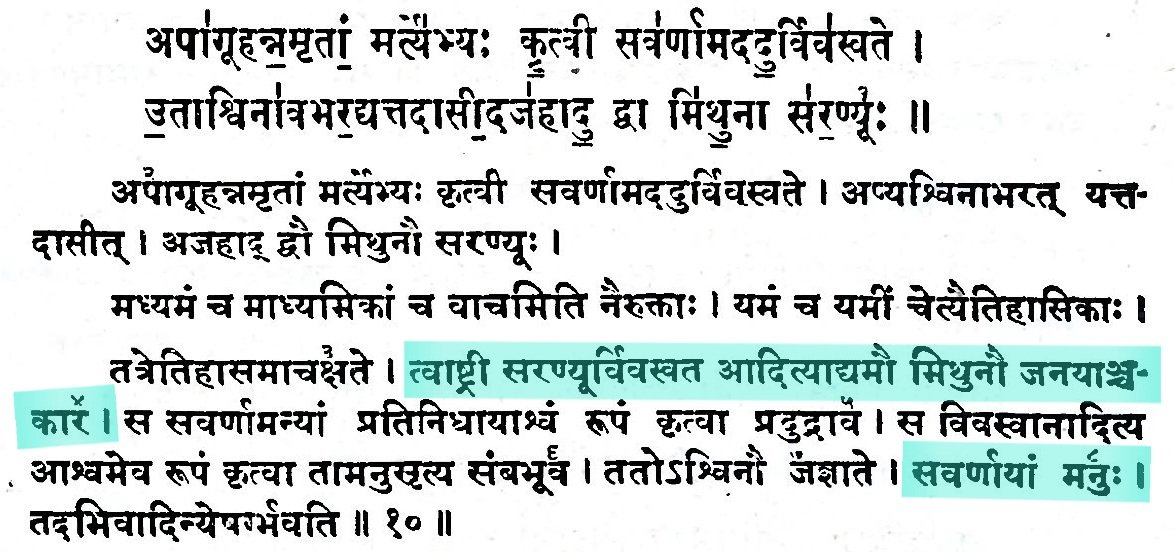
.. king of the dead in the underworld. Yāska in his Nírukta explains Mánu to be the son of Vívasvat, the sun (Ādityá), and of Savarṇā the substitute of Saraṇyū́.
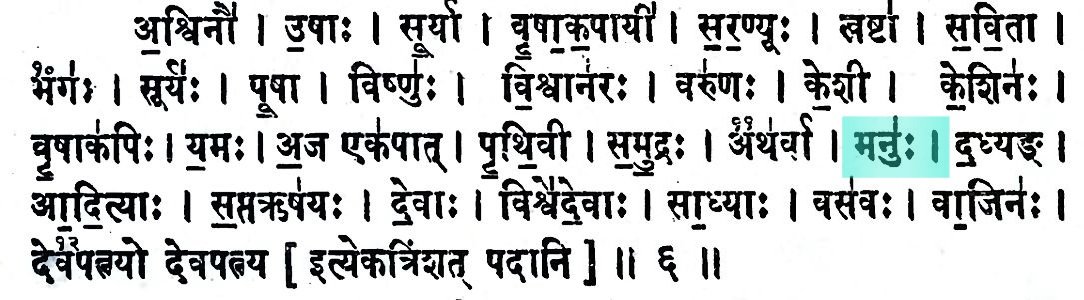
Yāska in his Nighaṇṭu counts him anong the divine beings of the celestial region.
Yāska in his Nighaṇṭu counts him anong the divine beings of the celestial region.
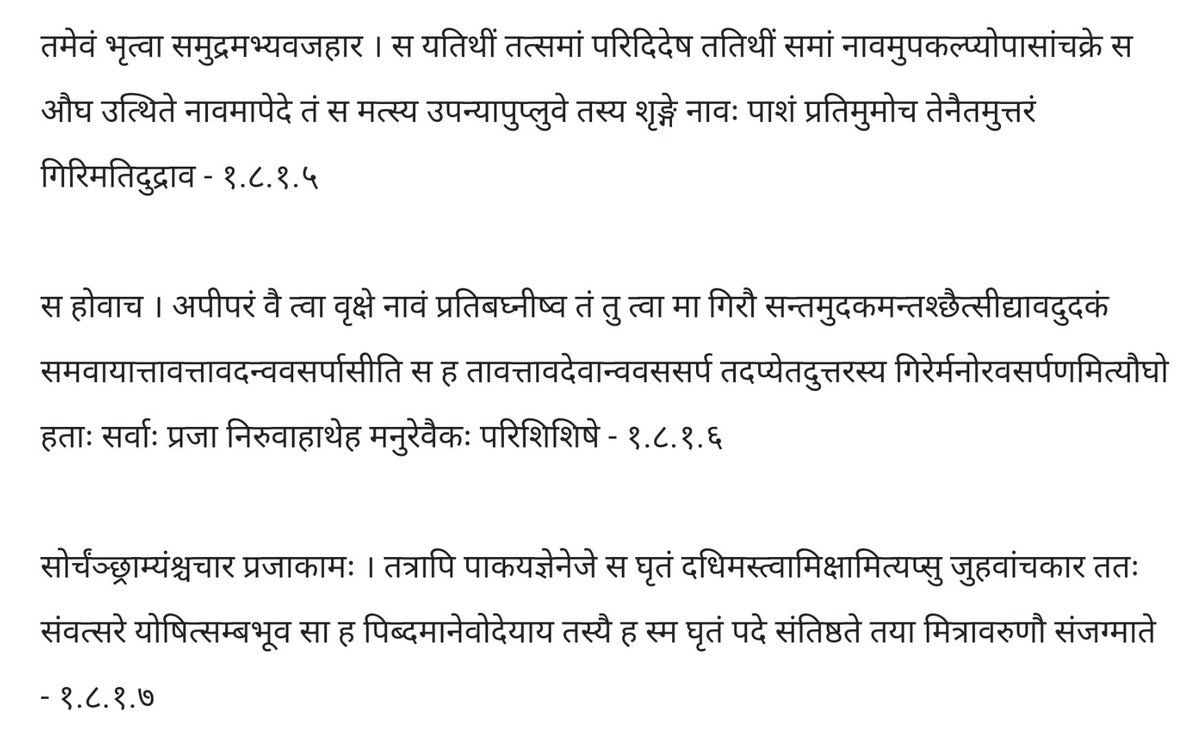
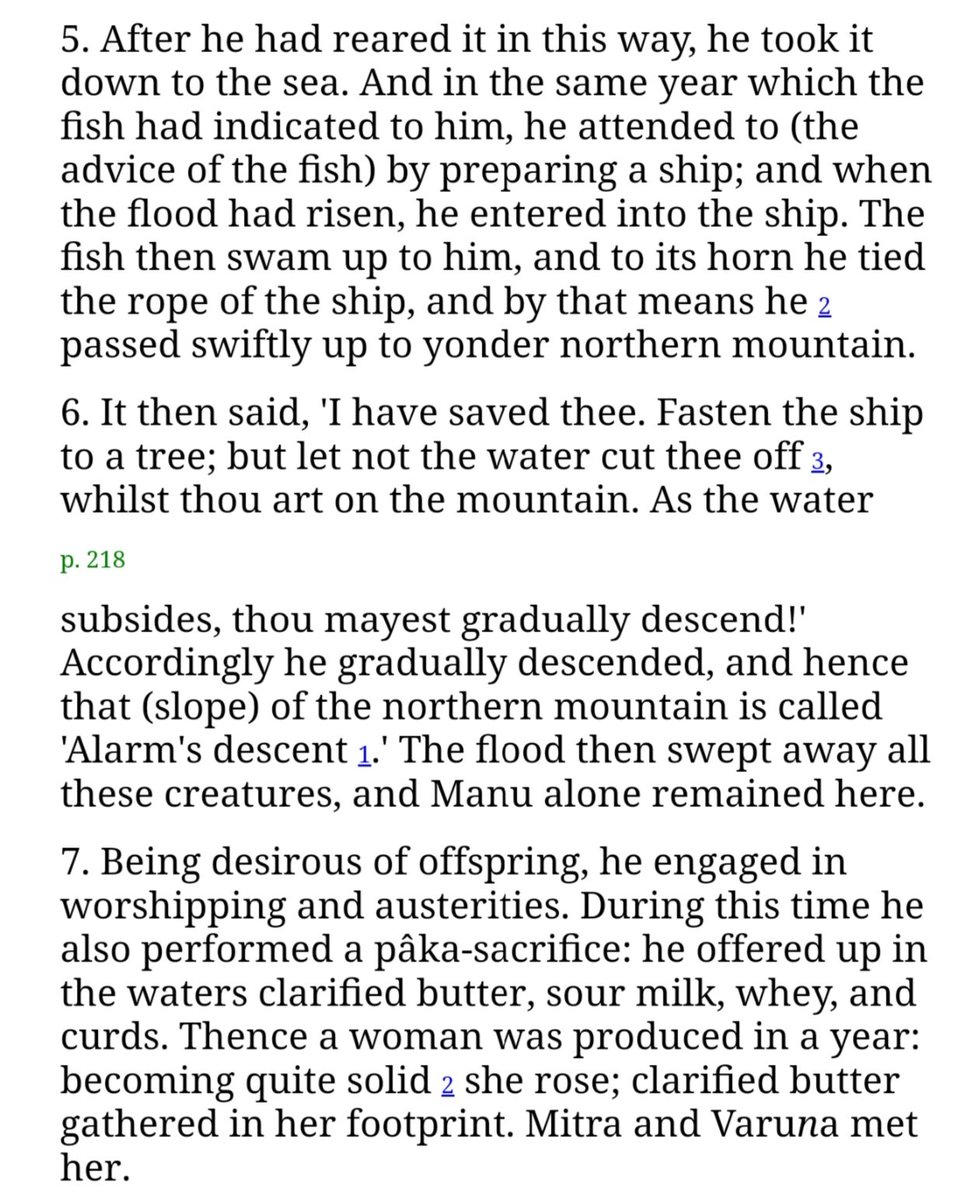
Śatápatha Brā́hmaṇa (1.8.1.1-10) relates a legend of how Mánu was saved in a ship from a deluge, which swept away all other creatures, by a fish (note: an avatāra of Víṣṇu, in post-Vedic myth).
Mánu is then said to have become the progenitor of mankind through his ..
Mánu is then said to have become the progenitor of mankind through his ..
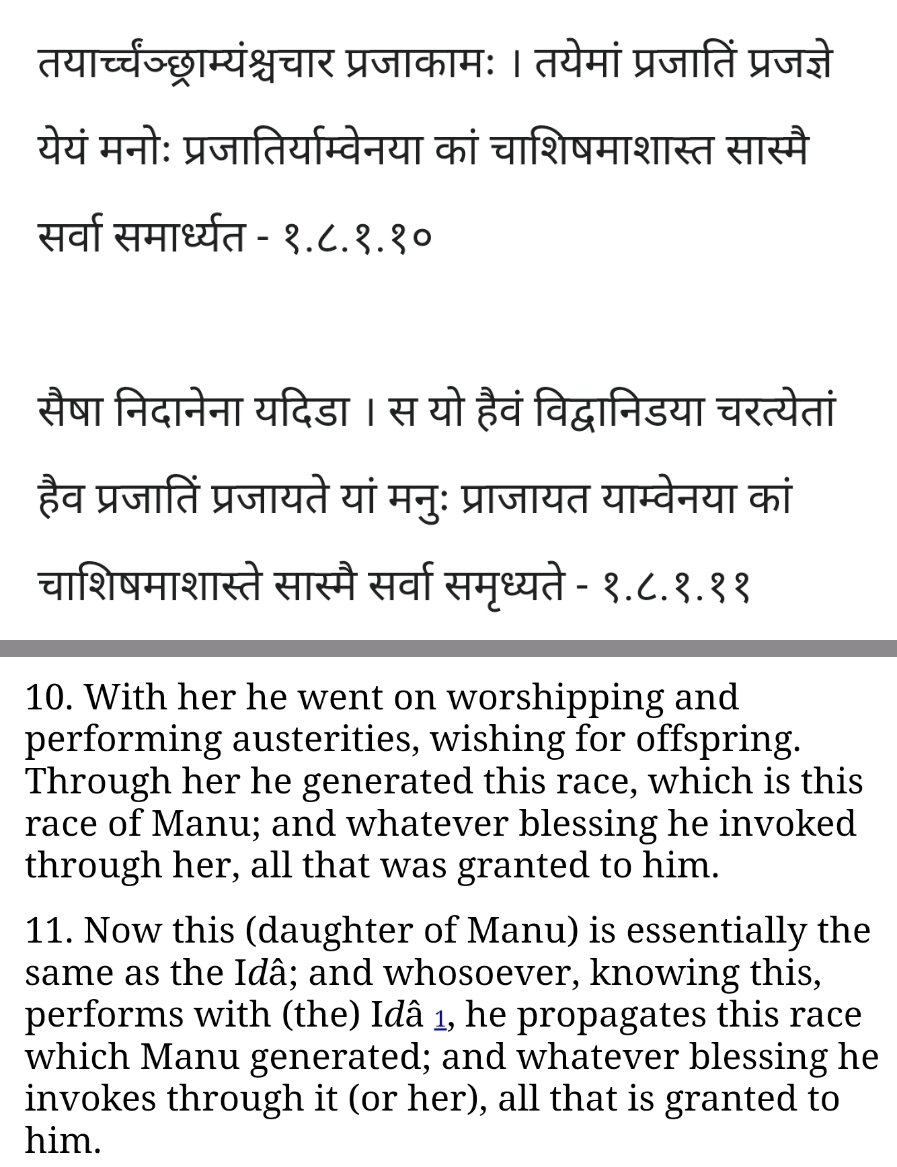
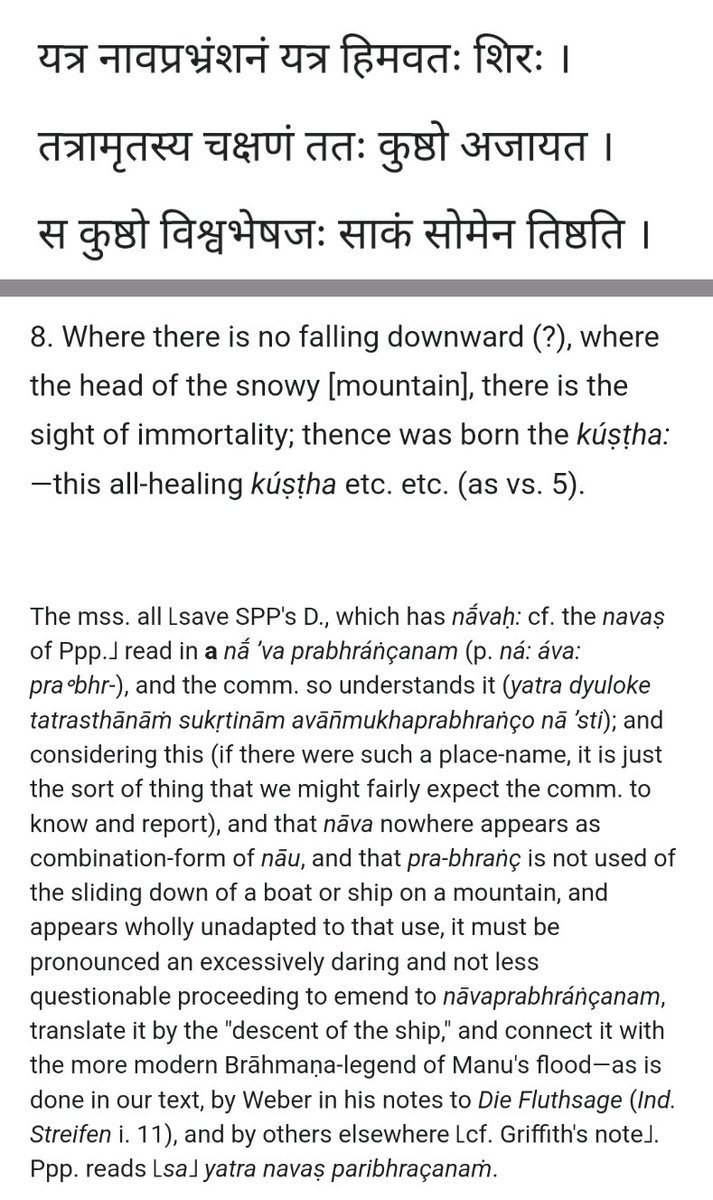
.. daughter Íḍā (or Íḷā), who was produced from his offerings. That the story of the flood was known as early as the time of the Atharvaveda is implied in a a passage of that Sáṃhitā.
** s̶a̶c̶r̶i̶f̶e̶r̶ sacrifice
Loading suggestions...