
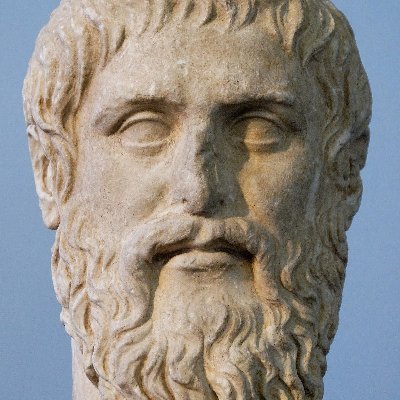
Ancient Greek and Roman sculptures were originally painted in vibrant colours.
To them, a plain marble statue would look unfinished...
To them, a plain marble statue would look unfinished...

It can appear shocking to us, almost kitsch, to see such bright and garish colours all over the pure, smooth marble to which we are so accustomed.
But, as strange as it seems, that's how it was.
But, as strange as it seems, that's how it was.
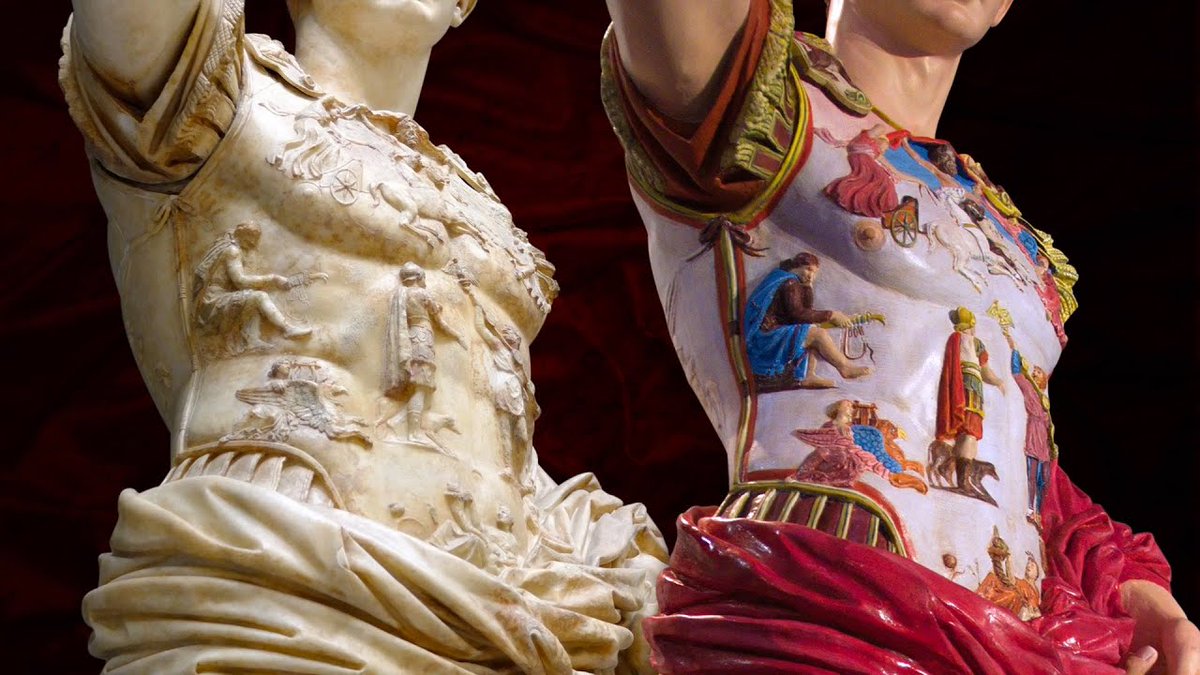
This technique - of painting a surface with different, vivid colours - is called "polychromy."
And it wasn't just used for statues, but also for friezes and other decorative elements on temples and buildings.
Over the many long centuries the paint wore off...
And it wasn't just used for statues, but also for friezes and other decorative elements on temples and buildings.
Over the many long centuries the paint wore off...
And in the Renaissance, when artists started paying more attention to the ruins and relics of Ancient Greece & Rome, they took Classical art as they found it - with no traces of paint left!
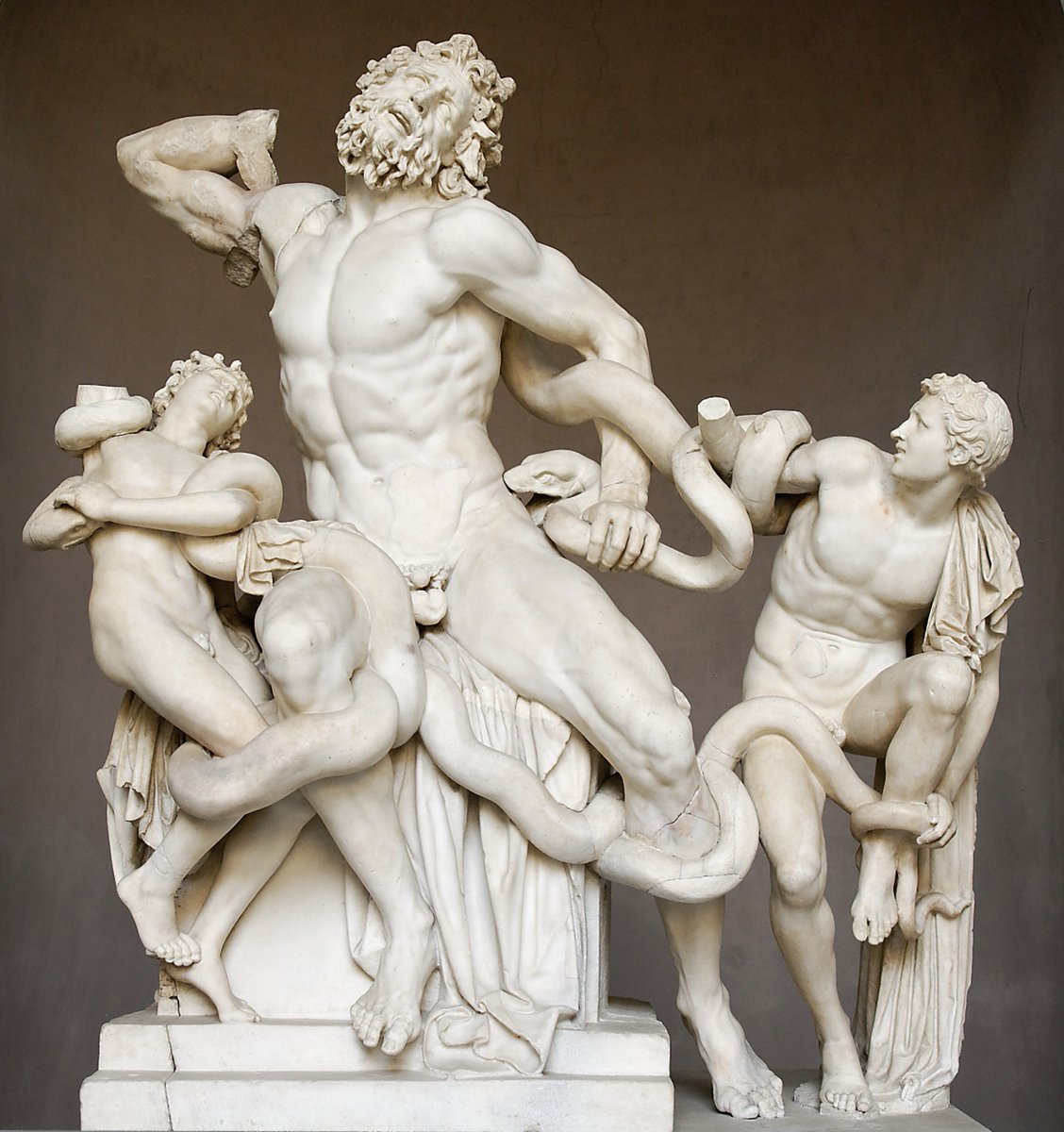
This ancient, legendary statue of Laocoön and His Sons was excavated in Rome in 1506 and totally captured the imagination of Renaissance sculptors.
They marvelled at the craftsmanship and rendering of solid marble as sinew and flesh:
They marvelled at the craftsmanship and rendering of solid marble as sinew and flesh:
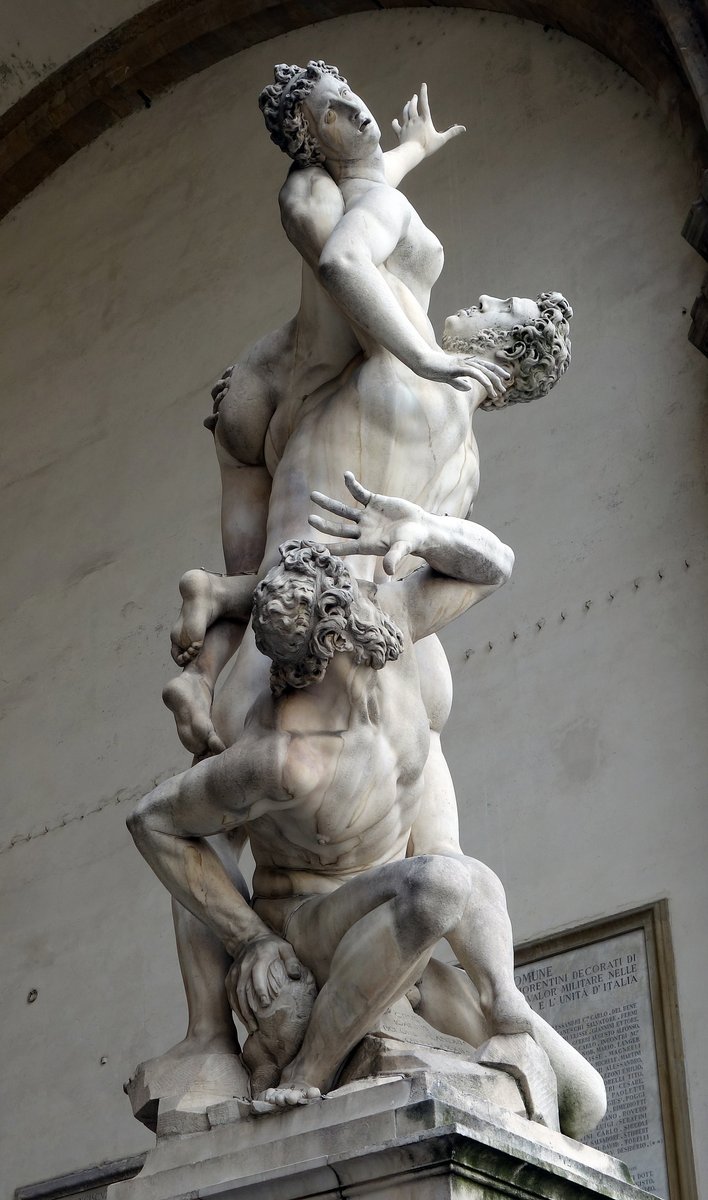
And it inspired sculptures like The Abduction of a Sabine Woman by Giambologna, from 1583.
Which was, therefore, never painted.
Which was, therefore, never painted.
But archaeologists in the early 19th century discovered artefacts with traces of paint, which got them thinking. They started "reconstructing" classical art.
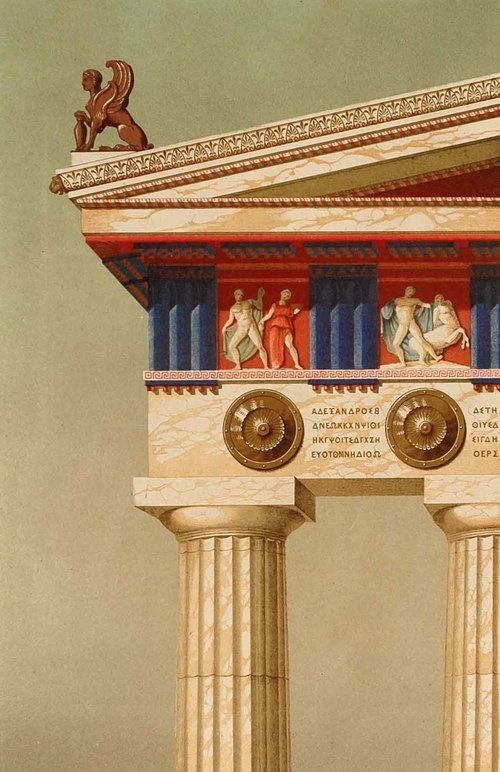
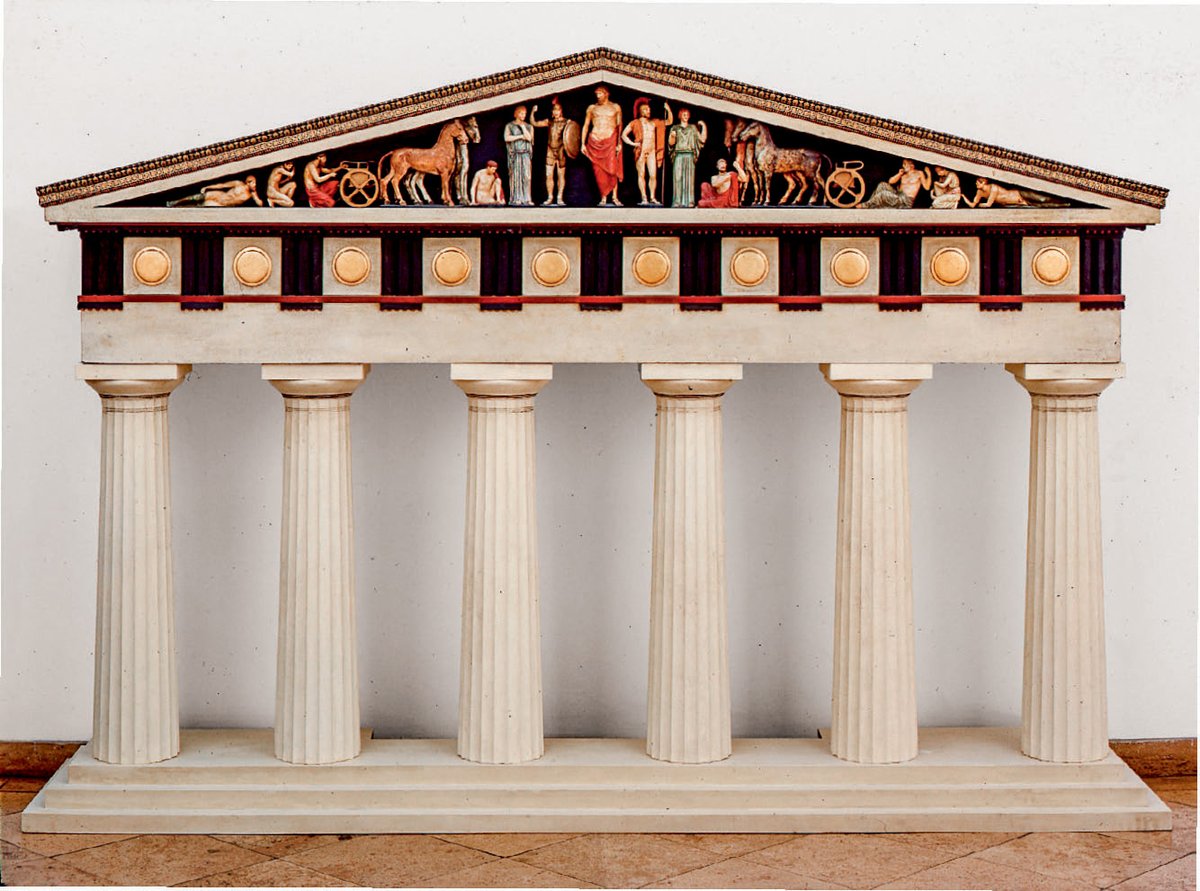
Consider this model of the Temple of Zeus at Olympia, from 1886:
Consider this model of the Temple of Zeus at Olympia, from 1886:
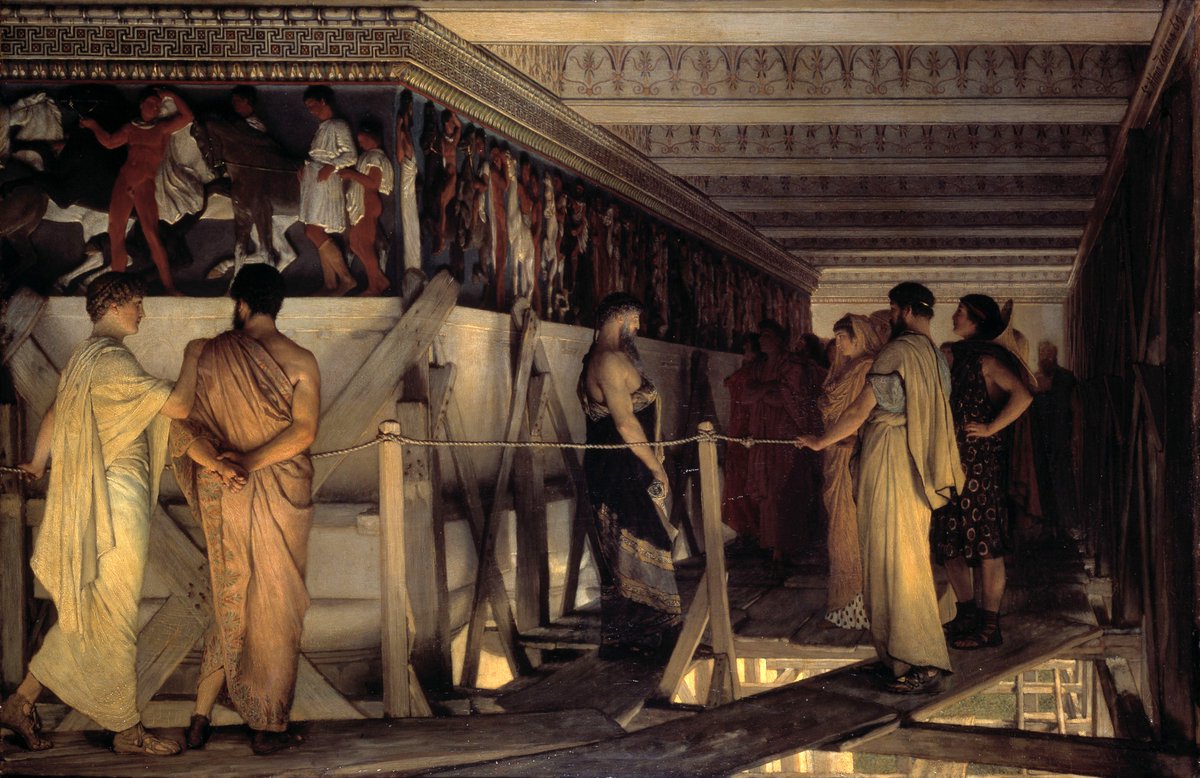
While in this 1868 painting the moment is reimagined when Phidias (perhaps the greatest sculptor of the Ancient World) revealed the famous Parthenon friezes in 432 BC:
This is what the friezes look like now, for reference:
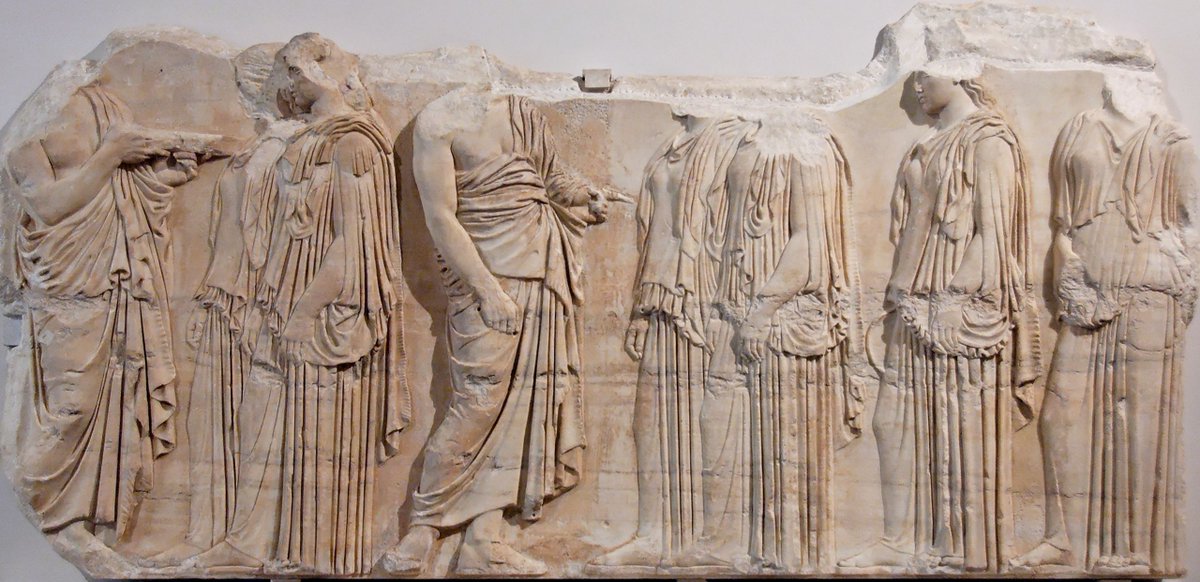
Since then, of course, technology has vastly improved our ability to detect traces of paint (including specific pigment!) on surfaces which otherwise display no apparent colour.
Thus allowing for increasingly accurate "reconstructions".
Thus allowing for increasingly accurate "reconstructions".
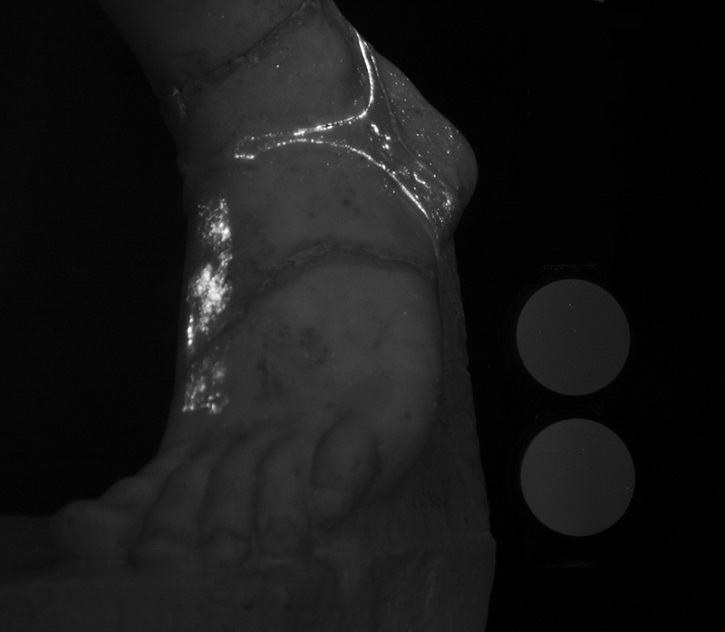
But there are historic references too, like this line from Euripides' 412 BC play, Helen:
"If only I could shed my beauty and assume an uglier aspect
The way you would wipe color off a statue."
Lucian, over 600 years later, also referenced the painting of statues.
"If only I could shed my beauty and assume an uglier aspect
The way you would wipe color off a statue."
Lucian, over 600 years later, also referenced the painting of statues.
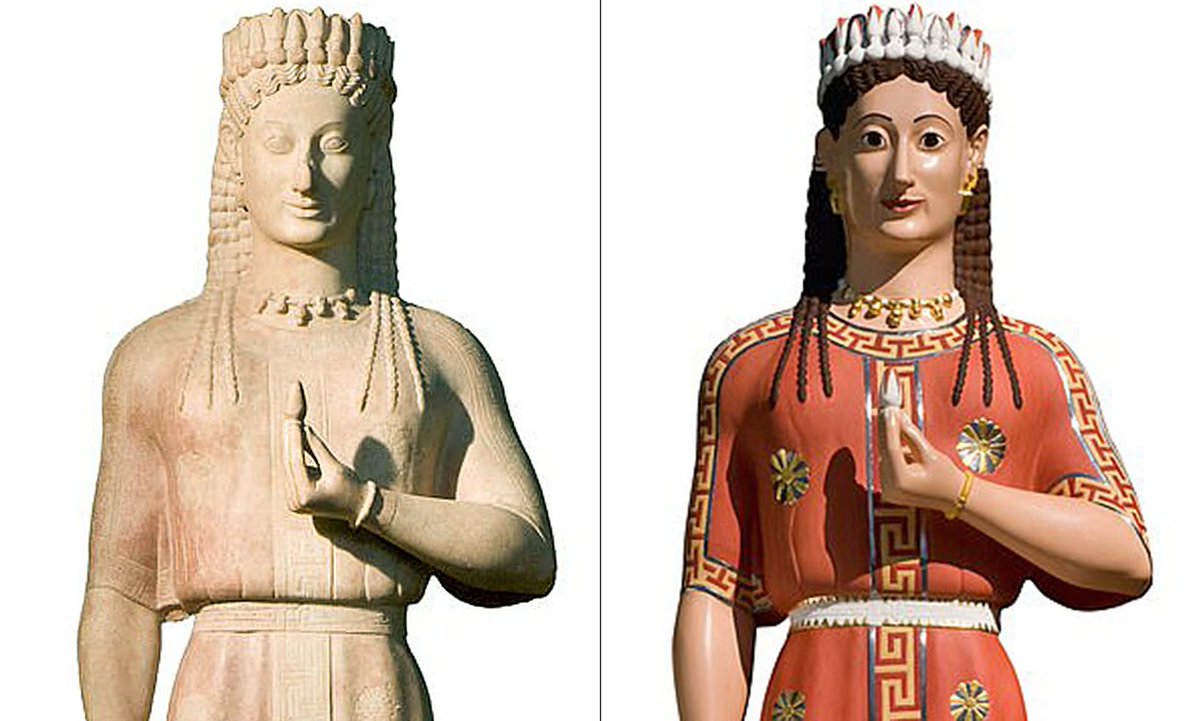
Of course, we can never be fully sure of how detailed or in exactly what style this painting was done.
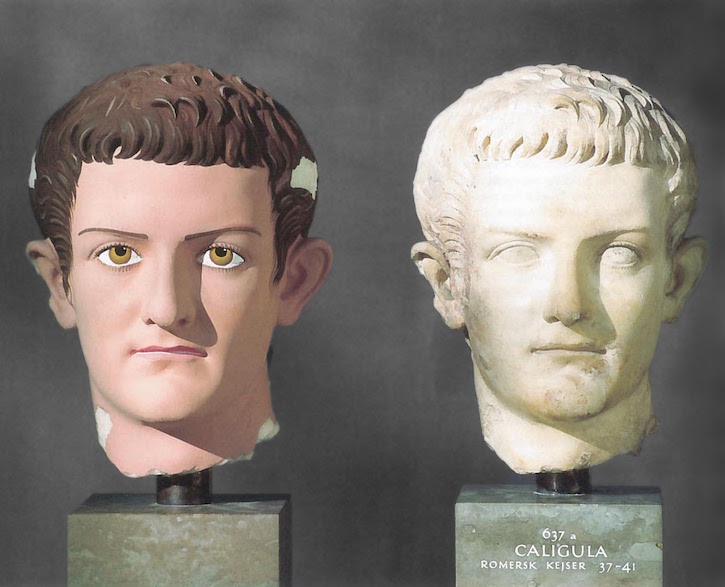
But certain statues which have retained traces of their original colour suggest it was far from rudimentary:
But certain statues which have retained traces of their original colour suggest it was far from rudimentary:
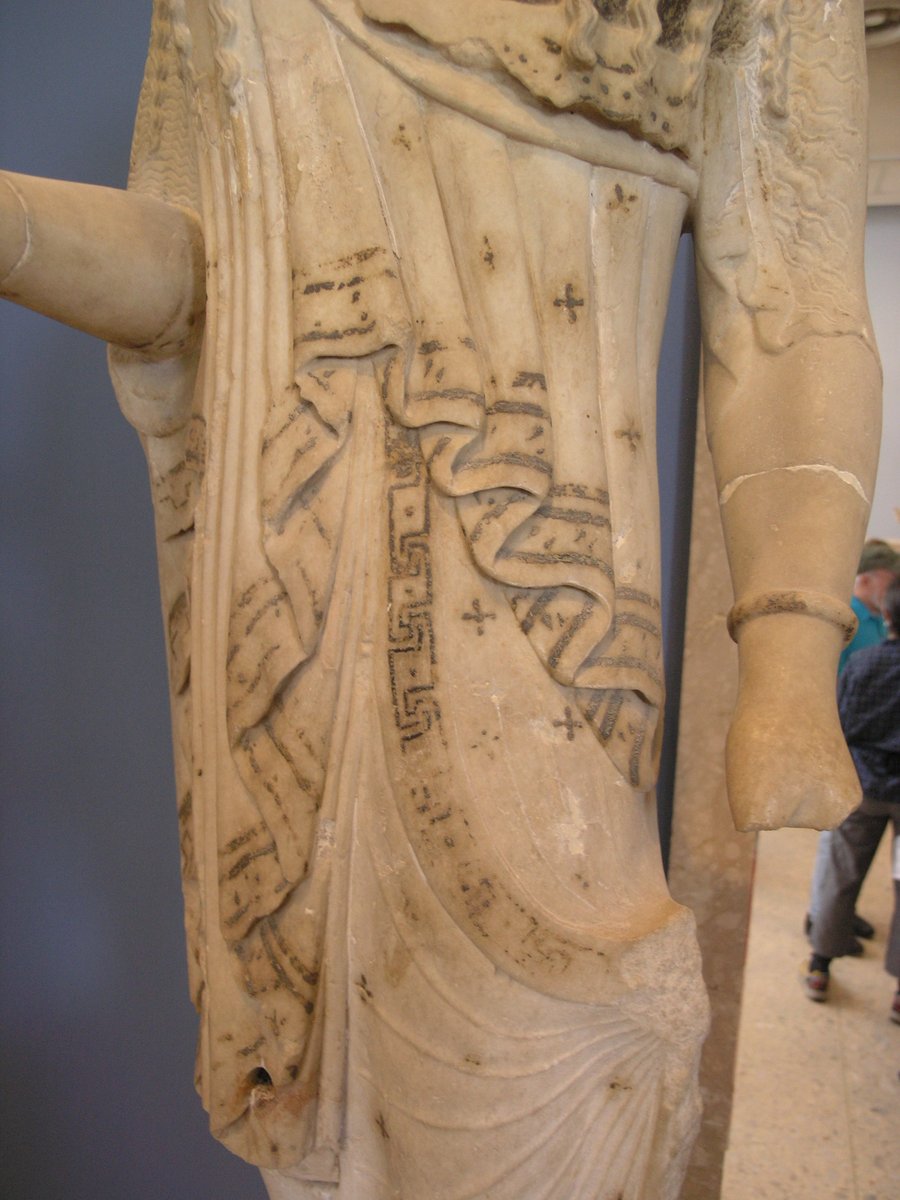
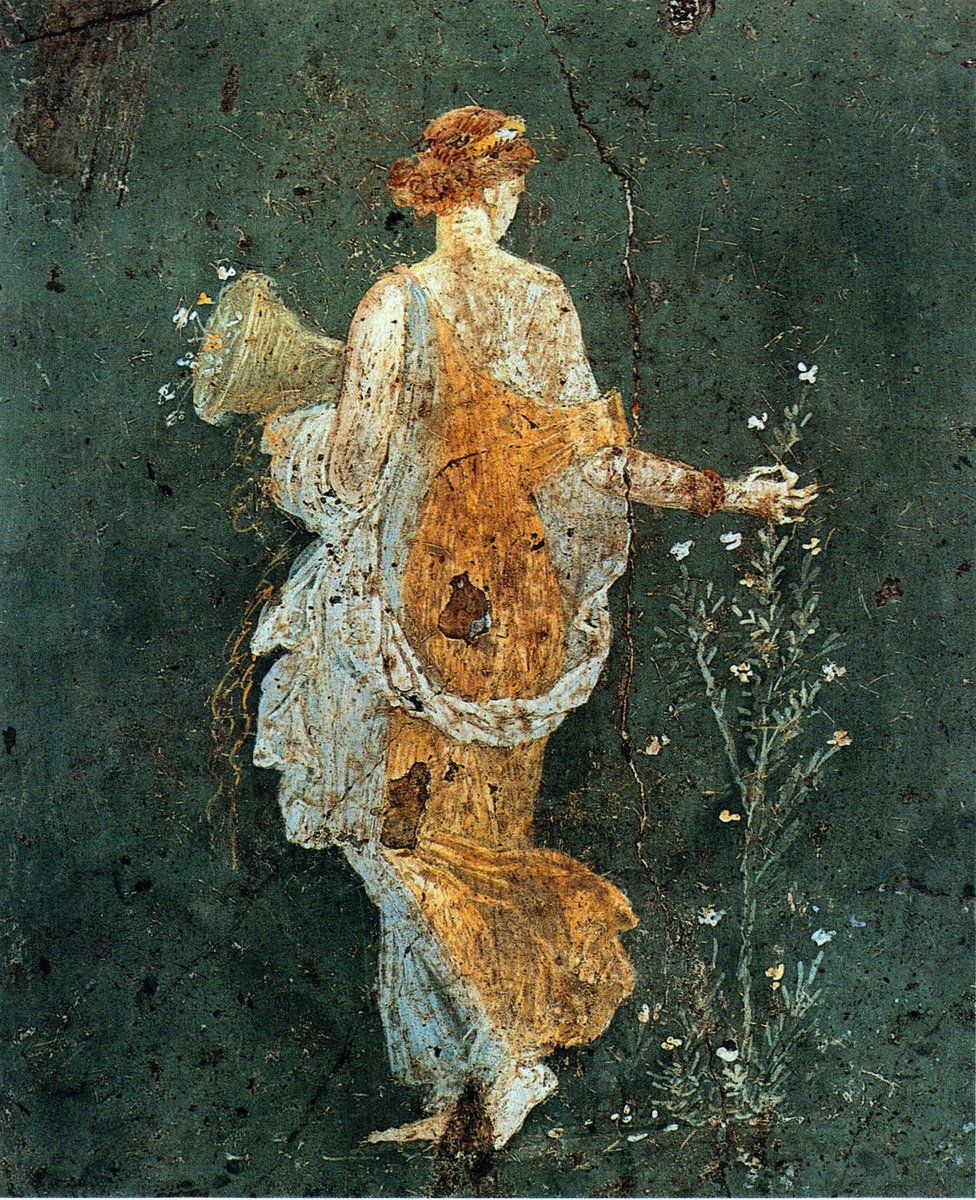
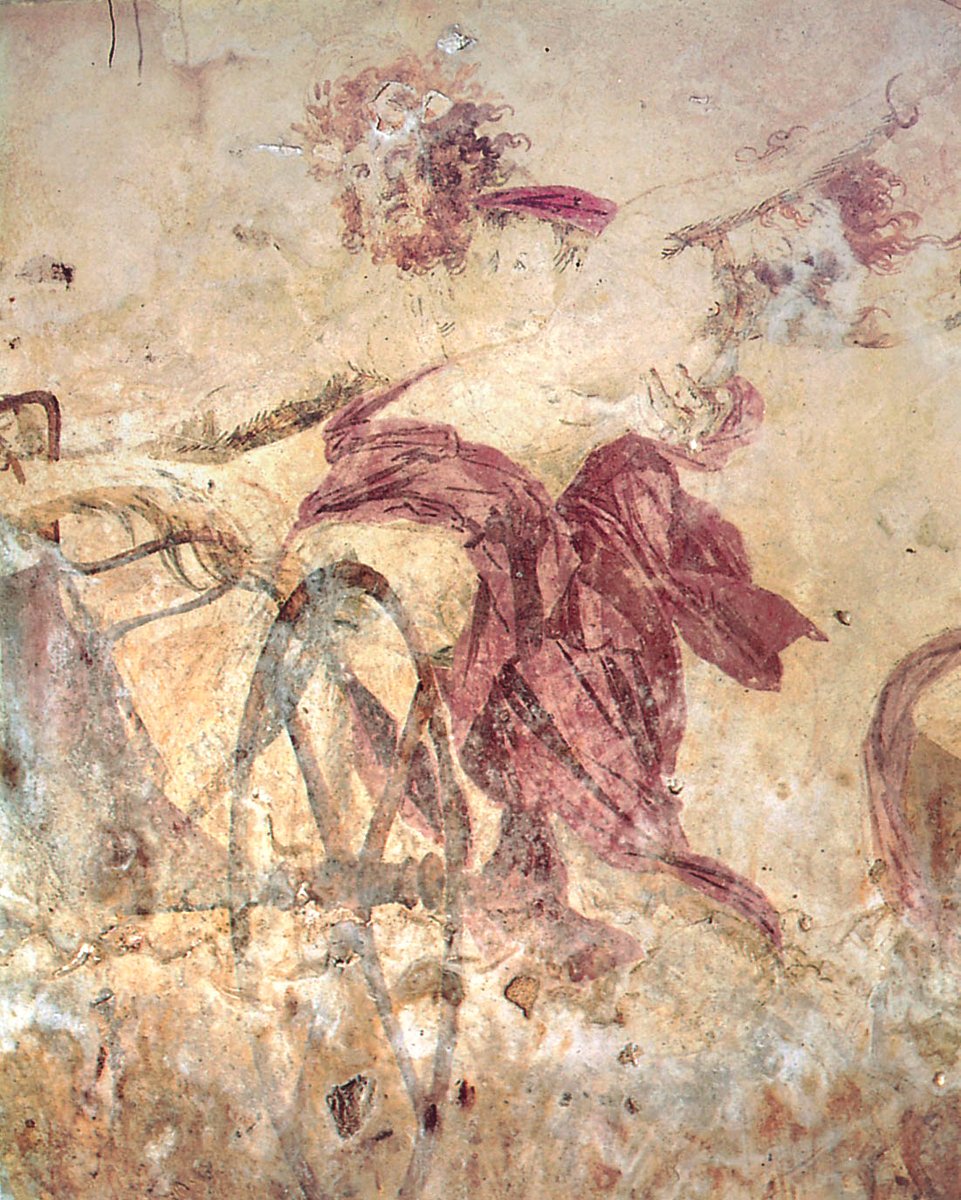
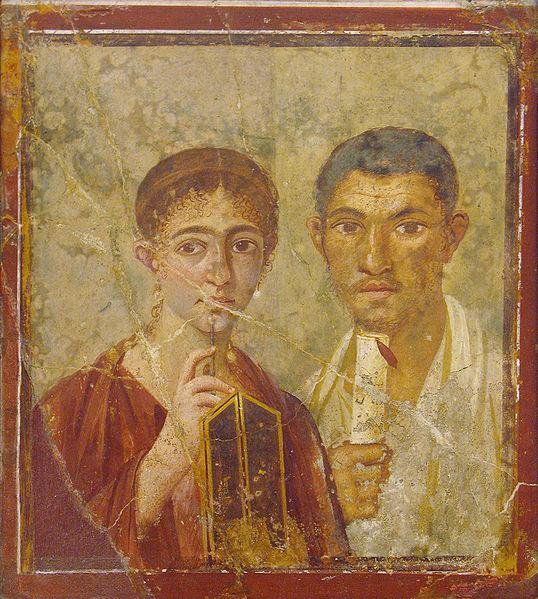
While our surviving examples of Ancient Greek and Roman painting - which are few and far between - indicate they were incredibly competent artists.
They had command of colour, perspective, and foreshortening; perhaps their statues also were more lifelike than we realise:
They had command of colour, perspective, and foreshortening; perhaps their statues also were more lifelike than we realise:
And yet, the sparkling white marble of Greece and Rome has become so closely identified with that era that to see it portrayed any other way feels wrong.
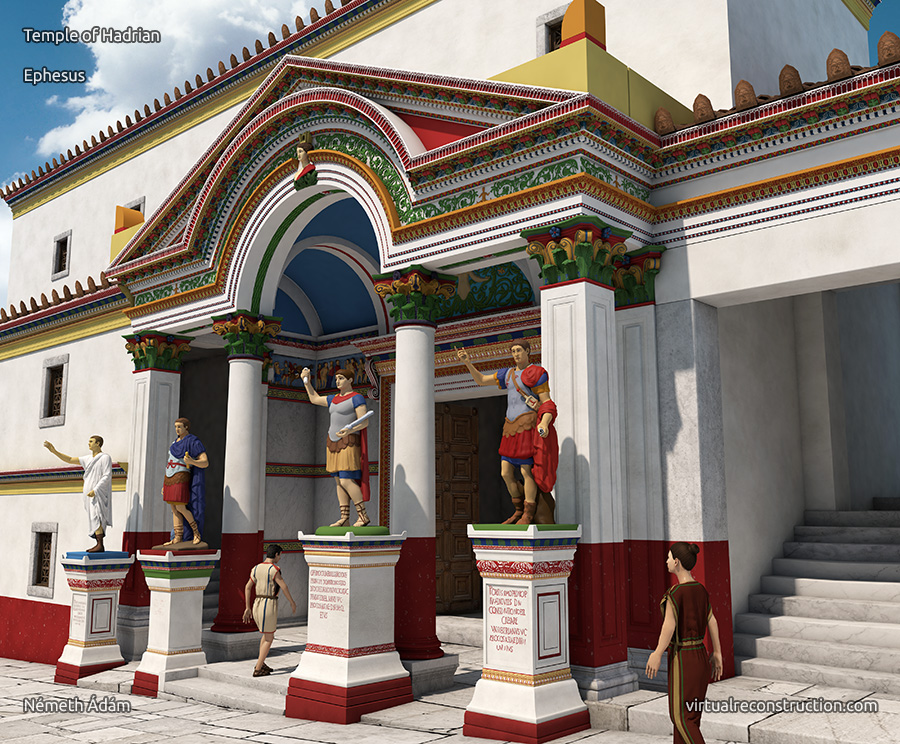
But to a Greek something like Michaelangelo's David would have looked unfinished!
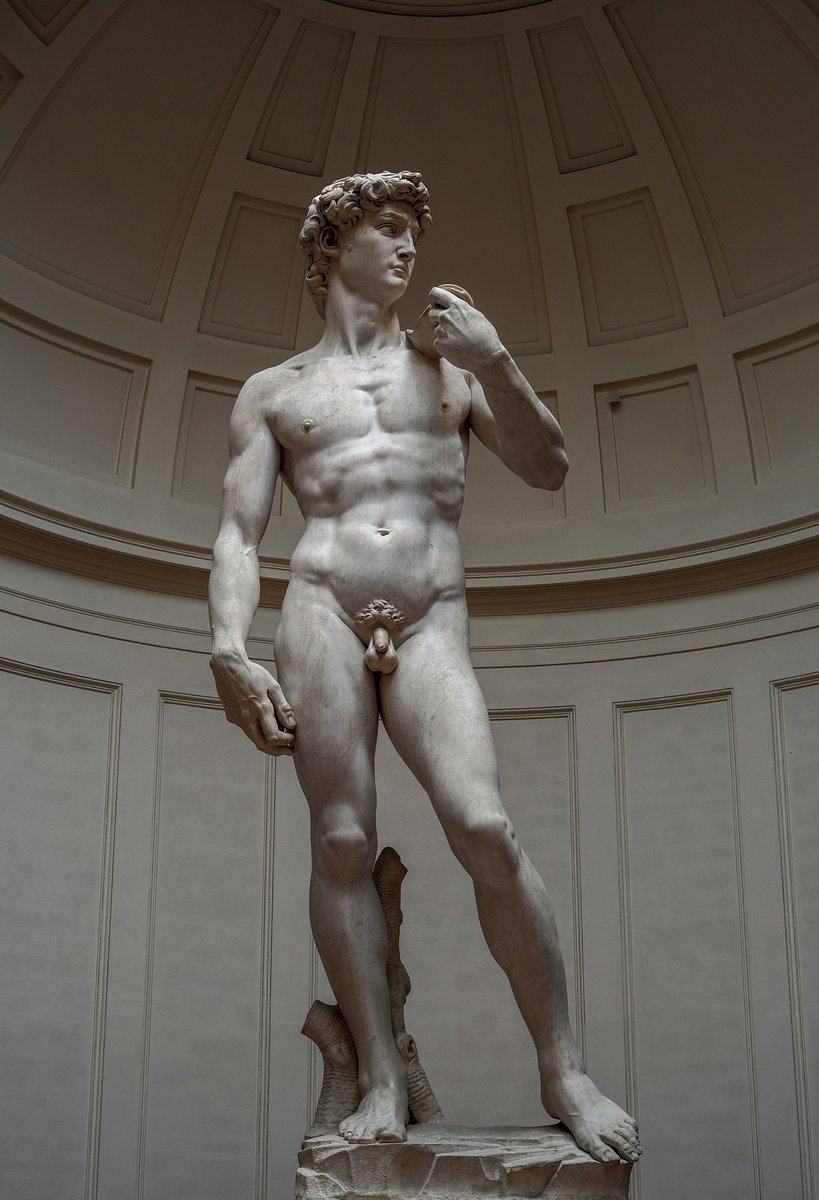
Nevermind all this unpainted neoclassical architecture all over the place...
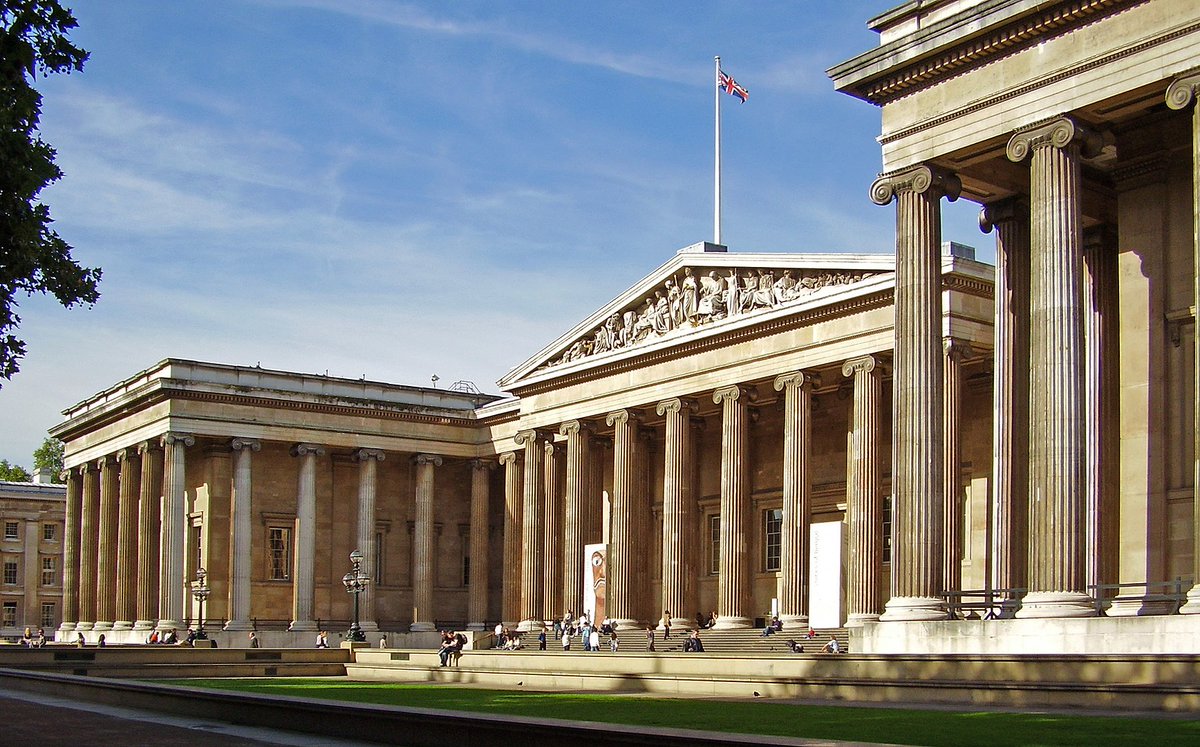
Which leaves us with a strange conflict between the unpainted and "unfinished" sculptures of Antiquity (which we might prefer, or not) and the "finished" but unpainted sculptures of the Renaissance and beyond.
Are we wrong to admire unpainted classical sculpture?
Are we wrong to admire unpainted classical sculpture?
And it would be amiss, of course, not to address this...
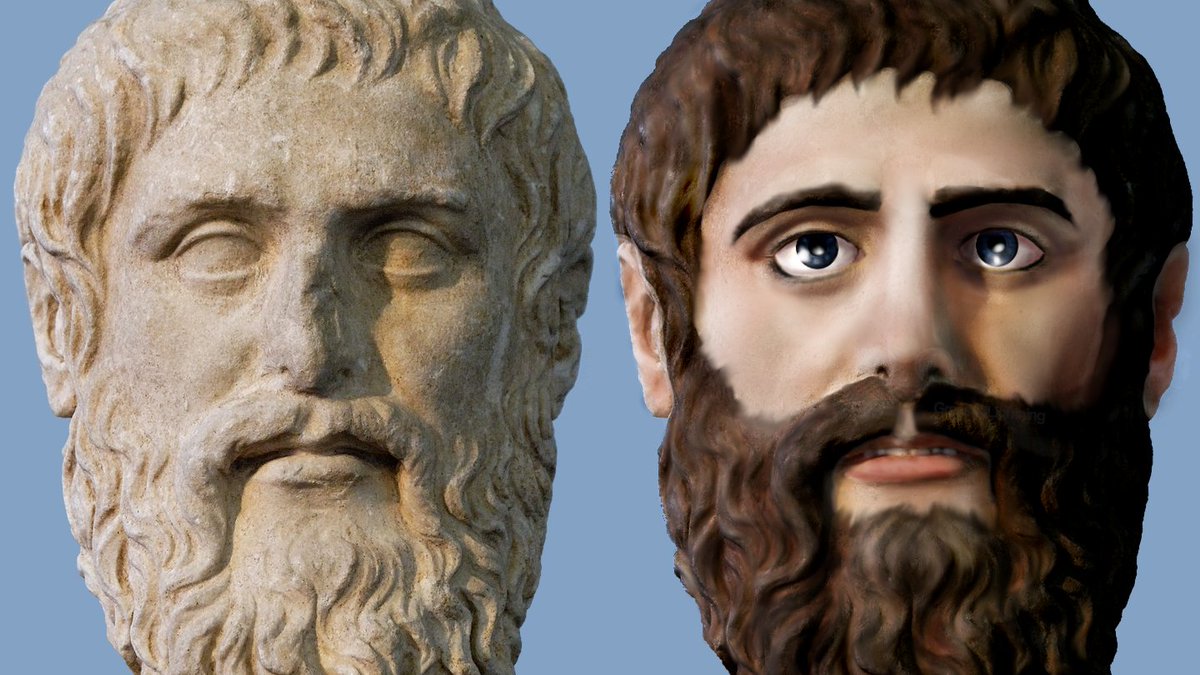
It's incorrect to say Renaissance sculptors got the past "wrong", since history and art are more than mere facts.
Nonetheless, it begs the question in how many other ways we inaccurately imagine and visualise the past?
Nonetheless, it begs the question in how many other ways we inaccurately imagine and visualise the past?
If you enjoyed this you may also like my free weekly newsletter, Areopagus.
Seven short lessons every Friday, including art, architecture, and rhetoric.
To make your week a little more interesting, useful, and beautiful, consider subscribing:
culturaltutor.com
Seven short lessons every Friday, including art, architecture, and rhetoric.
To make your week a little more interesting, useful, and beautiful, consider subscribing:
culturaltutor.com
Loading suggestions...