

🧵regarding the important suturing concept of whether to use one bite to grab both ends of the tissue ('taking it in 1'), versus using two bites ('taking it in 2').
We will go over some technical pointers about each of these, especially as they pertain to Lembert sutures.
We will go over some technical pointers about each of these, especially as they pertain to Lembert sutures.


Sometimes the wound edges can be approximated using 1 bite across both ends. This is known as 'taking it in 1'.
Here, the needle is large enough to go across both sides and be retrieved. The needle curvature can be followed, and the precision of the bite is satisfactory.
Here, the needle is large enough to go across both sides and be retrieved. The needle curvature can be followed, and the precision of the bite is satisfactory.
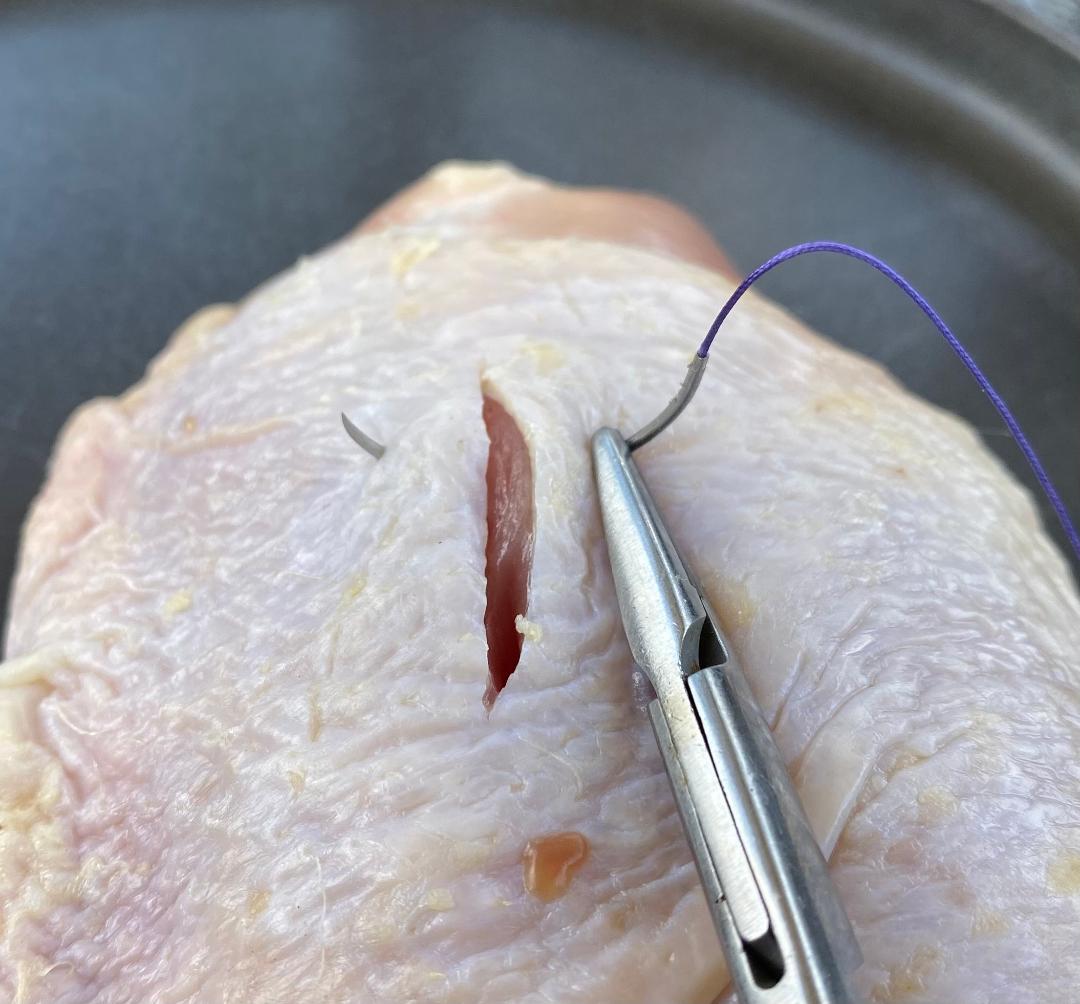
When 'taking it in 1', it is very common for the needle to not quite reach, as can be seen here.
One can take this out and redo it, this time with 2 bites.
Or one tries to push the needle harder and hope they can find the needle tip.
One can take this out and redo it, this time with 2 bites.
Or one tries to push the needle harder and hope they can find the needle tip.
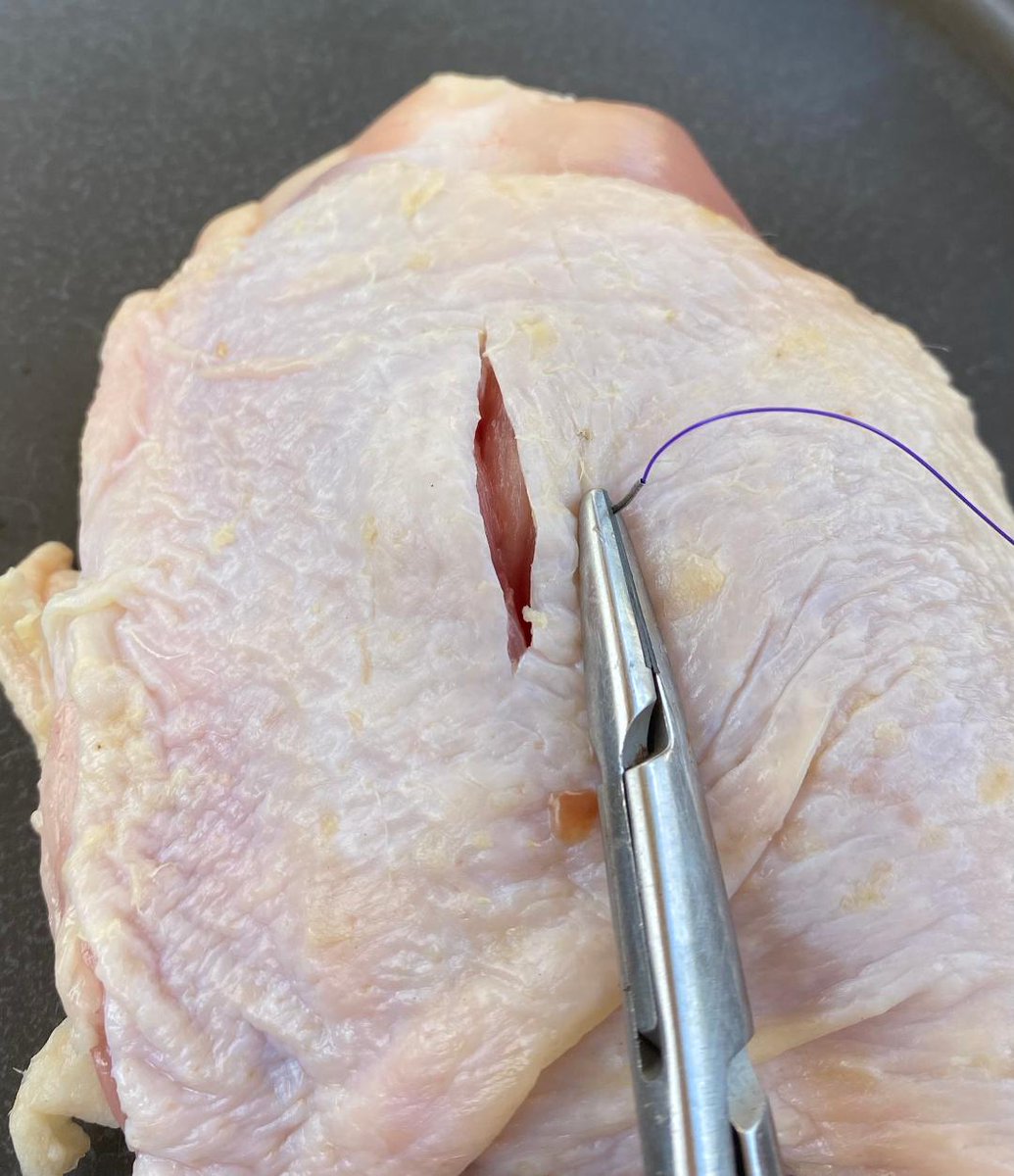
Here, the surgeon finds that the needle is too short, and pushes it through. The needle appears.
The two problems with this are:
- the needle often disappears again
- one may have to push hard on the tissue next to the needle driver, which may damage it (see video).
The two problems with this are:
- the needle often disappears again
- one may have to push hard on the tissue next to the needle driver, which may damage it (see video).

Here we are closing the chicken laceration by using 2 bites, or 'taking it in 2'.
The needle comes out in the wound itself, then must be picked up again to grab the other side.
It is almost always more precise. However, it clearly takes longer as it involves more moves.
The needle comes out in the wound itself, then must be picked up again to grab the other side.
It is almost always more precise. However, it clearly takes longer as it involves more moves.


When 'taking it in 2', the needle usually comes out slightly, like in the L picture.
One can reduce the number of moves by advancing it into a position where it can be grabbed again directly, as in the R picture. There are 2 ways to do this.
One can reduce the number of moves by advancing it into a position where it can be grabbed again directly, as in the R picture. There are 2 ways to do this.


First, by quickly grabbing the needle close to the end ('choking up') and pushing a little more, you can sometimes then grab the needle in the midpoint and then go straight on to the second tissue bite.

The other way to do it is more precise but a little harder. If you pull the needle just right, it will stay in the tissue and you can then grab the midpoint for the second tissue bite.

The second half of the thread describes this concept in Lembert sutures.
Lembert sutures are commonly used as the outer layer of a 2 layer bowel anastomosis.
Lembert sutures are commonly used as the outer layer of a 2 layer bowel anastomosis.
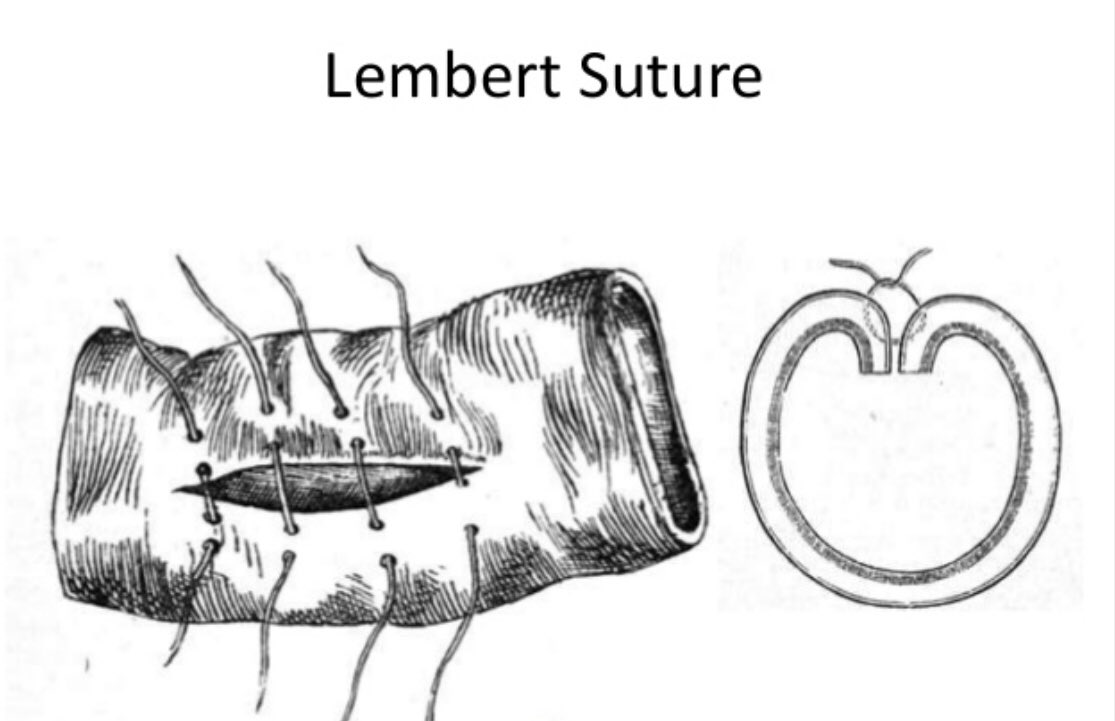
I will almost always take Lemberts in 2. In other words, a submucosal bite is taken on one side, and then the needle is regrabbed to take the other side.


Sometimes people want to take Lemberts in 1. Occasionally, it can be done, but it has to be just right. Here, a Lembert suture is done in 1 bite, and it seems to be satisfactory.

But it's very hard to do 20-30 of these just right. More commonly, one starts lifting up on the tissue too hard. Here we'll see it in real time, and then in the next frame we will see it in slow motion.

Here it is in slow motion. I am pulling on the tissue too hard. Sure, you often get away with it. But, if the tissue is fragile, it will either tear or at least be weakened.

Generally speaking, I will always want midline abdominal fascia to be taken in 2 separate bites, even when the needle does reach. And the same goes for Lembert sutures.


In summary:
'Taking it in 2' (seen below) is slower and requires more maneuvers. But it is more precise and causes less tissue trauma. I usually prefer it most of the time.
'Taking it in 1' is ok for instances where you want speed, and precision is less important.
⬛️
'Taking it in 2' (seen below) is slower and requires more maneuvers. But it is more precise and causes less tissue trauma. I usually prefer it most of the time.
'Taking it in 1' is ok for instances where you want speed, and precision is less important.
⬛️


Almost forgot the reference:
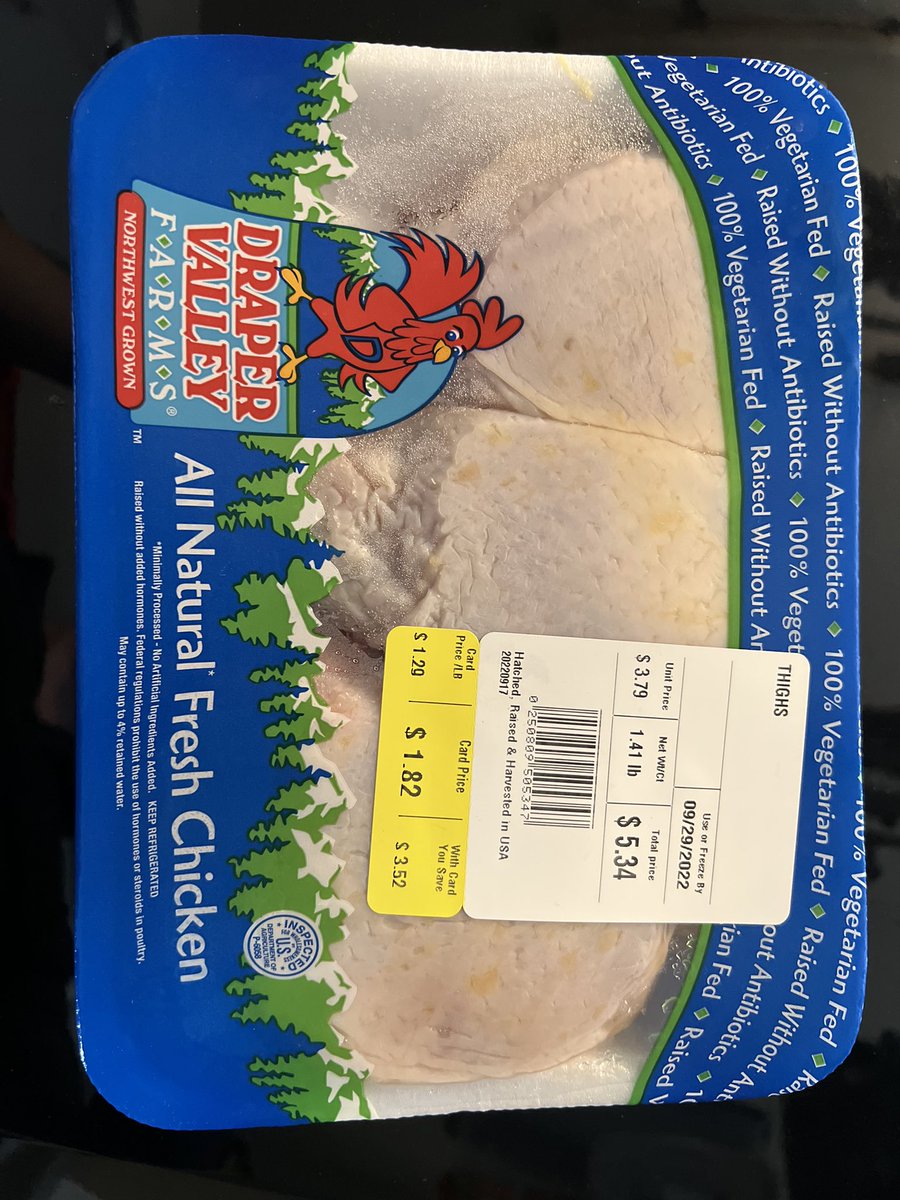
Chicken thighs were obtained from Safeway in Beaverton, OR via Draper Farms (Mt. Vernon, WA). Accessed September 22, 2022.
Chicken thighs were obtained from Safeway in Beaverton, OR via Draper Farms (Mt. Vernon, WA). Accessed September 22, 2022.
Loading suggestions...