

Originating from the camel drivers of north-western India, Tappa, a wild and offbeat musical form, travelled to the east to rise to popularity. Its journey, spanning across four centuries with impacting cultural shifts, is an intriguing one. A thread. 1/17
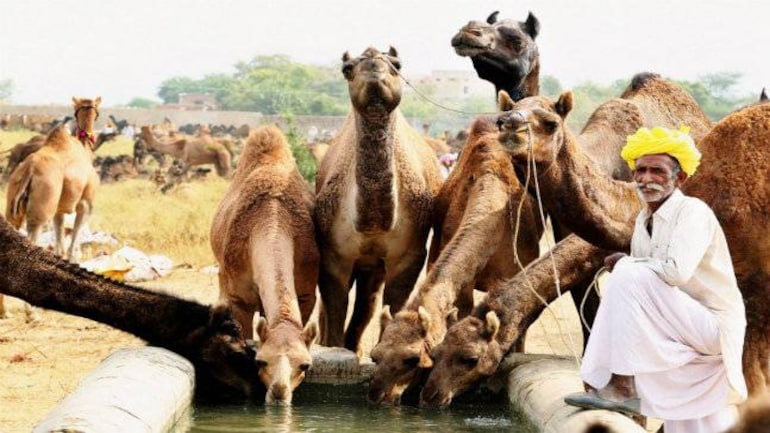
Legend states that a Khayal maestro, Ghulam Nabi Shori, travelled to the Punjab-Sindh region in search of varied musical experiences. There he heard the camel drivers singing in a unique style, scampering over notes, beats and words. 2/17
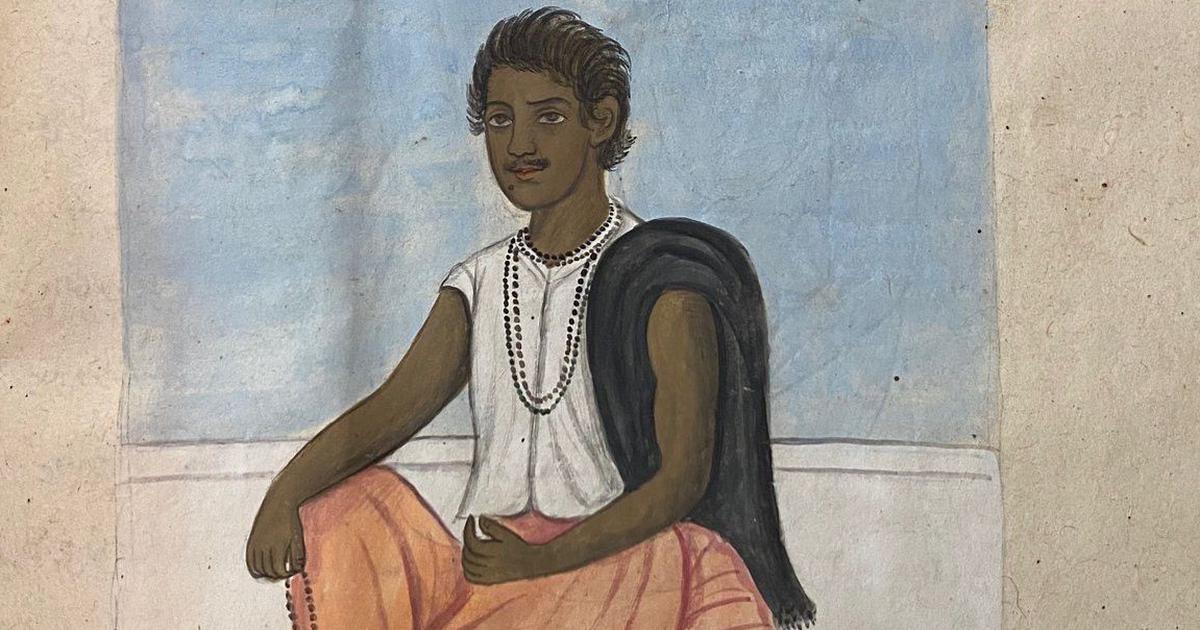
Shori wove this distinct style into existing Hindustani gharana and crafted the Tappa. 3/17
Tappas were majorly themed on a woman’s alarm at separation from her lover and her earnest request to be reunited. Tappas required gruelling breath control and called for a completely different kind of vocal training to master it. 4/17
Although the rendition of most of the contemporary Tappa is given to Shori, Katherine Schofield, a music historian, cited in her essay, ‘The Origins and Early Development of Khayal’, that Tappa was already present in Delhi, 100 years before it became popular in Lucknow. 5/17
Tappa’s journey to the east, however, has no discrepancies in anecdotes. The credit for it goes to Ramnidhi Gupta aka ‘Nidhu Babu’. Passion for elegant arts of the north was quite popular among the elite Bengalis of the 18th century. 6/17
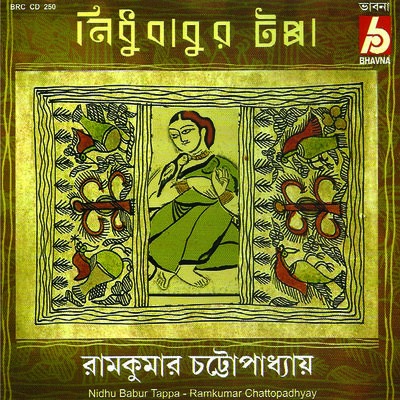
Nidhu Babu, who was working as a collectorate at Chhapra from 1776 to 1794, met a Hindustani Ustad and learned the unique art of Tappa from him. 7/17
He then adapted it to a more Bengali style by slowing down the tempo, transforming the body with love and tragedy and making it longer. Thus, Toppa was born, subsequently bringing about a revolution in Bengal’s musical landscape. 8/17
Nidhu Babu’s Toppas were considered indecent for women. They were categorized as appropriate for brothels and women who sang them were berated as salacious. 9/17
Bankim Chandra Chattopadhyay portrayed a woman character in his novel ‘Bishbriksha’ (Poison Tree) who ‘shamelessly’ declared at a public function that she would listen to Nidhu Babu’s Toppa alone and nothing else. 10/17
One of the key reasons behind the initial criticism could have been that most of Nidhu Babu’s Toppas were dedicated to a concubine of Mahananda Roy, Diwan of the Murshidabad collectorate. 11/17
The story of Roy’s tragic passion was even adapted into a film, ‘Amar Geeti’ (Immortal song), that featured a melodious Bengali song, ‘Tomari Tulona Tumi Pran’ (You are your comparison love), sung by Ram Kumar Chatterjee – a Toppa maestro of 20th century Bengal. 12/17

Over time, Toppa eventually found its way to the masses and became a popular part of Bengali theater. Gopal Ude, a jatra exponent of the 19th century, brought it into theater music, thus ensuring its spread among the non-elite in rural and small-town Bengal. 13/17
Toppa’s next transformation in Bengal can be accredited to Rabindranath Tagore. He used the core characteristics of Toppa and injected its essence into a wide range of his compositions to achieve certain melodic and emotional effects. 14/17
One of these pieces was featured in Satyajit Ray’s film ‘Kanchenjunga’ where the song ‘E Parobase Rabe Ke’ (Who will live in this alien land) was used to portray a middle-aged woman’s loneliness. 15/17

Another legend of Bengal’s contemporary music, Kabir Suman, had given a testimony of Toppa’s impact on Bengal’s musical paradigm in his song ‘Tini Briddho Holen’ (He grew old). The legacy of Toppa can be beautifully explored through his magical lyrics. 16/17

From dusty camel trails to timeless Bengali songs, Tappa’s remarkable journey survived and witnessed not only musical transformations but also social and cultural shifts and became immortal across generations. 17/17
Sources:
How a music form inspired by the songs of camel drivers of Punjab-Sindh became popular in Bengal (Scroll magazine article by Malini Nair [Kalpalata Fellow for Classical Music Writings] published on 8th January 2022)
@WikiCommons
Bhavna Records and Cassettes
YouTube
How a music form inspired by the songs of camel drivers of Punjab-Sindh became popular in Bengal (Scroll magazine article by Malini Nair [Kalpalata Fellow for Classical Music Writings] published on 8th January 2022)
@WikiCommons
Bhavna Records and Cassettes
YouTube
Loading suggestions...