
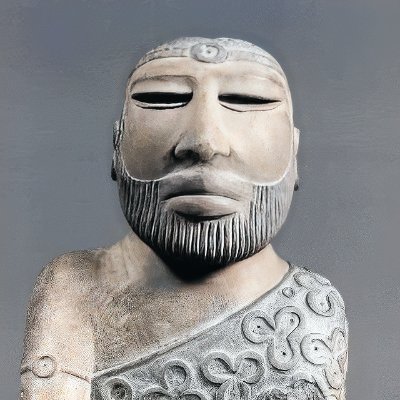
1/
#Thread on 'Nose-Piercing or नाक छिदवाना' in India.
Many opine that Nose-piercing is an Indian practive while contrary it was foreign to Indian custom 1000 years ago.
Let's begin
Pic Src in.pinterest.com
#Thread on 'Nose-Piercing or नाक छिदवाना' in India.
Many opine that Nose-piercing is an Indian practive while contrary it was foreign to Indian custom 1000 years ago.
Let's begin
Pic Src in.pinterest.com
2/
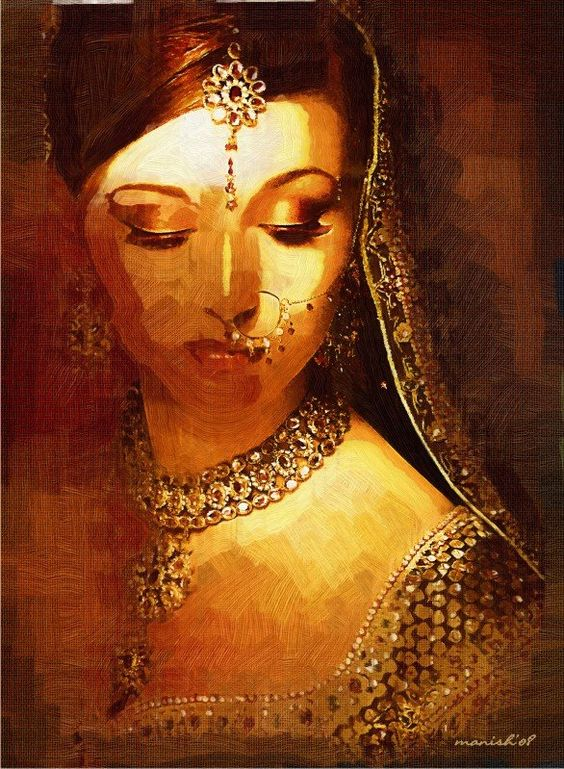
This is not same as Earlobe piercing which was known to the earliest Civilisations Indus, Mesopotamians, Minoan,
Nose piercing includes Bridge piercing, Septum piercing 'Nostril piercing'. This thread focus on 'Nostril' one.
#FactsMatter #Archaeology
#image4" target="_blank" rel="noopener" onclick="event.stopPropagation()">penn.museum
This is not same as Earlobe piercing which was known to the earliest Civilisations Indus, Mesopotamians, Minoan,
Nose piercing includes Bridge piercing, Septum piercing 'Nostril piercing'. This thread focus on 'Nostril' one.
#FactsMatter #Archaeology
#image4" target="_blank" rel="noopener" onclick="event.stopPropagation()">penn.museum
3/
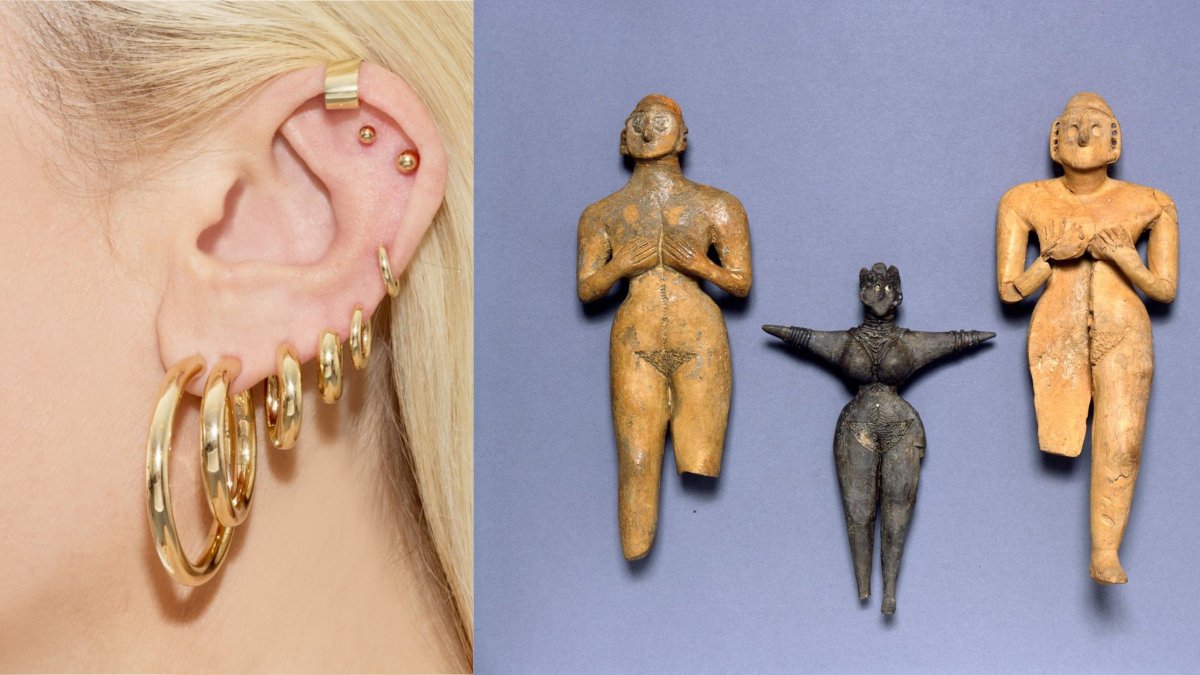
The first mention of nose-ring (for nose piercing) is in Old Testament when Abhraham's servant gives his daughter-in-law 'Rebekah' a golden nose-ring ("Shanf" in Hebrew). This practice of gifting rings to brides continues even today.
biblegateway.com
The first mention of nose-ring (for nose piercing) is in Old Testament when Abhraham's servant gives his daughter-in-law 'Rebekah' a golden nose-ring ("Shanf" in Hebrew). This practice of gifting rings to brides continues even today.
biblegateway.com
4/
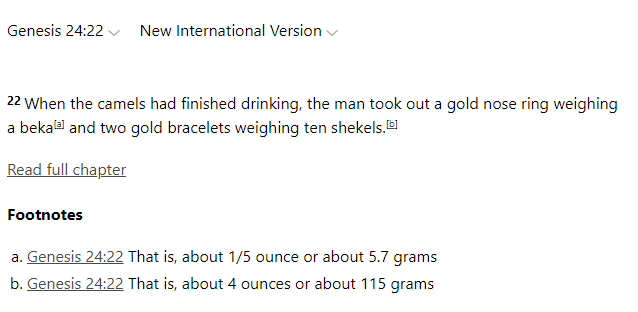
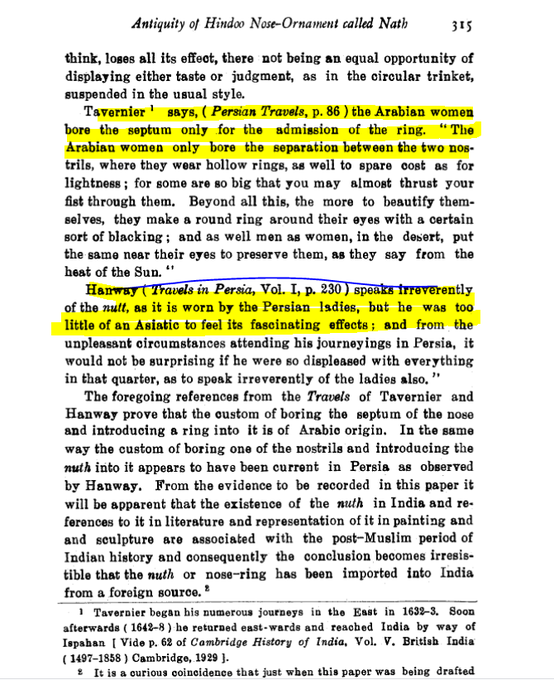
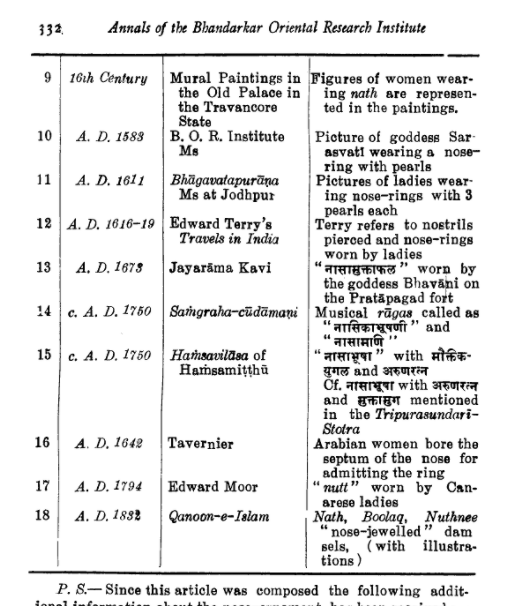
Nose-Pin or नथ is expressed on sculptures paintings in Moghul period not before
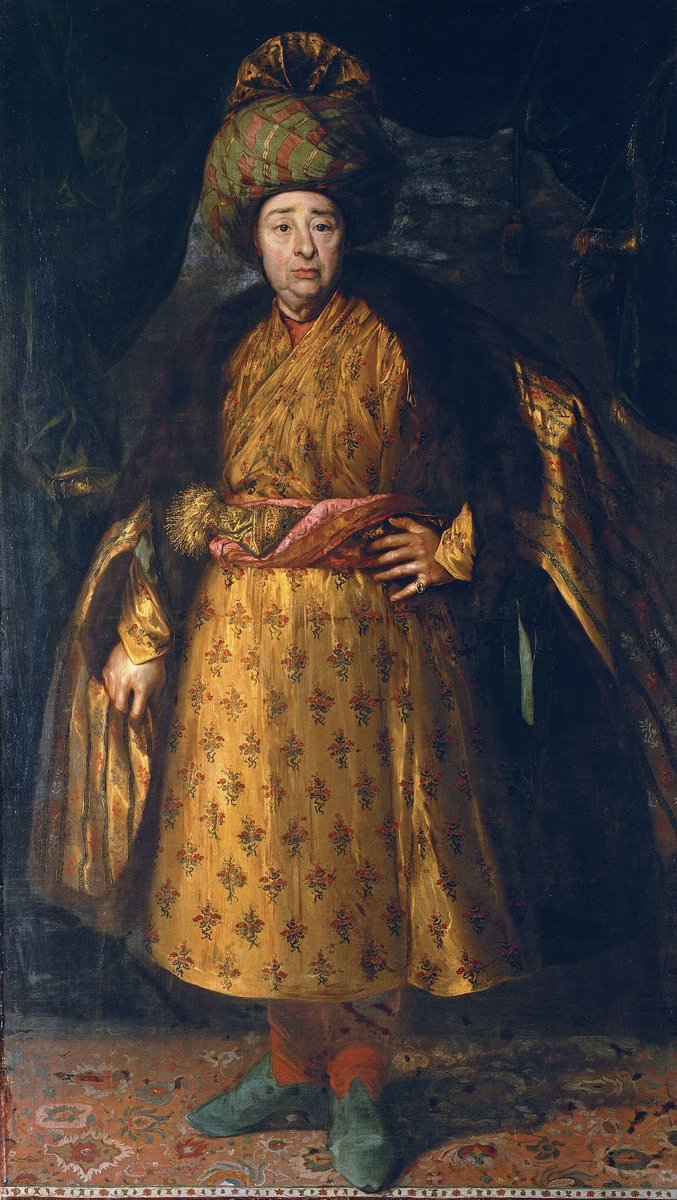
Tavernier (c. 1638 ce) describes of Arabian woman wearing Nose-Pins while other Traveller 'Hanway' speaks irreverently of the 'nutt' is proof of Nose-pin of Arabic origin
jstor.org
Nose-Pin or नथ is expressed on sculptures paintings in Moghul period not before
Tavernier (c. 1638 ce) describes of Arabian woman wearing Nose-Pins while other Traveller 'Hanway' speaks irreverently of the 'nutt' is proof of Nose-pin of Arabic origin
jstor.org
5/
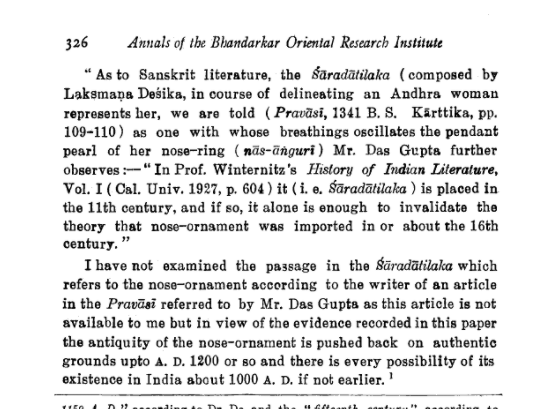
11 th century is the earliest references given for a nose-ring in a Sanskrit Literature.
Saradatilaka by Laksmana Desika mentions "as one with those breathings oscillates the pendant pear of her nose-ring (Nas-Anguri)
Let us assume it is nosepin proper for sake of thread.
11 th century is the earliest references given for a nose-ring in a Sanskrit Literature.
Saradatilaka by Laksmana Desika mentions "as one with those breathings oscillates the pendant pear of her nose-ring (Nas-Anguri)
Let us assume it is nosepin proper for sake of thread.
6/
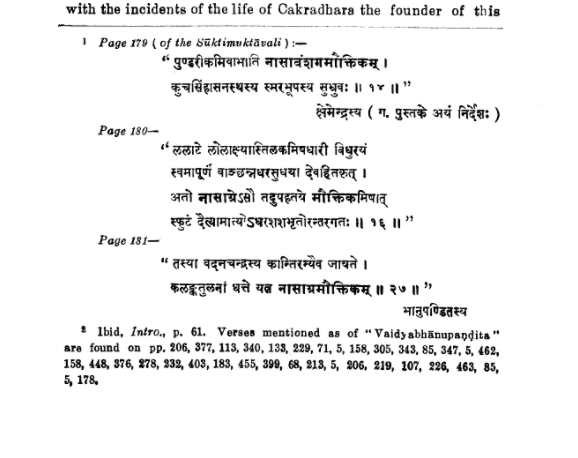
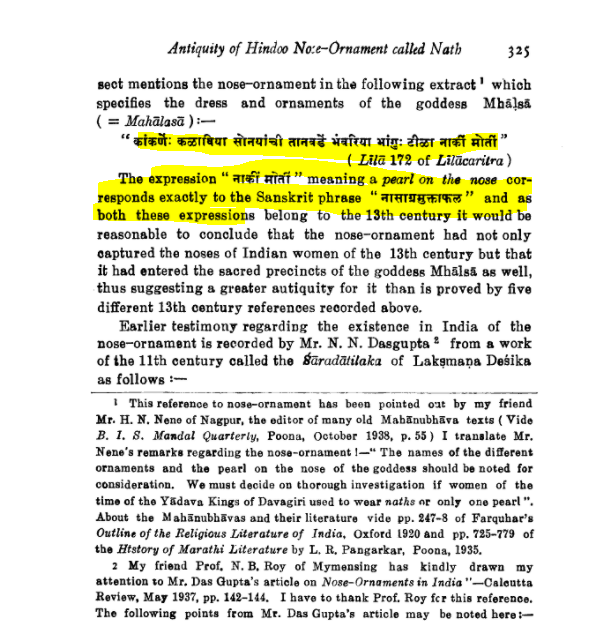
c. 1257 ce reference is given for a nose-ring with a pearl (nasagramauktika) in Suktimuktavali.
c. 1257 ce reference is given for a nose-ring with a pearl (nasagramauktika) in Suktimuktavali.
7/
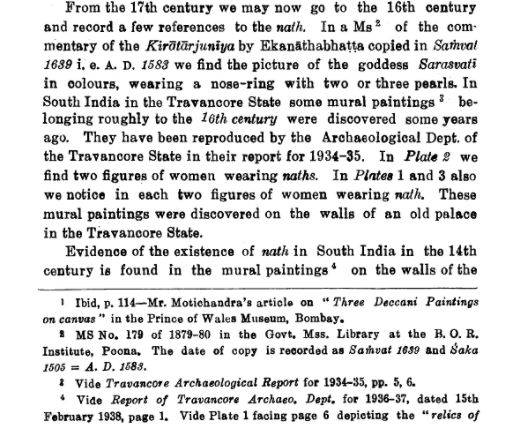
In a music party scene on Tiruvambadi shrine in the Śri Padmanabhasvāmi temple, Trivandrum 14th century. Many of women wear nose-rings (with three pearls) in their left nostrils
Src: Annals of the Bhandarkar Oriental Research Institute
In a music party scene on Tiruvambadi shrine in the Śri Padmanabhasvāmi temple, Trivandrum 14th century. Many of women wear nose-rings (with three pearls) in their left nostrils
Src: Annals of the Bhandarkar Oriental Research Institute
8/
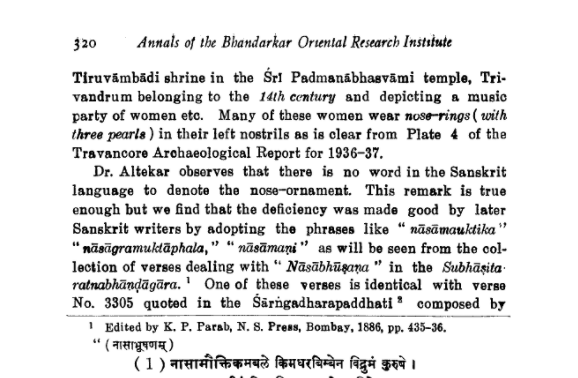
1583 AD
Commentary of the Kiratarjuniya by Ekanathabhatta in Samvant 1639, Godess Sarasvati is wearing a nose pin.
in Mural painting TAR 1934-35, woman are wearing 'Nath' in plate 1, 2 & 3
1583 AD
Commentary of the Kiratarjuniya by Ekanathabhatta in Samvant 1639, Godess Sarasvati is wearing a nose pin.
in Mural painting TAR 1934-35, woman are wearing 'Nath' in plate 1, 2 & 3
9/
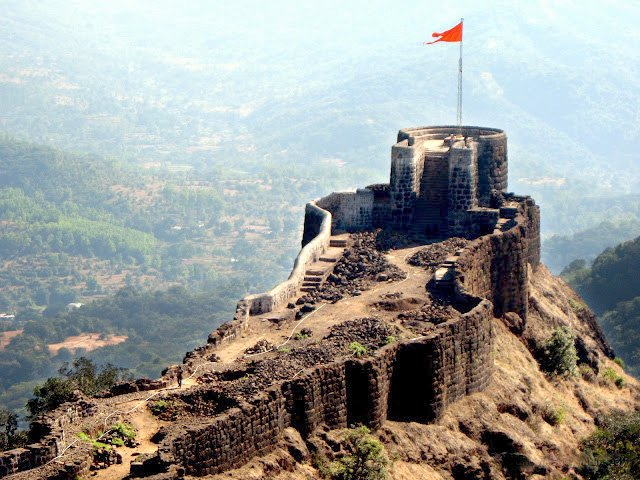
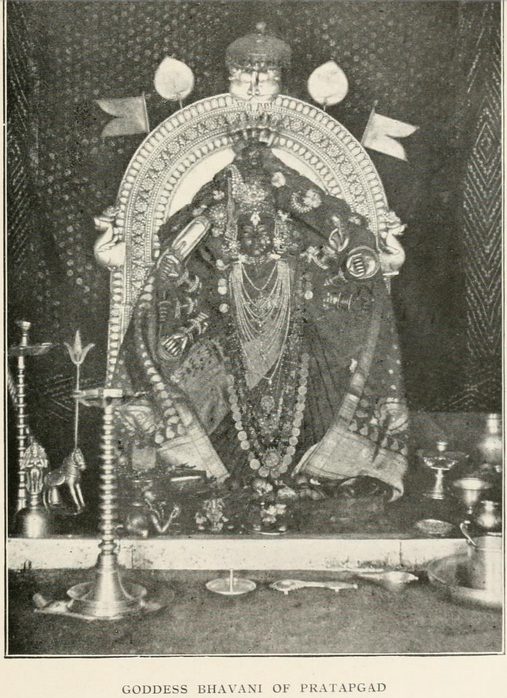
Nose pin worn by Maa Bhavani in Pratapgarh Fort temple by Shivaji Maharaj is first evidence of Indian Godess wearing Nose-pin.
The fort was built in 1656 ce.
pic credit @vvkbkvv
Nose pin worn by Maa Bhavani in Pratapgarh Fort temple by Shivaji Maharaj is first evidence of Indian Godess wearing Nose-pin.
The fort was built in 1656 ce.
pic credit @vvkbkvv
10/
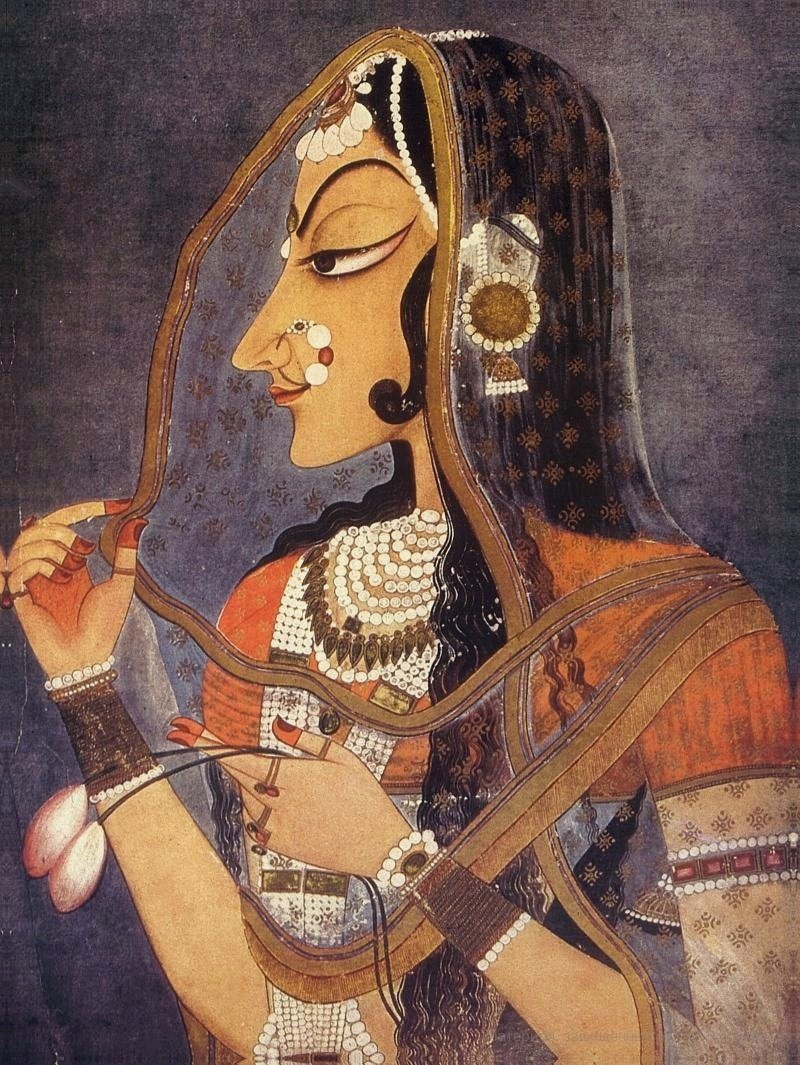
1750AD : in the music called संग्रह-चूड़ामणि composed by Govindacharya नासामणि नासिकभूसं
"नासिकाभूषणी मेलाआसामाणिजय"
Painting: Radha (Bani Thani), Kishangarh, ca. 1750, National Museum New Delhi with nose-pin
1750AD : in the music called संग्रह-चूड़ामणि composed by Govindacharya नासामणि नासिकभूसं
"नासिकाभूषणी मेलाआसामाणिजय"
Painting: Radha (Bani Thani), Kishangarh, ca. 1750, National Museum New Delhi with nose-pin
11/
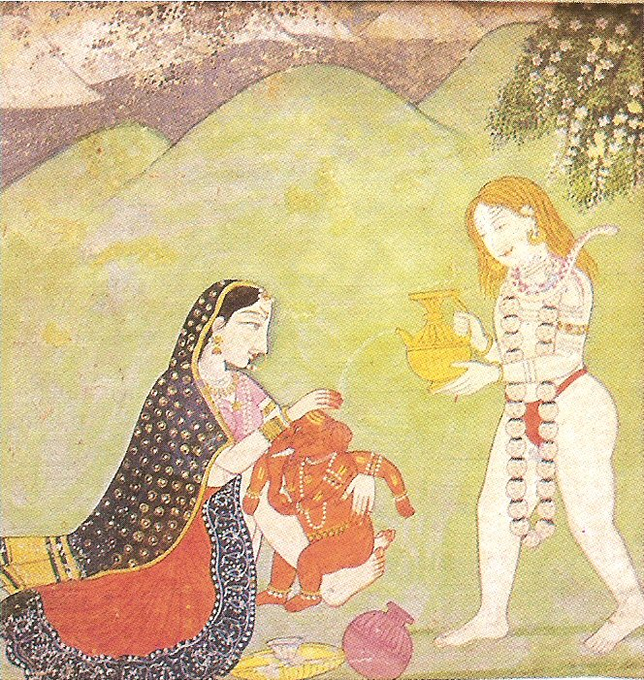
Godess Parvati holding Baby Ganesha is wearing a Nose-pin
Kangra Miniature Painting 18th Century
Allahbad Museum, New Delhi.
Godess Parvati holding Baby Ganesha is wearing a Nose-pin
Kangra Miniature Painting 18th Century
Allahbad Museum, New Delhi.
12/
There are sparse / unclear shloka ascribed to Shankaracharya and MBH (w.r.t. Draupadi) validity of which could not be established.
Other than that there are no other proof of Nose-Pin in India before ca. 1000 ce
There are sparse / unclear shloka ascribed to Shankaracharya and MBH (w.r.t. Draupadi) validity of which could not be established.
Other than that there are no other proof of Nose-Pin in India before ca. 1000 ce
13/
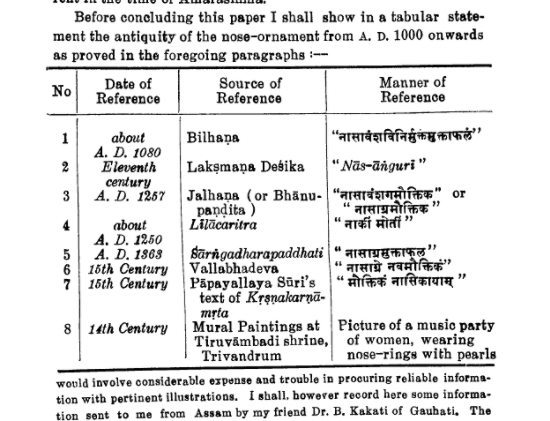
For further reading please read THE ANTIQUITY OF THE HINDOO NOSE-ORNAMENT CALLED "NATH"
jstor.org
For further reading please read THE ANTIQUITY OF THE HINDOO NOSE-ORNAMENT CALLED "NATH"
jstor.org
14/
While I was searching what is the concept of नथ pahanana. I was astonished to know the weird reason of 'नथ उतारना'. Enthusiasts may like to do independent search on this.
While I was searching what is the concept of नथ pahanana. I was astonished to know the weird reason of 'नथ उतारना'. Enthusiasts may like to do independent search on this.
Loading suggestions...