

Agní is more closely connected with human life than any other god.
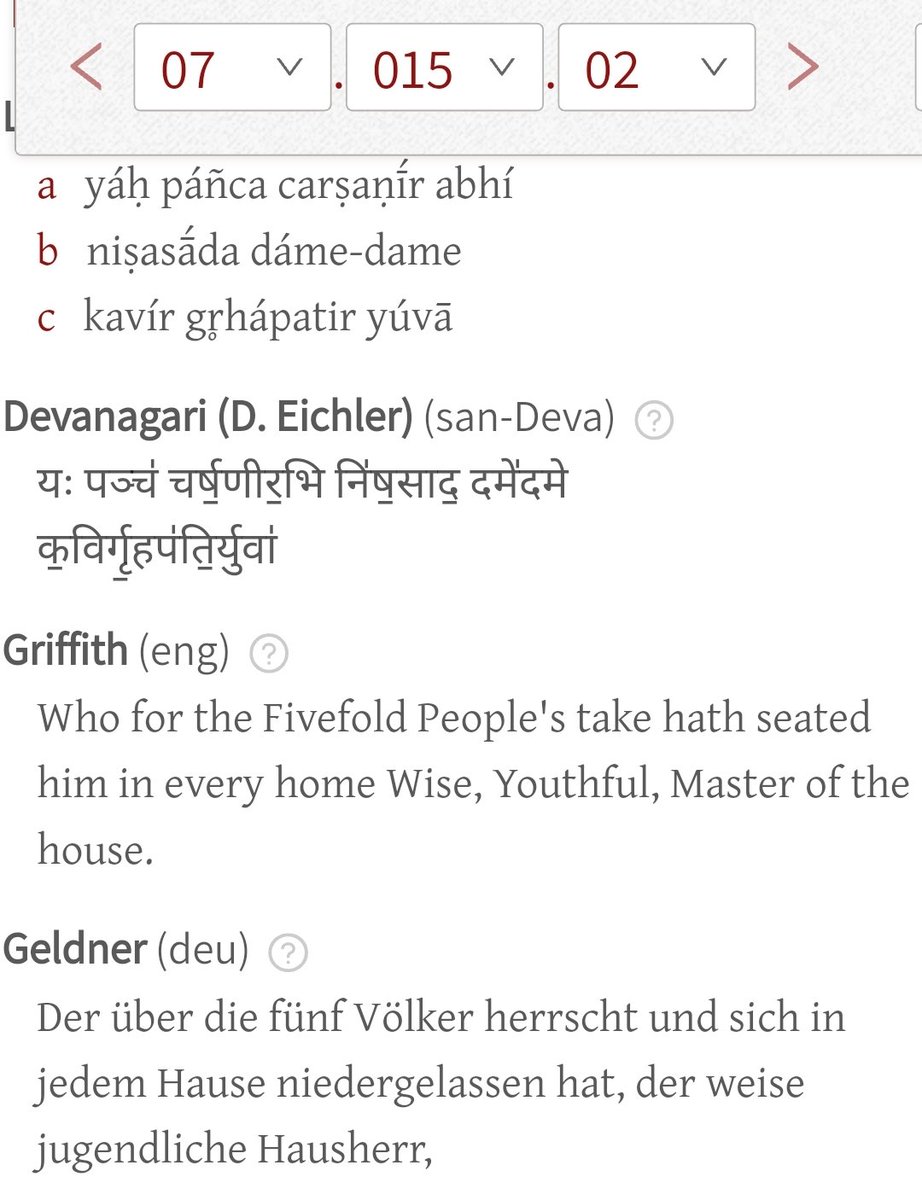
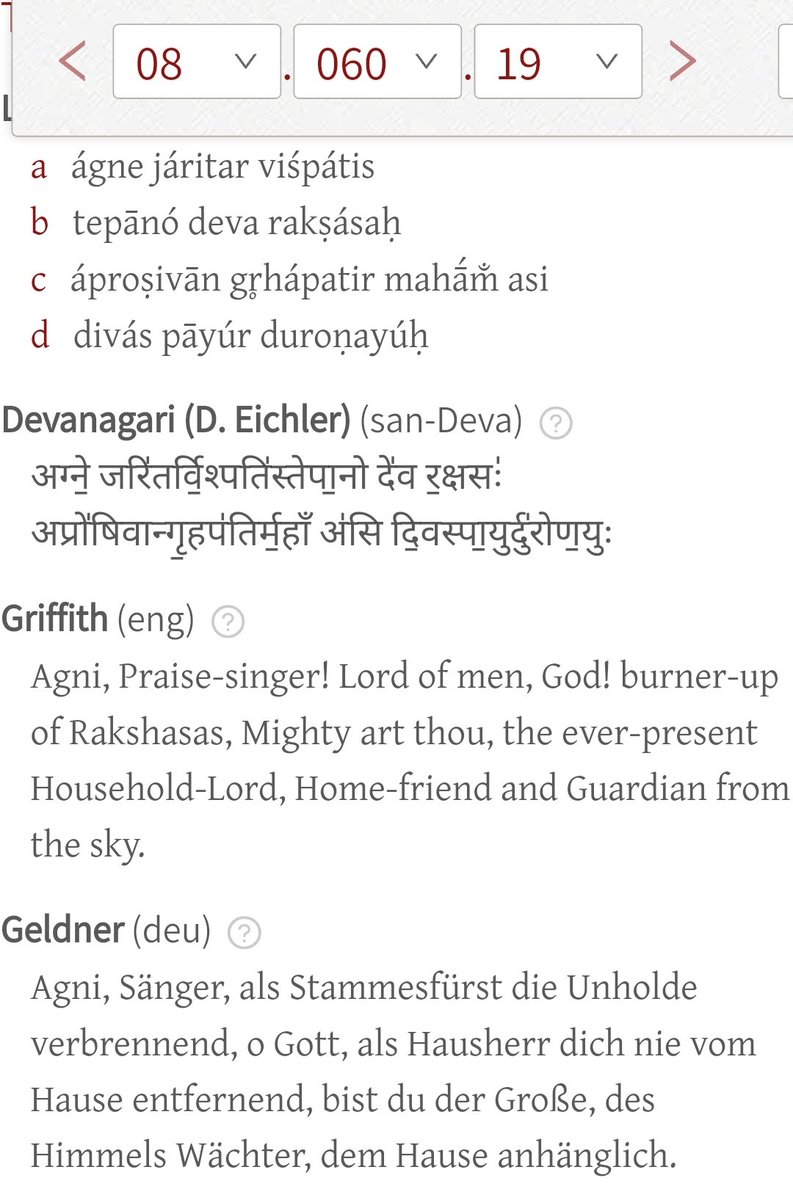
Agní dwells in every abode (नि॑ष॒साद॒ दमे॑दमे … क॒विर् गृ॒हप॑ति॒र् युवा॑), never leaving his home (अप्रो॑षिवान्).
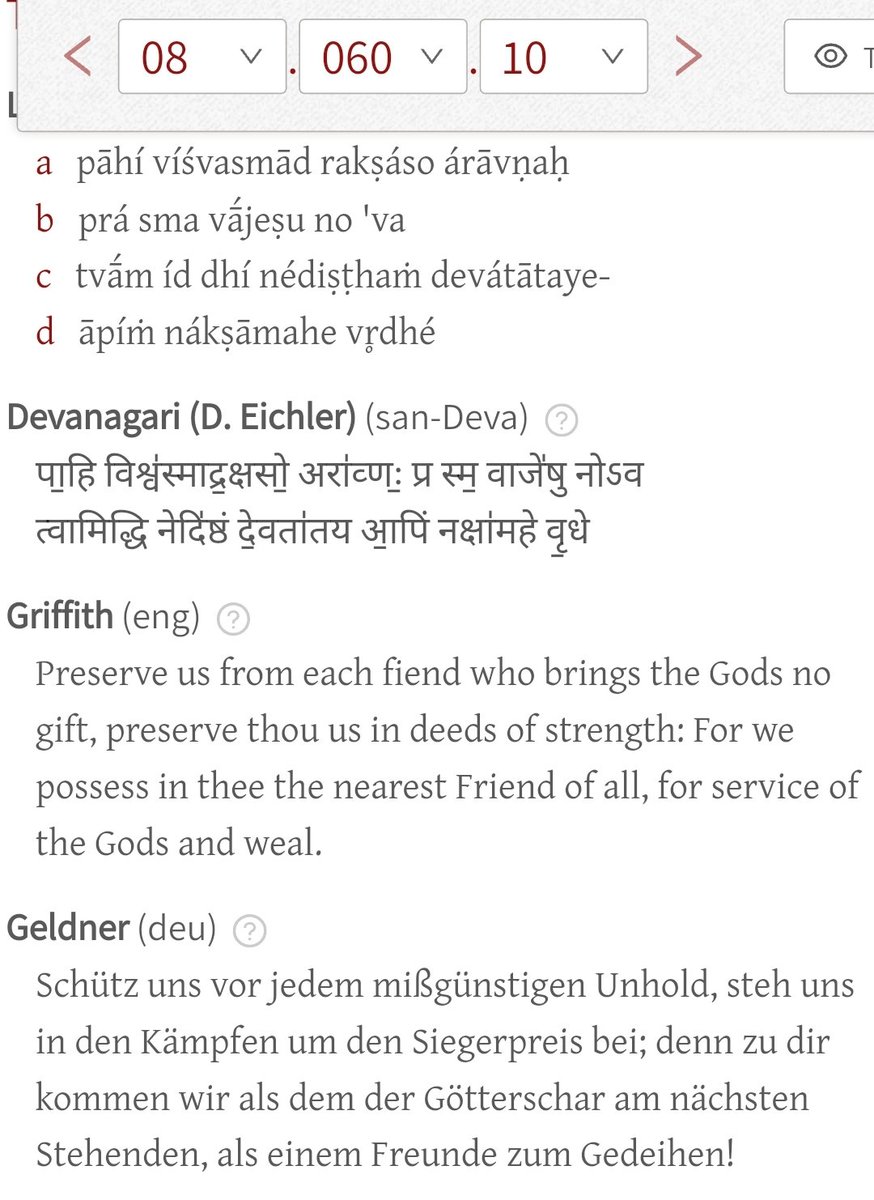
He is the nearest kinsman of man (नेदि॑ष्ठं … आ॒पिं).
Agní dwells in every abode (नि॑ष॒साद॒ दमे॑दमे … क॒विर् गृ॒हप॑ति॒र् युवा॑), never leaving his home (अप्रो॑षिवान्).
He is the nearest kinsman of man (नेदि॑ष्ठं … आ॒पिं).

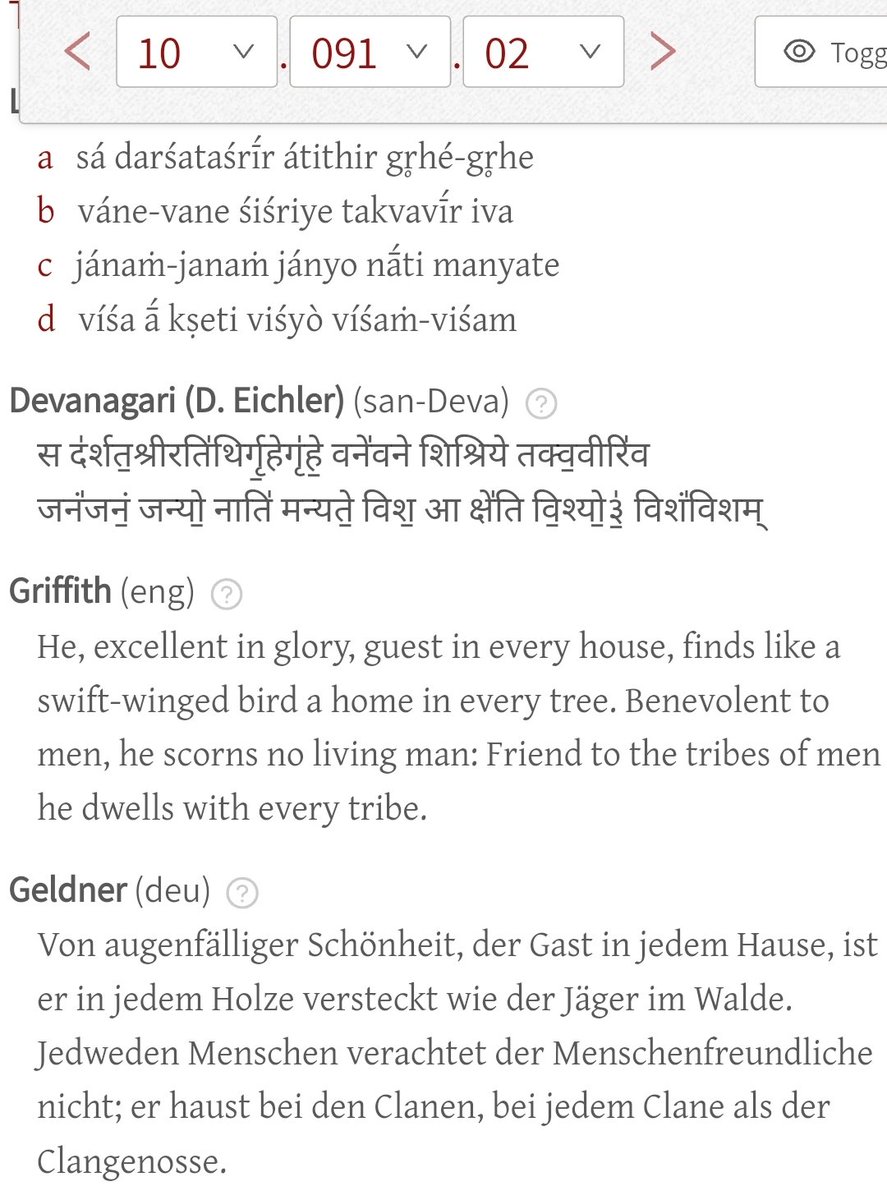
Agní is further constantly designated a guest (átithi) in human abodes.
He is a guest in every house (अति॑थिर् गृ॒हेगृ॑हे॒), and the first guest of settlers (त्वाम॑ग्ने॒ अति॑थिं पू॒र्व्यं विशः॑ शो॒चिष्के॑शं गृ॒हप॑तिं॒ नि षे॑दिरे).
He is a guest in every house (अति॑थिर् गृ॒हेगृ॑हे॒), and the first guest of settlers (त्वाम॑ग्ने॒ अति॑थिं पू॒र्व्यं विशः॑ शो॒चिष्के॑शं गृ॒हप॑तिं॒ नि षे॑दिरे).
For he is an immortal [a term much more commonly applied to Agní than to any other god] (पृ॒थु॒पाजा॒ अम॑र्त्यो … अ॒ग्निर् य॒ज्ञस्य॑ हव्य॒वाट्), who has taken up his abode among mortals (यो भूद् अ॒मृतो॒ मर्त्ये॒ष्व् आ होता॑ म॒न्द्रत॑मो वि॒शि).
![For he is an immortal [a term much more commonly applied to Agní than to any other god] (पृ॒थु॒पाजा॒...](https://pbs.twimg.com/media/Fdo6LwSagAUtfpY.jpg)
![For he is an immortal [a term much more commonly applied to Agní than to any other god] (पृ॒थु॒पाजा॒...](https://pbs.twimg.com/media/Fdo6MCfaMAAeaZc.jpg)
![For he is an immortal [a term much more commonly applied to Agní than to any other god] (पृ॒थु॒पाजा॒...](https://pbs.twimg.com/media/Fdo6MPKaMAAcJk4.jpg)
Agní is the only god to whom the frequent epithet gṛhápati, "lord of the house", is applied. The attribute "domestic" (dámūnas) is also generally connected with him (दमू॑ना गृ॒हप॑ति॒र् दम॒ आँ अ॒ग्निर् भु॑वद् रयि॒पती॑ रयी॒णाम्).
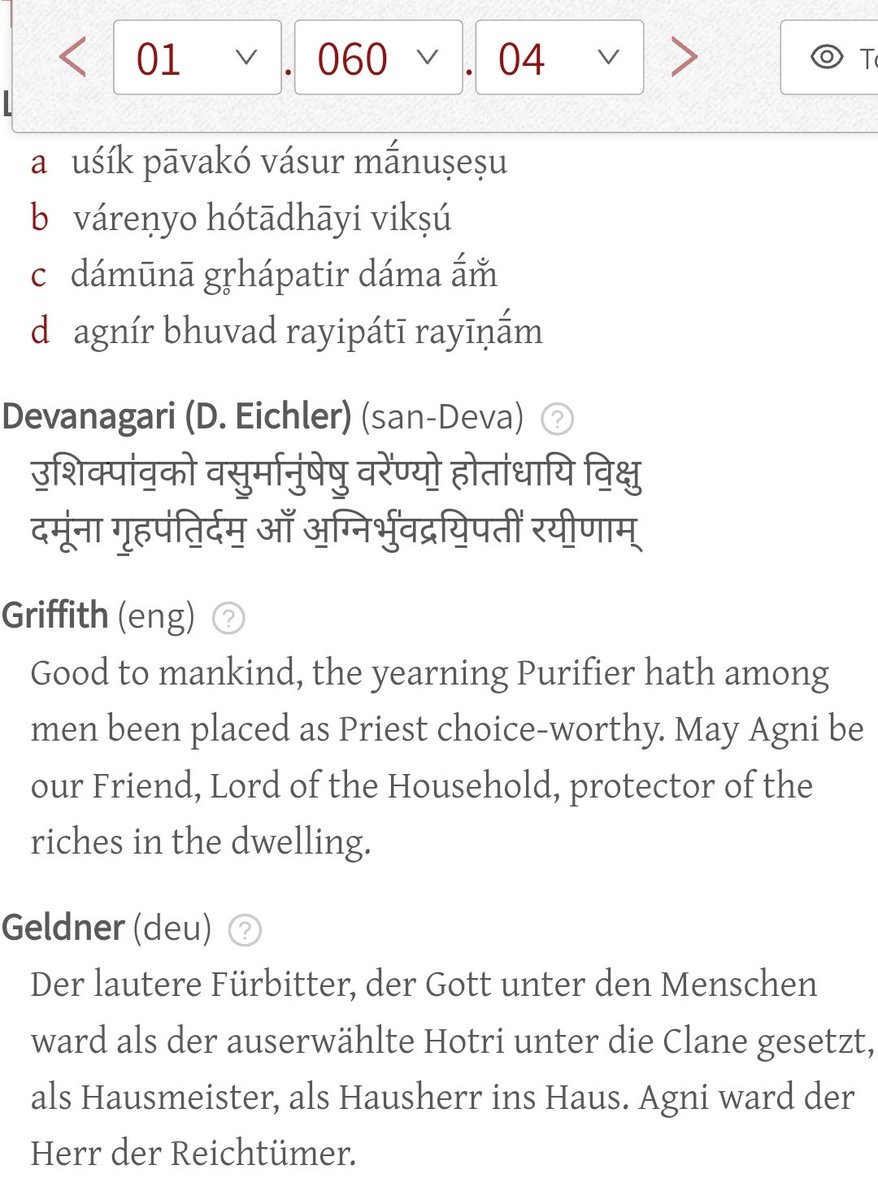
Note that in the later elaborate ritual of the 3 sacrificial fires, the one from which the other two (āhavanī́ya & dákṣiṇa) were taken, is called the gā́rhapatya, i.e. that which belongs to gṛhápati. Even in the Ṛgvedá there are traces of the sacrificial fire having been ..
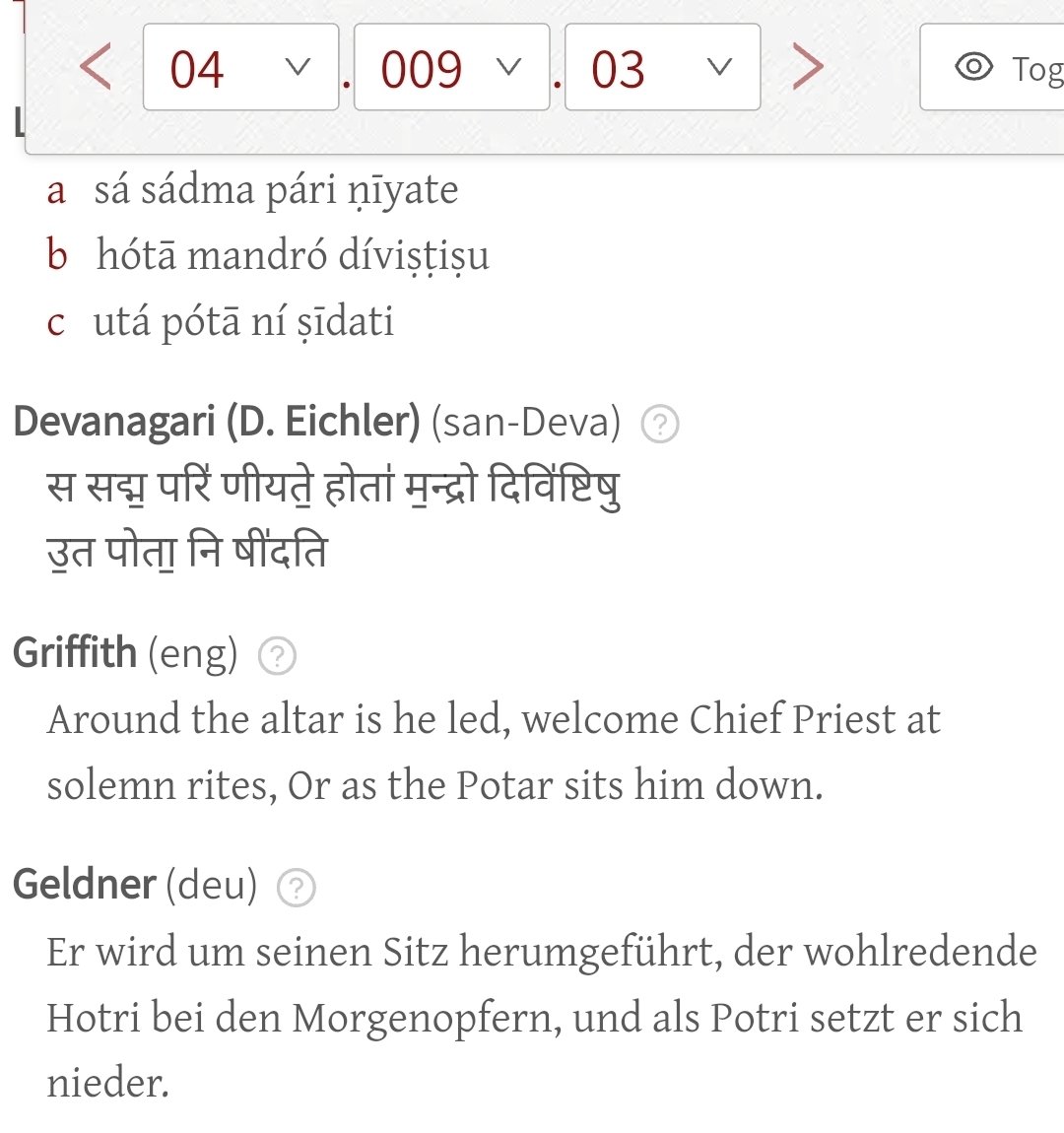
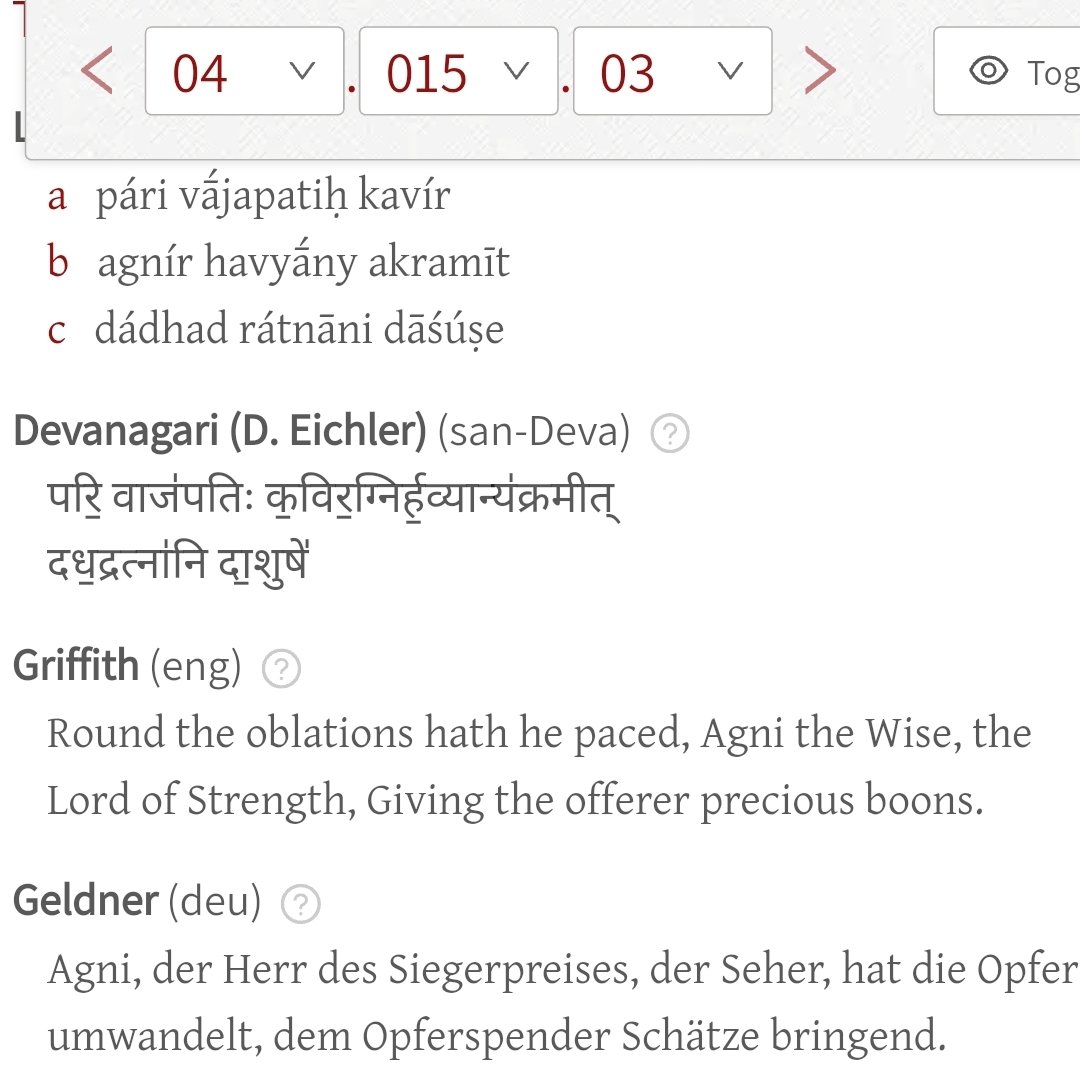
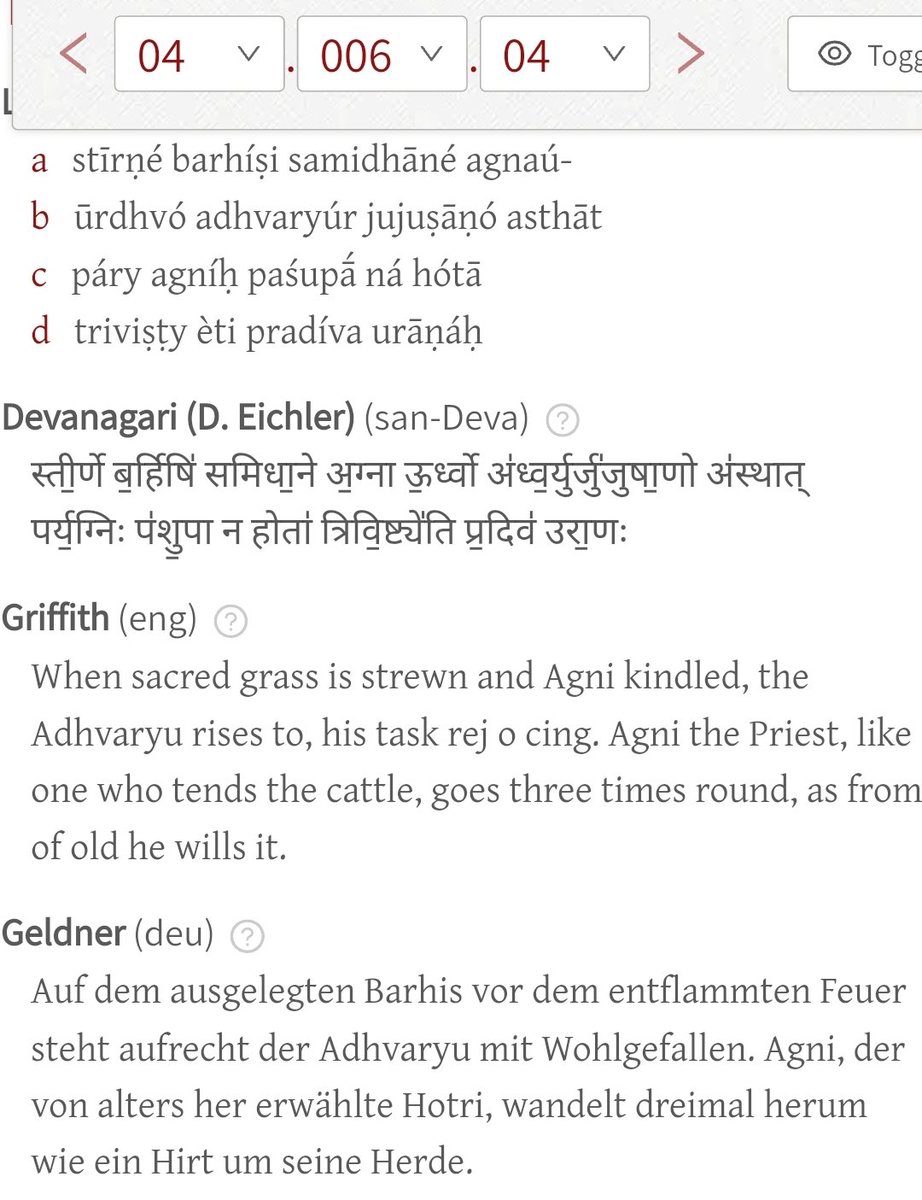
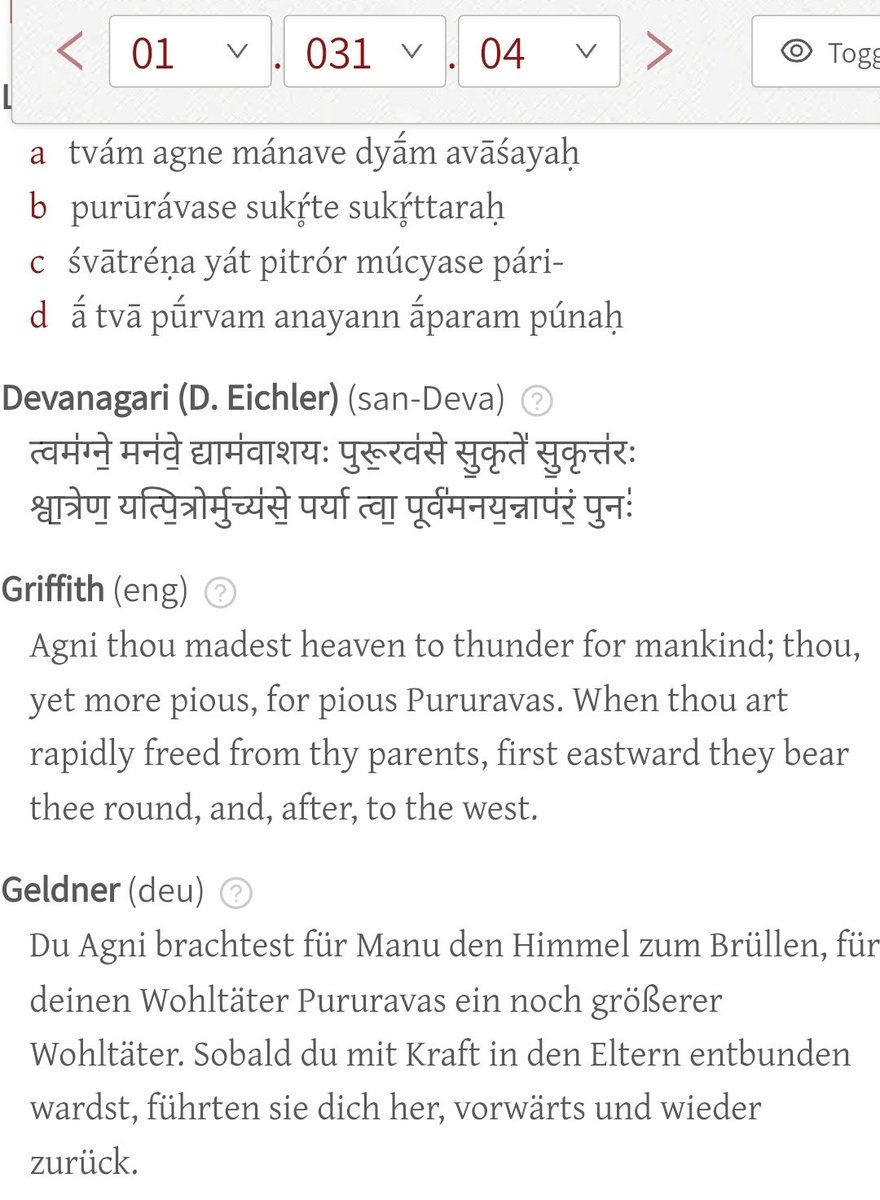
.. transported. For Agní is led round (सद्म॒ परि॑ णीयते॒), strides round the offerings (परि॒ वाज॑पतिः क॒विर् अ॒ग्निर् ह॒व्यान्य् अ॑क्रमीत्) or goes round the sacrifice 3 times (पर्य् अ॒ग्निः प॑शु॒पा न होता॑ त्रिवि॒ष्ट्य् ए॑ति); and as soon as he is released from his parents, ..
.. he's led to the east and again to the west (श्वा॒त्रेण॒ यत् पि॒त्रोर् मुच्य॑से॒ पर्य् आ त्वा॒ पूर्व॑म् अनय॒न्न् आ अप॑रं॒ पुनः॑).
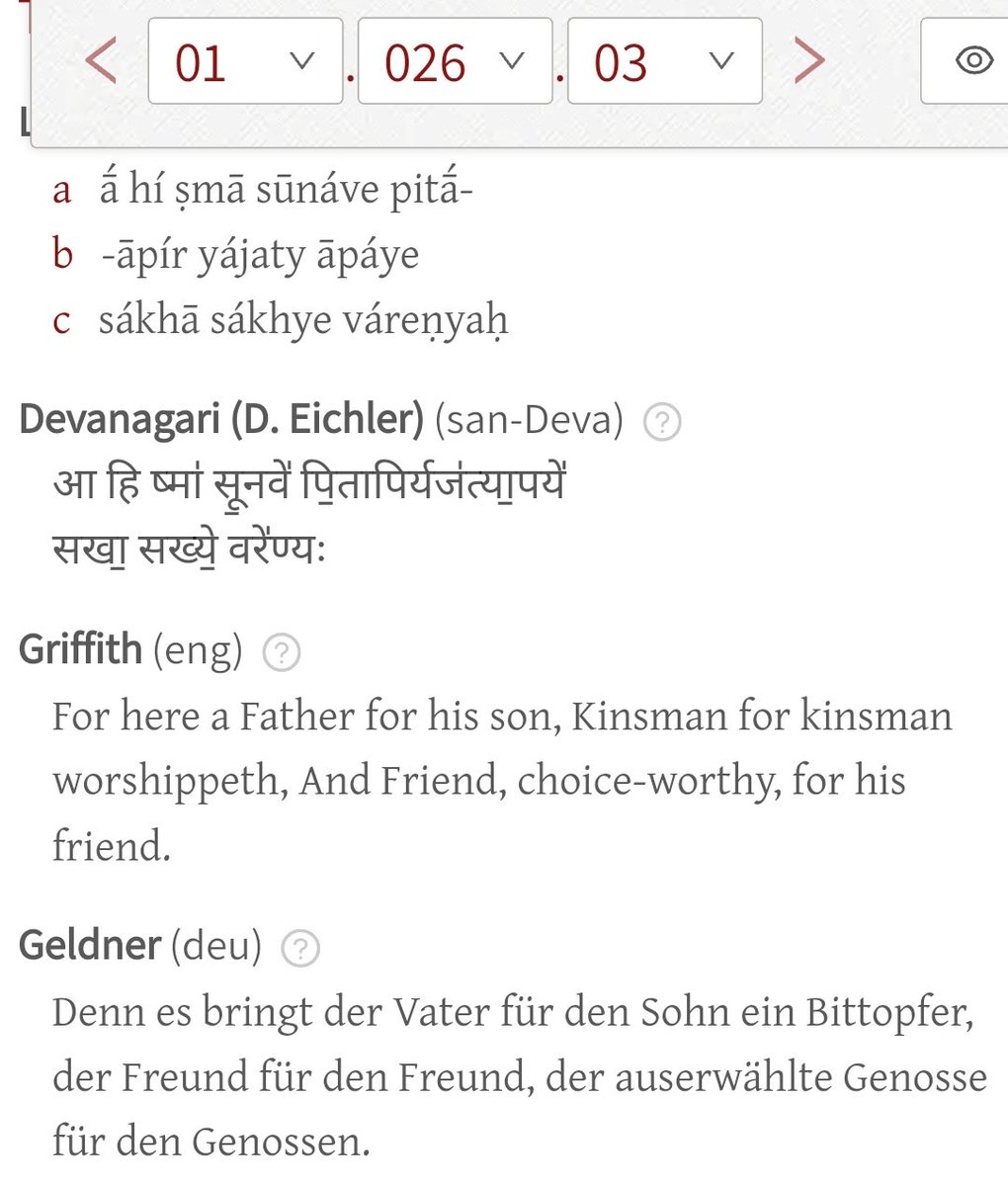
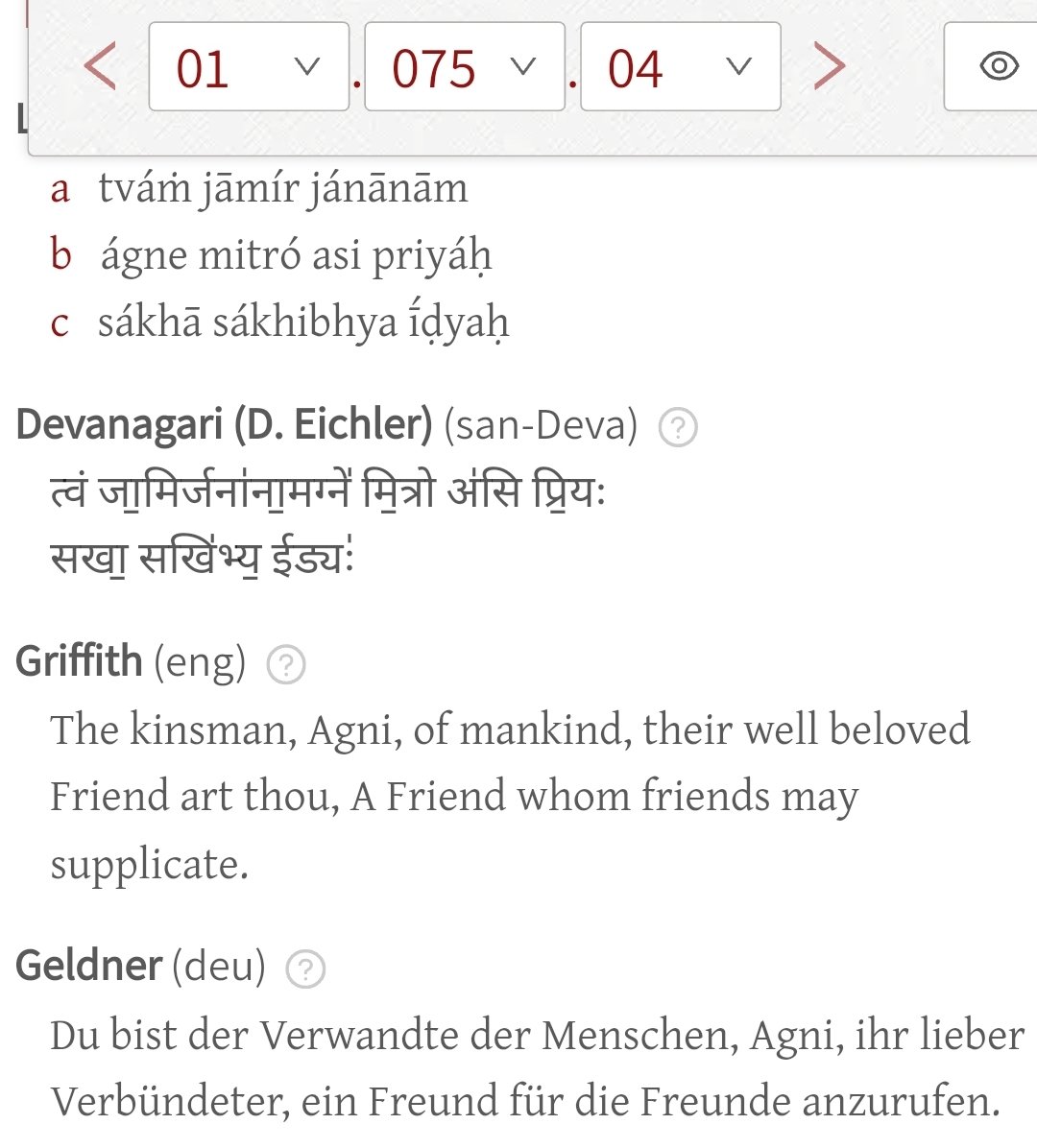
Often Agní is a kinsman or a friend (आपिर् यज॑त्य् आ॒पये॑, सखा॒ सख्ये॒ वरे॑ण्यः, जा॒मिर् जना॑ना॒म् अग्ने॑ मि॒त्रो अ॑सि प्रि॒यः).
Often Agní is a kinsman or a friend (आपिर् यज॑त्य् आ॒पये॑, सखा॒ सख्ये॒ वरे॑ण्यः, जा॒मिर् जना॑ना॒म् अग्ने॑ मि॒त्रो अ॑सि प्रि॒यः).
But he is oftenest described as a father [even mother] (पि॒ता मा॒ता सद॒म् इन् मानु॑षाणाम्), sometimes also as a brother (अग्ने॒ भ्रातः॒), and even as a son (त्वं पु॒त्रो भ॑वसि॒ यस्ते ऽवि॑ध॒त्), of his worshippers.
Such terms seem to point to an older order of things, when Agní..
Such terms seem to point to an older order of things, when Agní..
![But he is oftenest described as a father [even mother] (पि॒ता मा॒ता सद॒म् इन् मानु॑षाणाम्), sometime...](https://pbs.twimg.com/media/Fdo6P4qaMAEC6ut.jpg)
![But he is oftenest described as a father [even mother] (पि॒ता मा॒ता सद॒म् इन् मानु॑षाणाम्), sometime...](https://pbs.twimg.com/media/Fdo6QGUaAAAsEYZ.jpg)
![But he is oftenest described as a father [even mother] (पि॒ता मा॒ता सद॒म् इन् मानु॑षाणाम्), sometime...](https://pbs.twimg.com/media/Fdo6QbqaAAAjcSA.jpg)
.. was less sacrificial and, as the centre of domestic life, produced an intimate relation such as is not easily found in the worship of other gods.
The continuity of Agní's presence in the house would naturally connect him more closely than any other god with the past. Hence ..
The continuity of Agní's presence in the house would naturally connect him more closely than any other god with the past. Hence ..

.. the ancestral friendship of Agni with his worshipper (स॒ख्या पित्र्या॑णि॒).
He is the god whom the forefathers kindled, to whom they prayed.
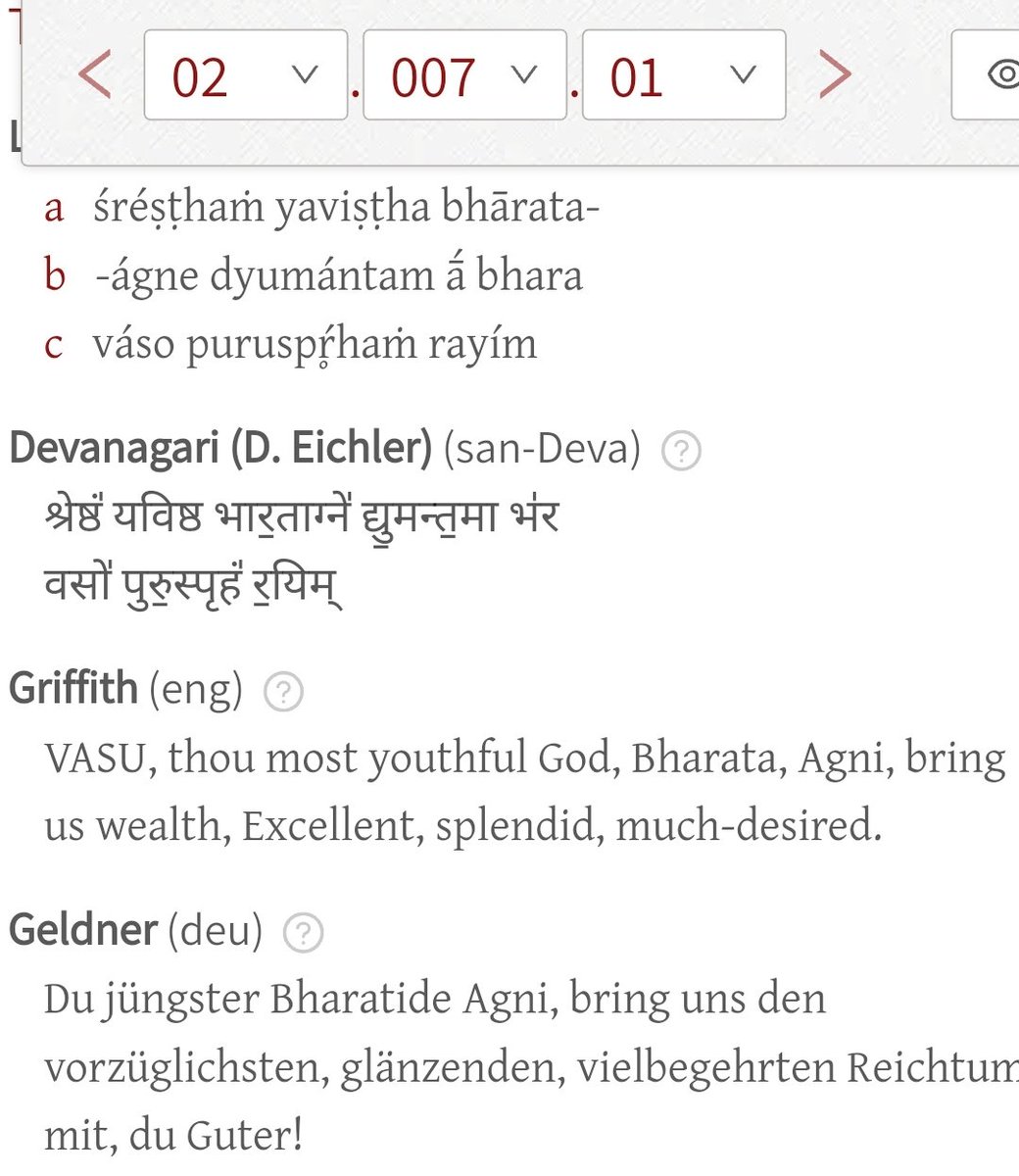
Thus mention is made of an Agní of Bharatá, of Vadhryaśvá, of Devávāta, of Dívodasa, and of Trasádasyu.
He is the god whom the forefathers kindled, to whom they prayed.
Thus mention is made of an Agní of Bharatá, of Vadhryaśvá, of Devávāta, of Dívodasa, and of Trasádasyu.

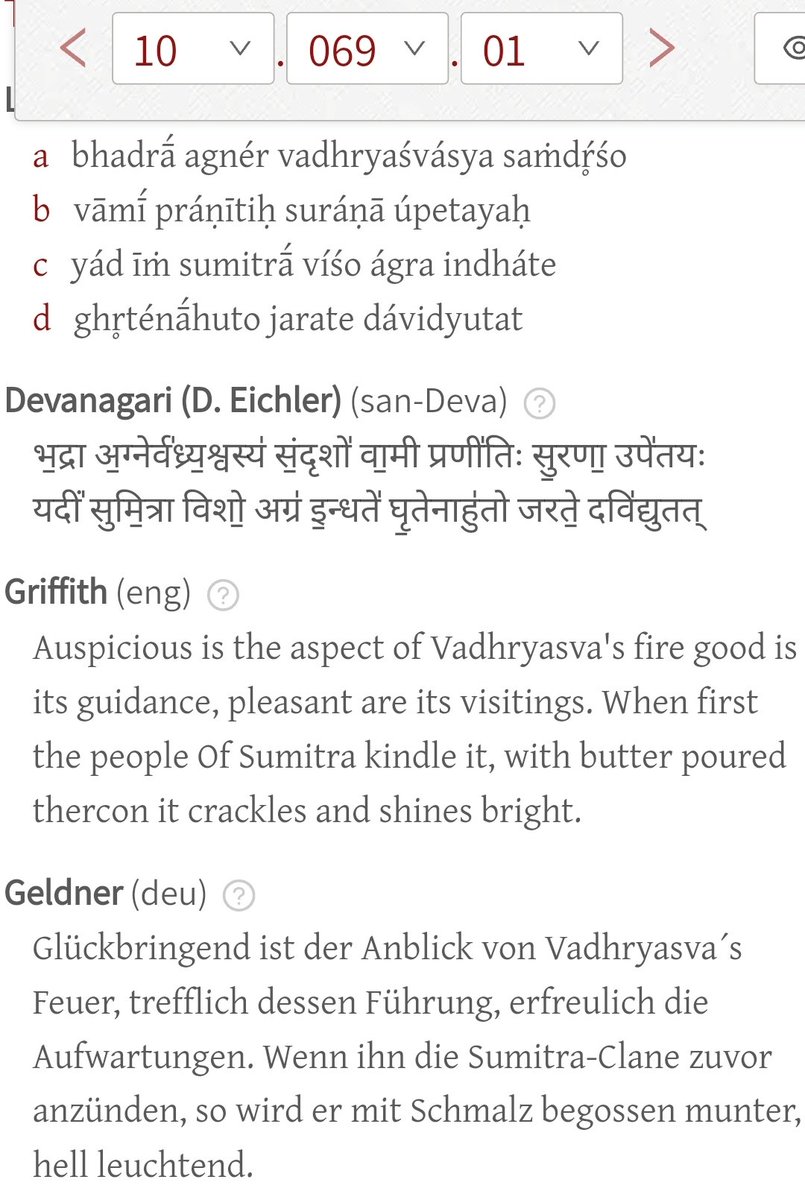
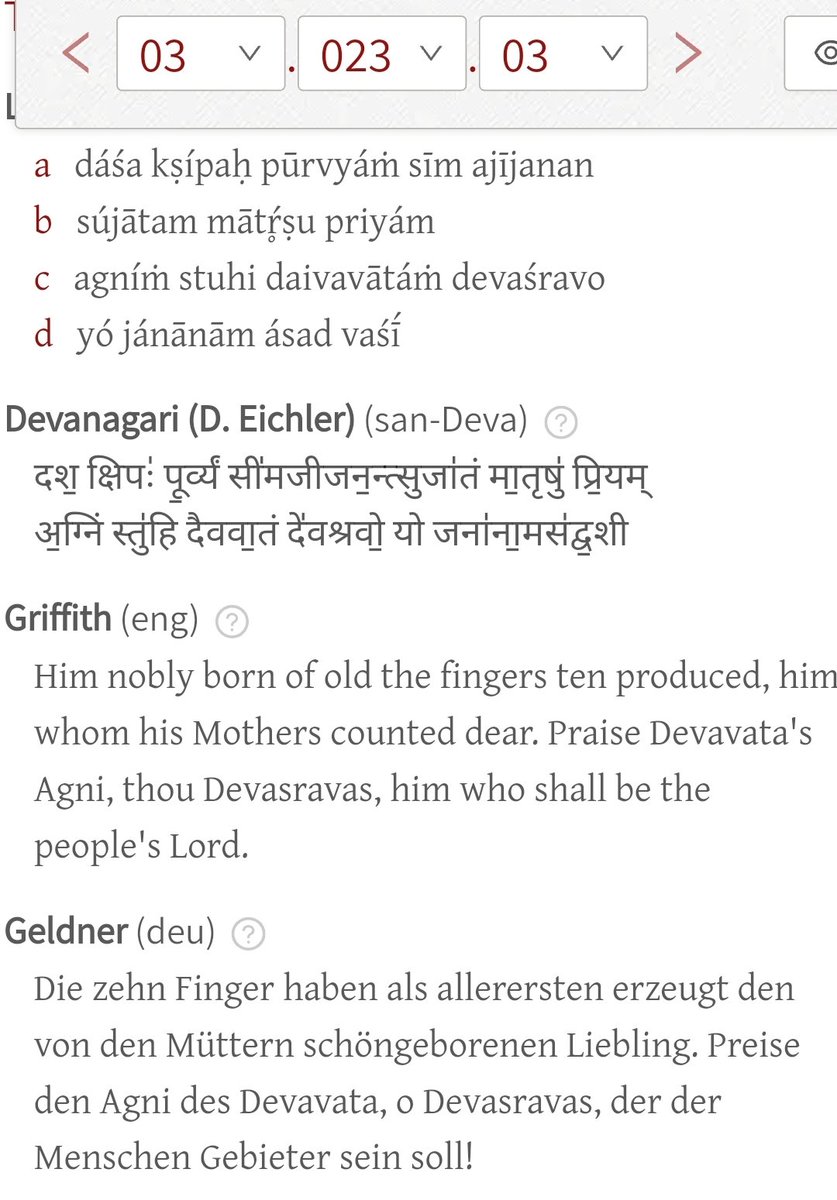
The names of ancestors sometimes identified with Agní are in part those of families to which composers of the Ṛgvedá belonged. Some of these, like Vásiṣṭha, seem to have had a historical origin, while others, like Áṅgiras and Bhṛ́gu, may be mythical.
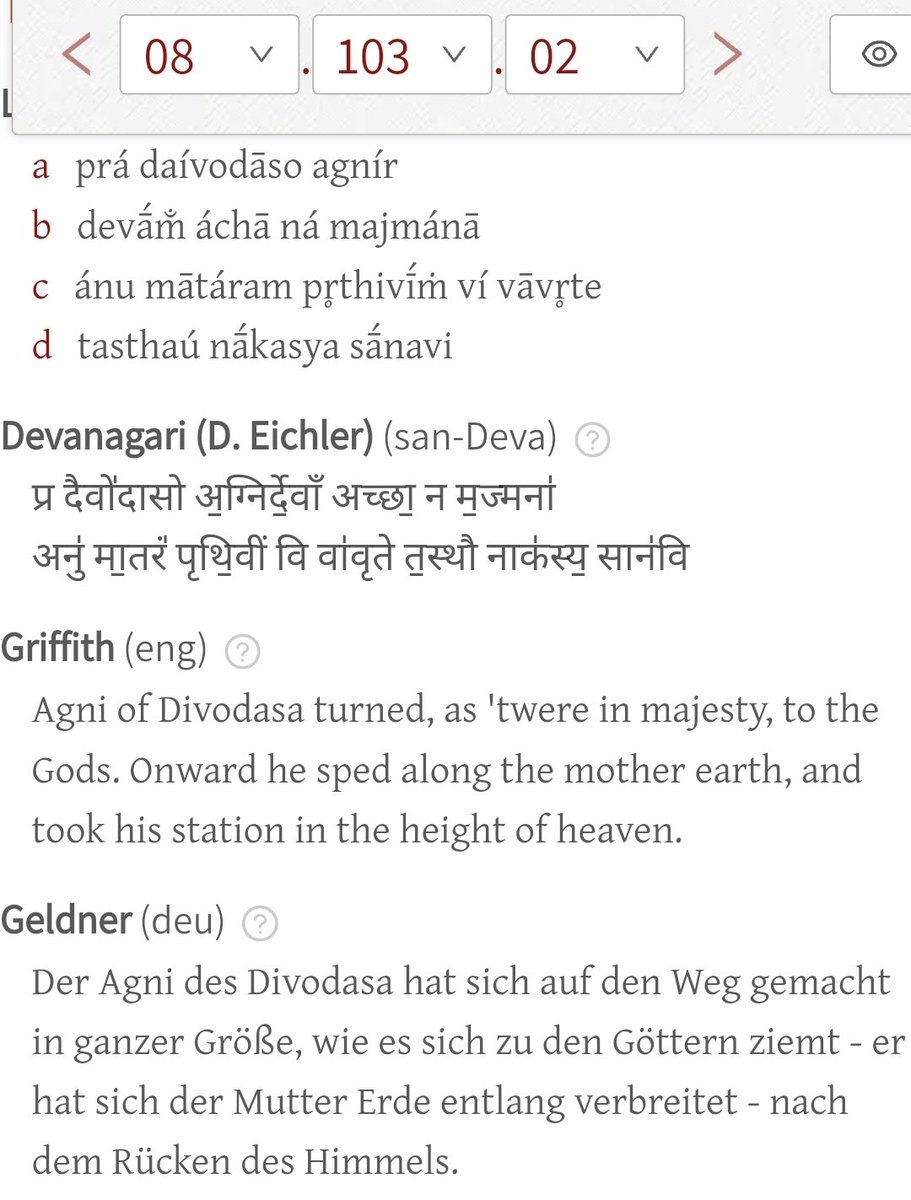
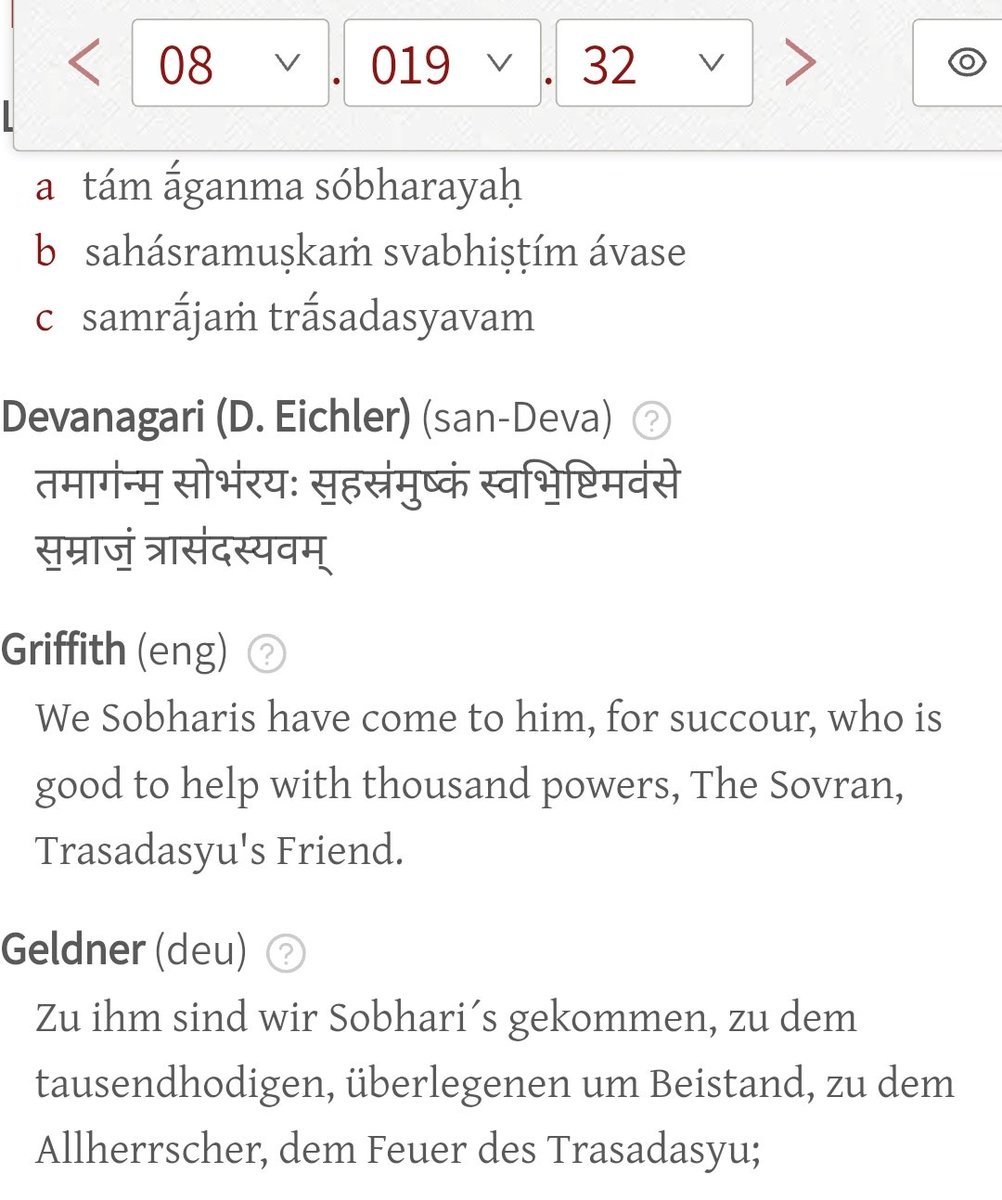
Loading suggestions...