

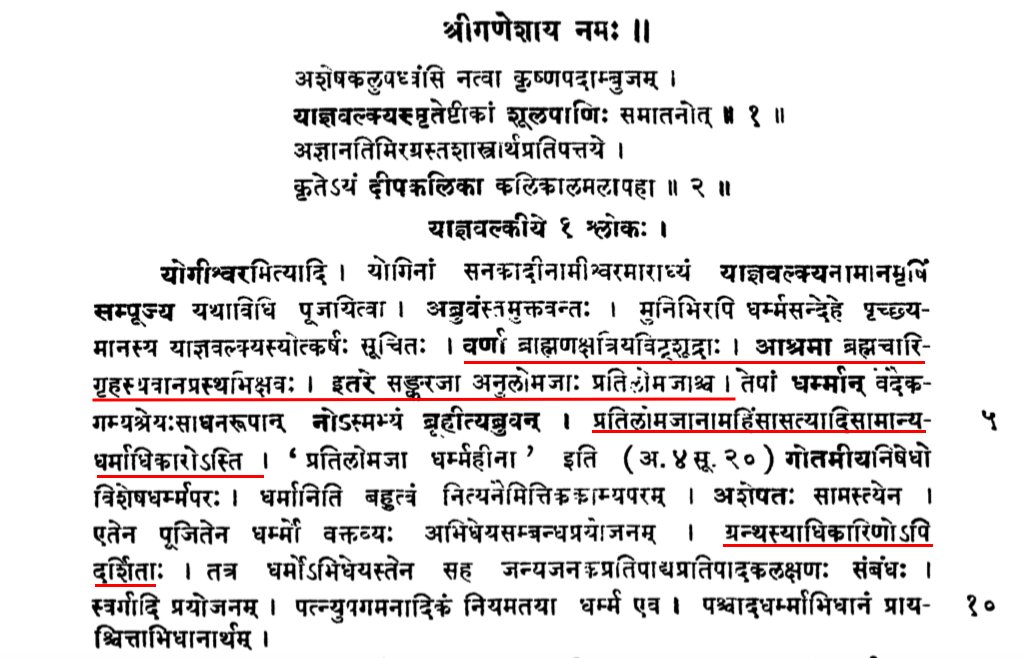
Śūlapāṇi in his commentary on Yājñavalkyasmṛti 1.1-2, mentions various sections of the society (upto Pratilomajas) whose dharmas have been mentioned in the Smṛti. He seems to take all of them to be the adhikārins of the text.
Mādhavācārya's idea of 'pauruṣeya-śāstra' +
Mādhavācārya's idea of 'pauruṣeya-śāstra' +
seems to be at play here.
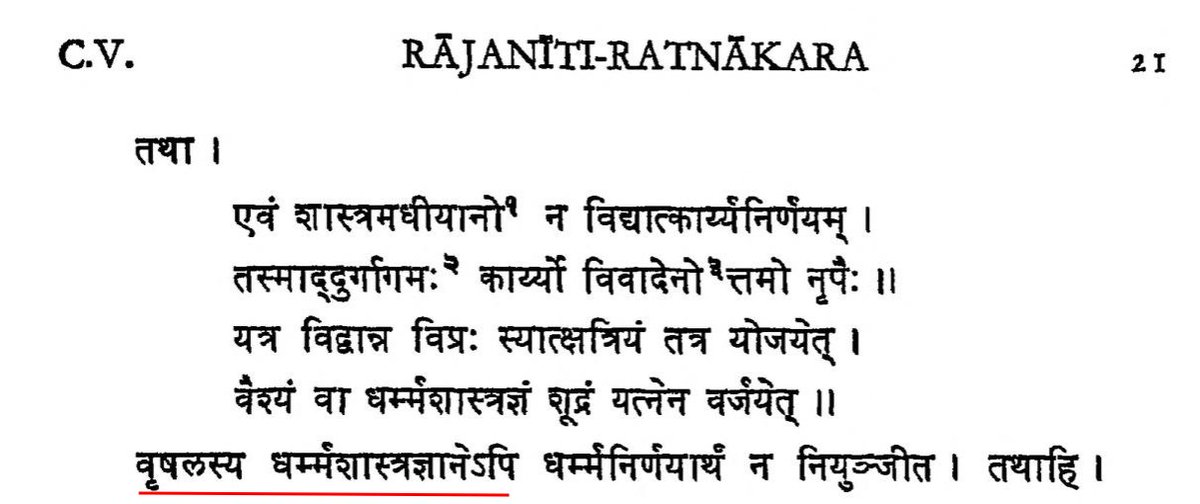
Caṇḍeśvara in his Rājanītiratnākara, while commenting on a verse attributed to Kātyāyana, indicates that even Śūdras could be the knowers of Dharmaśāstra, although they were not to be permitted to do dharmanirṇaya. +
Caṇḍeśvara in his Rājanītiratnākara, while commenting on a verse attributed to Kātyāyana, indicates that even Śūdras could be the knowers of Dharmaśāstra, although they were not to be permitted to do dharmanirṇaya. +
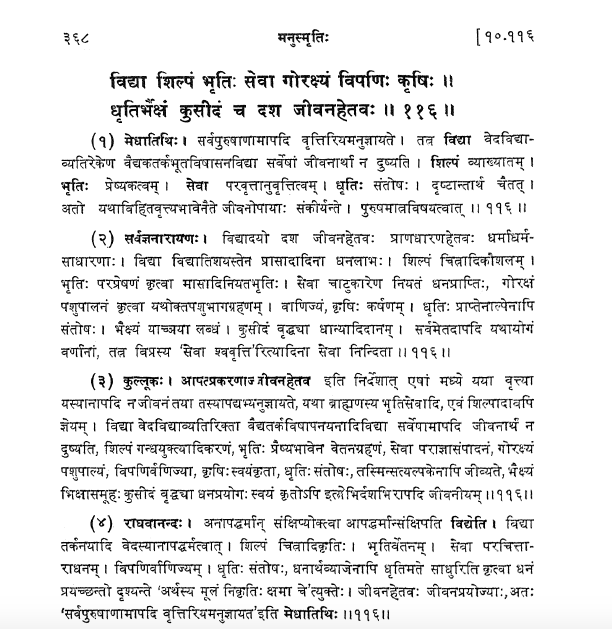
As per some traditional commentaries on Manusmṛti 10.116, except the Vedas, all other texts have been permitted to be studied by all. This matches with the point about Pauruṣeya-śāstra, as opposed with Apauruṣeya Veda. Mārkaṇḍeyasmṛti has made this kind of a division. +
There, the Pūrvapakṣa, with the intention of giving adhikāra of hearing 'Apauruṣeya' Vedas (for learning) to Śūdras, says that it can be done just like the 'Pauruṣeya' Śāstras, for which Śūdras are eligible for hearing from the Guru (for learning).
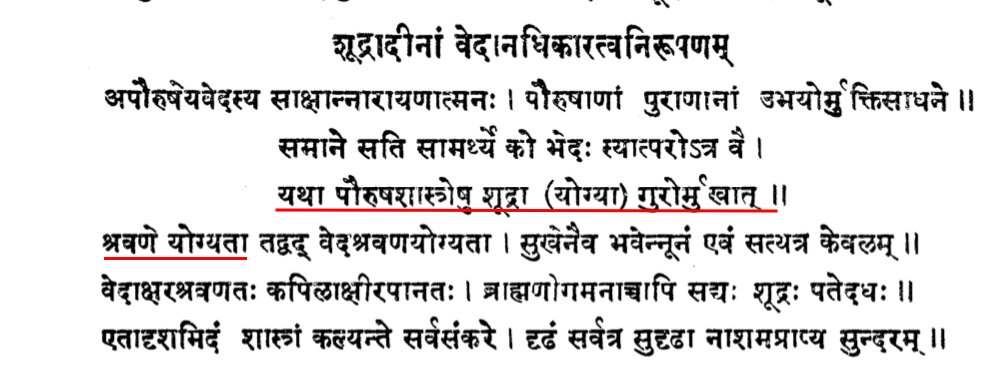
This indicates a general access to the Pauruṣeya-śāstras for the non-dvijas.
In Manusmṛti 2.16, where only dvijas have adhikāra for learning the Śāstra, Medhātithi, Kullūka and Maṇirāma take the 'śāstra' to be Manusmṛti. So the case of Manusmṛti could be a specific one.
In Manusmṛti 2.16, where only dvijas have adhikāra for learning the Śāstra, Medhātithi, Kullūka and Maṇirāma take the 'śāstra' to be Manusmṛti. So the case of Manusmṛti could be a specific one.
Loading suggestions...