

In the 90s, the concept of pairing a kurti with jeans revolutionized women's fashion in India
And the revolution was led by none other than Tata's flagship retail chain WESTSIDE
Here's how Westside created a timeless brand:
And the revolution was led by none other than Tata's flagship retail chain WESTSIDE
Here's how Westside created a timeless brand:
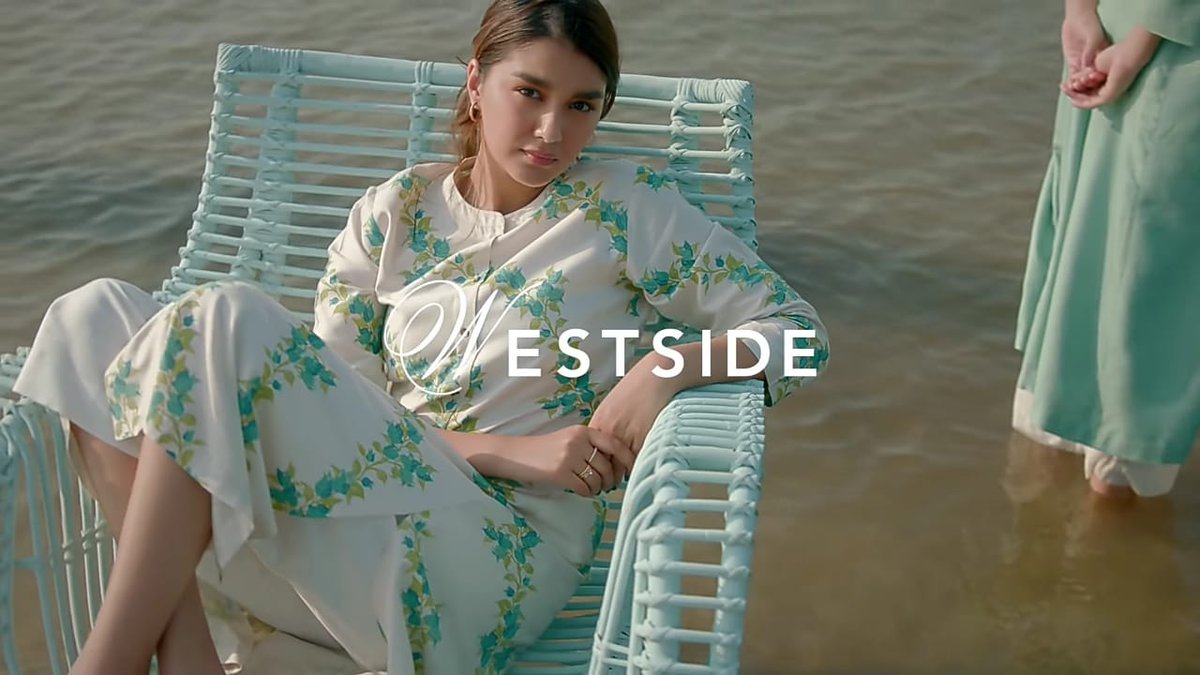
Westside is a retail fashion and lifestyle chain operated by Trent Ltd.
Trent was formed from the money Tata made by selling off its 50% stake in the cosmetics brand Lakmé to HUL for ₹200cr.
They saw great growth potential in clothes rather than cosmetics for an Indian co.
Trent was formed from the money Tata made by selling off its 50% stake in the cosmetics brand Lakmé to HUL for ₹200cr.
They saw great growth potential in clothes rather than cosmetics for an Indian co.
Subsequently, Trent acquired a London-based retail chain — Littlewoods, later renamed WESTSIDE.
Westside products are aspirational, affordable, and value-oriented.
In the late ‘90s, it led the fashion revolution in India by popularizing kurti amongst college and office goers.
Westside products are aspirational, affordable, and value-oriented.
In the late ‘90s, it led the fashion revolution in India by popularizing kurti amongst college and office goers.
Salwar kameez came apart and kurti became Westside’s trademark product.
“Teamed with jeans, it was hip; with a silk dupatta, classy; and with a skirt, edgy.”
It is the leading brand with 28 private labels, all of which account for its 97% revenue.
“Teamed with jeans, it was hip; with a silk dupatta, classy; and with a skirt, edgy.”
It is the leading brand with 28 private labels, all of which account for its 97% revenue.
While its competitors, Trends and Pantaloons, get only 75% and 60% of their sales from private labels.
Additionally, Westside has the best industry margins.
See, when a positive retail experience of your customer is associated with some other brand, your brand gets downplayed.
Additionally, Westside has the best industry margins.
See, when a positive retail experience of your customer is associated with some other brand, your brand gets downplayed.
Private labels are a way to win customer loyalty.
Moreover, you can benefit from higher markup on your private labels. The higher the markup, the more profits a brand can make.
Thus, Westside accounted for over 60% of Trent’s revenue until March 2022.
Moreover, you can benefit from higher markup on your private labels. The higher the markup, the more profits a brand can make.
Thus, Westside accounted for over 60% of Trent’s revenue until March 2022.
It has a franchise model and a rapid store expansion strategy — running more than 190 stores in 90 cities across India.
Westside plans to open 30-40 stores every year, and expand to 250+ by 2025.
Westside plans to open 30-40 stores every year, and expand to 250+ by 2025.
However, its geographical footprint may get capped because they want to operate only in metros and mini-metros.
Westside caters to the shopping needs of various customers.
It sells products ranging from apparel, footwear, perfumes, and even home accessories.
Westside caters to the shopping needs of various customers.
It sells products ranging from apparel, footwear, perfumes, and even home accessories.
However, the Indian apparel industry is highly fragmented and largely dominated by the unorganized sector.
Then how has Westside withstood the test of time for the last 24 yrs?
Most of its stores are located in malls, and always positioned near competitors.
Then how has Westside withstood the test of time for the last 24 yrs?
Most of its stores are located in malls, and always positioned near competitors.
If you notice carefully, you'll see that there are rarely any small Westside stores.
But its minimalist store designs give Westside a competitive advantage. How so?
They are visually aesthetic and give the customer a premium vibe while shopping.
But its minimalist store designs give Westside a competitive advantage. How so?
They are visually aesthetic and give the customer a premium vibe while shopping.
Also, the color scheme used is B&W — black shelves and white lighting.
This is a well-known concept for store design to improve the ambiance of stores.
It ensures that even if someone doesn't buy anything, they'll at least have a good time wandering about the store sections.
This is a well-known concept for store design to improve the ambiance of stores.
It ensures that even if someone doesn't buy anything, they'll at least have a good time wandering about the store sections.
Also, most stores have exclusively been opened for women because they form the largest segment of buyers.
But that’s not all that gives Westside an edge over its competitors.
It requires proper pricing strategies to sell in a price-sensitive market like India.
But that’s not all that gives Westside an edge over its competitors.
It requires proper pricing strategies to sell in a price-sensitive market like India.
Westside has aced it and made considerable success solely based on its pricing without offering discounts.
That is a huge brand differentiator for Westside. Even its tagline says - FIRST PRICE. RIGHT PRICE.
That is a huge brand differentiator for Westside. Even its tagline says - FIRST PRICE. RIGHT PRICE.
This was explained in an interview by Trent’s MD, Philip Auld: I don't want a lady coming into the store, seeing a beautiful dress, and then 8 weeks later coming in and seeing it at 30% off.
So every time you visit a Westside store, the price will remain unchanged.
So every time you visit a Westside store, the price will remain unchanged.
Westside is aware that Indian customers are spoiled.
They want it premium. They want it cheap. They want it fast. But unwilling to provide anything in return.
That is why its product pricing is neither too high nor too low.
They want it premium. They want it cheap. They want it fast. But unwilling to provide anything in return.
That is why its product pricing is neither too high nor too low.
It's in the grey area. That gives proper assurance to the customers as well as Westside.
Customers: I'm getting value for money. Westside: We aren't selling it cheap.
This helped build a strong brand identity and a loyal customer base.
Customers: I'm getting value for money. Westside: We aren't selling it cheap.
This helped build a strong brand identity and a loyal customer base.
Moreover, Westside doesn’t compromise on quality cos contrary to popular perception — quality is the deciding factor, not price.
Its purpose is consciously making style simple for every moment.
People don’t care about how much a shirt costs. They care about its looks and feel.
Its purpose is consciously making style simple for every moment.
People don’t care about how much a shirt costs. They care about its looks and feel.
Fashion focuses on trends that die off fast and items that aren't meant to last — hence, the poor quality.
Style, on the other hand, focuses on timeless and functional items that are well-made.
Style, on the other hand, focuses on timeless and functional items that are well-made.
Westside’s labels are divided into modern and contemporary.
For example, NUON is considered a fun and colorful casual wear for the everyday youth.
While ZUBA offers premium Indian wear in silk and handloom blends with handcrafted embroidery.
For example, NUON is considered a fun and colorful casual wear for the everyday youth.
While ZUBA offers premium Indian wear in silk and handloom blends with handcrafted embroidery.
Westside sells its products online through Tata CLiQ but it's not as popular as Myntra, Flipkart, and AJIO.
So, to increase its brand awareness, Westside leverages Influencer Marketing.
For instance, it launched an influencer-integrated local campaign for the Bangalore market.
So, to increase its brand awareness, Westside leverages Influencer Marketing.
For instance, it launched an influencer-integrated local campaign for the Bangalore market.
Through this, Westside tapped the significance of cultural relevance amongst fashion enthusiasts in Bangalore.
Tata is also experimenting with cross-selling in Westside stores.
They recently opened a Tata Starbucks in Mumbai’s Westside store to enhance customer experience.
Tata is also experimenting with cross-selling in Westside stores.
They recently opened a Tata Starbucks in Mumbai’s Westside store to enhance customer experience.
Westside’s same-store sales growth (SSSG) is 12% year-on-year, and in FY22 it reported gross revenue of ₹2900 crore — indicating a successful store performance and healthy store economics.
If you liked this thread, do Retweet 🔄 the 1st tweet and follow us @FinFloww for more ❤️
We have launched our new weekly email newsletter, “What the Floww?”
Not to share news but to tell you amazing stories.
Stories that will take you places you’ve never been before.
Subscribe here:getrevue.co
Not to share news but to tell you amazing stories.
Stories that will take you places you’ve never been before.
Subscribe here:getrevue.co
Join 3000+ people who are receiving such stories daily on their WhatsApp:
chat.whatsapp.com
chat.whatsapp.com
Loading suggestions...