

🧵 regarding the use of PTFE ('Teflon') pledgets for reinforcing sutures in fragile tissue.
We will briefly go over history, then get into technical pointers and examples of where people use pledgets. The emphasis will be on non-cardiovascular uses of pledgets.
We will briefly go over history, then get into technical pointers and examples of where people use pledgets. The emphasis will be on non-cardiovascular uses of pledgets.
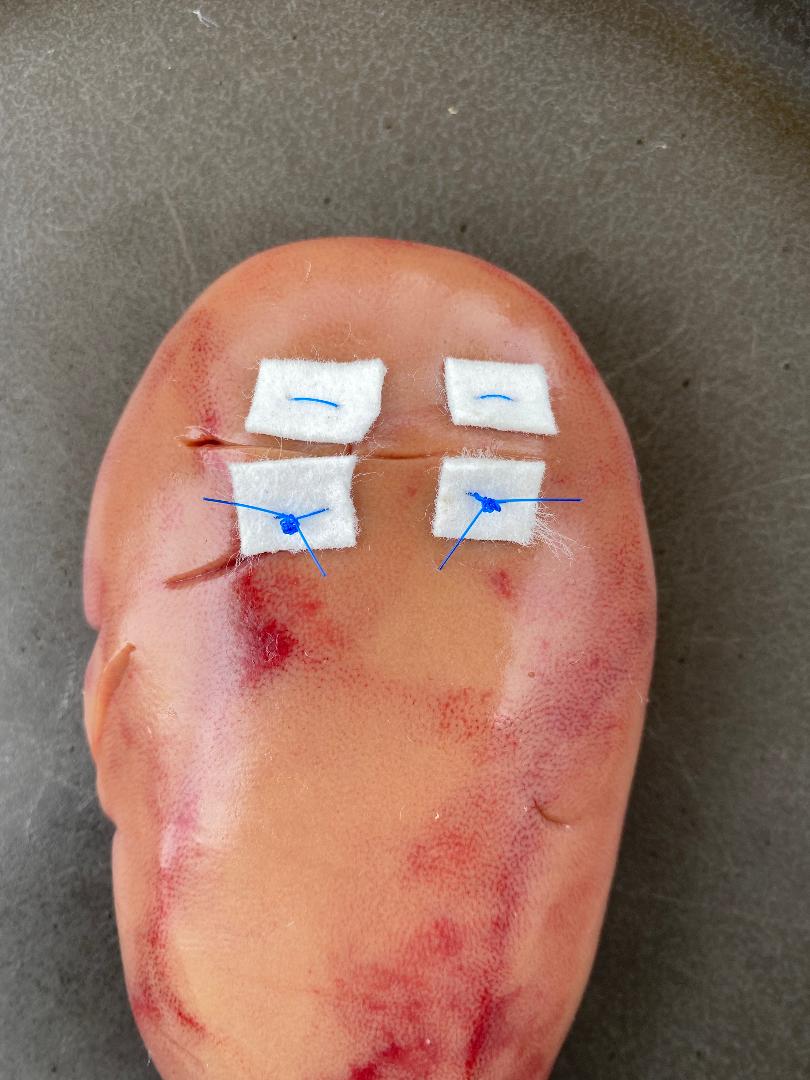
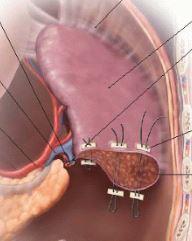
Pledgets are helpful when placing sutures in fragile tissue because they disperse the force over a wider area.
The PTFE felt rectangles are not rigid, so the force is not quite equal across the whole rectangle, but it spreads the force out much more than a simple suture does.
The PTFE felt rectangles are not rigid, so the force is not quite equal across the whole rectangle, but it spreads the force out much more than a simple suture does.
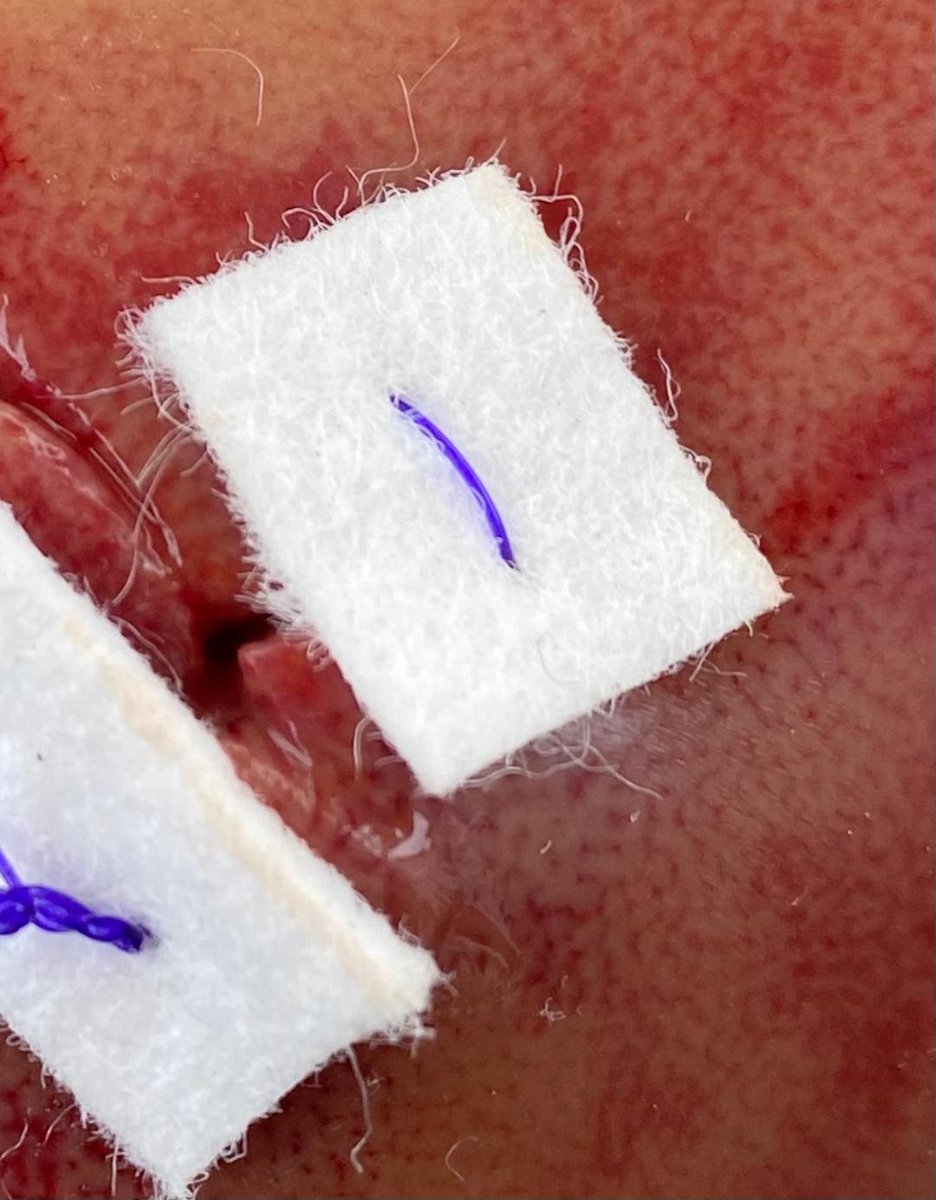
There are various sizes of pledgets. The smaller, harder ones seen below are generally for cardiovascular use (in fact, most pledgets are used in cardiac or vascular cases).
In general surgery, we usually use the larger pledgets that you have to cut to the size you want.
In general surgery, we usually use the larger pledgets that you have to cut to the size you want.
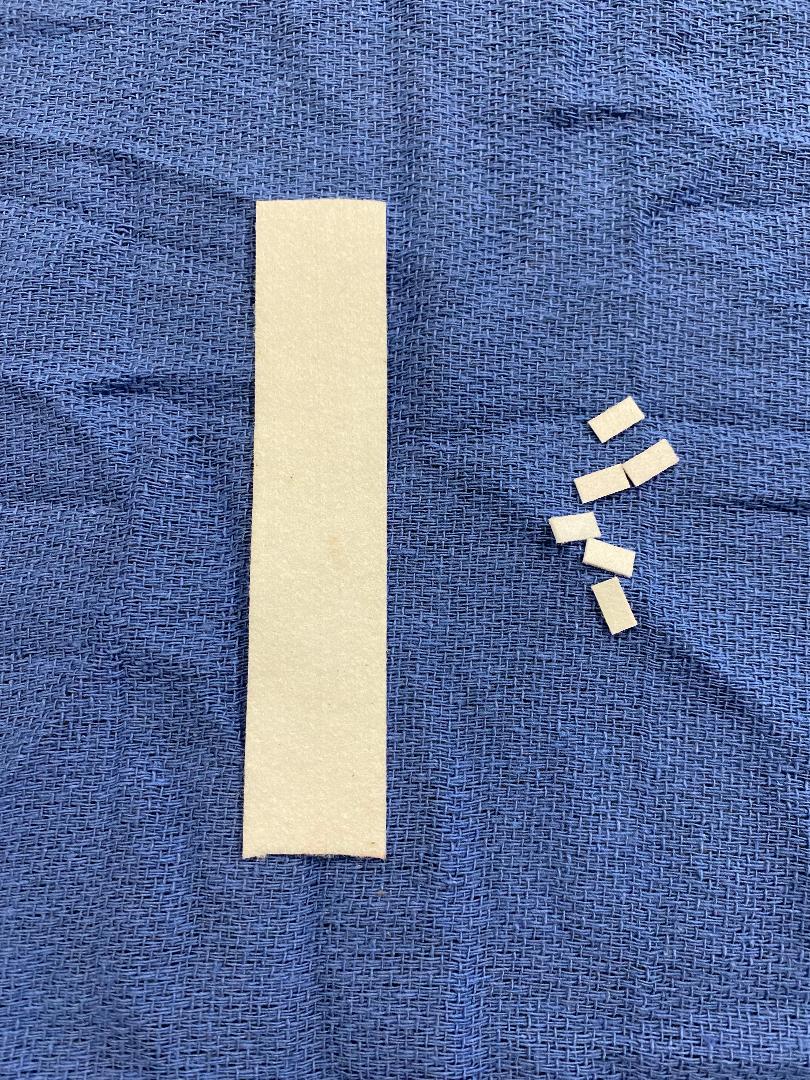
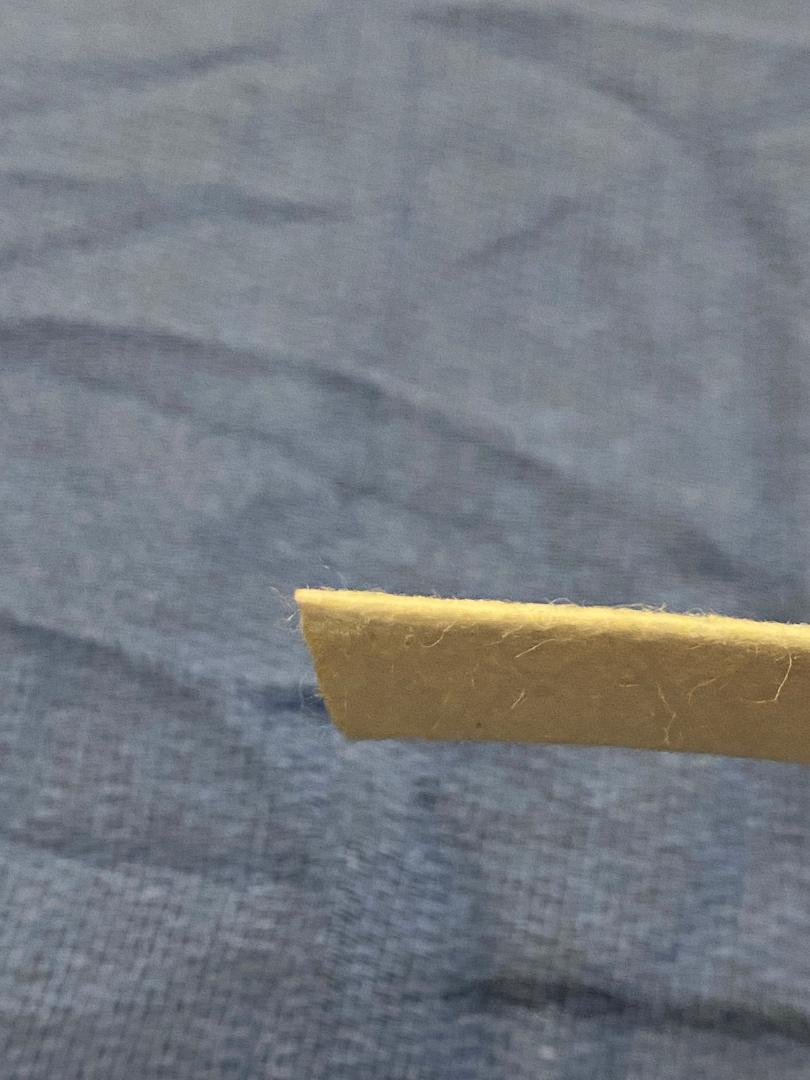
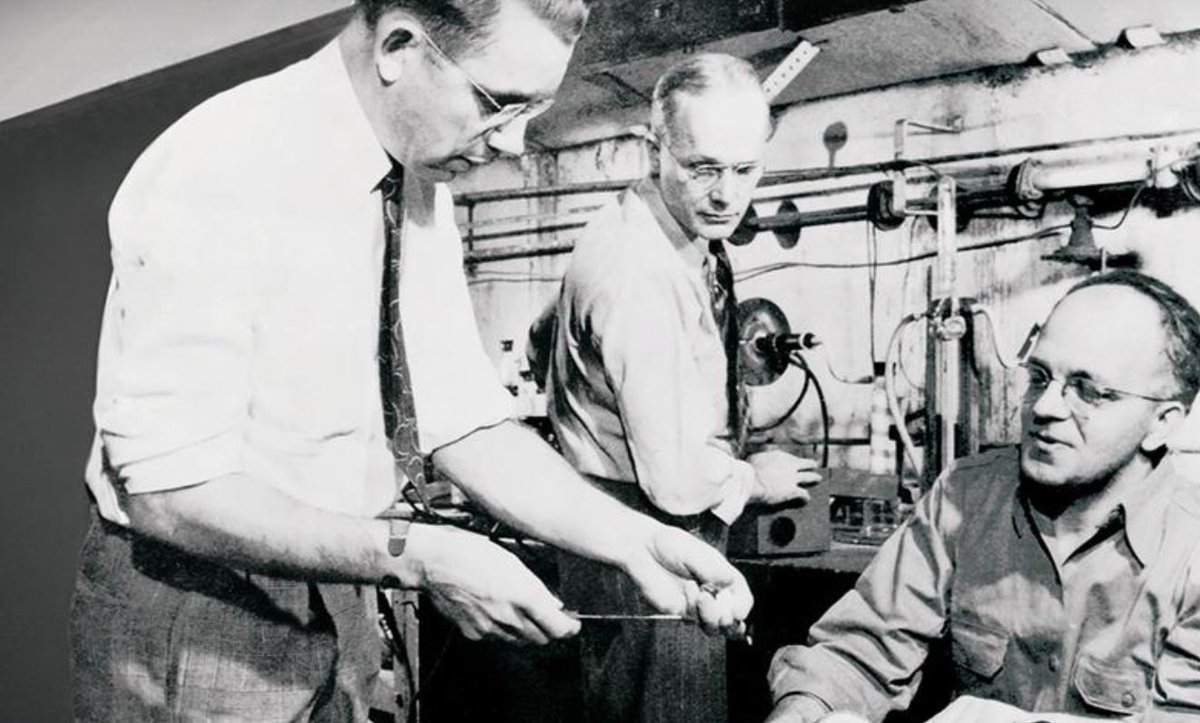
They are made of PTFE, or 'Teflon'. Teflon was discovered by accident in 1938 by the 27 year old chemist Roy Plunkett, who was experimenting with tetrafluoroethylene as a refrigerant. An unexpected polymer was found coating the bottle, which he called 'polytetrafluoroethylene'.
For the fragile tissue model, pig kidney was used. I found it to be a little more robust than a perfused human kidney, but good enough for our purposes.
We will start with trying to repair the simplest of lacerations.
We will start with trying to repair the simplest of lacerations.
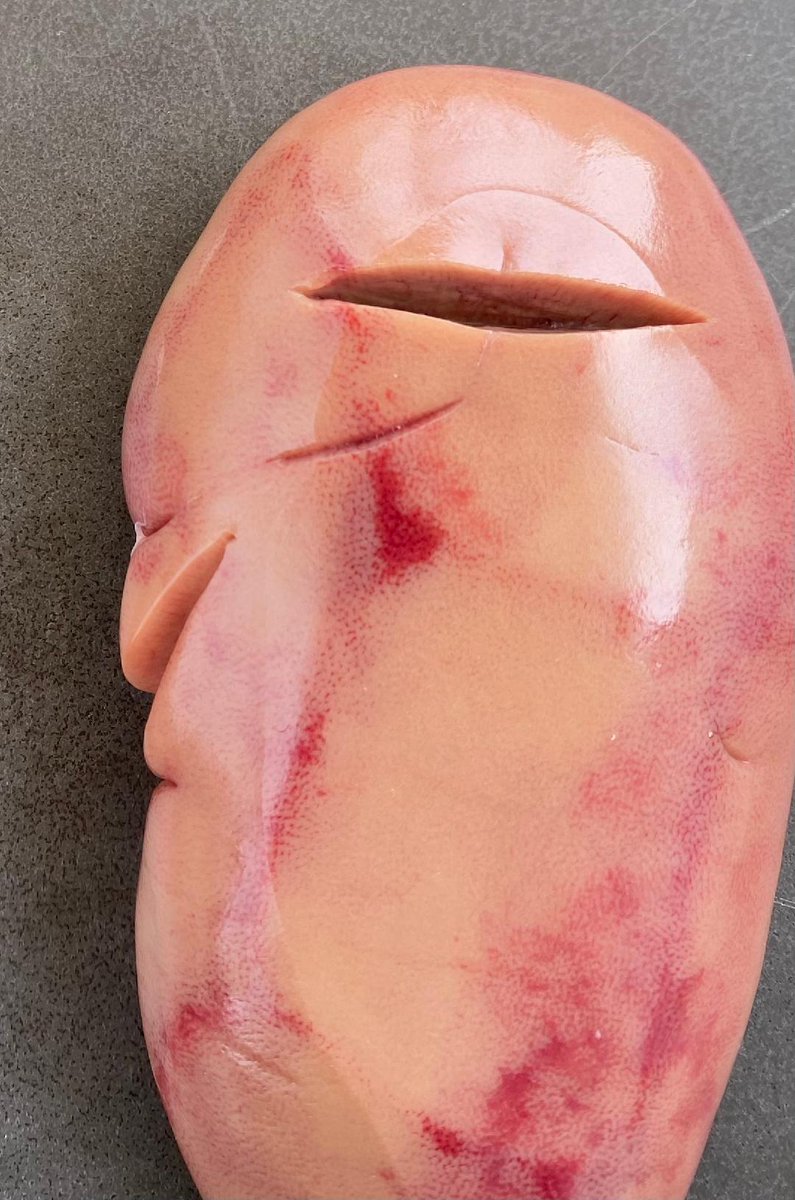
First, I will try to repair it with simple suture. Here, you want to 'take it in 1' because it is hard to retrieve the needle from the middle of the laceration.
At first, it may seem that I am getting away with a repair with simple sutures.
At first, it may seem that I am getting away with a repair with simple sutures.
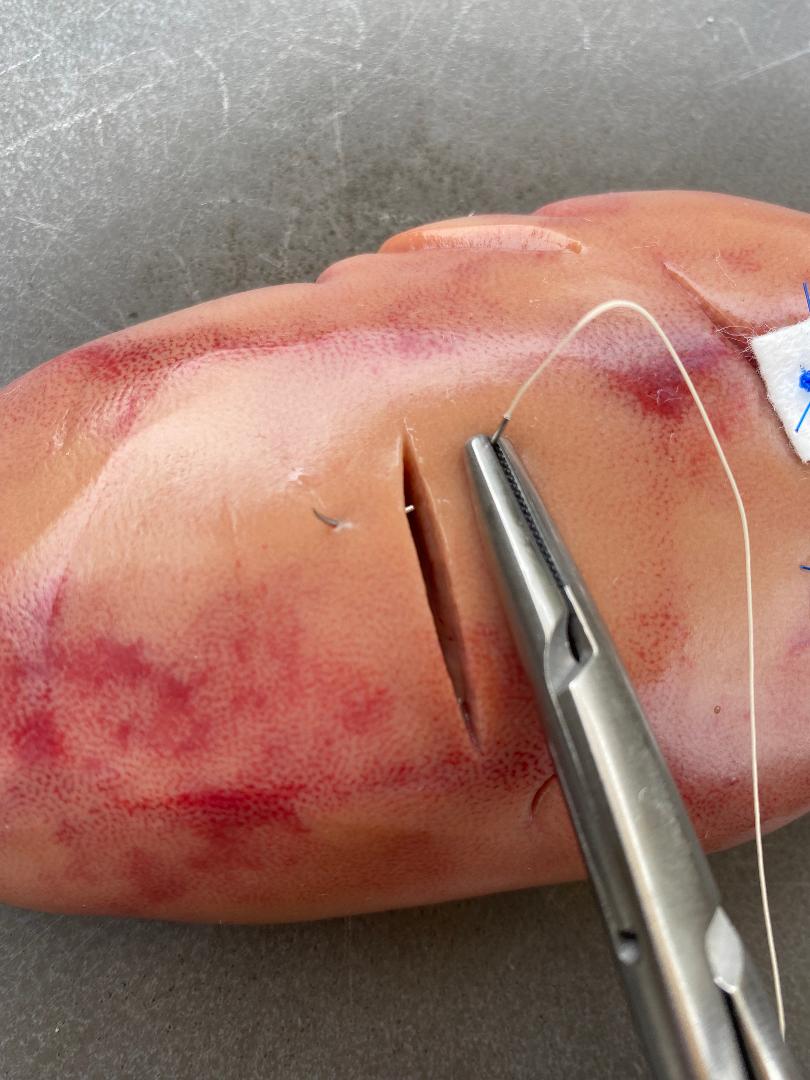
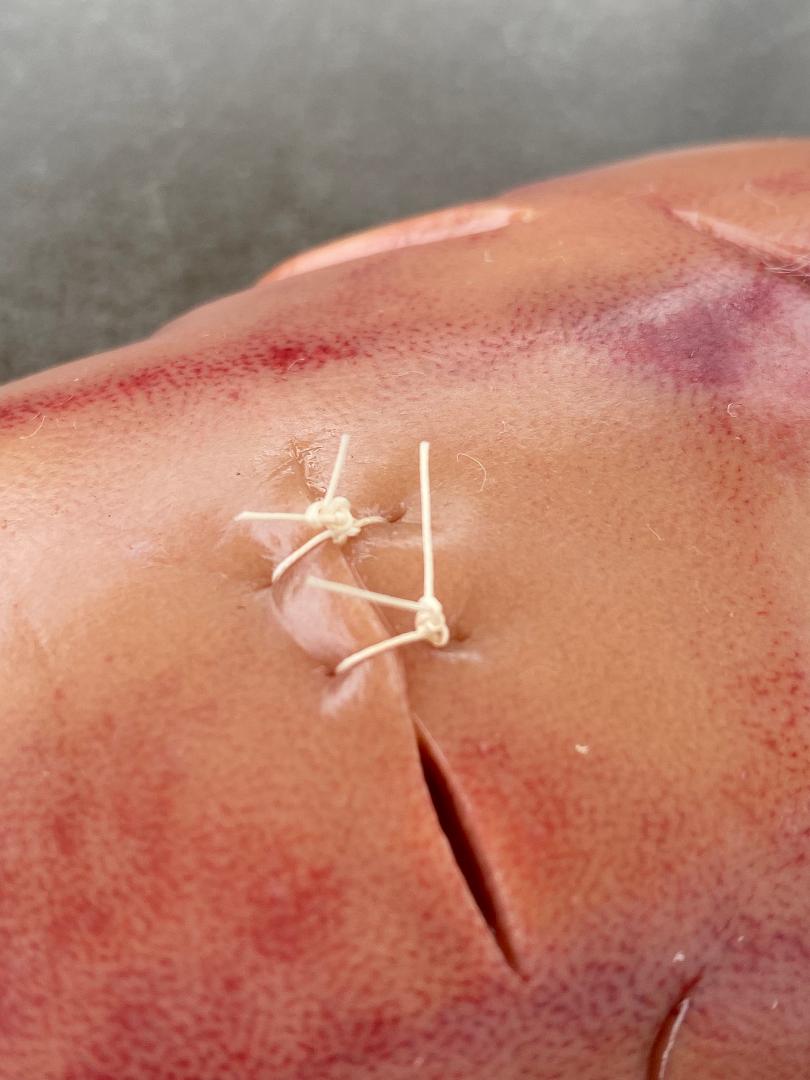
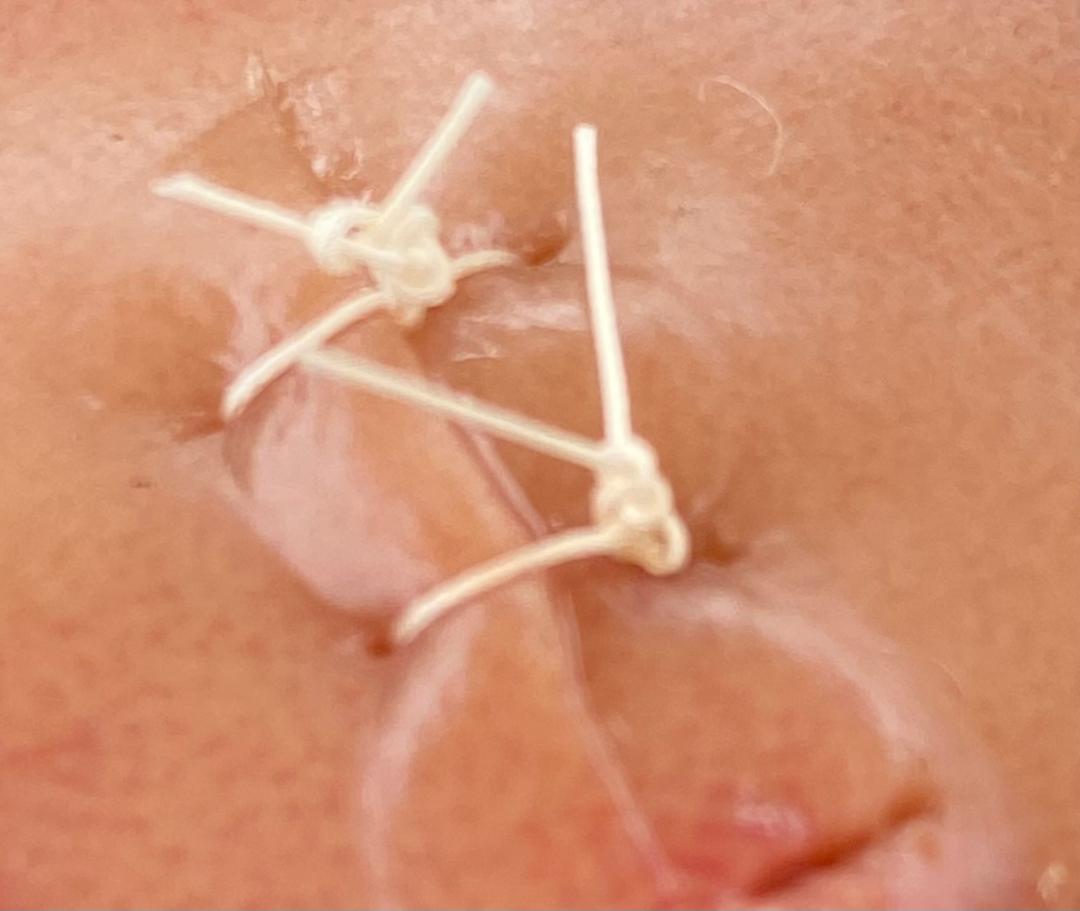
But look a little closer at one of the sutures. Even with maximal care, there is still a degree of tearing of the tissue at the suture insertion sites. And this is the *best case* scenario.
In the real world, this will bleed a lot, and will often still tear through.
In the real world, this will bleed a lot, and will often still tear through.
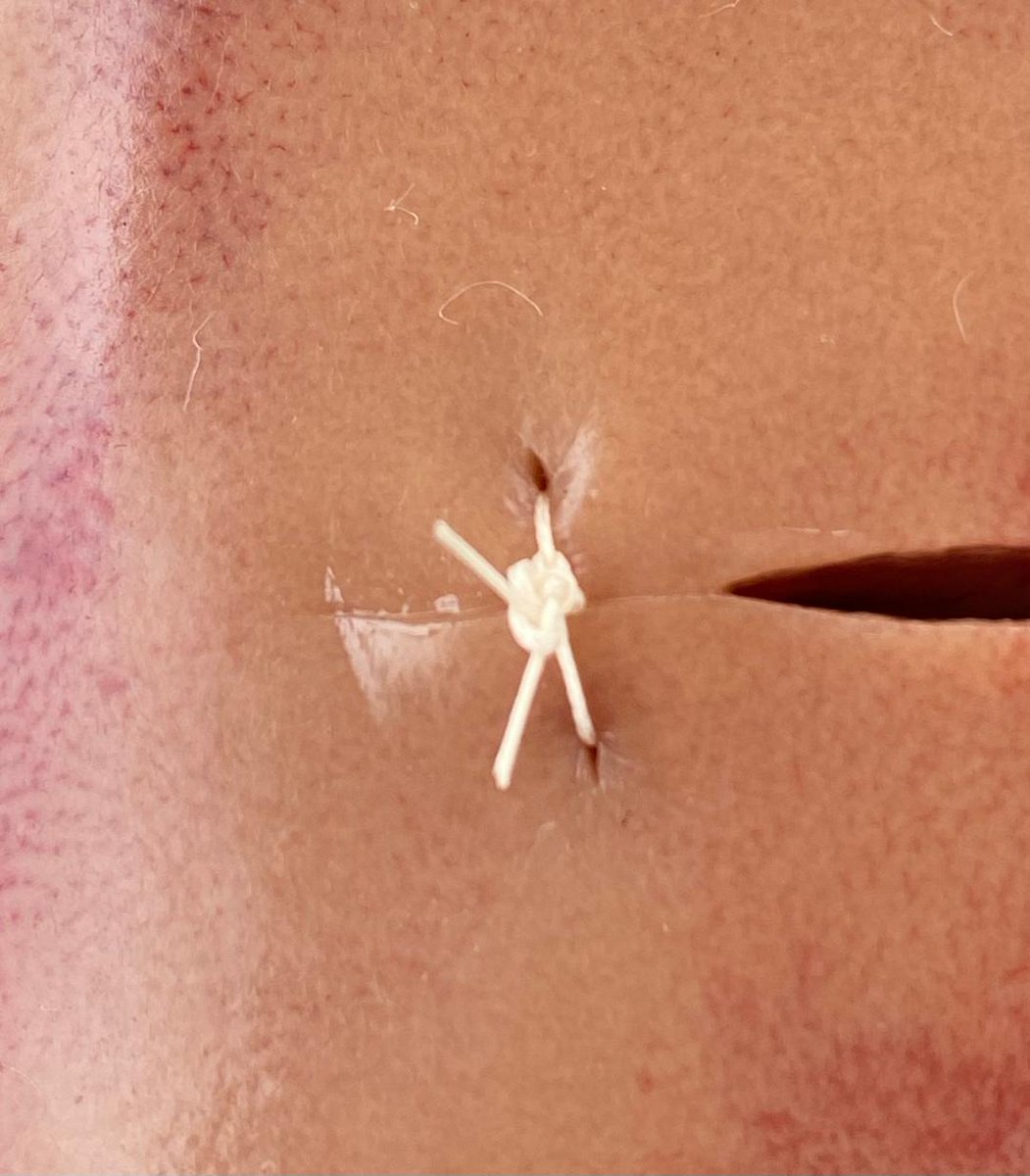
In reality, it's very easy to tear through the tissue.
Keep in mind that the tissue in this nonperfused kidney is somewhat tougher than in an actual human kidney.
Keep in mind that the tissue in this nonperfused kidney is somewhat tougher than in an actual human kidney.

And here is the consequence of the suture pulling through. Now there is a more complex laceration to deal with.
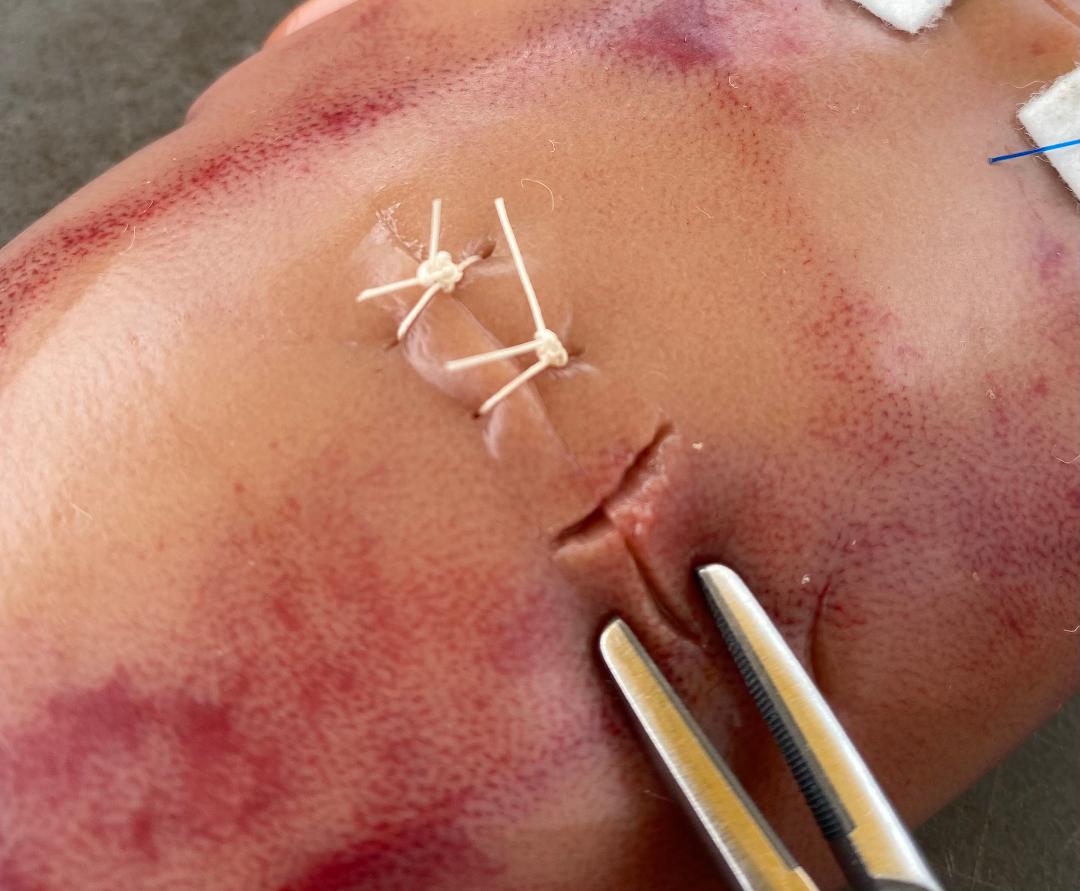
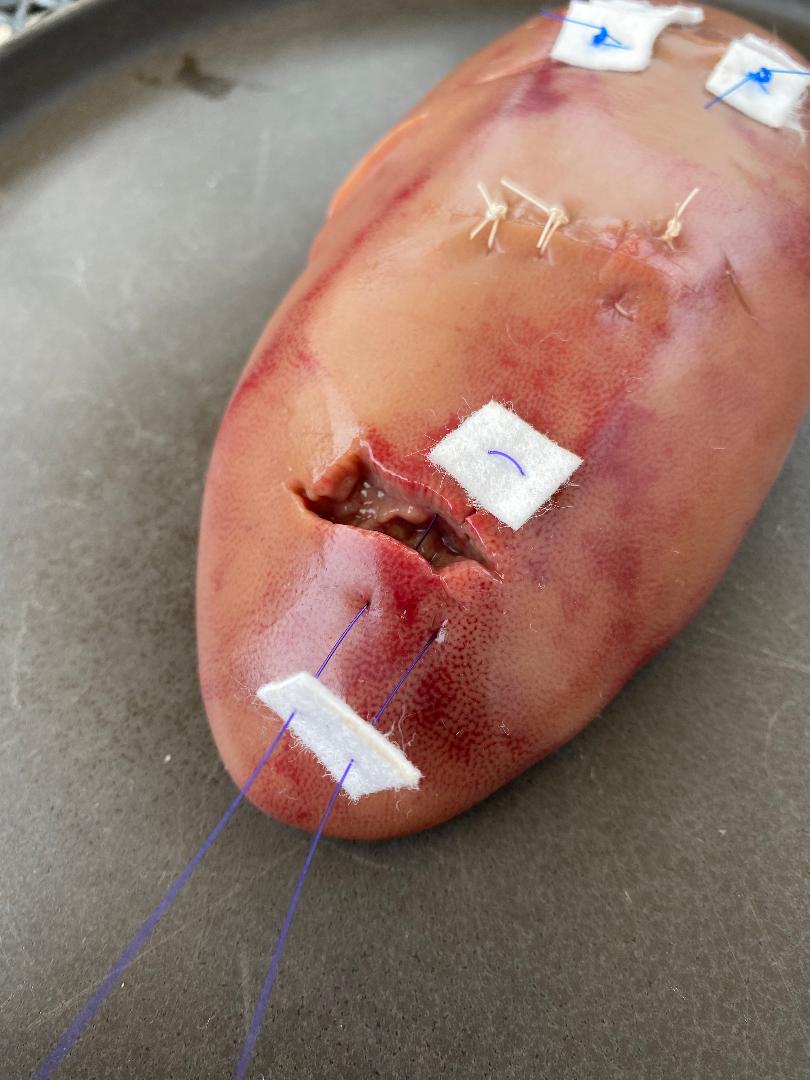
Here, the laceration has been repaired with pledgeted horizontal mattress sutures. It is easy to get good tissue approximation without tearing it.
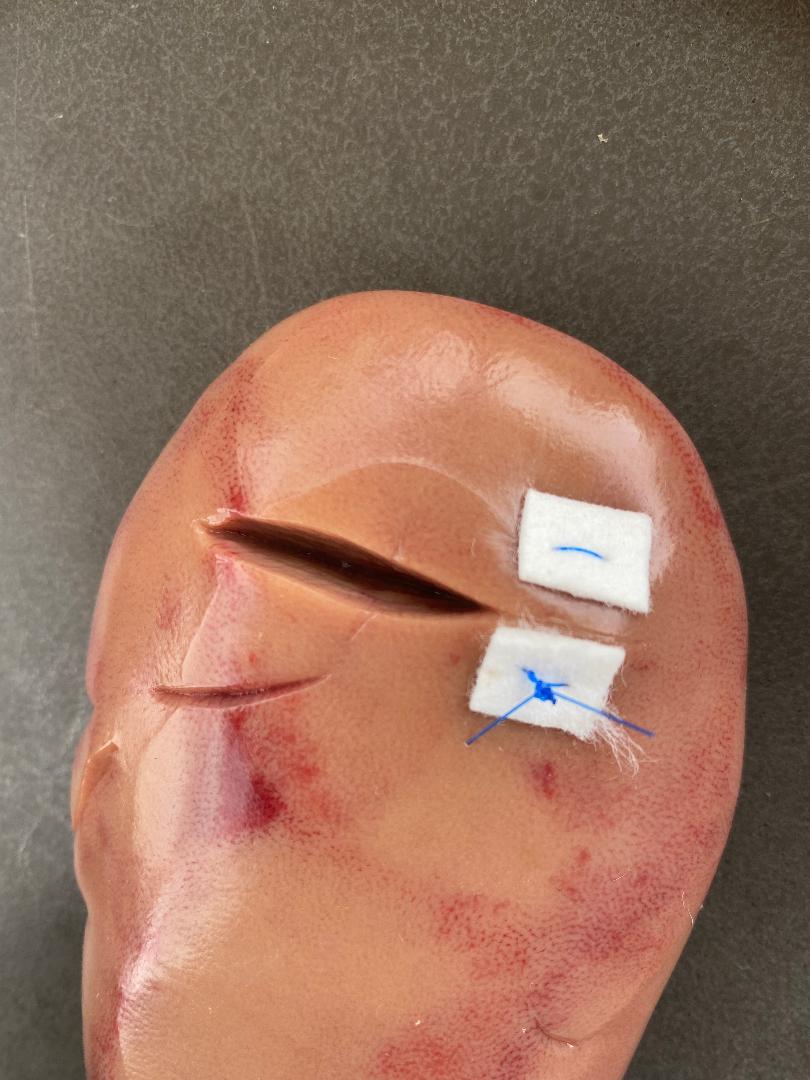
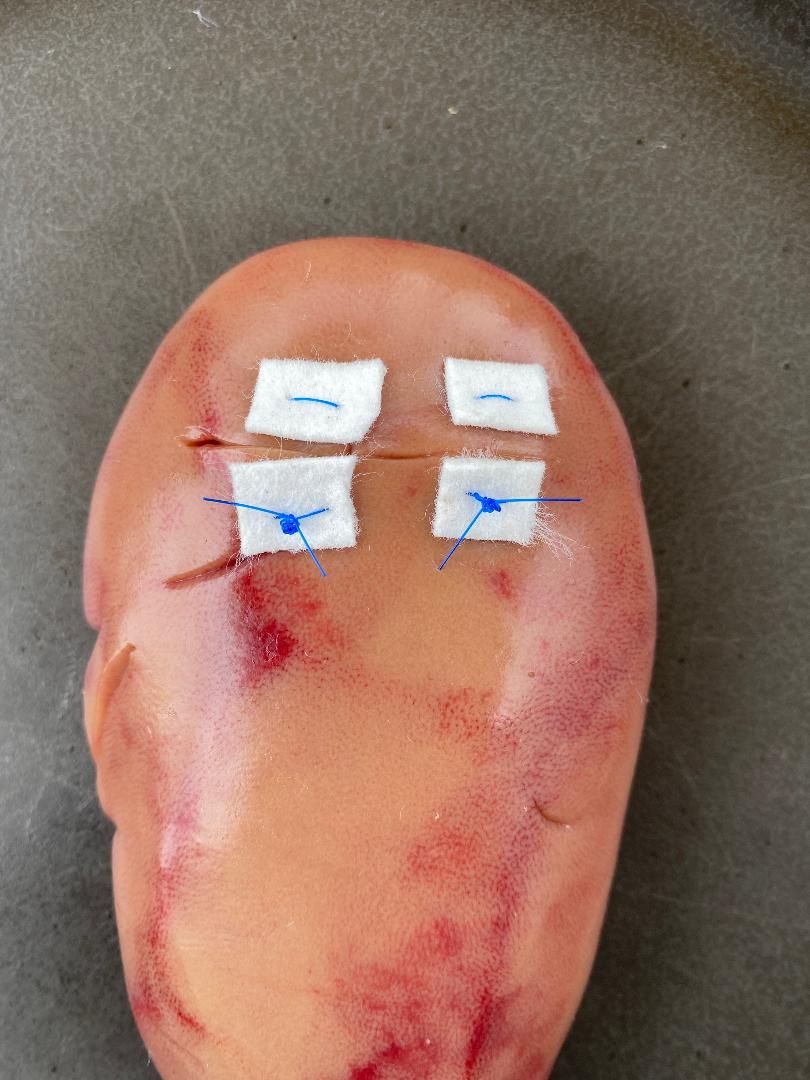
But most lacerations are not so simple and linear.
Now I will try to repair this more complex laceration with simple suture.
Now I will try to repair this more complex laceration with simple suture.
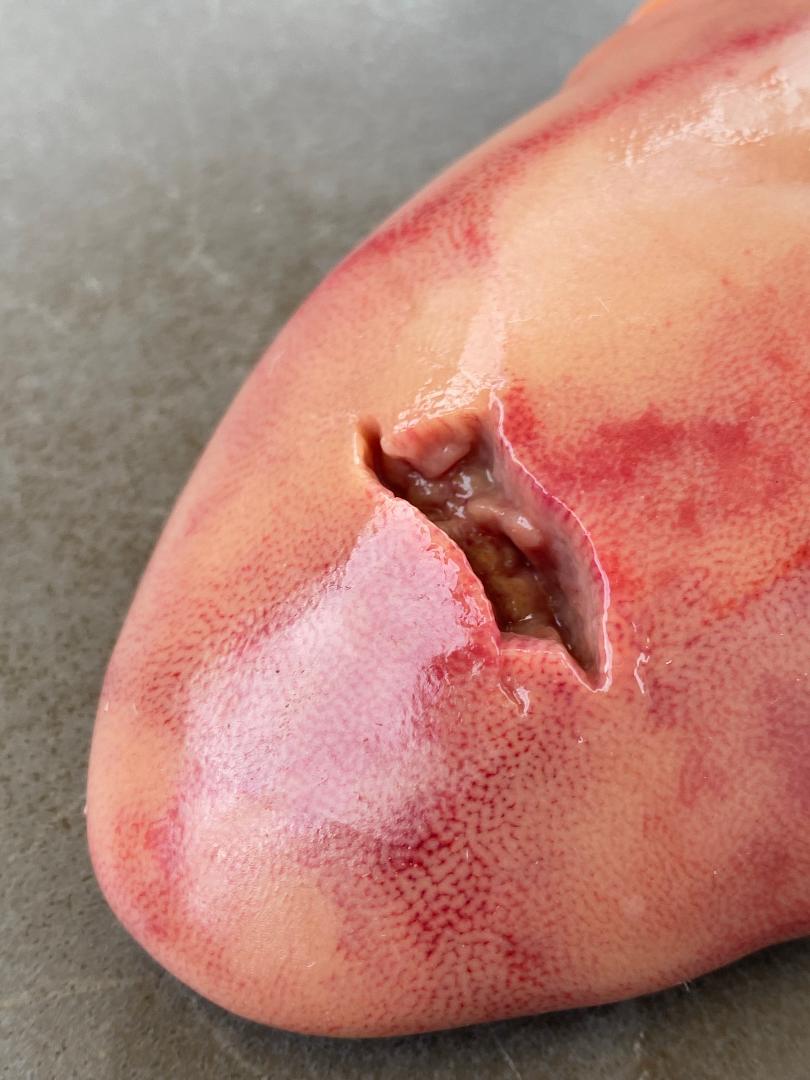
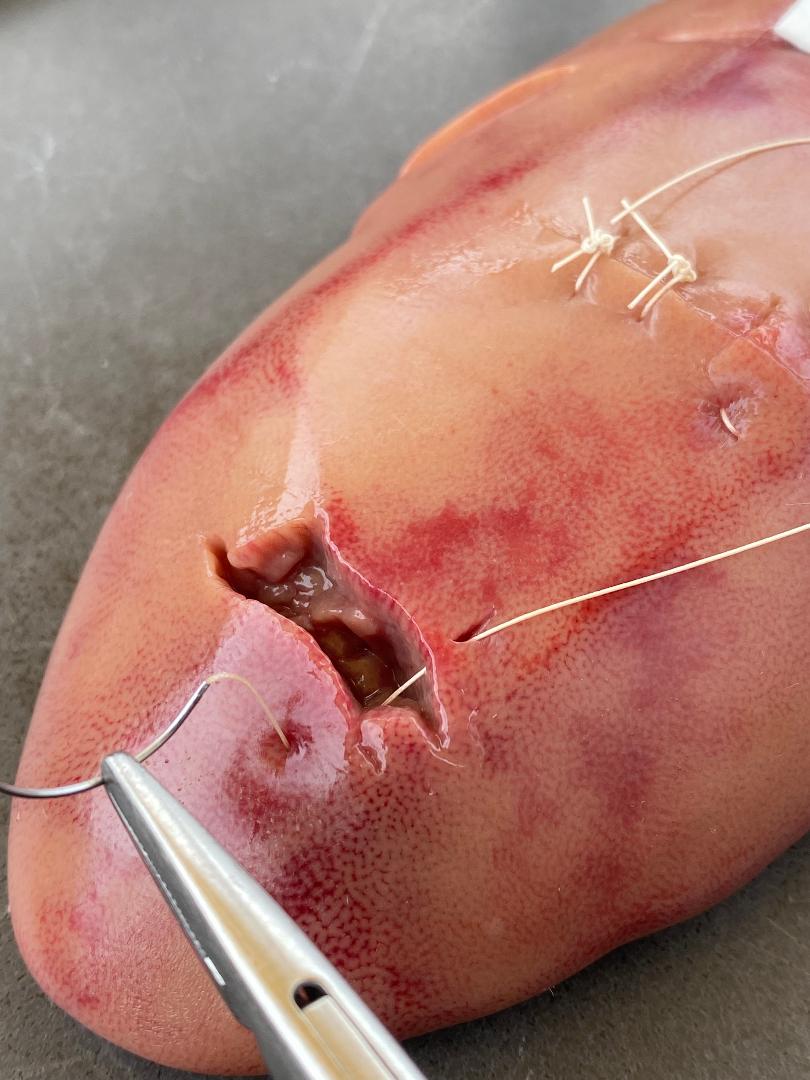
As you might imagine, even under ideal conditions (no bleeding, perfect exposure, etc), the suture has torn through.
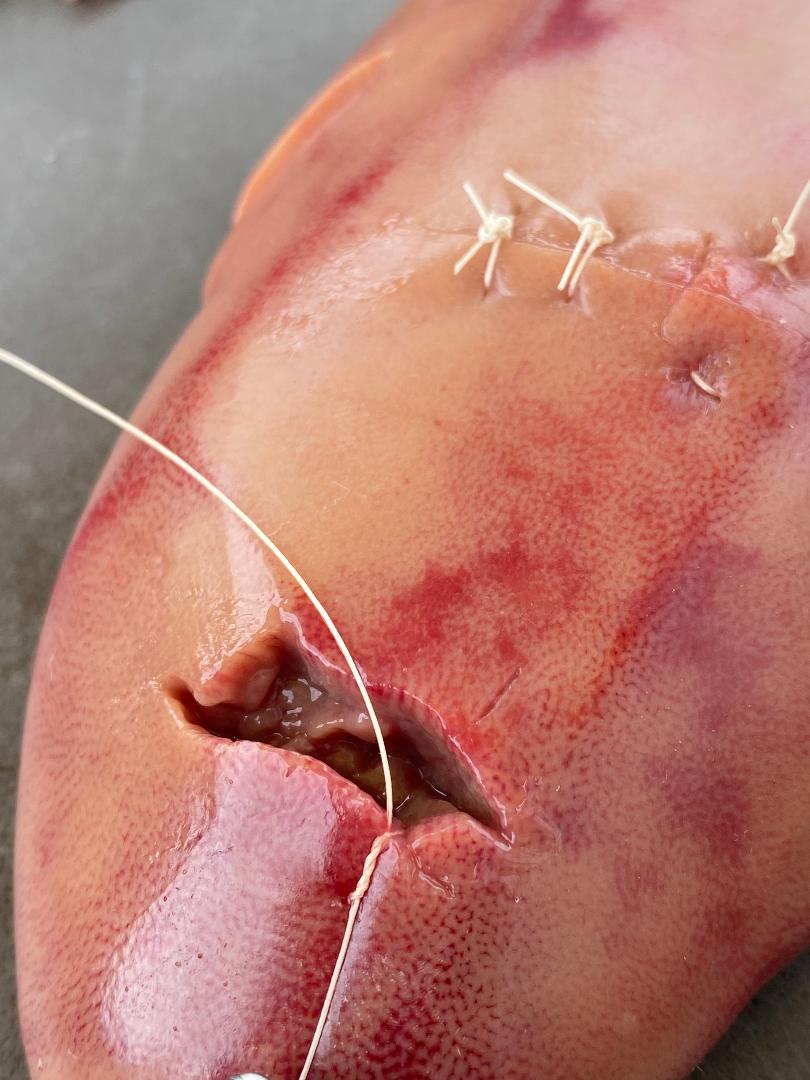
Again, pledgets come to the rescue. Even with the iatrogenic tear, I am able to approximate the tissue with pledgeted horizontal mattress sutures.
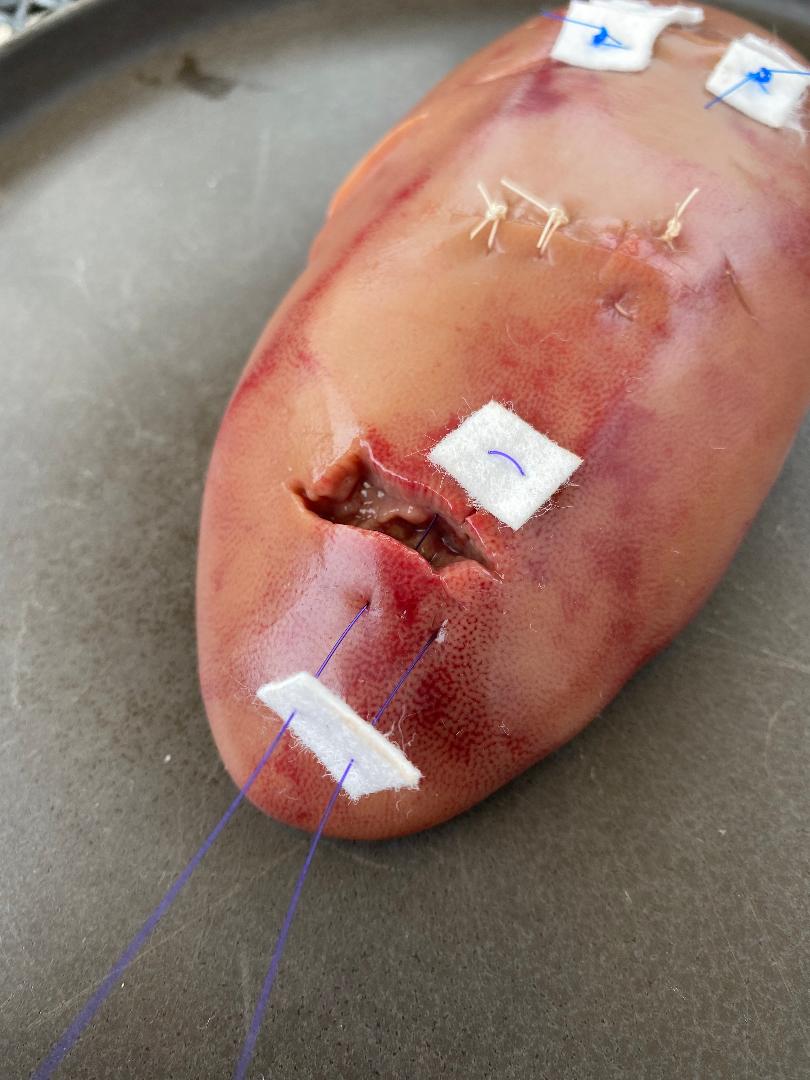
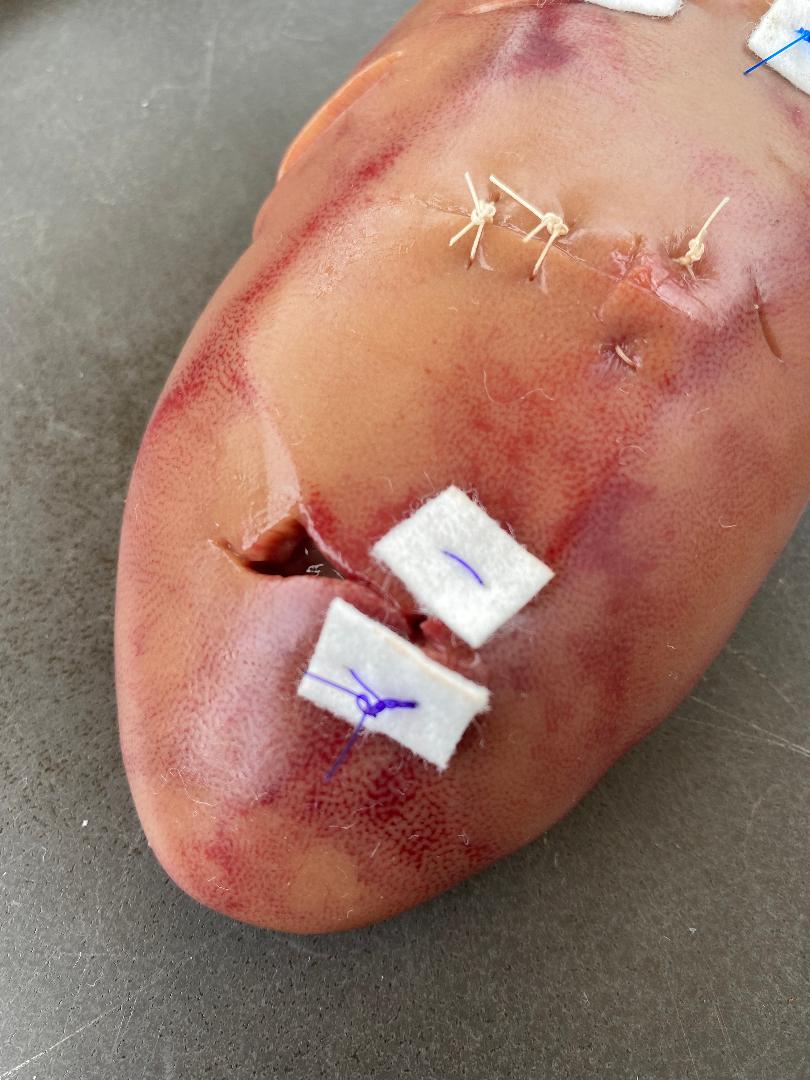
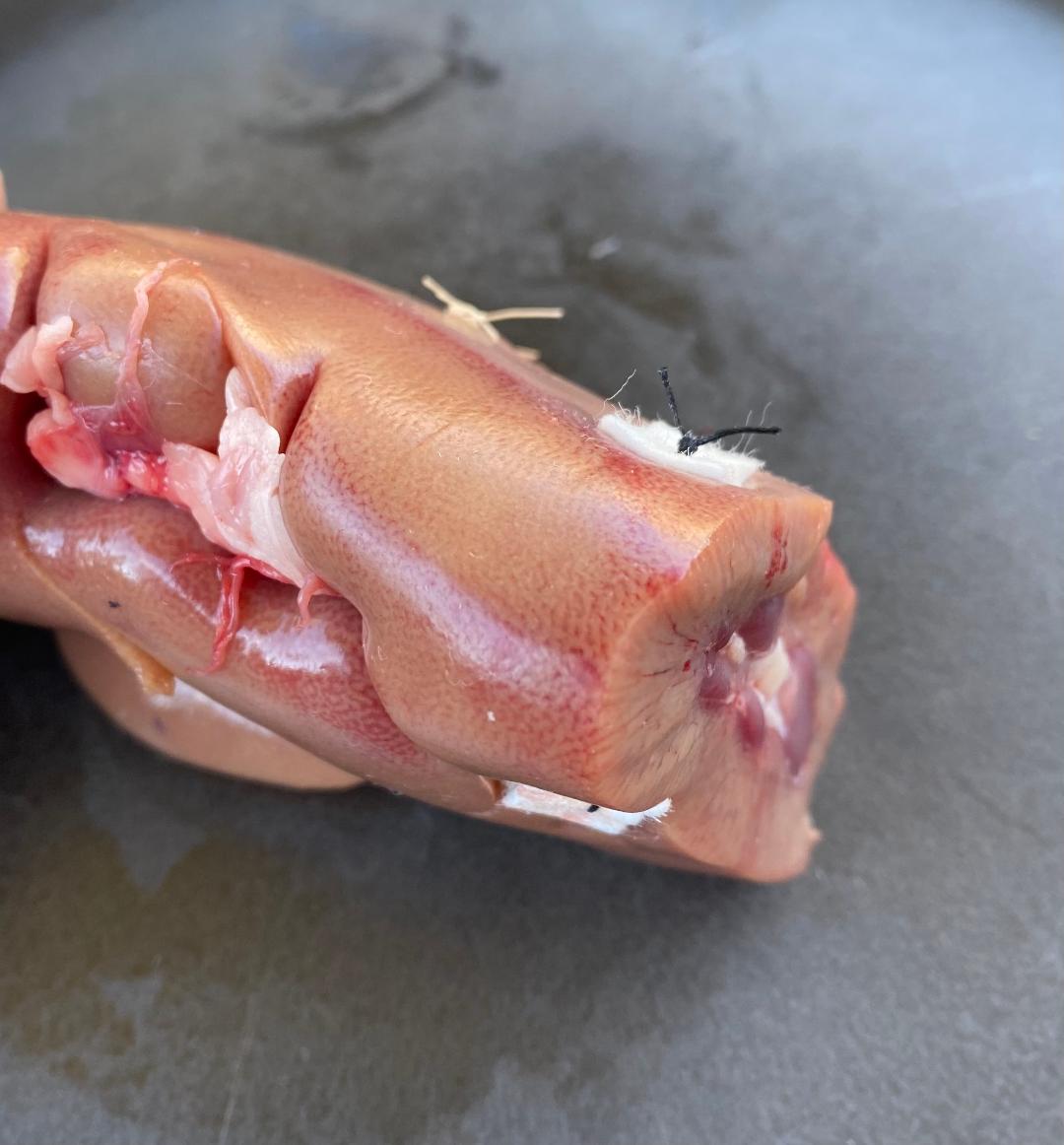
Other configurations are possible. Here the superior pole of the kidney had been removed, and pledgeted sutures are used to close the end.
(only partially completed; I had limited supplies)
(only partially completed; I had limited supplies)
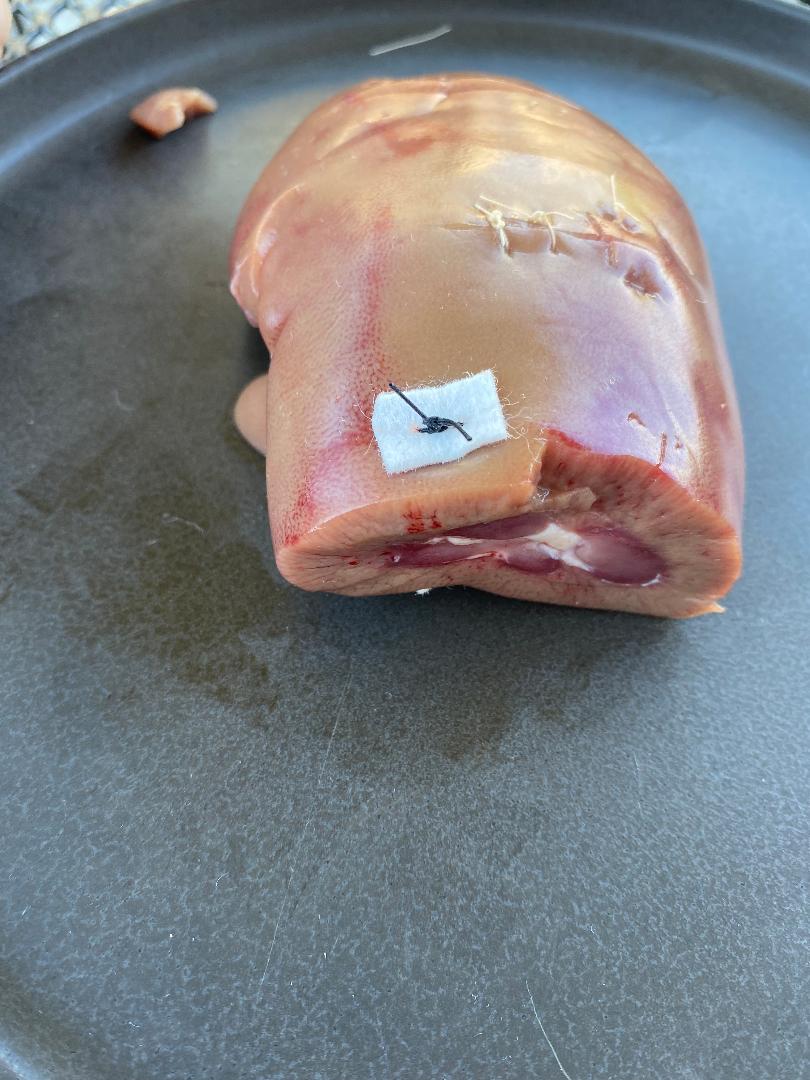
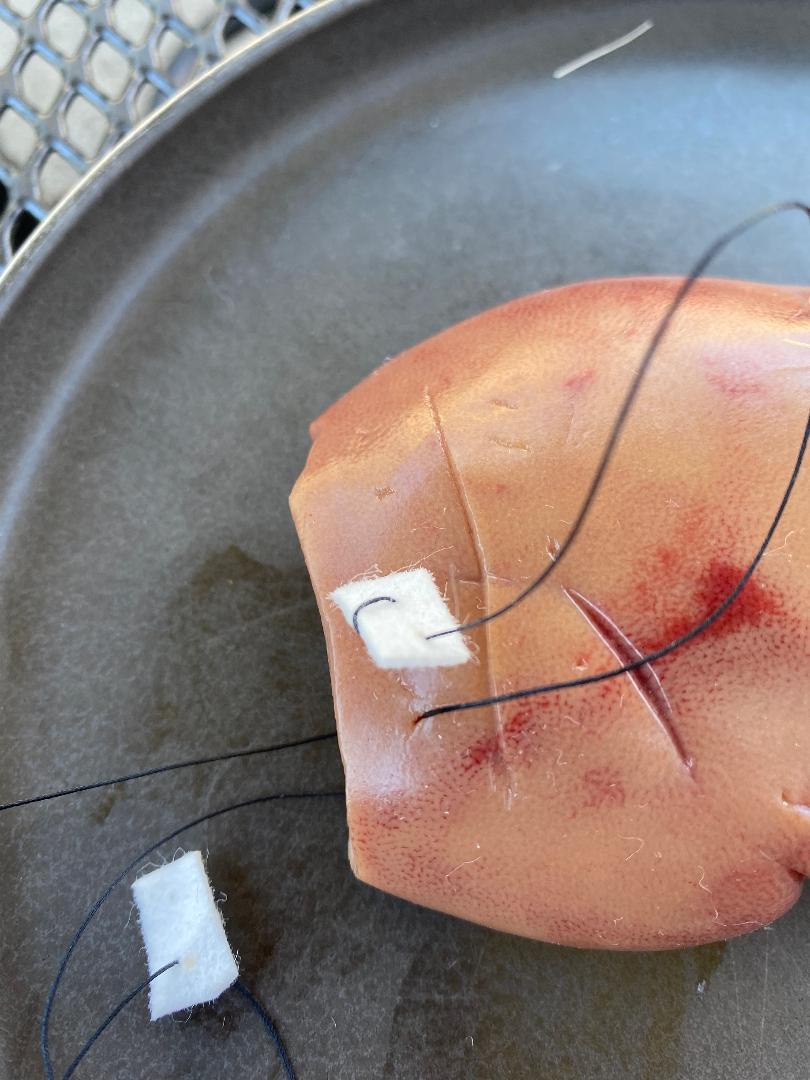
When using pledgeted sutures, I always prefer to use a double-armed suture.
One can use a 'regular' suture, but it is miserable. Aside from it requiring several more steps, it's easy to get things tangled, as I have done here. This will have to be removed and redone.
One can use a 'regular' suture, but it is miserable. Aside from it requiring several more steps, it's easy to get things tangled, as I have done here. This will have to be removed and redone.
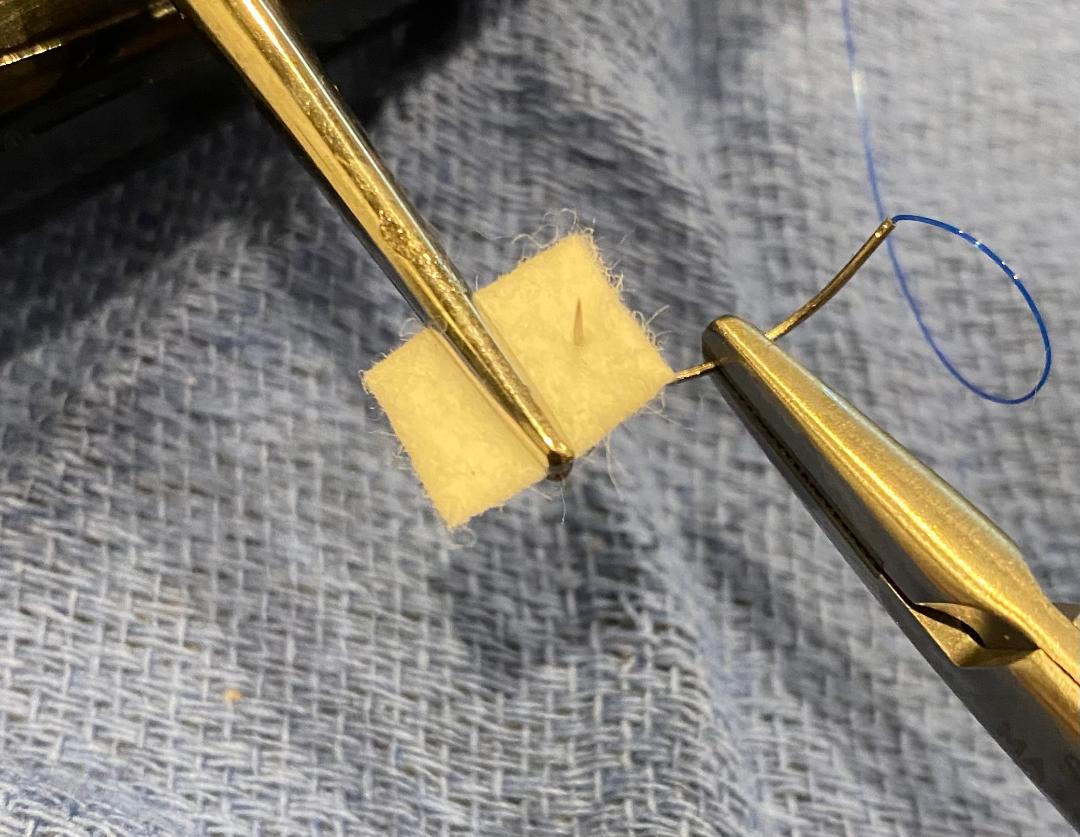
I prefer to preload one of the pledgets and use 2 needle drivers, one on each of the needles.
This makes the whole process much easier, especially for horizontal mattress sutures.
This makes the whole process much easier, especially for horizontal mattress sutures.
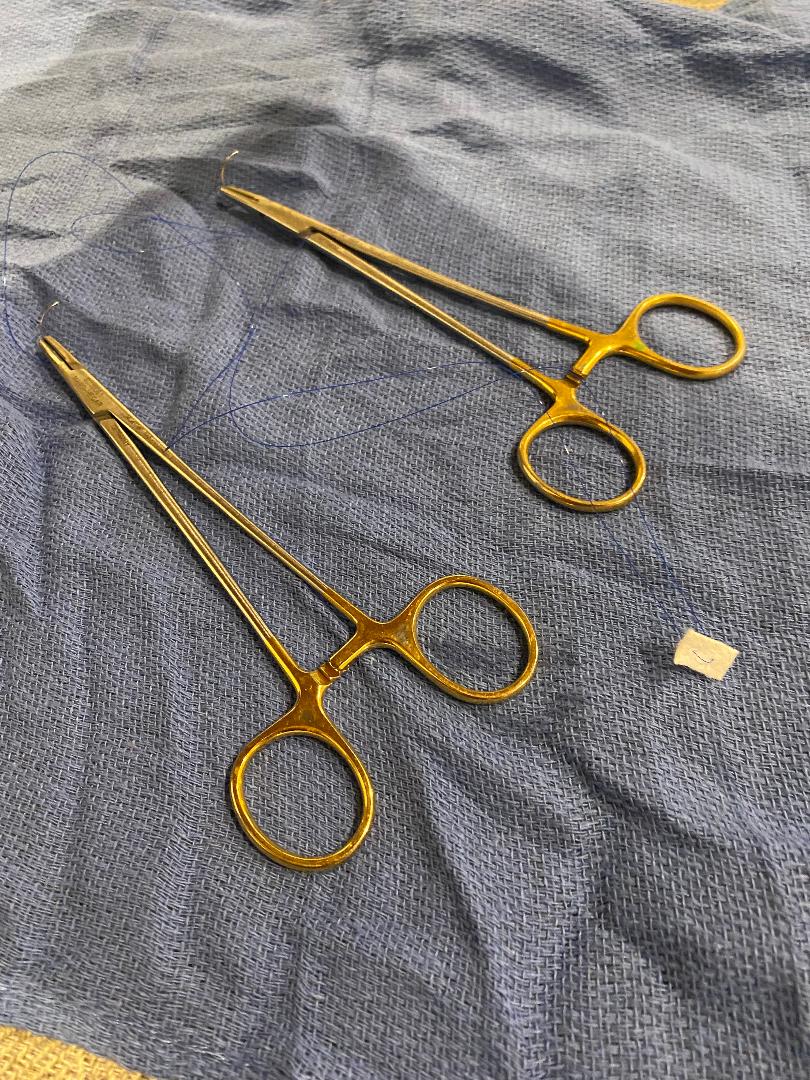
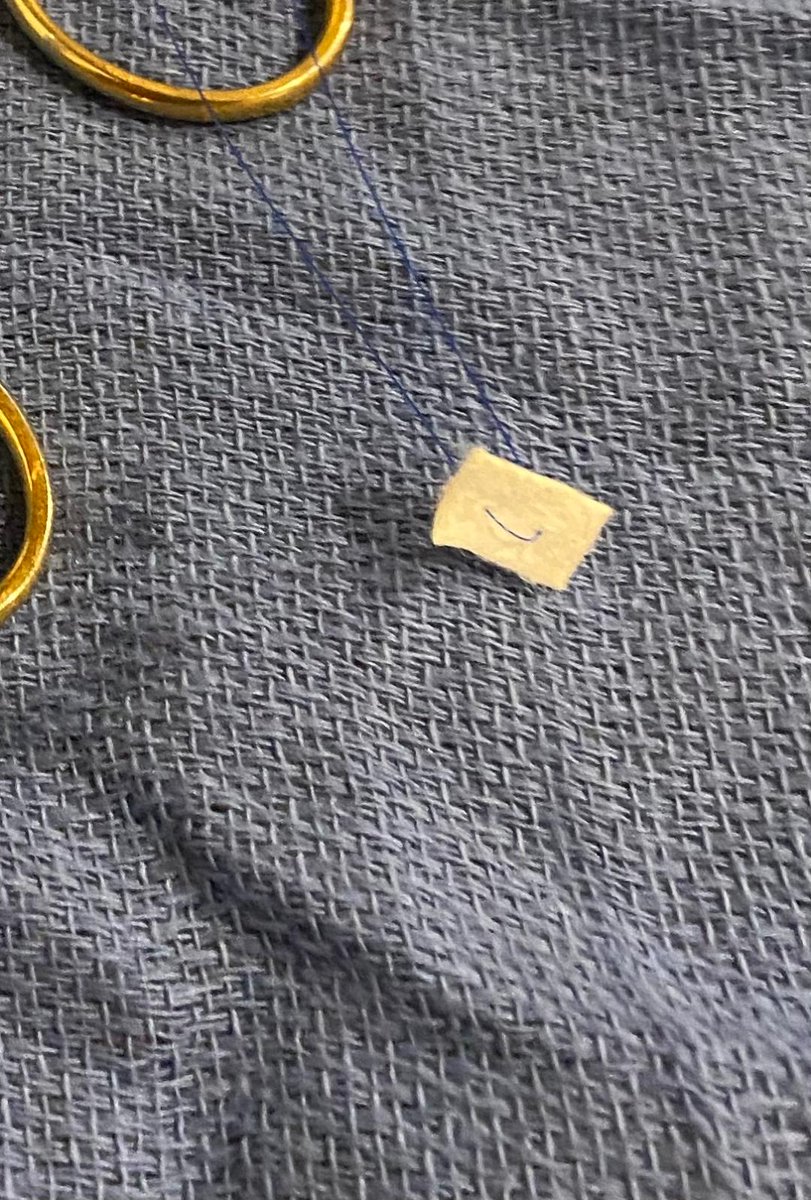
After the needle has gone through the tissue, the assistant holds the second pledget with a clamp, and it is grabbed with both needles in turn. The suture may then be tied down.
Of course, pledgets aren't just for kidneys. They have been used for many other applications.
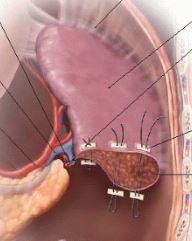
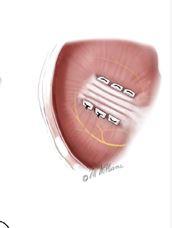
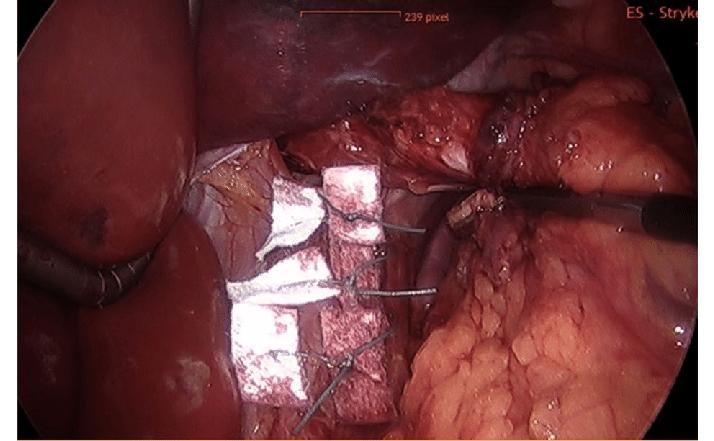
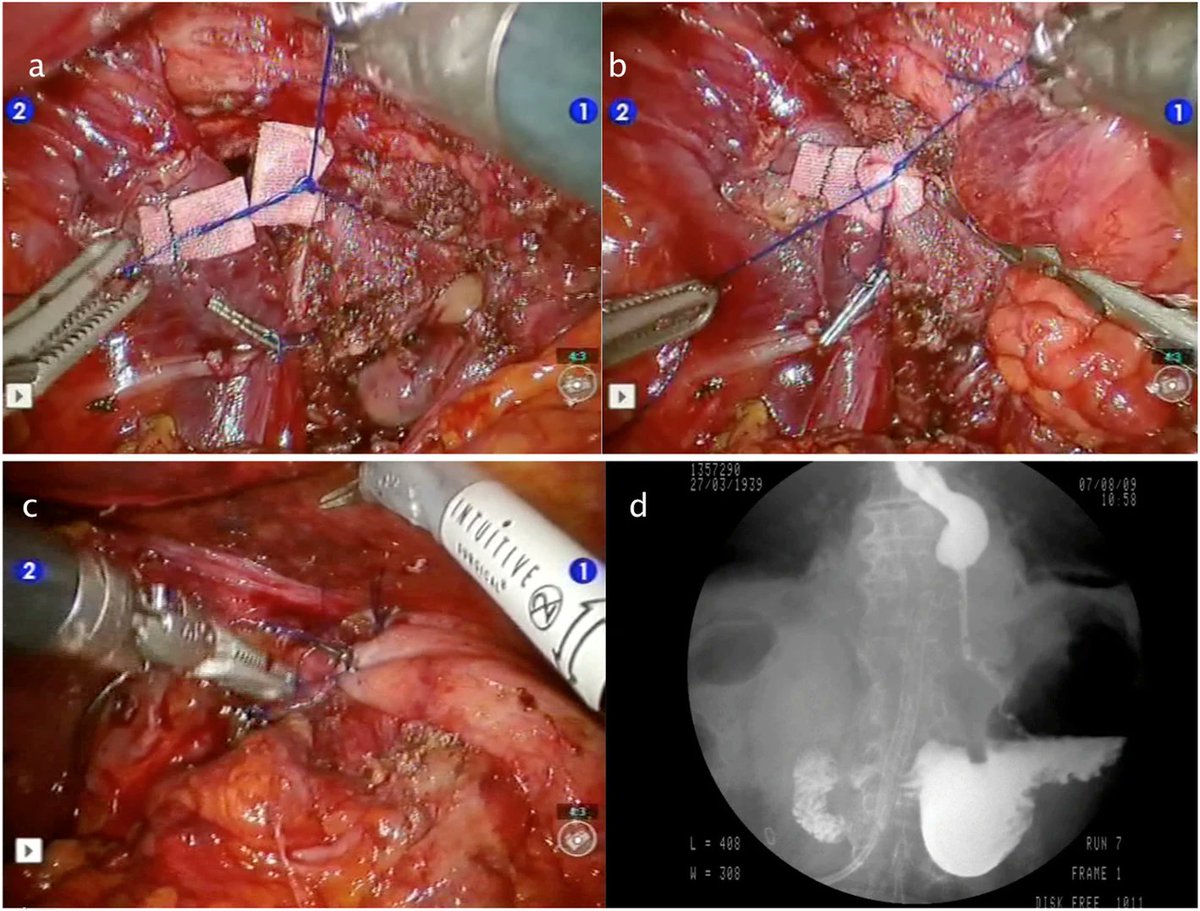
Here, we see pledgeted sutures for partial resection of the spleen, and for plication of the diaphragm.
(yes, I know splenorrhaphy is almost dead; you get the point).
Here, we see pledgeted sutures for partial resection of the spleen, and for plication of the diaphragm.
(yes, I know splenorrhaphy is almost dead; you get the point).
Pledgets seem to be popular in foregut surgery for a variety of different cases. I assume the tissue there is fragile (I don't do foregut; for those that like it, bless you).
Pledgeted 3-0 Prolene sutures are often used for cardiac repair for trauma.
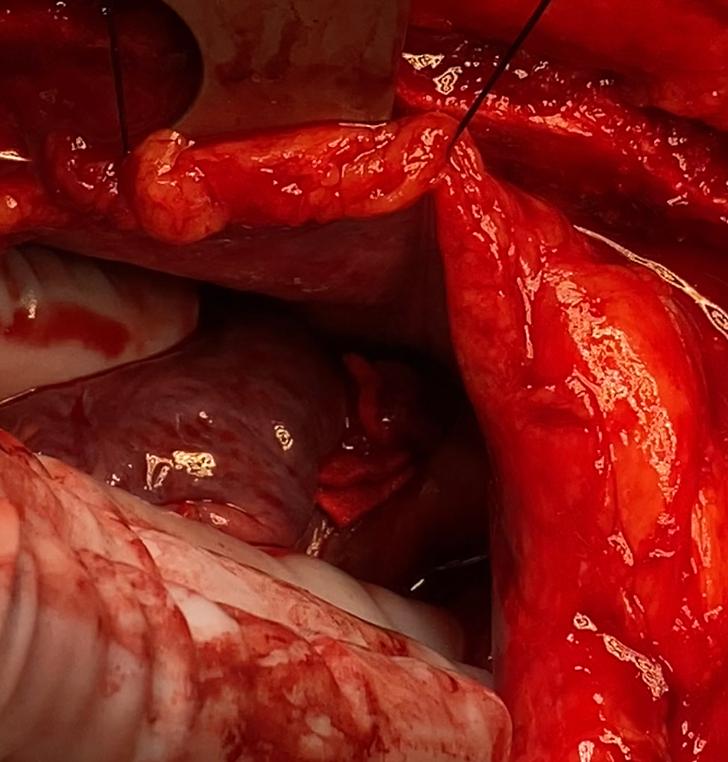
Here is a repair I did for blunt injury (that is to say, my R3 resident placed the actual sutures).
Here is a repair I did for blunt injury (that is to say, my R3 resident placed the actual sutures).
This time, I remembered the reference:
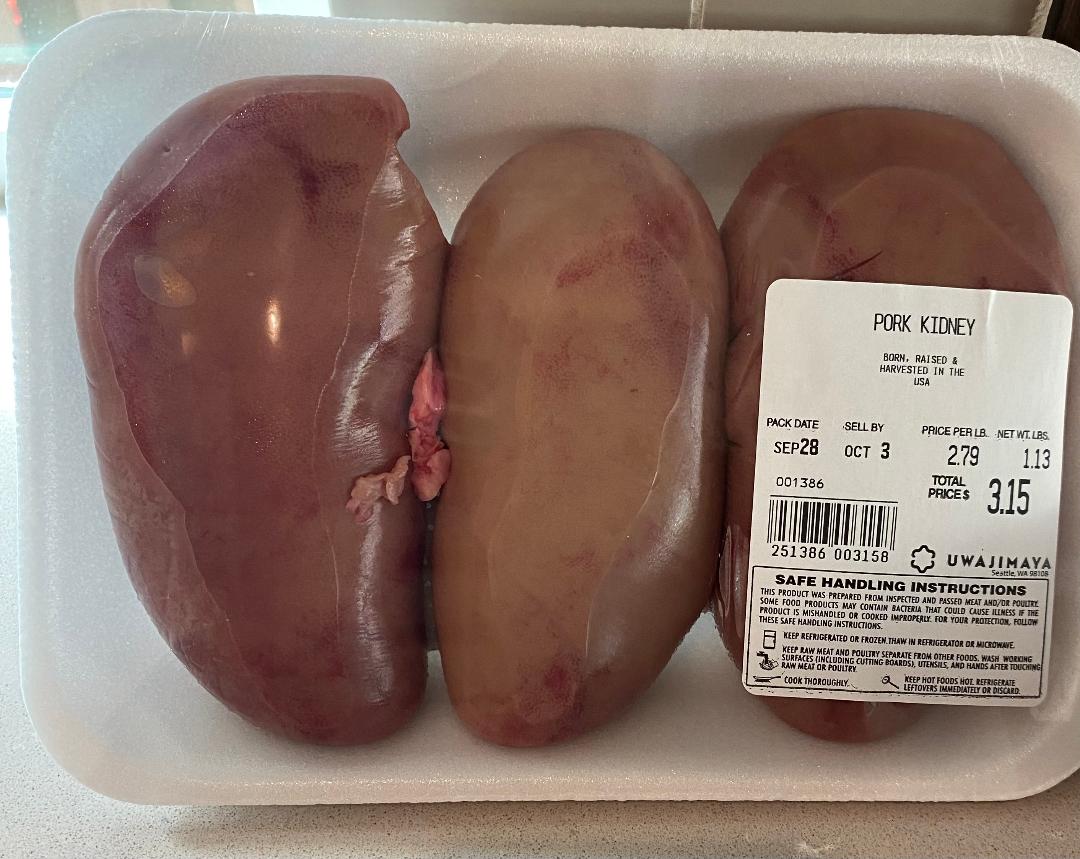
Pork kidneys were obtained from Uwajimaya market (Beaverton, OR). Accessed September 29. 2022.
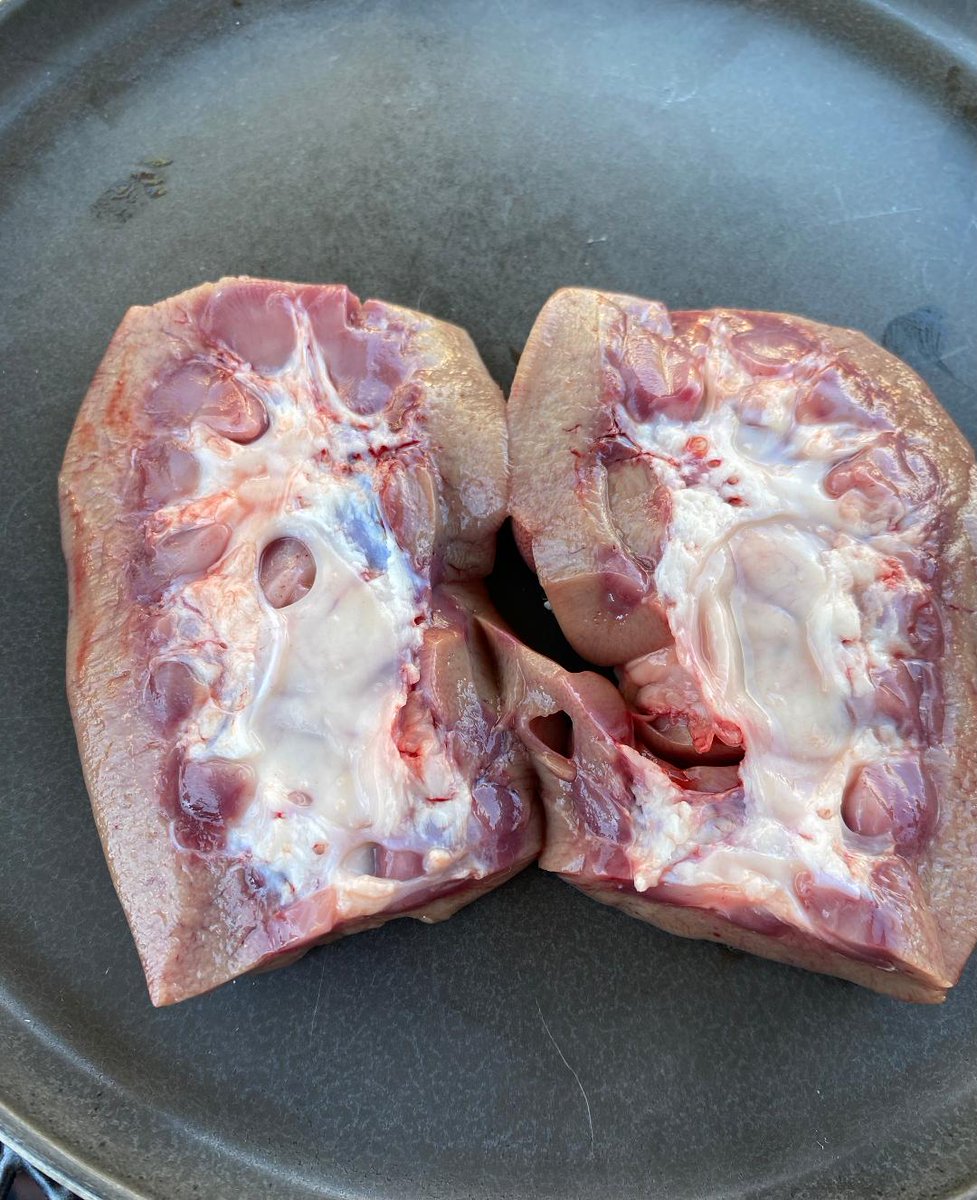
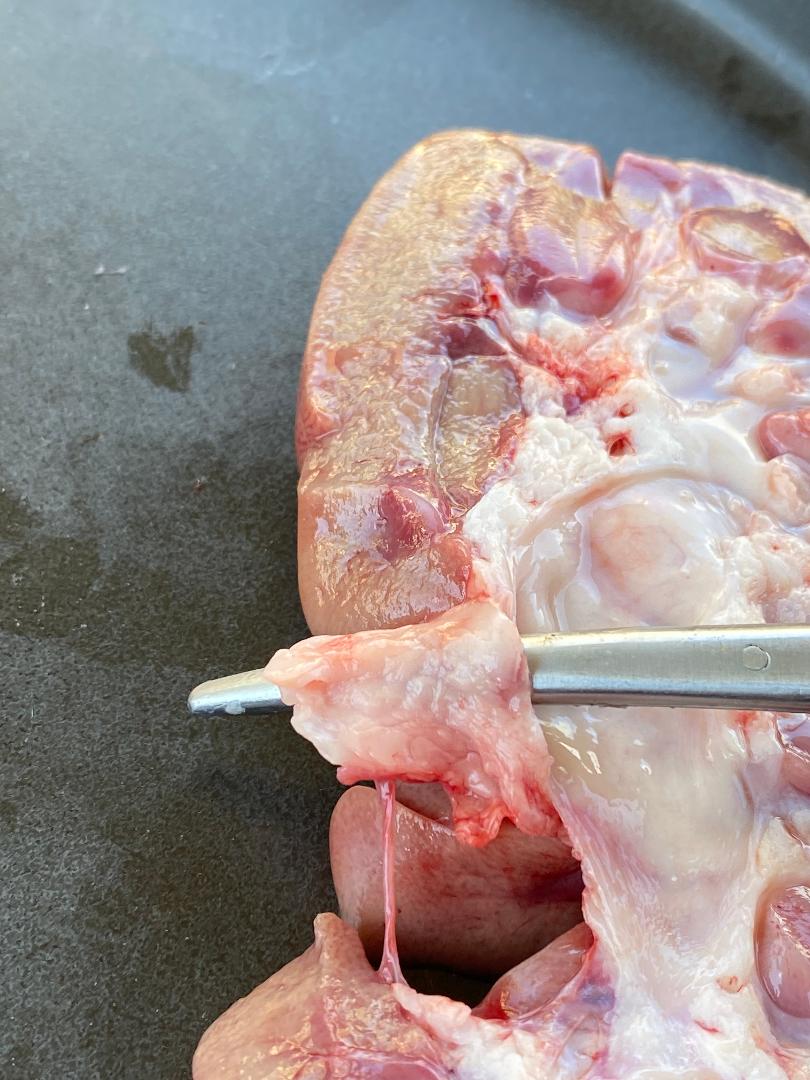
For the urologists out there, this is what it looks like when opened.
⬛️
Pork kidneys were obtained from Uwajimaya market (Beaverton, OR). Accessed September 29. 2022.
For the urologists out there, this is what it looks like when opened.
⬛️
Loading suggestions...