

Analysis and beakdown of the collected 🇲🇦🇩🇿🇹🇳 samples
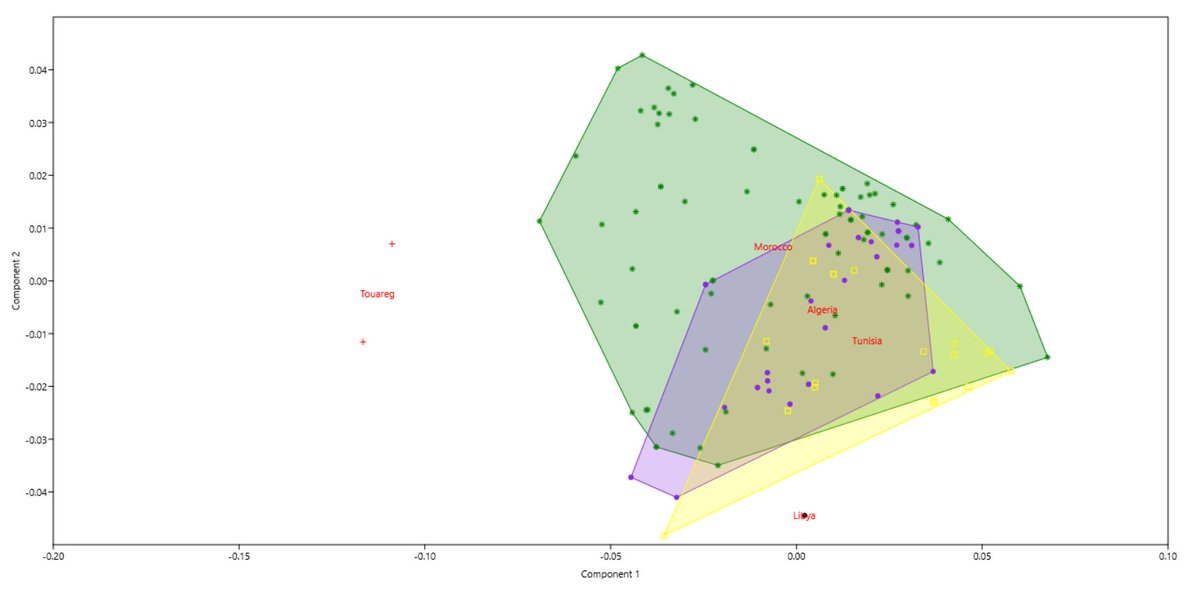
(Note: this is from the samples I have collected up until now. I am still collecting more. If you have done a genetics test or you know someone who has dm me)
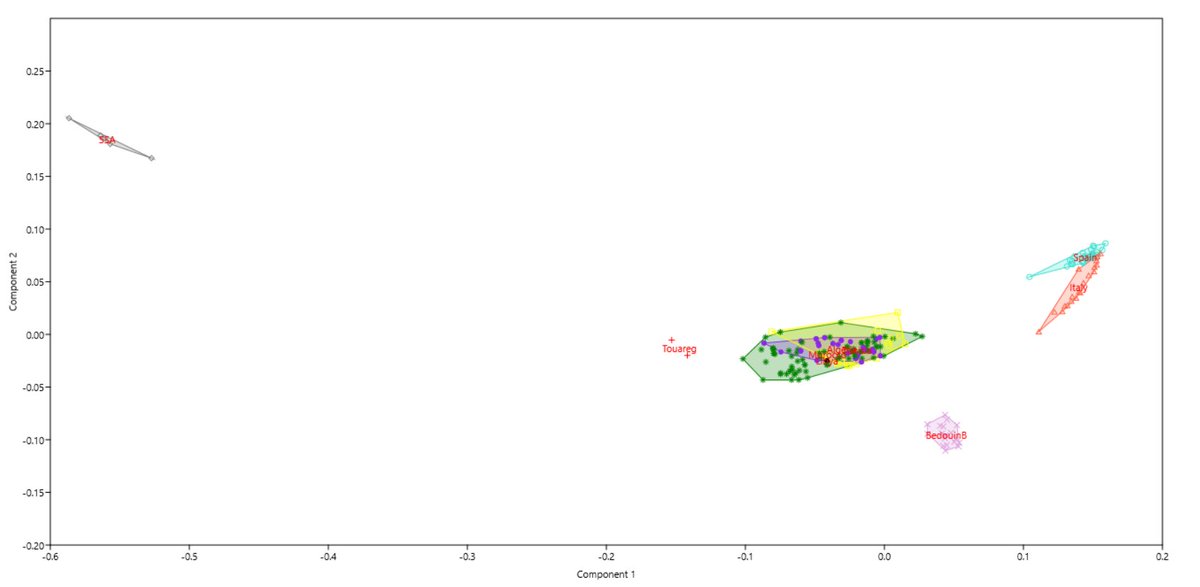
Here in the PCA we can see how the regions overlap. Touareg has a lot of distance from the rest due to admixture with subsaharans. The Moroccan Souss region pulls away like that due to the relative high Iberomaurusian admixture.
(Morocco is green, Algeria purple, Tunisia yellow)
(Morocco is green, Algeria purple, Tunisia yellow)
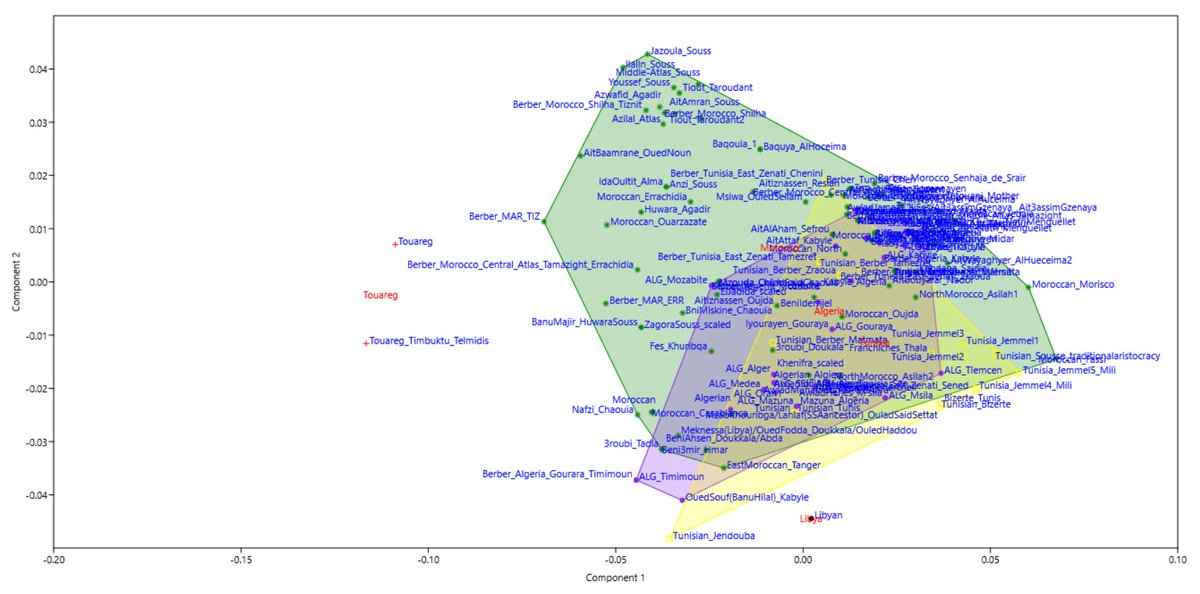
Same PCA as above but this time with the added sample labels.
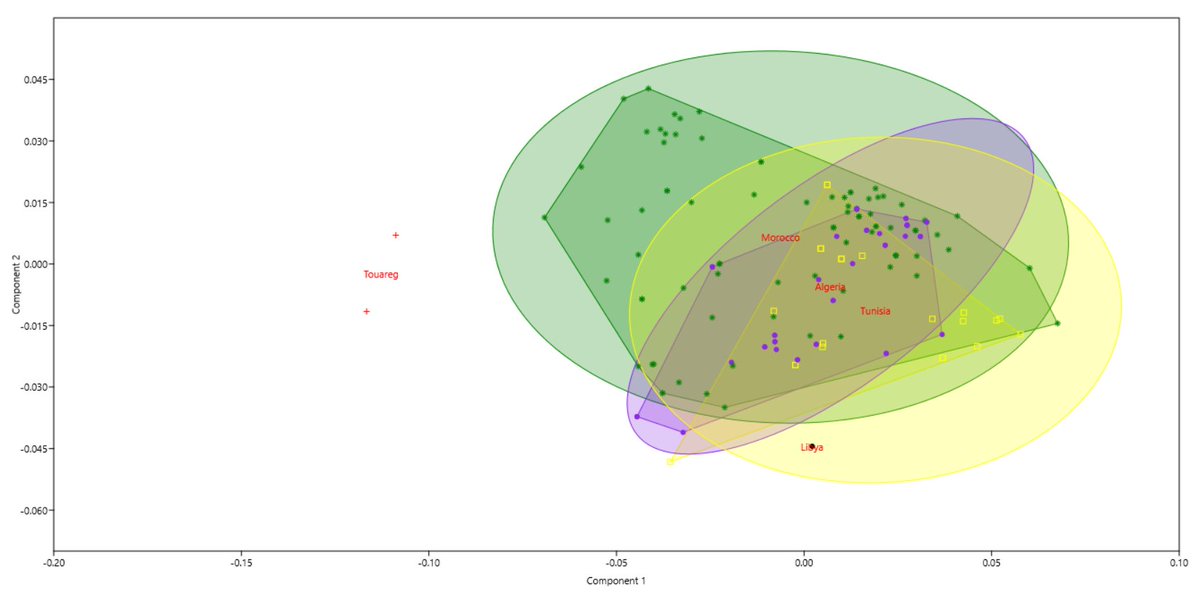
Here is the PCA again but this time with a 95% confidence ellipse. This means that if we were to take another sample the likelyhood of it falling in the region marked is 95%
In this PCA I have added the same BedouinB, a highly homogeneous Arab group, Arabian peninsula, Levantine, Egyptian, Italian, Spanish, as well as samples found in Syria from Ummayad burials from the 7-8th century. Again note the distances and overlap.
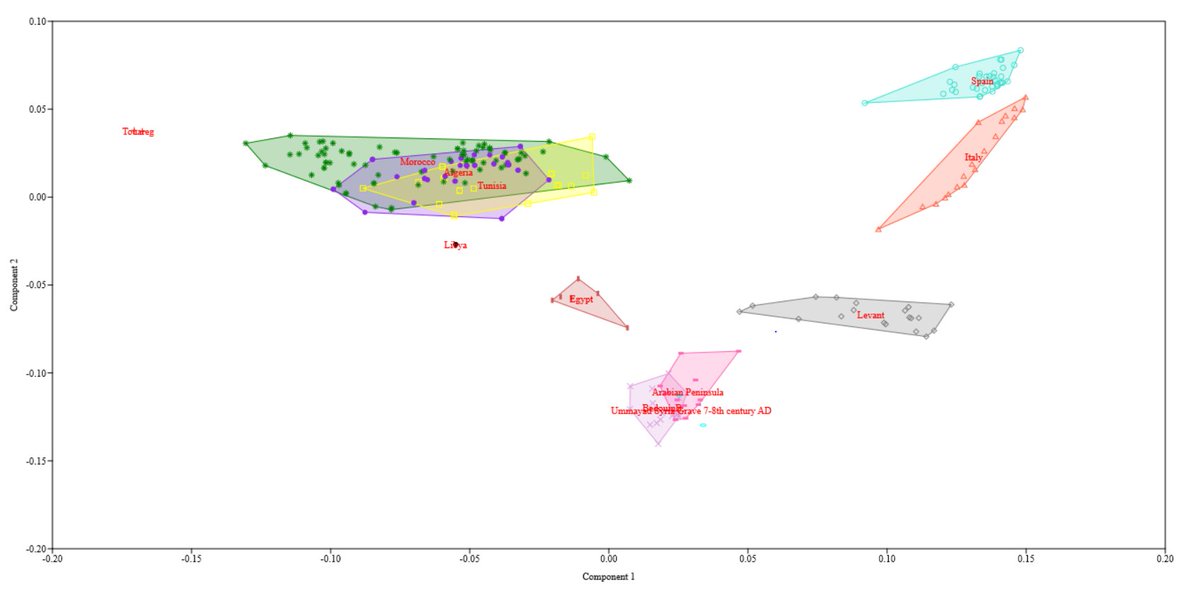
In this final one I have added two Subsaharan groups Yoruba and Dinka.
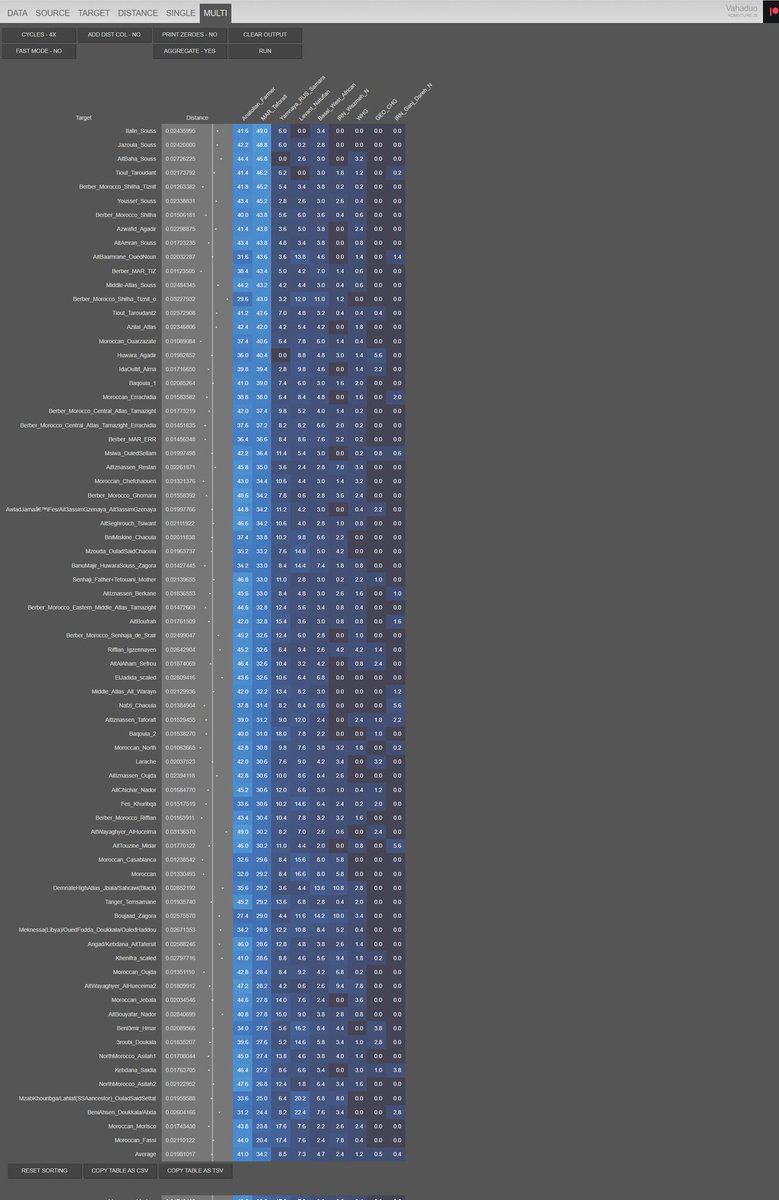
Now time for the ancient admixture models. First up is the Moroccan🇲🇦 one.
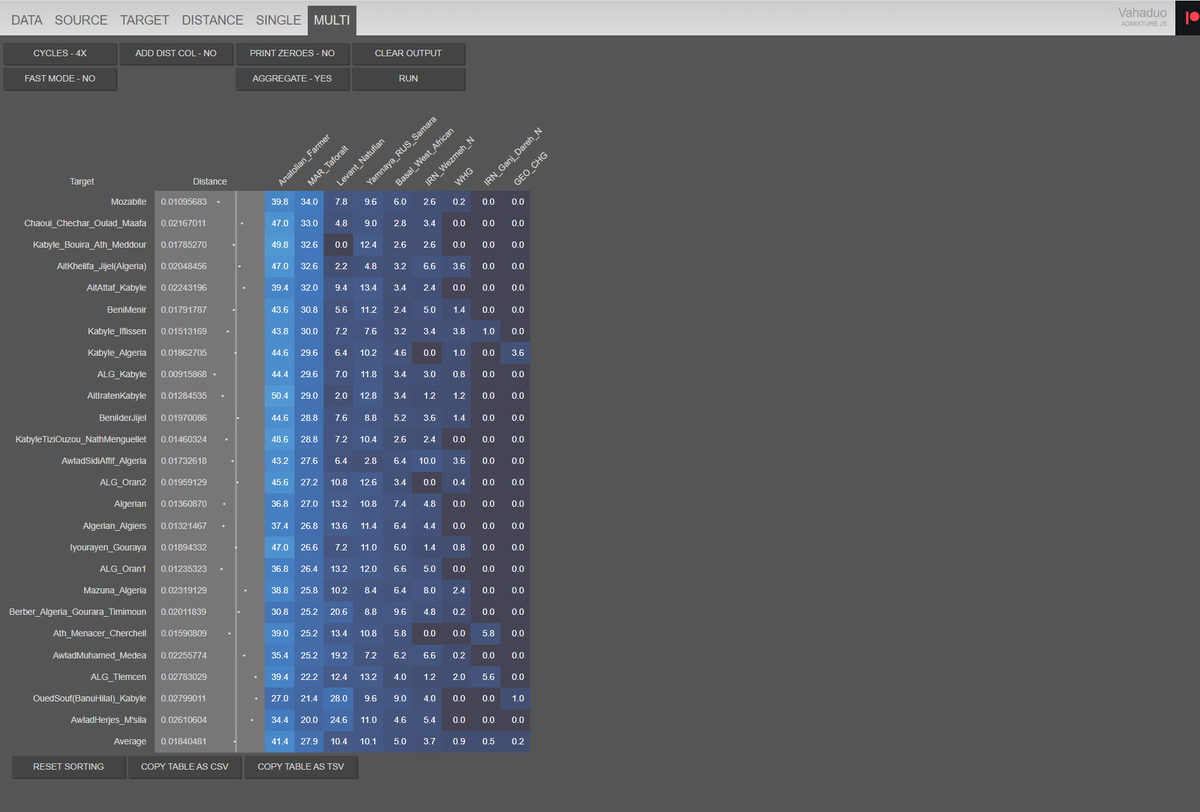
Now Algeria🇩🇿
Now Tunisia🇹🇳
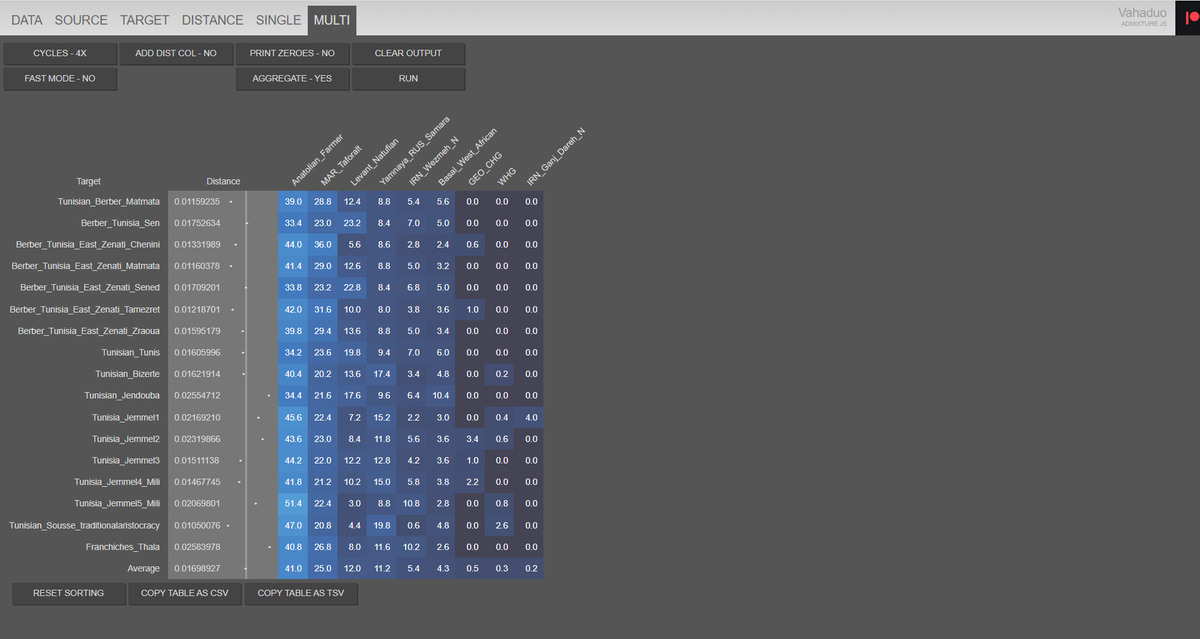
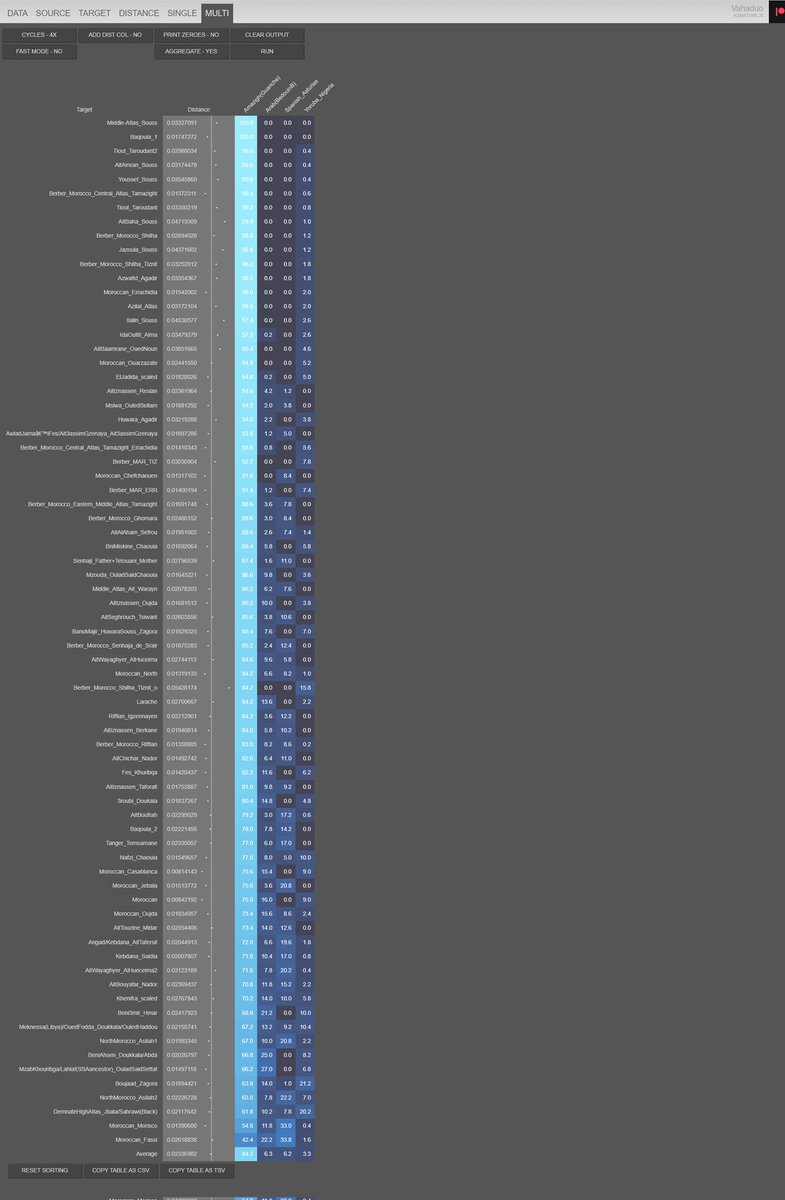
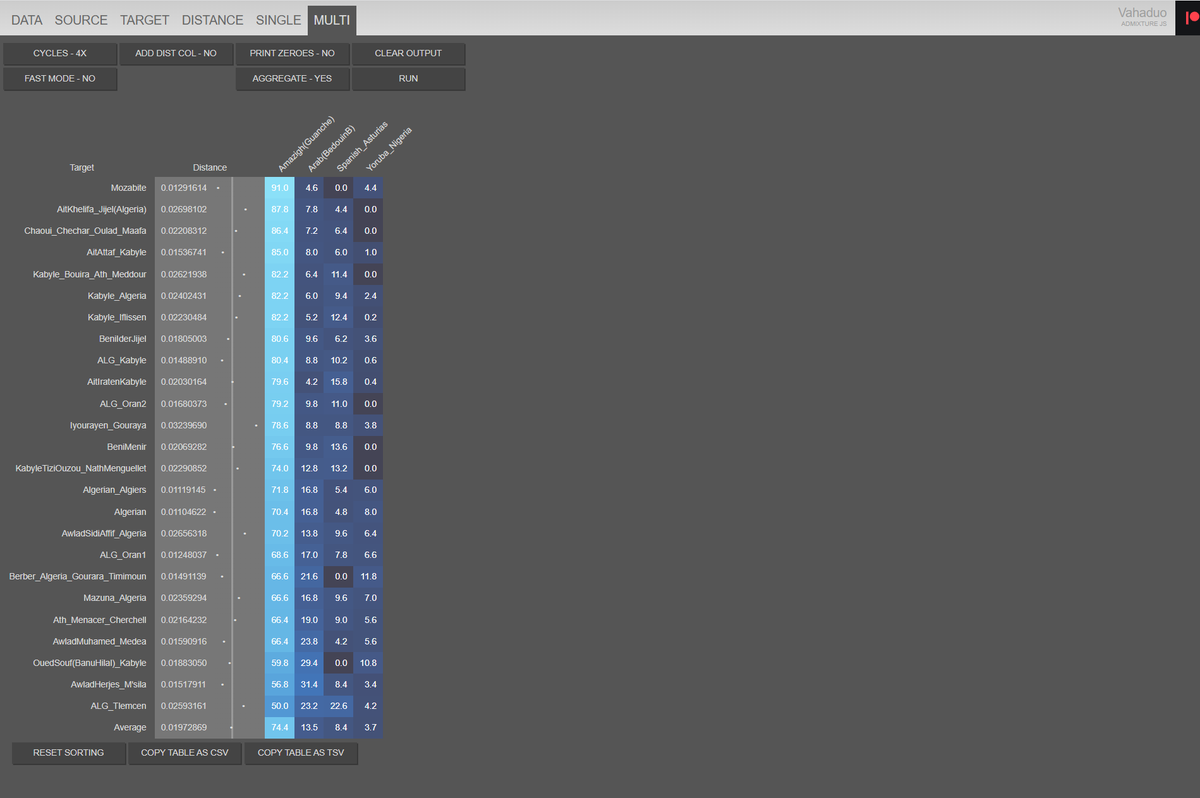
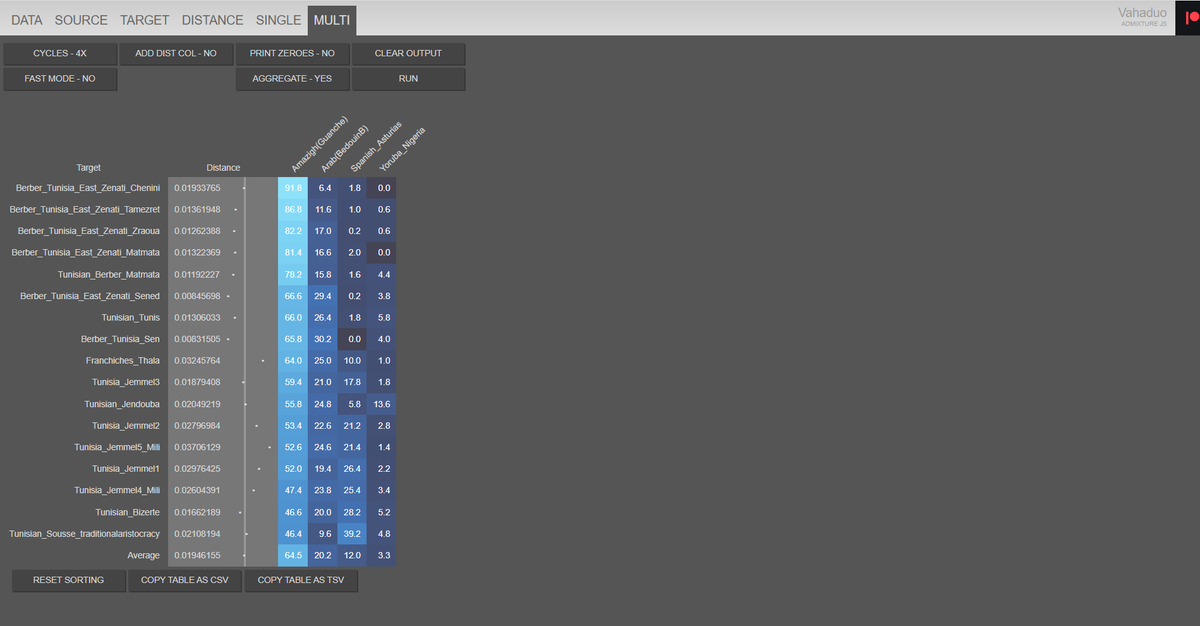
In the next admixture models we will look at how much Amazigh, Arab, Iberian, and Subsaharan admixtures the populations have. For Amazigh I used ancient Guanches, Arab I used BedouinB, Iberian I used Asturias, for subsaharan I used Yoruba.
🇲🇦
🇲🇦
🇩🇿
🇹🇳
[END]
@rattibha unroll
@rattibha unroll
Btw note* I used Arab out of simplicity. For example the Fassi sample here is likely to have Jewish admixture instead of Arab but because both are natufian heavy the calculator ascribes it to Arab.
Loading suggestions...