
Technology
Self-improvement
Health
Work
Personal Development
Lifestyle
Productivity
Time Management
Work-life balance

Why are we all so damn busy?
- a thread -
- a thread -
In the last month, how many times have you said some variation of "so busy!" or "good, just busy!" when asked how you're doing?
Be honest.
The number is probably high—probably much higher than you'd like to admit.
It's ok, you're not alone.
Be honest.
The number is probably high—probably much higher than you'd like to admit.
It's ok, you're not alone.
In recent years, it feels as though everyone has gotten really, really busy.
It's an interesting trend to observe, especially considering the body of research that is decidedly mixed on whether our actual hours of work and related commitments have increased.
What's going on?
It's an interesting trend to observe, especially considering the body of research that is decidedly mixed on whether our actual hours of work and related commitments have increased.
What's going on?
In understanding this problem, I find it makes sense to deconstruct it into two separate parts:
• Why do we SAY we are busy?
• Why do we FEEL we are busy?
It's an important distinction.
Let's start with the former: Why do we say we are busy?
• Why do we SAY we are busy?
• Why do we FEEL we are busy?
It's an important distinction.
Let's start with the former: Why do we say we are busy?
"Flex" or Status Signal
Busy has become the dystopian status symbol of the modern worker.
We have somehow decided that being busy is good, so we take pride in our busyness and wear it as a symbol of our value to society.
If we are busy, it must mean we are extremely valuable.
Busy has become the dystopian status symbol of the modern worker.
We have somehow decided that being busy is good, so we take pride in our busyness and wear it as a symbol of our value to society.
If we are busy, it must mean we are extremely valuable.
Self-Protection
Busy is used as a way to protect ourselves from scrutiny in the workforce.
If we constantly say/show we are busy, our superiors will never question our work ethic or output, and we will continue on a steady climb through whatever hierarchy we find ourselves in.
Busy is used as a way to protect ourselves from scrutiny in the workforce.
If we constantly say/show we are busy, our superiors will never question our work ethic or output, and we will continue on a steady climb through whatever hierarchy we find ourselves in.
Ok, so those are two core reasons we say we are busy, but how about the second question:
Why do we feel we are busy?
Why do we feel we are busy?
Constant Connectedness
It's no secret that we are living in an era of constant connectedness.
Our devices are literally attached to our bodies at all times—sending us frantic notifications of the latest breaking news and urgent to-dos.
Remote work has exacerbated the problem.
It's no secret that we are living in an era of constant connectedness.
Our devices are literally attached to our bodies at all times—sending us frantic notifications of the latest breaking news and urgent to-dos.
Remote work has exacerbated the problem.
With no fixed hours to a workday, we remain connected 24/7, and our bosses feel we can be reached on that same schedule.
It's a paradox:
More work, more to-dos, more pings—less ownership, less accountability, less connection.
We feel busier, but find less meaning in the noise.
It's a paradox:
More work, more to-dos, more pings—less ownership, less accountability, less connection.
We feel busier, but find less meaning in the noise.
Obsessive Optimization
Optimization culture told you that unless you are making the most of every second of every day, you're missing out on growth.
When we constantly seek to optimize, we fill our time with movement—that may be completely devoid of progress.
Optimization culture told you that unless you are making the most of every second of every day, you're missing out on growth.
When we constantly seek to optimize, we fill our time with movement—that may be completely devoid of progress.
Failure of Prioritization
The failure to prioritize is the greatest driver of busyness.
Two categories:
• Failure to identify the 2-3 things that really matter means we busy ourselves with everything.
• Spending too much time on the urgent draws us away from the important.
The failure to prioritize is the greatest driver of busyness.
Two categories:
• Failure to identify the 2-3 things that really matter means we busy ourselves with everything.
• Spending too much time on the urgent draws us away from the important.
The consequences of perpetual busyness are dire:
• Fail to progress on the important—we spend time on things that don't matter and miss things that do.
• Physical health suffers—we give ourselves excuses to cut corners.
• Mental health suffers—burnout potential is high.
• Fail to progress on the important—we spend time on things that don't matter and miss things that do.
• Physical health suffers—we give ourselves excuses to cut corners.
• Mental health suffers—burnout potential is high.
"No one pursuit can be successfully followed by a man who is preoccupied with many things…There is nothing the busy man is less busied with than living: there is nothing that is harder to learn." - Seneca
Busyness is a problem.
So let's talk about how we escape...
Busyness is a problem.
So let's talk about how we escape...
Reframe the Goal
The first step is to eliminate our desire to say we are busy.
We need to remove "busy" as a positive signal from our collective consciousness.
The goal isn't to generate prolific input—the goal is to generate prolific output per unit input.
The first step is to eliminate our desire to say we are busy.
We need to remove "busy" as a positive signal from our collective consciousness.
The goal isn't to generate prolific input—the goal is to generate prolific output per unit input.
With high output per unit input, you can decide on your level of input based on your personal situation and desires.
It's not about how many hours you work—it's about how much output you generate per unit of input.
It's about the leverage on your input.
It's not about how many hours you work—it's about how much output you generate per unit of input.
It's about the leverage on your input.
If you've escaped the trap, at your next party, take pride in declaring how anti-busy you are.
Talk about the freedom you have to take walks during the day, think creatively about ambitious projects, and spend time with your loved ones.
Let's make anti-busyness the new flex.
Talk about the freedom you have to take walks during the day, think creatively about ambitious projects, and spend time with your loved ones.
Let's make anti-busyness the new flex.
Identify & Focus on the Important
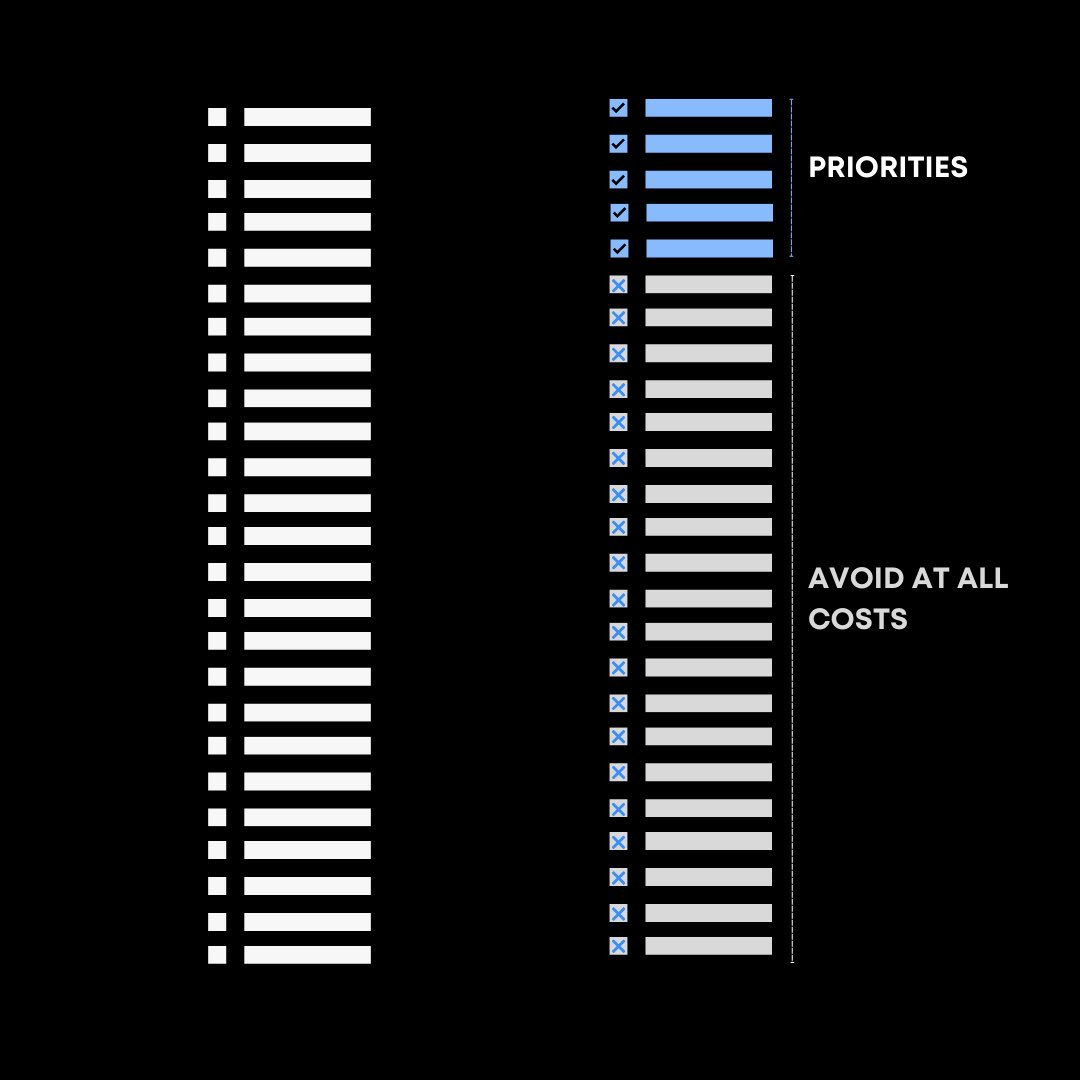
Make a List: Write down your top-20 priorities on a piece of paper.
Narrow: Circle the top 3-5 items--the absolute top priorities in your professional life.
Split: This is your focus list. The other items are your "avoid-at-all-costs" list.
Make a List: Write down your top-20 priorities on a piece of paper.
Narrow: Circle the top 3-5 items--the absolute top priorities in your professional life.
Split: This is your focus list. The other items are your "avoid-at-all-costs" list.
Once you've identified it, be ruthless in focusing on it.
If anything new comes up, pull out your list and make a quick assessment of whether it falls into one of your priorities.
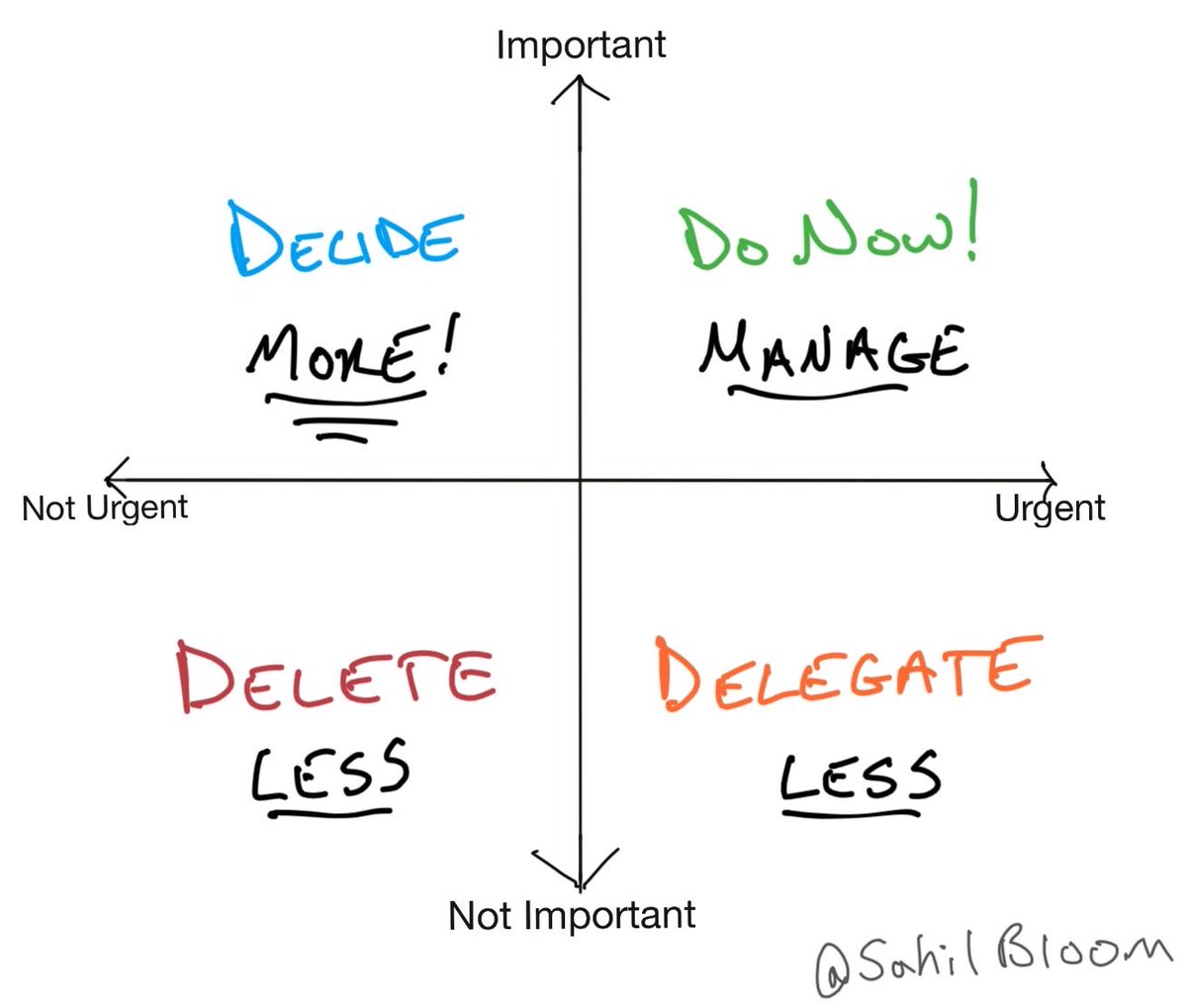
Use a simple decision matrix to see how much time you are spending on urgent vs. important tasks.
If anything new comes up, pull out your list and make a quick assessment of whether it falls into one of your priorities.
Use a simple decision matrix to see how much time you are spending on urgent vs. important tasks.
Embrace Boredom
“All of humanity's problems stem from man's inability to sit quietly in a room alone.” - Blaise Pascal
In our hyper-connected world, we have been taught to vilify boredom, idleness, and free time.
We need to reclaim this practice in order to escape busyness.
“All of humanity's problems stem from man's inability to sit quietly in a room alone.” - Blaise Pascal
In our hyper-connected world, we have been taught to vilify boredom, idleness, and free time.
We need to reclaim this practice in order to escape busyness.
To spark the change, try my Creative Boredom Challenge:
• 5 days, 30 min per day
• No technology allowed
• No books or reading
• No social interaction
• Dynamic (walking) or static
Let your mind wander. Carry a small notebook to log any interesting ideas or insights.
• 5 days, 30 min per day
• No technology allowed
• No books or reading
• No social interaction
• Dynamic (walking) or static
Let your mind wander. Carry a small notebook to log any interesting ideas or insights.
I think we're in the midst of a global busyness crisis.
And contrary to what you'd assume, it's making us all LESS productive, not more.
What's more, it's negatively impacting a whole host of other areas of our lives.
It's time we all take a stand and fight back against busy.
And contrary to what you'd assume, it's making us all LESS productive, not more.
What's more, it's negatively impacting a whole host of other areas of our lives.
It's time we all take a stand and fight back against busy.
Summarizing my 3 suggestions to escape:
Reframe: Stop taking pride in being busy. Learn to take pride in your output per unit input.
Focus: Use the 2-list strategy to identify what truly matters. Focus energy on the important.
Embrace Boredom: Schedule time to mentally wander.
Reframe: Stop taking pride in being busy. Learn to take pride in your output per unit input.
Focus: Use the 2-list strategy to identify what truly matters. Focus energy on the important.
Embrace Boredom: Schedule time to mentally wander.
Follow me @SahilBloom for more writing on business, productivity, growth, and life.
I write about these topics in my newsletter. You should join 121,000+ others who receive it every single week! sahilbloom.com
I write about these topics in my newsletter. You should join 121,000+ others who receive it every single week! sahilbloom.com
Loving this book from one of my favorite modern philosophers @oliverburkeman on all things time! amazon.com
For whatever reason, having a kid made me view time with very clear tradeoffs.
Every minute of unnecessary busyness is one less minute of these moments (which I’ll never get back).
Has made me think critically about how I spend my time and creating points of leverage.
Every minute of unnecessary busyness is one less minute of these moments (which I’ll never get back).
Has made me think critically about how I spend my time and creating points of leverage.

Loading suggestions...