
The Royal Game of Thrones (A 🧵)
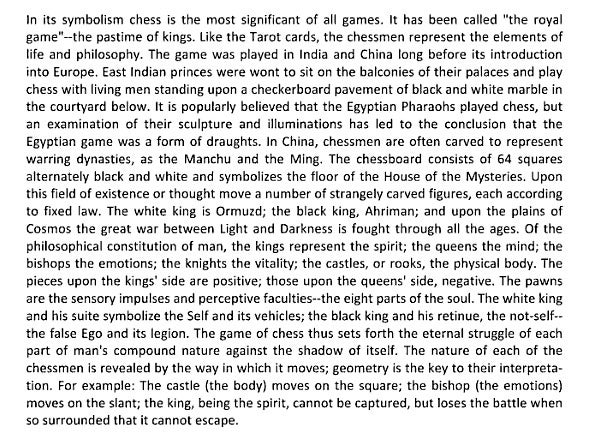
"In its symbolism CHESS is the most significant of all games. It has been called “the royal game”–the pastime of kings. Like the Tarot cards, the chessmen represent the elements of life and philosophy."
"In its symbolism CHESS is the most significant of all games. It has been called “the royal game”–the pastime of kings. Like the Tarot cards, the chessmen represent the elements of life and philosophy."
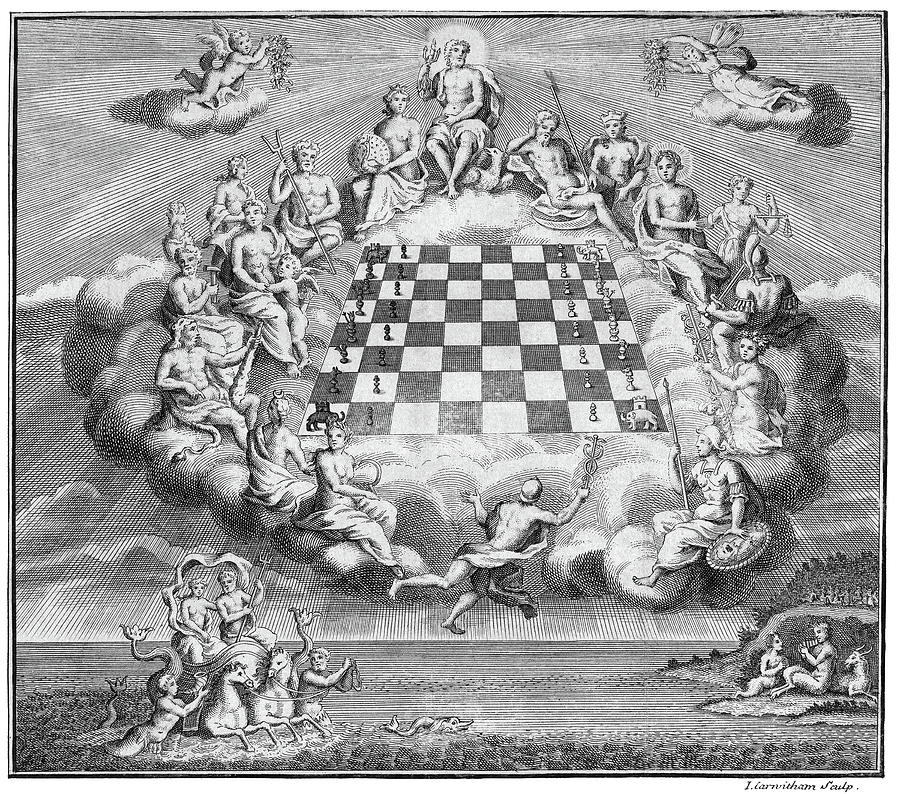
The game of Chess is believed to have originated in Persia. Legend holds that the game was developed for King Vishtaspa by the prophet Zarathutra (Zoroaster) who requested as a reward that he receive payment in grain.
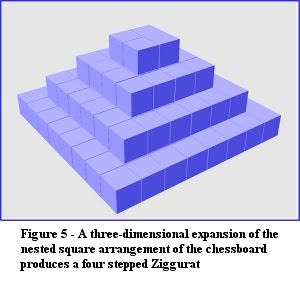
The conditions of this reward were that the amount of grain received would be equal to that which accumulated by placing one grain on the first square of the chess board, three on the second, six on the third, ten on the fourth, etc. up to the sixty-fourth and final square.
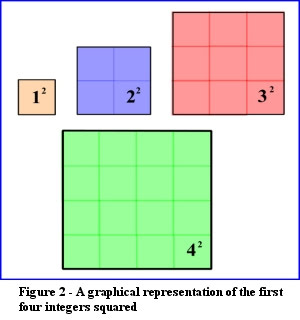
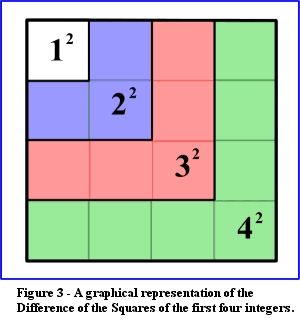
Mathematicians will recognize this to be a geometric progression, resulting in a greater quantity of grain than could be gathered in the entire Persian Empire (18,446,744,973,709,551,661 grains).
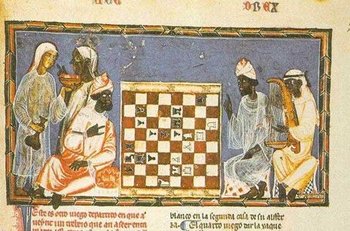
According to further legend, the original rules of the game of Chess were so ancient as to have been lost. A wise man in the Persian court by the name of Buzurdjmir, rediscovered the complete set of rules for the game of Chess, including the placement and movement of each Piece.
"To calculate the arithmetical progression upon the Board, he considered 32 pairs of numbers adding up to 65 (1+64=65, 2+63=65, 3+62=65 etc). So 32×65 = 2080. In an allegorical sense, the secret number of the Board is not 64, but 65, because all other numbers are related to it.”
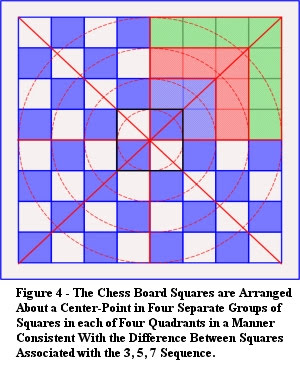
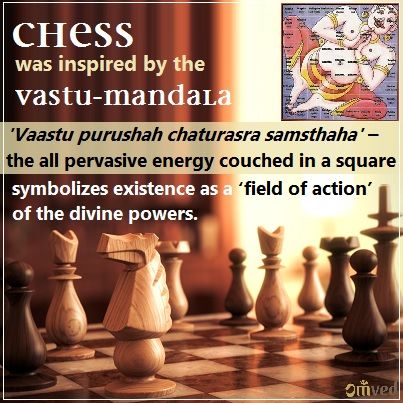
In the Indian version of the game, the sixty-four squares (in an 8 X 8 matrix) correspond to the Vastu Mandala, a diagram associated with the layout of sacred temples. The Hindu King Balhit wrote a book about Chess in which the Game is portrayed as an allegory of the Zodiac.
"The cyclic symbolism of the chess-board resides in the fact that it expresses the unfolding of space according to the quaternary & octonary of the principle directions (4X4X4=8X8), and that it synthesizes in crystalline form, the two great complementary cycles of sun and moon.."
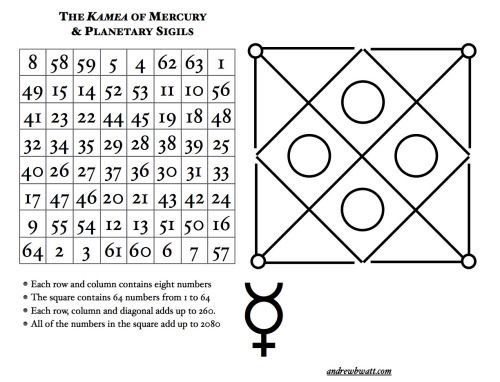
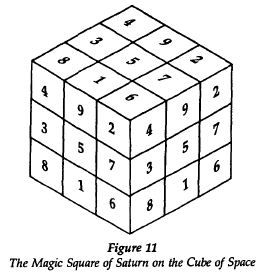
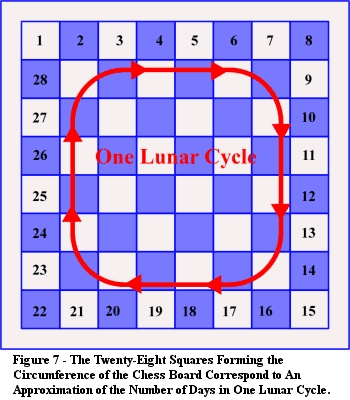
"..the duodenary of the Zodiac and the 28 Lunar mansions; furthermore, the number 64, the sum of the squares on the chess-board is a submultiple of the fundamental cyclic number 25920, which measures the precession of the equinoxes."
The word “Checkmate” used to signify the games end by successfully trapping the King, is believed to stem from the Persian word “Shah” (king) and the Arabic word “mat” meaning "He is Dead".
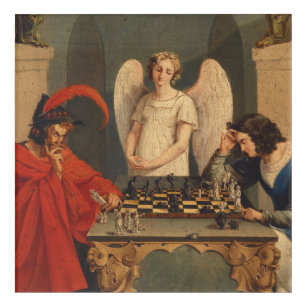
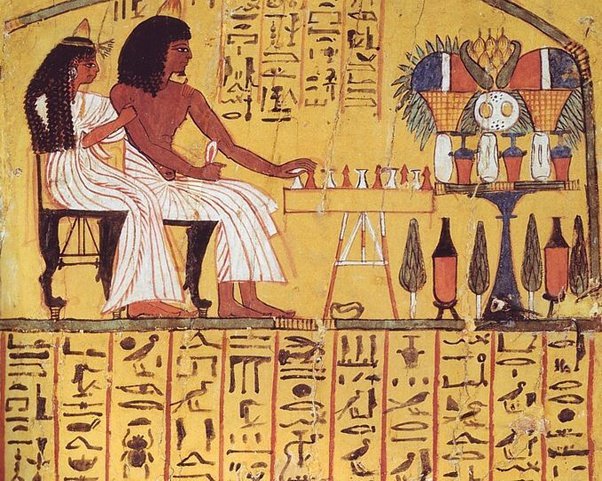
Still other sources identify that the game of Chess was invented by none of than Mercury, also known as the Greek Hermes or to the Egyptians as Thoth.
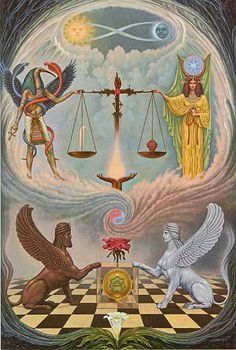
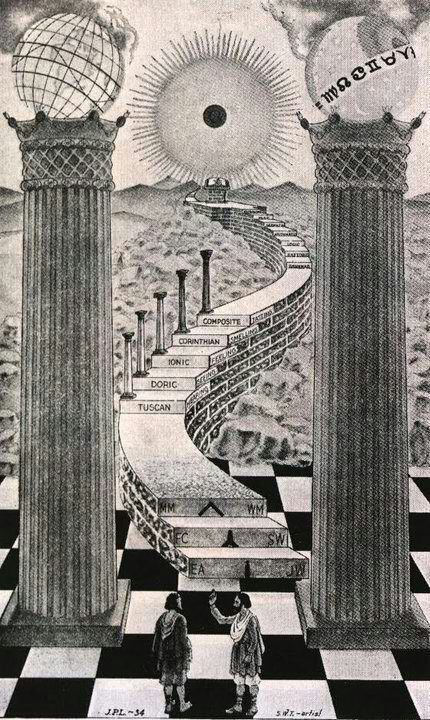
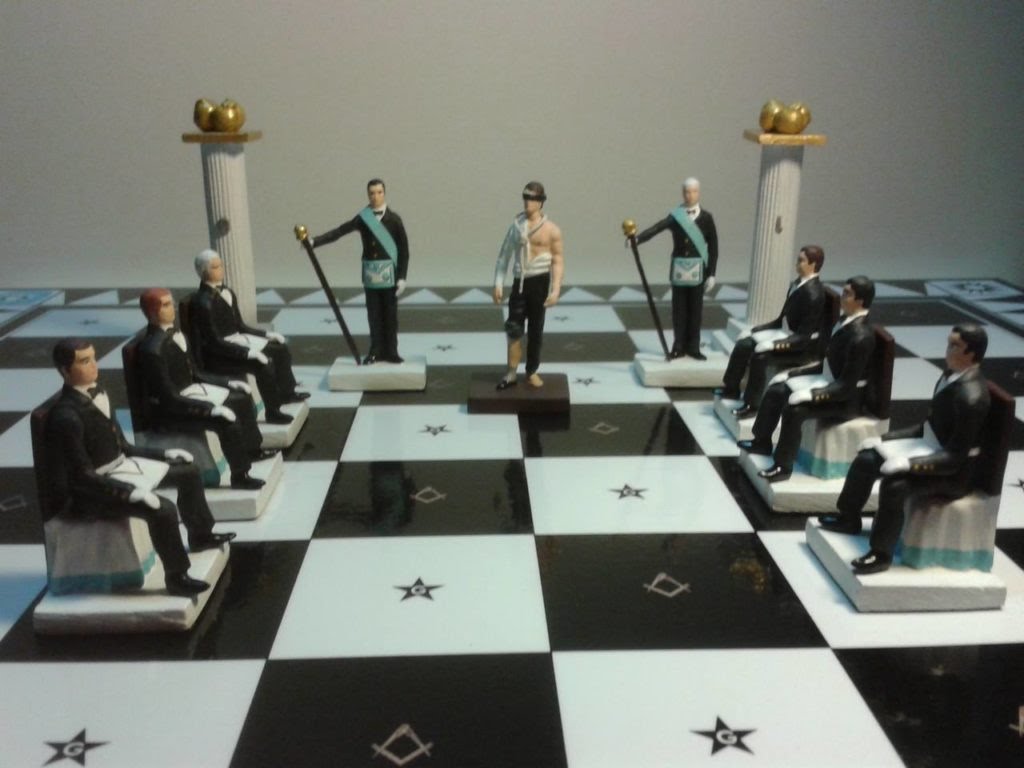
The chessboard consists of 64 squares alternately black and white and symbolizes the floor of the House of the Mysteries. Perfectly repressing the Kingdom of Duality.
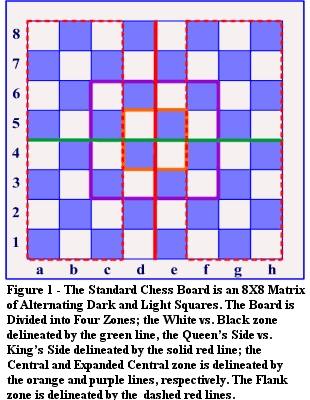
The white king is Ormuzd or Ahura Mazda; the black king, Ahriman or Angra Mainyu; and upon the plains of Cosmos the great war between Light and Darkness is fought through all the ages.
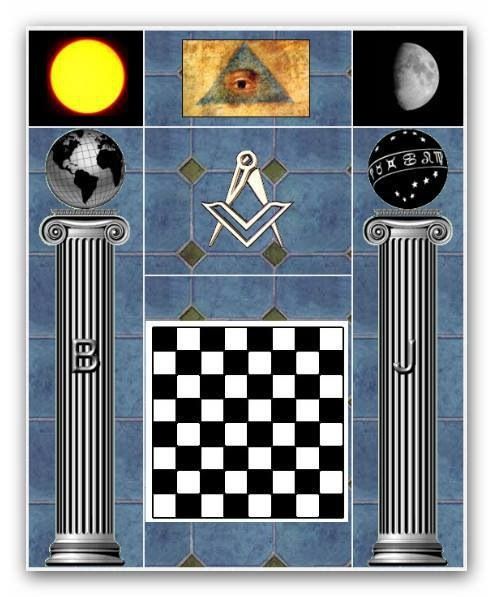
Of the philosophical constitution of man, the kings represent the spirit; the queens the mind; the bishops the emotions; the knights the vitality; the castles, or rooks, the physical body.
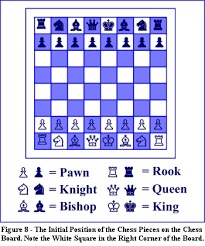
The pieces upon the kings’ side are positive; those upon the queens’ side, negative. The pawns are the sensory impulses and perceptive faculties–the eight parts of the soul.
The white king and his suite symbolize the Self and its vehicles; the black king and his retinue, the not-self–the false Ego and its legion.
The game of chess thus sets forth the eternal struggle of each part of man’s compound nature against the shadow of itself.
The nature of each of the chessmen is revealed by the way in which it moves; geometry is the key to their interpretation.
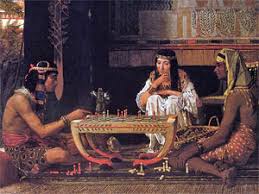
For example: The castle (the body) moves on the square; the bishop (the emotions) moves on the slant; the king, being the spirit, cannot be captured, but loses the battle when so surrounded that it cannot escape.
🧵🔚
🧵🔚
Loading suggestions...