

🔍 TACTICAL ANALYSIS :
🔵SSC Napoli - ⚪️🔴Ajax Amsterdam
How did Napoli, thanks to its pressing structure, took advantage from Ajax’s long balls and wide build-up to attack central spaces ?
🧵
🔵SSC Napoli - ⚪️🔴Ajax Amsterdam
How did Napoli, thanks to its pressing structure, took advantage from Ajax’s long balls and wide build-up to attack central spaces ?
🧵
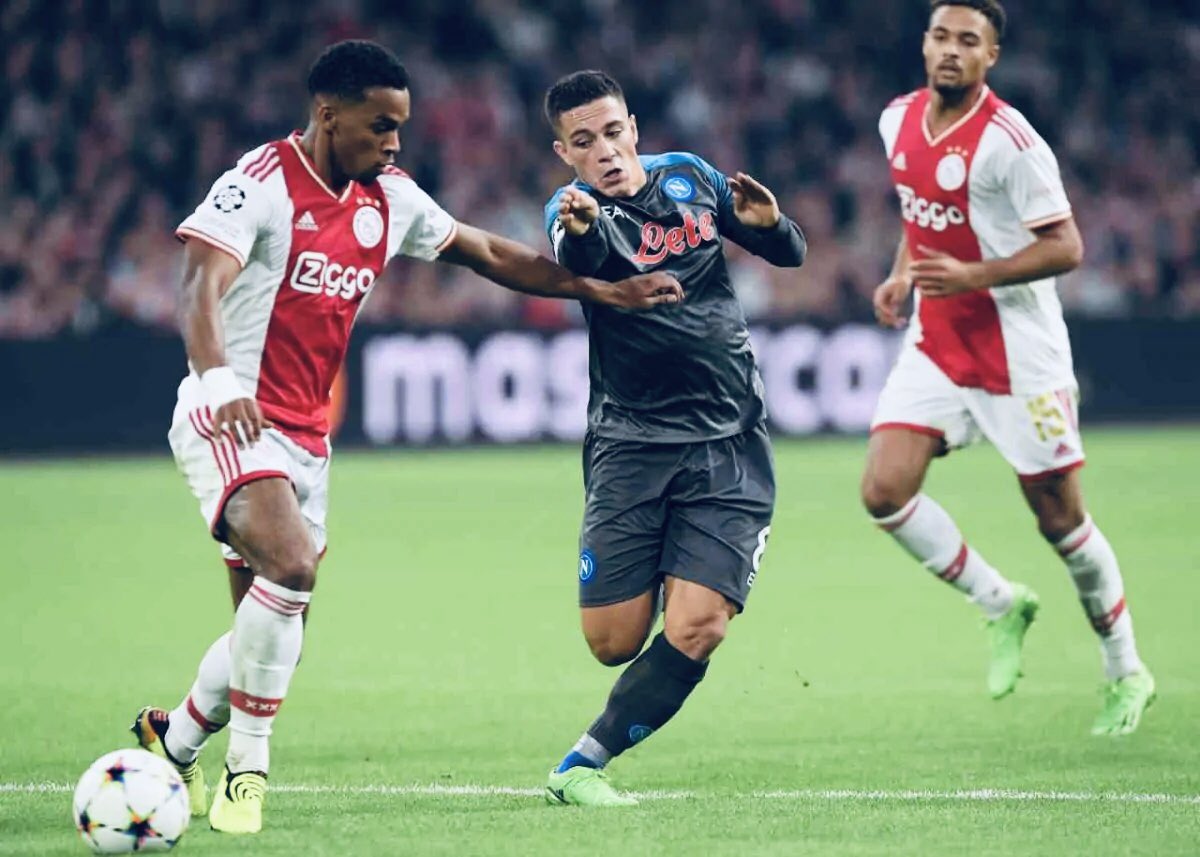
Spalletti had a completely opposite approach compare to the Liverpool game. Ajax’s low build-up will be Napoli’s main target, and the strategy was to prevent any vertical progression, given excellent moves in recent games from Alvarez and Taylor.
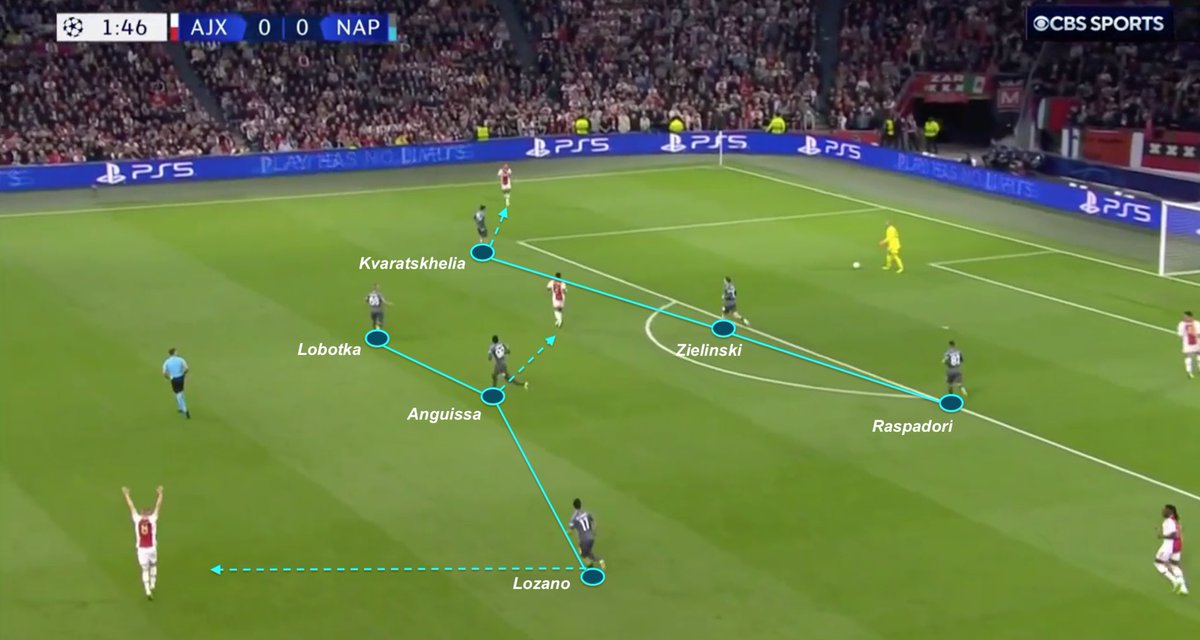
Napoli had different pressing shapes according to ball location, with precise purpose. Let’s focus first one the left hand side: 3-3 structure with Zielinski upfront, and willingly lock this zone with narrow distances, given wide positioning from Ajax players.
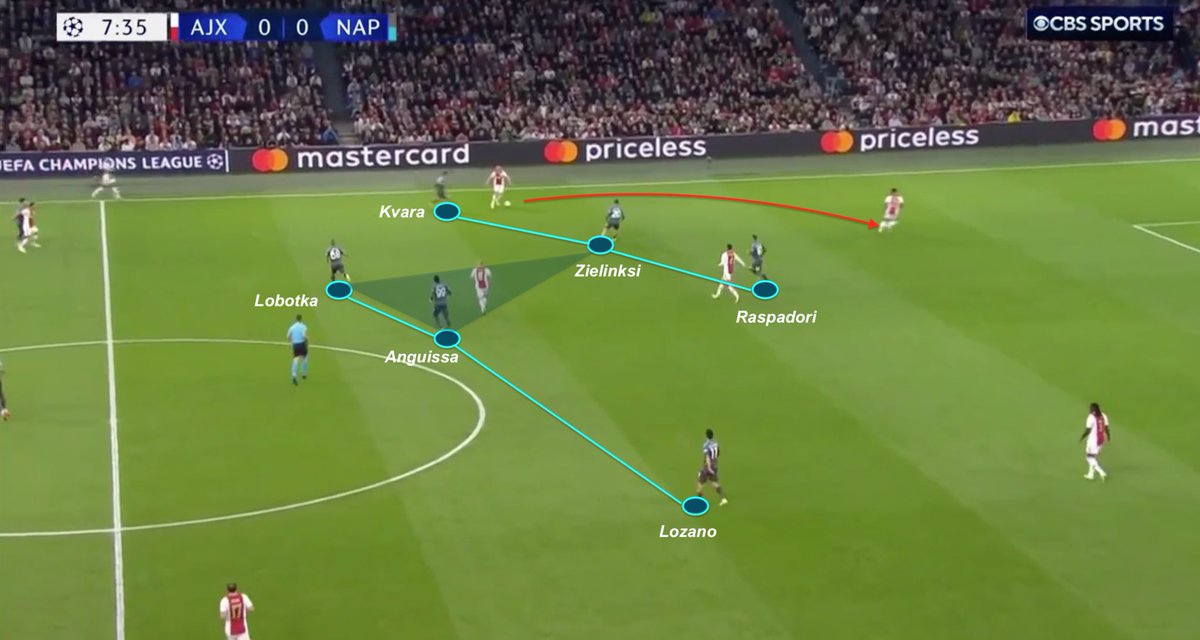
By constraining Rensch to back pass, this 3-3 structure eased out Lozano and Raspadori’s moves to form the other structure that we will dissect a little later. As long as Ajax did’t progress with vertical on-ground passes, Spalletti’s plan was respected
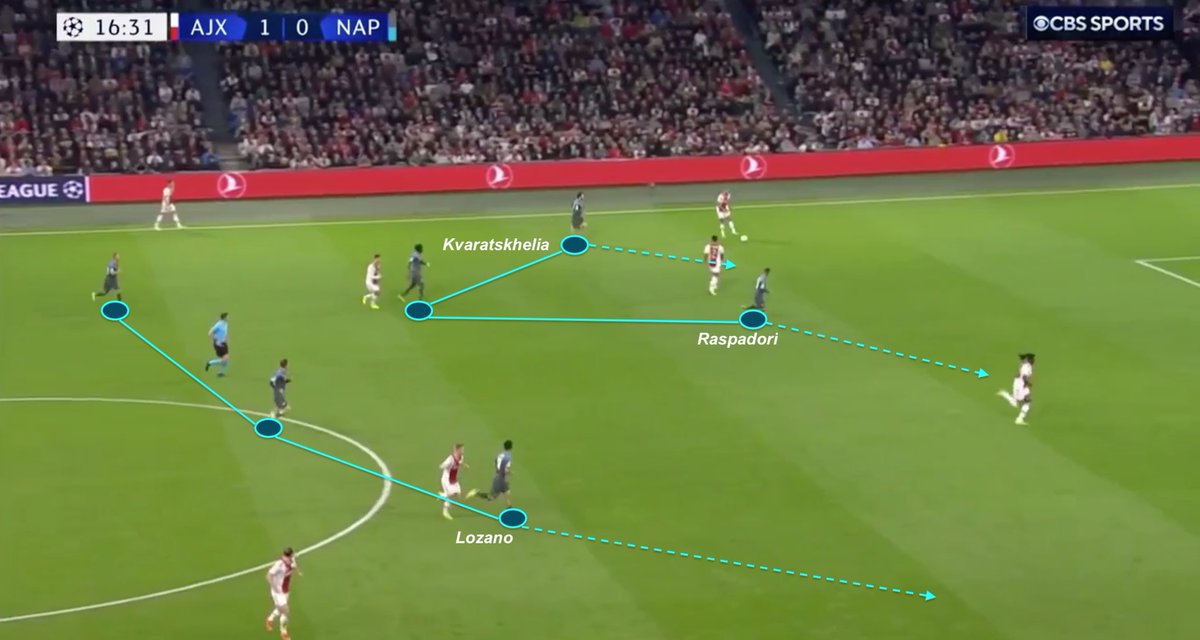
On the right hand side, pressing animation was different. We know Ajax’s ball carrier in that build-up area tries to look for difficult passing angles. Given Ajax had wide players, sticking the touchline, Napoli recovered the ball easily to attack central spaces, left by Ajax
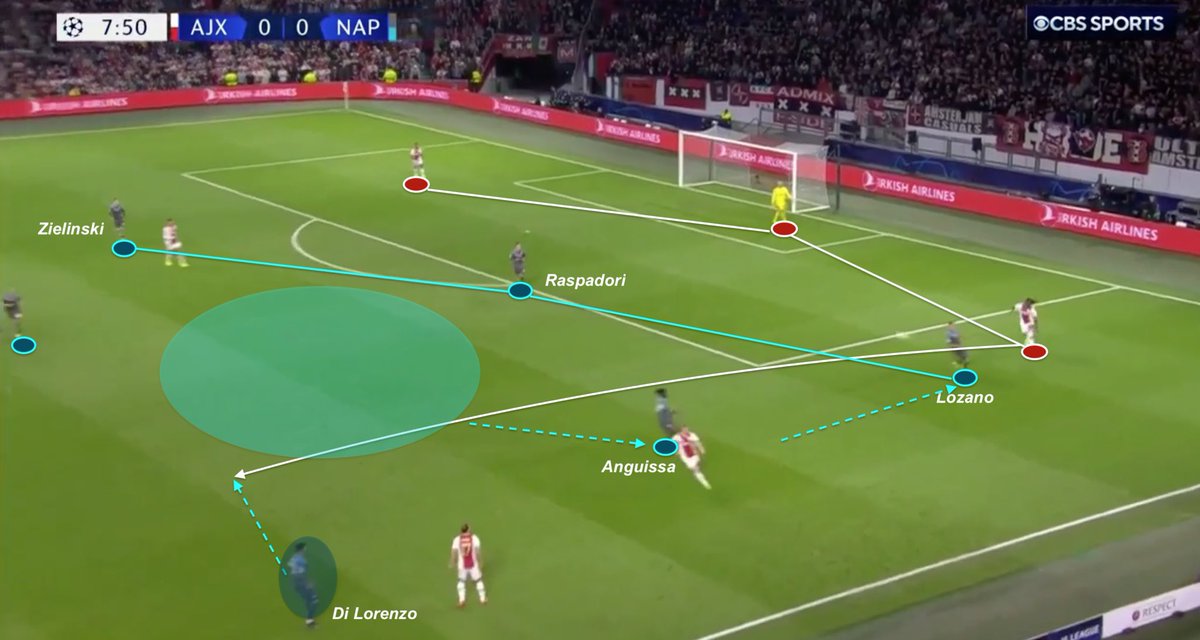
If Di Lorenzo didn’t press, Lozano had this intelligence to reposition to cut closest passing angle for Bassey, constrained to attempt long balls, systematically won by Napoli’s central defenders.
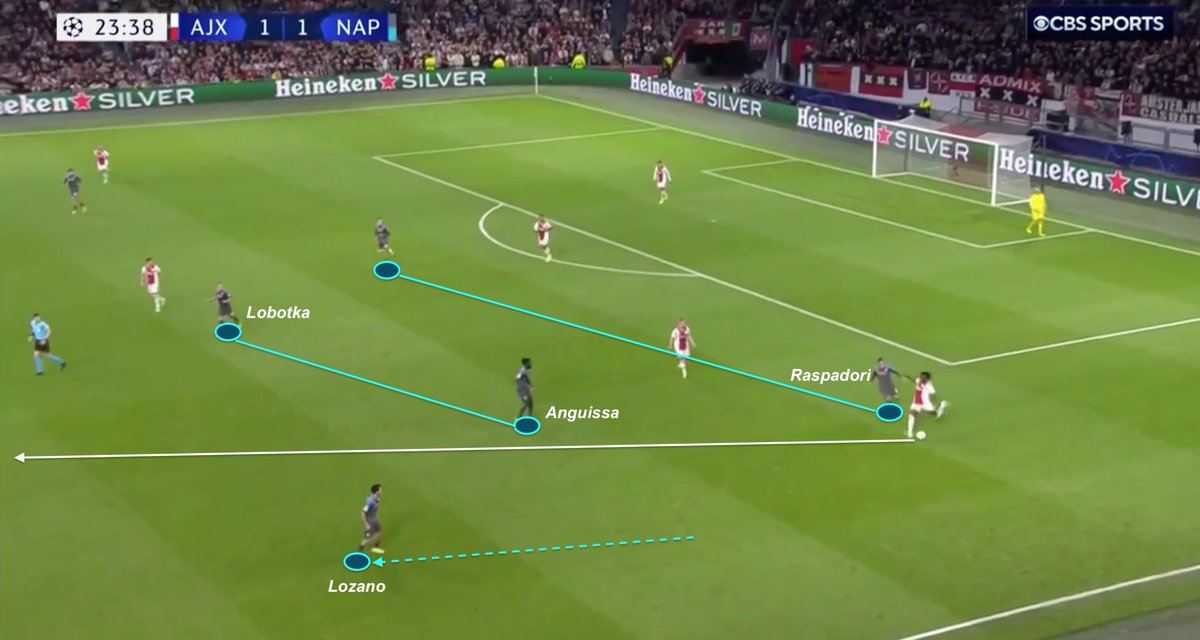
I think Napoli’s high pressing structure created misunderstandings in Ajax’s moves. Tyler frequently dropped to the right touchline, while Bassey looked for central passes, but falling into Napoli’s trap to recover the ball and attack in that specific area.
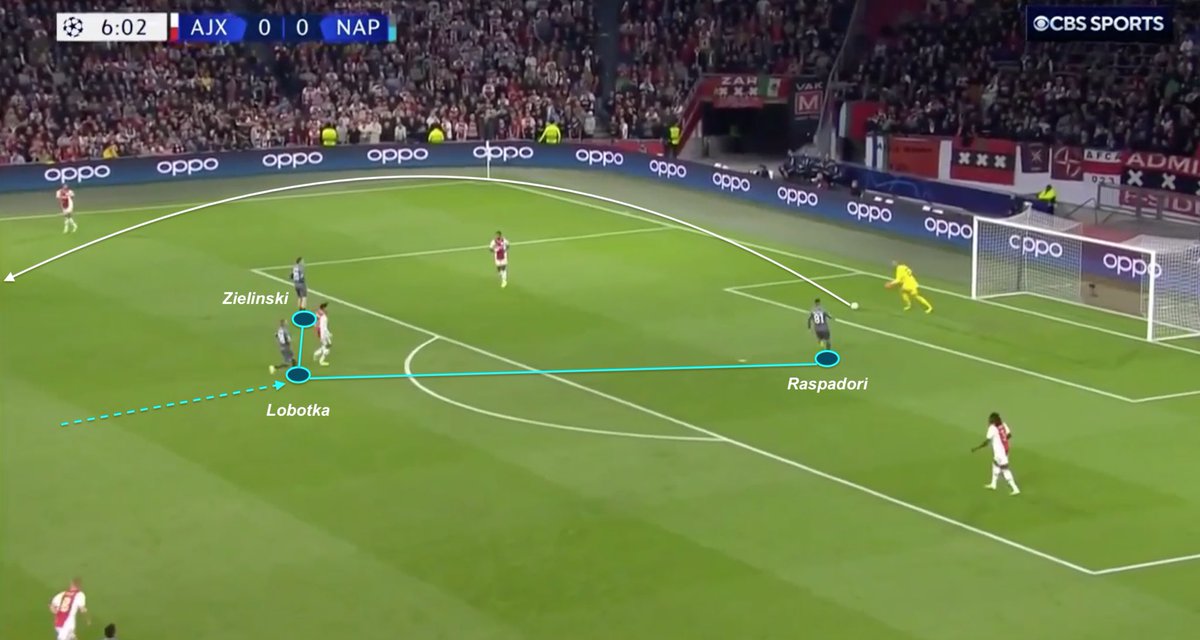
As I said, in central build-up, Napoli switched pressing shape, with Zielinski and one of the two others midfielders accompanying Raspadori’s excellent runs. Pasveer had no other options than kicking the ball out, Napoli’s central defenders were too strong in aerian duals.
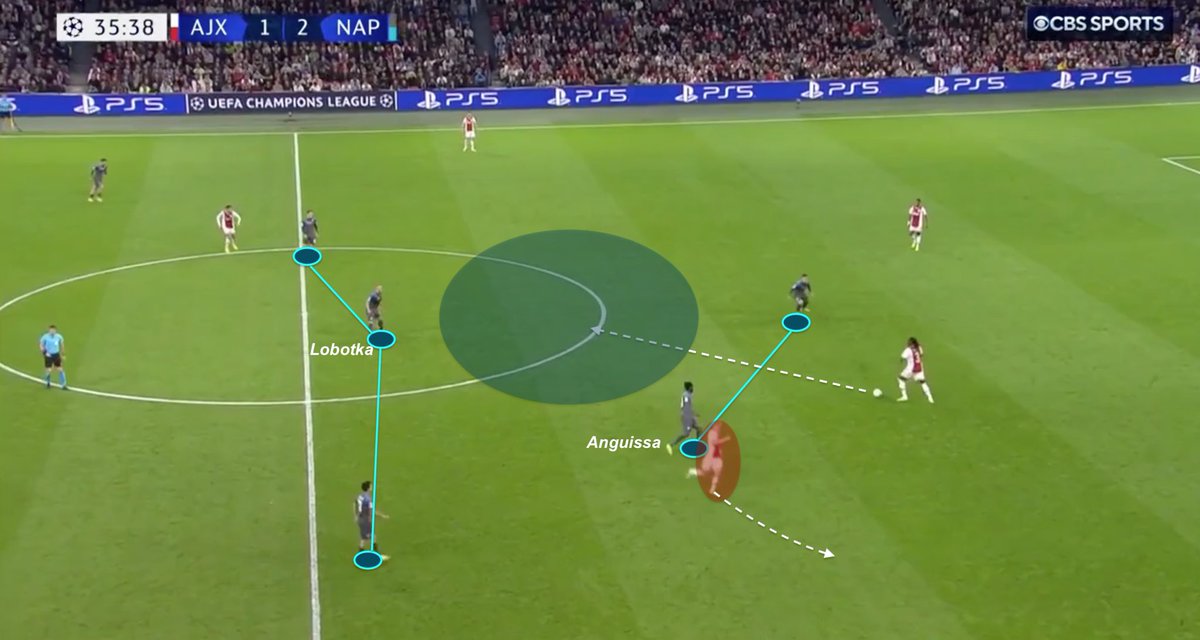
Spalletti let Lobotka and Anguissa more freedom than usual, as long as Alvarez and Tyler were strongly man-marked. No matter their positions in the pressing structure, those two players’ve respected the mission and I didn’t see many vertical progression in build-up for Ajax.
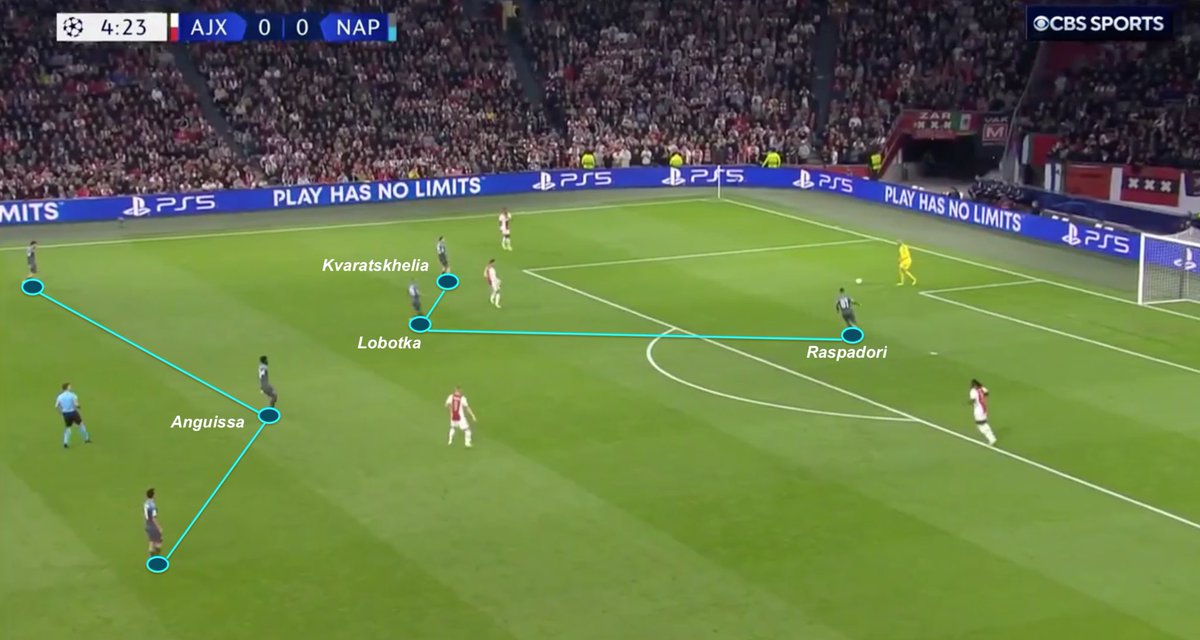
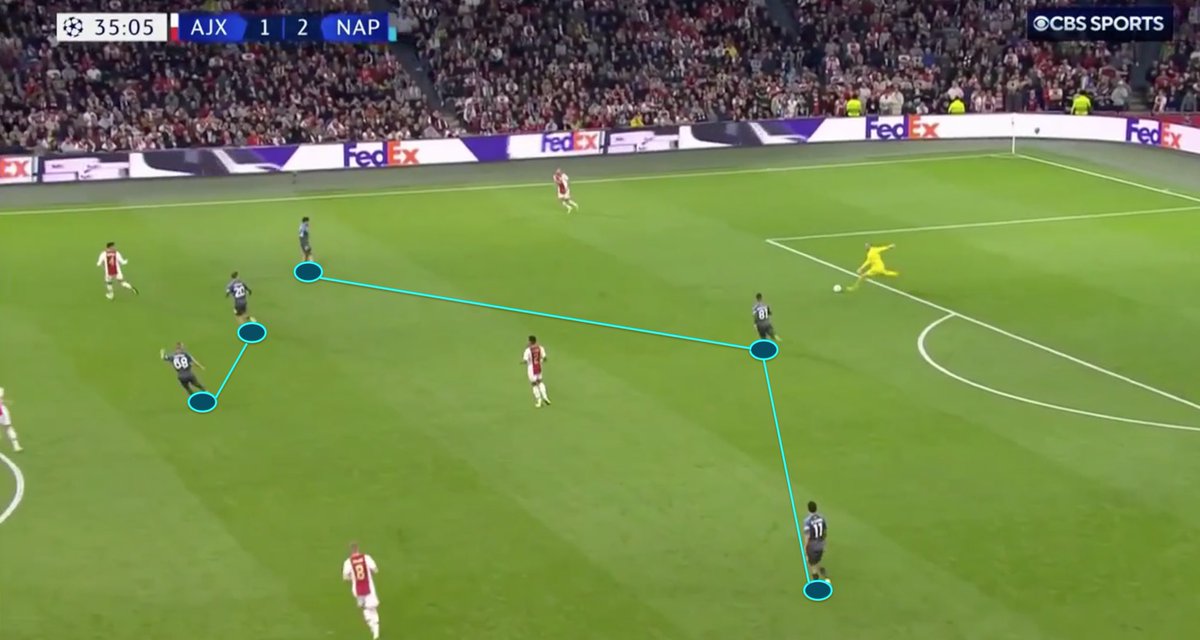
The most interesting feature in every Napoli’s game is how players consider the animation before individual positioning. Players coordination has reached a consequent level. Sometimes Anguissa replaced Lobotka and jumped to Alvarez or Tyler.

Napoli wanted Ajax to throw long-balls to recover the ball and attack central area. However, Ajax tried to bypass and find alternatives to this sound structure. Even in 4V3 situation, it was difficult for Ajax players (even w/ inverting positions) to counter it.
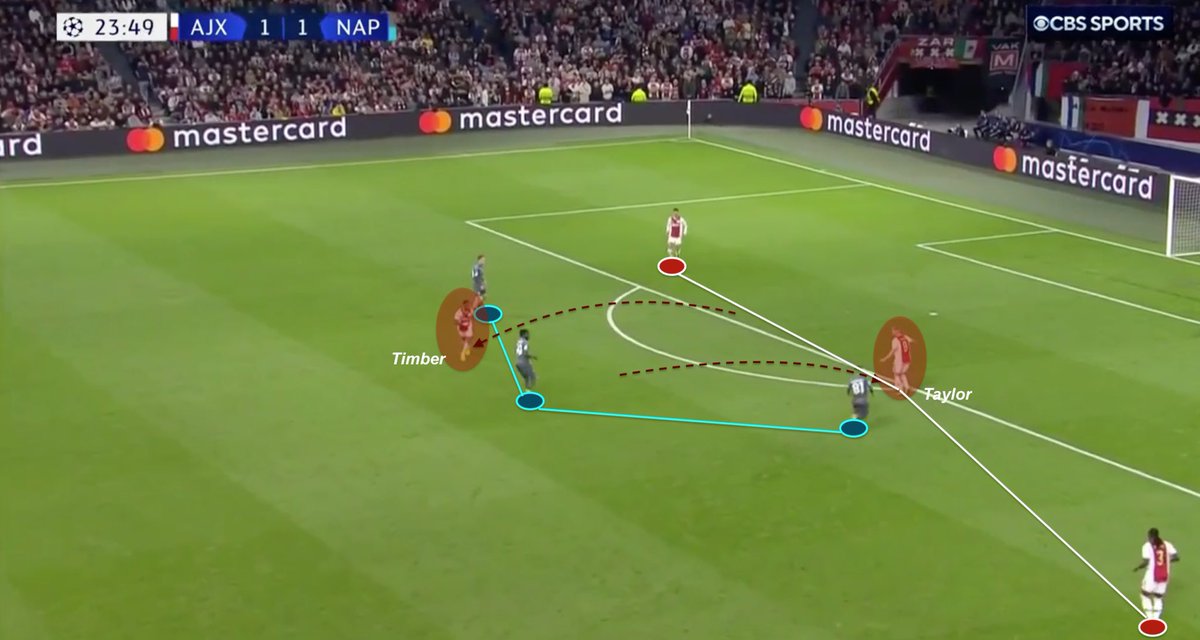
As I said earlier, Raspadori made lateral passes very difficult for Ajax in first build-up phase, thanks to these fast runs after each pass from Ajax players
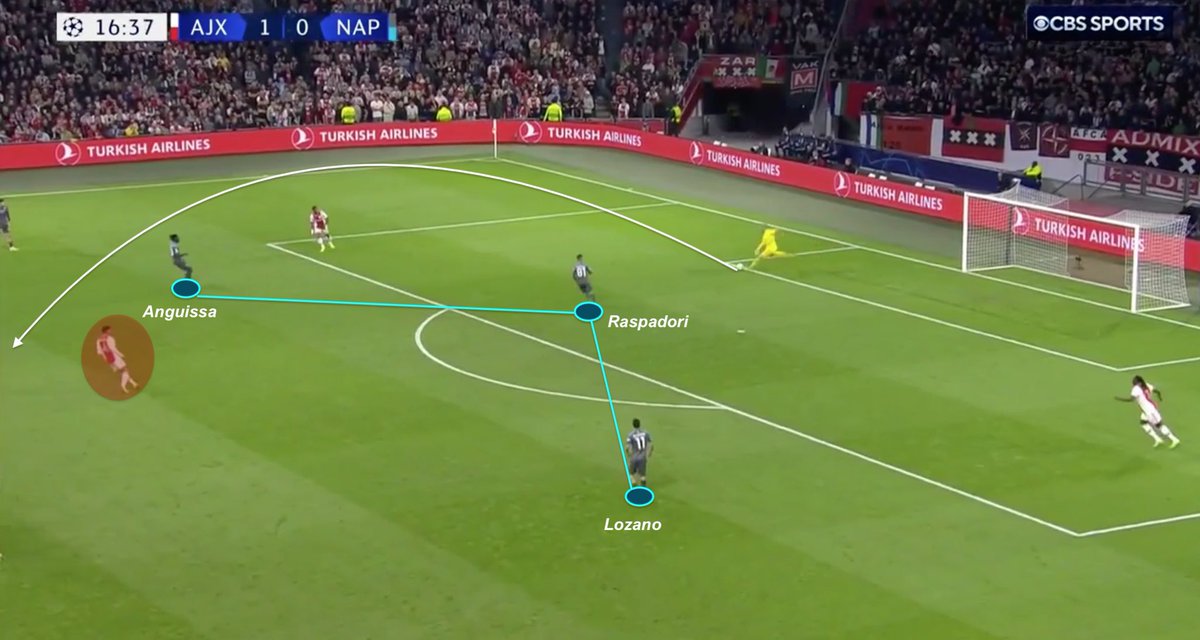
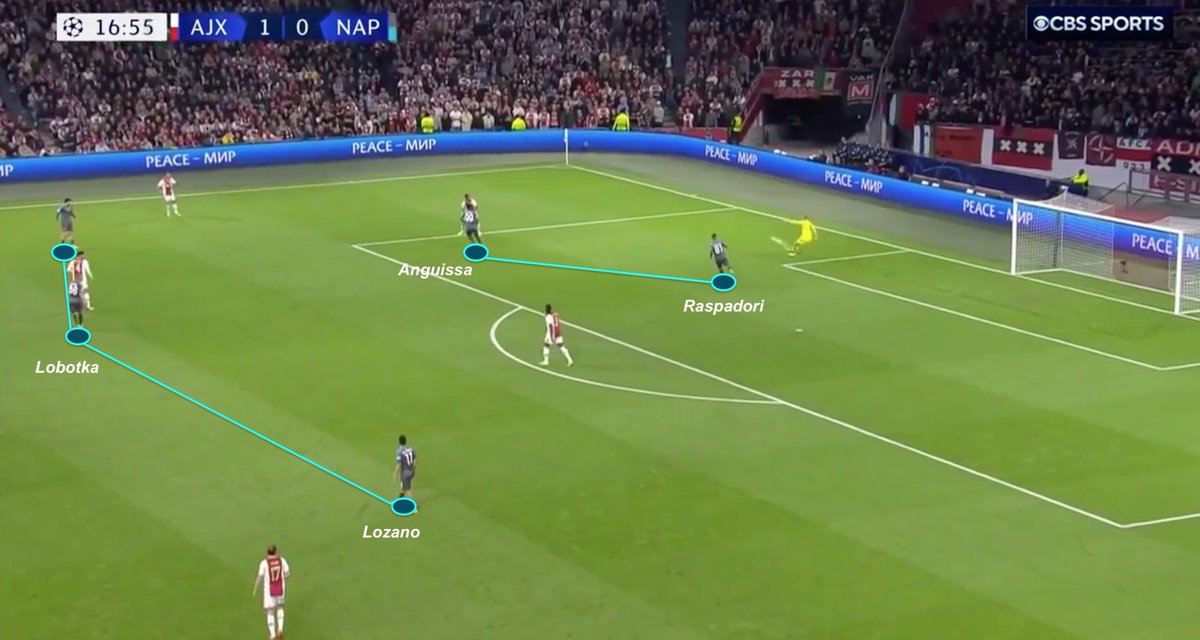
Raspadori’s positioning has also annihilated vertical passes for Alvarez, and this detail wasn’t necessarily planed by Ajax. It eased out Napoli’s process to recover the ball where they wanted : after long balls, thanks to Rhamani/Min-Jae physicality.
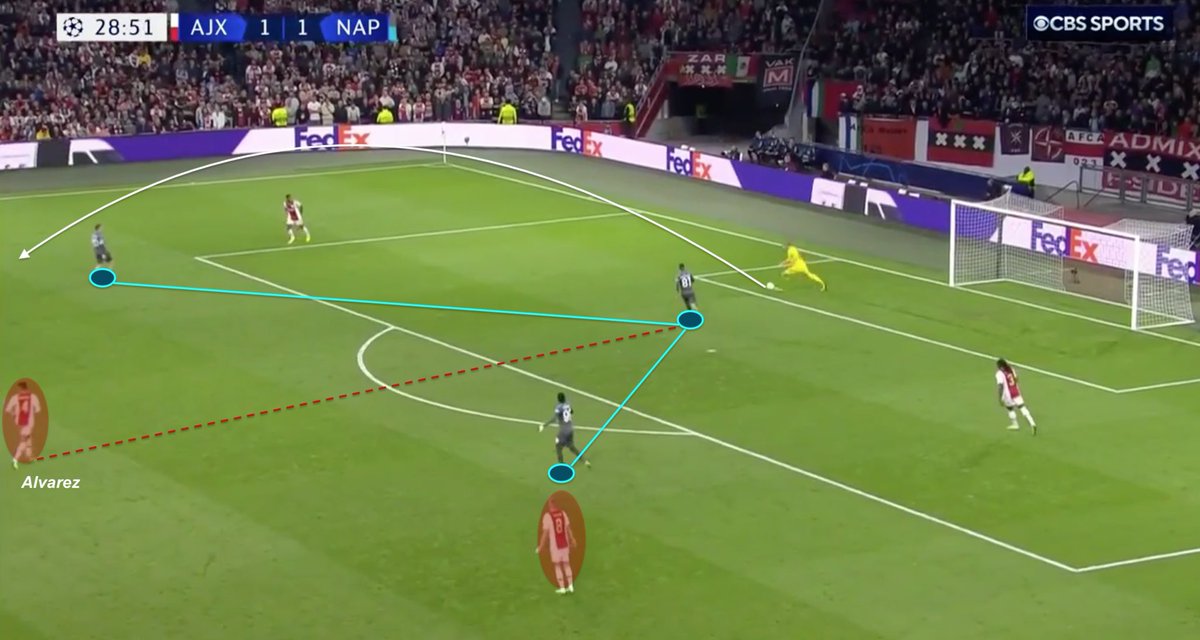
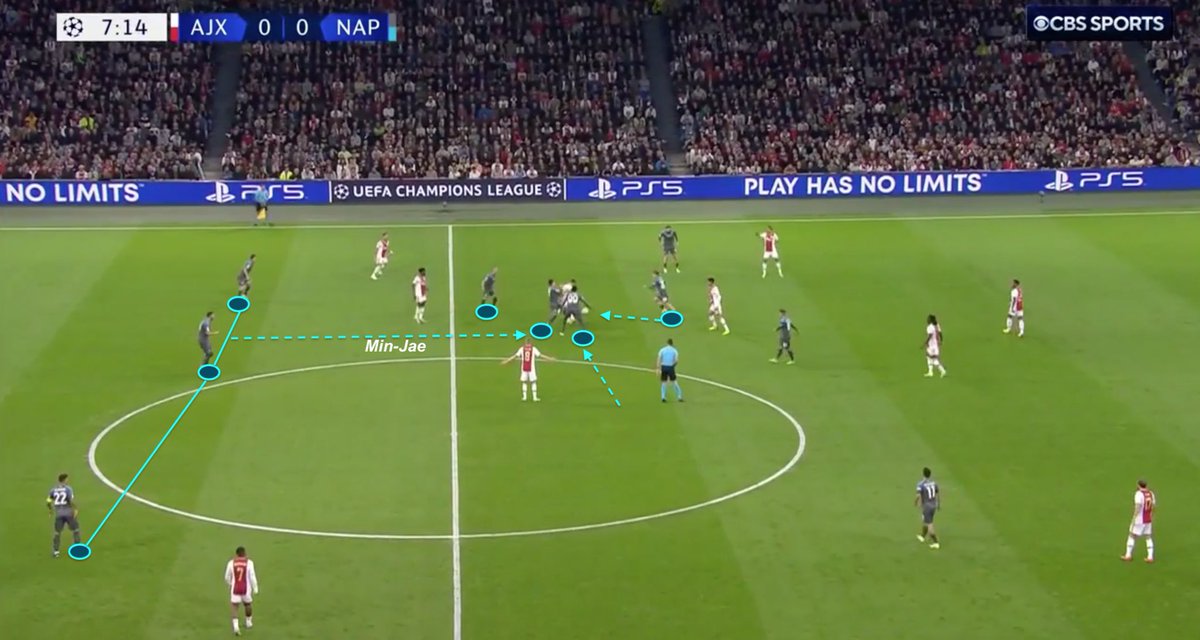
That 3-1-2 structure in pressing phase gave Napoli territorial dominance, forcing Ajax to have stretched lines, with long distance to cover with the ball. Alvarez has been constantly man-marked by Lobotka mostly, who did a great job to counter vertical progress.
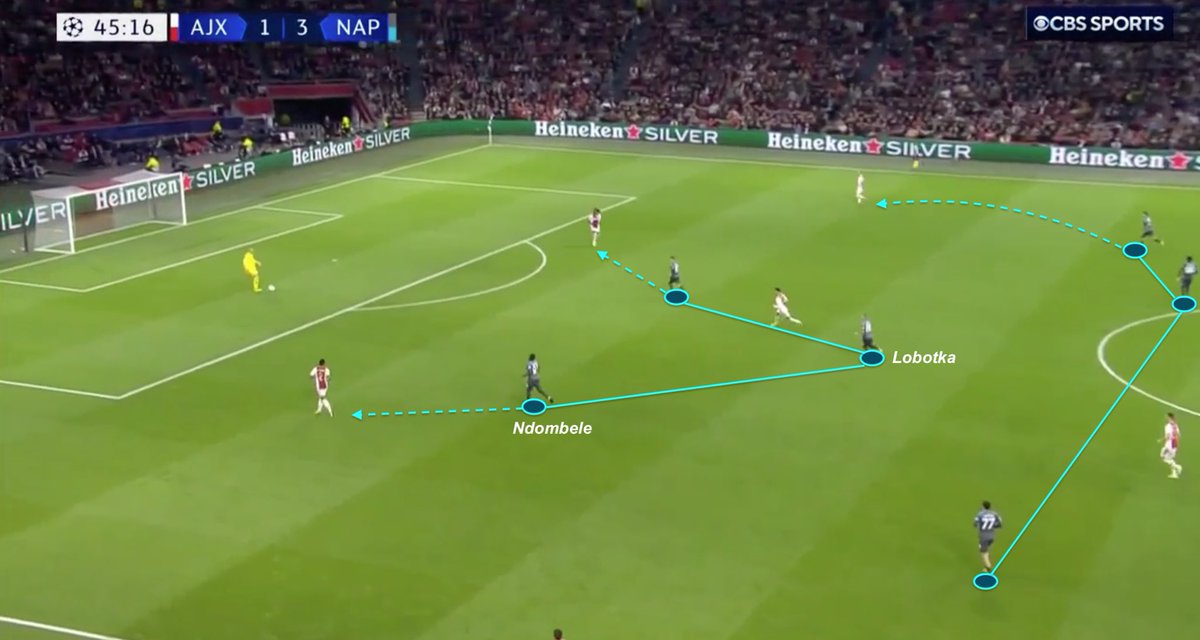
Even when Napoli lead 4-1, they continued to switch pressing structure, when Ajax build-up from right/left hand side to goalkeeper, they put so much discipline in it, even after 60min of the game. It illustrates this pressing plan was well-prepared by Napoli’s coach/staff.
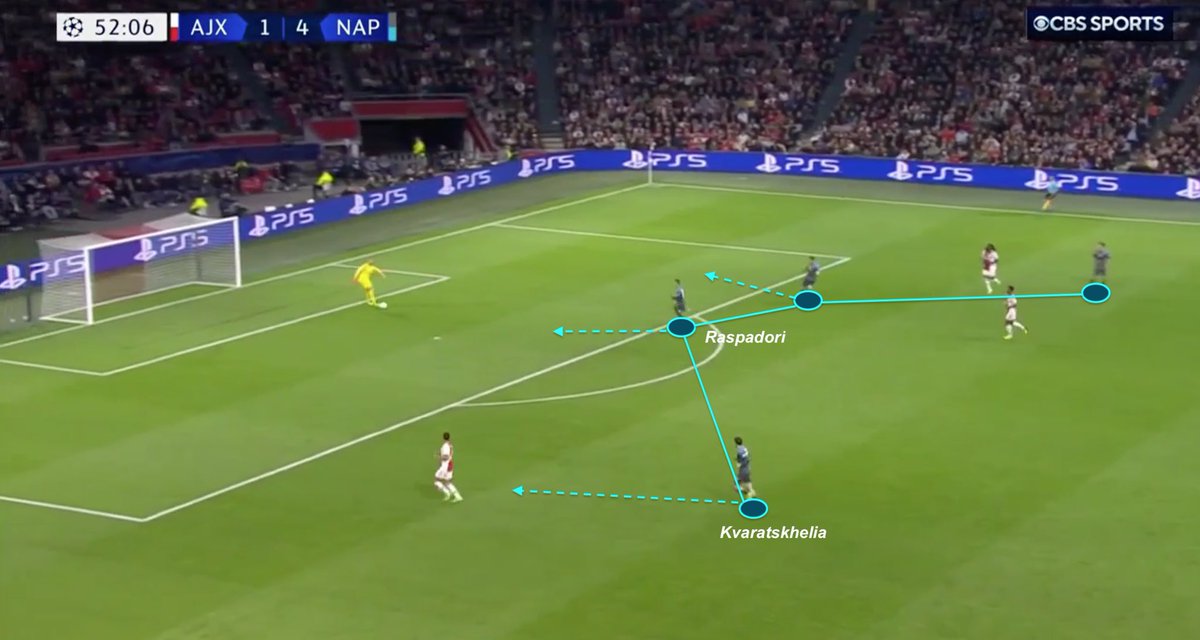
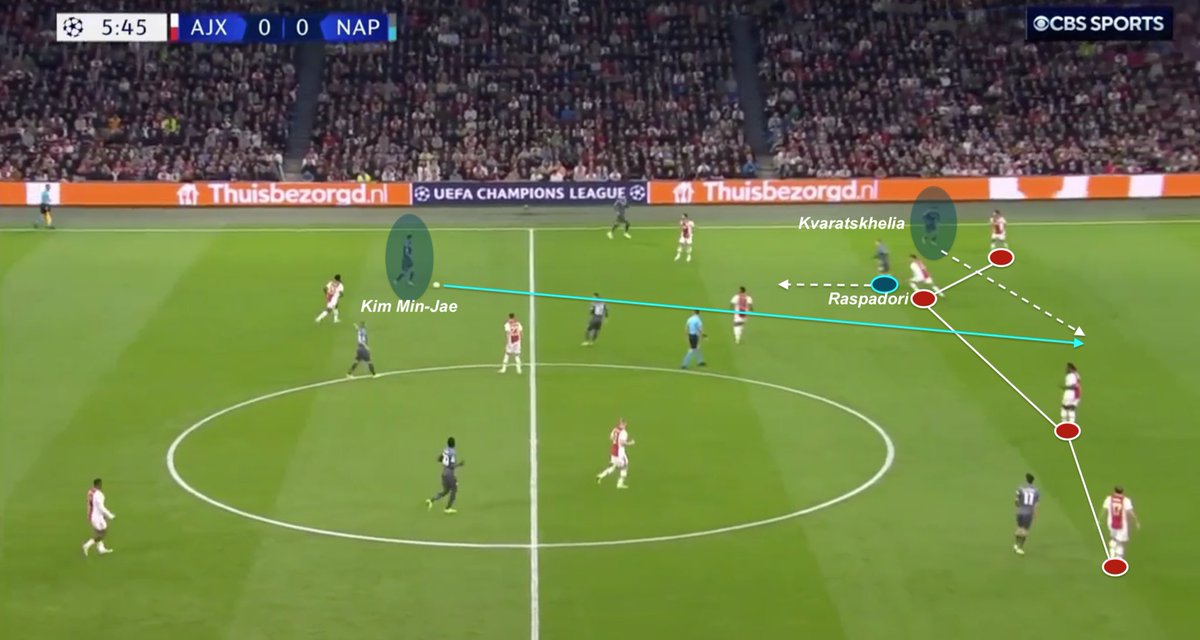
As soon as Napoli recovered the ball thanks to this impressive pressing structure, the objective was to build-up on the contrary to Ajax : fast, vertical passes, one touch, with as many risks as possible. Napoli could rely on Kin Min-Jae’s passing skills and Kvaratskhelia’s runs.
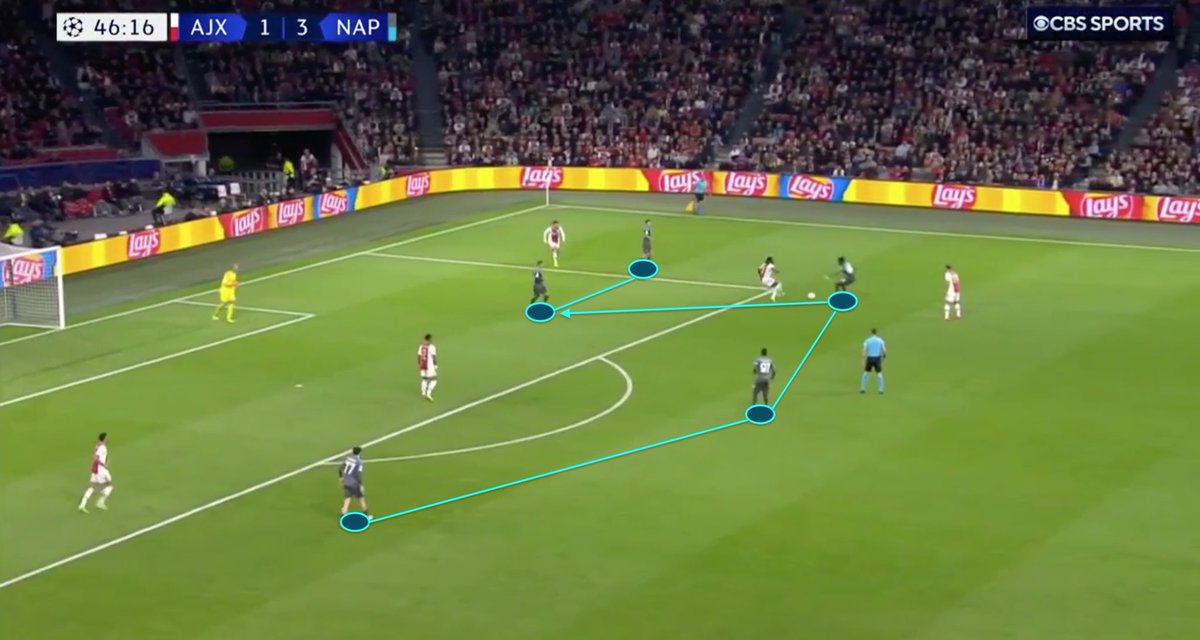
Moreover, short passing circuits on lanes to overload left/right hand sides embodies traditional passing schemes in possession for Napoli. And it’s always efficient enough to overthrow opponent’s defenses (leading to the equalizer).
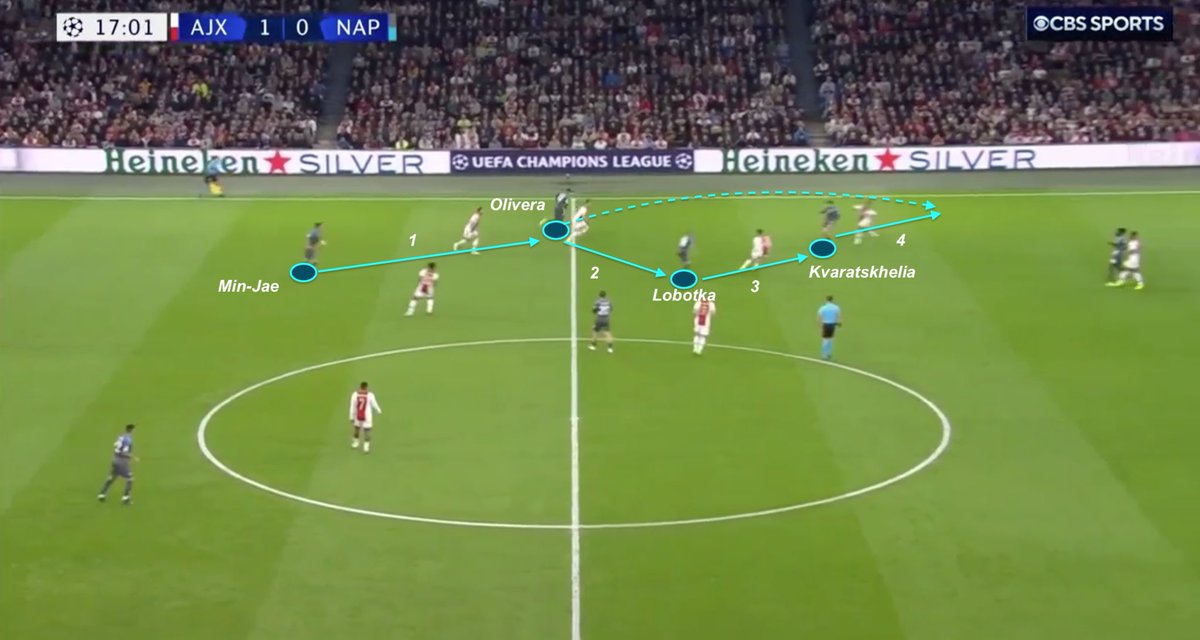
To conclude, Napoli adapted its pressing structure against a team who tended to build-up from deep positions. It shows Napoli can adapt to different opponents, different type of build-up, yet remaining tactical discipline safe and similar.

Loading suggestions...