

/1 𝐖𝐡𝐚𝐭 𝐢𝐬 𝐖𝐞𝐛 3.0? Why doesn’t it have 𝐚𝐝𝐬?
The diagram below shows Web 1.0/Web 2.0/Web 3.0 from a bird's-eye view.
The diagram below shows Web 1.0/Web 2.0/Web 3.0 from a bird's-eye view.

/2 🔹Web 1.0 - Read Only
Between 1991 and 2004, the internet is like a 𝐜𝐚𝐭𝐚𝐥𝐨𝐠 of 𝐬𝐭𝐚𝐭𝐢𝐜 𝐩𝐚𝐠𝐞𝐬. We can browse the content by jumping from one hyperlink to another. It doesn’t provide any interactions with the content.
Between 1991 and 2004, the internet is like a 𝐜𝐚𝐭𝐚𝐥𝐨𝐠 of 𝐬𝐭𝐚𝐭𝐢𝐜 𝐩𝐚𝐠𝐞𝐬. We can browse the content by jumping from one hyperlink to another. It doesn’t provide any interactions with the content.

/3 🔹Web 2.0 - Read Write
From 2004 to now, the internet has evolved to have search engines, social media apps, and recommendation algorithms backed apps.
From 2004 to now, the internet has evolved to have search engines, social media apps, and recommendation algorithms backed apps.

/4 Because the apps digitalize human behaviors and persist user data when users interact with these apps, big companies leverage user data for advertisements, which becomes 𝐨𝐧𝐞 𝐨𝐟 𝐭𝐡𝐞 𝐦𝐚𝐢𝐧 𝐛𝐮𝐬𝐢𝐧𝐞𝐬𝐬 𝐦𝐨𝐝𝐞𝐥𝐬 in Web 2.0.
/5 That’s why people say the apps know you better than your friends, family, or even yourself.
/6 🔹Web 3.0 - Read Write Own
The idea has been discussed a lot recently due to the development of blockchain and decentralized apps. The creators’ content is stored on IPFS (InterPlanetary File System) and 𝐨𝐰𝐧𝐞𝐝 𝐛𝐲 𝐭𝐡𝐞 𝐮𝐬𝐞𝐫𝐬.
The idea has been discussed a lot recently due to the development of blockchain and decentralized apps. The creators’ content is stored on IPFS (InterPlanetary File System) and 𝐨𝐰𝐧𝐞𝐝 𝐛𝐲 𝐭𝐡𝐞 𝐮𝐬𝐞𝐫𝐬.
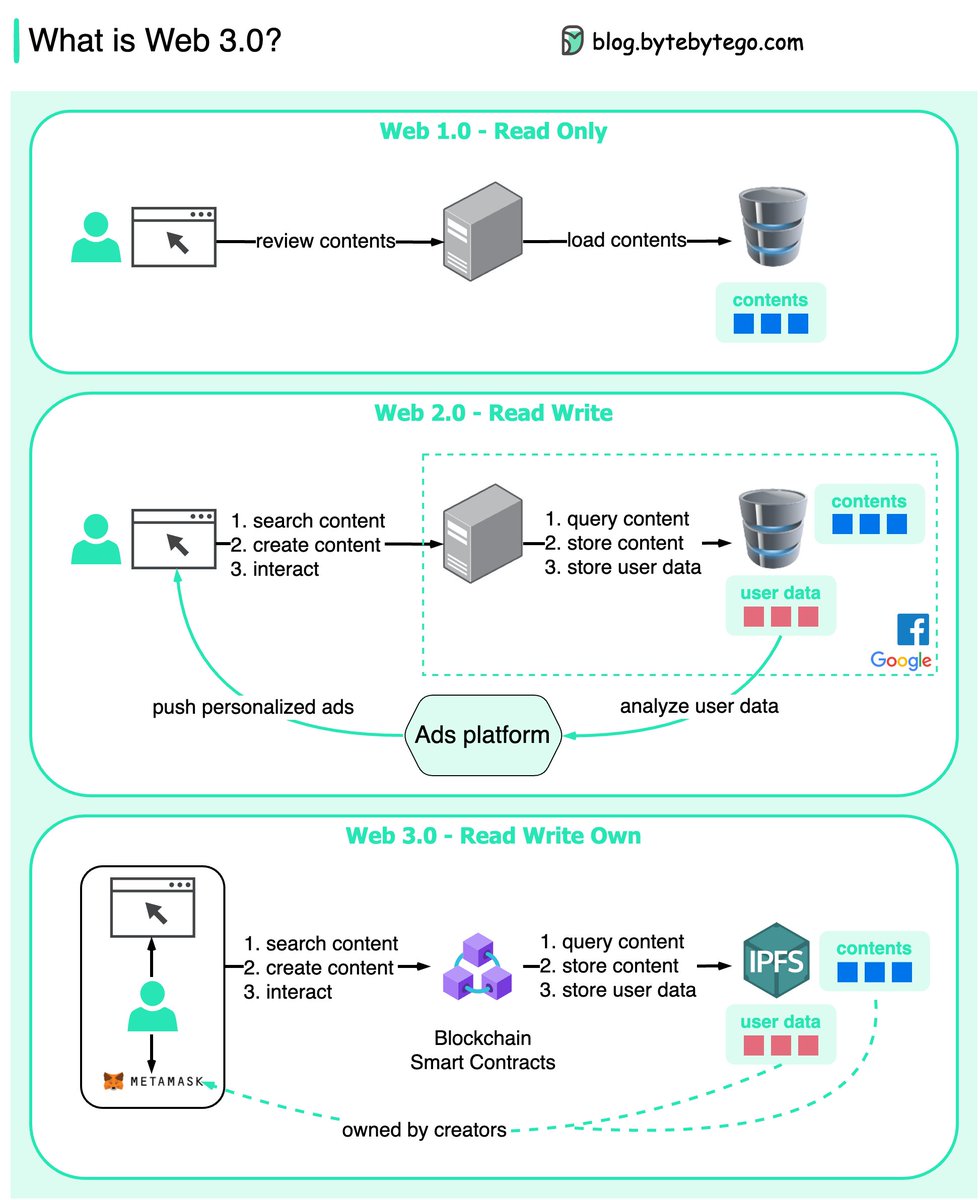
/7 If apps want to access the data, they need to get 𝐚𝐮𝐭𝐡𝐨𝐫𝐢𝐳𝐚𝐭𝐢𝐨𝐧 from the users and 𝐩𝐚𝐲 for it.
In Web 3.0, the ownership change may lead to some major innovations.
In Web 3.0, the ownership change may lead to some major innovations.
/8 Over to you: Web 3.0 is controversial. What do you think of it? Is it the future, a scam, or a little bit of both?
/9 I hope you've found this thread helpful.
Follow me @alexxubyte for more.
Like/Retweet the first tweet below if you can:
Follow me @alexxubyte for more.
Like/Retweet the first tweet below if you can:
Loading suggestions...