

In the extreme northeastern region of Yorubaland, close to the Niger—Benue confluence, the area
"BELIEVED TO HAVE BEEN THE EARLIEST HOME OF THE YORUBA AS A PEOPLE", there live today many small subgroups of
the Yoruba: the Owe, Ikiri, Abunu, Oworo, Yagba, Gbede and Jumu.
"BELIEVED TO HAVE BEEN THE EARLIEST HOME OF THE YORUBA AS A PEOPLE", there live today many small subgroups of
the Yoruba: the Owe, Ikiri, Abunu, Oworo, Yagba, Gbede and Jumu.
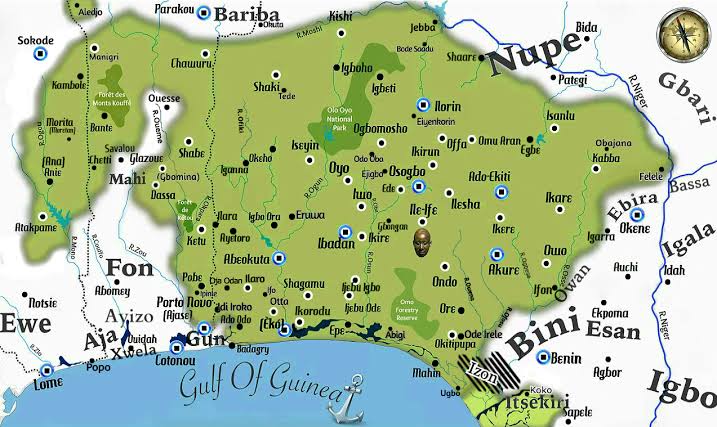
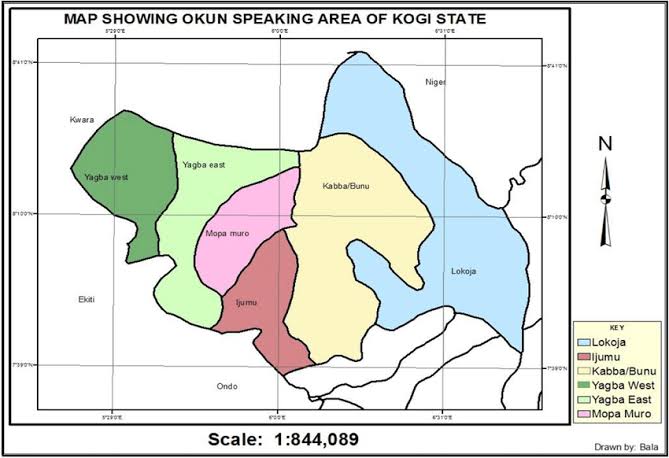
These Okun Yoruba had the Ekiti
and Akoko as their neighbors to the south, and Igbomina as their neighbors to the west, and non-Yoruba
peoples, the Nupe and the Kakanda, as their neighbors to the north and east. Their territory is the area
where Yoruba people closely touch
and Akoko as their neighbors to the south, and Igbomina as their neighbors to the west, and non-Yoruba
peoples, the Nupe and the Kakanda, as their neighbors to the north and east. Their territory is the area
where Yoruba people closely touch
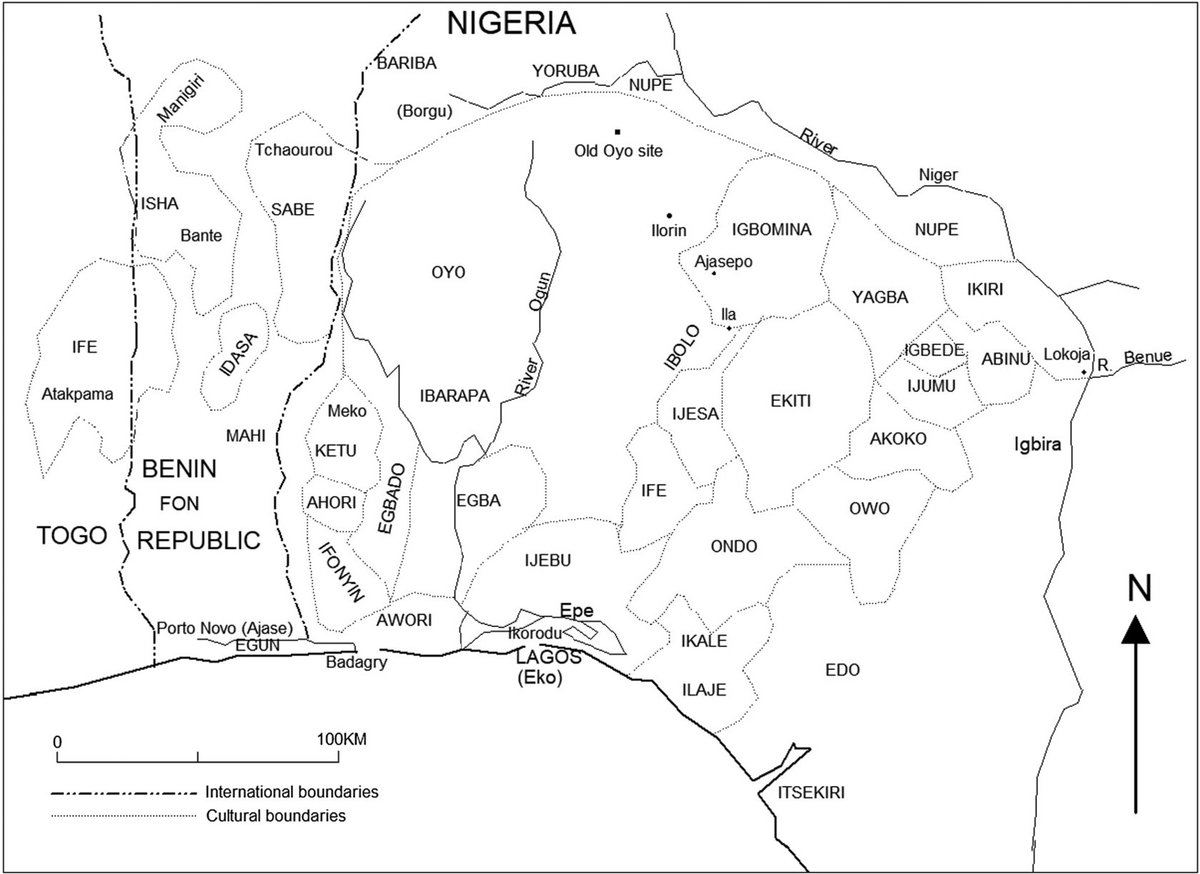
and interact with other peoples of the Niger—Benue confluence,
namely the Nupe, Ebira, Kakanda and Igala.
For reasons not known to us today, this region of Yorubaland did not experience the centuries-long
revolution that resulted in the creation of the Yoruba kingdoms.
namely the Nupe, Ebira, Kakanda and Igala.
For reasons not known to us today, this region of Yorubaland did not experience the centuries-long
revolution that resulted in the creation of the Yoruba kingdoms.
As a result, the subgroups in the region
have no traditions of kingdom-founding migrant personages and groups from Ife or elsewhere in
Yorubaland, no centralized Yoruba kingdoms, and no typical Yoruba monarchical institutions and
paraphernalia.
have no traditions of kingdom-founding migrant personages and groups from Ife or elsewhere in
Yorubaland, no centralized Yoruba kingdoms, and no typical Yoruba monarchical institutions and
paraphernalia.
Instead of typical, centralized, Yoruba kingdoms, what have evolved among them are
decentralized state formations — examples of which are found in Ife Olukotun among the Iyagba and Ufe
Jumu among the Jumu. In Ife Olukotun, for instance, a sort of supreme ruler with the
decentralized state formations — examples of which are found in Ife Olukotun among the Iyagba and Ufe
Jumu among the Jumu. In Ife Olukotun, for instance, a sort of supreme ruler with the
title of Ajalorun
(later Olukotun) emerged, but this did not involve the abolition of the original leadership titles or the
creation of central institutions The original rulers, with the titles of Olu or Oba, continued to preside over
their own hierarchies of chiefs and over
(later Olukotun) emerged, but this did not involve the abolition of the original leadership titles or the
creation of central institutions The original rulers, with the titles of Olu or Oba, continued to preside over
their own hierarchies of chiefs and over
their own little states, each of which was a combination of some
lineages, with its own cycle of rituals, its own set of prohibitions and taboos, its own area of land. All these,
plus the differences between their pantheon of deities and the typical Yoruba gods, strongly
lineages, with its own cycle of rituals, its own set of prohibitions and taboos, its own area of land. All these,
plus the differences between their pantheon of deities and the typical Yoruba gods, strongly
indicate that
the Yoruba subgroups in this region are directly descended from groups largely unaffected by the major
kingdom-founding developments that transformed the rest of Yorubaland.
the Yoruba subgroups in this region are directly descended from groups largely unaffected by the major
kingdom-founding developments that transformed the rest of Yorubaland.
Loading suggestions...