

[THREAD] - Tactical Analysis of Barcelona - Inter
A thrilling match. Barça found solutions to the problems faced last week, but Inter were good at keeping their heads in the game and taking advantage of the many spaces conceded by the Catalans. Let's see the match in the detail.
A thrilling match. Barça found solutions to the problems faced last week, but Inter were good at keeping their heads in the game and taking advantage of the many spaces conceded by the Catalans. Let's see the match in the detail.
![[THREAD] - Tactical Analysis of Barcelona - Inter
A thrilling match. Barça found solutions to the p...](https://pbs.twimg.com/media/Fe8r-rxWYAQxlov.jpg)
This is how the two teams lined-up. Xavi confirmed the XI of last week (with the only change being Piqué for the injured Christensen), while Inzaghi replaced the injured Correa with Dzeko and Darmian with Dumfries (rightly so if you read my last analysis).

While Inzaghi's gameplan was basically the same (5-3-2, Bastoni and Skriniar jumping off the line to mark players in the half-space, quick transitions), Xavi changed quite a lot without changing the XI.
Raphinha and Dembélé switched sides, Alonso played as a LCB and not as a fullback providing width, but the most important thing is Sergi Roberto position in the right half-space, forming a 3-1-5-1. Why this structure?
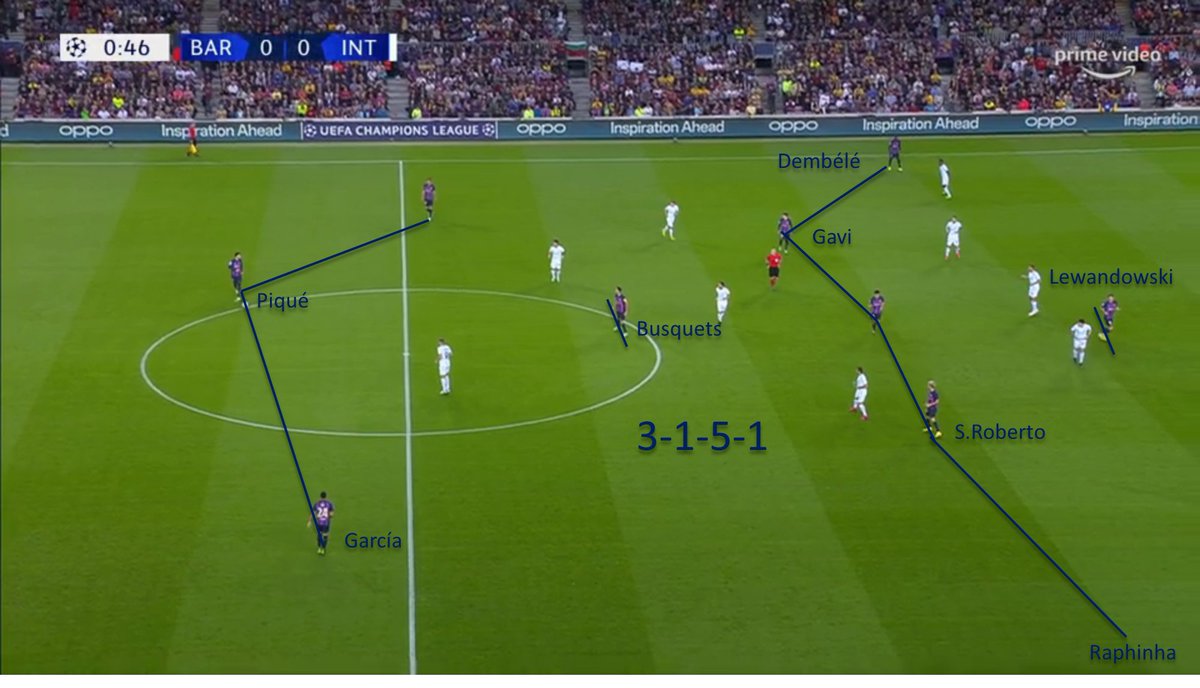
If you read my last week analysis, you'll remember that Inter left some space in behind when Bastoni and Skriniar jumped on the player in the half-space, but Barça never exploited that space. With this structure Barça had the numerical superiority (5vs4) and...
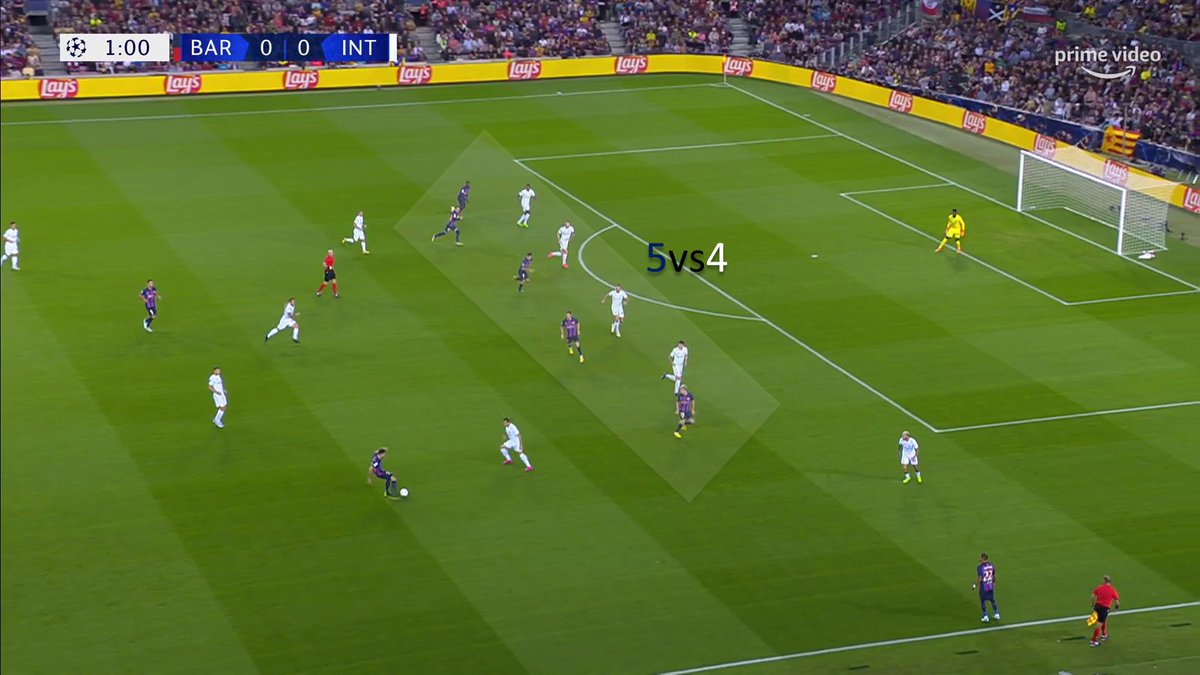
always had a free player (especially Sergi Roberto) to attack that aforementioned space.
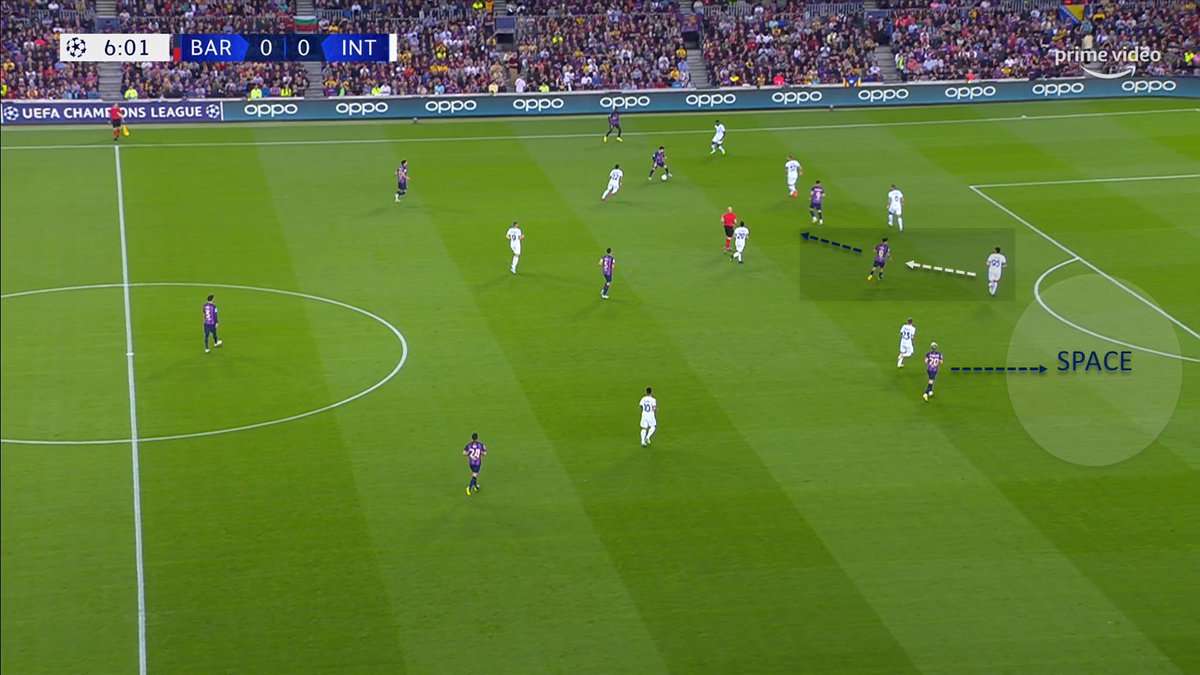
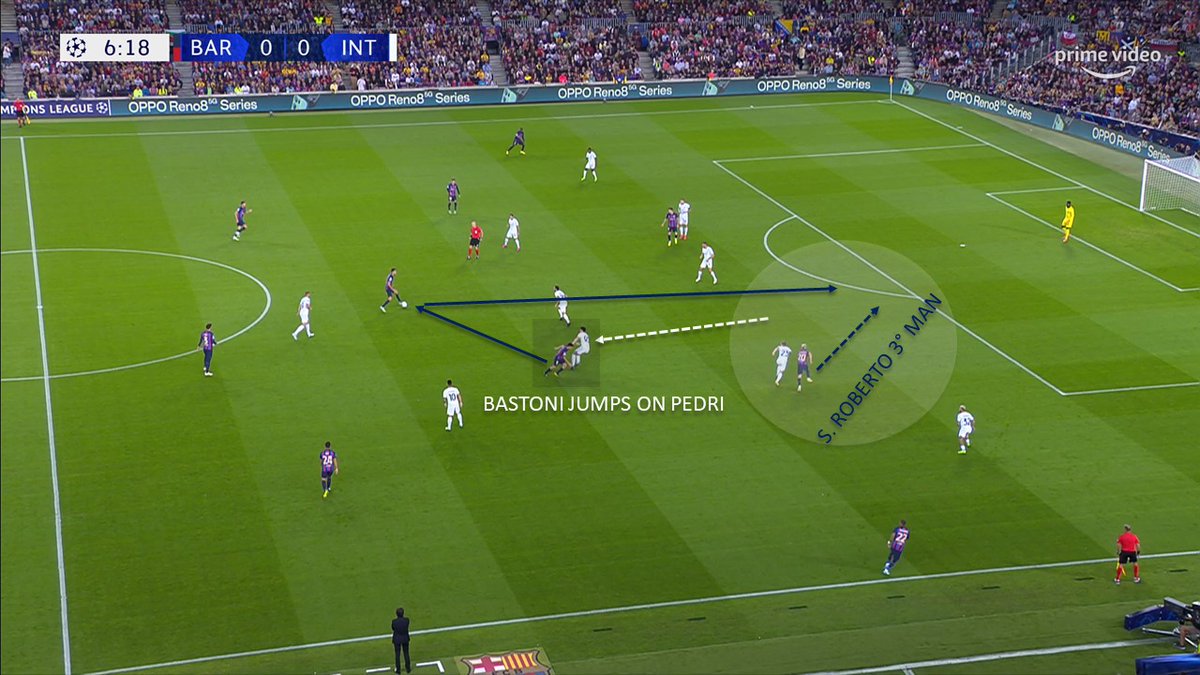
Here's another 2 clear examples: in the 1st frame Pedri comes really deep, Bastoni follows him leaving a space behind attacked by Sergi Roberto who could receive the pass as the 3rd man. In the 2nd frame similar situation with Gavi as the invader.
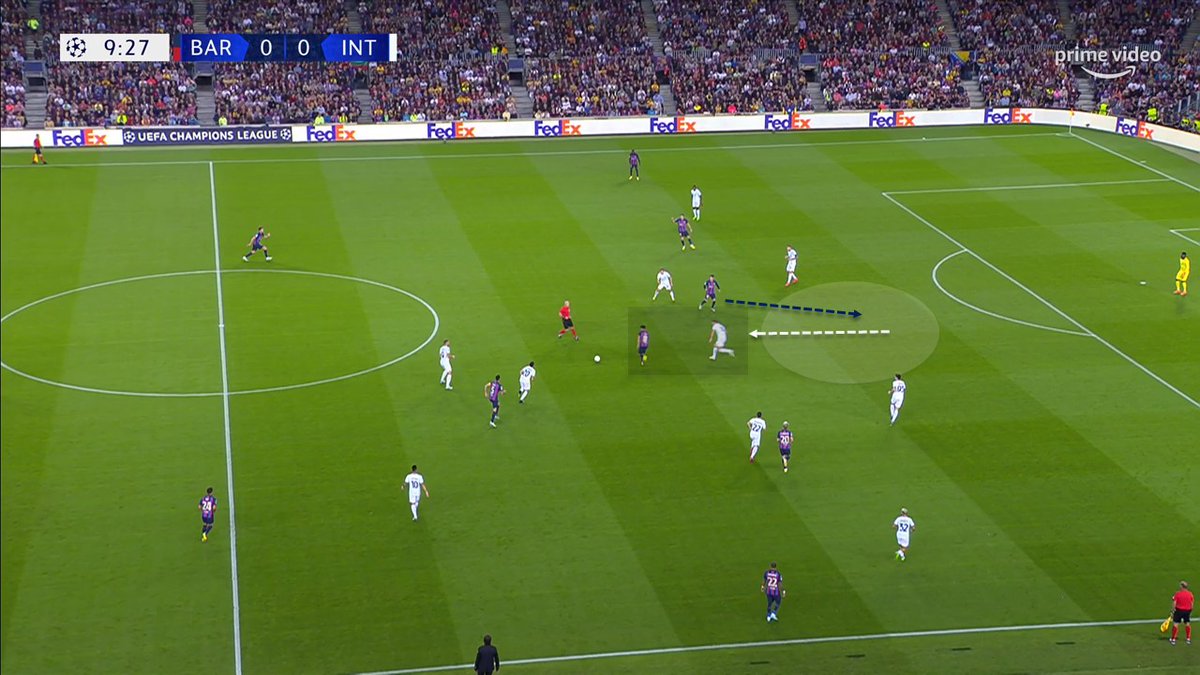
This constant overload permitted Barça to find solutions on the weak side. This is one of the most dangerous chances for Barça: Lewa receives on the left taking out Skriniar, Pedri and S. Roberto in the half-spaces, Dimarco narrow , Raphinha all alone. Qualitative superiority.
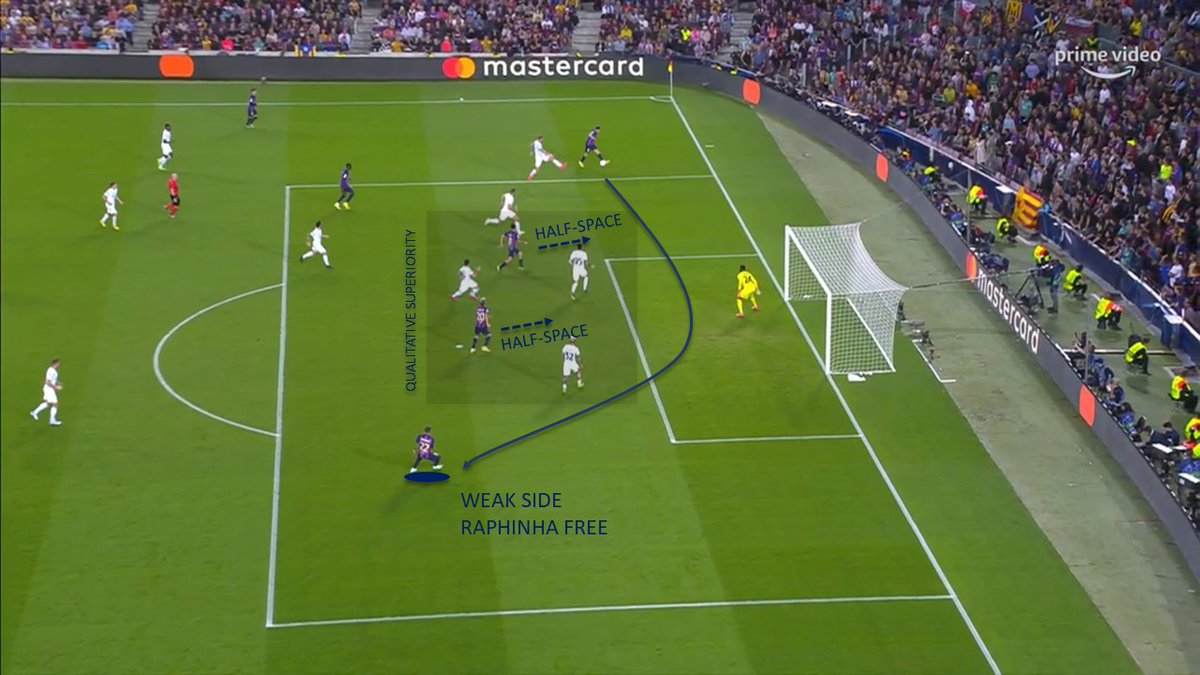
There was also the possibility to overload a side having a winger and two CMs + the LCB and Busquets there, with Lewa + the CM on the weak side and Raphinha wide (could have easily played a 1vs1 with Dimarco there).
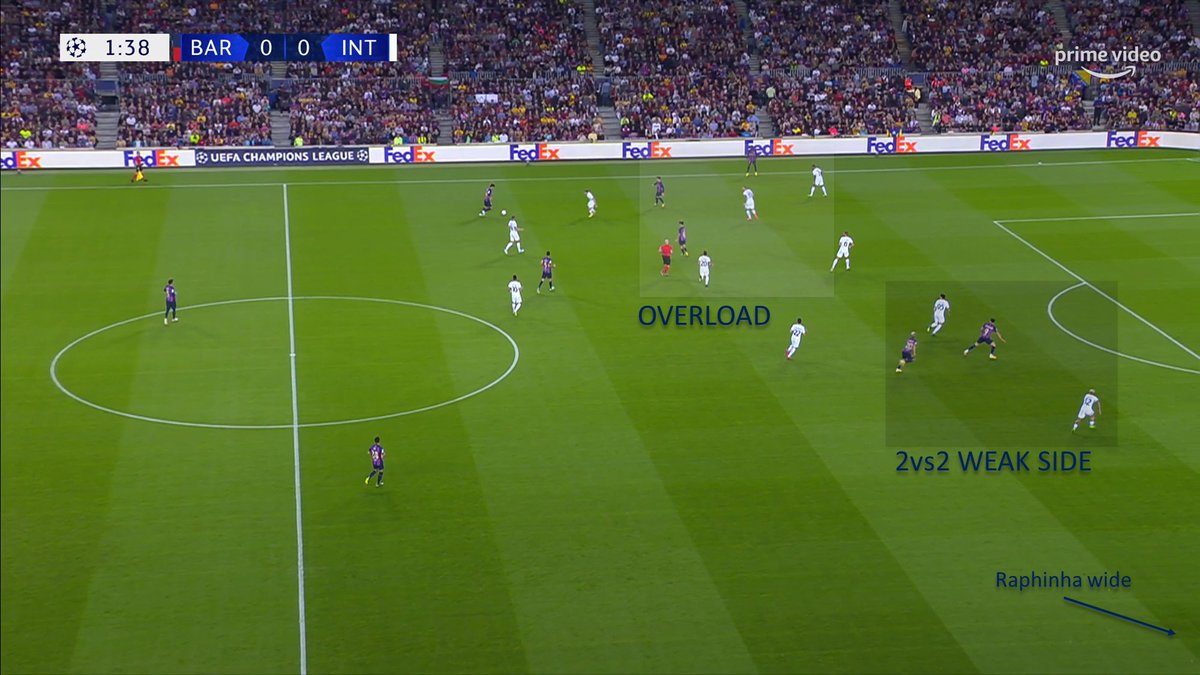
The crucial player for Barça in this match was Pedri. He played really close to Lewa to create that 2vs1 mentioned earlier, in a position that reminded me of Gundogan's when paired with Haaland.
Calhanoglu had to remain deep to stay on him, but that would leave Busquets free. When Calhanoglu jumped on Busi that would create a dangerous 2vs1 with Pedri+Lewa against a CB. Busi could find Lewa with a through ball, or on his feet to play a 1-2, or find Pedri as the 3rd man.
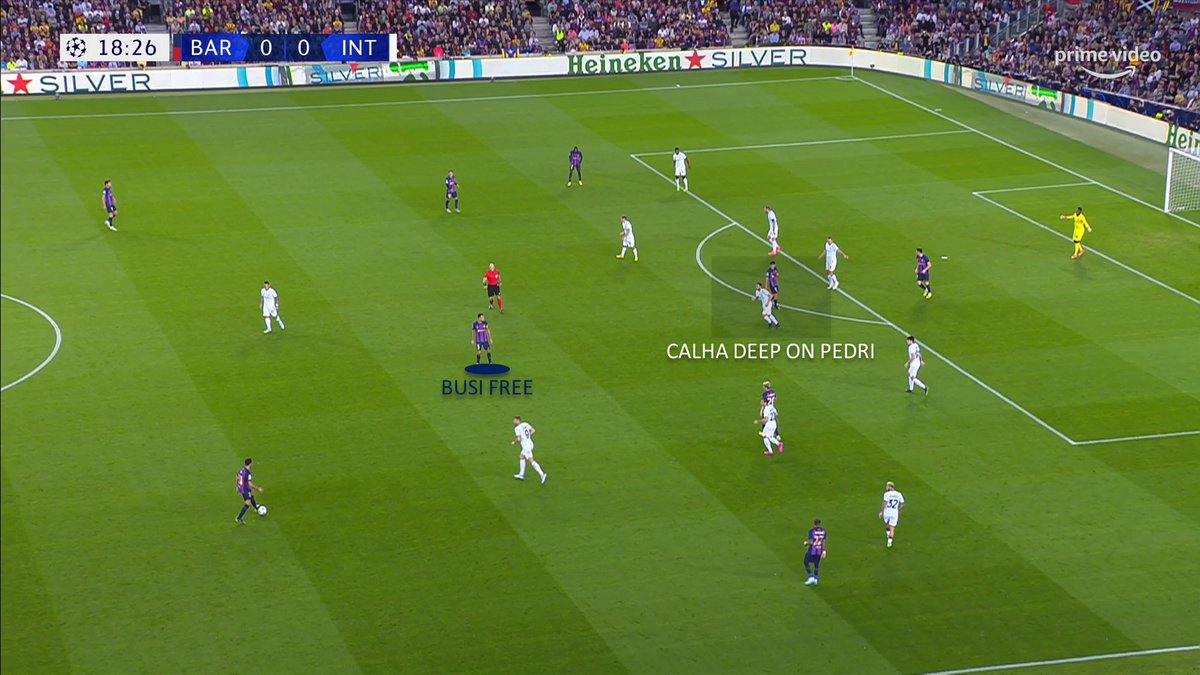
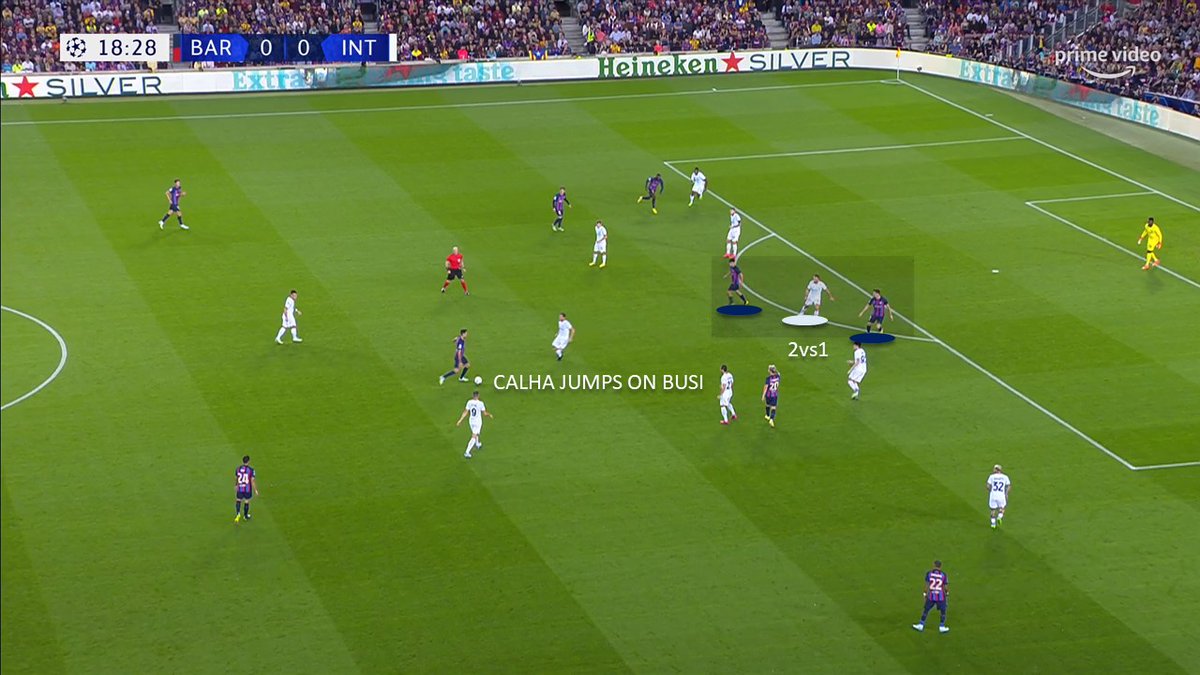
Here's another two examples of Pedri's key position:
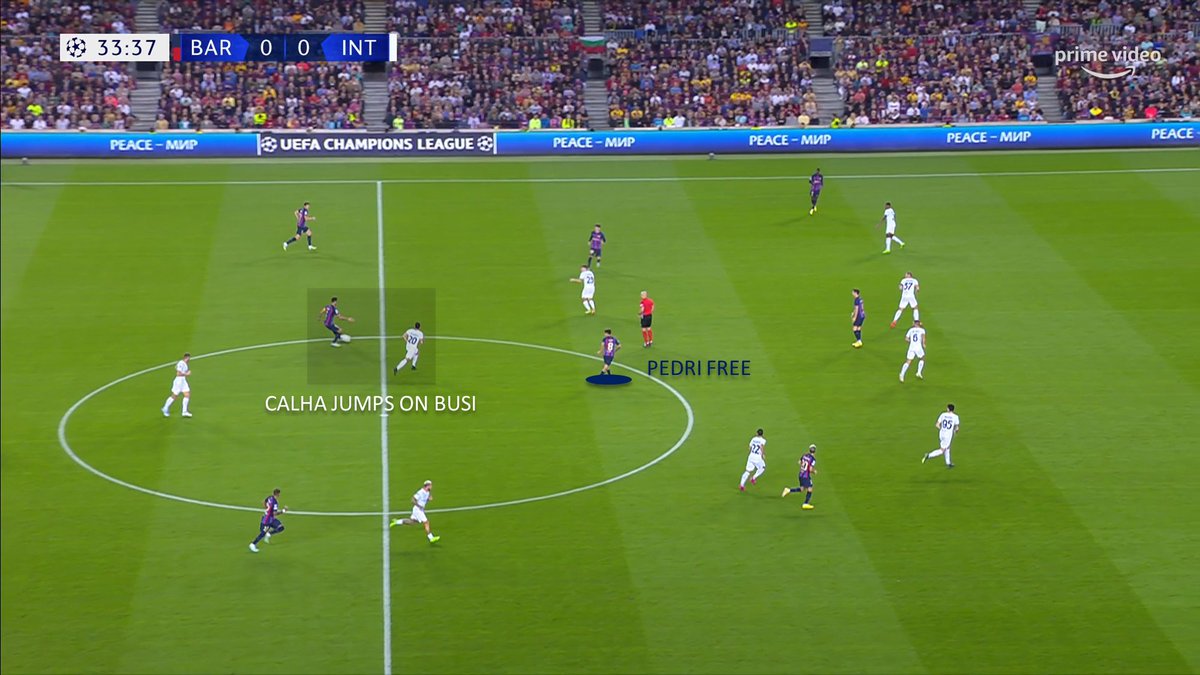
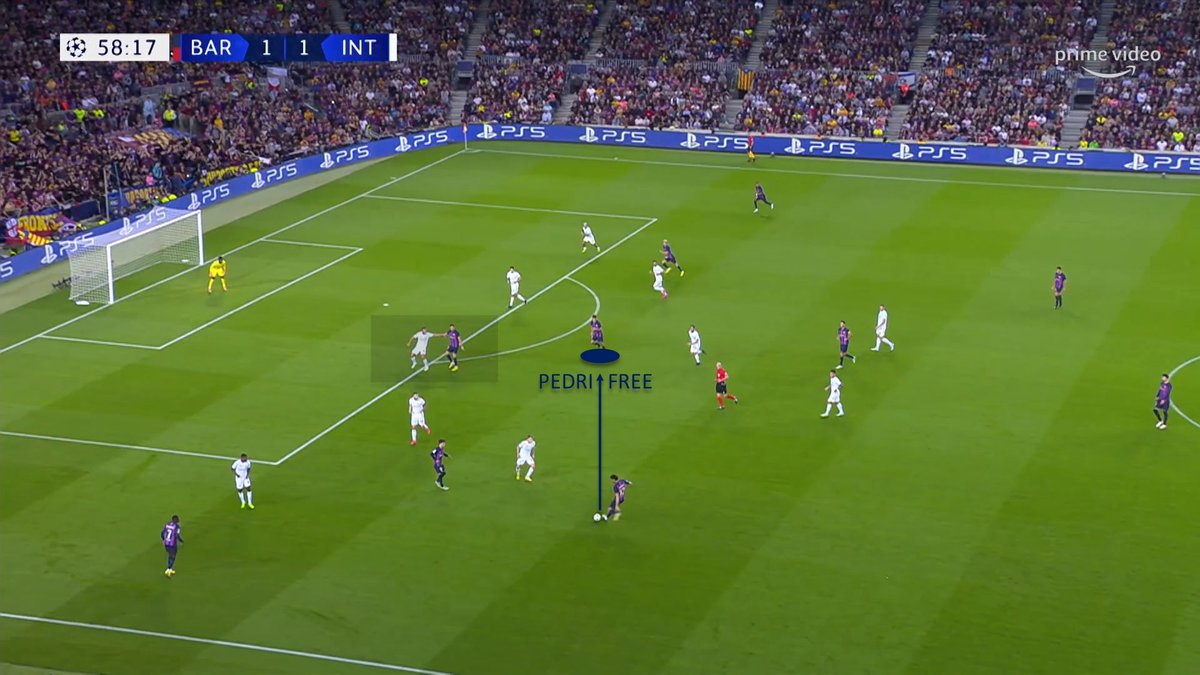
This was a great example: Lewa starts wide attracting Skriniar, Gavi attacks the space behind his back attracting de Vrij, then Pedri attacks that space. Meanwhile Lewa is free (Skriniar doubled up Dembélé) and can receive from Pedri and shoot.

Let's get to the bad news for Barcelona. This team lacks patience and longs excessively to verticality. When you play a team sitting deep, you have to be patient, move the ball (quickly, not in a sterile way) from one side to the other until you find a space to attack.
Compared to last week's game the circulation definitely improved (Dembélé played half as many balls), but there was too much haste even after taking the lead. Also, overloading that space between the lines created a problem: no structure on rest defense.
Gavi, Pedri and Sergi Roberto were all really high, and Busquets' sides were always too empty. Once Barça lost the ball in the final 3rd, Inter could easily counterattacck (and they did, A LOT).
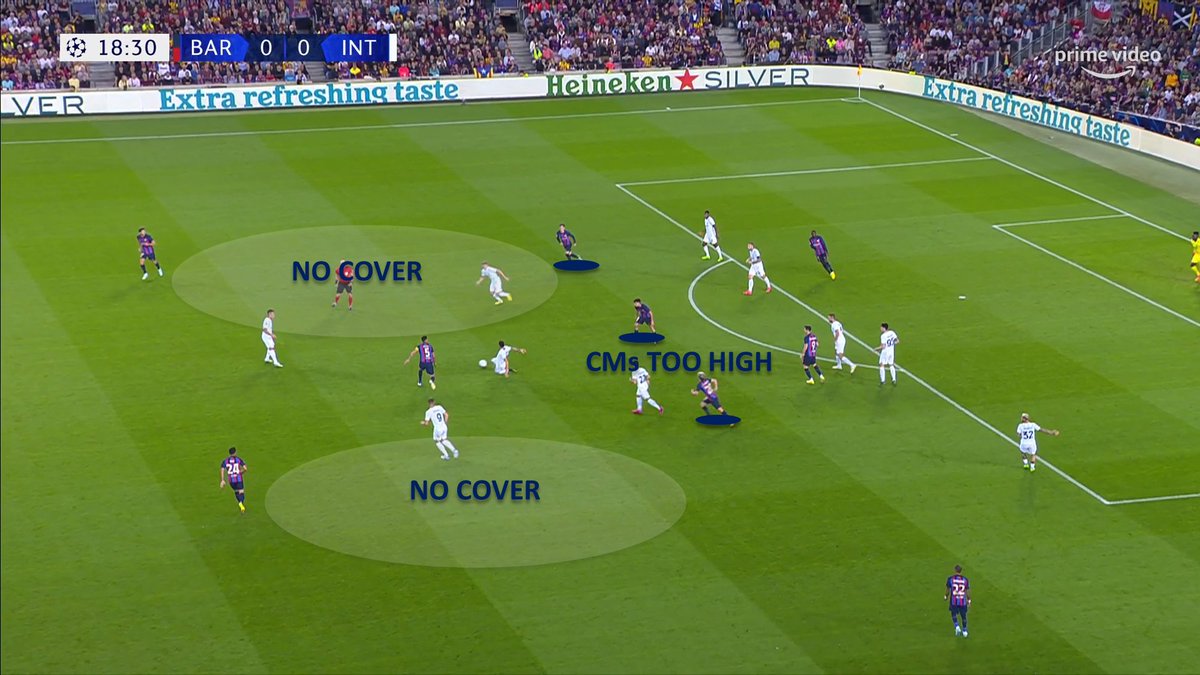
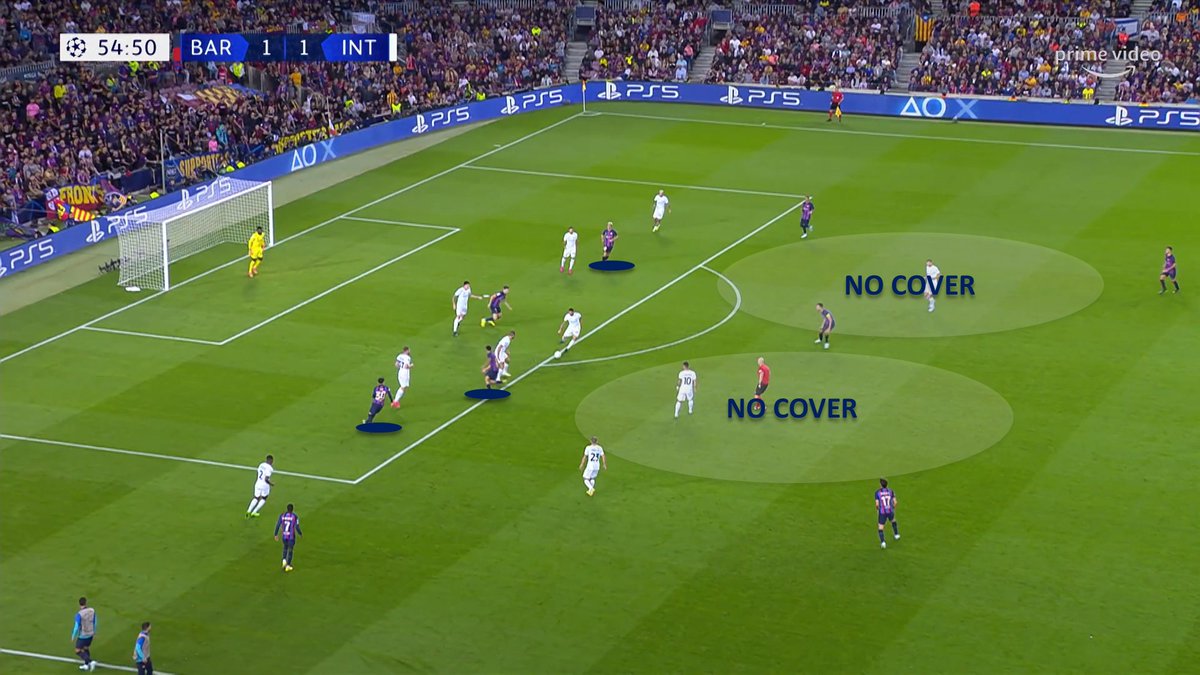
Xavi tried to solve this without losing that overload by keeping Alonso and especially García higher in order to be have less pitch to run when they had to make an anticipation. But that's dangerous too, if they lose their duels there's basically only the slow Piqué back.
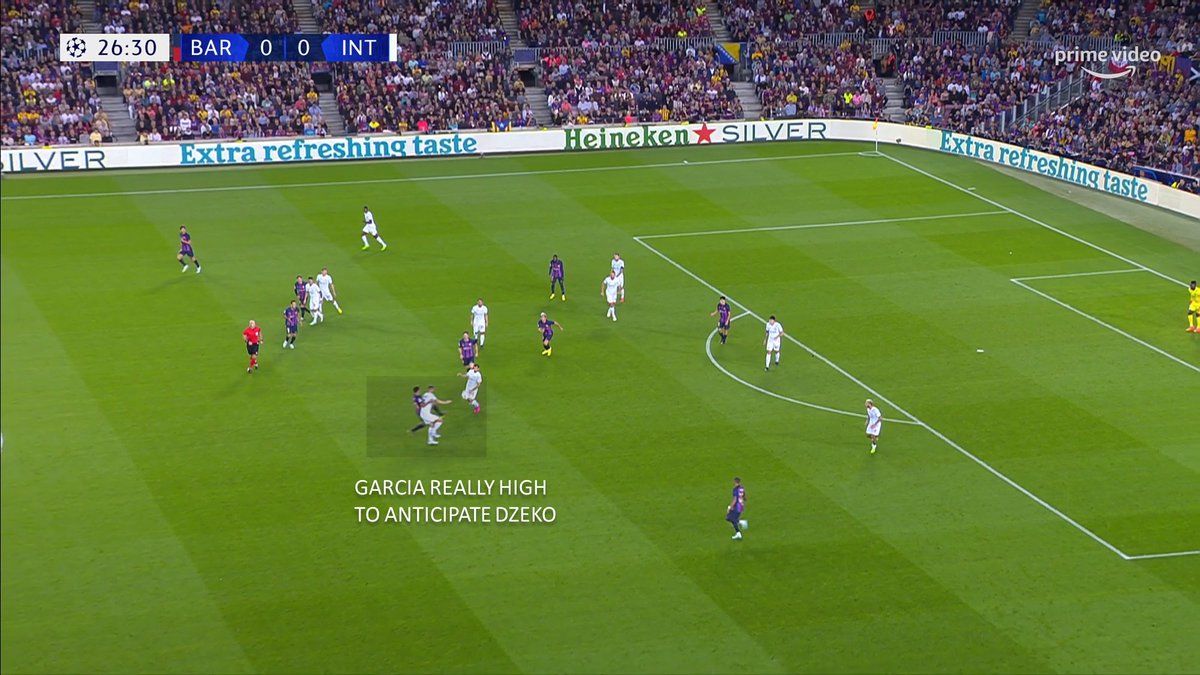
Lautaro's goal originates from this lack of cover. Busquets trying to find Pedri, Calhanoglu reads the pass and intercepts the ball. There's no structure to counterpress and Lautaro is alone with García (bad 1vs1 defender) on the left side.
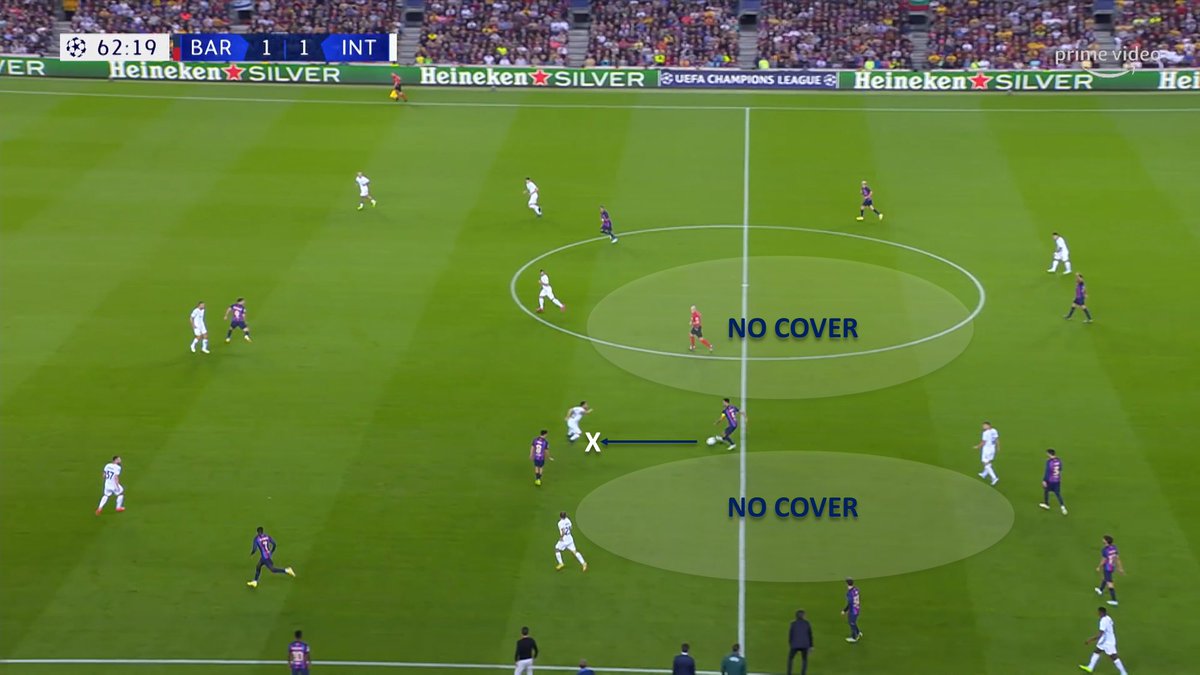
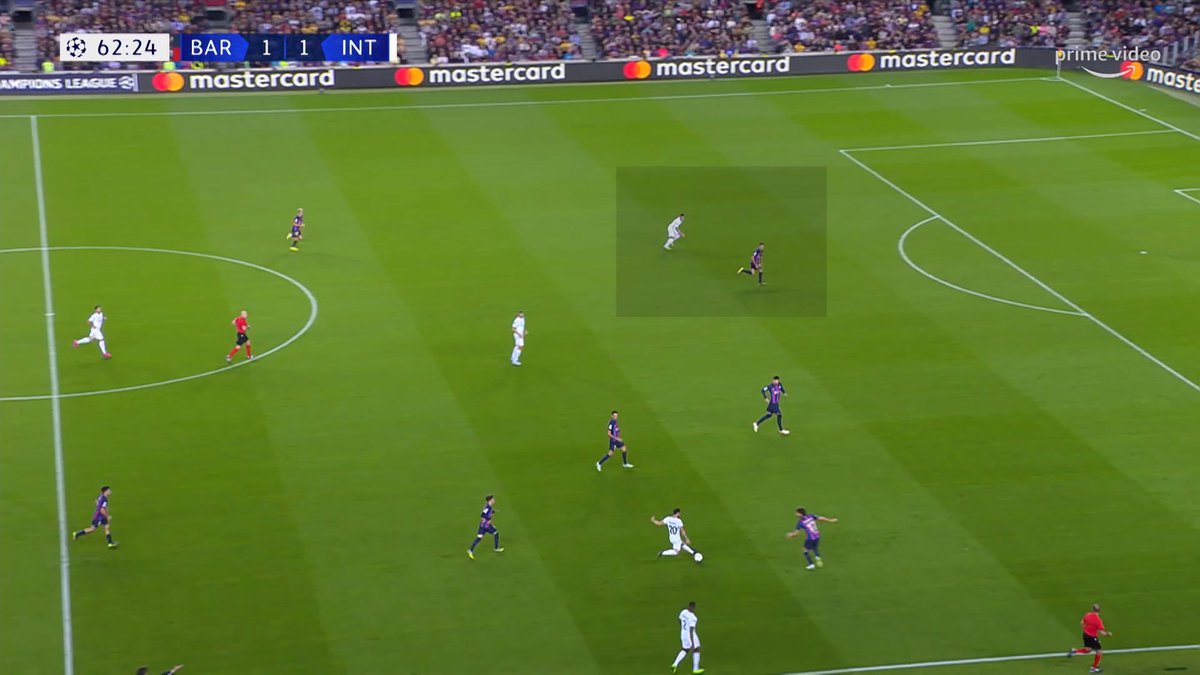
Quick digression on Marcos Alonso and why Inzaghi should have played Dumfries in the first match too. Inter had a lot to space to attack, Dumfries is really fast, Alonso is not and he usually was quite narrow (often without any reason), while Dumfries played very wide.
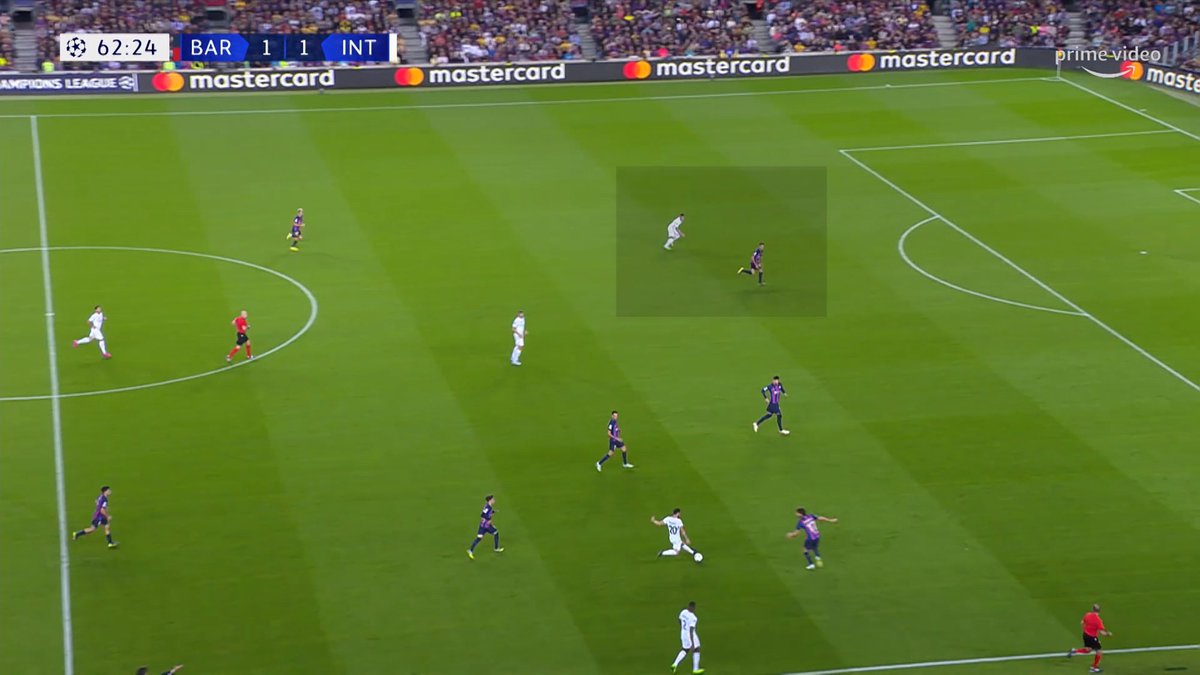
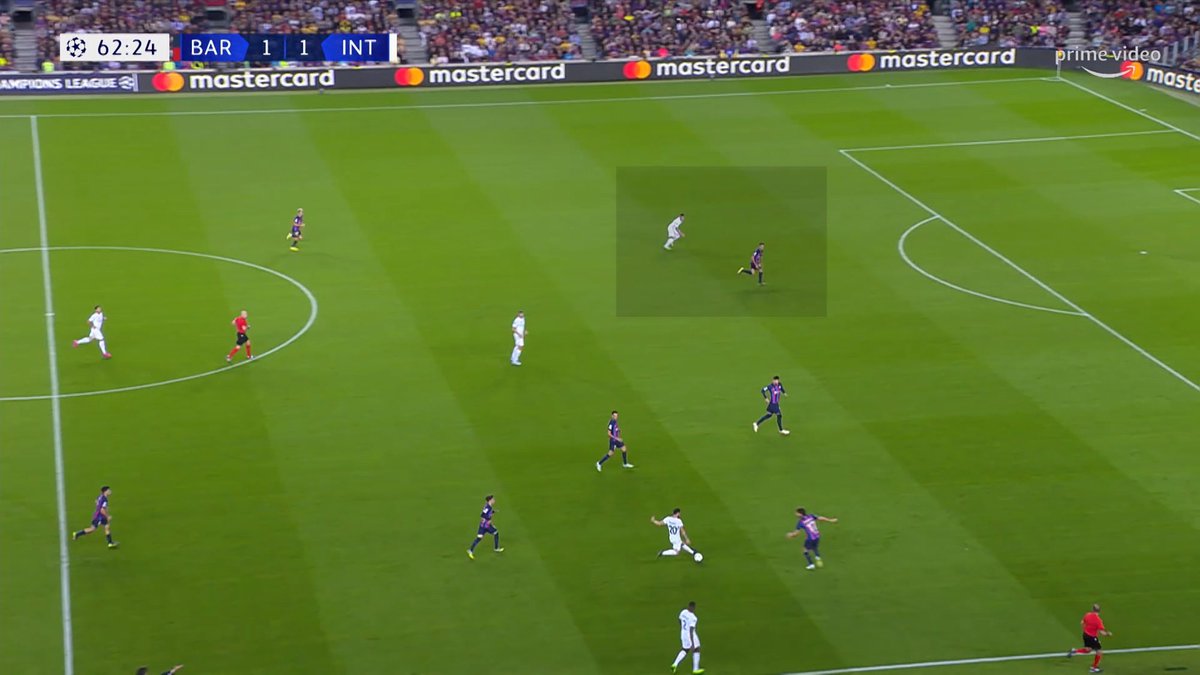
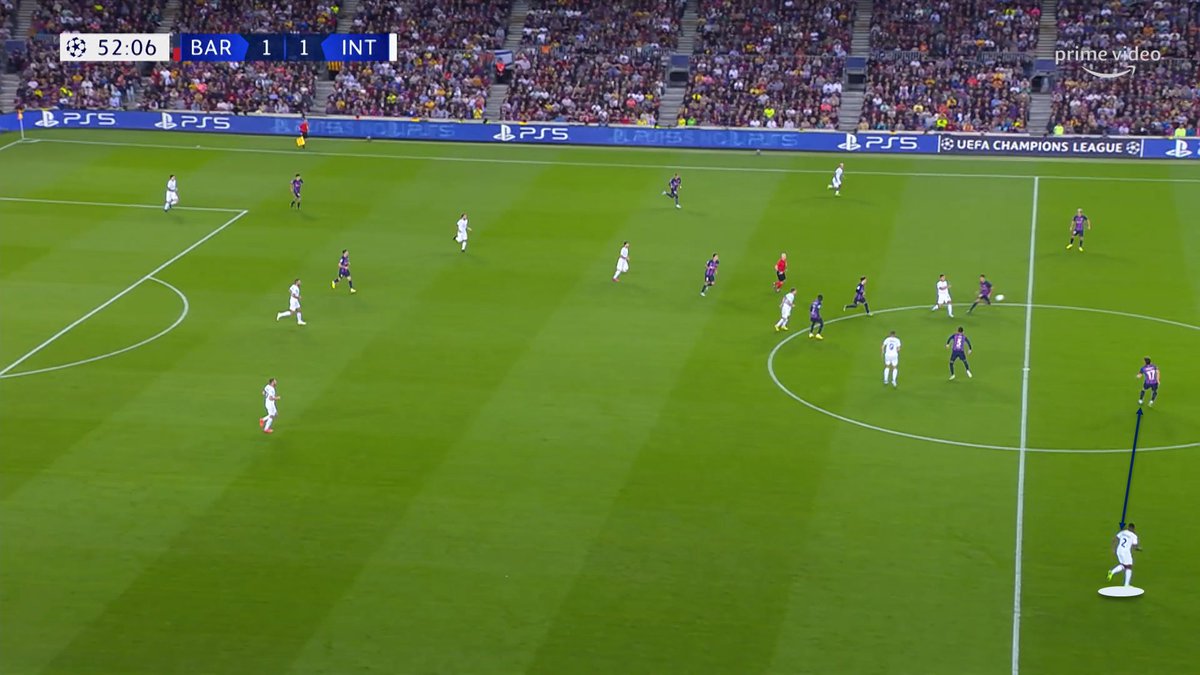
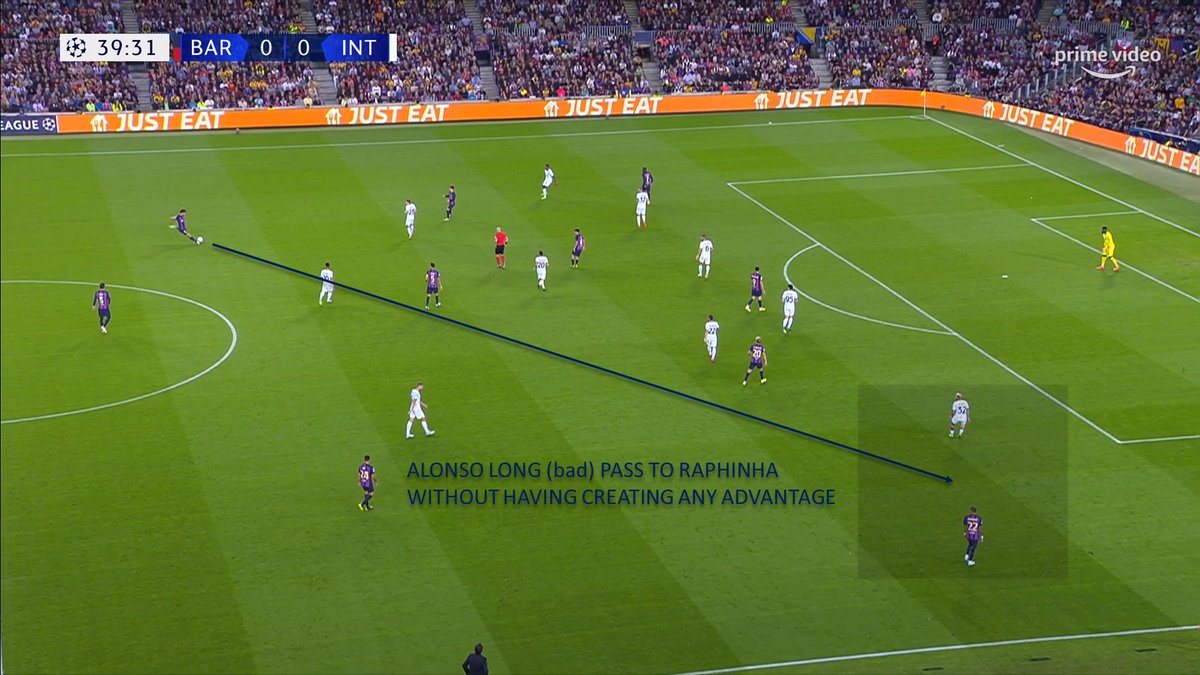
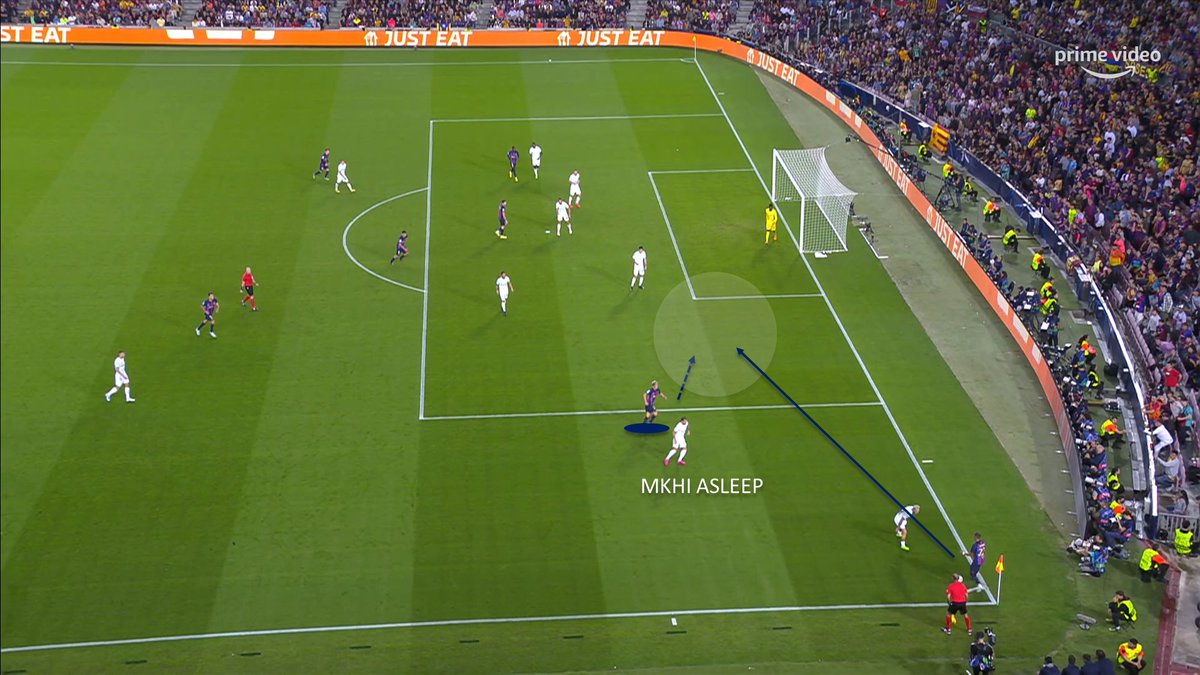
How the goals took place? Starting with the 1-0, the curious thing is that this was quite a random goal. Alonso switches side (quite badly too) hastly without having created any advantage. Raphinha wins the aerial duel, Mkhi forgets S. Roberto who receives and make the assist.
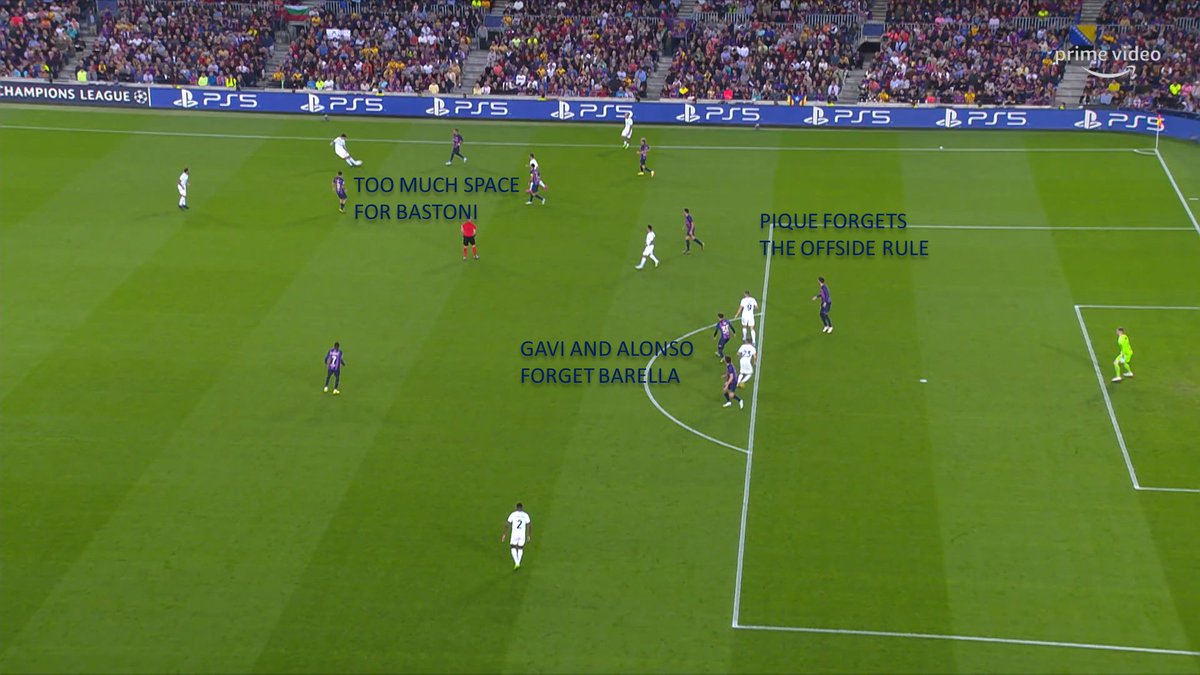
Inter's equalizer is the product of Barça's horrible defense and Bastoni+Barella's quality. Bastoni showing off his amazing passing ability (you can't leave him that amount of space), Piqué reads the situation terribly, Gavi and Alonso forget Barella who scores a beauty.
Gosens' originates from another horror show by Barça's defense (they missed Araújo and Koundé so much): Great pass by Onana, Piqué runs the offside trap even though Lautaro is behind the halfway line, Kessié jogs instead of sprinting. (Lautaro is AMAZING)

There's not much to say about Lewa's second goal, Barça attacked the box with many players, difficult situation to defend for Inter, great header by the Polish.
In conclusion: Barça created the basis for hurting Inter, but were not precise enough in the final 3rd and especially in the second half they played too hastily. In addition, the total lack of structure in rest defense and Inter's determination in transition made the difference.
Btw, I know this is mainly an analysis on Barça's game, but Inter's gameplan was quite straightforward and really similar to last week's game. You can find my analysis of that game here:
Tbf this is not a matter of offside trap since no one is marking Bastoni (idk the word in English, in Italian is "palla scoperta, so maybe open ball?), It's just a nonsensical defensive line
Loading suggestions...