

Well, it's really shocking that not many people know how many kings performed The Ashwamedha Yagya as per inscriptions.
So let's see how many of the King were performed Horse sacrifice in Indian history...
#Thread 📜
So let's see how many of the King were performed Horse sacrifice in Indian history...
#Thread 📜
1. Pushyamitra Sunga 2nd century BCE
Pusyamitra Sunga of Pataliputra is mentioned as celebrating 2 Ashvamedha in the Ayodhya inscription of his descendant Dhanadeva, king of Kosala.
Kālidāsa also mentioned in his Mālavikāgnimitram that Pusyamitra performed Ashvamedha yajna.
Pusyamitra Sunga of Pataliputra is mentioned as celebrating 2 Ashvamedha in the Ayodhya inscription of his descendant Dhanadeva, king of Kosala.
Kālidāsa also mentioned in his Mālavikāgnimitram that Pusyamitra performed Ashvamedha yajna.

2. Gajayana Sarvatata (1st century B.C.)
Sarvatata King of the Chitorgarh region of Rajasthan is mentioned as the performer of an Ashvamedha in his Ghosundi and Hathibada inscriptions.
Sarvatata King of the Chitorgarh region of Rajasthan is mentioned as the performer of an Ashvamedha in his Ghosundi and Hathibada inscriptions.


Satakarni I (1st century B.C.)
King Satakarni of the Satavahana dynasty of the Deccan performed 2 Ashvamedha, the second of which is referred to in the fragmentary Nanaghat inscription probably incised after his death.
King Satakarni of the Satavahana dynasty of the Deccan performed 2 Ashvamedha, the second of which is referred to in the fragmentary Nanaghat inscription probably incised after his death.
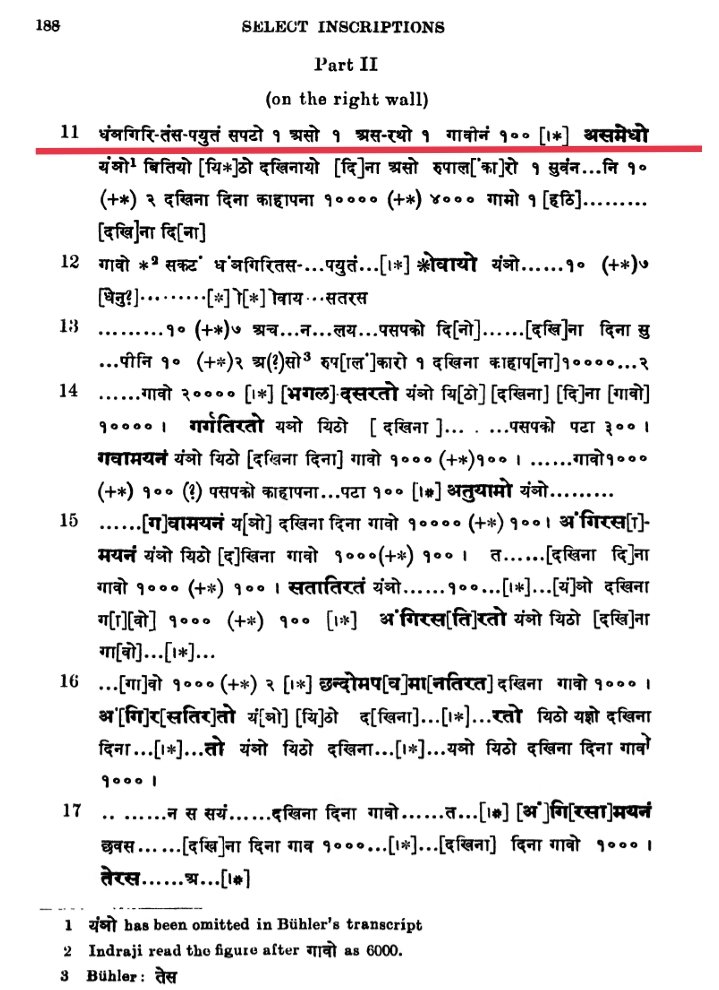
Devimitra (1st century B.C.)
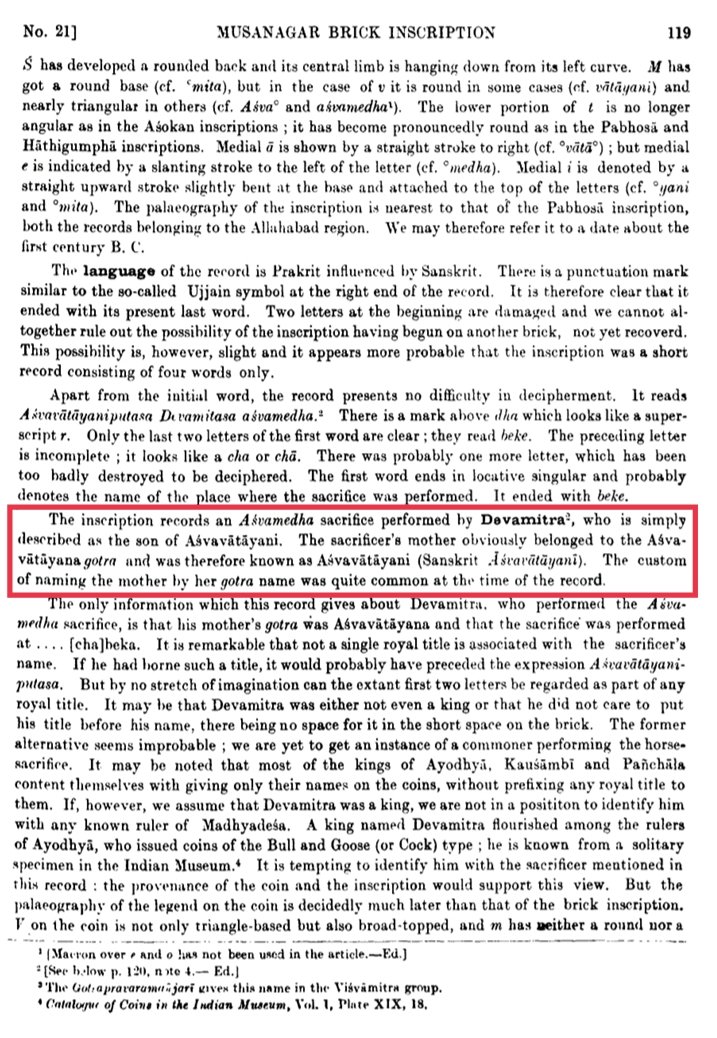
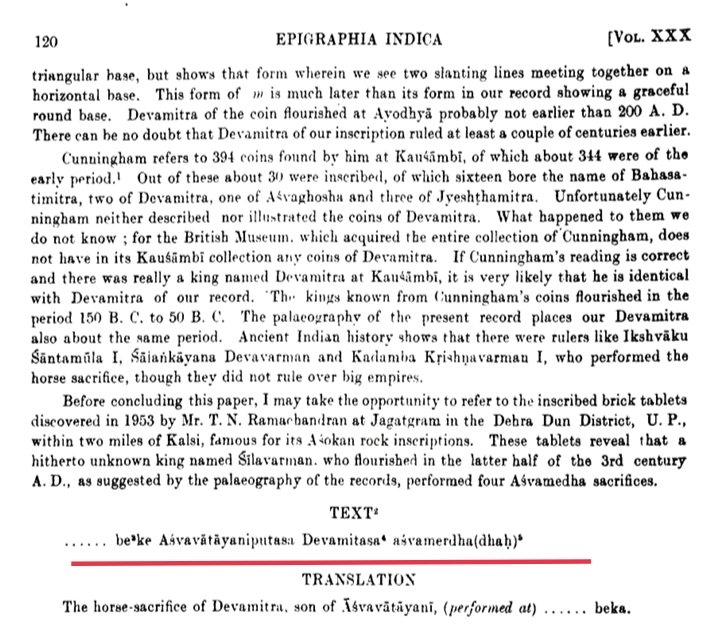
Devimitra, the son of Asvavatayani of the Kanpur- Allahabad region of U.P. is known from his Musanagar brick inscription to have celebrated a horse-sacrifice (Ashvamedha Yajna).
Devimitra, the son of Asvavatayani of the Kanpur- Allahabad region of U.P. is known from his Musanagar brick inscription to have celebrated a horse-sacrifice (Ashvamedha Yajna).
5. King Silavarman (3rd century A.D.)
Silavarman of the Vrishagana-gotra from PONA dynasty holding sway over the Dehradun region of U.P. is known to have performed no less than 4 Ashvamedha Yajna, the 4th of them being referred to in his Jagatpur brick inscription.
Silavarman of the Vrishagana-gotra from PONA dynasty holding sway over the Dehradun region of U.P. is known to have performed no less than 4 Ashvamedha Yajna, the 4th of them being referred to in his Jagatpur brick inscription.

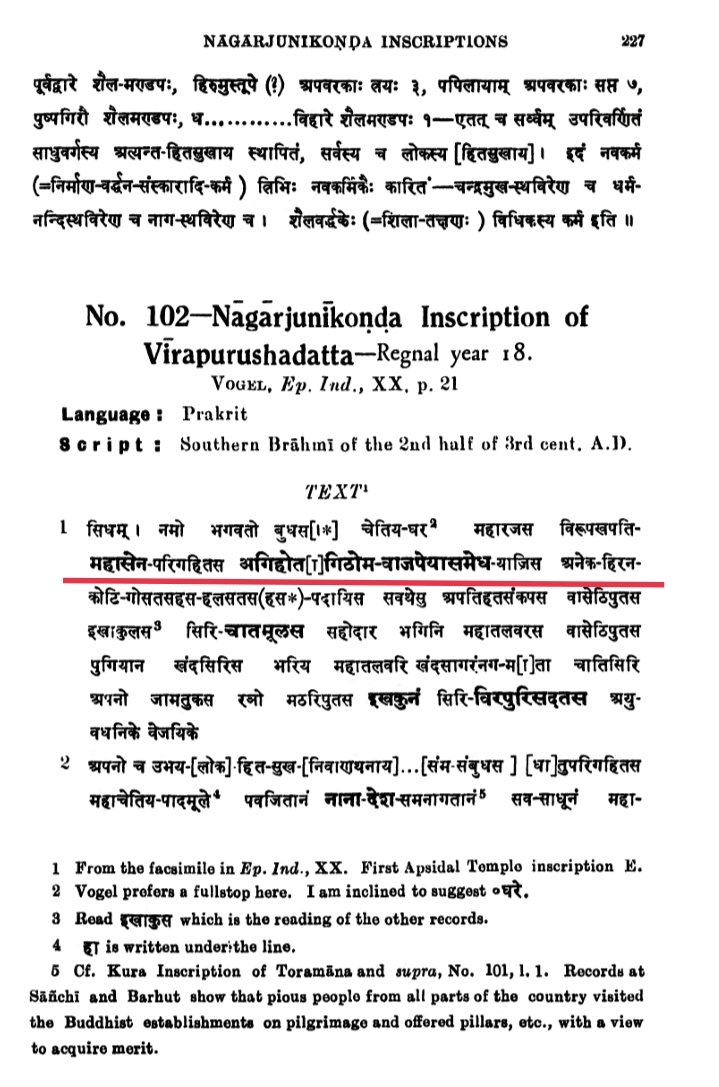
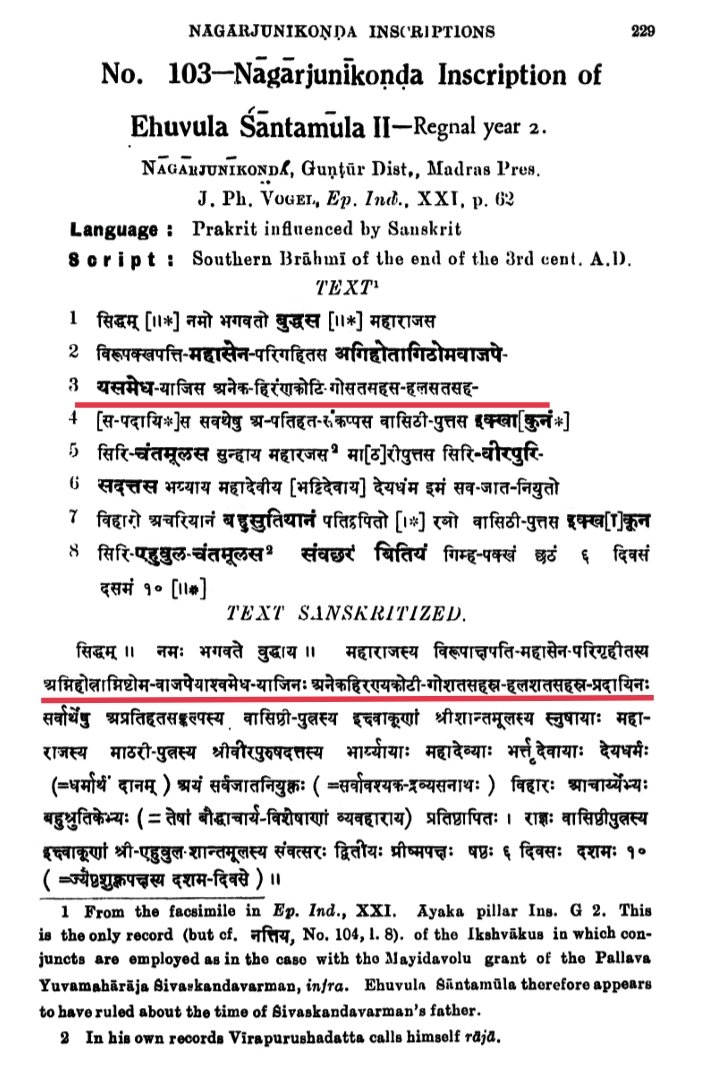
6. Santamula (Cantamula) I (3rd century A.D.)
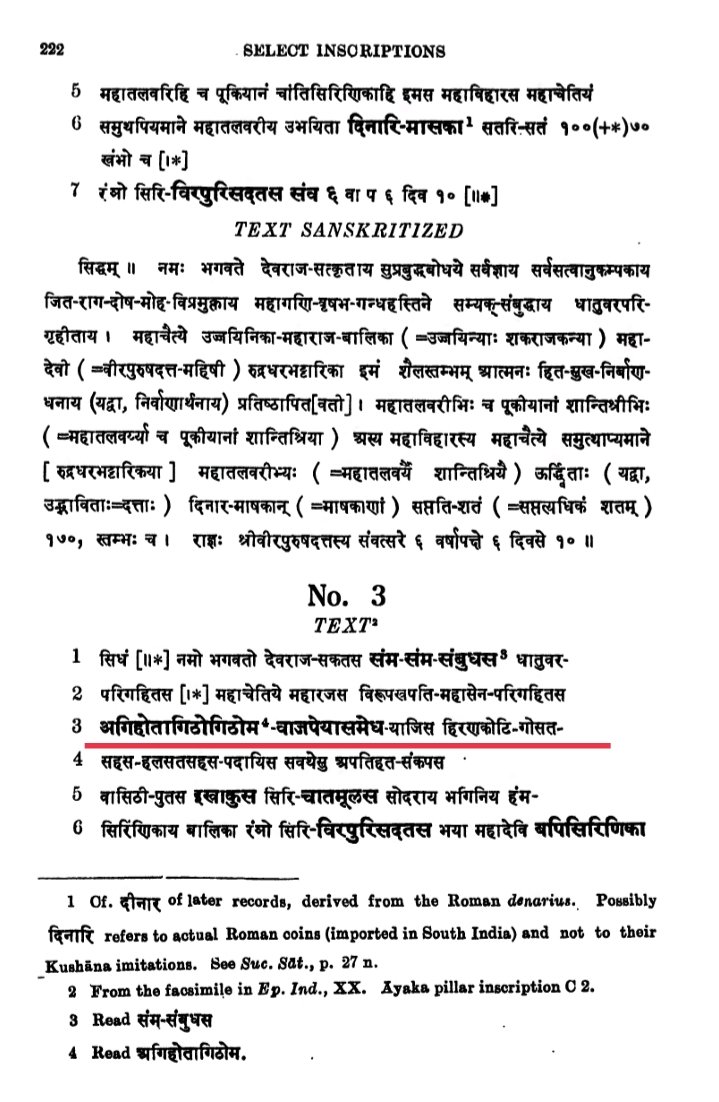
Santamula of the Iksvaku dynasty of Vijayapuri (in the Nagarjunikonda valley, Guntur District, Andhra Pradesh) is credited with the performance of an Ashvamedha and Vajpai yajna in the records of his son and grandson.
Santamula of the Iksvaku dynasty of Vijayapuri (in the Nagarjunikonda valley, Guntur District, Andhra Pradesh) is credited with the performance of an Ashvamedha and Vajpai yajna in the records of his son and grandson.

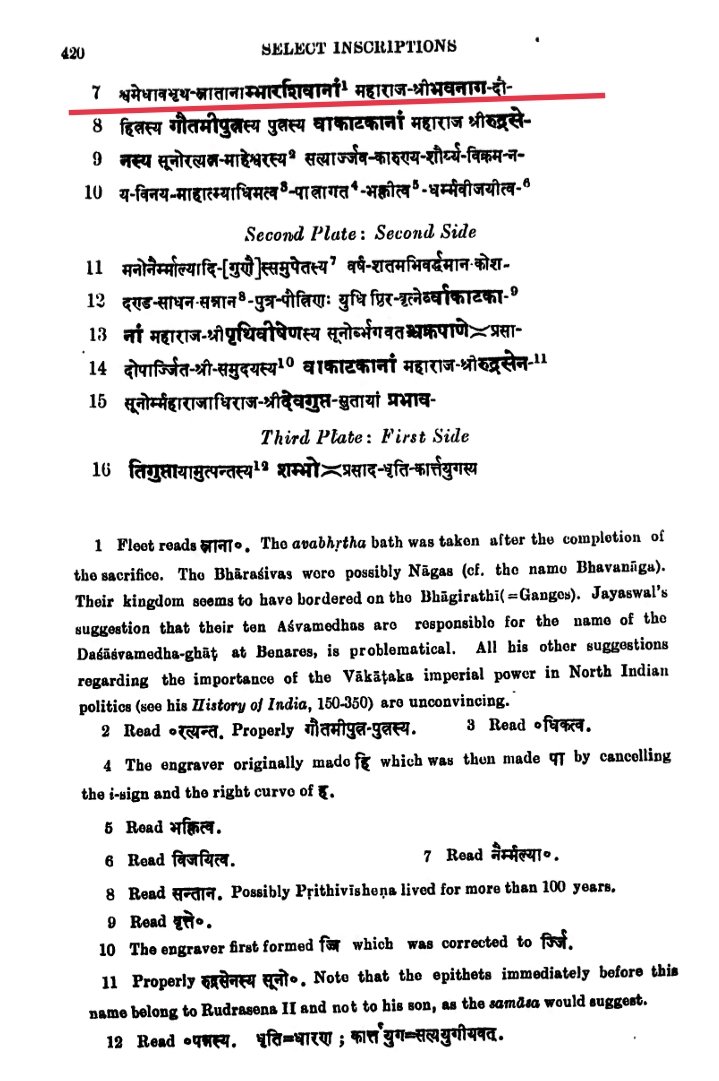
7. The Bharasiva Nagas (3rd and 4th centuries A.D.)
Nagas of the Eastern Malwa region are credited with the celebration of ten horse-sacrifices in the records of their Vakataka relatives” although the names of the kings who performed the sacrifices are unknown.
Nagas of the Eastern Malwa region are credited with the celebration of ten horse-sacrifices in the records of their Vakataka relatives” although the names of the kings who performed the sacrifices are unknown.
8. The King of Vakataka The Pravarasena I (3rd-4th century A.D.)
Pravarasena I holding sway over parts of the Deccan and the central regions of India, is known from the inscriptions of his descendants to have performed Vajpai and four Ashvamedha Yajna.
Pravarasena I holding sway over parts of the Deccan and the central regions of India, is known from the inscriptions of his descendants to have performed Vajpai and four Ashvamedha Yajna.
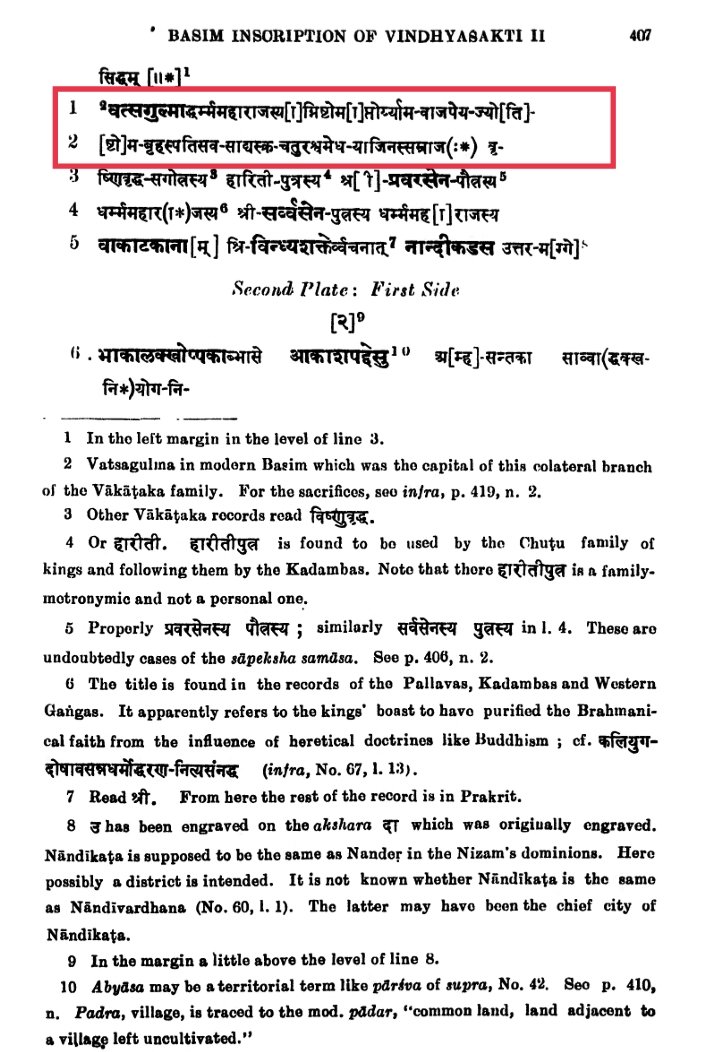
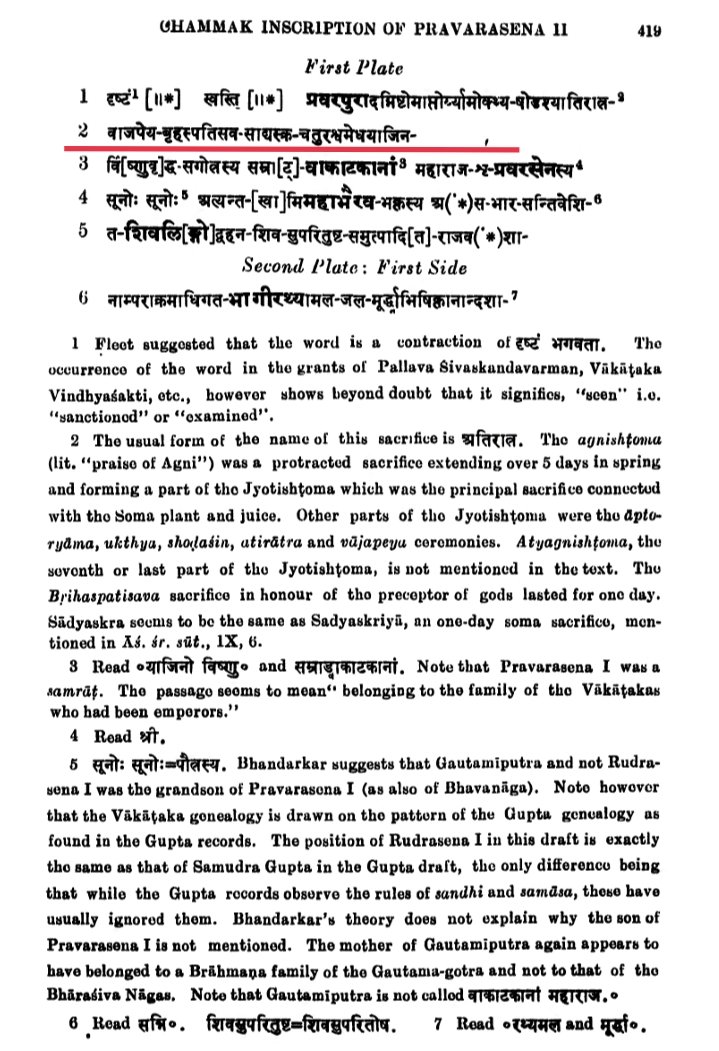
9. Sivaskandavarman (4th century A.D.)
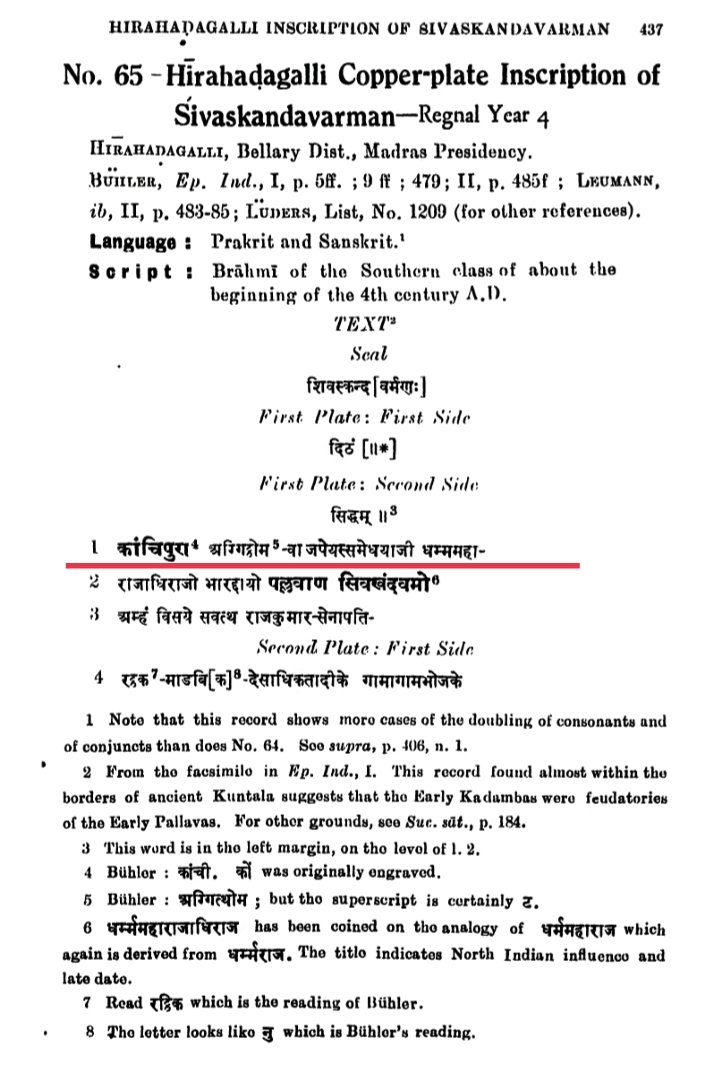
There are three performers of the Ashvamedha yajna in the Pallava Royal family of Kanchipura near Madras. The first of them is Sivaskandavarman who claims to be an Ashvamedha and Vajpai Yajna in his Hirahadagalli copper-plate.
There are three performers of the Ashvamedha yajna in the Pallava Royal family of Kanchipura near Madras. The first of them is Sivaskandavarman who claims to be an Ashvamedha and Vajpai Yajna in his Hirahadagalli copper-plate.
10. Kumaravishnu (4th century)
The second is Kumaravishnu described similarly in his great-grandson’s Omgodu grant.
The second is Kumaravishnu described similarly in his great-grandson’s Omgodu grant.
11. Narasimhavarman (circa 630-68 A.D.)
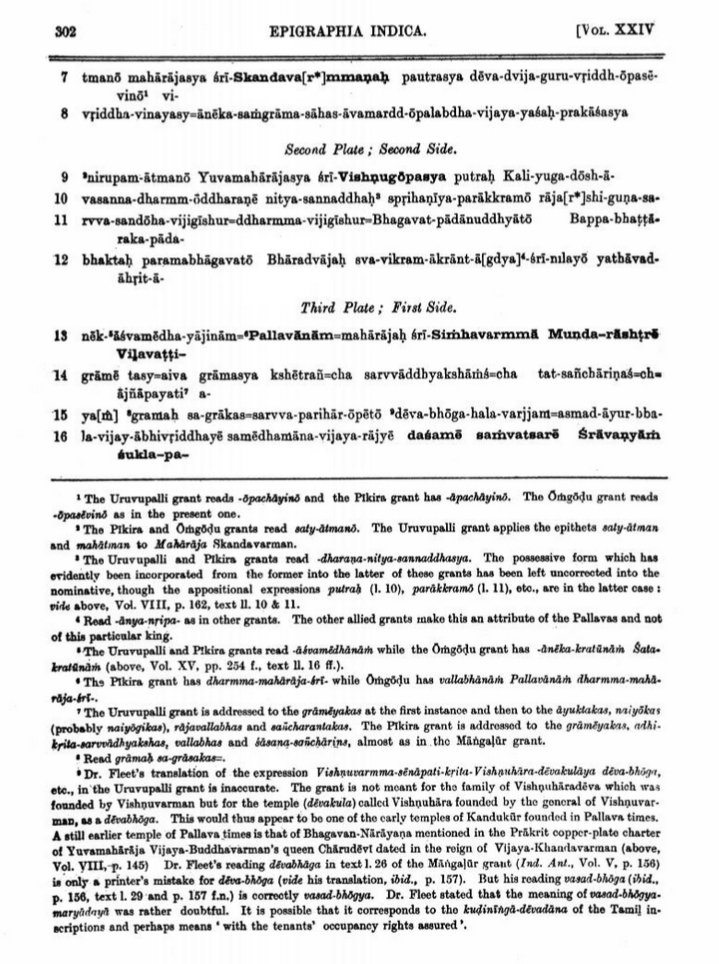
Third is Simhavarman, who has been tentatively identified with Narasimhavarman I. He has performed many types of Yajna besides the Ashvamedha.
Third is Simhavarman, who has been tentatively identified with Narasimhavarman I. He has performed many types of Yajna besides the Ashvamedha.
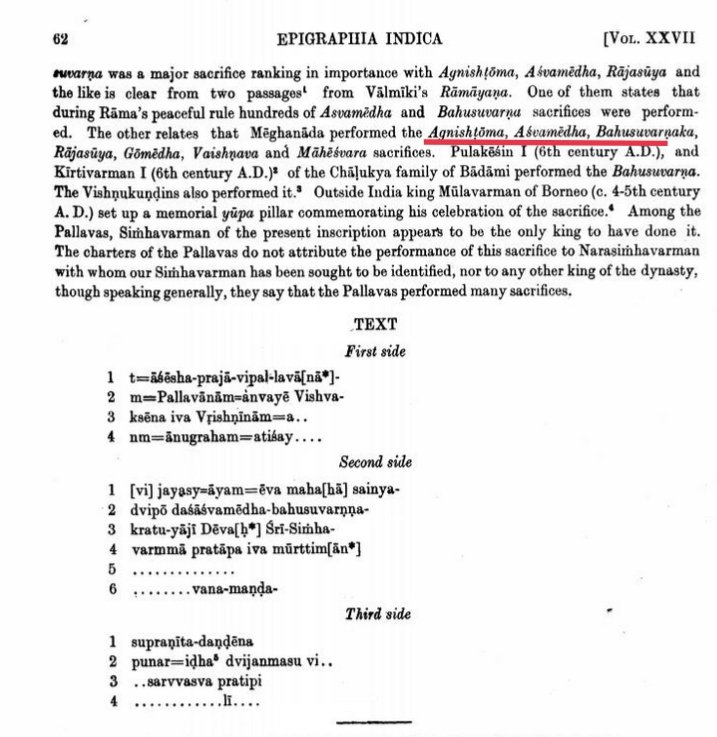
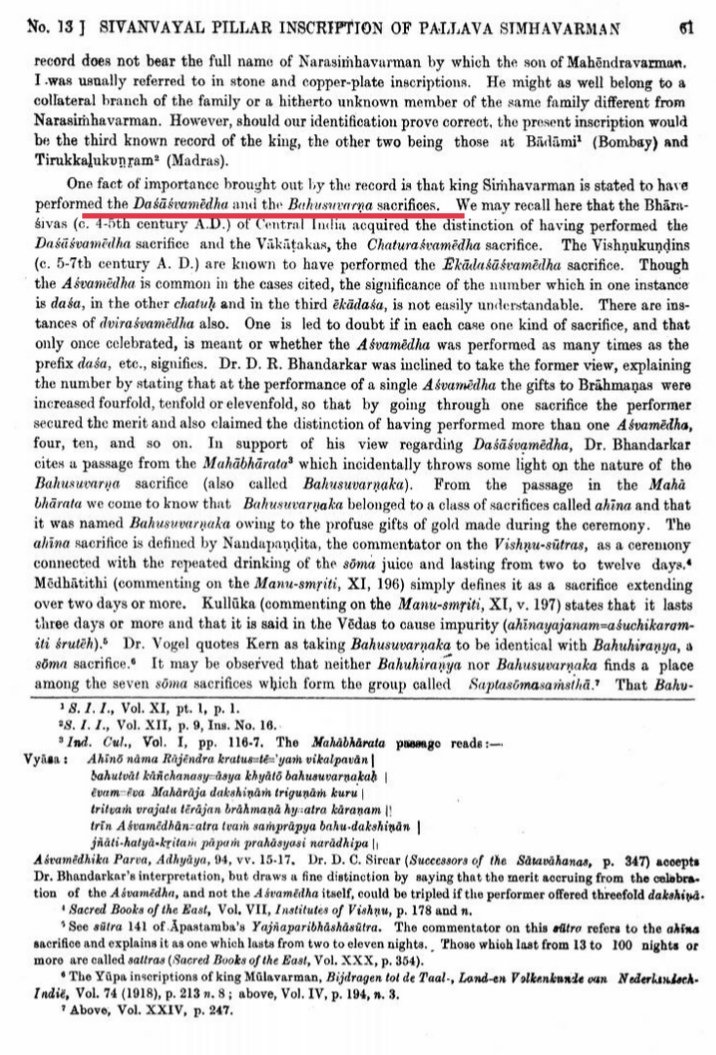
and also with the Pallava ruler who claims to have performed ten Ashvamedhas in his Sivanvayal (Chingleput District, Tamil Nadu) pillar inscription.
13. Devavarman (4th century A.D.)
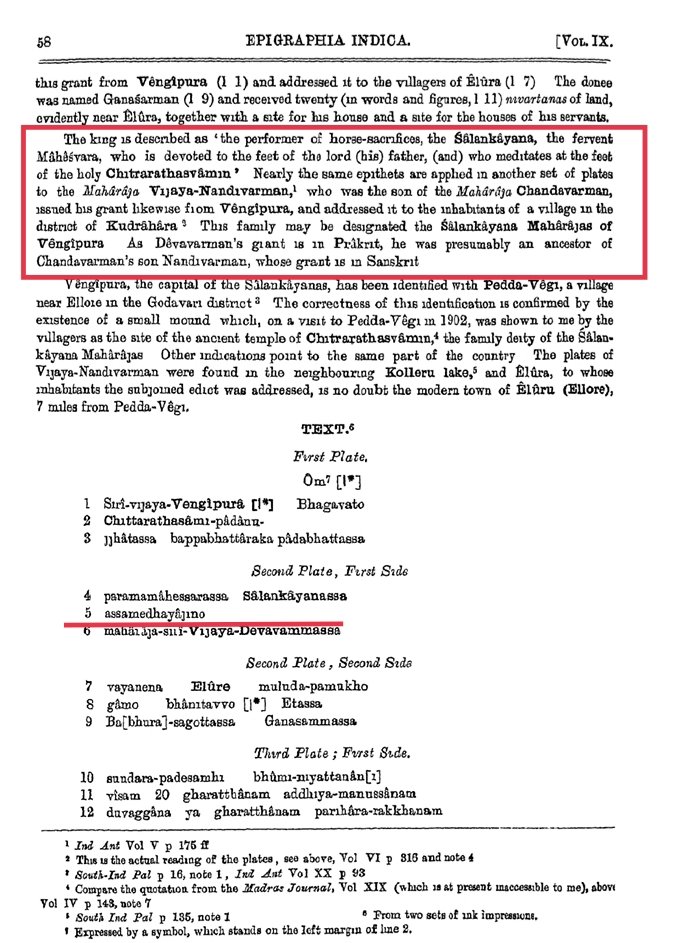
Among the Salankayanas of Vengi (near Ellore in the West Godavari District, Andhra Pradesh), king Devavarman claims to have celebrated an Ashvamedha in his Ellore plate.
Among the Salankayanas of Vengi (near Ellore in the West Godavari District, Andhra Pradesh), king Devavarman claims to have celebrated an Ashvamedha in his Ellore plate.
14. Samudragupta👑 (330AD to 376 AD)
Samudra Gupta succeeded his father Chandragupta I, was the greatest king of Gupta empire. He inflamed the Gupta Empire by winning a series of battles till he was a master of northern India. Soon he conquered the kings of Vindhyans and Deccan
Samudra Gupta succeeded his father Chandragupta I, was the greatest king of Gupta empire. He inflamed the Gupta Empire by winning a series of battles till he was a master of northern India. Soon he conquered the kings of Vindhyans and Deccan
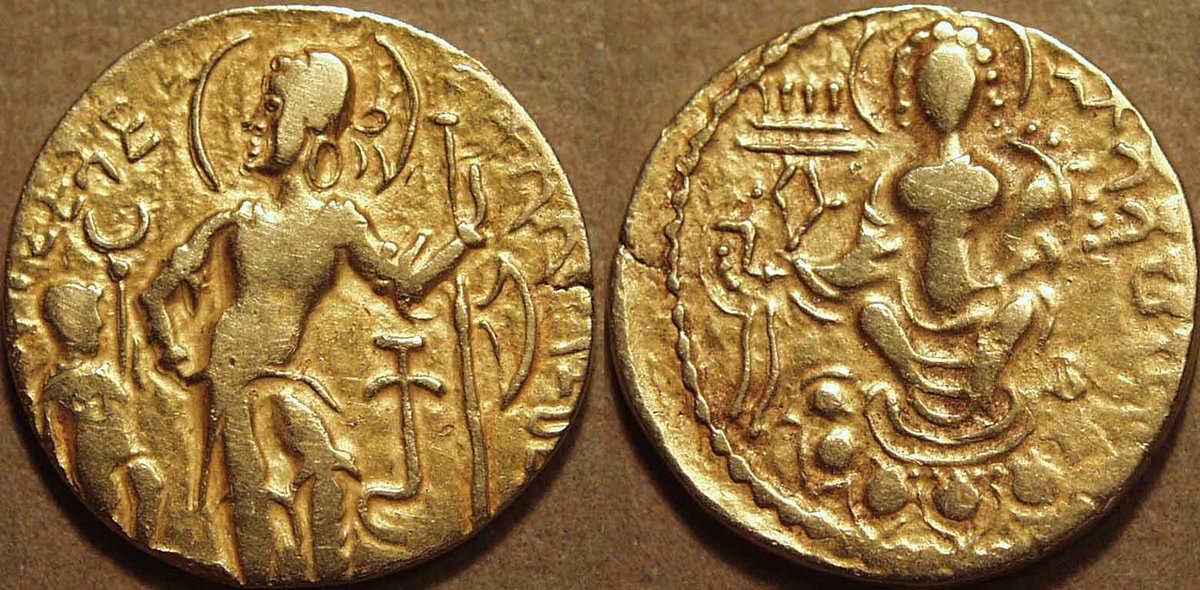
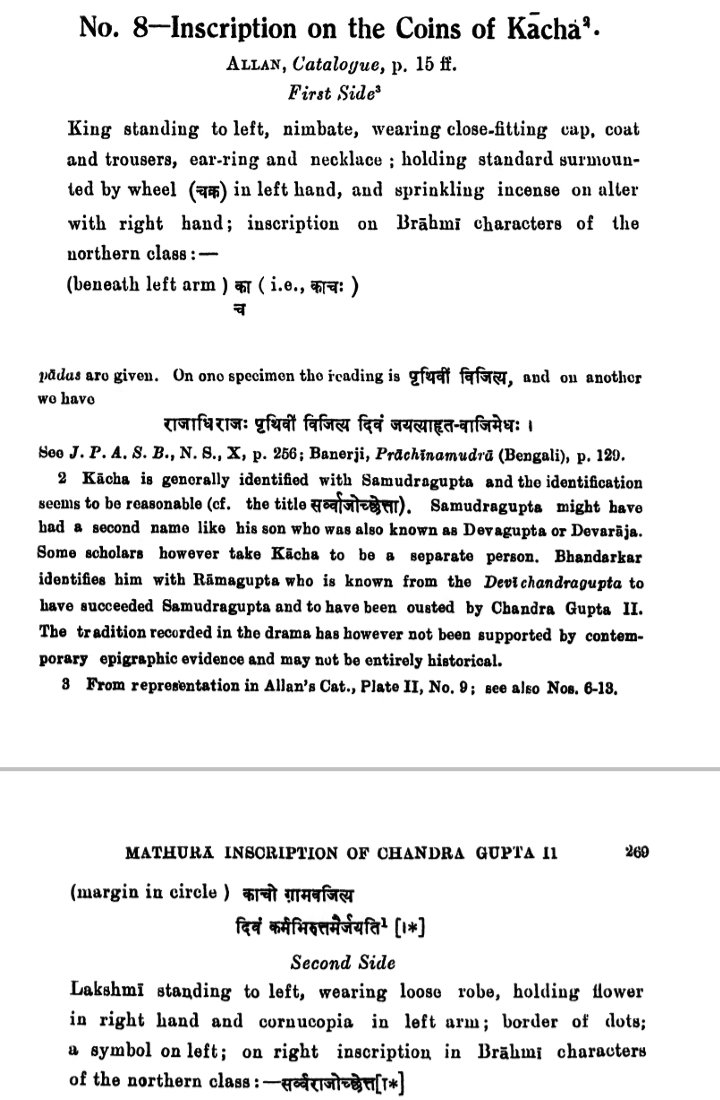
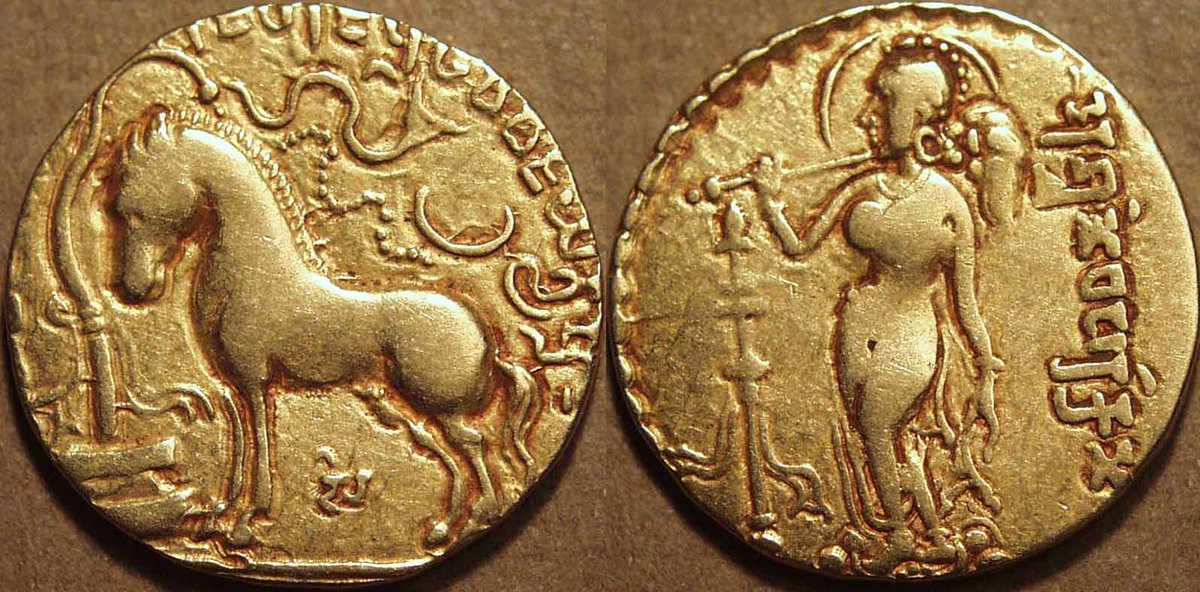
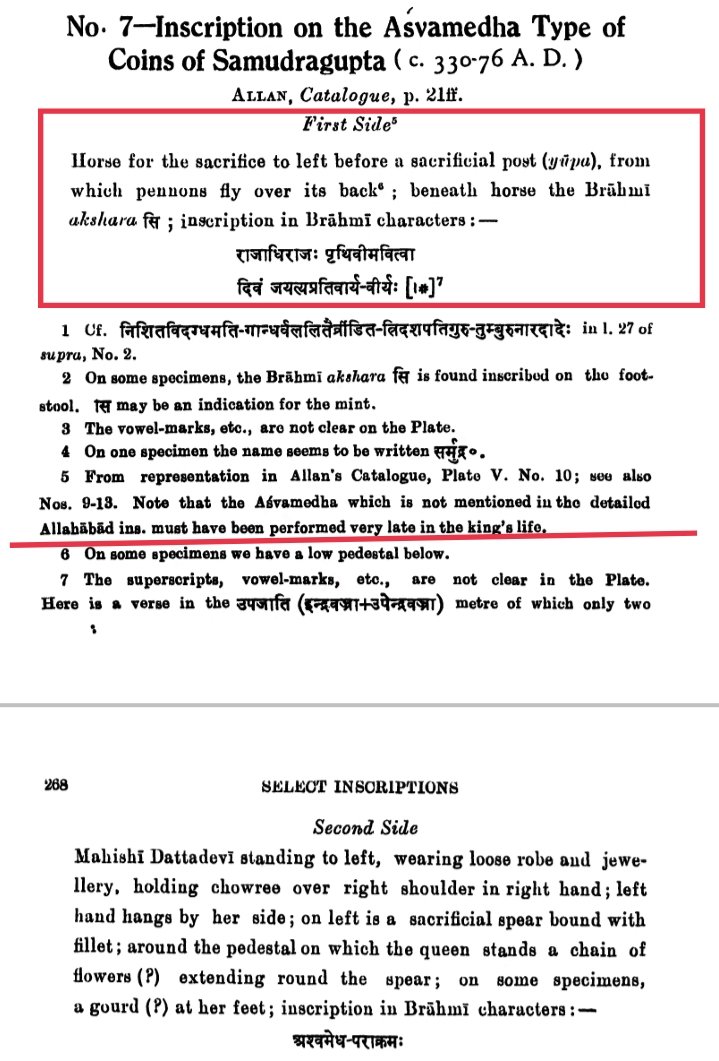
He performed the Ashwamedha Yagna (Horse sacrifice ceremony) which is marked on some of his coins. Ashwamedha Yagna gave him the popular title of Maharajadhiraja, means the supreme king of kings.
15. Kumargupta I (414 to 455 AD)
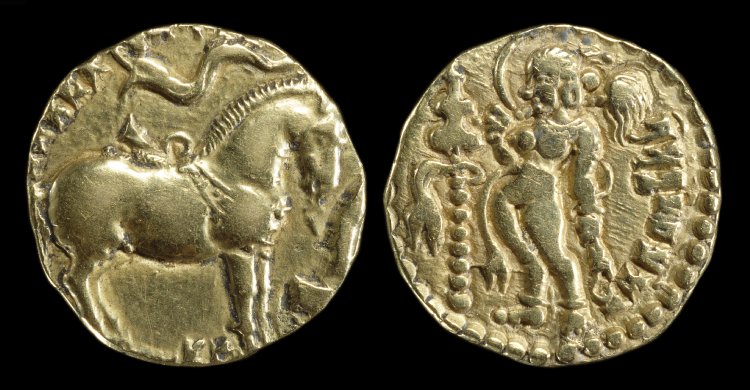
Vikramaditya was succeeded by his talented son Kumargupta I. He sustained his huge kingdom, which covered most of India. He also performed the Ashwamedha Yagna and proclaimed himself to be Chakrawarti, king of all kings.
Bilsad stone pillar ins.
Vikramaditya was succeeded by his talented son Kumargupta I. He sustained his huge kingdom, which covered most of India. He also performed the Ashwamedha Yagna and proclaimed himself to be Chakrawarti, king of all kings.
Bilsad stone pillar ins.

16. Dahrasena of Traikutaka dynasty (5th century A.D.)
Traikutakas were a dynasty from Aparanta or Konkan region who ruled between 388 and 456.
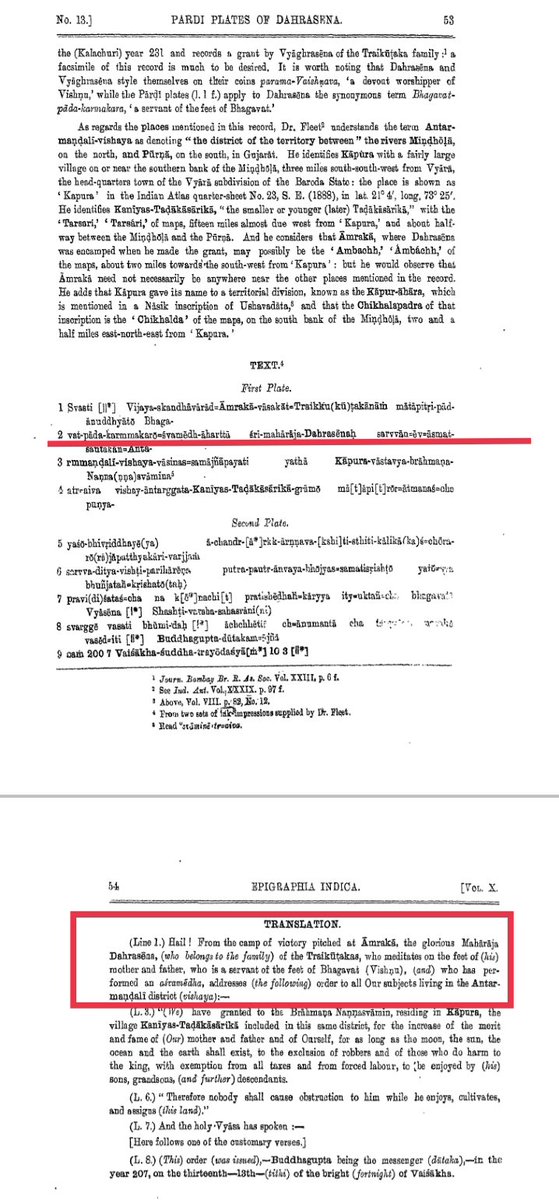
Dahrasena claims in his Pardi plates of 455 A.D. to have performed the Ashvamedha yajna.
Traikutakas were a dynasty from Aparanta or Konkan region who ruled between 388 and 456.
Dahrasena claims in his Pardi plates of 455 A.D. to have performed the Ashvamedha yajna.

17. Krishnavarman I (5th century A.D.)
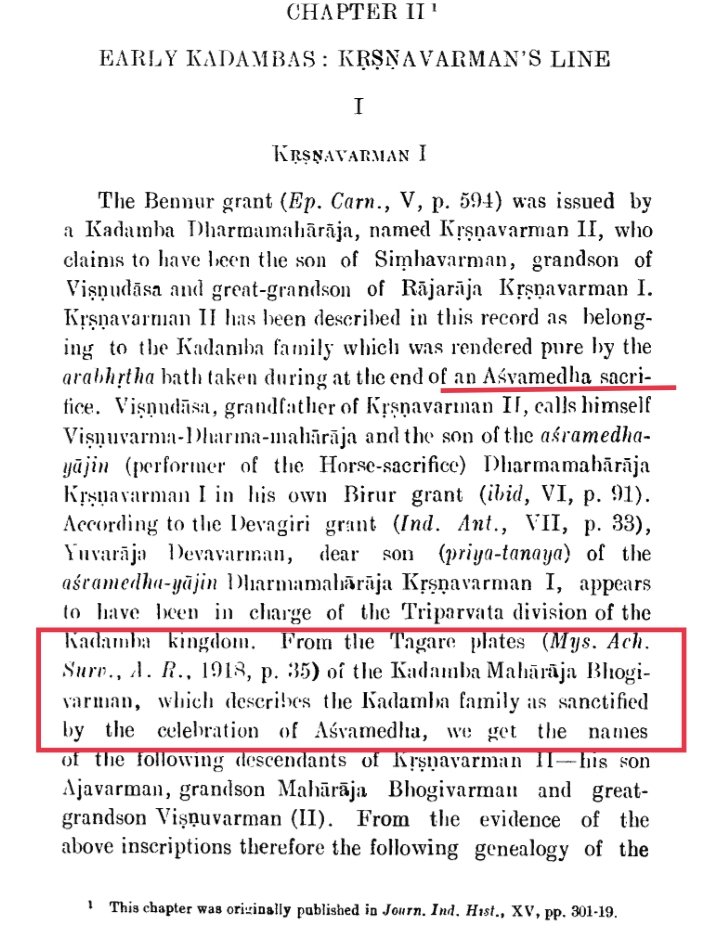
The Kadambas of the Kannada-speaking area, Krishnavarman I performed an Ashvamedha yajna according to the Birur and Devagiri plates of his sons.
The Kadambas of the Kannada-speaking area, Krishnavarman I performed an Ashvamedha yajna according to the Birur and Devagiri plates of his sons.
18. Mayurasarman (4th century A.D.)
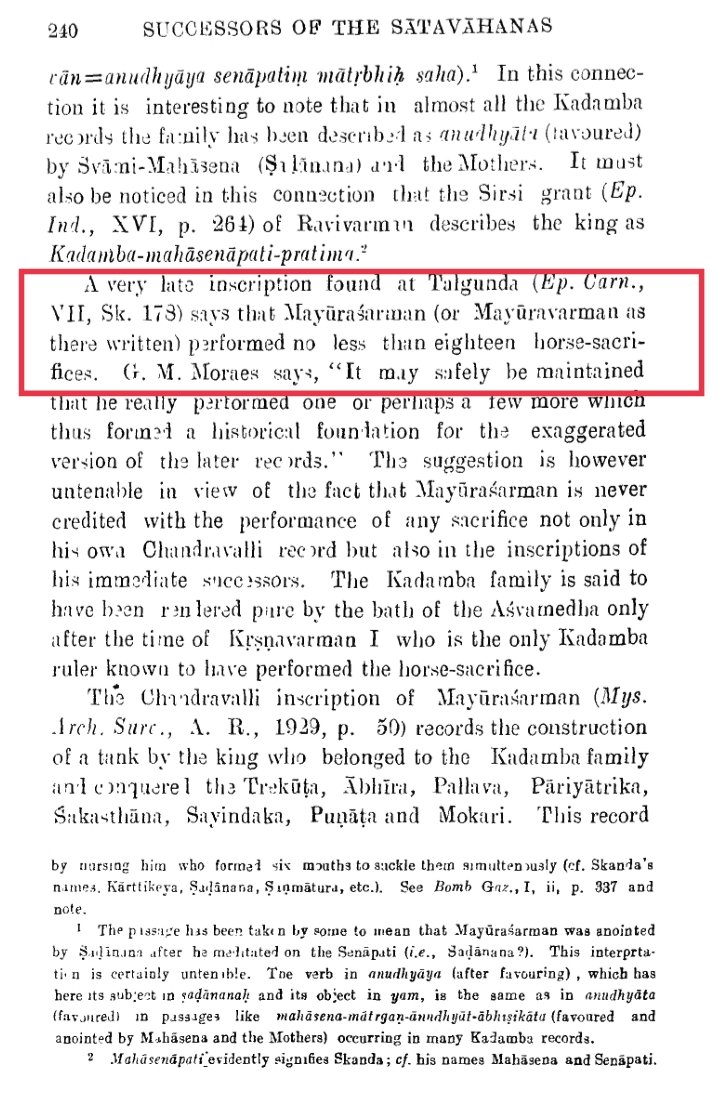
A very late inscription from Talagunda wrongly assigns the celebration of 18 Ashvamedha yajna to Mayuravarman, a name that was later fabricated for Mayurasarman, founder of the Kadamba dynasty.
A very late inscription from Talagunda wrongly assigns the celebration of 18 Ashvamedha yajna to Mayuravarman, a name that was later fabricated for Mayurasarman, founder of the Kadamba dynasty.
19. The Visnukundin king Madhavavarman I (6th century A.D.)
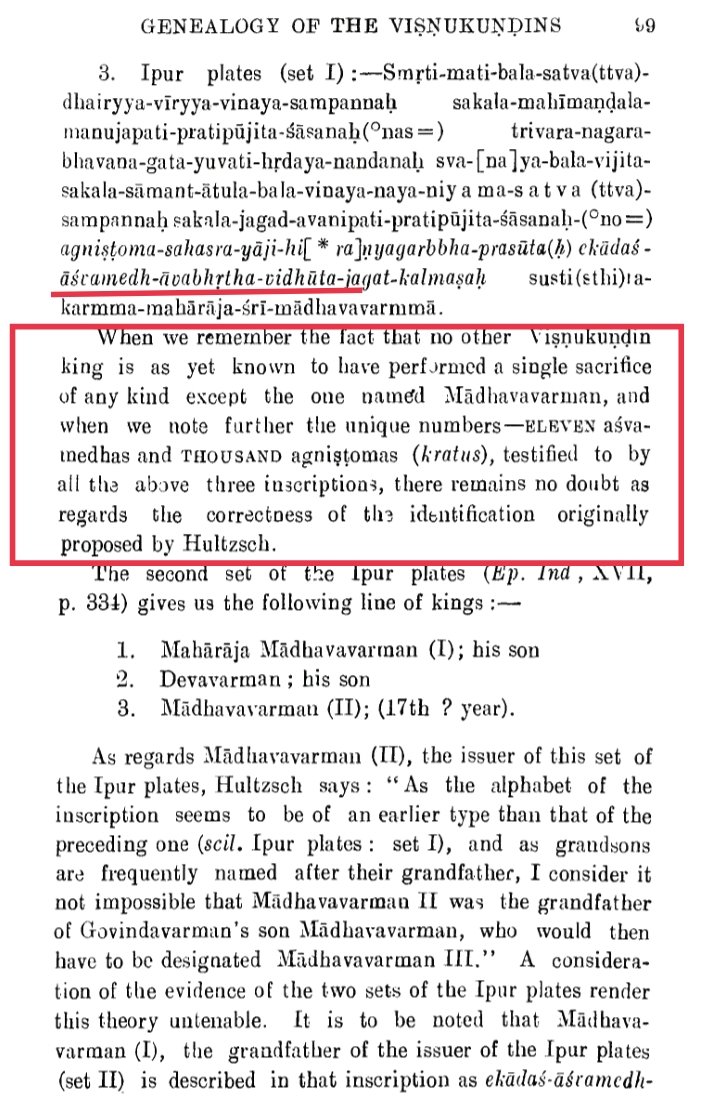
Madhavavarman I of the Guntur-Krishna-Godavari region is stated, in his own epigraphs as well as in those of his successors, to have performed no less than 11 Ashvamedha yajna.
Madhavavarman I of the Guntur-Krishna-Godavari region is stated, in his own epigraphs as well as in those of his successors, to have performed no less than 11 Ashvamedha yajna.
20. Pulakesin I Chalukya (6th century A.D.)
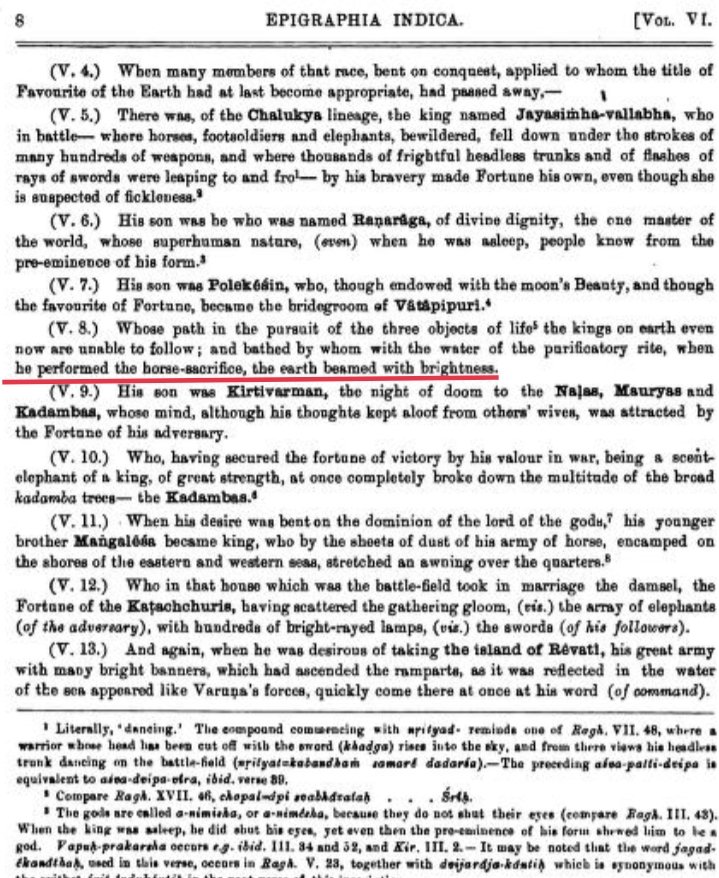
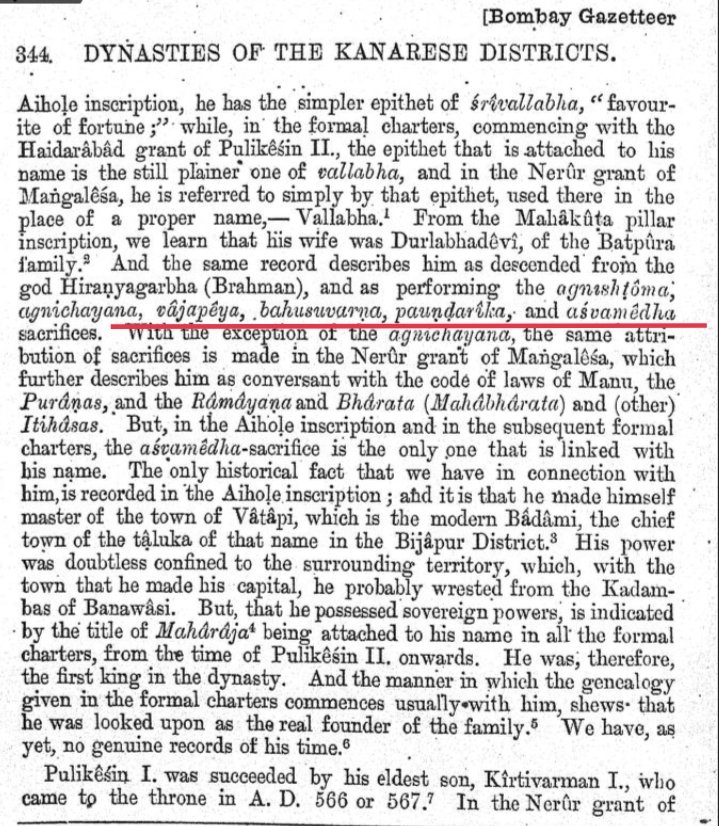
Jayasimha was the first ruler of this dynasty. But Pulakeshin I was the actual founder of Chalukya kingdom with his capital as Badami. He celebrated an Ashvamedha which is referred to in the records of himself and his descendants.
Jayasimha was the first ruler of this dynasty. But Pulakeshin I was the actual founder of Chalukya kingdom with his capital as Badami. He celebrated an Ashvamedha which is referred to in the records of himself and his descendants.
21. Mangalesha Chalukya (597-610)
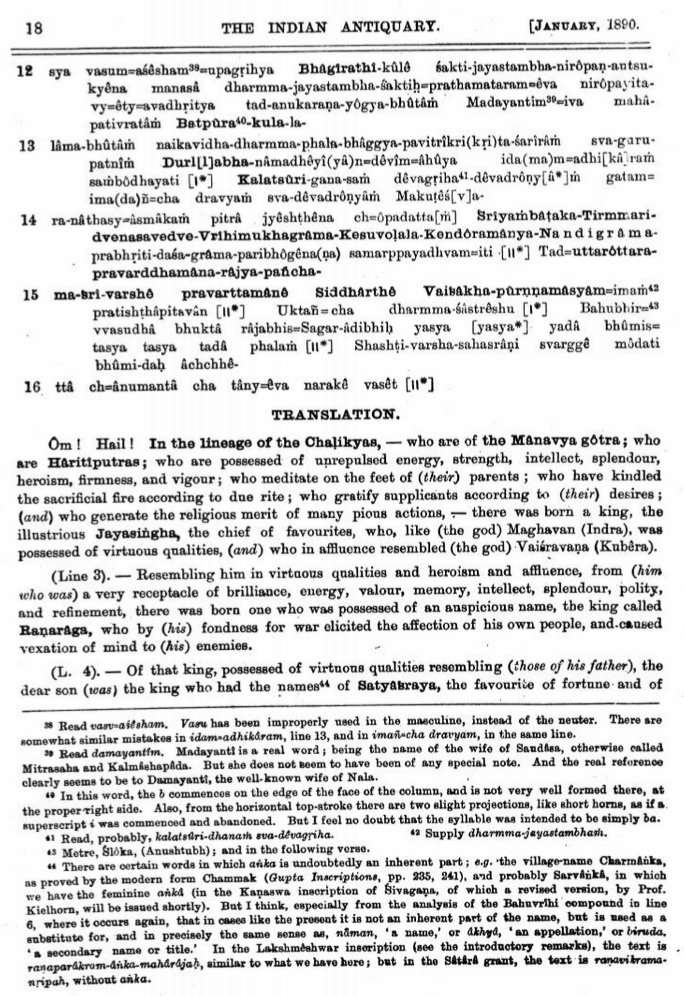
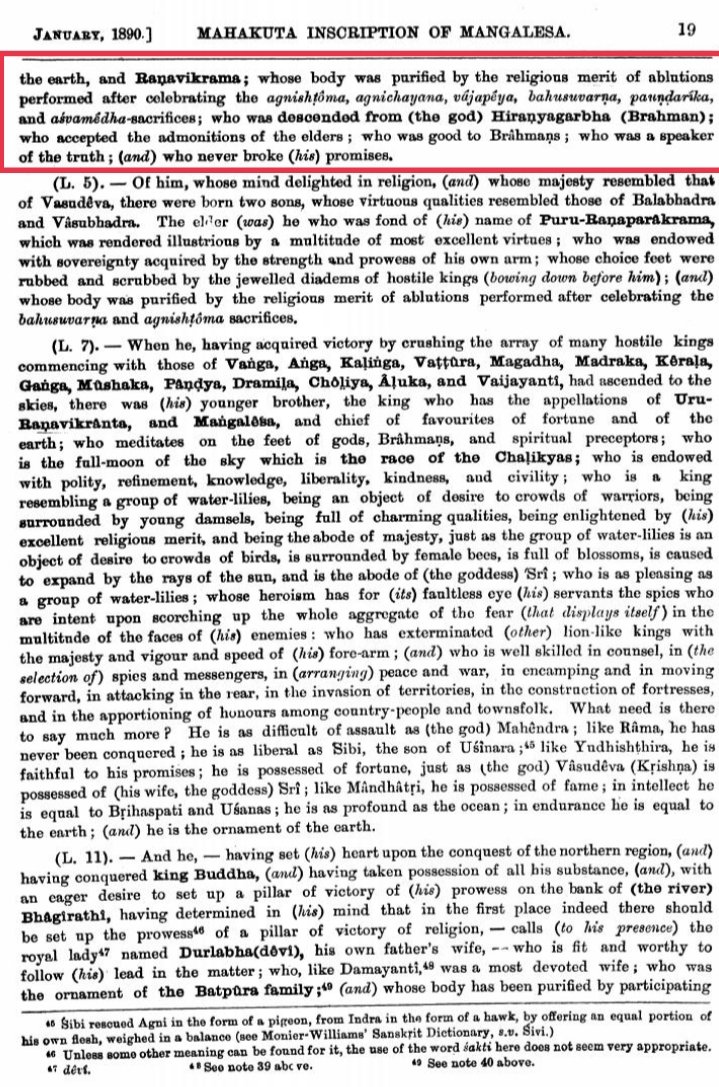
Pulakeshin I was succeeded by Kirthivarman I (566-596). After his untimely death, his brother Mangalesha succeeded his throne.
Mahakuta inscription : he has celebrating the agnishthoma, vajapeya, bahusuvarna, paundarik and Ashvamedha yajna.
Pulakeshin I was succeeded by Kirthivarman I (566-596). After his untimely death, his brother Mangalesha succeeded his throne.
Mahakuta inscription : he has celebrating the agnishthoma, vajapeya, bahusuvarna, paundarik and Ashvamedha yajna.
22. Pulakeshin II Chalukya
He came to throne in 608A.D. after waging a war against his uncle Mangalesha. Pulakeshin’s earlier name was Ereya.
In his Aihole inscription we know about him performed an Ashvamedha yajna.
He came to throne in 608A.D. after waging a war against his uncle Mangalesha. Pulakeshin’s earlier name was Ereya.
In his Aihole inscription we know about him performed an Ashvamedha yajna.
23. Narayanavarman
The Varman dynasty (350-650) is the first historical dynasty of kampura kingdom. The geology of this dynasty appears from dubi and nidhanpur copperplate inscription
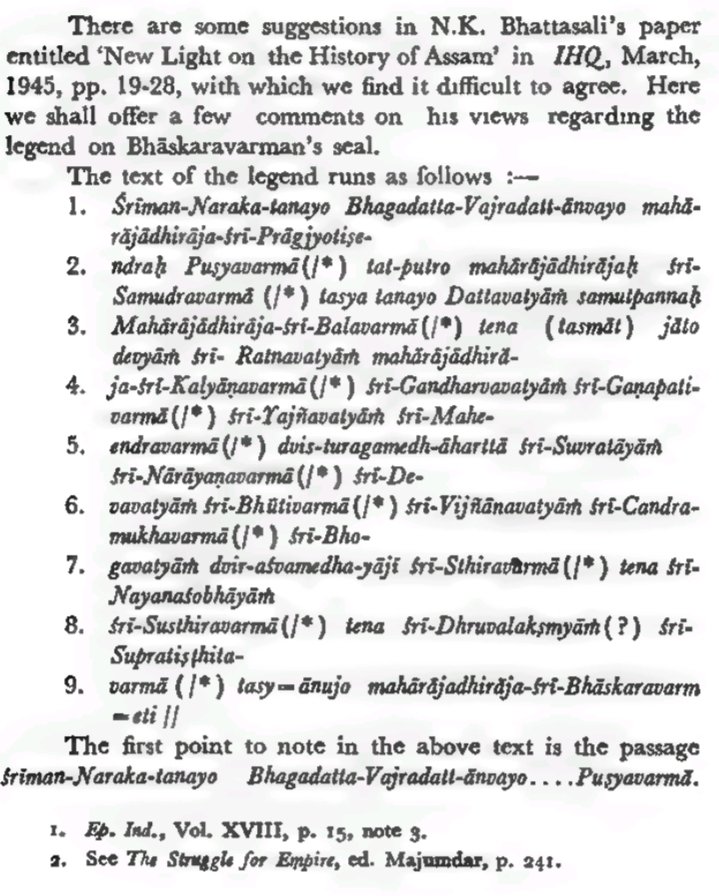
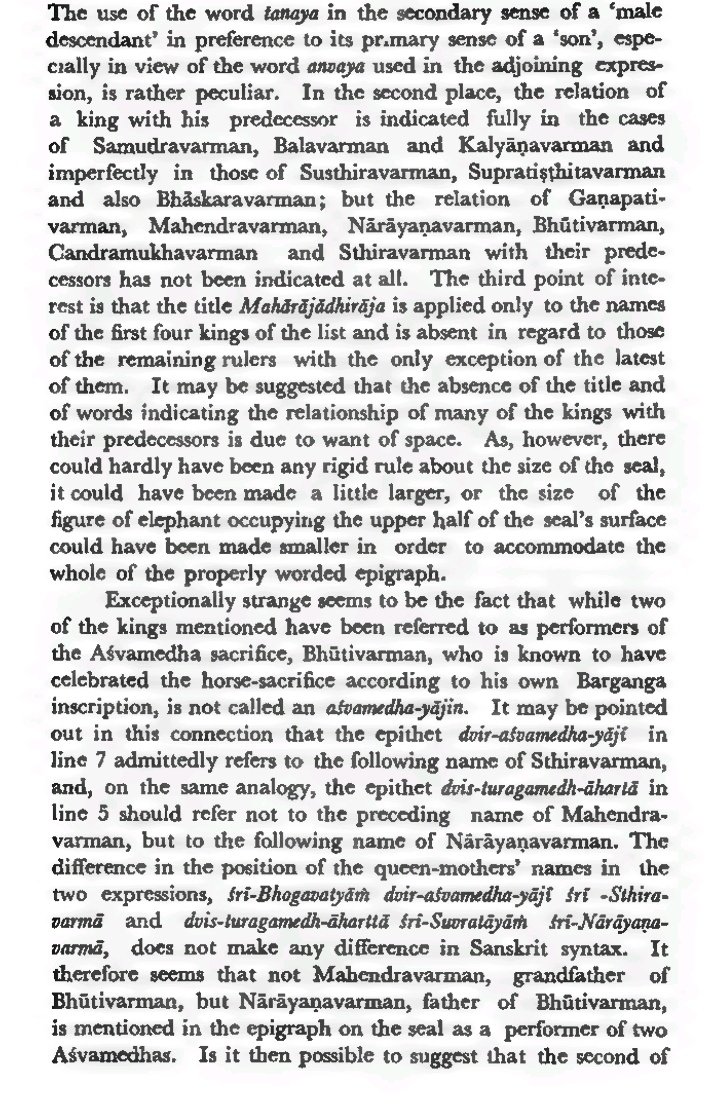
According to recorded in the Dubi seal Inscription, Mahendra Varman sacrificed two horses.
The Varman dynasty (350-650) is the first historical dynasty of kampura kingdom. The geology of this dynasty appears from dubi and nidhanpur copperplate inscription
According to recorded in the Dubi seal Inscription, Mahendra Varman sacrificed two horses.
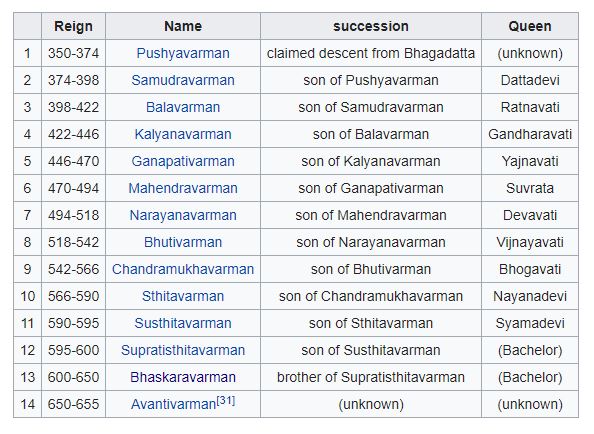
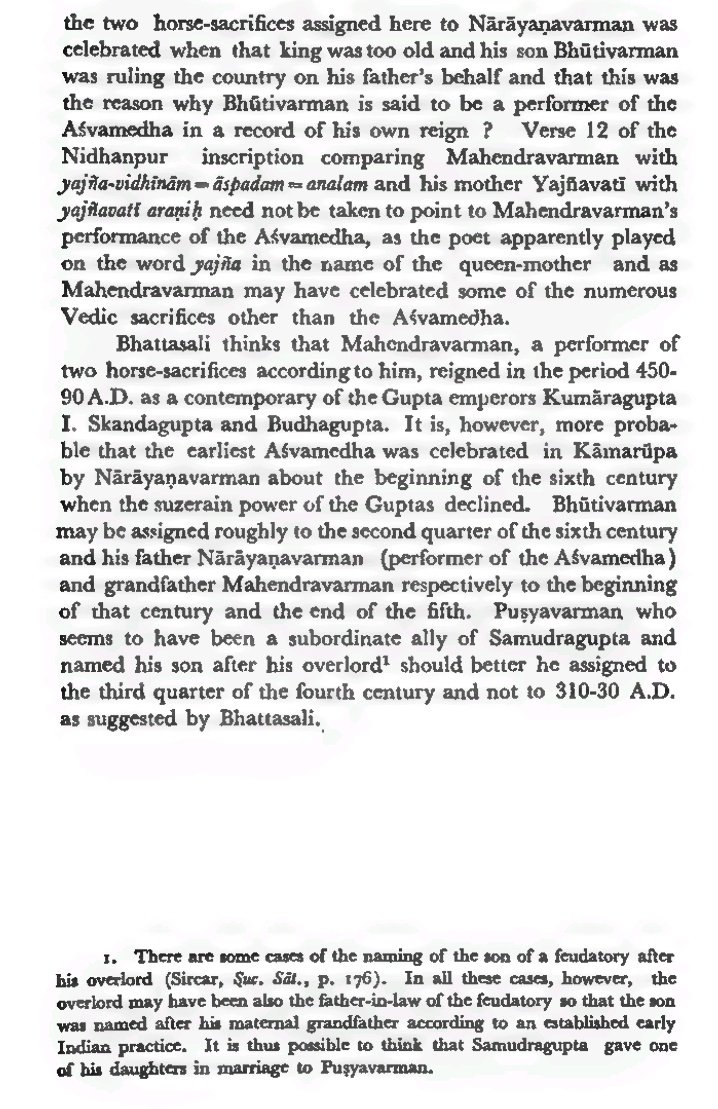
But DC sarkar rejected this claim and according to Bhaskravarman seal, Narayana Varman, Mahendravarman's son, (c.494- 518 A.D) do Ashvamedha yajna.
24. Bhutivarman
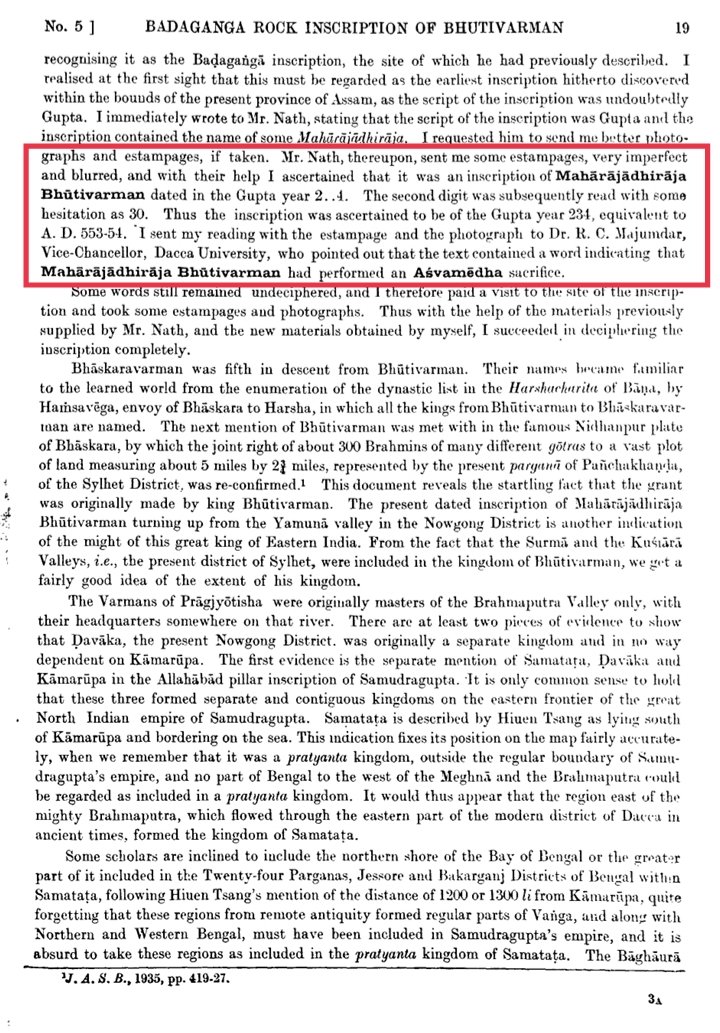
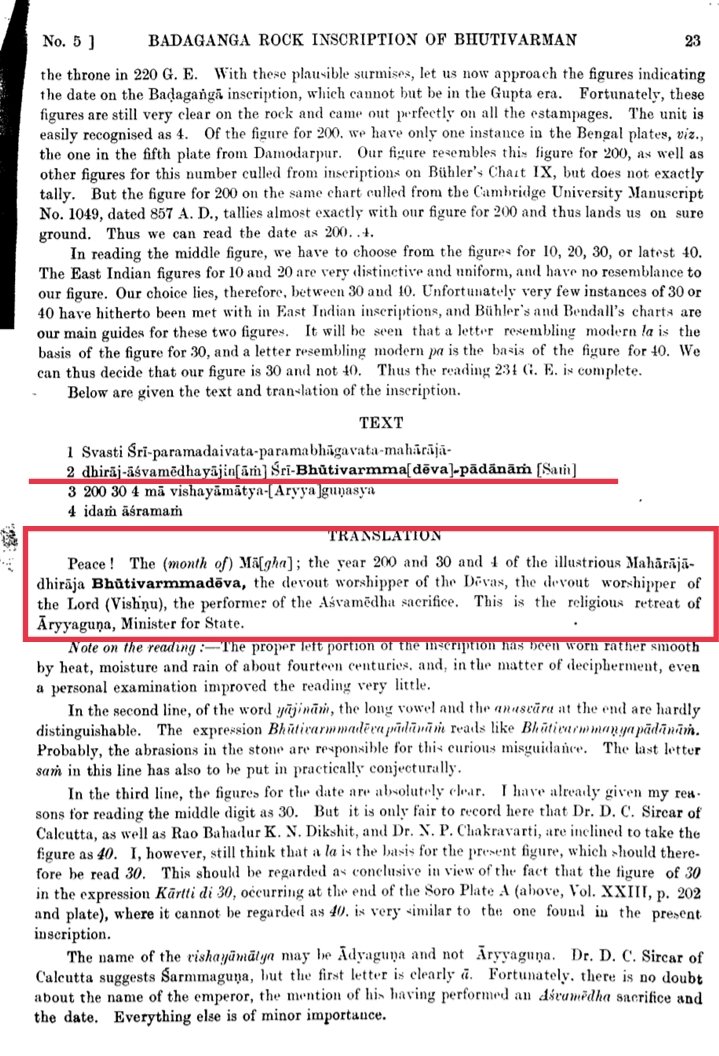
Bhutivarman is the son of Narayanavarman. BADAGANGA Rock Inscription refers to Sri Bhutivarman or Mahabhutivarman, who performed an asvamedha yajna.
Bhutivarman’s reign approximately between 520 and 560 A.D.
Bhutivarman is the son of Narayanavarman. BADAGANGA Rock Inscription refers to Sri Bhutivarman or Mahabhutivarman, who performed an asvamedha yajna.
Bhutivarman’s reign approximately between 520 and 560 A.D.
25. Sthitavarman. 566-590 A.D.)
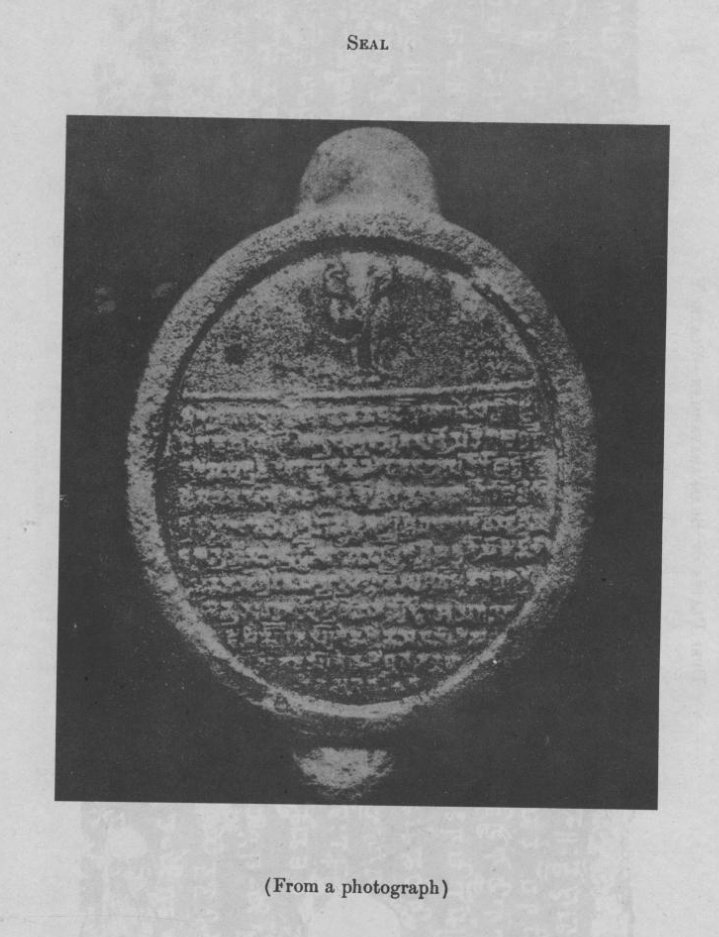
Sthitavarman is the grandson of Bhutivarman. He is credited with two horse sacrifices according to Bhaskravarman clay Seal of Dubi.
Sthitavarman is the grandson of Bhutivarman. He is credited with two horse sacrifices according to Bhaskravarman clay Seal of Dubi.
26. Madhavavarman II Srinivasa (7th century A.D.)
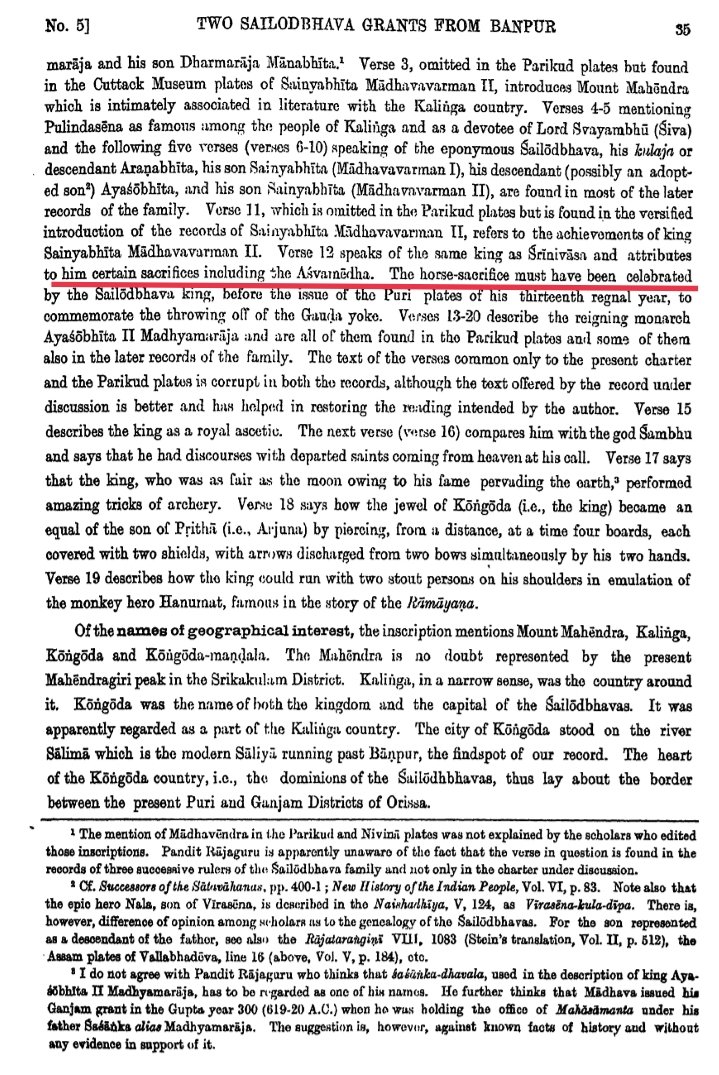
The Sailodbhava king Sainyabhita Madhavavarman II Sirinivasa of Kongoda (Ganjam District, Orissa) is credited with the performance of a horse-sacrifice in his own Inscription.
The Sailodbhava king Sainyabhita Madhavavarman II Sirinivasa of Kongoda (Ganjam District, Orissa) is credited with the performance of a horse-sacrifice in his own Inscription.
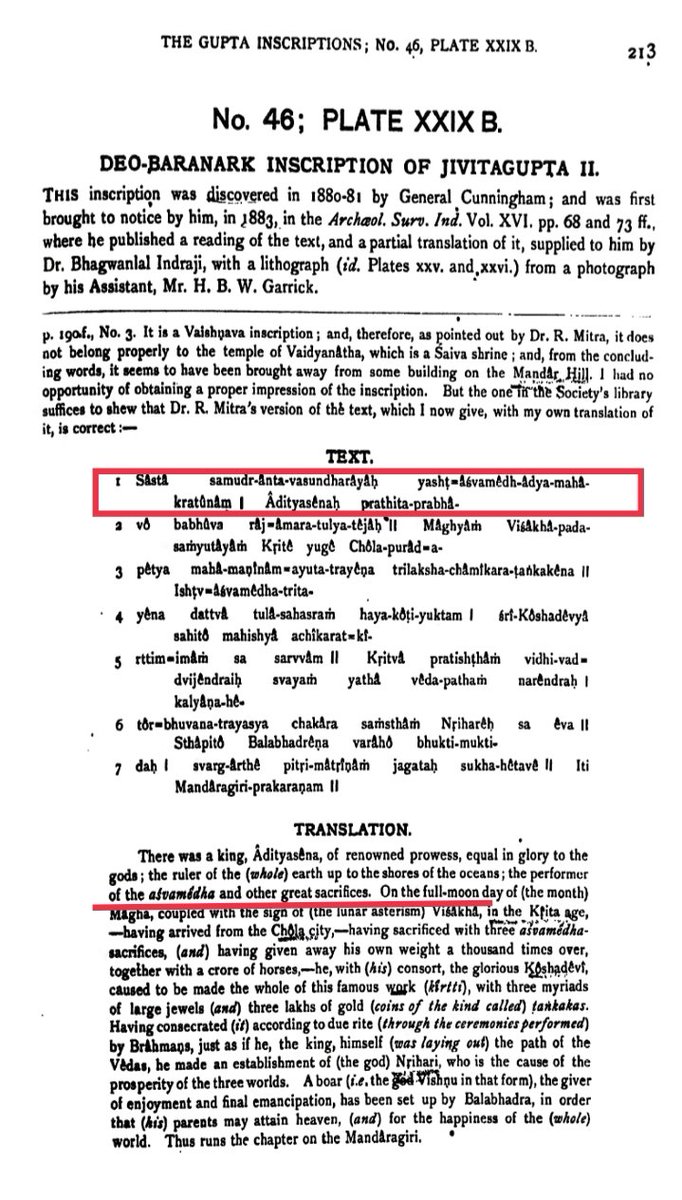
27. Adityasena (7th century A.D.)
The ‘Later Gupta’ king Adityasena of Magadha is credited with the performance of three Ashvamedhas in an inscription on the right-hand side pier in the porch of the Vaidyanatha temple at Deoghar in the Santal Parganas District of Bihar.
The ‘Later Gupta’ king Adityasena of Magadha is credited with the performance of three Ashvamedhas in an inscription on the right-hand side pier in the porch of the Vaidyanatha temple at Deoghar in the Santal Parganas District of Bihar.
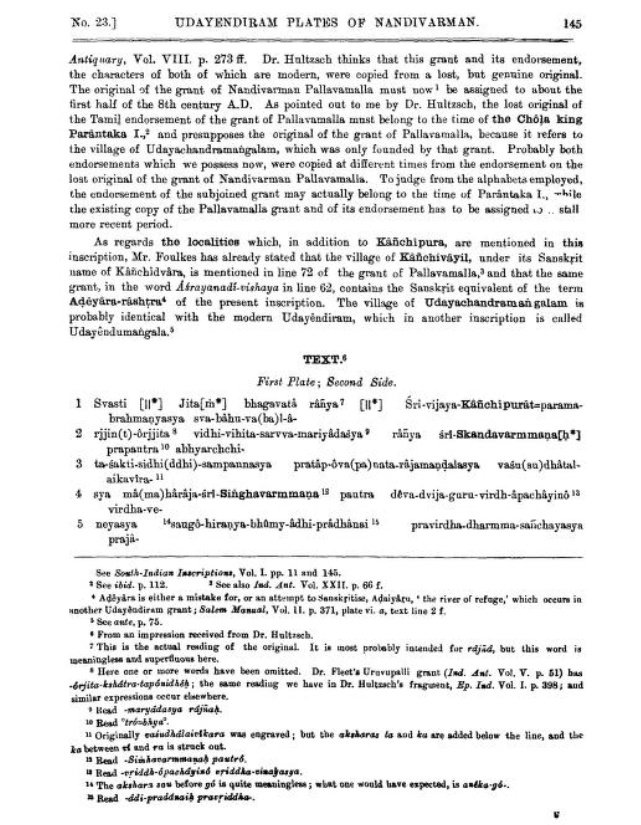
Nandivarman II (731 – 795)
The Udayendiram plates’ of the Pallava king Nandivarman II refers to the victory of his general Udayacandra over a ruler named Prithivivyaghra who was engaged in guarding the horse let loose in connection with an Ashvamedha yajna.
The Udayendiram plates’ of the Pallava king Nandivarman II refers to the victory of his general Udayacandra over a ruler named Prithivivyaghra who was engaged in guarding the horse let loose in connection with an Ashvamedha yajna.
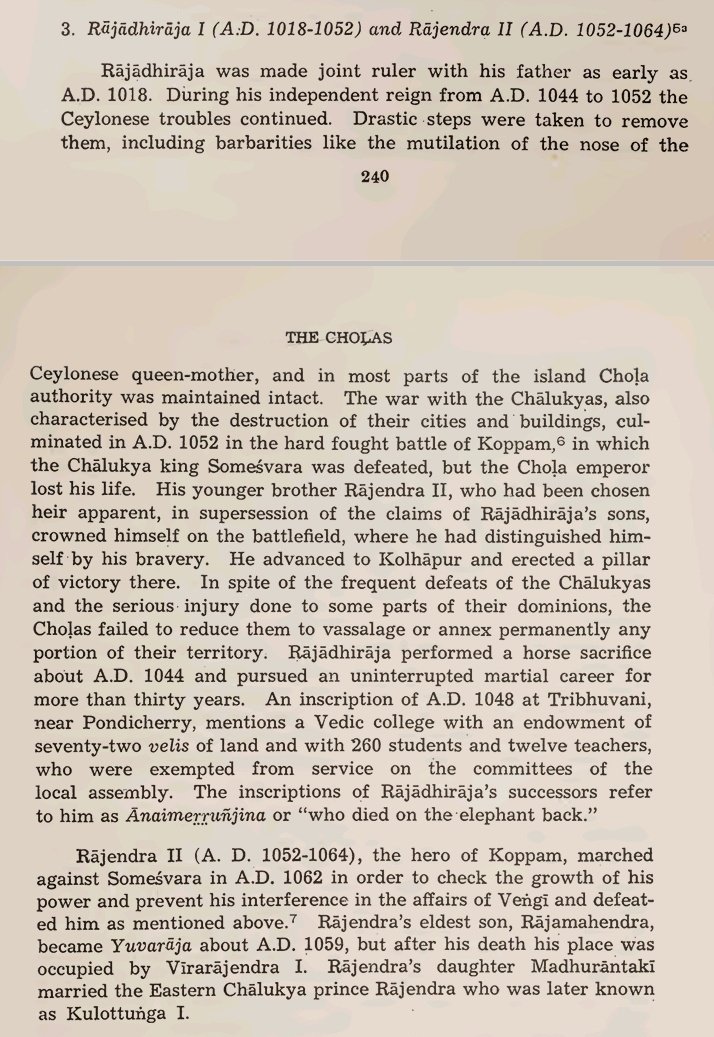
29. Rajadhiraja Chola (994 CE - 1052 CE)
Rajadhiraja Chola I was succeeded his father Rajendra Chola I of the Chola dynasty.
Rajadhiraja Chola’s record shows that he was performed an Ashvamedha yajna.
Rajadhiraja Chola I was succeeded his father Rajendra Chola I of the Chola dynasty.
Rajadhiraja Chola’s record shows that he was performed an Ashvamedha yajna.
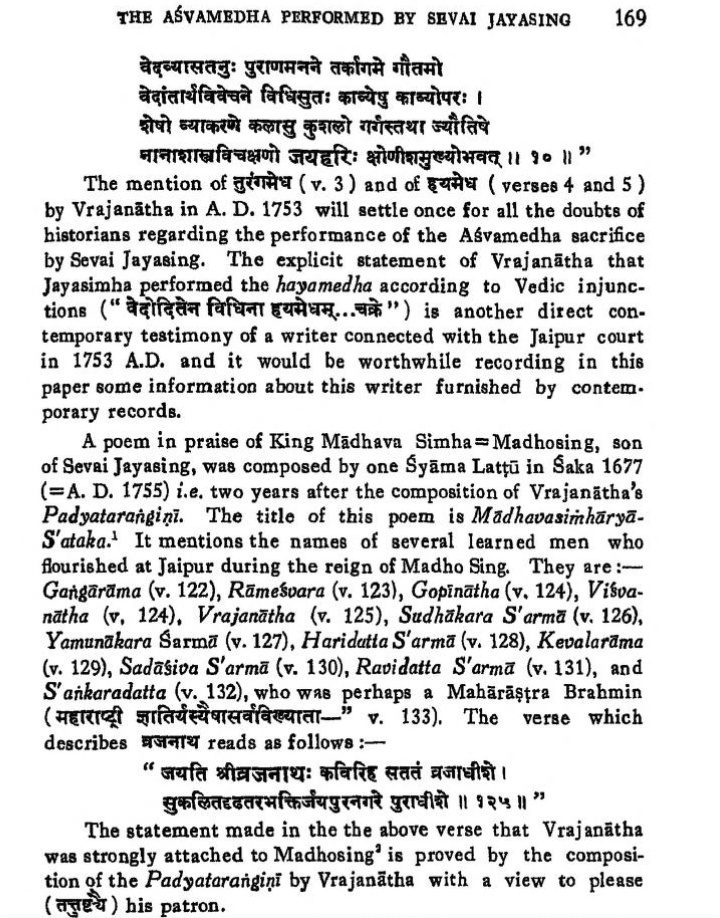
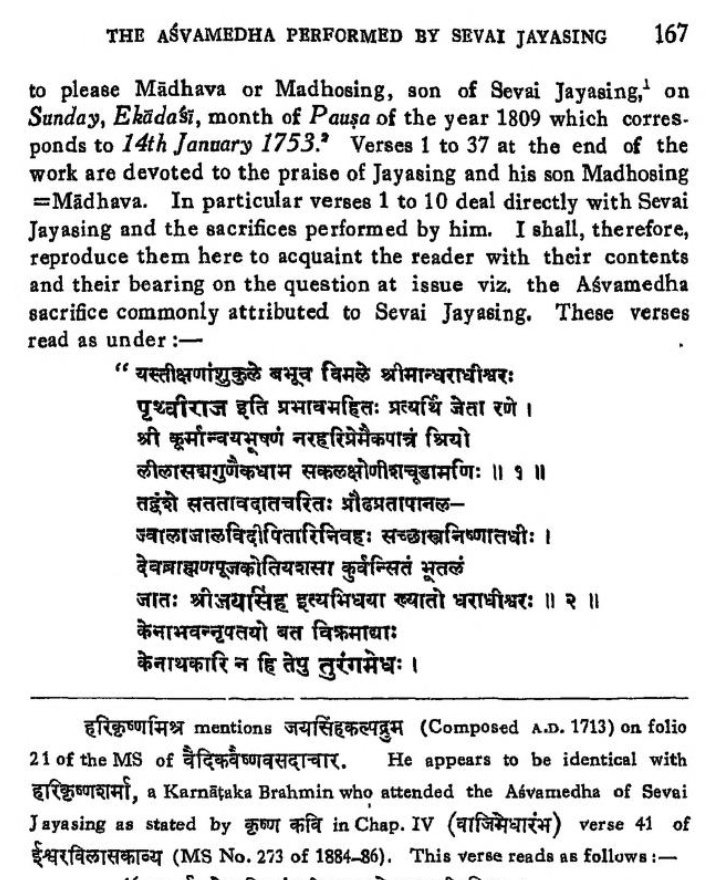
30. 30. Sawai Jaysingh (1699-1744 A.D.)
The last king to perform the Aśvamedha yajña was the 18th century Rajput ruler Sawai Jai Singh. The Vardharajan (Lord Vishnu) was brought to Jaipur from South India for the Ashwamedha Yagya.
The last king to perform the Aśvamedha yajña was the 18th century Rajput ruler Sawai Jai Singh. The Vardharajan (Lord Vishnu) was brought to Jaipur from South India for the Ashwamedha Yagya.

Sawai Raja Jaisingh and his wife had taken a pledge to get food to 3 crore people. People were fed food till the completion of this Yagya which lasted for about one and a half years.
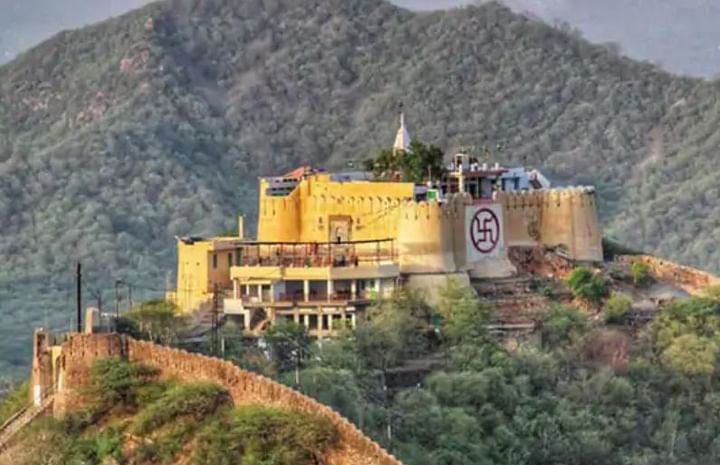
After the completion of the Yagya, the idol of Lord Ganesha was placed in Jaipur on the top of the Aravalli ranges in the north.
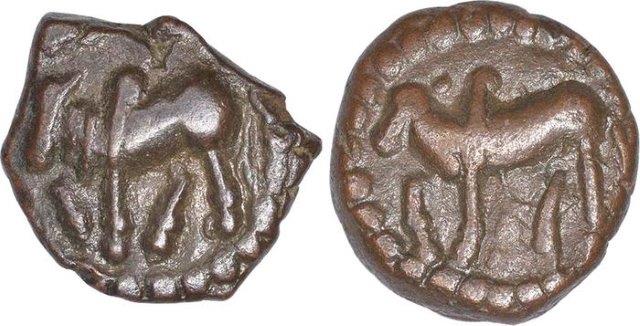
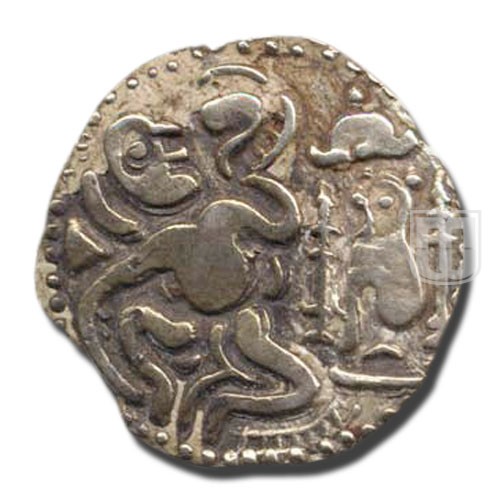
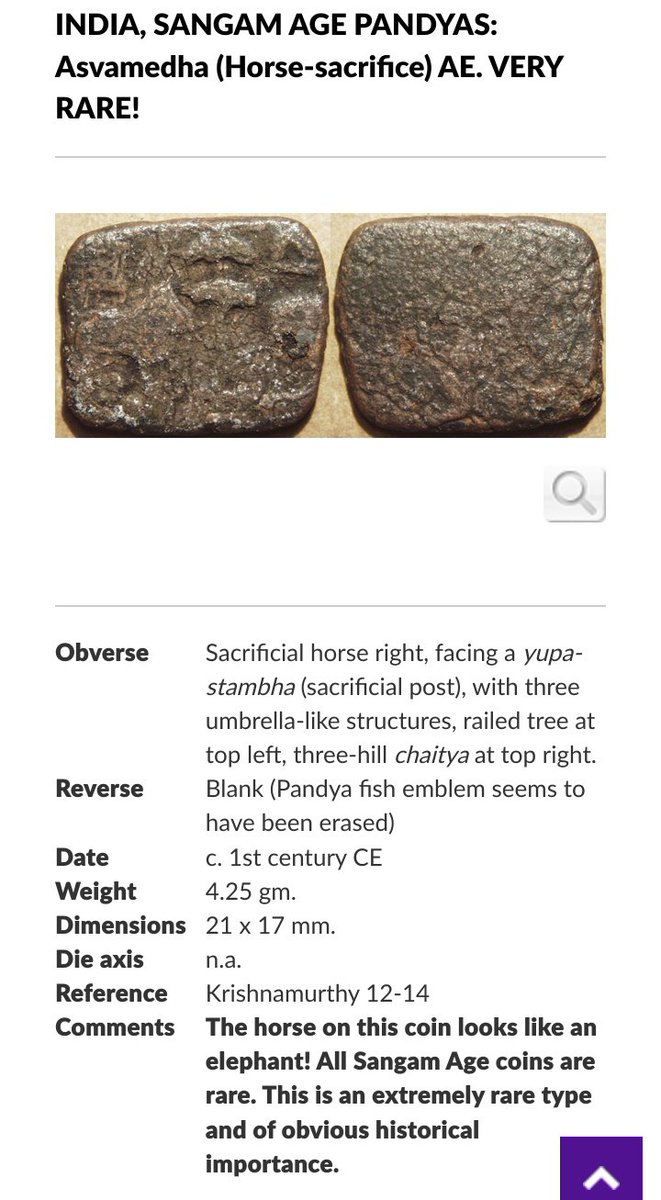
31. A very Rare Sangam age pandya coin refers or hinted an Ashvamedha yajna.
Coin around 2000 years old.
Coin around 2000 years old.
32. AMMARAJA II Eastern Chalukya
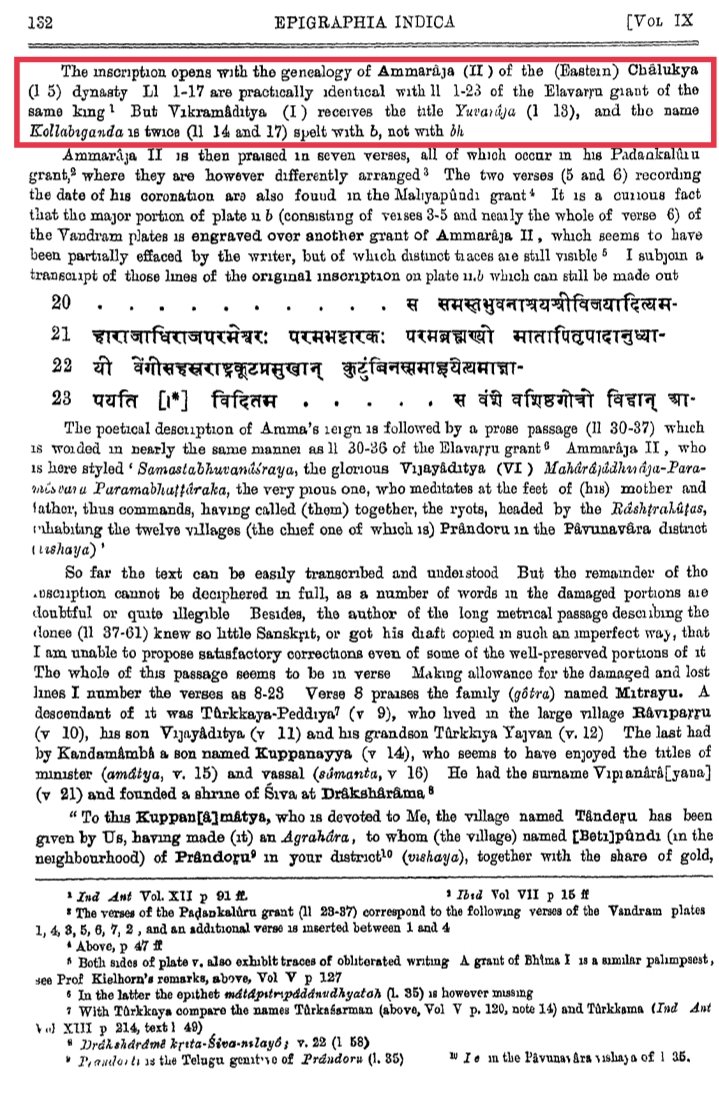
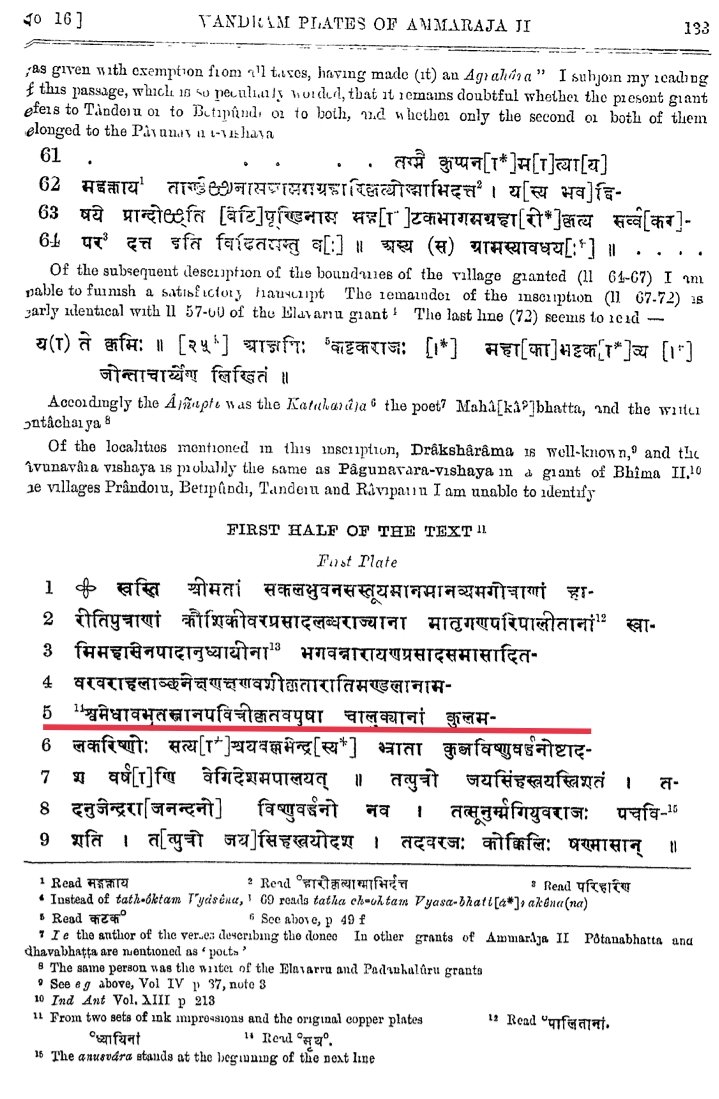
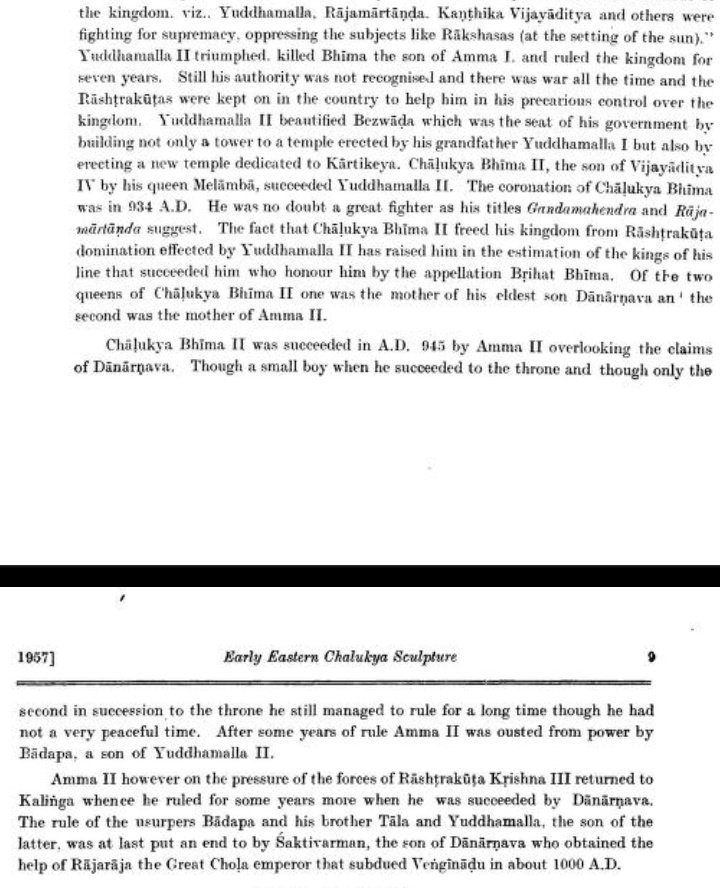
It has mentioned in the Vandram Plate of Ammaraja II that he has performed an Ashvamedha yajna.
It can be said that Eastern Chalukya period was the Golden Period for Andhra History Also.
It has mentioned in the Vandram Plate of Ammaraja II that he has performed an Ashvamedha yajna.
It can be said that Eastern Chalukya period was the Golden Period for Andhra History Also.
33. Kirtivarman I (c. AD 567-97) Chalukya
Kirtivarman I succeeded Pulakesin for a short period. But He constructed a beautiful cave temple for Vishnu at Badami. He died leaving three sons, Pulakesin, Vishnuvardhana and Jayasimha.
Kirtivarman I succeeded Pulakesin for a short period. But He constructed a beautiful cave temple for Vishnu at Badami. He died leaving three sons, Pulakesin, Vishnuvardhana and Jayasimha.
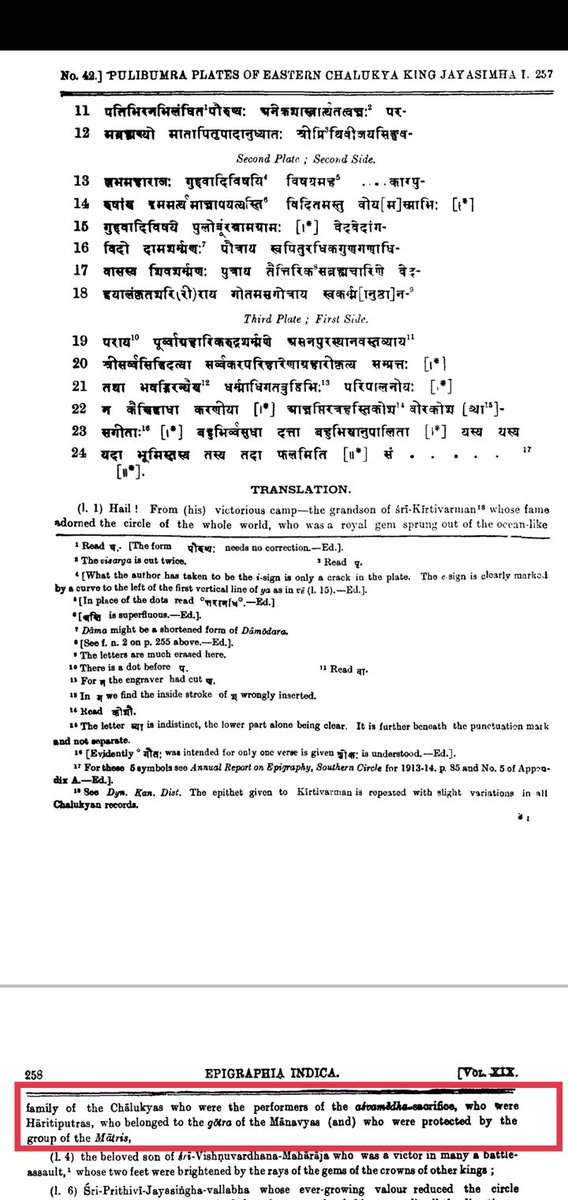
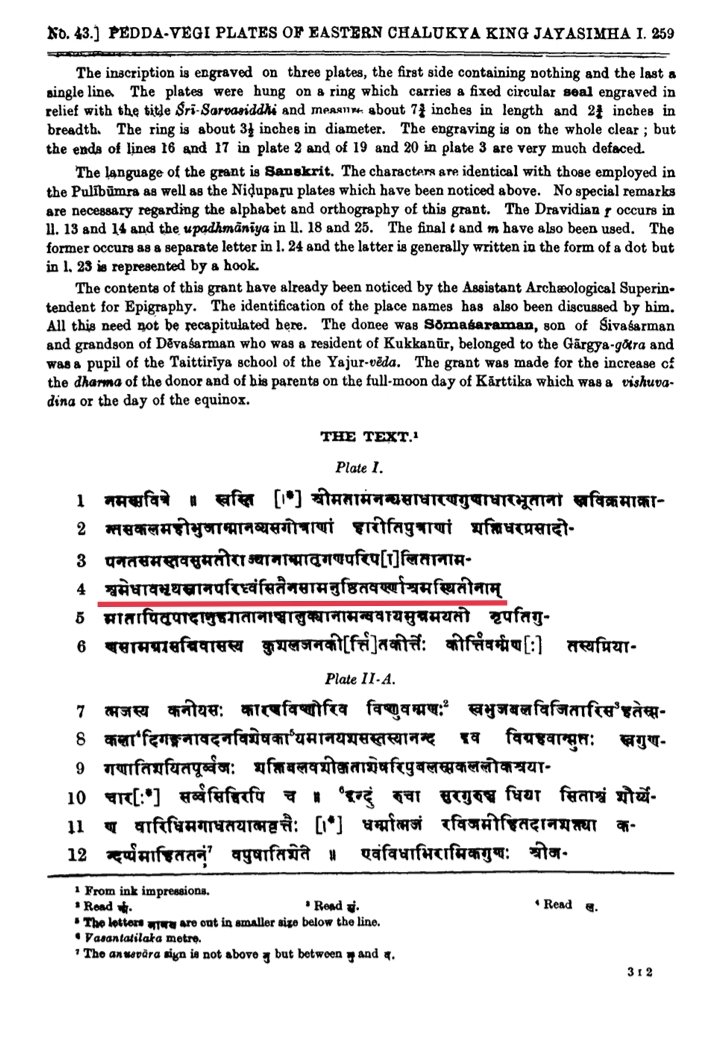
Jayasimha I has said in his two inscriptions that Kirttivarman performed the Ashwamedha Yagya.
And This branch is today also known as the Eastern Chalukyas.
And This branch is today also known as the Eastern Chalukyas.
34. Venkanapati I (1586-1614 CE)
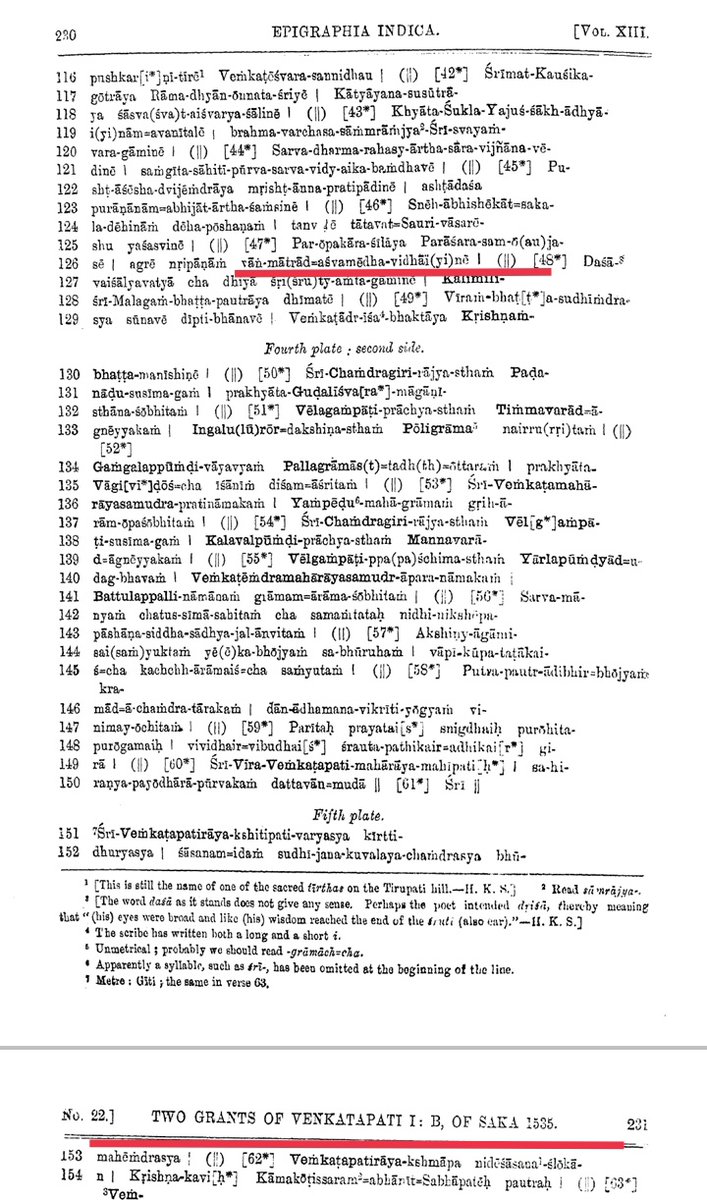
The younger brother of Sriranga I became the King of Vijayanagara Empire from 1586-1614. His reign of three decades saw a revival of strength and prosperity of the empire. As per his inscription, we know that Venkanapati performed an Ashvamedha.
The younger brother of Sriranga I became the King of Vijayanagara Empire from 1586-1614. His reign of three decades saw a revival of strength and prosperity of the empire. As per his inscription, we know that Venkanapati performed an Ashvamedha.
Loading suggestions...