

🔵Player tactical analysis
🇸🇰 In which way Stanislav Lobotka has a fundamental role in controlling Napoli’s midfield, in and out of possession ?
Example vs Ajax Amsterdam 🧵
🇸🇰 In which way Stanislav Lobotka has a fundamental role in controlling Napoli’s midfield, in and out of possession ?
Example vs Ajax Amsterdam 🧵
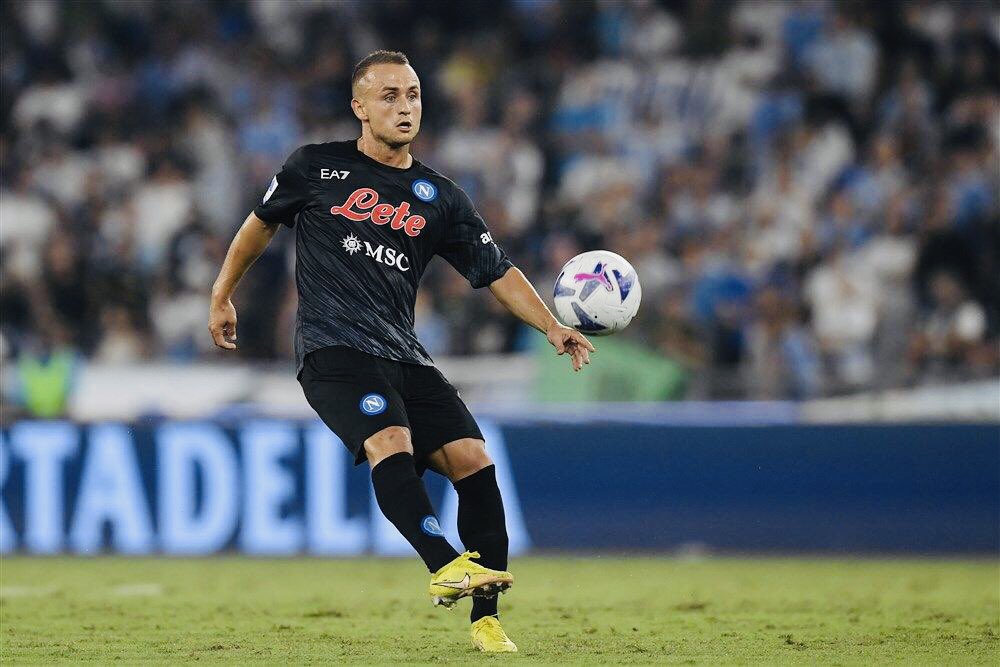
I. OUT OF POSSESSION
Given Napolis usually implements a 4-5-1 in mid third out of possession, Lobotka’s mission is to prevent any vertical progression, through ball carries or vertical passes. Any player who position in central spaces has to be man-marked by Lobotka,no one else.
Given Napolis usually implements a 4-5-1 in mid third out of possession, Lobotka’s mission is to prevent any vertical progression, through ball carries or vertical passes. Any player who position in central spaces has to be man-marked by Lobotka,no one else.
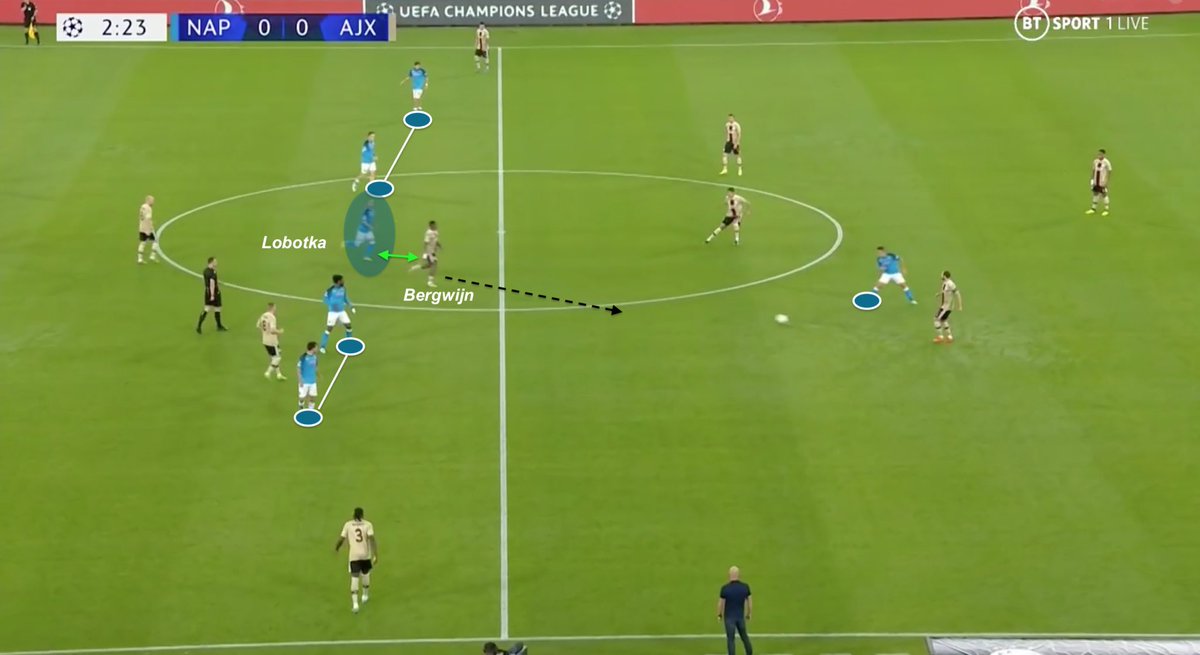
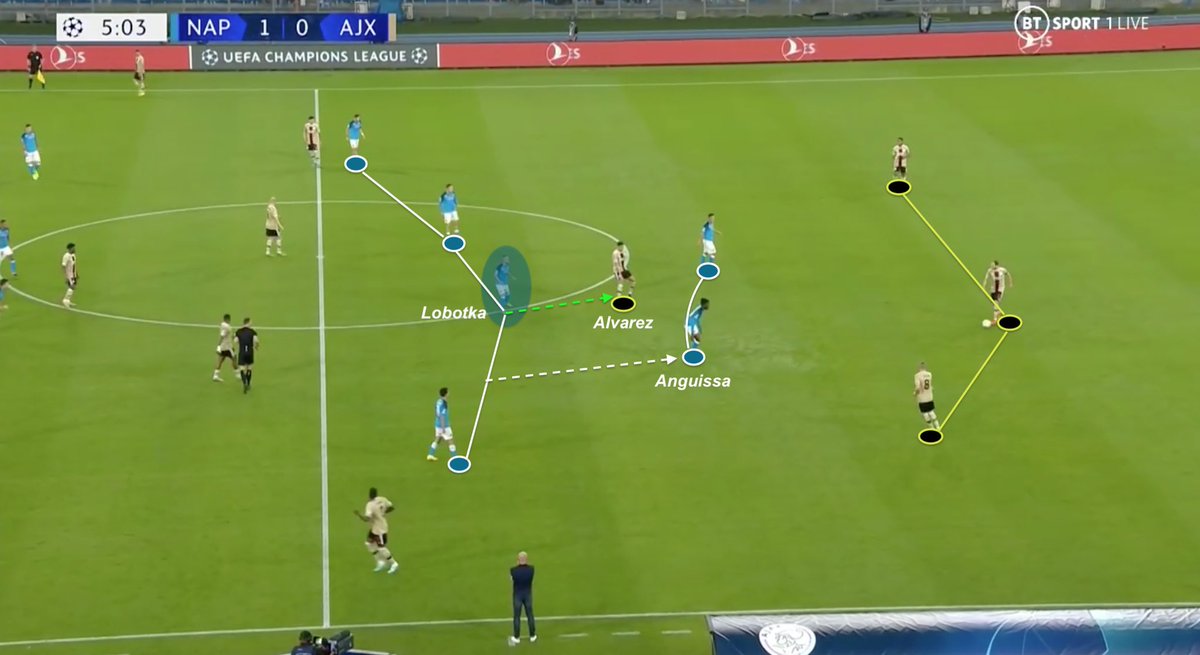
Why is that man-marking helpful ? It allows Anguissa to step up in pressing phase, knowing Alvarez (key player in build-up) will see his activity strongly reduced, thanks to Lobotka.
Therefore, his sense of individual marking also gives enough confidence for his teammates.
Therefore, his sense of individual marking also gives enough confidence for his teammates.
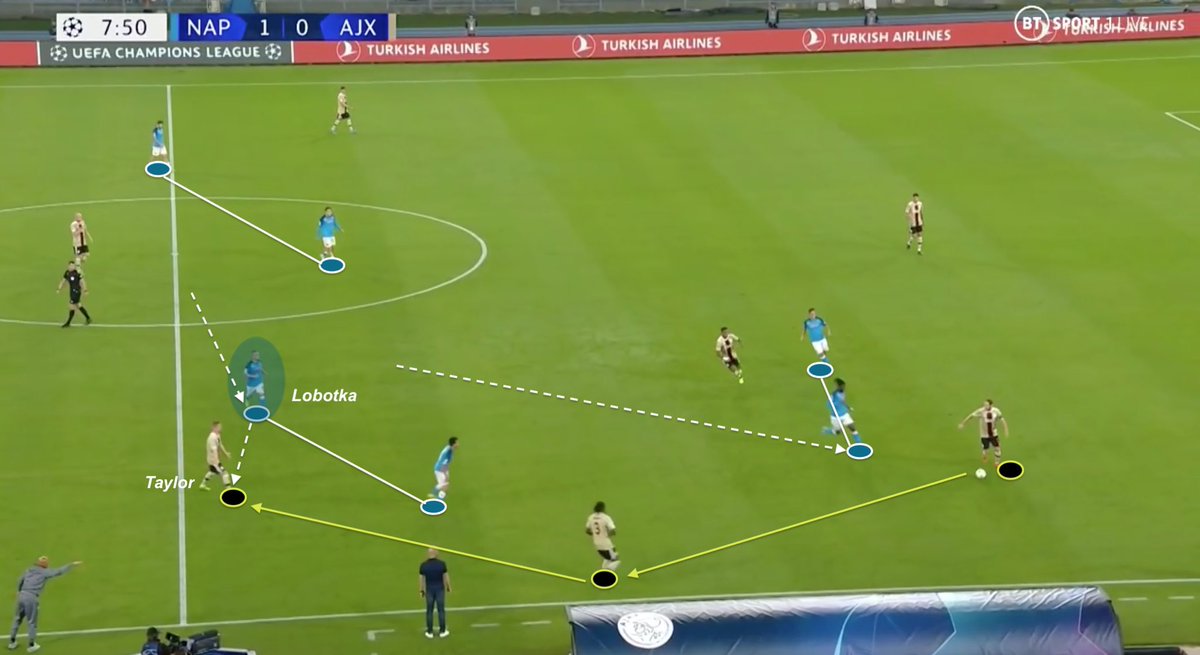
Same strategy as last week : Ajax wanted to build-up wide, overloading channels with numerical superiority. Lobotka, thanks to his sense of anticipation, tracked Taylor’s move and and managed to cut Ajax wide build-up scheme.
Lobotka guides pressing structure, marks individually the most dangerous player in possession (Alvarez). It constrains Ajax to build-up on lanes, forcing their fullbacks to drop deep (not the initial plan)
However, Lozano anticipated well by not pressing high on the right channel
However, Lozano anticipated well by not pressing high on the right channel
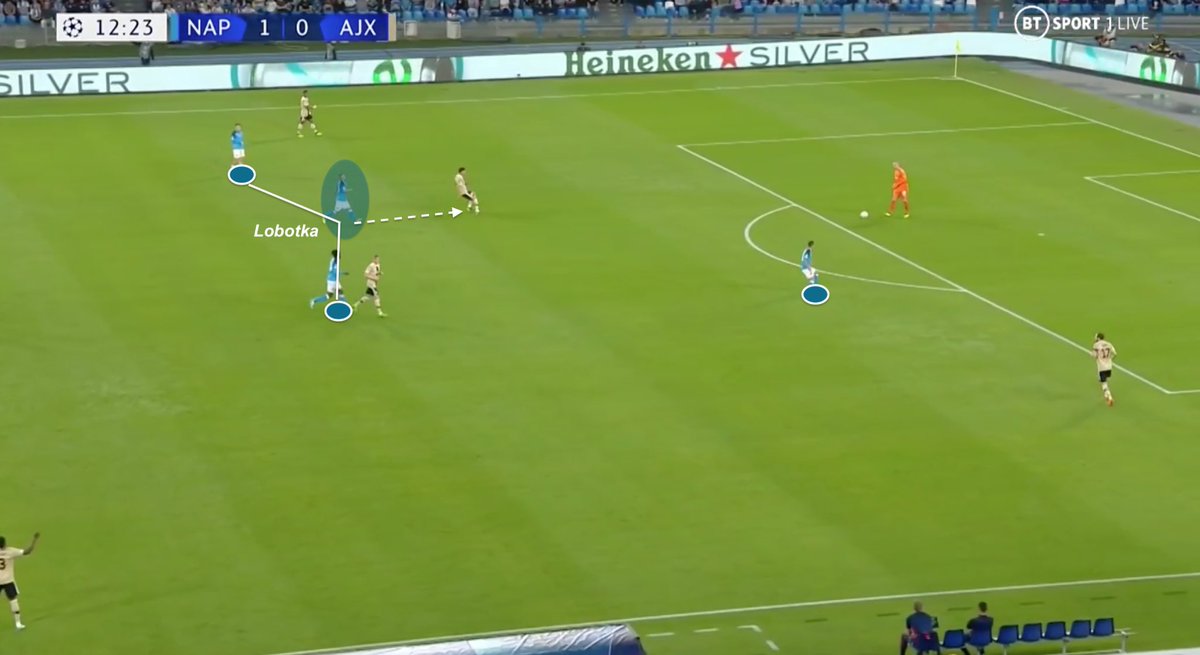
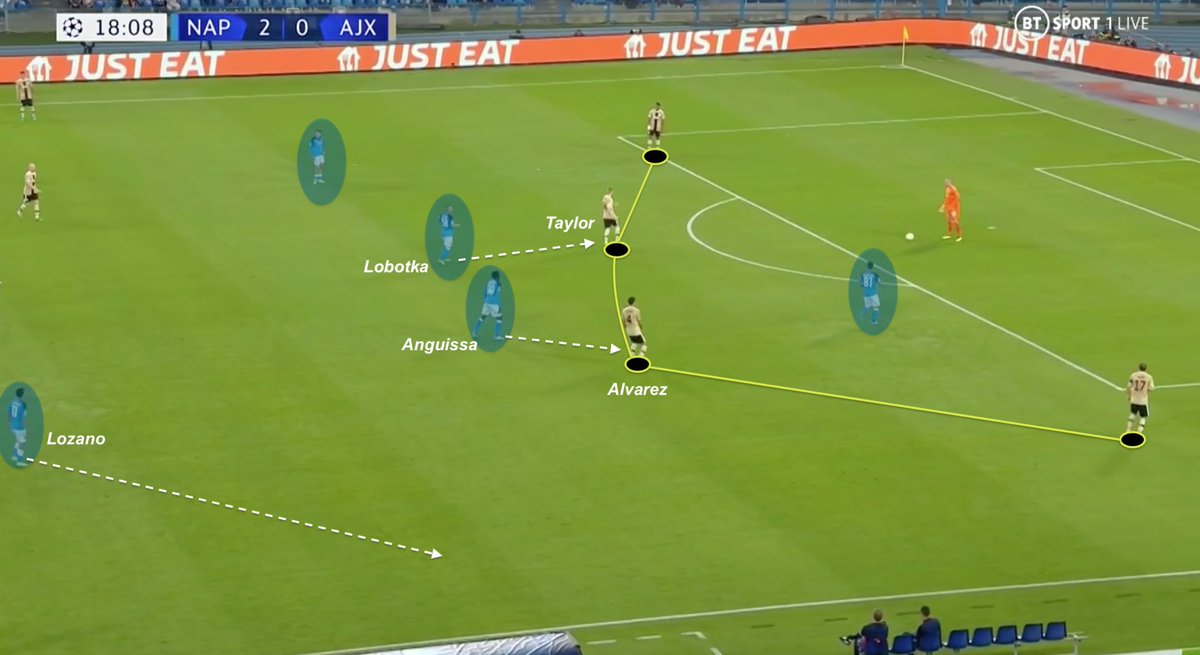
Napoli’s various pressing structures are made possible because of Lobotka’s ability to adapt according to each pressing shape, with different positions. Sometimes he just cut central passes, sometimes he replaces Anguissa’s usual role (#10 in opponent’s def third).
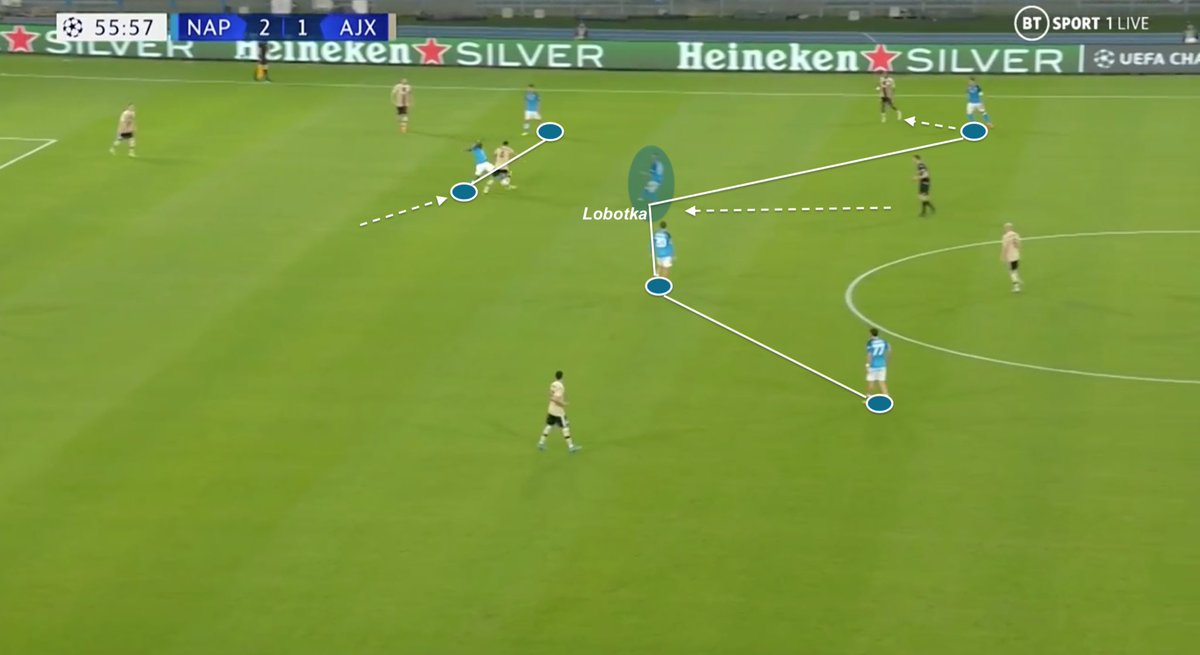
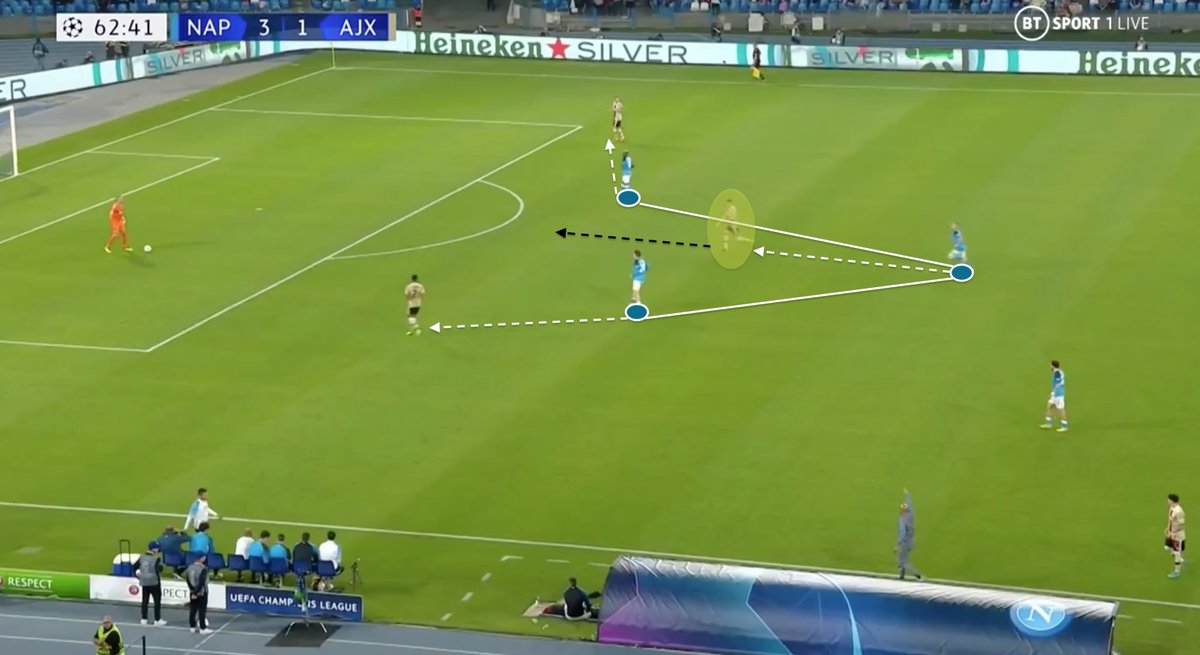
LOBOTKA’S POSITIONING
If Napoli succeeds so many times to escape central pressure, it’s because Spalletti designed a versatile midfield, with much freedom on positions, but strict roles in pass schemes. Zielinski under pressure => Lobotka => Anguissa is the main pass pattern.
If Napoli succeeds so many times to escape central pressure, it’s because Spalletti designed a versatile midfield, with much freedom on positions, but strict roles in pass schemes. Zielinski under pressure => Lobotka => Anguissa is the main pass pattern.
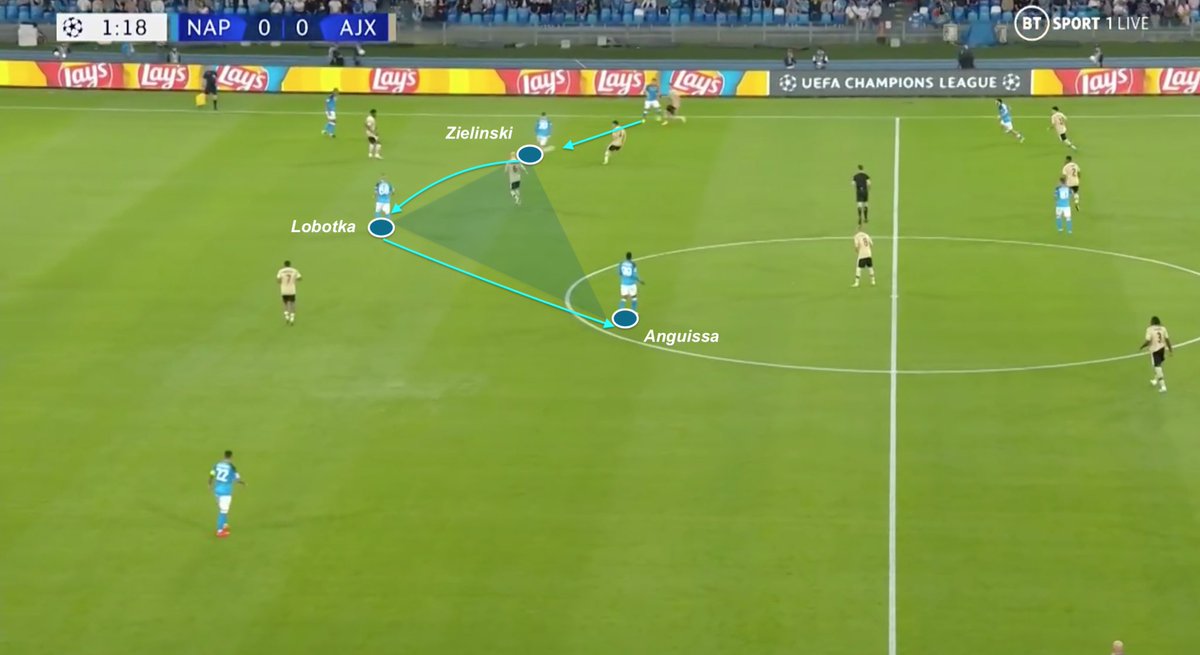
Lobotka has that spatial awareness to have at least 2 pass options, in a very short period of time. He always choose verticality to catatylze central build-up, to reach lanes with technical/fast players. He takes risks so his teammates can attack wide spaces easily.
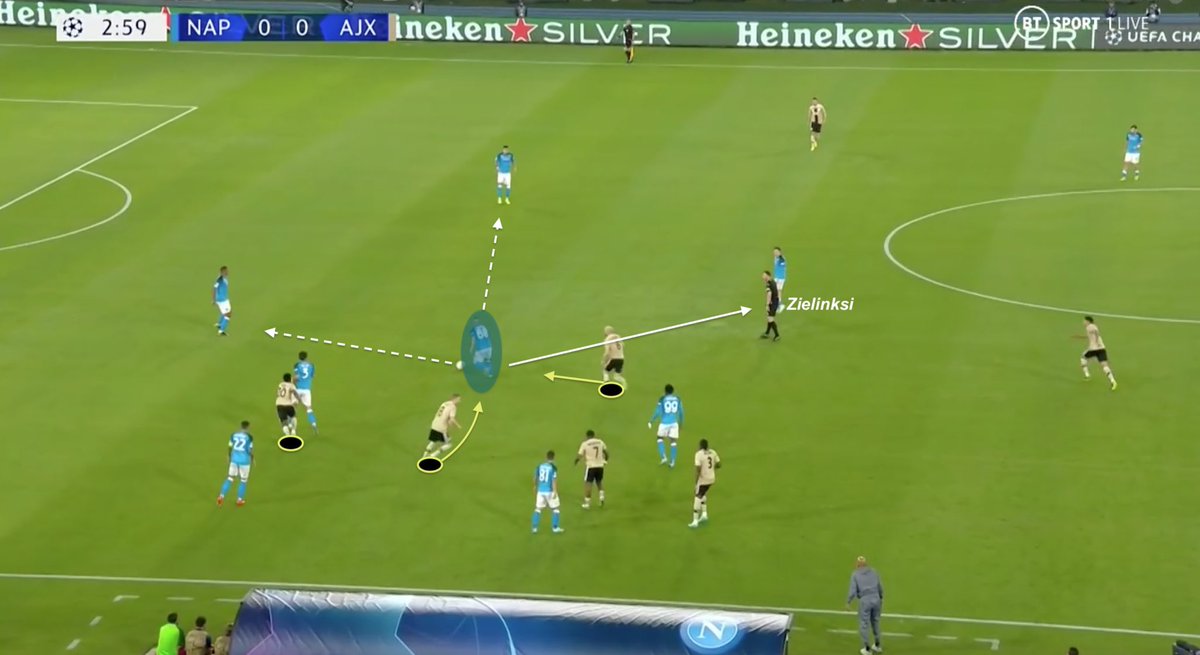
Klaassen and Kudus had troubles to deal with Lobotka’s moves in possession to end up in an ideal position to receive the ball. Why ? Because Lobotka receives in a non ‘direct danger’ position, yet he can escape press easily. It forces the opponent to hesitate b/w press or not.
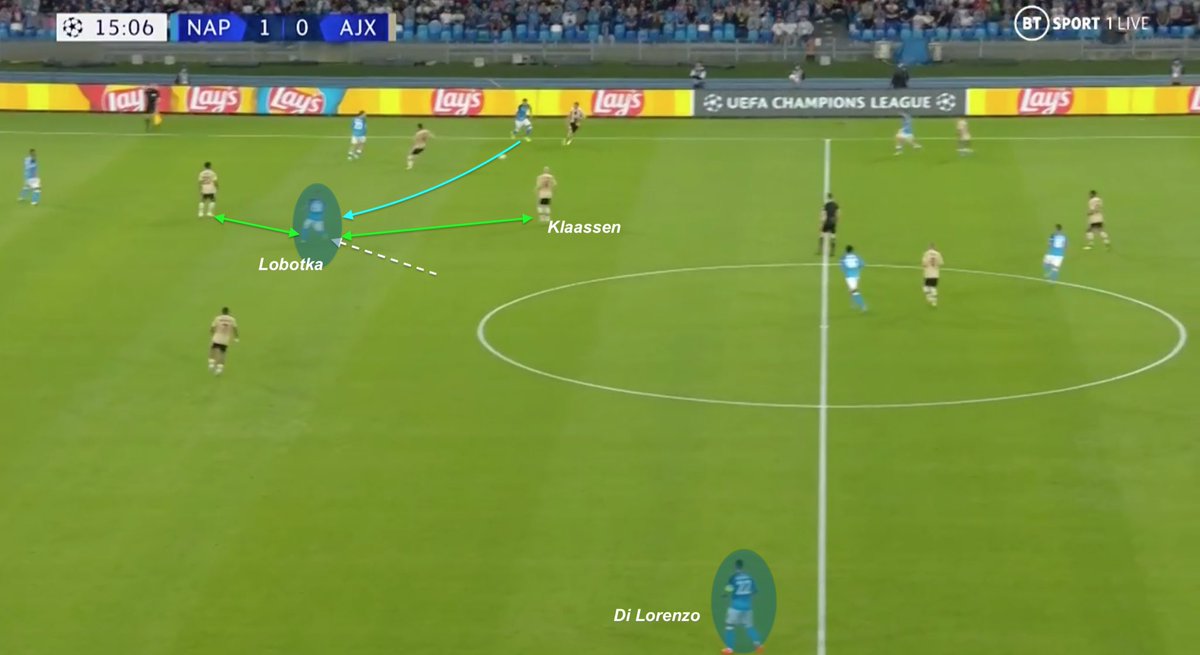
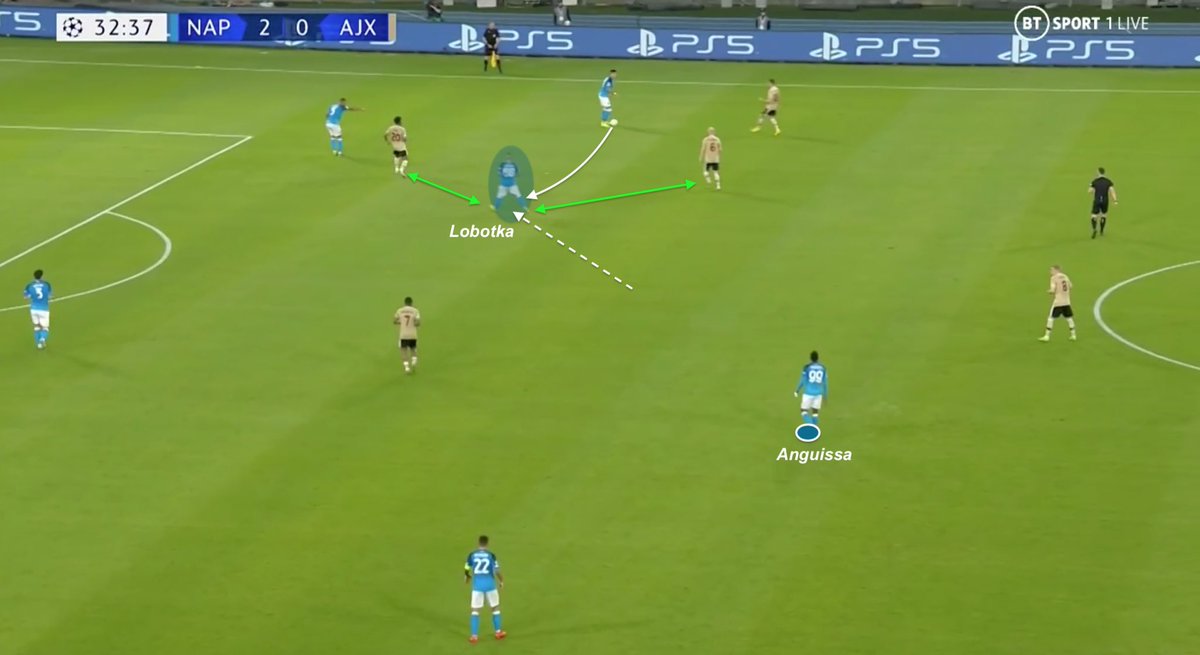
Even if Lobotka does not receive the ball, he constantly had to move between 3 Ajax players to offer the best pass option for ball carrier. That discipline is why Napoli has so much pass option. Everyone moves in ideal positions to receive, as risky as it could be.
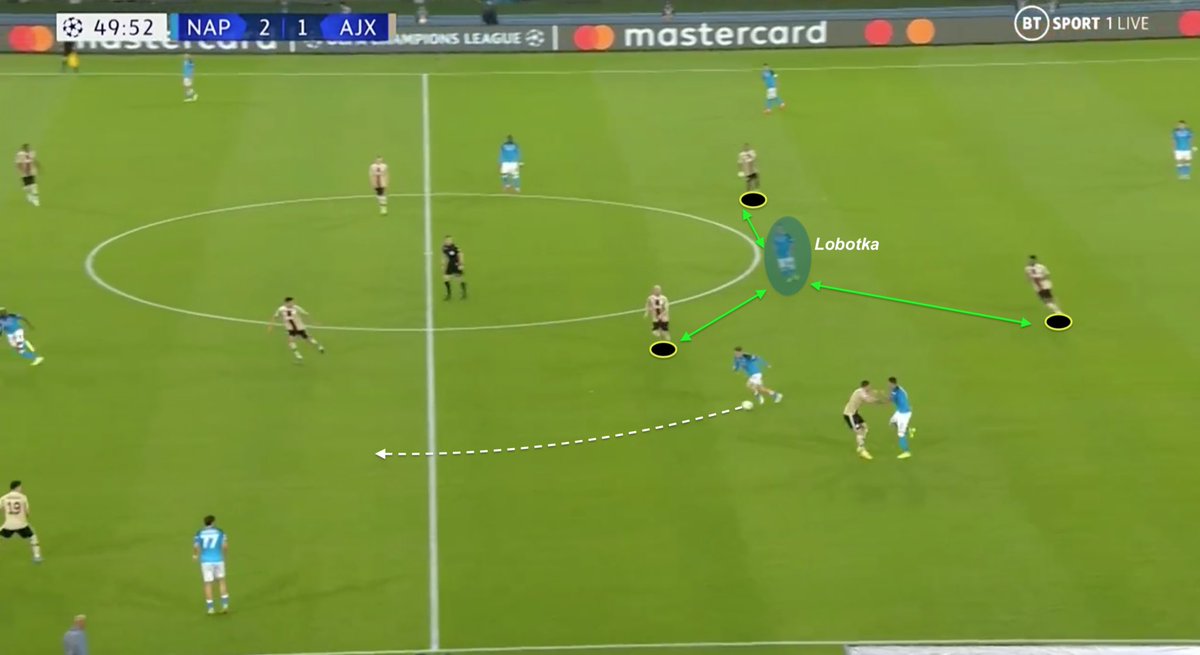
We all know automatisms into the midfield structure. However, Anguissa and Lobotka developed tools to progress vertically. They usually make short passes, with Anguissa back to goal, and Lobotka attacking the space in midfield. Again, all of this to look for width easier.

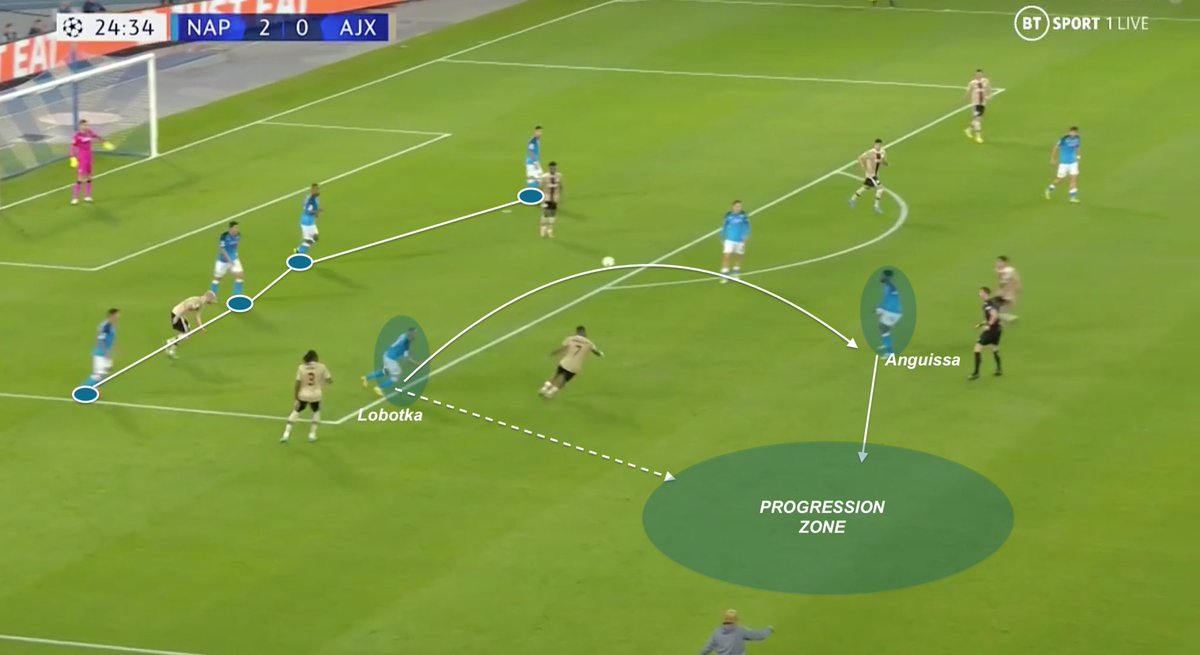
As I said earlier, Lobotka’s press resistance and the ability to make passes in very short spaces (under pressure), eases out Napoli’s process to suddenly accelerate wide switches of play.
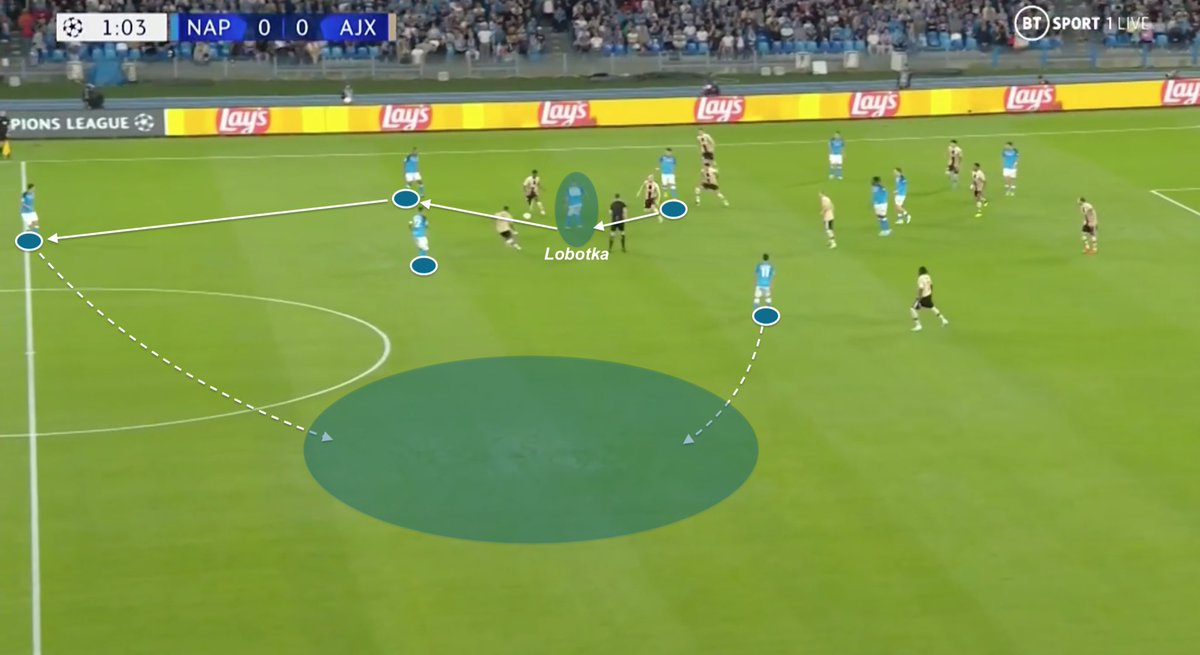
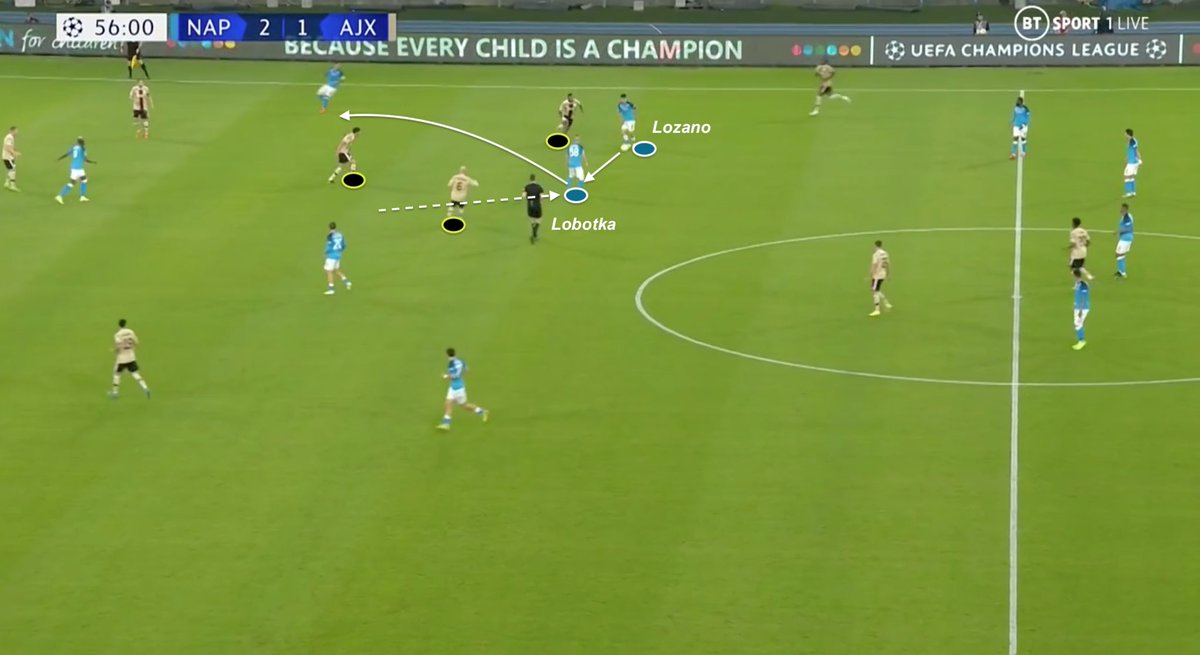
Lobotka’s press resistance allows Napoli to escape from dangerous situations (especially when the opponent decided to press higher), and overthrow pressing structures. Di Lorenzo already anticipates his run. Lobotka passes under pressure, Zielinski-Zambo orientate build-up phase.
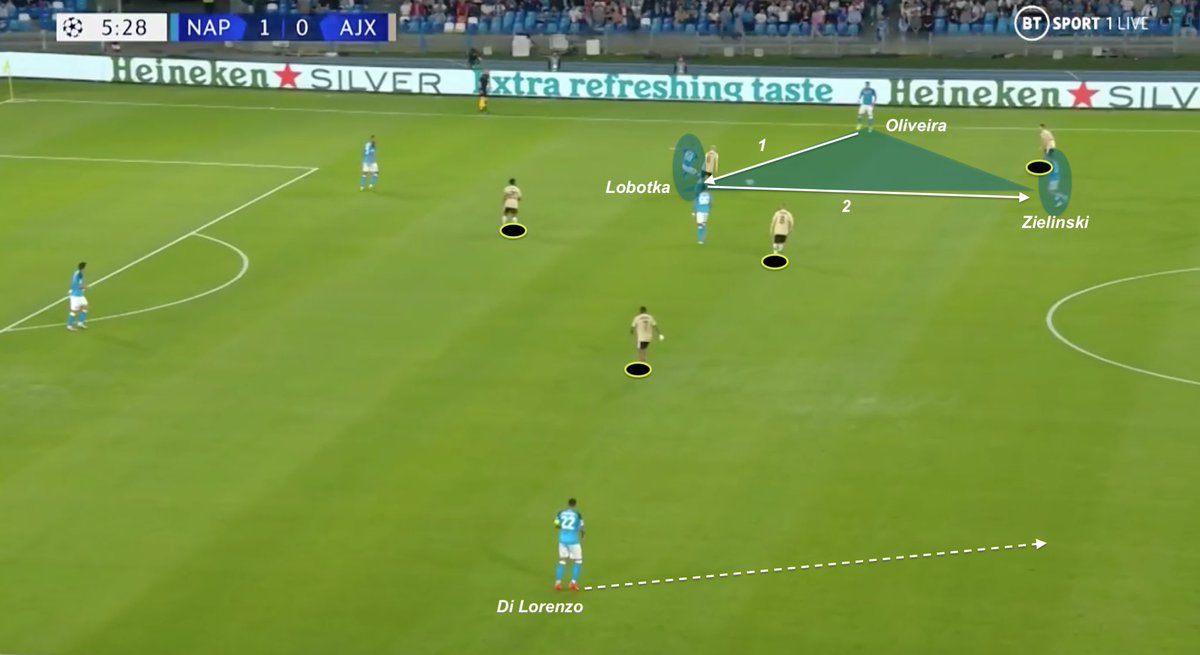
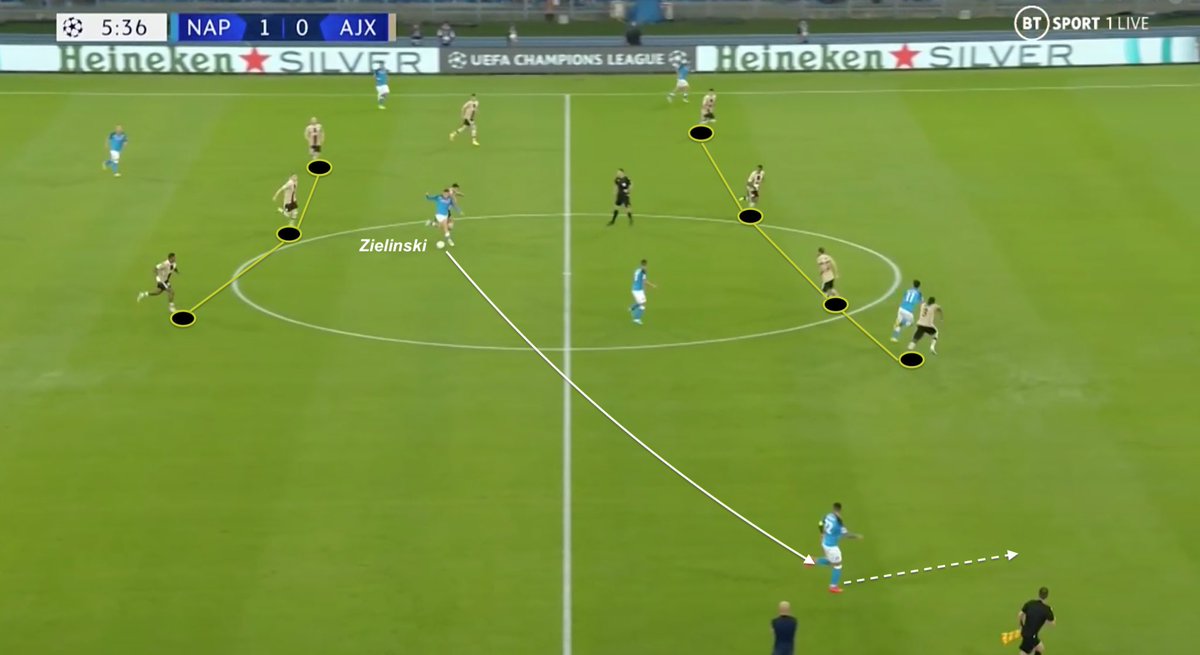
Lobotka’s drop-offs are not useless, only if needed. Taylor and Alvarez, both excellent midfielders, had always one second of delay when they did individual marking on Lobotka. Again, same process: press resistance and wide passes in direction of fullbacks or wingers.
Loading suggestions...