

A new 🇺🇸 National Security Strategy was released this week.
My take? It's yet another instance of a US administration equating "International Order" with "American Leadership"
[THREAD]
My take? It's yet another instance of a US administration equating "International Order" with "American Leadership"
[THREAD]
Before discussing the document, you can read the document for yourself 👇
whitehouse.gov
whitehouse.gov
The purpose of these documents is to "set the tone" and point to the priorities of the administration's foreign policy.
Since 1986, the President is required by law to produce them for the Congress, though the frequency by which they are produced varies.
history.defense.gov
Since 1986, the President is required by law to produce them for the Congress, though the frequency by which they are produced varies.
history.defense.gov
The documents are long and there is a lot to unpack.
Indeed, a bunch of folks have been offering their takes this week on what the current NSS means for their particular subject area, from cyber to trade. For example, see 👇
carnegieendowment.org
Indeed, a bunch of folks have been offering their takes this week on what the current NSS means for their particular subject area, from cyber to trade. For example, see 👇
carnegieendowment.org
A way to make the process of analyzing the document manageable is to look at the frequency key phrases/words are used.
So let's `cntrl-f' the NSS!
So let's `cntrl-f' the NSS!
Given that this is a "security" document, one shouldn't be shocked that "Russia" appears 71 times!
An example: " Russia poses an immediate threat to the free and open international system, recklessly flouting the basic laws of the international order today."
An example: " Russia poses an immediate threat to the free and open international system, recklessly flouting the basic laws of the international order today."
For comparison, China/PRC appears 55 times.
An example: "The PRC...is the only
competitor with both the intent to reshape the international order and, increasingly, the economic,
diplomatic, military, and technological power to advance that objective"
An example: "The PRC...is the only
competitor with both the intent to reshape the international order and, increasingly, the economic,
diplomatic, military, and technological power to advance that objective"
Russia and China dominate the document.
For comparison:
- Iran = 7 times.
- North Korea = 2 times.
- Afghanistan = 4 times.
- Syria = 3 times.
For comparison:
- Iran = 7 times.
- North Korea = 2 times.
- Afghanistan = 4 times.
- Syria = 3 times.
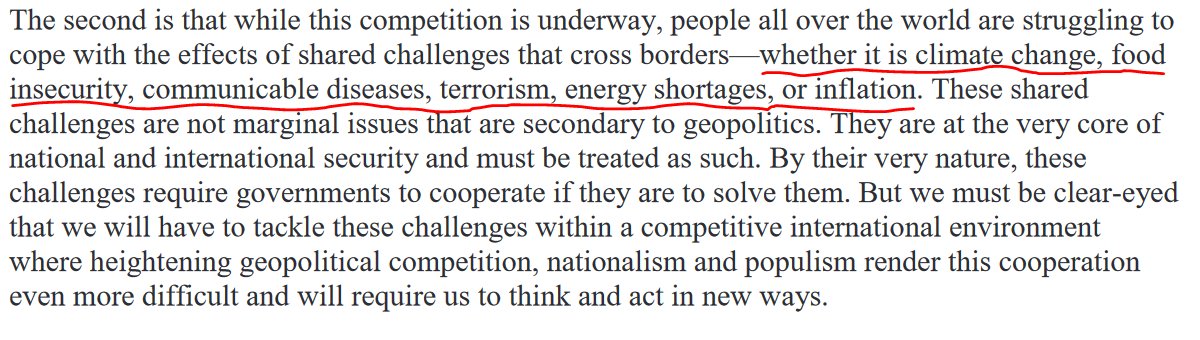
The document also highlights a host of issues that fit into a broader notion of security, from climate change to terrorism to food insecurity.
This is captured well by the following passage (and you can `cntrl-f' each of these):
This is captured well by the following passage (and you can `cntrl-f' each of these):
But what jumps out to me -- going back to the first tweet in this 🧵-- is the frequency of variations on "order":
- "International order" = 24 times
- "world order" = 2 times
- "rules-based order" = 3 times
- "global order" = 3 times
- "global economic order" = 1 time
- "International order" = 24 times
- "world order" = 2 times
- "rules-based order" = 3 times
- "global order" = 3 times
- "global economic order" = 1 time
BTW: Guess which variation of "international order" is NOT used in the document?
"Liberal International Order"
Perhaps the Biden admin felt the phrase has too much baggage tied to it?
lawfareblog.com
"Liberal International Order"
Perhaps the Biden admin felt the phrase has too much baggage tied to it?
lawfareblog.com
Compare the total use of "international order" -- 33 times -- to the use of "democracy" (38 times), the defense of which the Biden administration has made a priority (see Summit of Democracy)
brookings.edu
brookings.edu
This compares to ~15 times variations of "international order" are used in the 2015 NSS by the Obama administration...
obamawhitehouse.archives.gov
obamawhitehouse.archives.gov
... and ~6 times variations of "international order" are found in the 2017 NSS by the Trump administration (note: be careful doing a `cntrl-f' for "order" in this document, as "border" IS used a lot).
trumpwhitehouse.archives.gov
trumpwhitehouse.archives.gov
Variations on "international order" have been used in the NSS going back to the first one in 1986:
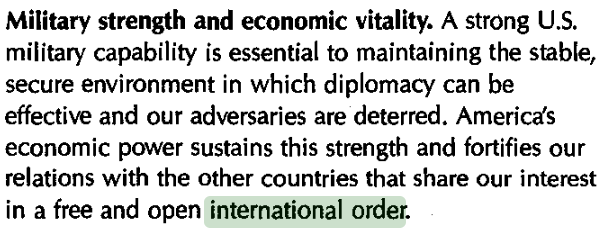
In short, bringing up the need to secure the "international order" is not unique to this document (though the emphasis/frequency does stand out).
Indeed, the document's focus on international order follows a LONG tradition for US foreign policy.
Indeed, the document's focus on international order follows a LONG tradition for US foreign policy.
Consider the below NGram for "international order". Though the phrase appears in the early 20th century, its usage takes off during an obvious time: World War I.
Link: #t1%3B%2Cinternational%20order%3B%2Cc0" target="_blank" rel="noopener" onclick="event.stopPropagation()">books.google.com
Link: #t1%3B%2Cinternational%20order%3B%2Cc0" target="_blank" rel="noopener" onclick="event.stopPropagation()">books.google.com
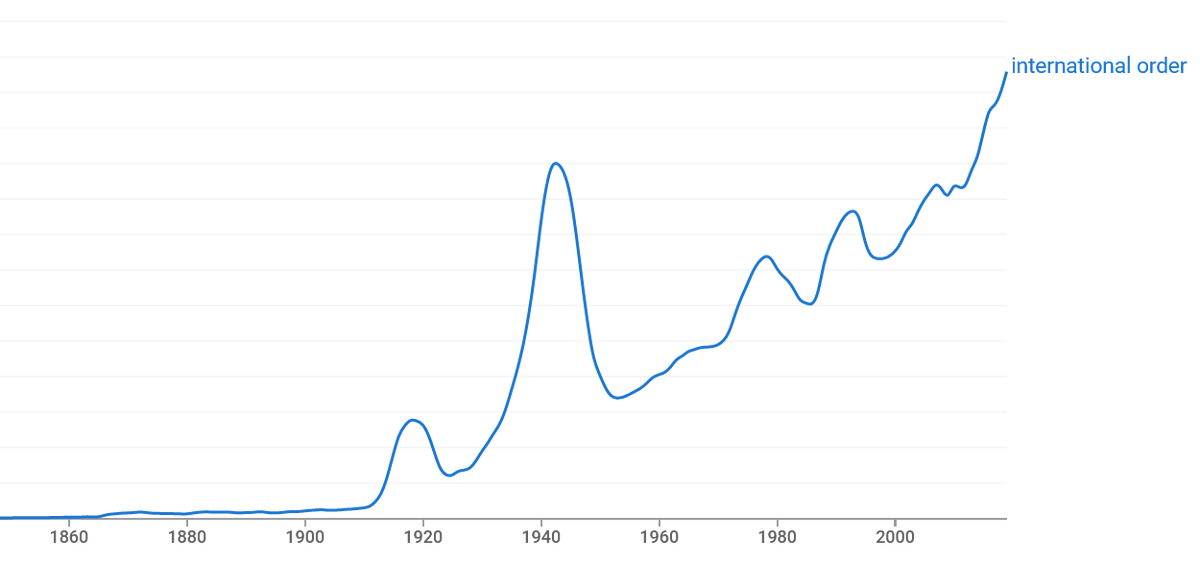
Specifically, the phrase was central to Woodrow Wilson's efforts to support US intervention in the war and establish a "League of Nations" after the war.
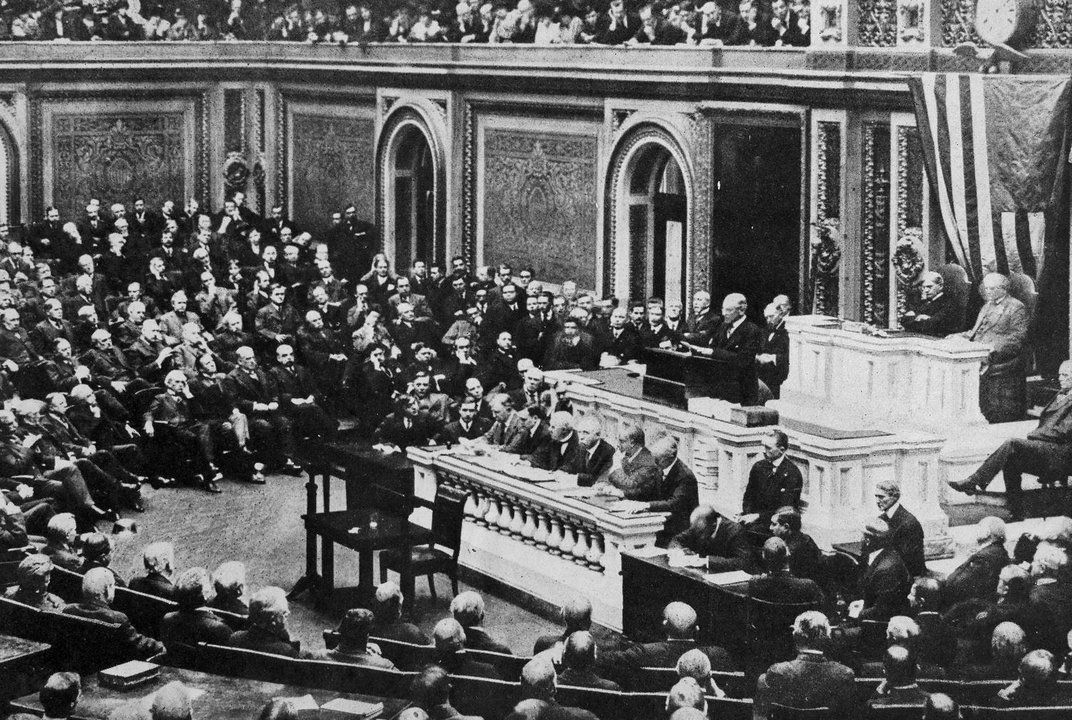
This is most evident in his 1918 speech, "Address to Congress on International Order"
Link: presidency.ucsb.edu
Link: presidency.ucsb.edu
In a key phrase from the Address, Wilson says
"What is at stake now is the peace of the world. What we are striving for is a new international order based upon broad and universal principles of right and justice -no mere peace of shreds and patches."
"What is at stake now is the peace of the world. What we are striving for is a new international order based upon broad and universal principles of right and justice -no mere peace of shreds and patches."
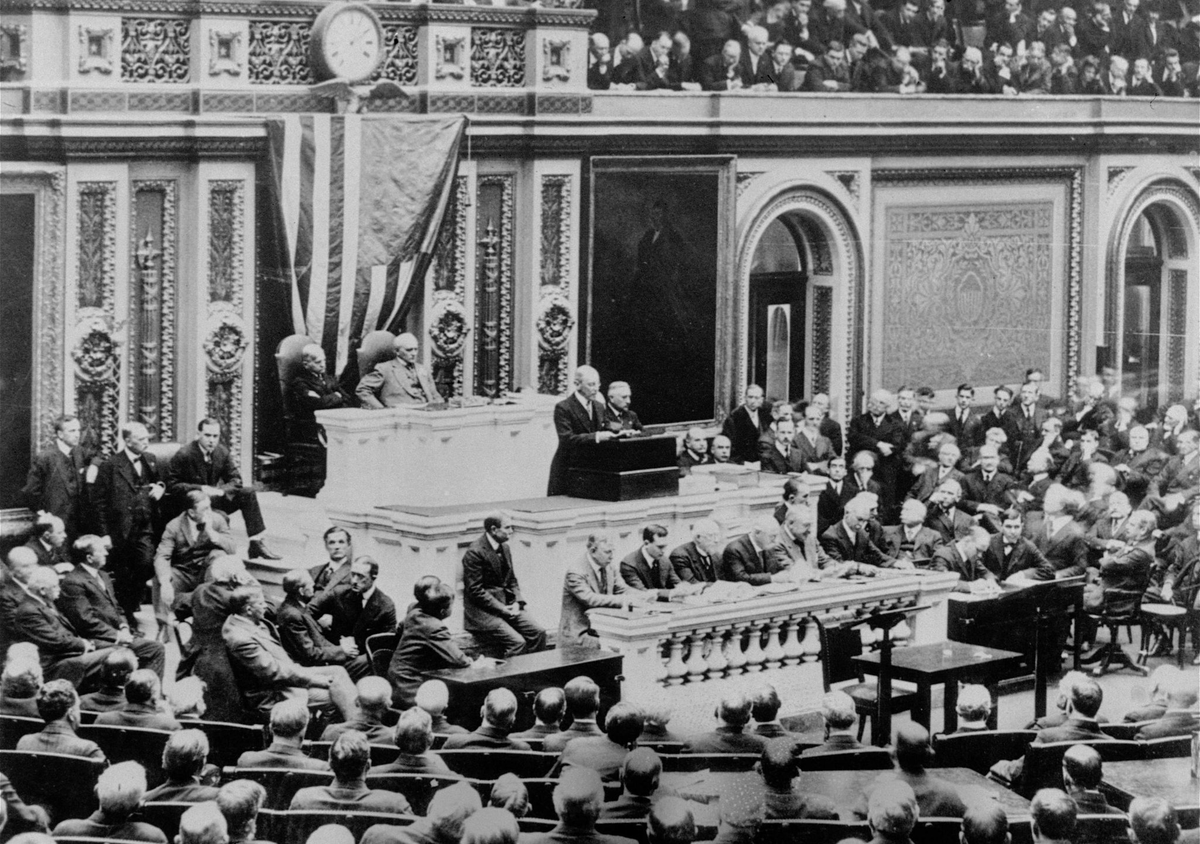
Notice that phrase -- "what is at stake". The implication is that only 🇺🇸 can secure the international order.
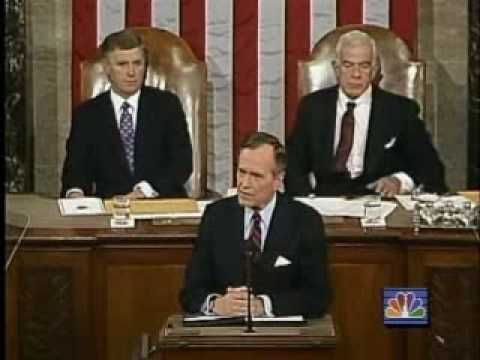
Years later, during another time of global change and upheaval, another US President, George H. W. Bush, used that exact phrase to express the same idea.
Years later, during another time of global change and upheaval, another US President, George H. W. Bush, used that exact phrase to express the same idea.
In his 1991 State of the Union Address, Bush states,
"What is at stake is more than one small country; it is a big idea: a new world order, where diverse nations are drawn together in common cause to achieve the universal aspirations of mankind"
Link: presidency.ucsb.edu
"What is at stake is more than one small country; it is a big idea: a new world order, where diverse nations are drawn together in common cause to achieve the universal aspirations of mankind"
Link: presidency.ucsb.edu
Just this year, Biden echoed those words again in his State of the Union speech:
"While it shouldn’t have taken something so terrible [Putin's War] for people around the world to see what’s at stake, now everyone sees it clearly. We see the unity among leaders of nations."
"While it shouldn’t have taken something so terrible [Putin's War] for people around the world to see what’s at stake, now everyone sees it clearly. We see the unity among leaders of nations."
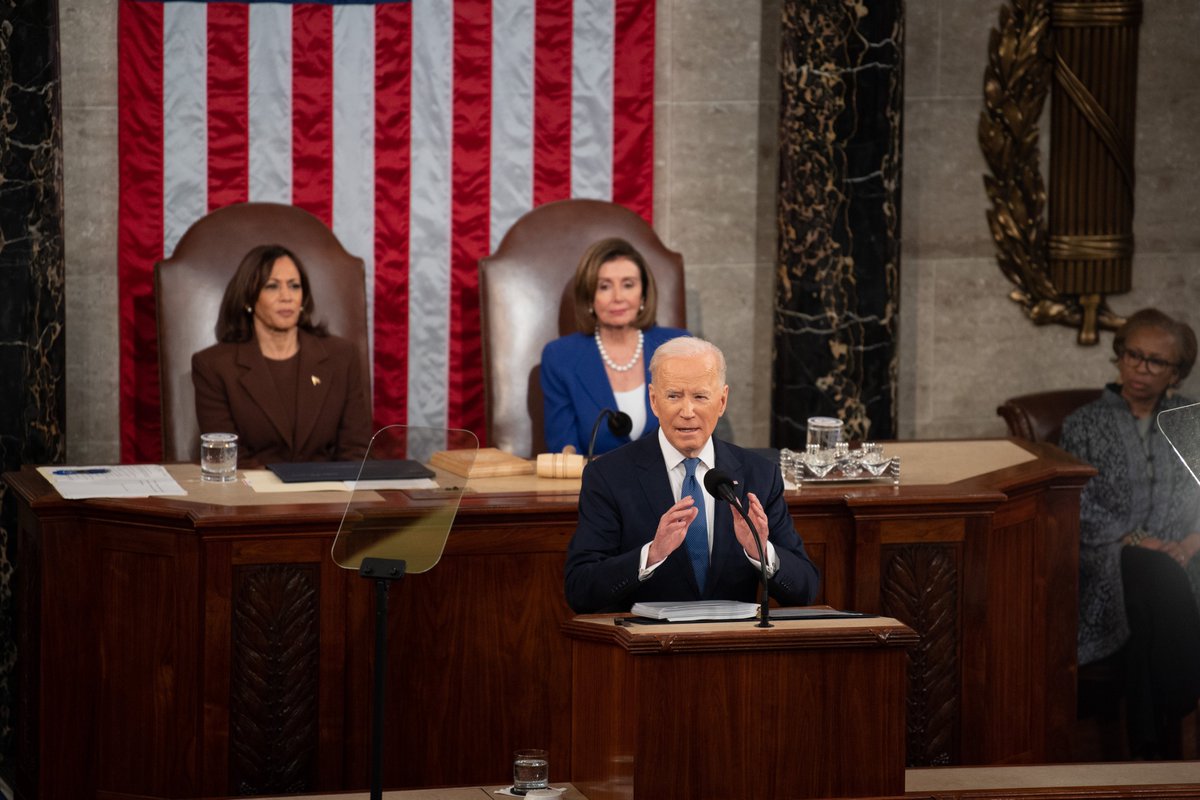
The implication is clear: it requires the United States to handle the stakes of maintaining the world/international/global order.
"International Order" requires (or might be synonymous with) "American Leadership".
"International Order" requires (or might be synonymous with) "American Leadership".
A more cynical take is that "International Order" is a euphemism for "American Hegemony" or "American Empire".
You won't get an argument from me.
Link: books.google.com
You won't get an argument from me.
Link: books.google.com
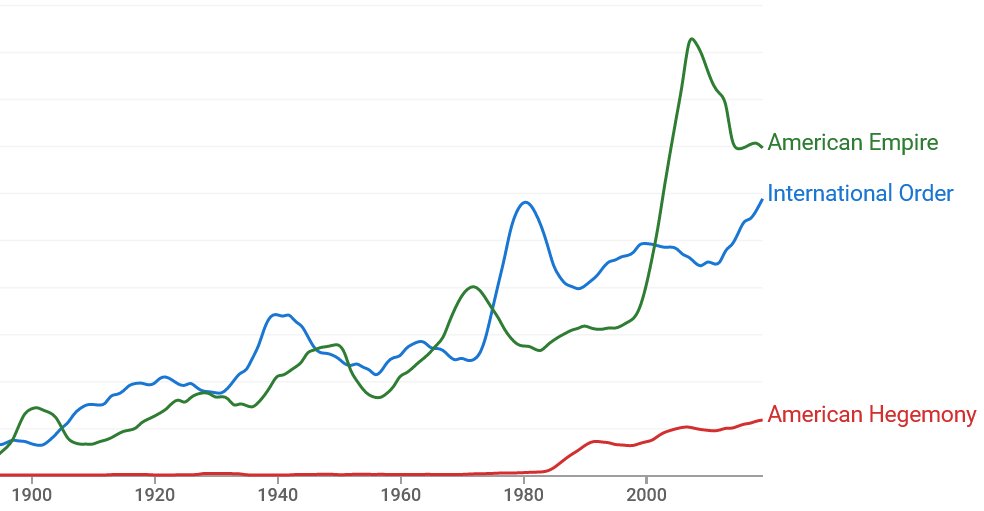
In sum, while there is a lot to take away from the latest NSS, the idea that defending the current "international order" requires (or is equivalent to) "American Leadership" is evident and follows a long legacy in American Presidential discourse.
[END]
[END]
Loading suggestions...