

🚨At least ⅔ ‼️ of the world’s youth do not reach even basic skill levels
That’s the bottom line of our new paper:
“Global Universal Basic Skills:
Current Deficits and Implications for World Development”
w/ @sarages & @EricHanushek
Out @ NBER: nber.org
A🧵1/10
That’s the bottom line of our new paper:
“Global Universal Basic Skills:
Current Deficits and Implications for World Development”
w/ @sarages & @EricHanushek
Out @ NBER: nber.org
A🧵1/10



This paper addresses 2 intertwined questions:
1⃣How far is the world away from ensuring that every child obtains the basic skills needed to be internationally competitive?
2⃣What would accomplishing this mean for world development?
[ungated version: sites.google.com] 3/10
1⃣How far is the world away from ensuring that every child obtains the basic skills needed to be internationally competitive?
2⃣What would accomplishing this mean for world development?
[ungated version: sites.google.com] 3/10
Based on the micro data of international & regional achievement tests,
we develop a new method to map achievement onto a common scale.
We then estimate the share of children not achieving basic skills for 159 countries that cover 98% of world population & 99% of world GDP. 4/10
we develop a new method to map achievement onto a common scale.
We then estimate the share of children not achieving basic skills for 159 countries that cover 98% of world population & 99% of world GDP. 4/10
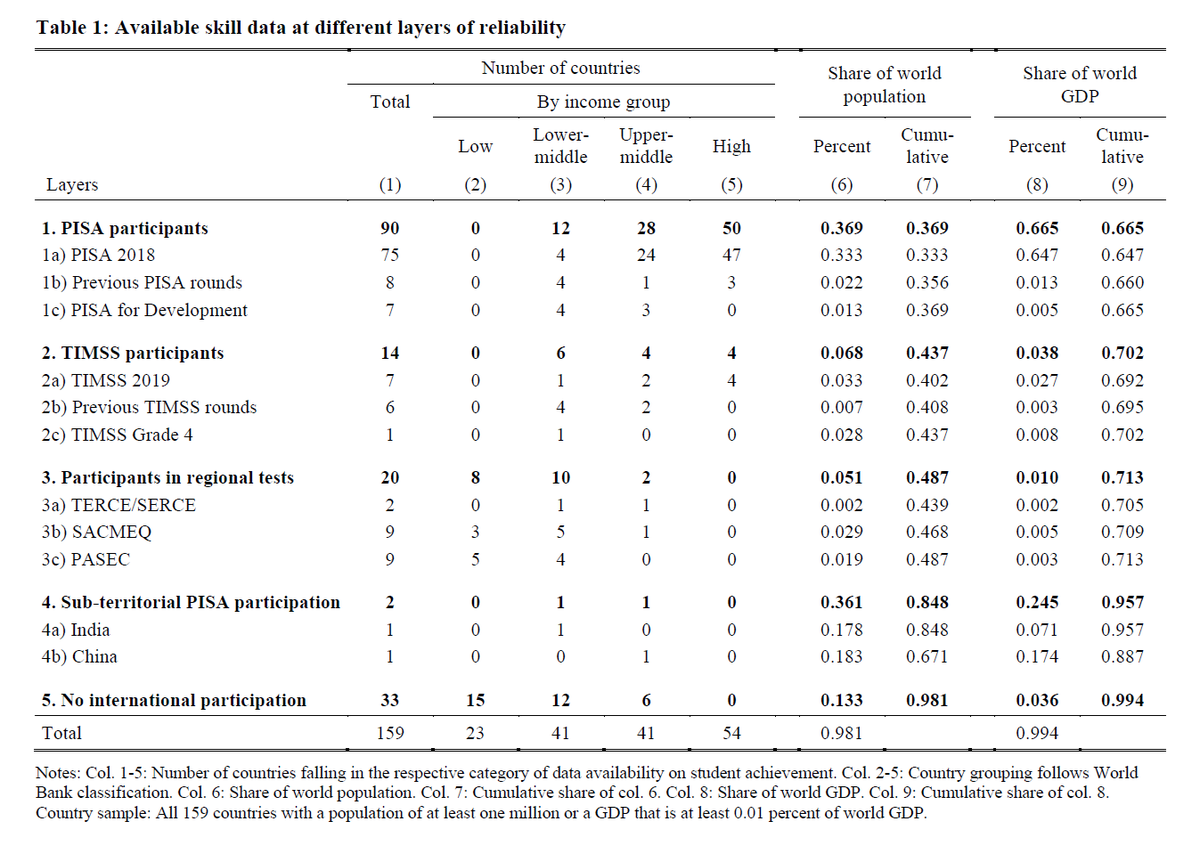
Available skill data at 5 layers of decreasing reliability
1⃣PISA
2⃣TIMSS
3⃣regional tests: TERCE, SACMEQ, PASEC
4⃣sub-territorial PISA participation (India & China)
5⃣no international participation
5/10
1⃣PISA
2⃣TIMSS
3⃣regional tests: TERCE, SACMEQ, PASEC
4⃣sub-territorial PISA participation (India & China)
5⃣no international participation
5/10
Method to depict skills on a common global scale
1⃣Define basic skills: PISA Level 1
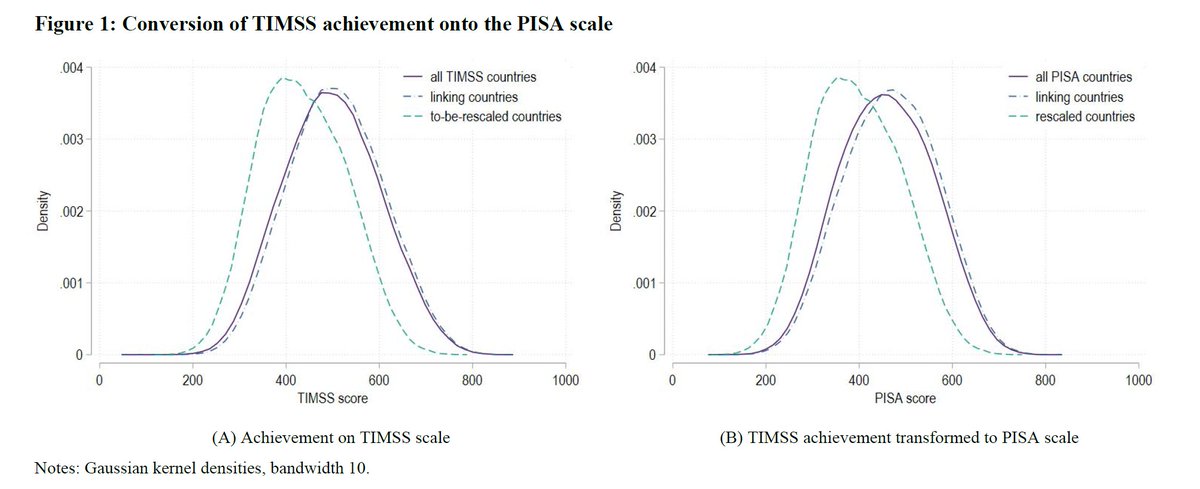
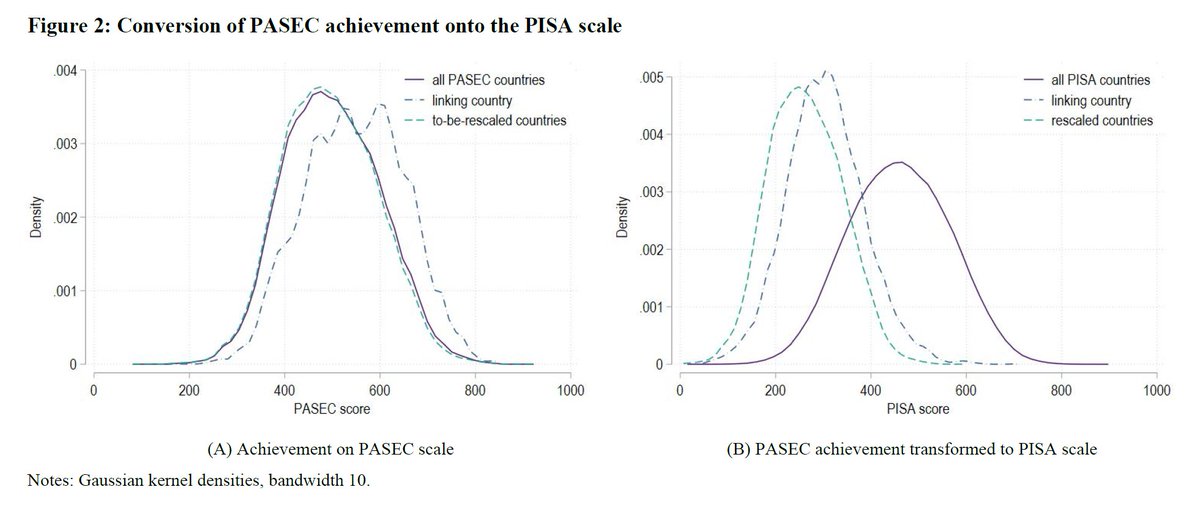
2⃣Transform other achievement tests onto PISA scale
3⃣India & China on a global scale
4⃣Impute achievement in countries w/o int’l test participation
5⃣Skill levels of children not in school
6/10
1⃣Define basic skills: PISA Level 1
2⃣Transform other achievement tests onto PISA scale
3⃣India & China on a global scale
4⃣Impute achievement in countries w/o int’l test participation
5⃣Skill levels of children not in school
6/10
👉6 stylized facts on world distribution of basic skills:
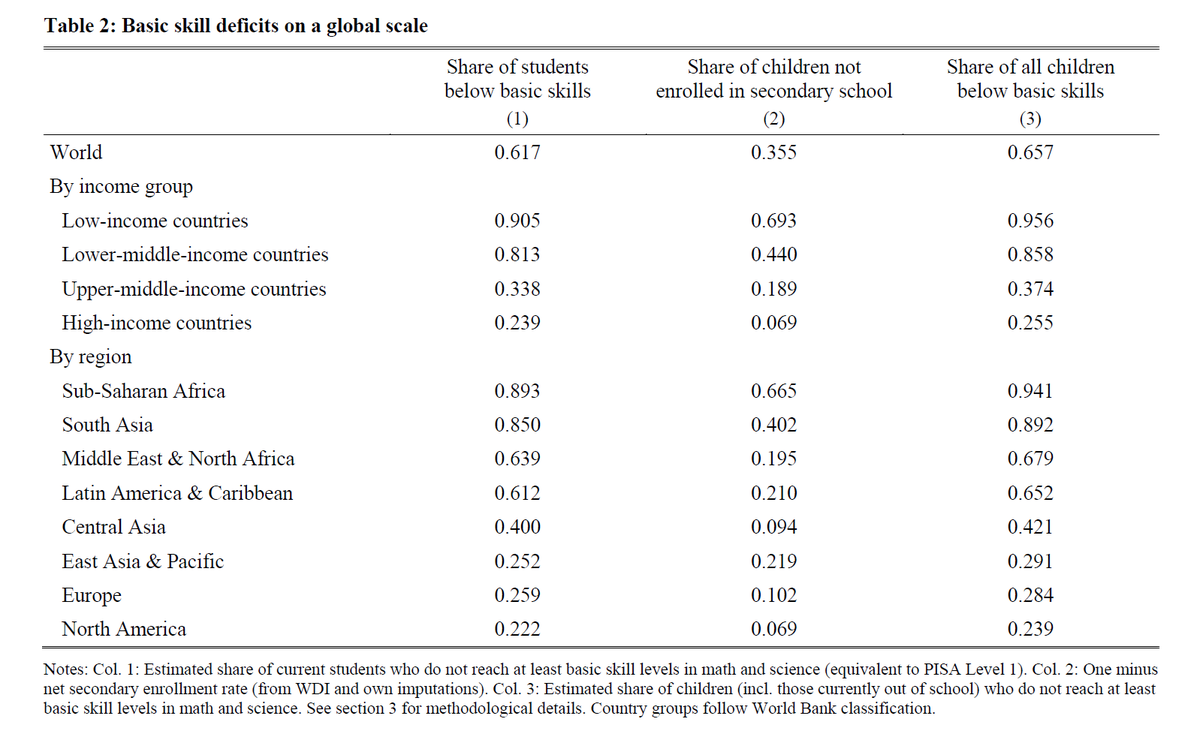
1⃣At least ⅔ of the world’s youth do not obtain basic skills.
2⃣Share of children not reaching basic skills exceeds half in 101 countries & rises above 90% in 36 of these countries. 7/10
1⃣At least ⅔ of the world’s youth do not obtain basic skills.
2⃣Share of children not reaching basic skills exceeds half in 101 countries & rises above 90% in 36 of these countries. 7/10
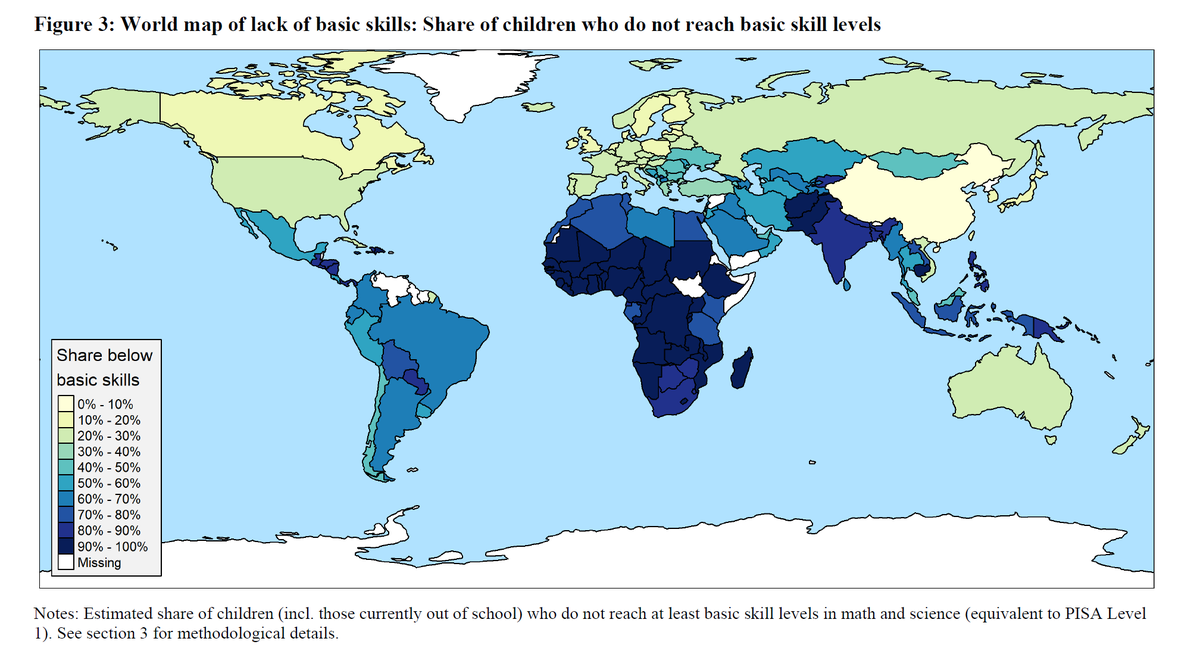
3⃣Even in high-income countries, ¼ of children lacks basic skills.
4⃣Skill deficits reach 94% in Sub-Saharan Africa & 89% in South Asia but also hit 68% in Middle East/North Africa & 65% in Latin America. 8/10
4⃣Skill deficits reach 94% in Sub-Saharan Africa & 89% in South Asia but also hit 68% in Middle East/North Africa & 65% in Latin America. 8/10
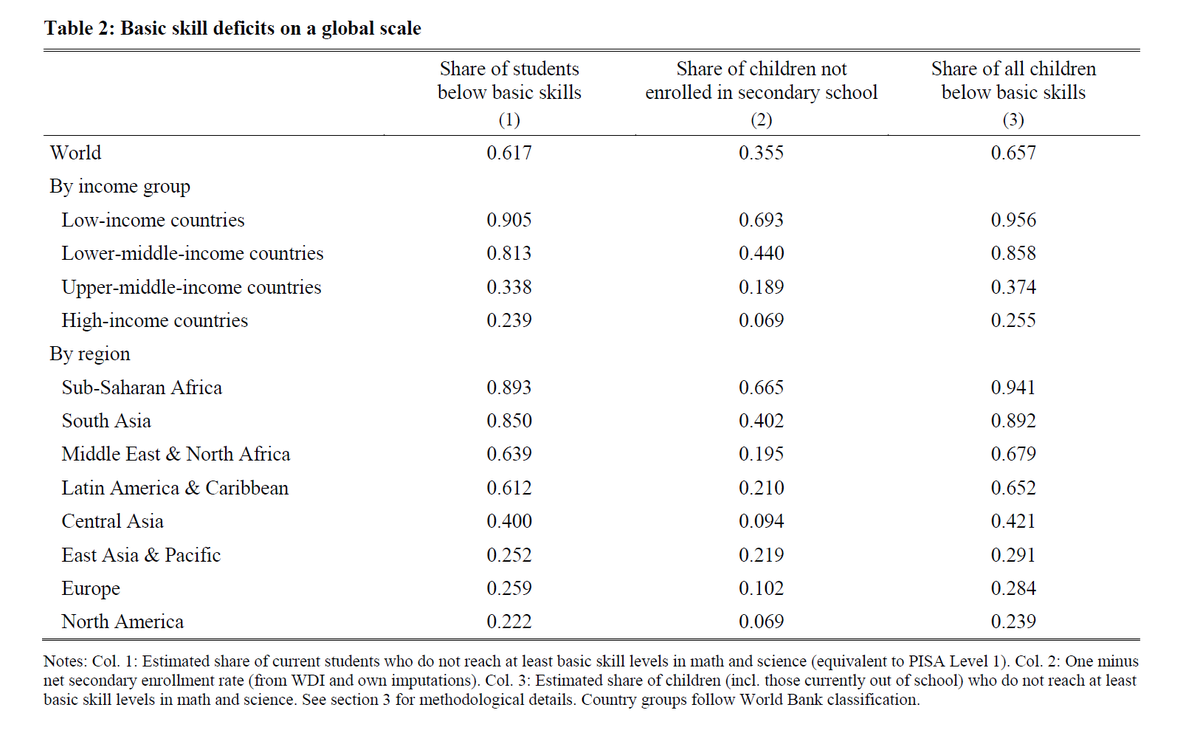
5⃣Skill gaps most apparent for ⅓ of global youth not attending secondary school, but fully 62% of world’s secondary-school STUDENTS fail to reach basic skills.
6⃣½ of world’s youth live in 35 countries that fail to participate in int’l tests, lack reliable information. 9/10
6⃣½ of world’s youth live in 35 countries that fail to participate in int’l tests, lack reliable information. 9/10
We use skill measures to quantify economic gains from every child achieving at least basic skills:
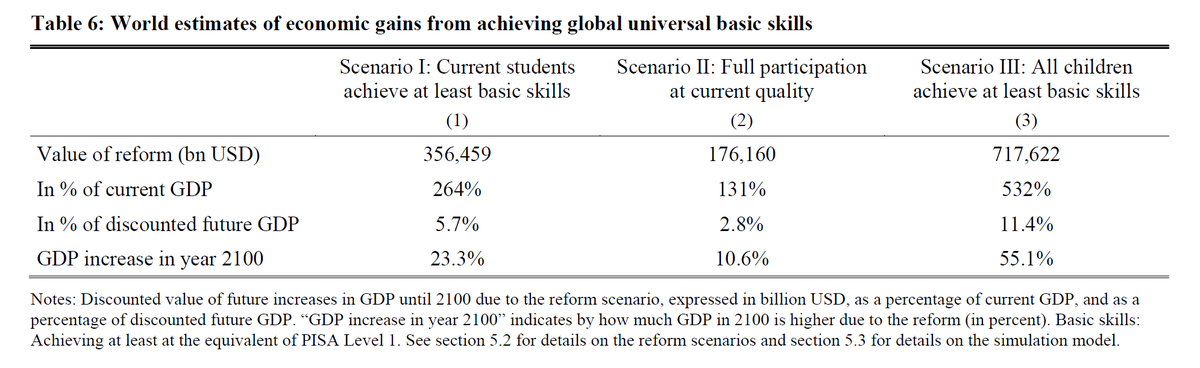
Present value of lost world economic output due to missing goal of global universal basic skills amounts to
> $700 trillion over remaining century or
11% of discounted GDP. 10/10
Present value of lost world economic output due to missing goal of global universal basic skills amounts to
> $700 trillion over remaining century or
11% of discounted GDP. 10/10
Loading suggestions...